KAMPALA, Uganda (AP) — The funeral was underway Saturday in western Uganda for a traditional monarch who ascended the throne of the Tooro Kingdom as an infant in 1995 and died last month at 34, triggering a succession dispute that has rocked the royal family and gripped the entire nation.
The funeral of Tooro's King Oyo Nyimba in a cathedral in the remote city of Fort Portal, near the Congo border, concludes a nine-day mourning period that was blemished by an increasingly acrimonious dispute over who should succeed him. He will be buried next to his ancestors later on Saturday.
Click to Gallery
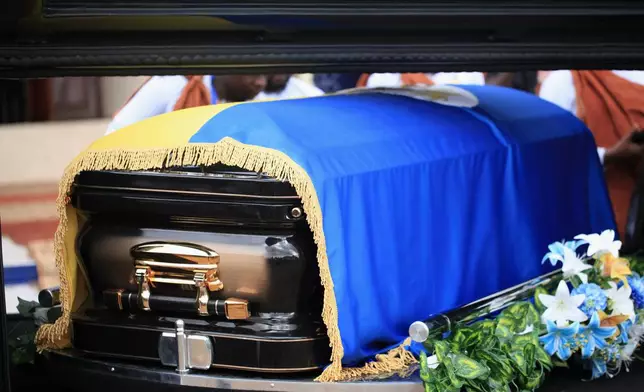
The casket of Tooro's King Oyo Nyimba is loaded into a hearse in the remote city of Fort Portal, near the Congo border in Uganda, Saturday, Sept. 12, 2026. (AP Photo/Patrick Onen)
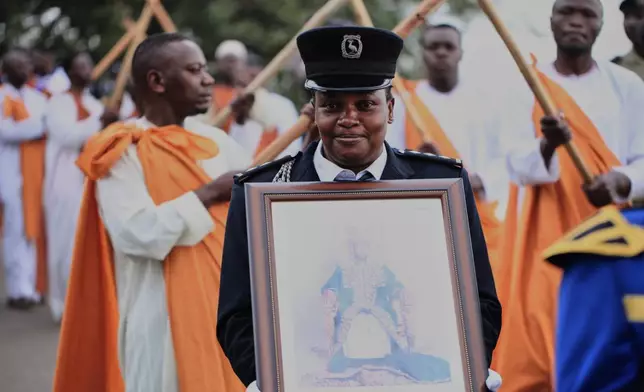
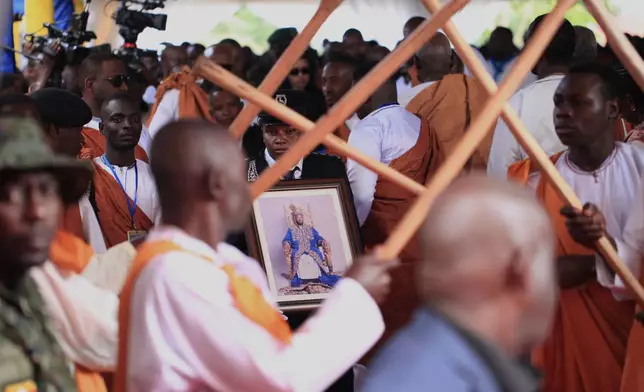
A Ugandan security officer carries a portrait of Tooro's King Oyo Nyimba during his funeral procession in Fort Portal, Uganda, Saturday, Sept. 12, 2026. (AP Photo/Patrick Onen)
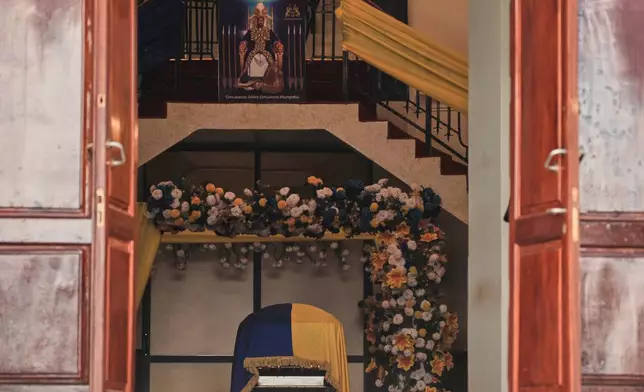
The casket of Tooro's King Oyo Nyimba is placed at Karuziika Palace, the official royal residence, in Fort Portal, Uganda, Saturday, Sept. 12, 2026. (AP Photo/Patrick Onen)
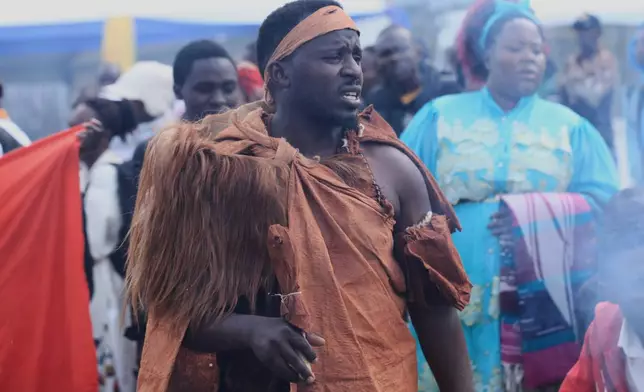
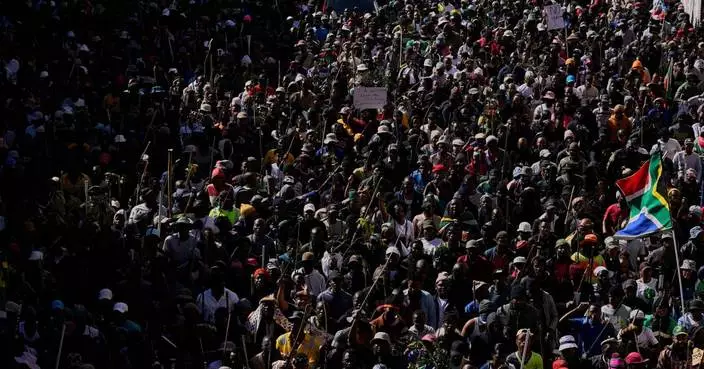
Mourners gather for the funeral of Tooro's King Oyo Nyimba in the remote city of Fort Portal, near the Congo border in Uganda, Saturday, Sept. 12, 2026. (AP Photo/Patrick Onen)
A Ugandan security officer carries a portrait of Tooro's King Oyo Nyimba during his funeral procession in Fort Portal, Uganda, Saturday, Sept. 12, 2026. (AP Photo/Patrick Onen)
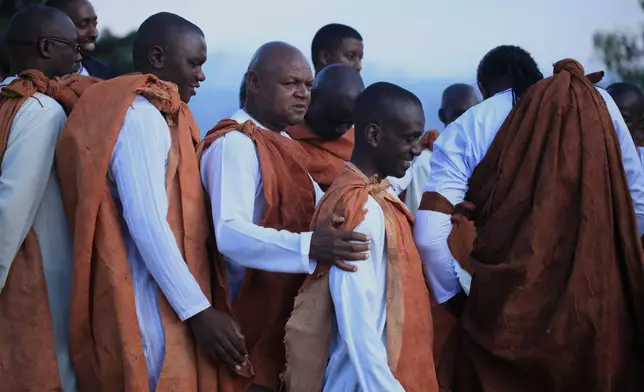
Mourners gather for the funeral of Tooro's King Oyo Nyimba in the remote city of Fort Portal, near the Congo border in Uganda, Saturday, Sept. 12, 2026. (AP Photo/Patrick Onen)
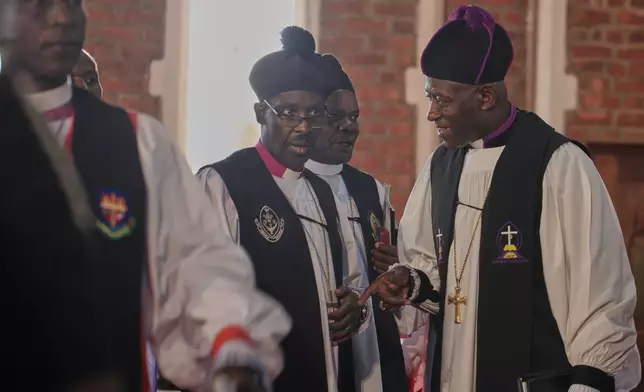
Priests attend the funeral of Tooro's King Oyo Nyimba in Fort Portal, Uganda, near the Congo border, Saturday, Sept. 12, 2026. (AP Photo/Patrick Onen)
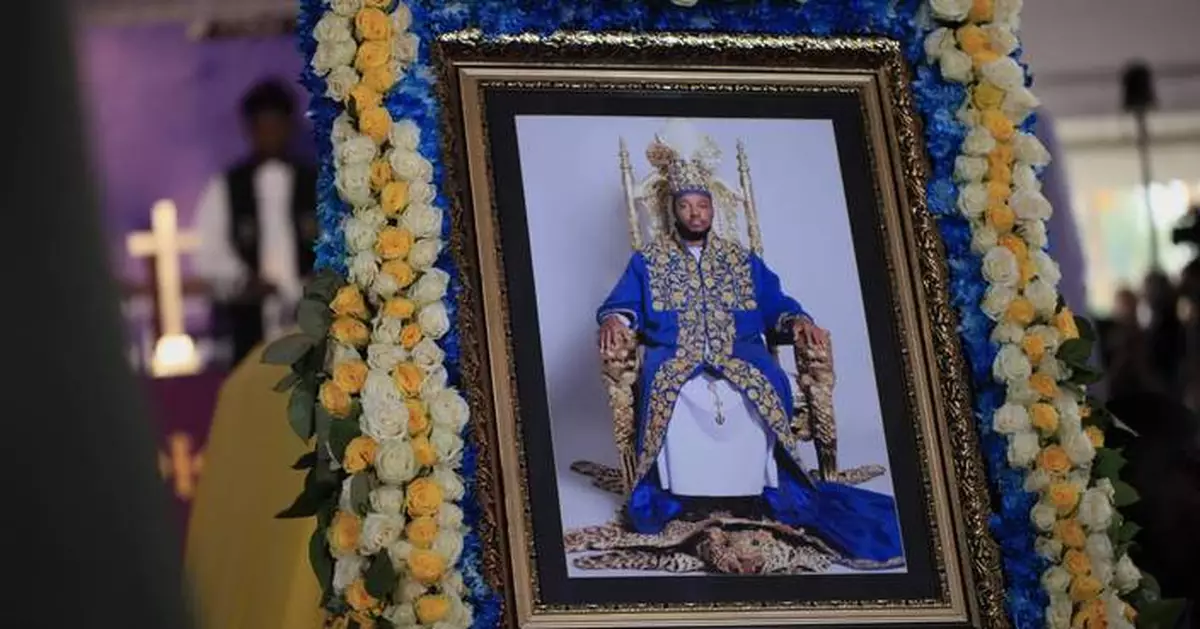
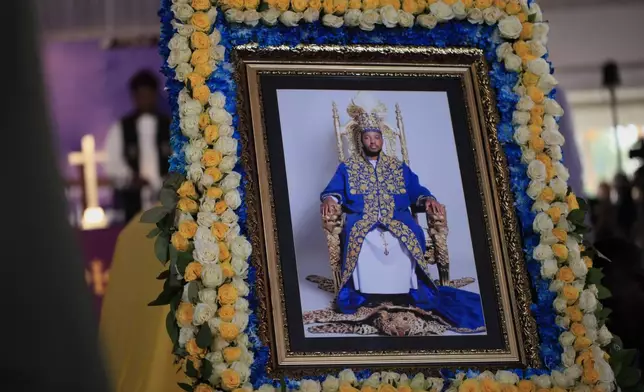
A portrait of Tooro's King Oyo Nyimba is displayed inside St. John's Cathedral in Fort Portal, Uganda, near the Congo border, Saturday, Sept. 12, 2026. (AP Photo/Patrick Onen)
King Oyo, as he was best known to his subjects, was unmarried when he died late in August after suffering from cancer. Elders with the kingdom’s ruling clan, known as the Babiito, said he never declared an heir to them, disputing the account of others in the kingdom who said he left behind a son born out of wedlock. The son has not been publicly identified, leading to sensational claims on social media of at least two possible heirs alleged to be Oyo’s children.
On Wednesday, a committee of Tooro elders announced that they had chosen a prince working as a journalist to succeed Oyo, earning praise from traditionalists who want an adult on the throne and rebuke from the king’s closest relatives.
Oyo’s sister, Ruth Komuntale, said the announcement sought to “bring division and turmoil.” Queen Mother Best Kemigisa said in a statement that the succession battle undermined their ability to mourn the king’s death. “I also appeal to those fighting over the throne: please, there will be time for all of that,” she said in a statement. “Let us grieve and bury my son King Oyo.”
Traditional monarchs are beloved but don’t wield any formal power in the East African country.
Oyo was crowned in 1995, at the age of 3, after his father’s death. He was a curious child in colorful robes and an object of adoration for his hundreds of thousands of followers.
At his coronation, he went through a series of tribal rituals and was led into the royal cemetery to perform a coming-of-age ceremony: successfully tossing nine coffee beans into his father’s tomb.
Amid the ongoing succession dispute, it was not clear who would perform this rite. The matter of Oyo’s successor could go to the courts, after his family said he left behind a will that had been ignored by Tooro elders.
Oyo once held the unofficial title of the world’s youngest king, a mesmerizing figure even for world leaders introduced to him at national events, including South Africa’s Nelson Mandela. Oyo was guided by regents appointed by the kingdom until he became an adult at 18.
“This is one of those deaths, the Bob Marley kind, that one never heals from,” Timothy Kalyegira, a prominent analyst who is from Tooro, said in a eulogy posted on social platform X. “Not Oyo; not that likeable young man; not at 34. That’s what makes it so painful.”
The late Libyan leader Moammar Gadhafi befriended the Tooro royal family as if they were part of his extended family. He made multiple trips to Uganda and supported Oyo and his mother for years before his death in October 2011.
Uganda’s traditional kingdoms were banned after independence from British colonial rule by a republican president who said he wanted to unify the country, but they were restored in 1993. Although they have no political authority and are legally not allowed to engage in partisan politics, monarchs wield authority as guardians of tribal culture.
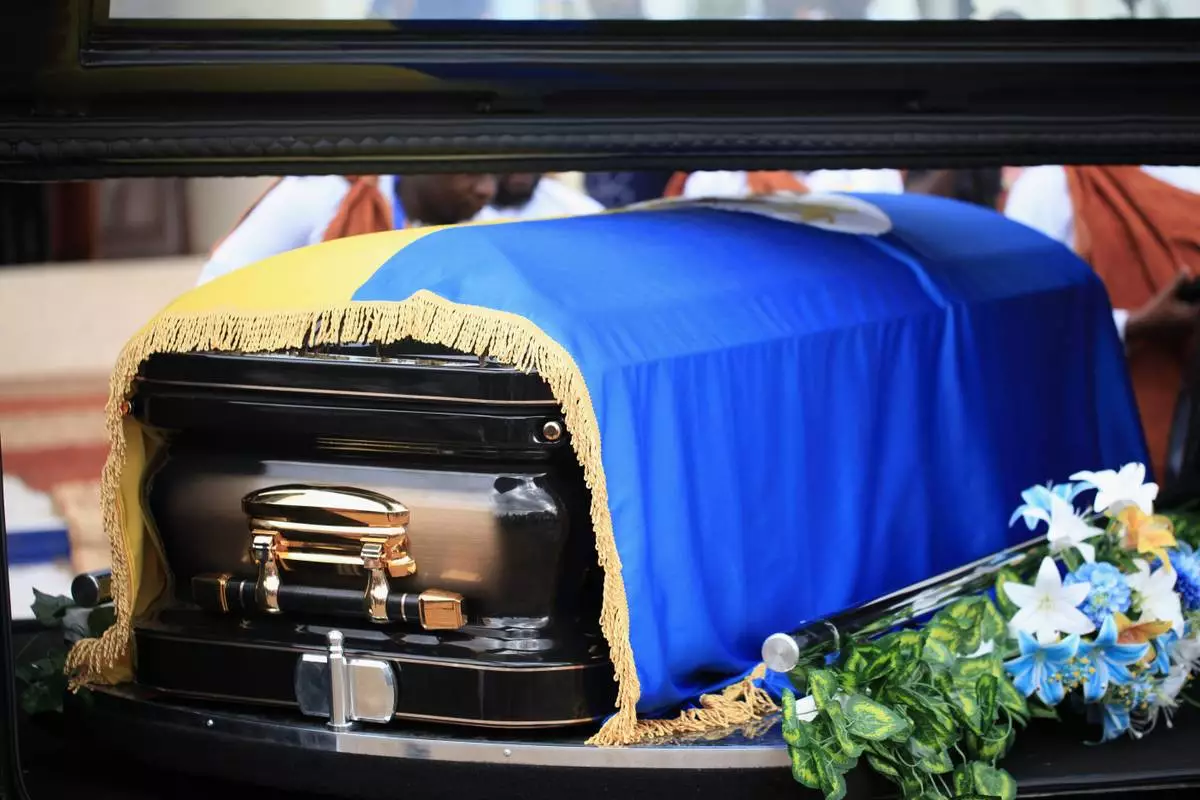
The casket of Tooro's King Oyo Nyimba is loaded into a hearse in the remote city of Fort Portal, near the Congo border in Uganda, Saturday, Sept. 12, 2026. (AP Photo/Patrick Onen)
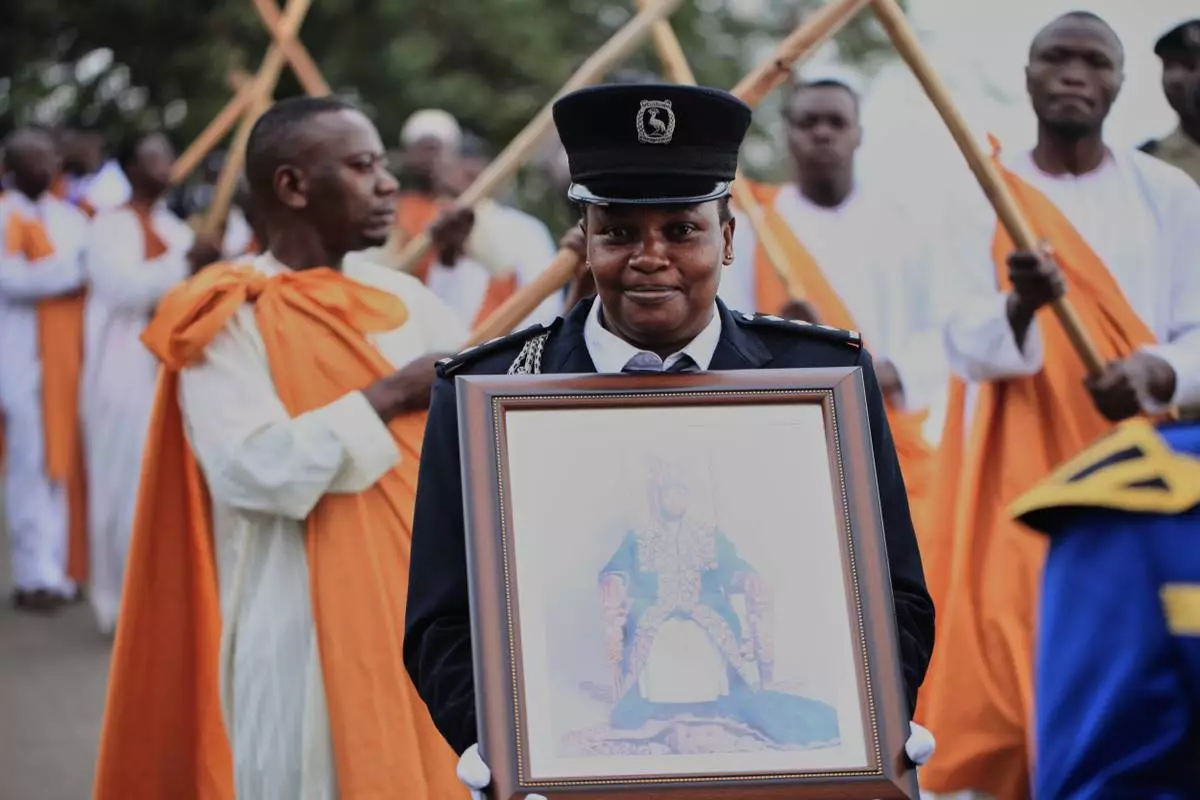
A Ugandan security officer carries a portrait of Tooro's King Oyo Nyimba during his funeral procession in Fort Portal, Uganda, Saturday, Sept. 12, 2026. (AP Photo/Patrick Onen)
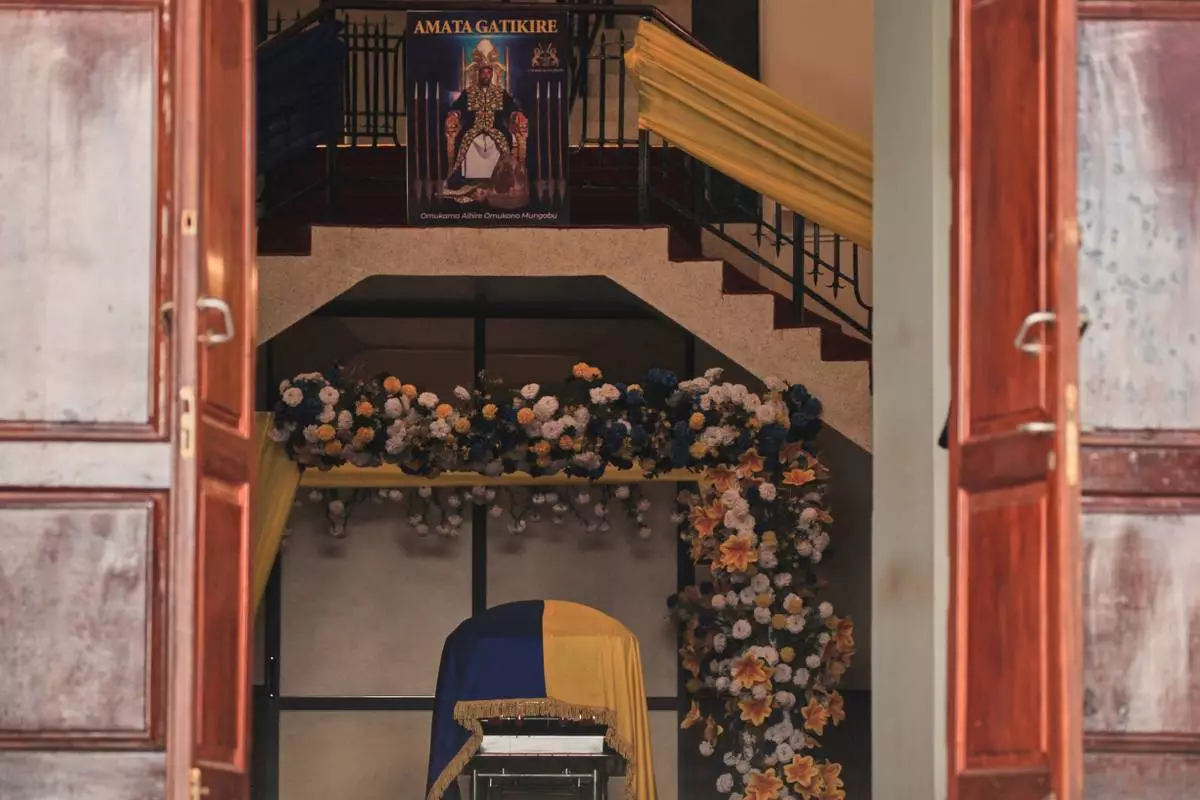
The casket of Tooro's King Oyo Nyimba is placed at Karuziika Palace, the official royal residence, in Fort Portal, Uganda, Saturday, Sept. 12, 2026. (AP Photo/Patrick Onen)
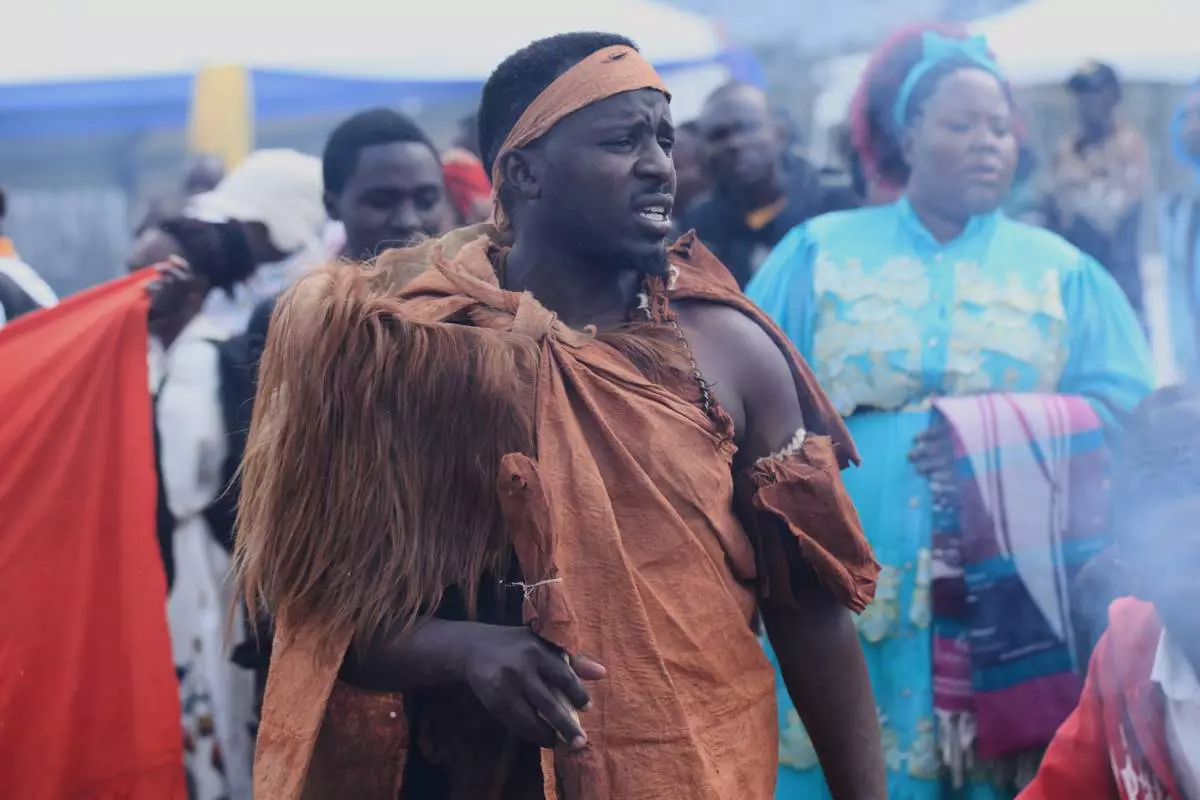
Mourners gather for the funeral of Tooro's King Oyo Nyimba in the remote city of Fort Portal, near the Congo border in Uganda, Saturday, Sept. 12, 2026. (AP Photo/Patrick Onen)
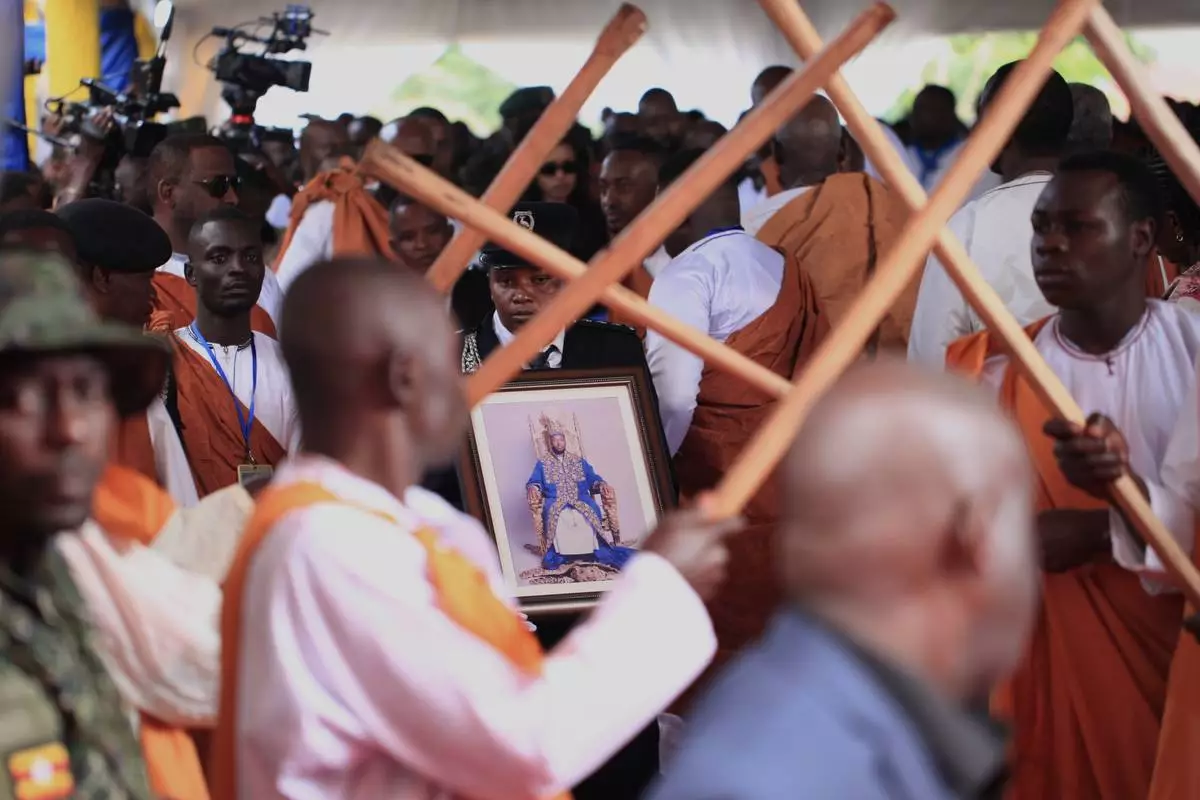
A Ugandan security officer carries a portrait of Tooro's King Oyo Nyimba during his funeral procession in Fort Portal, Uganda, Saturday, Sept. 12, 2026. (AP Photo/Patrick Onen)
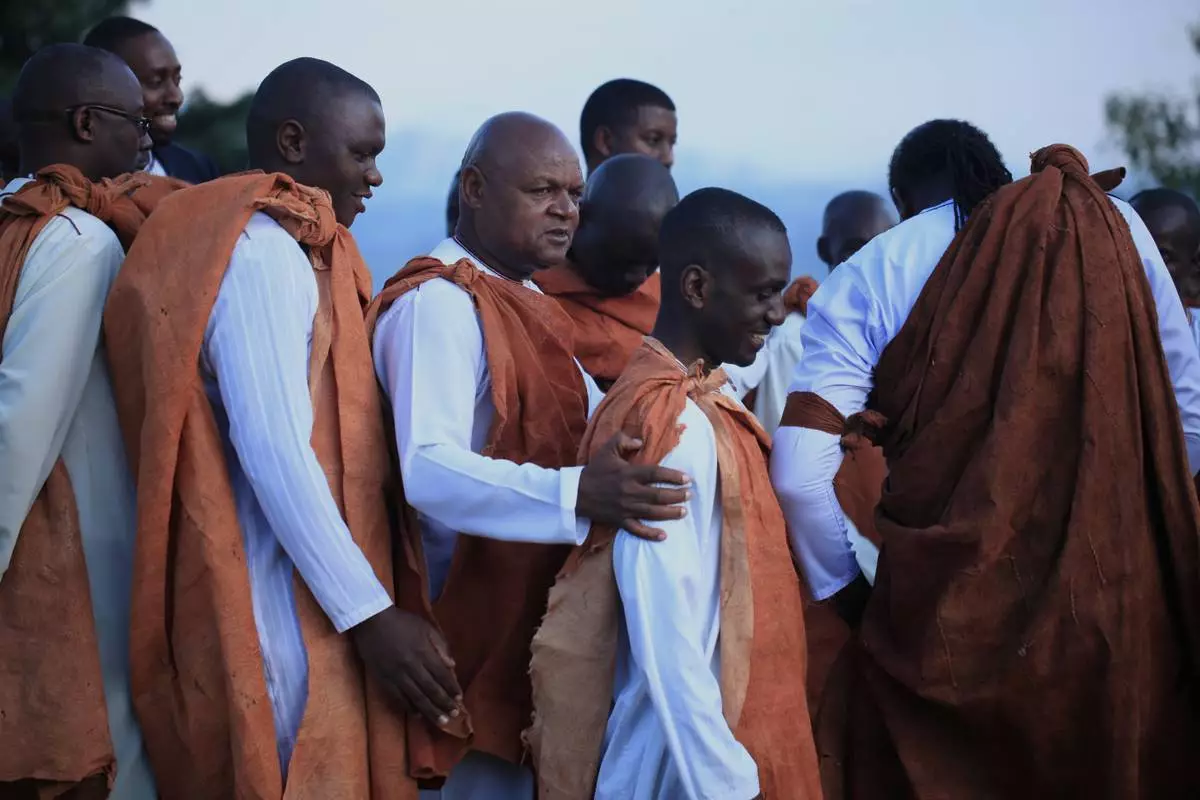
Mourners gather for the funeral of Tooro's King Oyo Nyimba in the remote city of Fort Portal, near the Congo border in Uganda, Saturday, Sept. 12, 2026. (AP Photo/Patrick Onen)
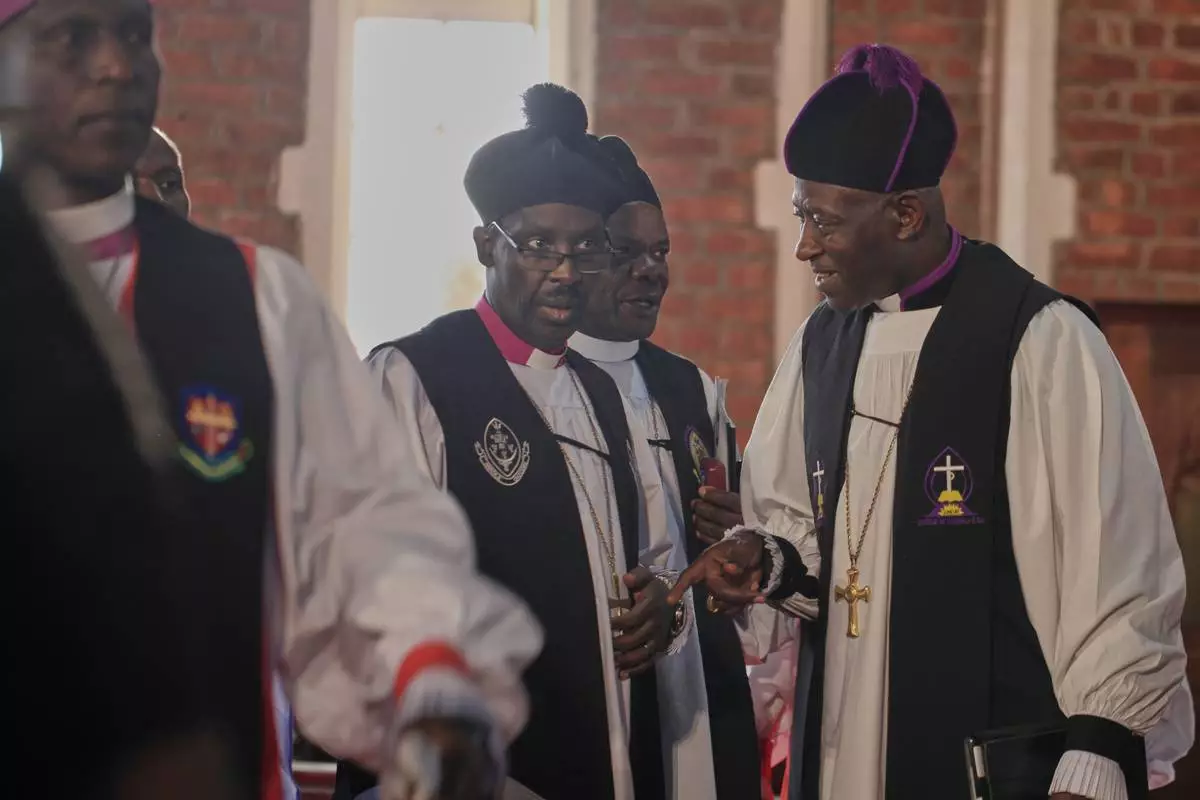
Priests attend the funeral of Tooro's King Oyo Nyimba in Fort Portal, Uganda, near the Congo border, Saturday, Sept. 12, 2026. (AP Photo/Patrick Onen)
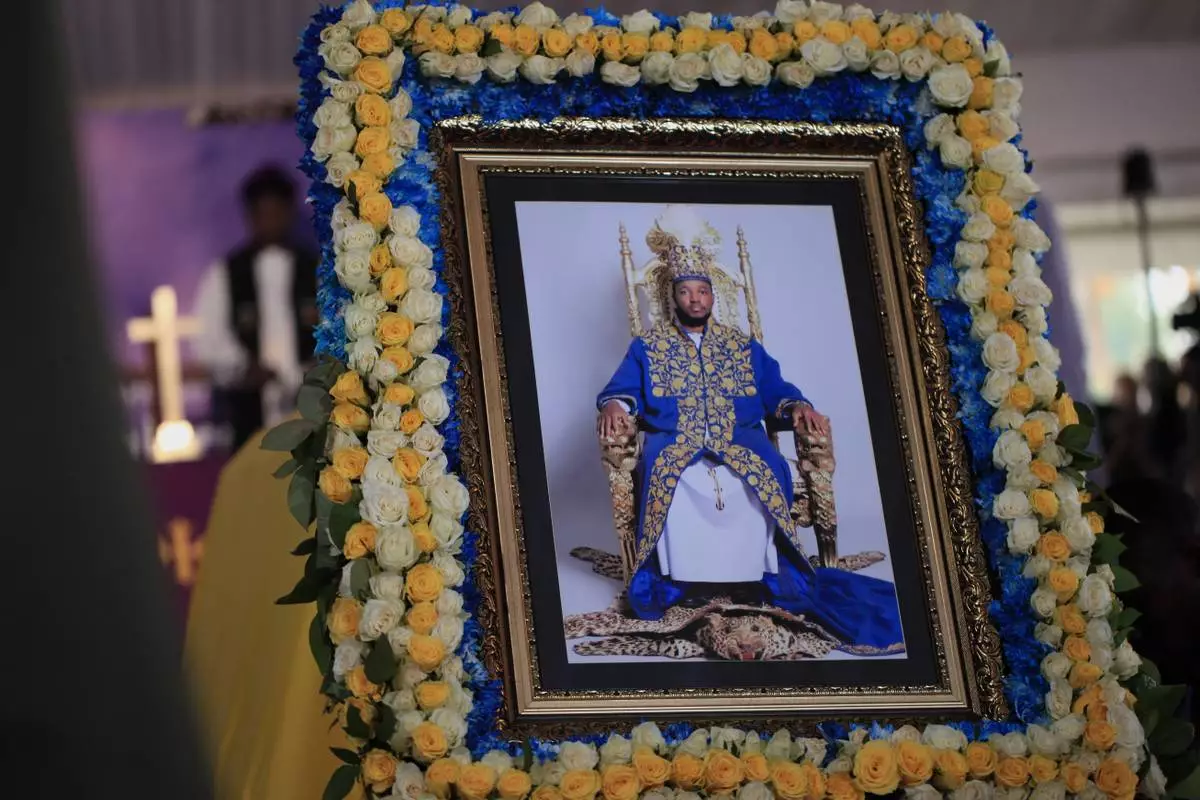
A portrait of Tooro's King Oyo Nyimba is displayed inside St. John's Cathedral in Fort Portal, Uganda, near the Congo border, Saturday, Sept. 12, 2026. (AP Photo/Patrick Onen)
BAGHDAD (AP) — Iraq’s government was racing Saturday to contain the fallout after local Iran-backed militias were accused of attacking and shuttering a key Saudi pipeline.
Though an umbrella group of Iran-backed militias in Iraq denied their involvement, Iraq's government confirmed the attacks had originated from its territory. The government pledged to investigate and dismissed two senior officials.
The country is under mounting pressure to prevent local militias from aiding other Iran proxy groups across the region. The Iraqi government has set a Sept. 30 deadline for nonstate groups to disarm, but several of the most powerful militias have said they will not comply.
Pressure to disarm the militias is especially acute as the Iran-backed Houthi rebels make an advance across Yemen’s west coast in a major setback to the Saudi-backed coalition that risks escalating the war in the region. The Houthis on Friday seized an island in the Bab el-Mandeb Strait, a key shipping lane through which around 12% of global trade passes.
Their virtual control of the strait could send global oil prices — already inflated by the six-month Iran-U.S. war — spiraling. The strait has become a vital commercial lane for Saudi oil ever since the Iran war disrupted shipping in the Strait of Hormuz.
Asked about the region Saturday while speaking to reporters in Dublin, U.S. President Donald said Iran was “probably” responsible for the pipeline attack, but tried to calm concerns.
He said his administration has “had discussions” with the Houthis, though he did not specify when those talks occurred and the White House did not immediately respond to a request for comment about the timing of the discussions. The administration engaged in at least one round of talks with the group in May 2025.
“The Houthis called us, and they don’t want to fight with us,” Trump said. “They would much prefer not having us involved, and they’re letting most ships go through.”
A group of Iran-backed militias in Iraq denied they were responsible for the attacks on the east-west Saudi oil pipeline in a statement Saturday, while praising the Houthis for their “ongoing battlefield victories against Saudi forces.”
The group said it would cooperate with the Iraqi government’s investigation.
Iraqi Prime Minister Ali al-Zaidi said earlier Saturday that he'd ordered an investigation into the operations command of Maysan province, along the border with Iran, and dismissed the province's commander. His office later said the provincial police chief was also dismissed.
Saudi Arabia shut down the major, cross-country oil pipeline on Friday, saying it was a “precautionary measure” after the pipeline came under drone attack. It blamed the attacks on several drones that came from Iraq, but said the kingdom would not retaliate, to give the Iraqi government “an opportunity to take the necessary measures.”
Several Arab countries on Saturday, including Kuwait, the United Arab Emirates, Oman and Egypt, condemned the attack, according to the Saudi state news agency.
Built in the 1980s, the East-West pipeline has played an important role in Saudi Arabia’s ability to export oil following the disruption of the Strait of Hormuz during the Iran war. By early June, Saudi Arabia had more than doubled oil exports from the Red Sea port at the pipeline’s end to more than 5 million barrels per day, according to the International Energy Agency.
Tehran-backed Iraqi militias have carried out strikes on U.S.-linked targets both inside and outside of Iraq since the U.S. and Israel attacked Iran on Feb. 28, and have coordinated with Yemen’s Houthi rebels to attack Saudi Arabia.
In a move possibly linked to the investigation, Iraq closed two key border crossings with Iran, Iraq’s state-run news agency reported Saturday.
The report said that Iraqi officials were at the border, investigating previous “violations and infractions” at the crossings.
Valiollah Hayati, the deputy governor of Iran’s southwestern Khuzestan province, named the closed crossings as Shalamcheh and Chazabeh. They are among the main official border crossings between Iran and Iraq.
Iranian state media said the measure would halt all passenger and commercial traffic through the two crossings until further notice.
Saudi Arabia and the United States bombed Iranian-backed militias in Iraq in July after blaming them for drone attacks on Saudi oil facilities that had been claimed by the Houthis. Regional officials told The Associated Press that the Houthis helped the Iraqi militias plan and execute the attacks.
The escalating fighting threatens to end a fragile truce that had largely halted Yemen’s civil war since 2022. At stake are 40 million people in the Arab world’s poorest country. The conflict killed 150,000 and brought many others to the brink of famine.
The surge in fighting in the past week has sent over 46,000 people fleeing, the U.N. migration agency said Friday.
The Houthis have been at war with Yemen’s government since 2014, when the rebels seized much of northern and central Yemen and the capital, Sanaa. Saudi Arabia entered the war the following year on the side of the government.
——
Jill Lawless and Darlene Superville in Dublin contributed to this report.
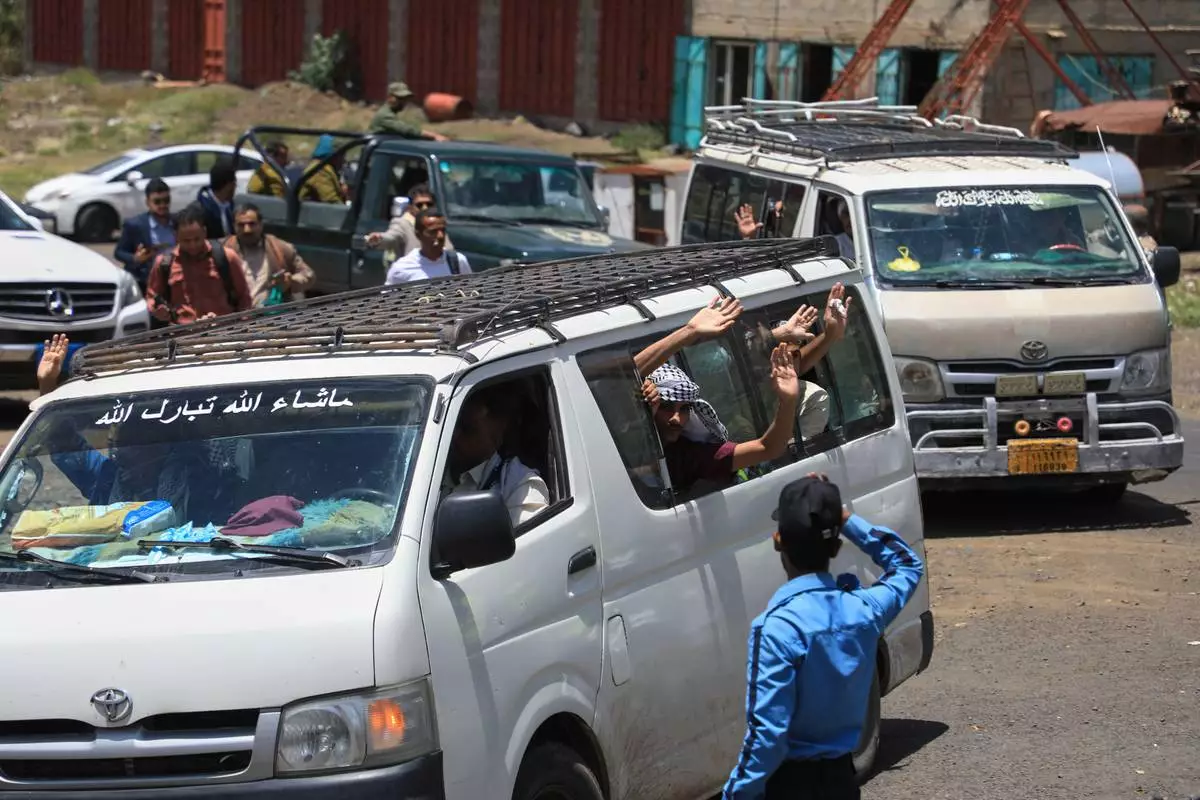
Houthi prisoners wave from vehicles as they travel through the Bani Matar district on their way to Sanaa, Yemen, Saturday, Sept. 12, 2026, after being freed in Mokha following the Houthi takeover of the southern Red Sea port city. (AP Photo/STR)
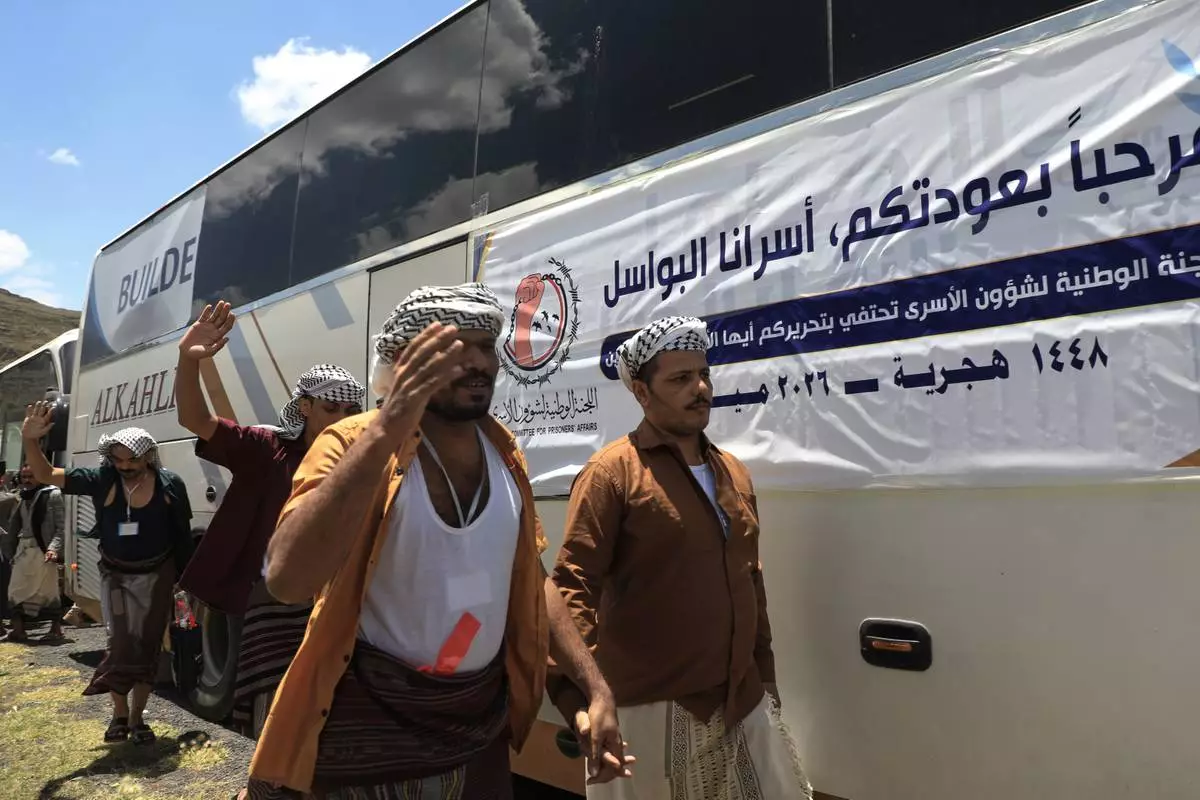
Houthi prisoners freed in Mokha wave as they arrive in the Bani Matar district on their way to Sanaa, Yemen, Saturday, Sept. 12, 2026, following the Houthi takeover of the southern Red Sea port city. (AP Photo/STR)
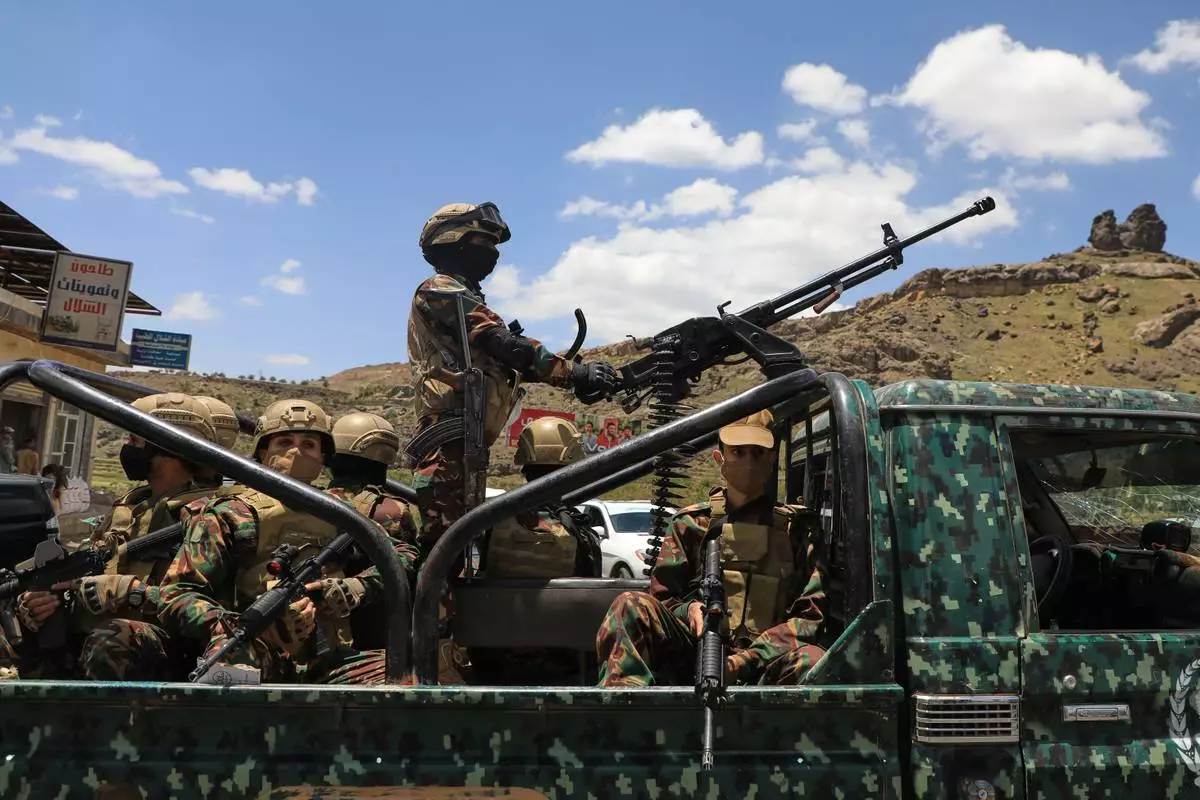
Houthi fighters escort a convoy carrying prisoners freed in Mokha through the Bani Matar district on its way to Sanaa, Yemen, Saturday, Sept. 12, 2026, following the Houthi takeover of the southern Red Sea port city. (AP Photo/STR)
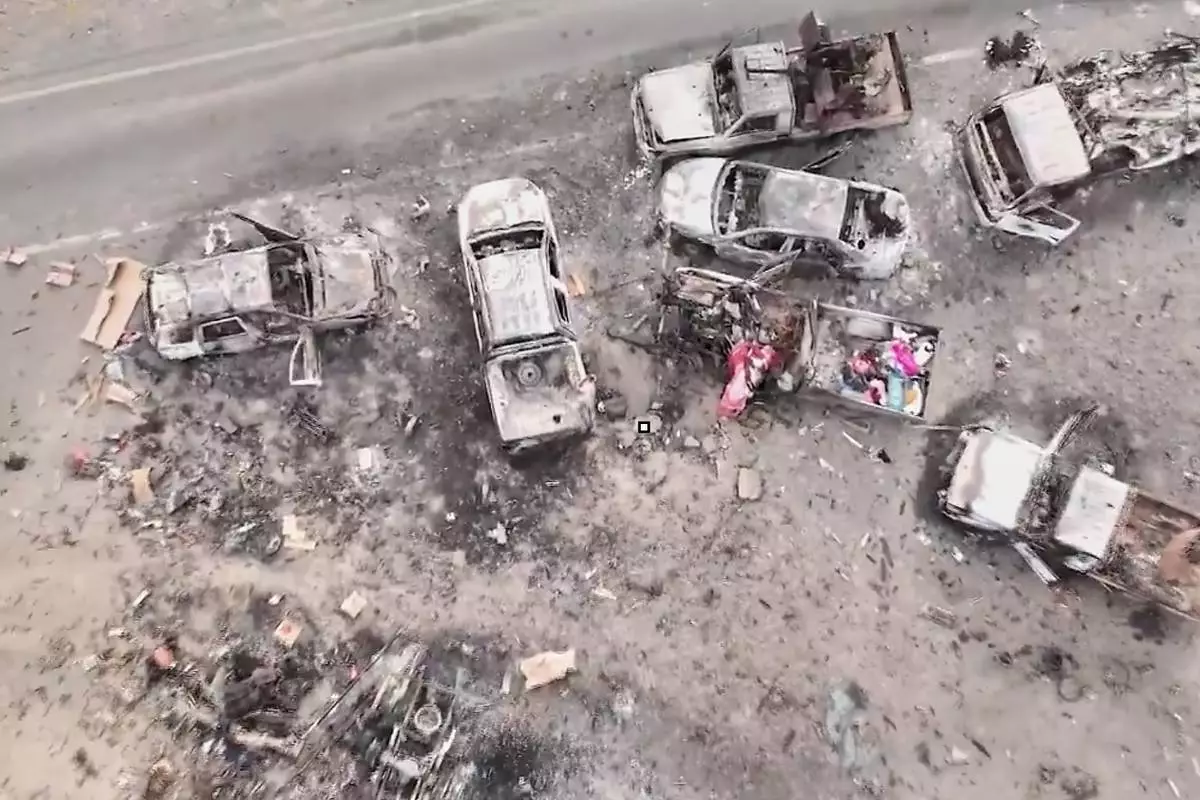
This image taken from undated video released by the Houthi-run Al-Masirah television channel on Saturday, Sept. 12, 2026, shows damaged vehicles on a road between the Dhubab and Amri junctions in Yemen, according to the channel. (Al-Masirah TV via AP)
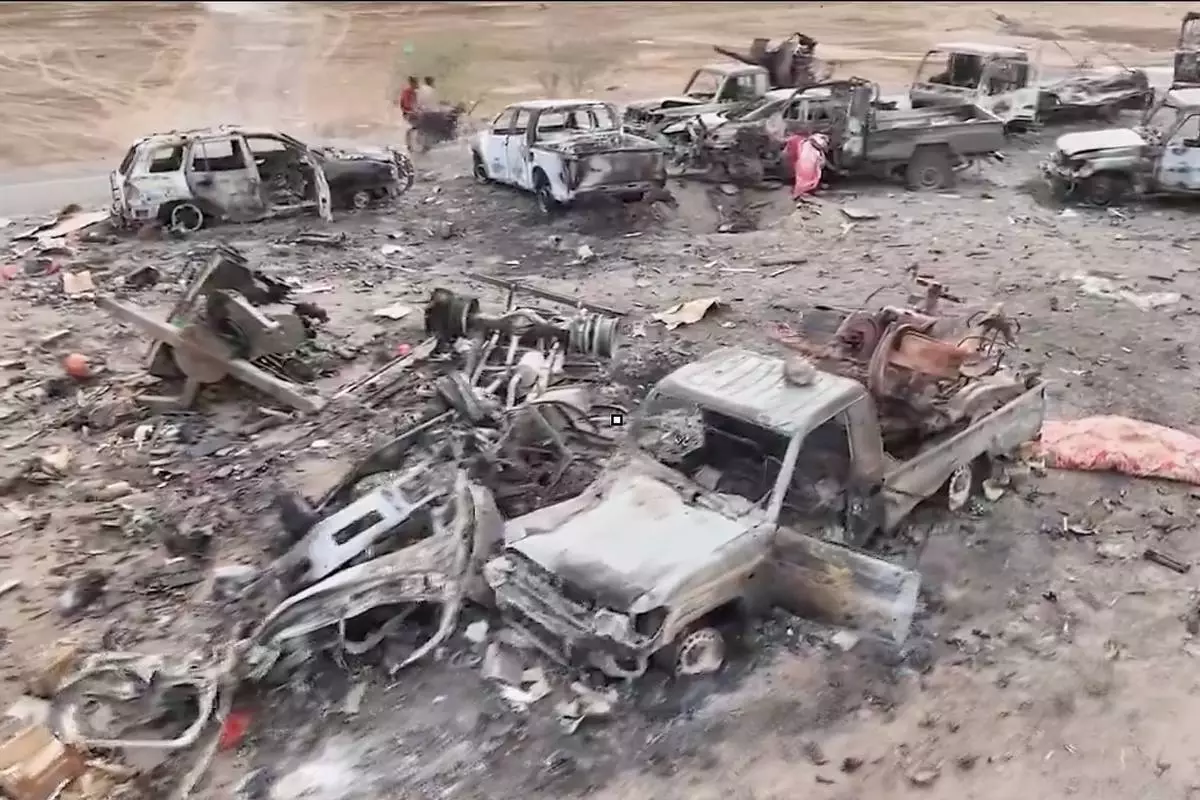
This image taken from undated video released by the Houthi-run Al-Masirah television channel on Saturday, Sept. 12, 2026, shows damaged vehicles on a road between the Dhubab and Amri junctions in Yemen, according to the channel. (Al-Masirah TV via AP)
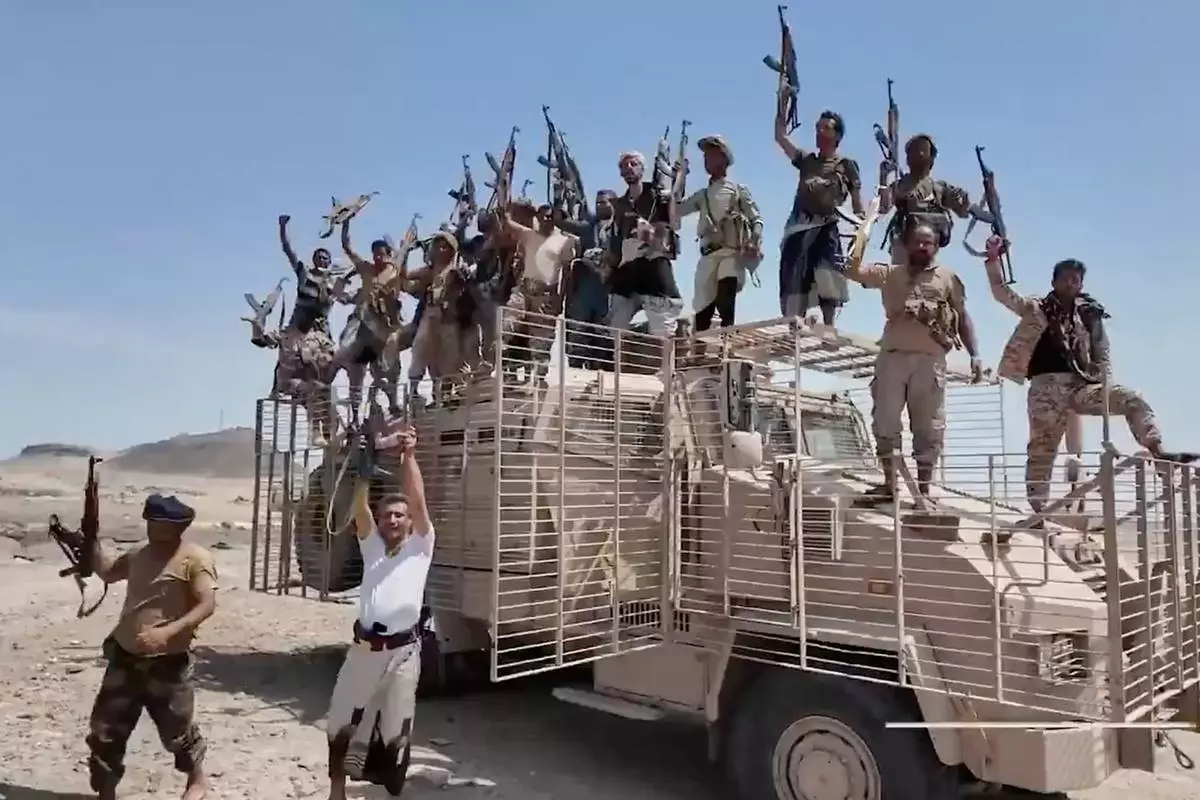
This image taken from undated video released by the Houthi-run Al-Masirah television channel on Saturday, Sept. 12, 2026, shows Houthi fighters chanting and raising rifles atop a military vehicle in Dhubab district, Taiz province, Yemen, according to the channel. (Al-Masirah TV via AP)
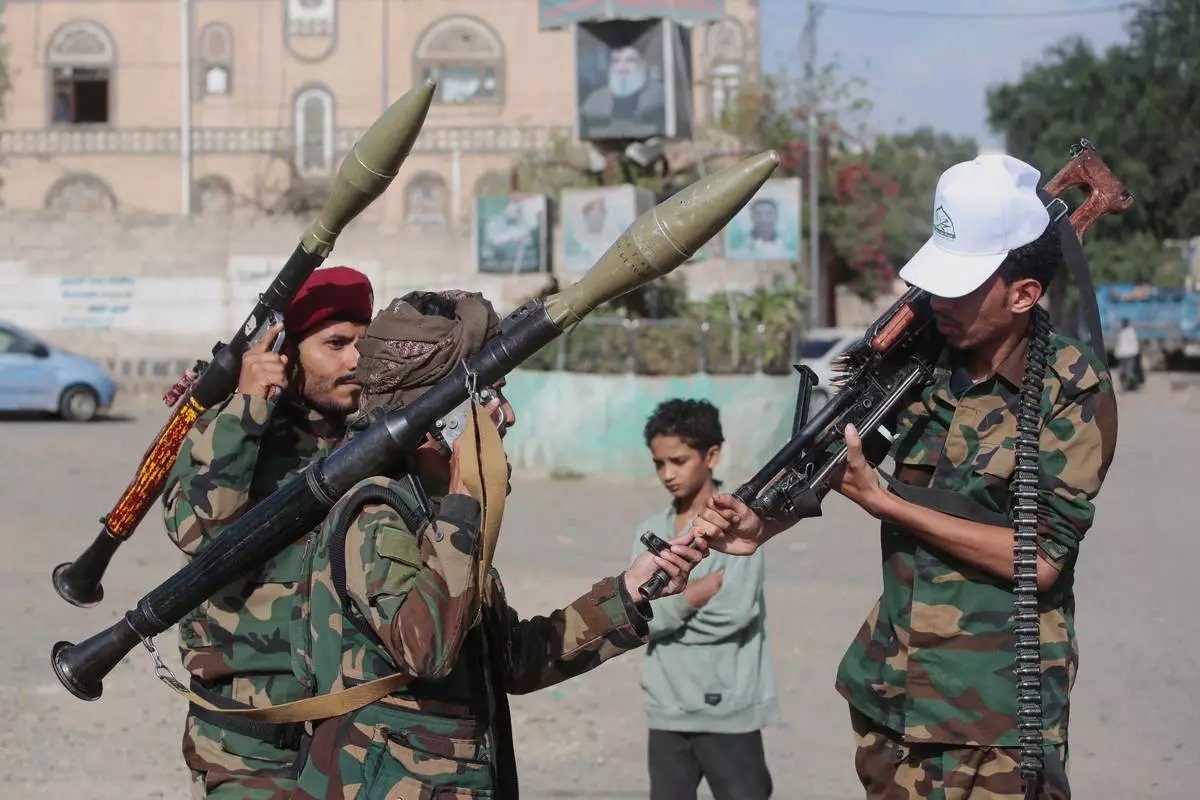
Yemen's Houthi rebels chat as they check their weapons during a mobilization campaign in Sanaa, Yemen, Thursday, Sept. 10, 2026. (AP Photo)
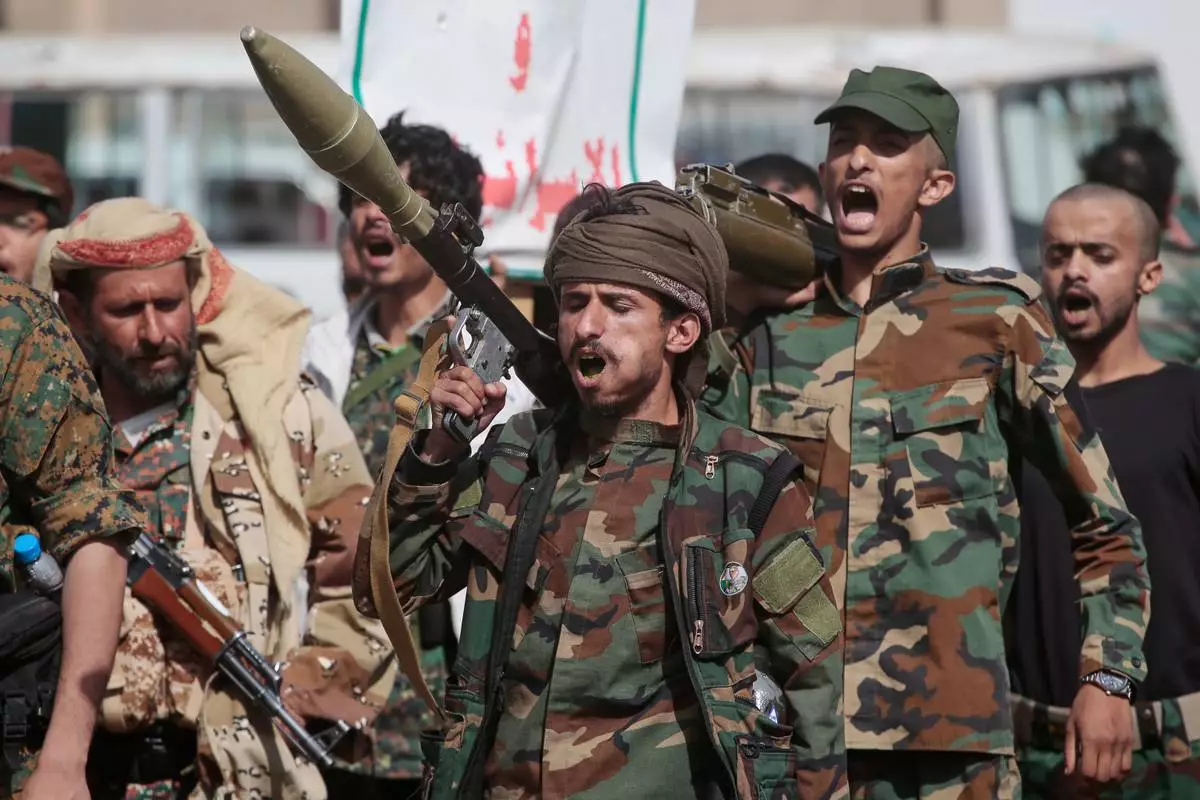
Yemen's Houthi rebels march during a mobilization campaign in Sanaa, Yemen, Thursday, Sept. 10, 2026. (AP Photo)