Skip to Content Facebook Feature Image

Afghanistan still bears scars of U.S.-led invasion 25 years on after 9/11

China

China

China

Afghanistan still bears scars of U.S.-led invasion 25 years on after 9/11

2026-09-12 19:37 Last Updated At:23:47

Twenty-five years after the September 11 attacks, Afghanistan remains a country defined by the consequences of that day -- and by the U.S.-led invasion that followed, which plunged the nation into two decades of war, foreign intervention and repeated shifts in government.

The U.S.-led military coalition invaded Afghanistan on charges of harboring Osama bin Laden, the then leader of the al-Qaida network. On Sept. 11, 2001, al-Qaida militants had hijacked four airplanes and carried out suicide attacks against targets in the United States. Two of the planes were flown into the twin towers of the World Trade Center in New York City, a third hit the Pentagon and the fourth crashed in a field in Shanksville, Pennsylvania. Almost 3,000 people were killed.

What followed was a war that would reshape Afghanistan for a generation. In the two decades after the invasion, the country endured a U.S.-led military operation that left it in turmoil, with stability only briefly restored under foreign intervention. After the U.S. and NATO withdrawal in mid-2021, the situation has not stabilized.

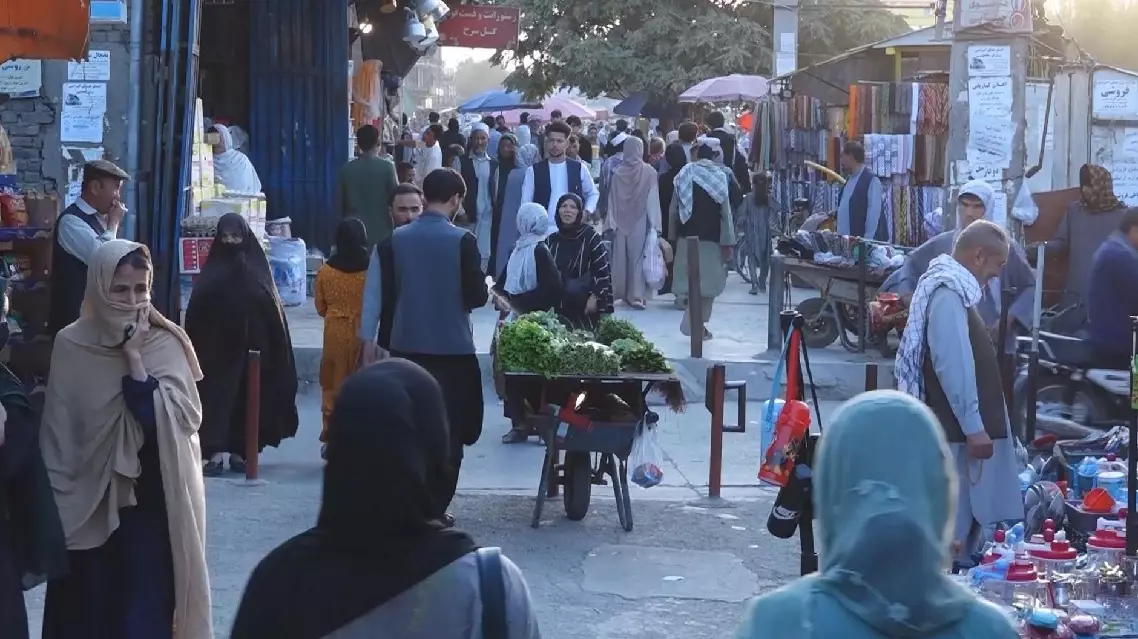
Nowhere is that unresolved legacy more visible than in the western Kabul district of Dasht-e-Barchi, home to a large Hazara community, which has grown from a small suburb into a densely populated area of more than one million people.

Diljam Manan, a resident who moved to Kabul in the 1970s, is one of six brothers in the family now running a business in the city. He remembers the night Kabul was shaken by the first U.S. bombs. "We heard bombs and explosions, and knew something major was about to happen in Afghanistan. For the first time, Television Hill was hit. The blast was incredibly loud and powerful. That is what I remember most," he said.

Hazara communities continue to face religious discrimination and insecurity in their everyday lives.

"Sometimes, I feel terrified that the relative calm our people enjoy under the current government may erode in the future. This is the only fear that troubles me most," said Diljam Manan Qasemi. A generation that has known Afghanistan only in the aftermath of 9/11 is now confronting a new reality. Young Afghans, including many in Dasht-e-Barchi, see the exclusion of the country's younger generation from education as an issue with profound implications for the country's future.

"The girls we see in Dasht-e-Barchi cannot go to school or universities, or work with peace of mind. If they have no supporter like a brother or father, they have to work on their own -- and that, for me, is the most painful part," said Mustafa Qasemi, a young member of the Qasemi family.
Afghanistan still bears scars of U.S.-led invasion 25 years on after 9/11
Afghanistan still bears scars of U.S.-led invasion 25 years on after 9/11

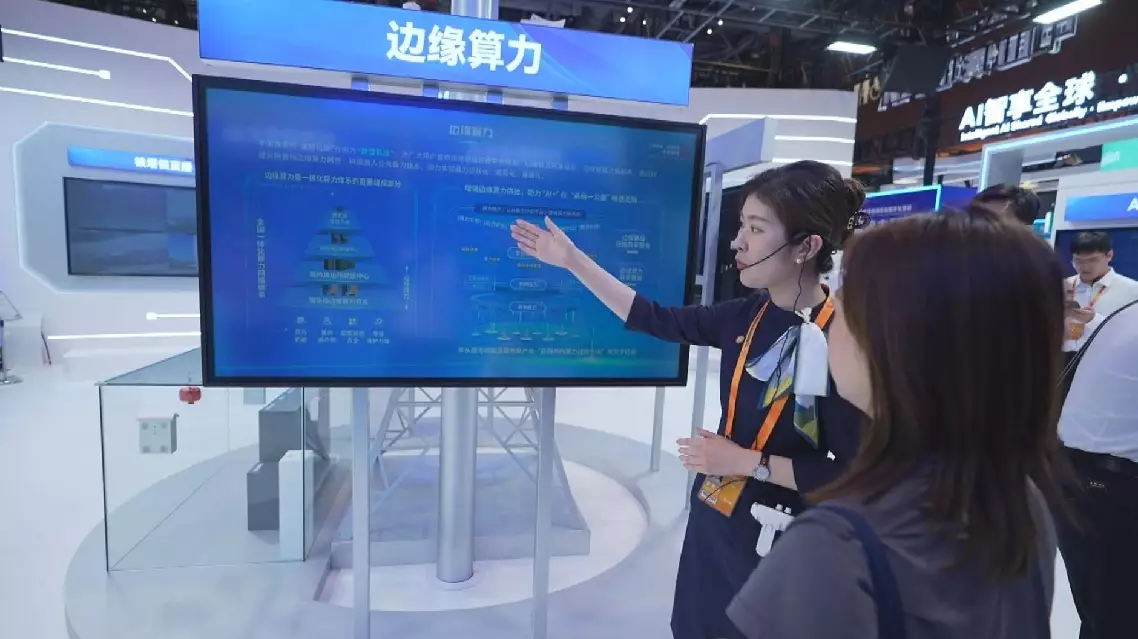
Computing power services are gaining momentum as artificial intelligence (AI) technology evolves, opening new avenues for the development of trade in services and becoming a highlight of the ongoing 2026 China International Fair for Trade in Services (CIFTIS) in Beijing.

The five-day CIFTIS opened on Wednesday, drawing participants from 90 countries, regions and international organizations, with over 1,800 companies showcasing their service products on-site.

Exhibitors at the 2026 Thematic Exhibition: Telecommunications, Computers and Information Services are shifting their focus from traditional communication offerings to integrated services combining computing power and AI.

"Currently, we operate over 2 million base stations, and each base station has a supporting communication machine room. We have integrated computing facilities into these machine rooms, upgrading them into data centers that can provide localized, distributed computing services. This enables real-time computing support for applications such as AI-powered forest fire prevention, disaster mitigation, and water quality monitoring in local areas," said Qiao Zhi, a staff member of China Tower Beijing Branch.

Beyond these application services, China's industry chain leaders are showcasing a broad array of innovative solutions at the upstream segment, including chip design, testing, verification, and technical licensing. Chinese service providers are offering tailored solutions for a diverse range of regions and markets.

"For example, European and American clients tend to prefer large-model, high-performance chips, while clients from the Middle East and Southeast Asia focus more on edge-side AI chips, mainly to assist their smart city projects and robotics initiatives. Chinese enterprises can meet the customized demands of different regions, different customers and different scenarios," said Wang Wenqian, head of research and development of the Joinsilicon, which provides customized products and solutions for the semiconductor industry.

Services that can be digitally delivered, including those related to computing power, are becoming an important engine driving the growth of services trade. According to China's Trade in Services Development Index Report 2026 released at the CIFTIS, the share of digitally deliverable services in global services exports rose to 57.9 percent in 2025.

Computing power services emerge as new growth driver for trade in services

Computing power services emerge as new growth driver for trade in services

Recommended Articles