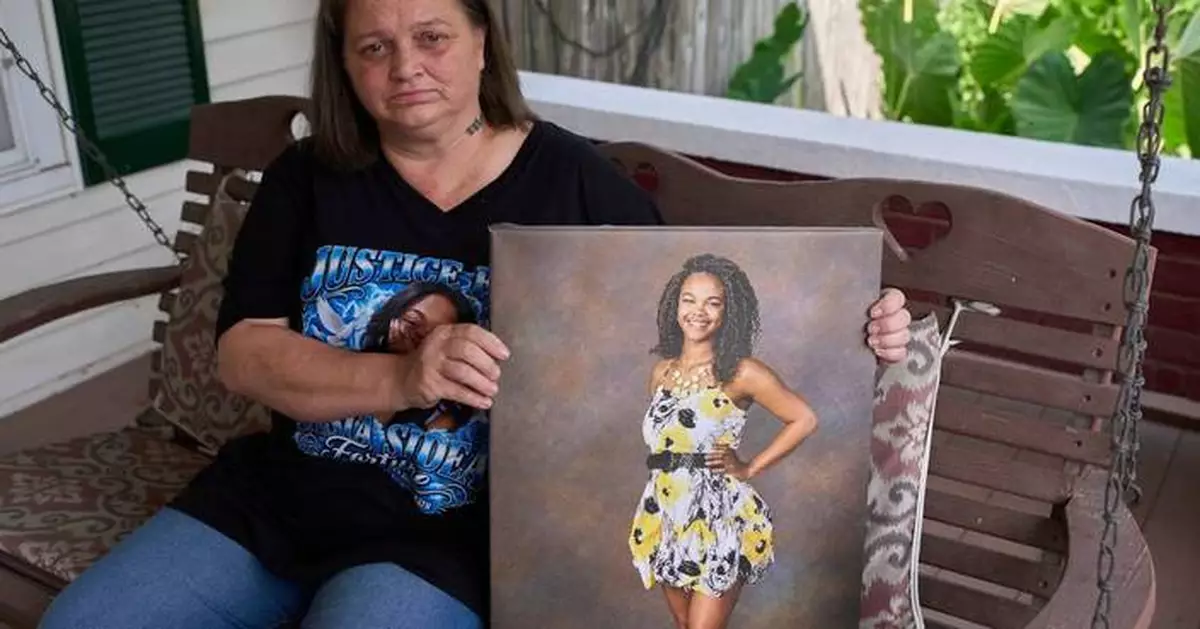
Mississippi police said Saturday they were still investigating the death of Tasia Fortune, a Black woman found hanging from a tree last month, a day after a man was arrested in connection with the killing.
Loved ones also painted a picture of Fortune as a mother, athlete and woman of faith who they hoped would not solely be remembered for her horrific death.
Additional arrests are expected in the case, Jackson Police Chief RaShall Brackney said Friday. Police sought and arrested 51-year-old Jarques Ratliff, who is Black, when they encountered him walking on the street, authorities said. Ratliff should appear in Jackson Municipal Court no later than Monday morning, said André de Gruy, Mississippi’s state defender.
Brackney said Ratliff had an “association” with Fortune but would not elaborate on their relationship. She called Ratliff's arrest on a murder charge "an important development” in the investigation.
“But it is not the conclusion. This case remains active, and additional arrests will be pending as our investigators continue to follow the evidence wherever it leads,” Brackney said Friday. “We understand that this case has received media attention from across the globe, and across this community.”
The state medical examiner’s office determined Thursday evening that the death was a homicide, Brackney said, allowing police to execute the warrants they already had on hand.
Police did not respond to calls and messages from The Associated Press on Saturday about potential updates to the investigation beyond confirming it was still going on.
Ratliff was charged with murder, Hinds County jail records stated Saturday. The jail report stated that Ratliff was a resident of Jackson and contained little other information.
It couldn’t immediately be determined if he had a lawyer, and a message was left for the public defender's office. If represented by a public defender, it would be the Hinds County public defender, de Gruy said.
Christy Spivey, Fortune’s mother, said Friday after police told her of the arrest that “I just started crying and told them ‘thank you, thank you, thank you.’”
Spivey said police did not share a motive or whether DNA led them to the arrest. Spivey said she did not know the man who had been arrested, but she was asking her daughter's friends if they knew him. Spivey described the family as “in disbelief” and “shock.”
“We still don’t have a lot of answers,” Spivey said.
Police discovered Fortune’s body hanging in the backyard of an abandoned home in Jackson on Aug. 3.
Spivey said she was certain that her daughter, 29, would not have killed herself.
“Absolutely not. Even if she could climb that tree, no, no, she would never, ever, ever,” Spivey said.
An obituary about Fortune posted on the website of Tucker Funeral Home in Central City, Kentucky, in August stated that Fortune's “path was not always easy, and there were highs and lows.” It also stated that she skipped her junior year of high school, was a star cross-country runner, and had a strong faith in God. Services were held last month in Kentucky.
“She leaves behind a powerful legacy of resilience, rooted deeply in her unwavering faith. Even in her darkest hours, she never stopped believing in her Savior,” the obituary stated.
Fortune was also the mother of four children, but she rarely saw two of them, Spivey said. The last time Spivey saw her daughter was in late July for a planned family reunion in Kentucky that was canceled, but her daughter came to see her anyway.
“When she was there, there was this pull, like a spiritual pull to her. I needed her. I guess God knew that was going to be it,” Spivey said.
Spivey said she and Fortune's father faced racism and violence as a mixed-race couple in Crittenden County, Kentucky, before Fortune was born.
Fortune was taken from her parents and placed in foster care as a child. During her high school years, she moved around among group homes and eventually ran away to Mississippi. The obituary stated that she had lived in Jackson for 10 years.
Spivey wasn’t sure where Fortune was living at the time of her death but said her daughter had been struggling with homelessness in recent years. Fortune had two sisters and was close with them. The father of one of her children was verbally and physically abusive to Fortune, Spivey said.
Before she died, Fortune had talked about starting a cleaning business and was trying to get her life in order.
“Say her name. Keep it going,” Spivey said. “Because I’m not going to stop until I get answers.”
Associated Press writer Josh Kelety contributed to this report.
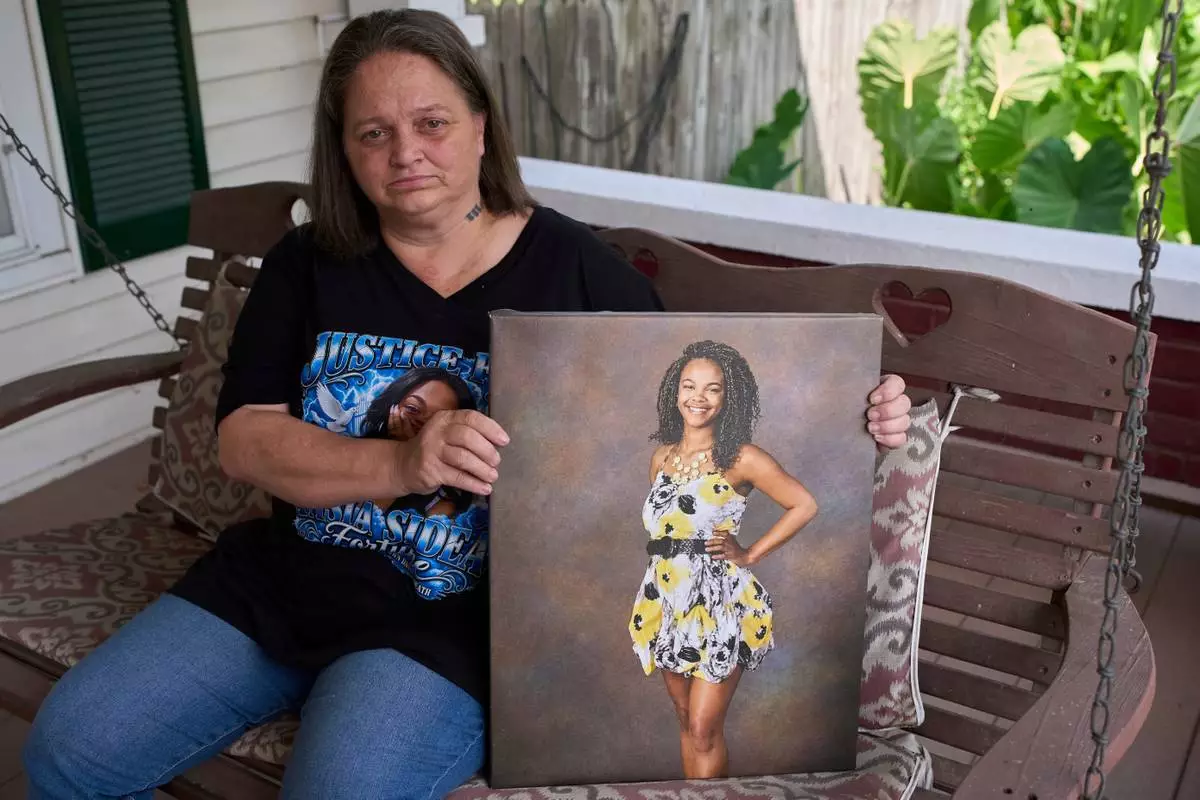
Christy Spivey poses with a portrait of her late daughter Tasia Fortune, Tuesday, Sept. 8, 2026, in Marion, Ky. (AP Photo/George Walker IV)
A lightning advance by Houthi rebels threatens a crucial Red Sea shipping route. Drone attacks blamed on Iraqi militias have forced the closure of a major pipeline, and Iran is still disrupting the Strait of Hormuz.
It's a nightmare scenario for Saudi Arabia, and it has sent jitters through global markets.
The Saudis' most essential ally, the United States, has been unpredictable and sometimes unreliable. U.S. President Donald Trump seems reluctant to widen an already unpopular and stalemated Mideast war ahead of congressional elections. For Iran, the rebels' advance and closure of the pipeline ramp up global economic pressure as its grip over the Strait of Hormuz has been loosened.
Michael Ratney, a former U.S. ambassador to Saudi Arabia, said the latest developments are “incredibly frustrating” for the kingdom.
“Despite their antipathy for the Iranians, this is a war they had never asked for, they had great trepidation about. And once it started, all of their … worst-case scenarios started coming true.”
The Saudi government did not respond to a request for comment. But a Saudi official, who was not authorized to brief media and spoke on condition of anonymity, said the kingdom would defend itself and work with partners, including the United States, to ensure freedom of navigation in the Red Sea.
Saudi Arabia's crown prince and de facto ruler, Mohammed bin Salman, has spent years trying to build a very different Middle East, with wide-ranging social and economic changes aimed at transforming the ultra-conservative kingdom into a global business hub in a more prosperous and integrated region.
Those efforts suffered major setbacks after Hamas' Oct. 7, 2023 attack on Israel, which triggered one war after another. When the U.S. and Israel attacked Iran on Feb. 28, it responded with missile and drone attacks on Saudi Arabia and other Gulf states, and effectively shut down the Strait of Hormuz, bottling up their oil and gas exports and jolting the world economy.
Saudi Arabia escaped some of the worst effects by piping its oil across the Arabian Peninsula to the Red Sea, where it could be exported to Europe via Egypt's SUMED pipeline and the Suez Canal, or to Asia via a route running through the Bab el-Mandeb Strait, and toward the Indian Ocean.
But tensions reignited with the Houthis in July, leading the rebels to declare a blockade of Saudi shipping and resume large-scale attacks for the first time in four years.
Over the last two days, the Houthis have seized the port city of Mokha and a Red Sea island from Saudi-backed Yemeni government forces, enhancing the rebels' ability to block Saudi shipments through the Bab el-Mandeb.
On Friday, Saudi Arabia said it shut down the pipeline leading from major oil fields in the east to the Red Sea in the west because of drone attacks originating in Iraq, where Iran supports powerful militias. Regional officials recently told The Associated Press that the Houthis have helped the Iraqi militias carry out attacks.
Houthi attacks have already caused a plunge in Saudi oil exports to Asia, from around 3.4 million barrels a day in June to just 128,000 in August, though they had recovered somewhat this month to 700,000, according to figures compiled by Kpler, a global trade monitor.
Saudi Arabia fought against the Houthis for years beginning in 2015, but its allies made little progress on the ground. The conflict killed an estimated 150,000 people and at times pushed Yemen to the brink of famine before a 2022 ceasefire.
“Saudi Arabia has spent several years trying to move beyond the Yemen conflict and focus on economic transformation and regional stability,” said Neil Quilliam, a Middle East expert at Chatham House.
“Recent Houthi gains increase pressure on Riyadh to respond, but every available option carries significant costs and uncertain outcomes.”
The Saudis could step up their military response and try to dislodge the Houthis, but that would prolong the conflict and lead to even heavier Houthi attacks on Saudi energy infrastructure, said Sherwan Hindreen Ali, Middle East research manager at ACLED, a conflict monitoring group.
“The kingdom already faced this in the past, but Houthi weaponry is more sophisticated now than it was back then, and the Saudis likely have less interceptor missiles available as a result of the U.S.-Iran conflict,” he said.
The Saudis could also seek a diplomatic solution with either the Houthis or their patrons in Tehran.
But the Houthis have demanded the lifting of a Saudi-led blockade, which would allow them to grow much stronger over the long term, and Iran has little interest in stabilizing the region without securing major U.S. concessions.
For decades, Saudi Arabia and other Gulf states have relied on U.S. security guarantees. Those have eroded under Trump, who did not respond during his first term when a 2019 attack claimed by the Houthis temporarily knocked out half of Saudi Arabia's oil supply.
In February, the U.S. joined Israel in attacking Iran without consulting its Gulf allies, and since then it has struggled to defend them from Iranian attacks.
The U.S. carried out airstrikes against the Houthis in January 2024 under the Biden administration. Trump launched an air campaign against the rebels last year in response to earlier attacks on Red Sea shipping linked to the war in Gaza.
But this time, U.S. forces are heavily deployed around the Strait of Hormuz, where they are blockading Iran and trying to prevent attacks on shipping there.
The fighting has visibly strained the U.S. military and drawn down supplies of sophisticated interceptors.
The war is also deeply unpopular and has eroded Trump's support after he had promised to keep the U.S. out of Mideast wars. Launching another military campaign in Yemen could compound the struggles of fellow Republicans in tight House and Senate races.
Trump on Saturday said that Iran was “probably” behind the Saudi pipeline attack. Asked about a recent call with Saudi Arabia’s crown prince, he said: “He’s a good friend of mine, and I can just say everything’s going to work out fine and dandy.”
The White House did not respond to a request for comment on whether it plans to intervene in Yemen.
Speaking more broadly about the war with Iran on Thursday, Trump shrugged aside the idea of increasing military pressure, as some U.S. hawks have suggested. “Maybe I don’t do that because of the election,” he told Fox News’ “The Ingraham Angle.”
Ratney, the former U.S. ambassador, said it would be difficult for the Saudis to achieve their objectives without consistent U.S. support, which they had at previous times while fighting the Houthis.
“My understanding at this point is the White House is not enthusiastic about getting involved,” he said.
Associated Press writers Aamer Madhani in Washington and Jill Lawless and Darlene Superville in Dublin contributed.
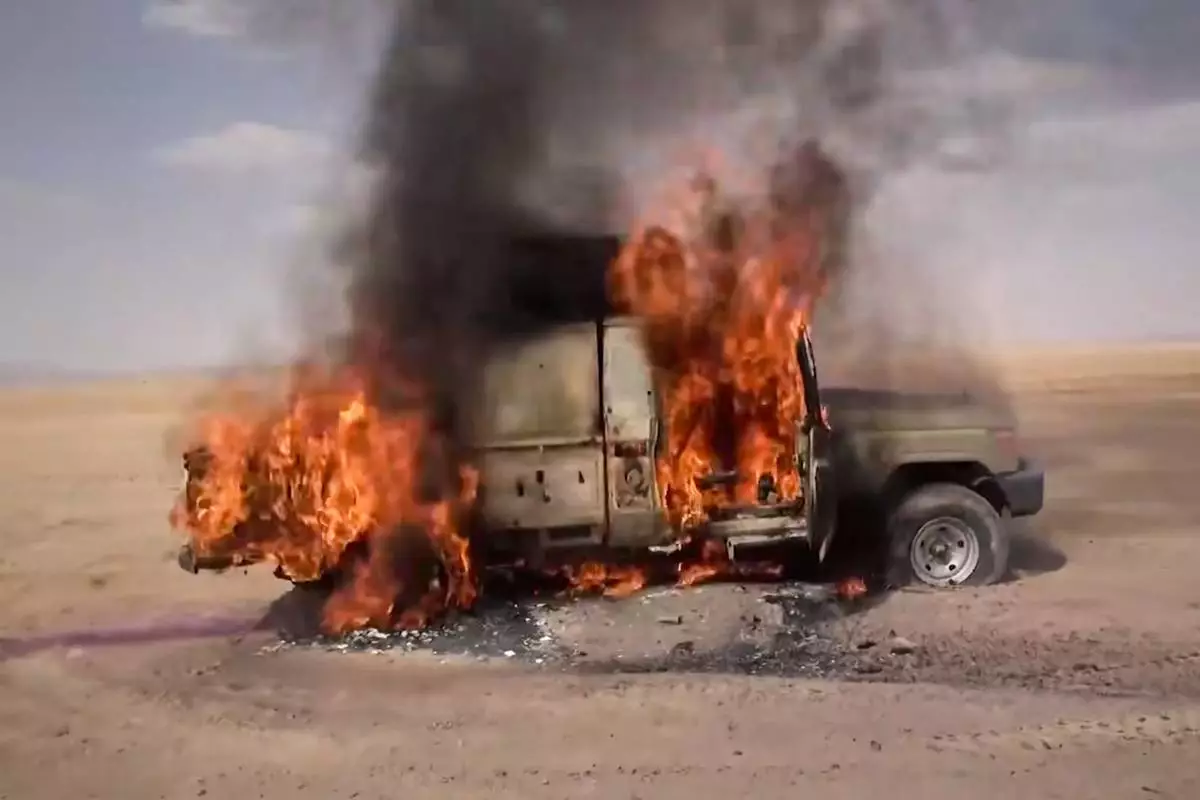
This image taken from undated video released by the Ansar Allah Media Office, the media arm of Yemen's Houthi rebels, on Wednesday, Sept. 9, 2026, shows a pickup truck burning following what the Houthis described as an attack on Saudi-backed forces in eastern Jawf province, Yemen. (Ansar Allah Media Office via AP)
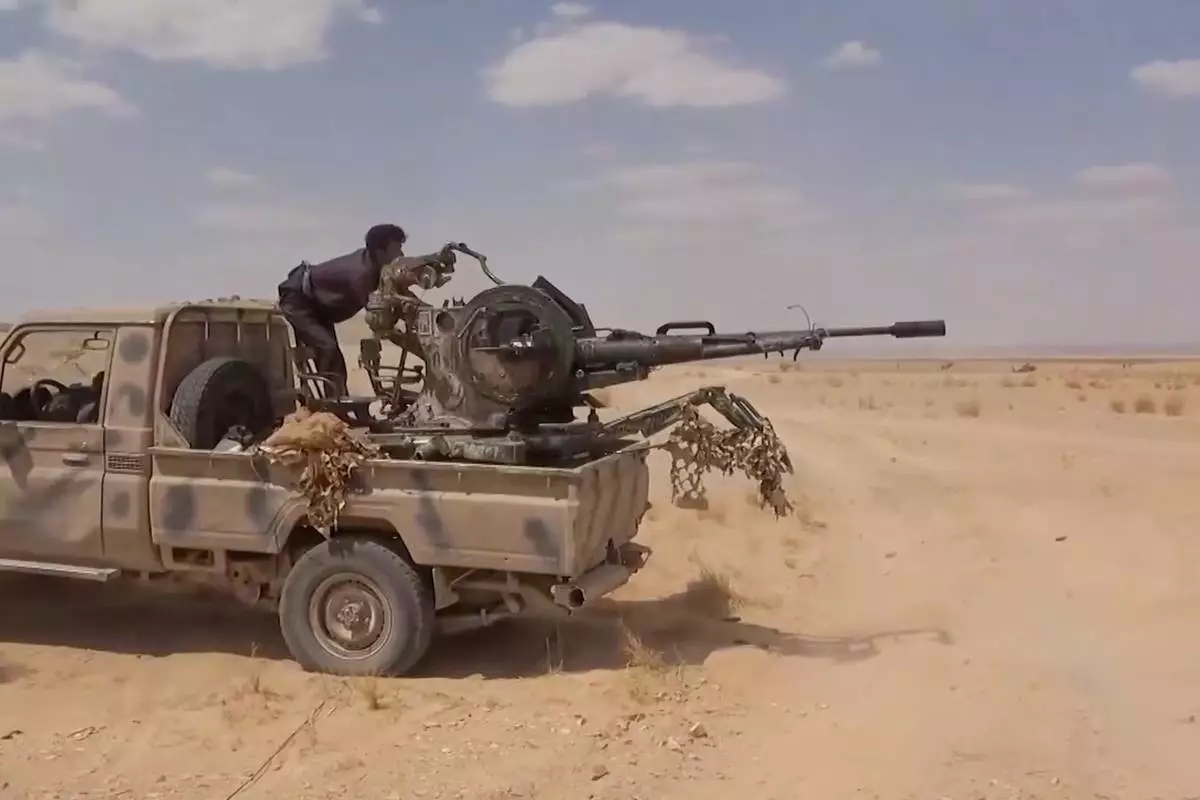
This image taken from undated video released by the Ansar Allah Media Office, the media arm of Yemen's Houthi rebels, on Wednesday, Sept. 9, 2026, shows a Houthi fighter firing a truck-mounted anti-aircraft gun during what the group said was an attack on Saudi-backed forces in eastern Jawf province, Yemen. (Ansar Allah Media Office via AP)
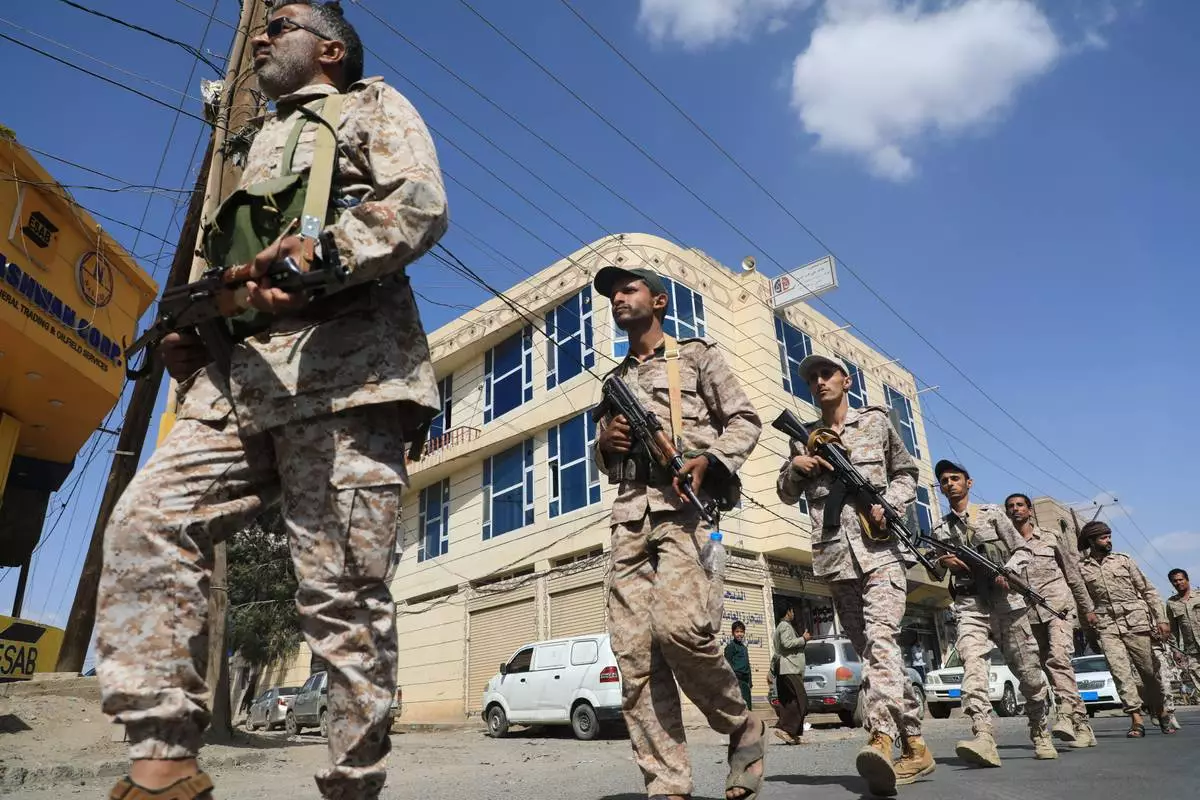
Yemen's Houthi rebels march during a mobilization campaign in Sanaa, Yemen, Thursday, Sept. 10, 2026. (AP Photo)
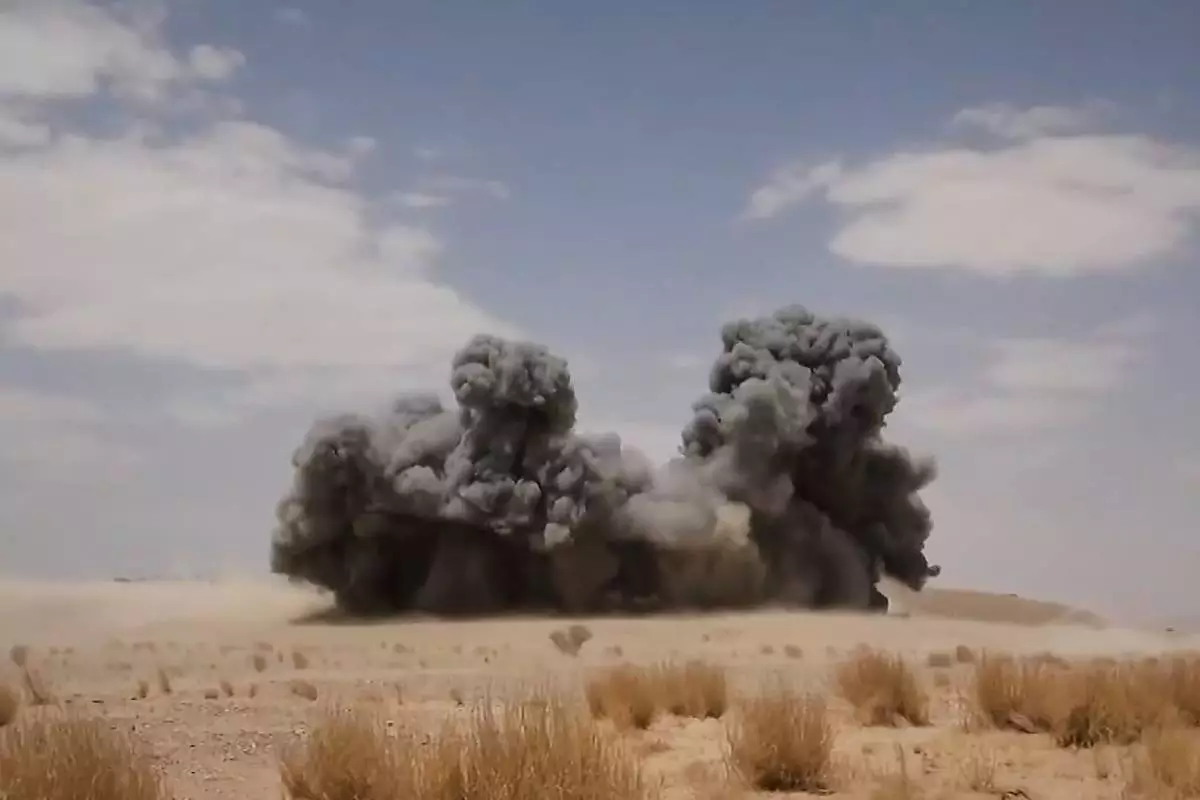
This image taken from undated video released by the Ansar Allah Media Office, the media arm of Yemen's Houthi rebels, on Wednesday, Sept. 9, 2026, shows a smoke from a wide explosion following what the Houthis described as an attack on Saudi-backed forces in eastern Jawf province, Yemen. (Ansar Allah Media Office via AP)