ANCHORAGE, Alaska (AP) — Alaska prosecutors are dropping voter misconduct cases against a group of residents born in American Samo a after a state appeals court threw out felony charges against a woman who wrongly checked a box saying she was a U.S. citizen.
The state’s Department of Law announced the decision Friday, after a three-judge Court of Appeals panel ruled a week earlier that state law requires proof that defendants who erroneously filled out voter registration forms had a “consciousness of wrongdoing” and intended to break the law.
The panel found flaws with a state trooper’s questioning of Tupe Smith, the woman involved in the case that was thrown out, as well as with the grand jury process that led to her indictment. It overturned a lower court’s decision that had kept the charges against her alive.
Acting Alaska Attorney General Cori Mills said in a statement that after reviewing the decision and applying the facts, prosecutors concluded that they could not prove cases against Smith and the other s beyond a reasonable doubt. Her husband, Michael Pese, had also been charged.
“We respect the role of the courts in interpreting Alaska law and will faithfully execute our duty to apply the law and carefully evaluate our prosecutorial decisions,” Mills said.
In a statement last week, Smith’s lawyer Whitney Brown heralded the Court of Appeals decision, saying it “establishes an important safeguard against imposing felony liability for an honest mistake.”
The court “made clear that Alaska law requires more than simply showing that a statement was false — the State must prove a person acted with a consciousness of wrongdoing,” Brown said. “That distinction makes a world of difference to Ms. Smith and helps ensure that Alaska’s voter-misconduct statute is applied as the legislature intended going forward.”
In all, 11 people from the small community of Whittier, about 50 miles (820 kilometers) southeast of Anchorage, were charged with falsely claiming U.S. citizenship either when registering or trying to vote. Messages seeking comment were left for their lawyers.
American Samoa is the only U.S. territory where residents are not automatically granted citizenship by being born on American soil and instead are considered U.S. nationals. Paths to citizenship exist, such as naturalization, though that process can be expensive and cumbersome.
American Samoans can serve in the military, obtain U.S. passports and vote in elections in American Samoa, but they cannot hold public office in the U.S. or participate in most U.S. elections.
Smith was arrested after winning election to a regional school board in 2023. She has said she relied on erroneous information from election officials in Whittier when she identified herself as a U.S. citizen on voter registration forms.
Smith said she marks herself as a U.S. national on paperwork. But when there was no such option on voter registration forms, she was told by city representatives that it was appropriate to mark herself as a citizen, according to court papers.
Prosecutors contended that Smith falsely and deliberately claimed citizenship, pointing to warnings on voter registration forms she filled out in 2020 and 2022 that noncitizens “are not eligible to vote.”
The Court of Appeals panel said in its ruling that toward the end of a police interview, a state trooper asked Smith “a long compound question that implied that Smith actually knew she was not eligible to vote” but wanted to be involved in the school board.
When Smith, whose native language is not English, did not respond right away, another state trooper clarified, “He’s asking you,” and the first trooper again presented his question, which the panel describe as “a lengthy and complex statement containing four individual questions.”
Smith answered “Yes,” the panel said, leading to her arrest and indictment on two counts of felony voter misconduct.
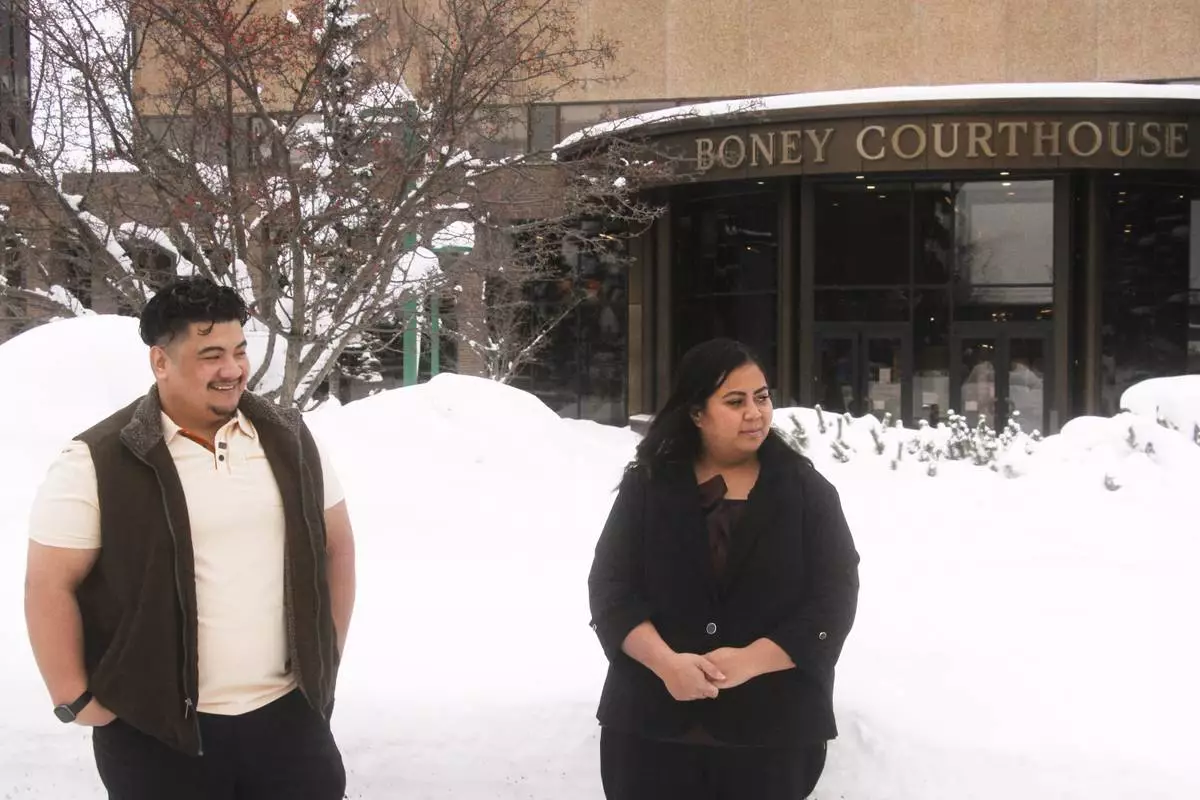
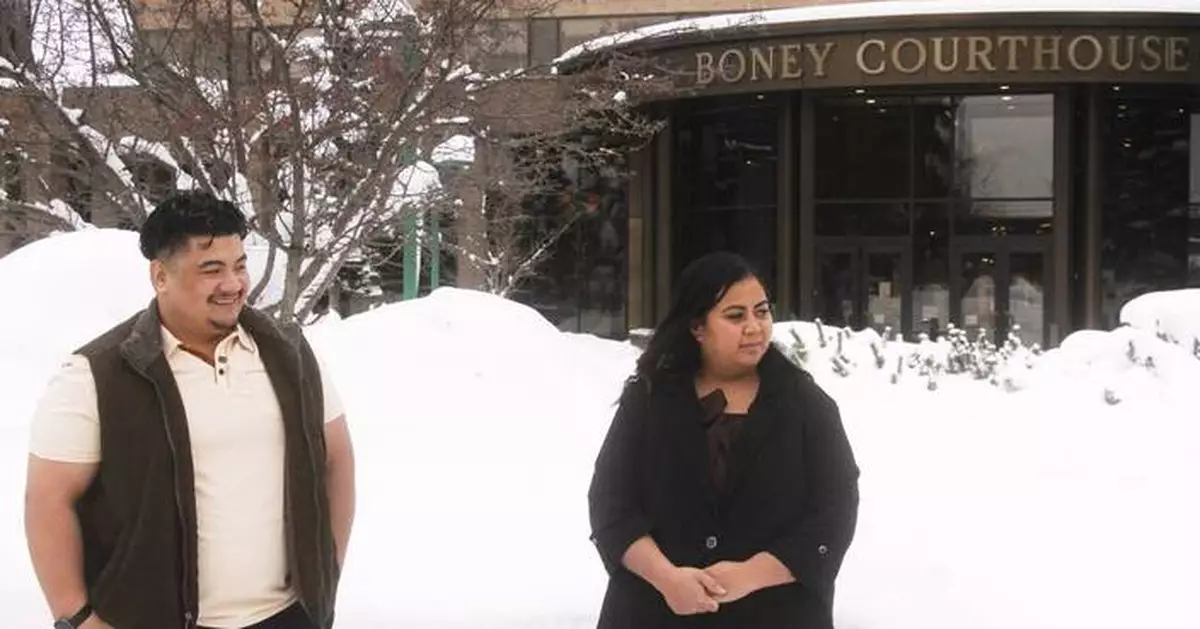
FILE - Michael Pese and his wife Tupe Smith stand outside the Boney Courthouse in Anchorage, Alaska, on Jan. 15, 2026. (AP Photo/Mark Thiessen, File)
Iraq said attacks on a key Saudi oil pipeline were launched from its territory, as U.S. President Donald Trump appeared to blame Iran.
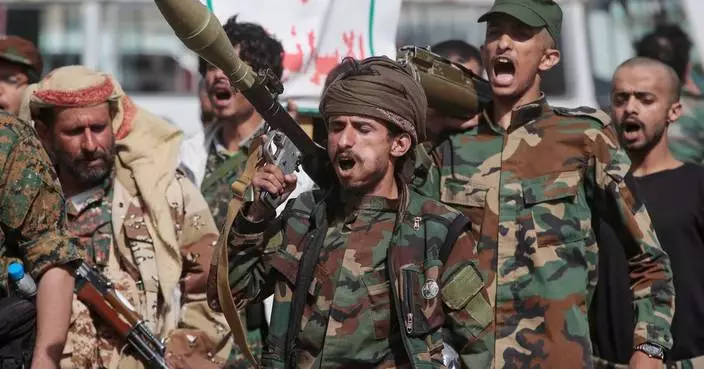
Meanwhile, the number of displaced people in Yemen is rising quickly after a swift advance by Iran-backed Houthi rebels threatens a key alternative to the Strait of Hormuz, the Bab el-Mandeb. And Lebanon and Israel will hold new direct talks next month.
Here’s a look at the latest news in the Middle East. Full coverage can be found here.
Asked if he thought Iran was behind the attack that closed the East-West pipeline, Trump told reporters: “Well, I think they are. Probably they are.”
Trump said his administration has “had discussions” with the Houthis, though he did not say when. “The Houthis called us, and they don’t want to fight with us,” he said. “They would much prefer not having us involved, and they’re letting most ships go through.” The Houthis have said they are only targeting neighboring Saudi Arabia's shipping.
Asked about a recent call with Saudi’s crown prince, Trump said: “He’s a good friend of mine, and I can just say everything’s going to work out fine and dandy. It’s going to be very good.”
Thousands of people have fled the Houthis' advance. In Aden, held by Yemen's Saudi-backed internationally recognized government, residents have opened their homes. In one, dozens of men lay on a floor carpeted with thin mattresses and sheets.
“We set out in hysterical panic on a motorcycle, not knowing where we were heading,” said Alaa Ali Salem, who fled from al-Khawkha district. “The roads suddenly became extremely congested, and while I was driving, the motorcycle overturned. My wife, my children and I were all injured.”
The International Organization for Migration said at least 76,000 people have fled since July as fighting escalates between the Houthis and government forces, up from 46,000 just days earlier. Some fear a return to the civil war that killed 150,000 before a 2022 ceasefire.
“I saw the soldiers as they were withdrawing. They told us we must escape,” said a tearful Durrah Ali Hassan, who took shelter in a relative’s house. She said she was worried about the toll of the chaos on her pregnant daughter, who had been bleeding and was now in a coma at a hospital.
Lebanese and Israeli negotiators are scheduled to meet in Rome in October for U.S.-brokered talks. A planned round this month was postponed without explanation.
The U.S. State Department also said Lebanese and Israeli ambassadors to the U.S. will meet at its headquarters in Washington next week to discuss ongoing developments and the continued implementation of the framework agreement reached in June.
Lebanon and Israel have held seven rounds of talks in Washington and Rome over the past months in search of a way to calm the latest fighting between Israeli forces and the Lebanon-based Hezbollah militant group.
Lebanon’s president made a rare visit to a southern city Saturday, close to where Israel captured a strategic hill.
Iranian President Masoud Pezeshkian and Abu Dhabi Crown Prince Khaled bin Mohamed bin Zayed Al Nahyan held talks on the sidelines of the BRICS summit in New Delhi, according to a UAE government statement, signaling efforts to maintain engagement despite growing instability across the region.
Iran has sharply criticized the security partnerships some Gulf states maintain with Western powers, while the United Arab Emirates has backed efforts aimed at containing Iran’s military influence.
Prime Minister Ali al-Zaidi ordered an investigation into the operations command in Maysan province, which borders Iran, and dismissed its commander after authorities determined that the attacks on the Saudi pipeline were launched from the province, the government said.
The Saudi Foreign Ministry blamed the attacks on drones that came from Iraq and said the kingdom would not retaliate to give the Iraqi government “an opportunity to take the necessary measures.”
The East-West pipeline has been vital to Saudi Arabia’s oil exports since the Iran war disrupted shipping in the Strait of Hormuz. According to the International Energy Agency, Saudi oil exports through the Red Sea port at the pipeline’s end have more than doubled.
Regional officials have told The Associated Press that the Houthis and the Iraqi militias recently coordinated attacks on Saudi oil facilities.
A large-scale oil spill, believed to be from a tanker struck by the U.S. military, doubled in size between Wednesday and Thursday, endangering two protected areas off Oman and Iran, said Nina Noelle of Greenpeace Germany.
The tanker RIESCO was one of four attacked Tuesday in the Gulf of Oman. A fifth was destroyed in the Strait of Hormuz off Iran’s Kharg island.
The visible area of pollution measured about 400 square kilometers (154 square miles) on Thursday, Noelle said. Satellite images reviewed by The Associated Press showed the spill stretching almost 70 kilometers (43 miles) long.
The spill is located between the Musandam protected area on the Omani side, which includes one of the region’s most important seabird breeding islands. On the Iranian side is the Hara-e Roud-e Gaz Protected Area in Hormozgan province that includes mangrove forests.
“The current situation in the Strait of Hormuz, together with our experience of oil spills since the beginning of the war, unfortunately suggests that an effective response is unlikely,” Noelle said.
Israeli troops opened fire at a group of Palestinians who did not appear to be posing a threat in the occupied West Bank, wounding one man, according to video obtained by The Associated Press.
The video, shot by a witness, showed the man falling near the Palestinian village of Faqqua. At least 14 shots were fired and continued as men rushed to move the man to safety before tying a tourniquet around his leg.
Mahmoud Shahin, a resident, said the Palestinians had rushed to the area after receiving reports that Israeli settlers had arrived with sheep. He said Israeli soldiers then came and began firing in the air and toward the Palestinians.
He said the man was undergoing surgery in Jenin.
Israel’s military said the video was authentic and confirmed its forces had fired toward the Palestinians, wounding one man, and said commanders would review the incident.
Settler violence in the West Bank has surged under the ultranationalist government of Prime Minister Benjamin Netanyahu. The international community largely considers Israeli settlements to be illegal.
Syrian Energy Minister Mohammed al-Bashir told journalists in Damascus Saturday that the country is facing a crisis in oil derivatives due to the ongoing war in the region, exacerbating existing energy issues in the country that is trying to rebuild its infrastructure after 14 years of civil war.
Before the conflict began in 2011, Syria was producing 300,000 to 350,000 barrels of oil per day, a number that has now fallen to 102,000, Bashir said. The country needs about 325,000 barrels per day for its own domestic consumption and is relying on imports to make up the difference. Plans are underway to build new refineries in the east and south of the country and to expand the storage capacity of the existing Baniyas refinery on the coast, al-Bashir said.
This report will be updated throughout the day as new developments emerge.
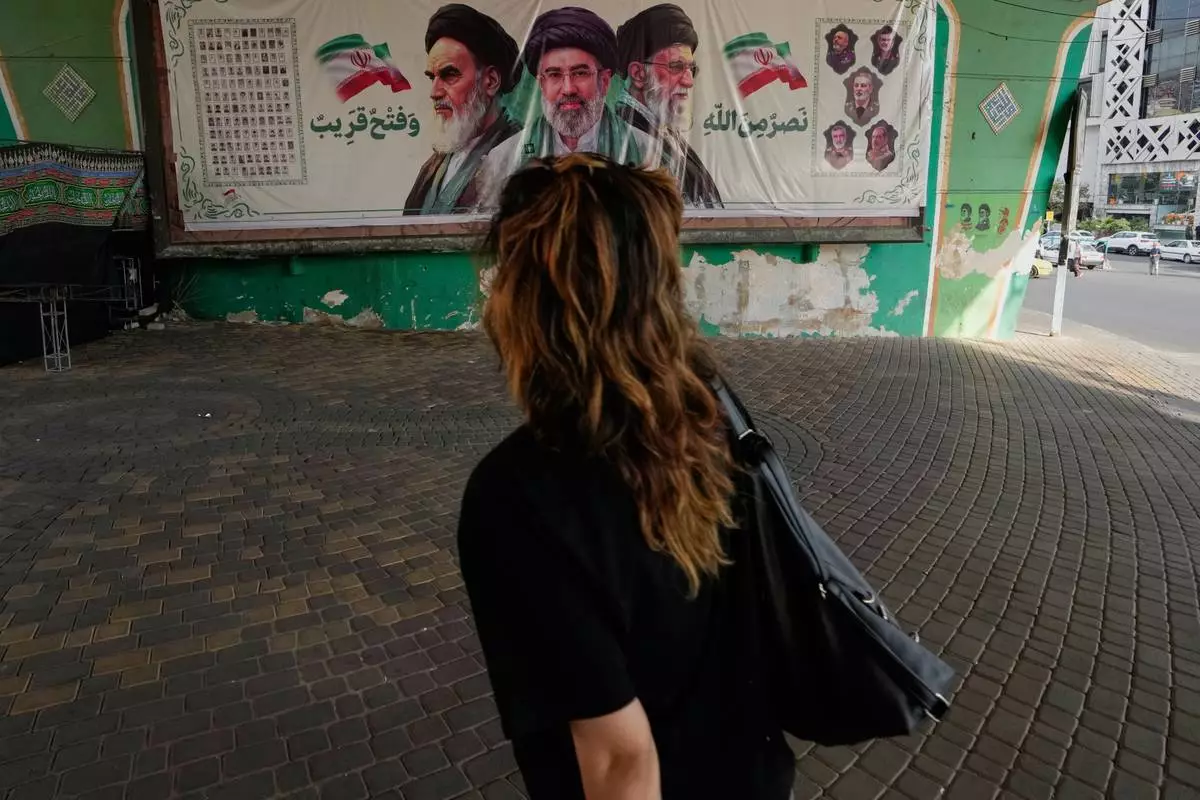
A woman walks past a banner showing portraits of the late Iranian revolutionary founder Ayatollah Khomeini, left, Supreme Leader Ayatollah Mojtaba Khamenei, center, and the late Supreme Leader Ayatollah Ali Khamenei in northern Tehran, Iran, Saturday, Sept. 12, 2026. (AP Photo/Vahid Salemi)
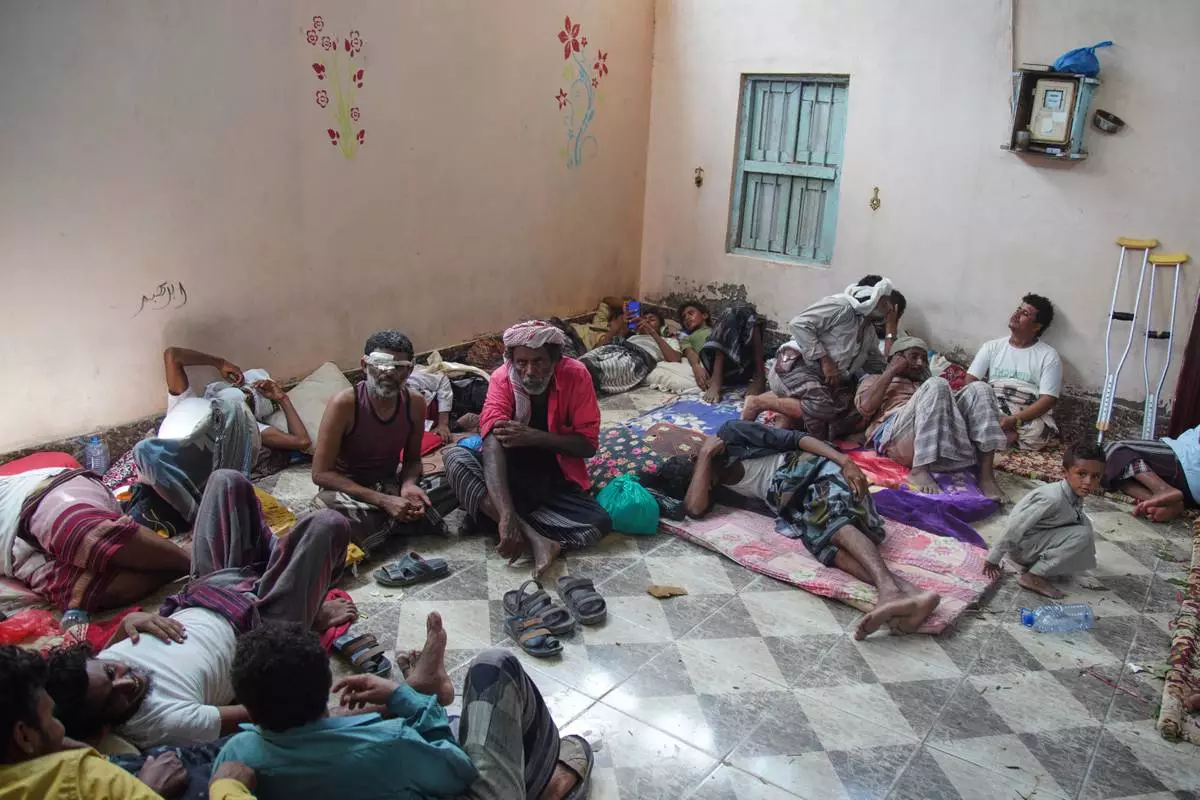
Displaced Yemenis rest at a temporary shelter in the Dar Saad district of Aden, Yemen, Saturday, Sept. 12, 2026, after fleeing Houthi attacks in the western coastal cities of al-Khokha and Mokha. (AP Photo/Abdulnasser Alseddik)
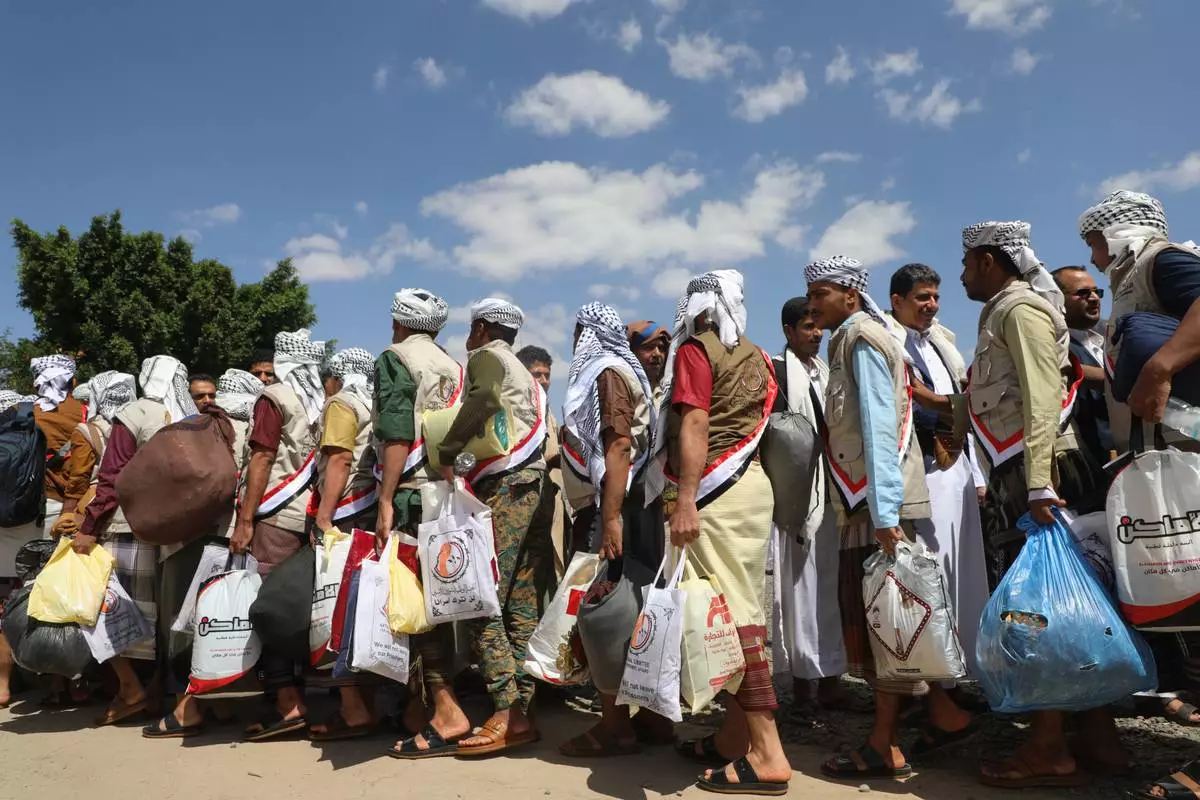
Houthi prisoners freed in Mokha carry their belongings as they arrive in Sanaa, Yemen, Saturday, Sept. 12, 2026, following the Houthi takeover of the southern Red Sea port city. (AP Photo)
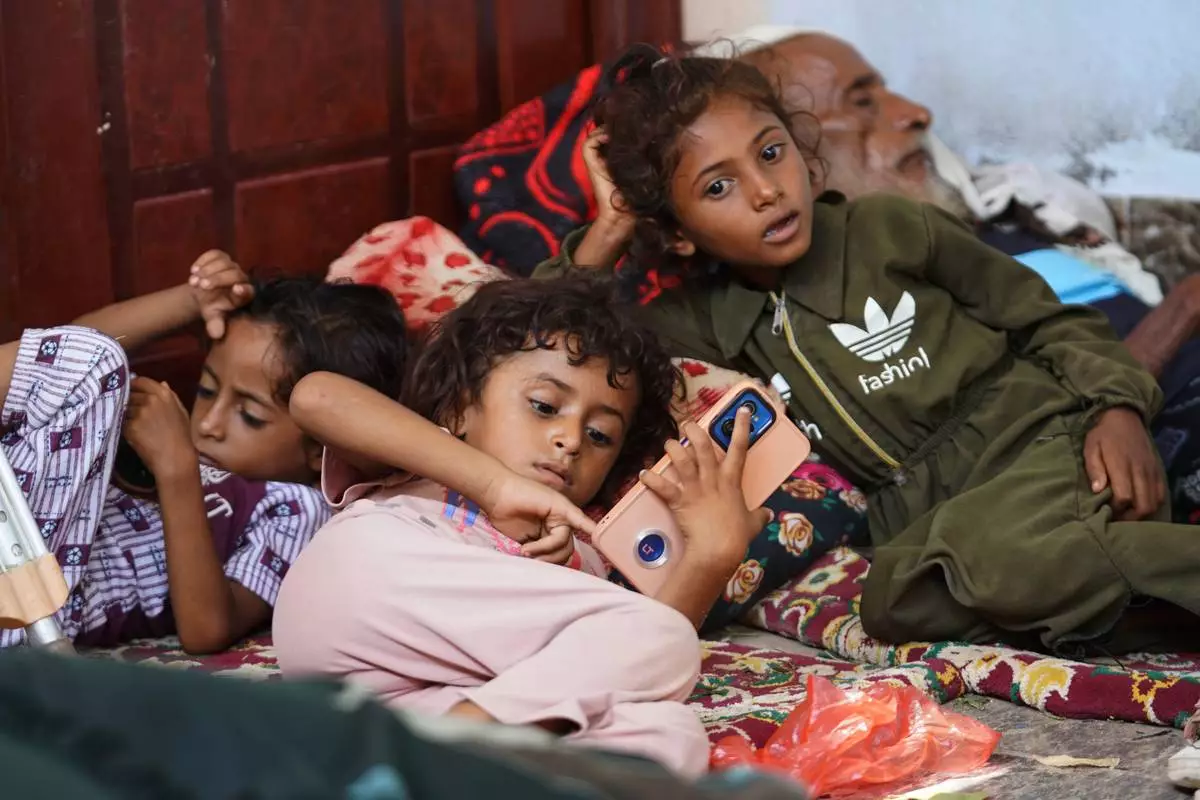
Displaced Yemenis rest at a temporary shelter in the Dar Saad district of Aden, Yemen, Saturday, Sept. 12, 2026, after fleeing Houthi attacks in the western coastal cities of al-Khokha and Mokha. (AP Photo/Abdulnasser Alseddik)
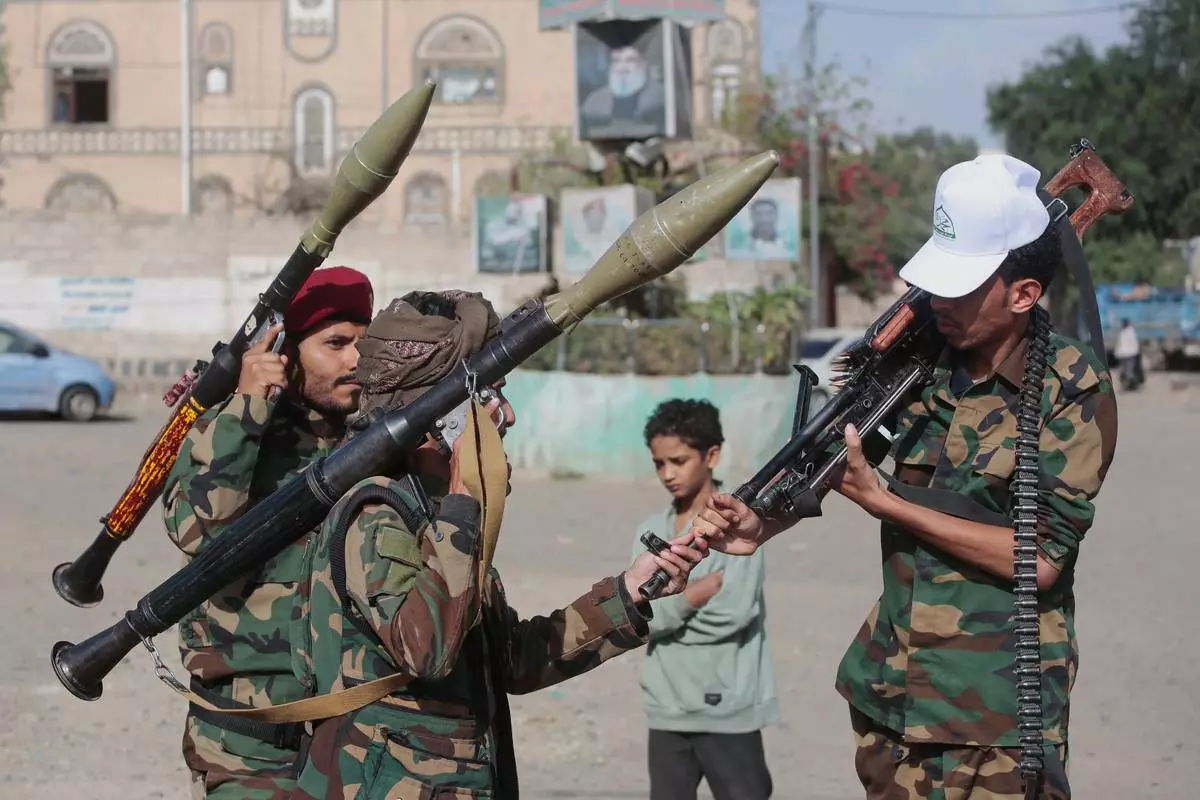
Yemen's Houthi rebels chat as they check their weapons during a mobilization campaign in Sanaa, Yemen, Thursday, Sept. 10, 2026. (AP Photo)