RIO DE JANEIRO (AP) — Brazil is having a moment. Celebrities and record numbers of tourists donning green, yellow and blue are flooding into the country. Brazilian culture — from its Oscar-nominated films to funk music — is taking the world by storm. Global fashion brands and influencers are leaning into the hype.
For decades, Brazilians have lamented that the country and its cultural makeup and output have long gone under-appreciated in what has become known as the “mongrel complex.”
Click to Gallery
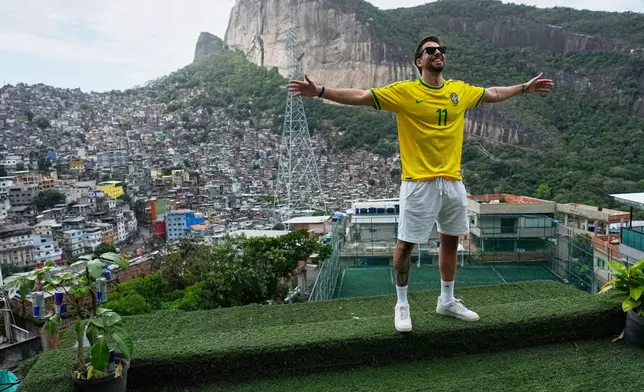
A tourist wearing a jersey in Brazilian colors poses for photos on a terrace at the Rocinha favela in Rio de Janeiro, on Sept. 2, 2026. (AP Photo/Silvia Izquierdo)
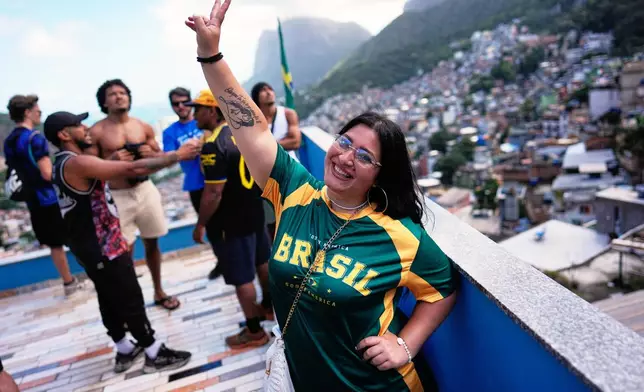
Italian tourist Edda Di Dato, wearing a Brazil's jersey, strikes a pose at a terrace in the Rocinha favela in Rio de Janeiro, on Sept. 2, 2026. (AP Photo/Silvia Izquierdo)
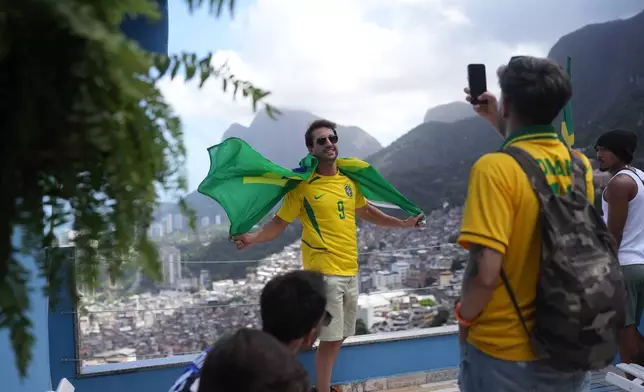
A tourist wearing a jersey in Brazilian colors poses for a photo at the Rocinha favela in Rio de Janeiro, on Sept. 2, 2026. (AP Photo/Silvia Izquierdo)
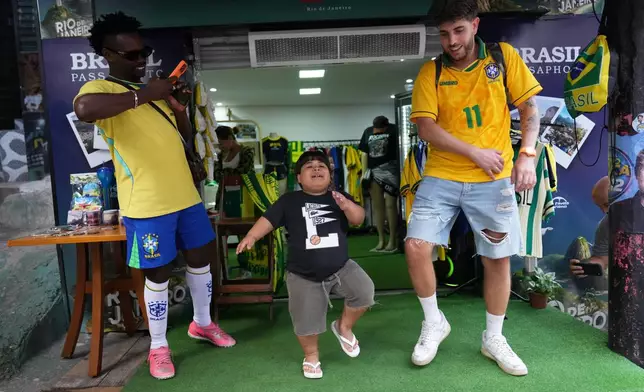
Influencer Narutinho, center, dances with Spain's tourist Ricard Sastre, right, at the Rocinha favela in Rio de Janeiro, on Sept. 2, 2026. (AP Photo/Silvia Izquierdo)
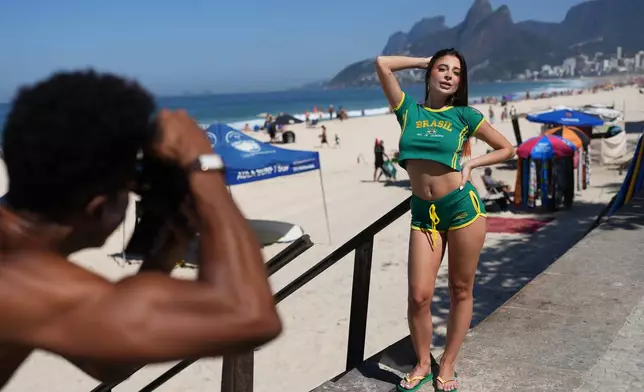
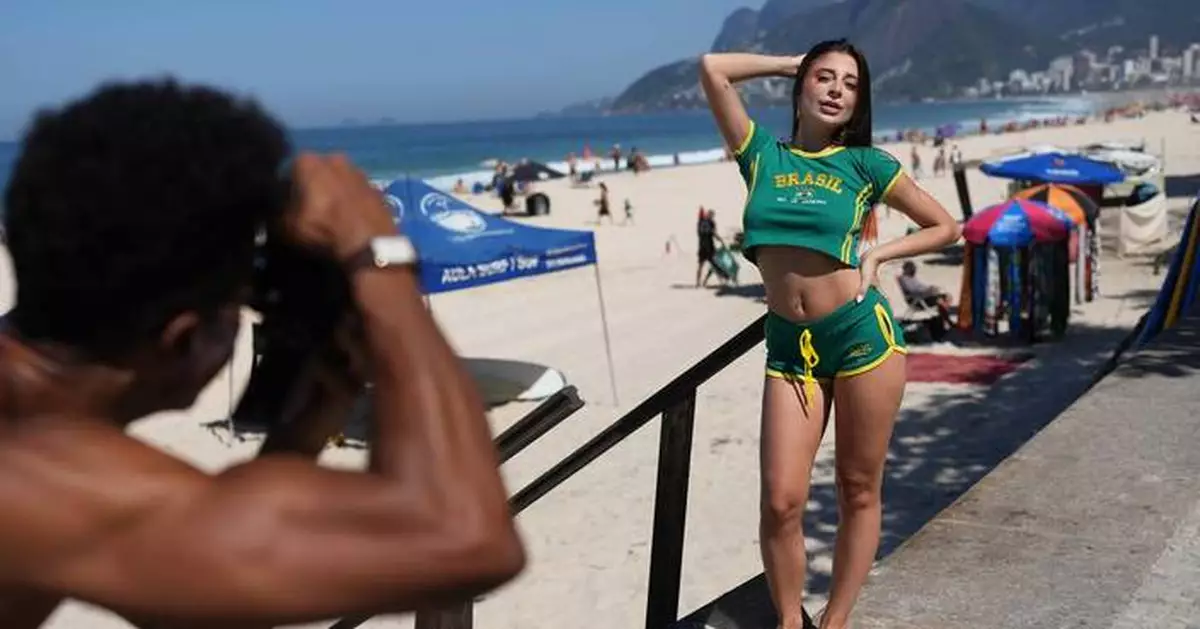
Influencer Gabriela Catao poses for photos at Ipanema beach in Rio de Janeiro, on Sept. 4, 2026. (AP Photo/Silvia Izquierdo)
But as attention from abroad pours in and consolidates itself in 2026, some say a shift may be underway with the rise of “caramelo pride” — a ubiquitous celebration by Brazilians of caramel-colored street mutts that have come to represent the country.
Here’s a look at the phenomenon.
Brazil has captured the world’s attention and admiration before, and Brazilians cyclically observe that “Brasil está na moda,” or Brazil is in fashion.
Many trace the current popularity of the phase to 2023, when Brazilcore, a fashion trend featuring the colors of the Brazilian flag and inspired by Brazilian culture, gained widespread global traction. Celebrities including Bad Bunny, Emily Ratajkowski, Hailey Bieber, Tina Kunakey, Sabrina Carpenter, Alex Consani and Addison Rae have all participated in the trend.
Fashion was “very rigid, with many uniformized clothes. Suddenly came this wave from Brazil showing more skin, using more color,” said Néli Pereira, a PhD candidate at the University of Sao Paulo in cultural studies who specializes in Brazil. The spontaneity and vivid color palettes resonated amid a craving for more light-heartedness.
Recently, the popularity of Brazilcore has morphed into a massive, multi-faceted global phenomenon that celebrates “brasilidade,” or Brazilianness, moving beyond fashion to include music, dance, cinema and sport.
Brazilcore can be spotted on high streets around the world and takes the forms of bikinis, micro-shorts, crochet pieces, soccer shirts and accessories. Brands including fast fashion giants, such as Zara and H&M, have put out tops in green and yellow or emblazoned with Rio de Janeiro, while Chanel, Jil Sander and Schiaparelli have all made references to Brazil’s national colors.
The hype around Brazil has also translated into record numbers of tourists visiting the country. More than 9 million tourists came to Brazil last year, a 37% increase compared with 2024. Jokes on the internet abound about the CPF — an individual’s fiscal identity in Brazil — being the new sought-after green card.
In Rio, visitors head to Rocinha favela, kitted out in Brazilcore, and pay for footage of themselves striding out onto a terrace, plonking themselves down as a drone captures the scene before panning out to capture Rio’s stunning urban landscape. These videos have gone viral in recent months.
“If you don’t do the video with the drone, it’s as if you didn’t come to the favela,” said Eduardo Maristany, a 30-year-old tourist from Barcelona, who recently partook in a tour of Rocinha. Like many others, he chose the country as a destination after seeing an influx of videos on social media about Brazil’s famed favelas, beaches and parties.
It’s not just tourists who are engaging with Brazil. Madonna, Lady Gaga and Shakira performed free shows on Copacabana Beach in 2024, 2025 and 2026 respectively, drawing at least a million concert-goers each time, according to Rio City Hall numbers.
And in 2024, Bruno Mars posted a video of himself dancing to funk music, seemingly getting a Christ the Redeemer tattoo on his chest and posing with a caramelo dog. With more than 13 million likes on Instagram, the video ends with the words: “I love you Brazil.” Rosalia and Dua Lipa have also professed their love for Brazil online.
Meanwhile, Brazilian culture — from Anitta’s funk music to Academy Award-nominated films such as ‘I’m Still Here’ and ‘The Secret Agent’ — is being celebrated on the world’s biggest stages and across the internet, turbocharging Brazil’s soft power.
It's frequently said about the country that “Brazil is not for amateurs.” The oft-repeated phrase taps into the complexity of the continental-sized country, where exuberant celebrations of life – epitomized by Carnival — coexist alongside violence, poverty and political scandals reminiscent of telenovelas.
Brazil’s ambiguities “make sense in a world filled with conflicts, inequalities and scarcity,” said Bruno Pompeu, a professor at the University of Sao Paulo’s school of communications and arts.
The country’s formidable presence online is also contributing to the current wave of interest in Brazil. Brazil — with a population of over 200 million — is one of the most connected countries in the world and social media users are showcasing the country’s seemingly infinitely multilayered culture.
“Brazil pulsates creativity and has this very particular characteristic of interacting on the internet in a collective manner. It’s common for content to be quickly transformed into memes and cultural references,” said Eduardo Lorenzi, general director of operations for Latin America at TikTok.
Brazilians are known for their high engagement, a much-sought-after characteristic in the attention economy.
Courtney Henning Novak, a Californian and prolific reader and writer, developed an online community composed mostly of Brazilian followers after her rave review of a 1881 book by Brazilian author Joaquim Maria Machado de Assis went viral.
“Brazilians love to comment. I get more messages than I can keep up with, and there’s a lot of positive energy,” she said.
For the global entertainment industry, brands, event organizers, businesses and influencers, Brazil represents a key market and an exceptionally valuable fan base.
Vitor Oliveira, a 36-year-old tour guide from Rocinha, credits social networks for the explosion of tourism in his neighborhood. “Influencers coming here were a game changer and primordial to the increase of tourism in Rio and especially in Rocinha,” he said.
Beyond digital engagement, Brazil’s current moment in the spotlight is the result of a confluence of factors involving politics, diplomacy, culture and economics, said Pereira, pointing to policies that support the showcasing of Brazilian culture and a huge effort to attract tourists by Embratur, Brazil’s government tourism agency.
Like all trends, this one is likely to fade, experts say, predicting that the upcoming election and the return of political polarization may diminish the association of yellow and green with joy.
French comedian Paul Cabannes, who is based in Sao Paulo and has millions of followers across different platforms, posts humorous content about Brazil and has watched as the number of foreigners producing content almost exclusively about Brazil soared.
“It’s a formula that’s getting a bit tired. I think it’s harder to succeed doing this than before,” he said.
In an increasingly multipolar world, many Brazilians believe that the country’s soft power is here to stay. But Pereira predicts that Brazil’s “mongrel complex” will resurface if the current attention from abroad fades. “Once people stop giving us those little pats on the head, it’ll all come back," she said.
Follow AP’s coverage of Latin America and the Caribbean at https://apnews.com/hub/latin-america
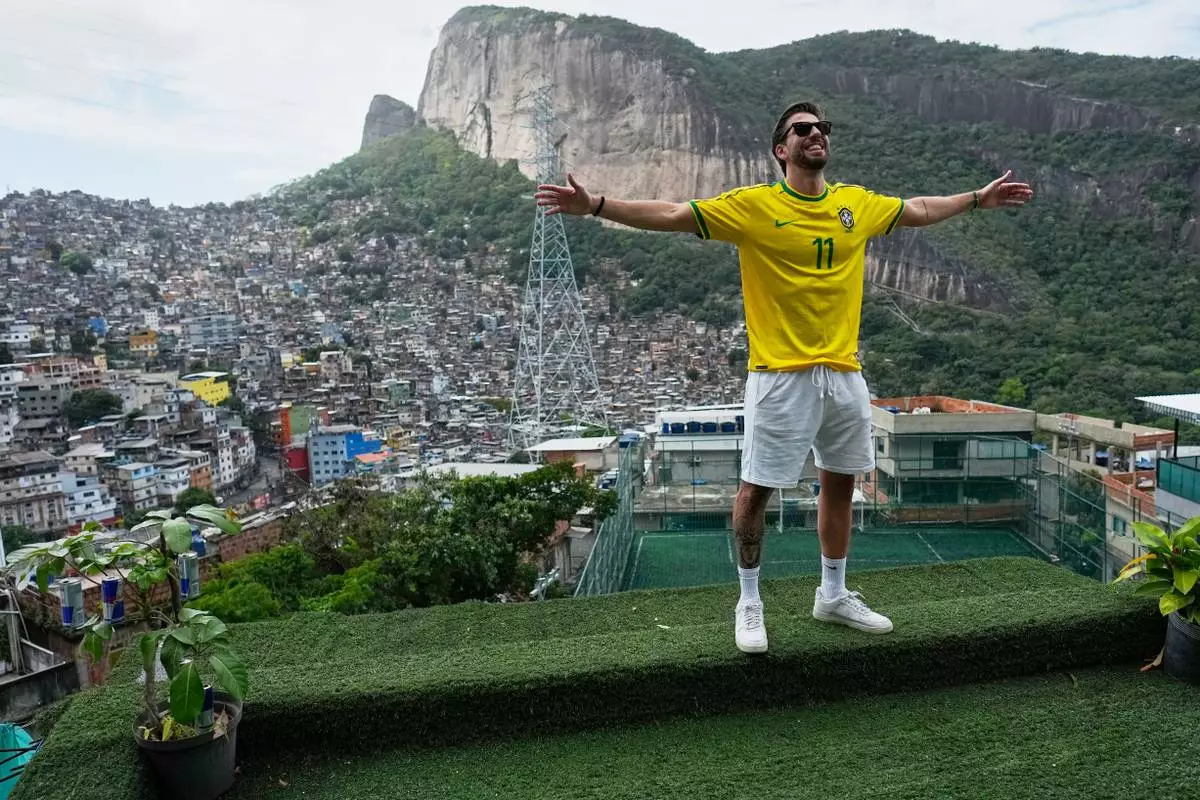
A tourist wearing a jersey in Brazilian colors poses for photos on a terrace at the Rocinha favela in Rio de Janeiro, on Sept. 2, 2026. (AP Photo/Silvia Izquierdo)
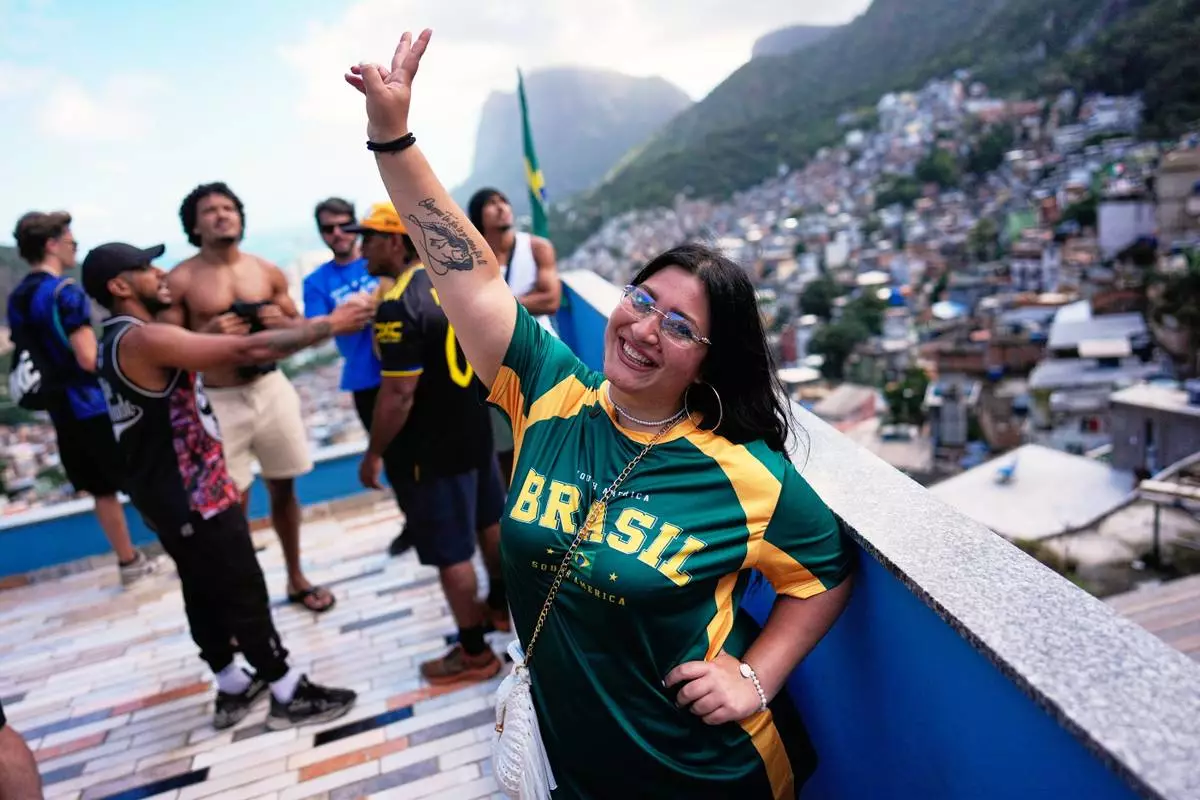
Italian tourist Edda Di Dato, wearing a Brazil's jersey, strikes a pose at a terrace in the Rocinha favela in Rio de Janeiro, on Sept. 2, 2026. (AP Photo/Silvia Izquierdo)
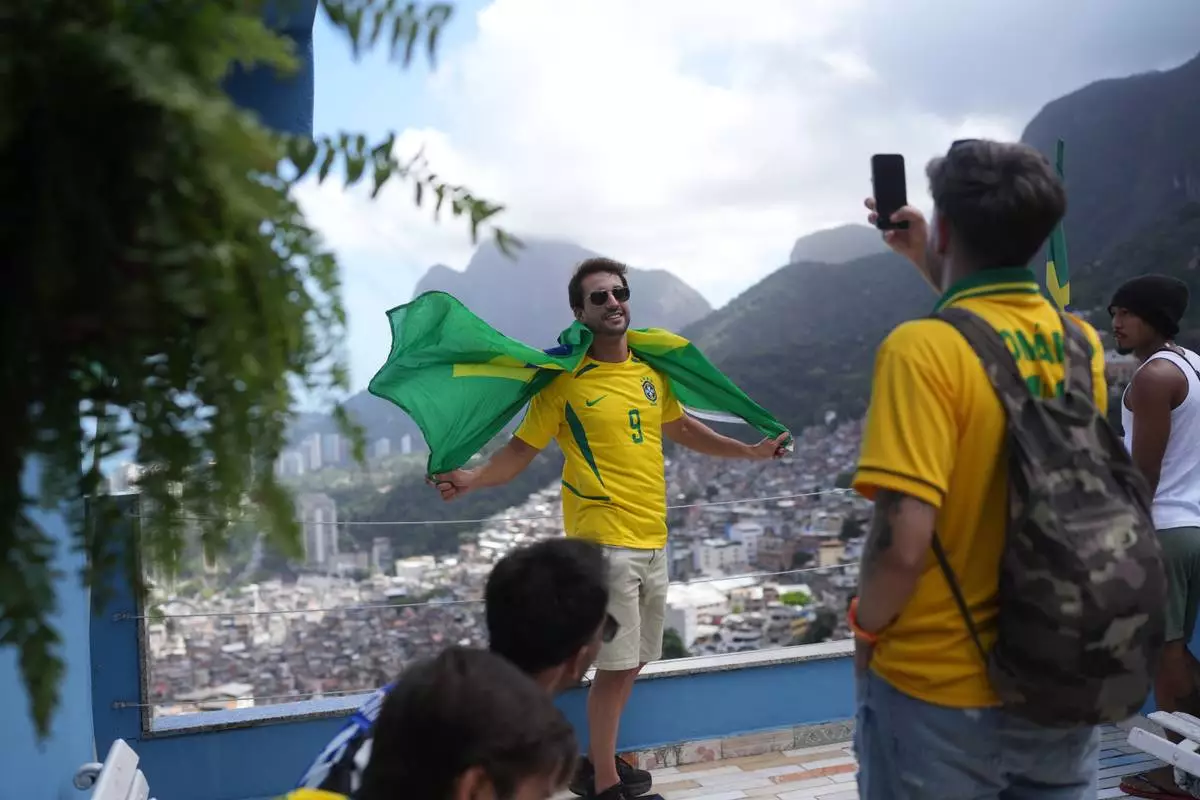
A tourist wearing a jersey in Brazilian colors poses for a photo at the Rocinha favela in Rio de Janeiro, on Sept. 2, 2026. (AP Photo/Silvia Izquierdo)
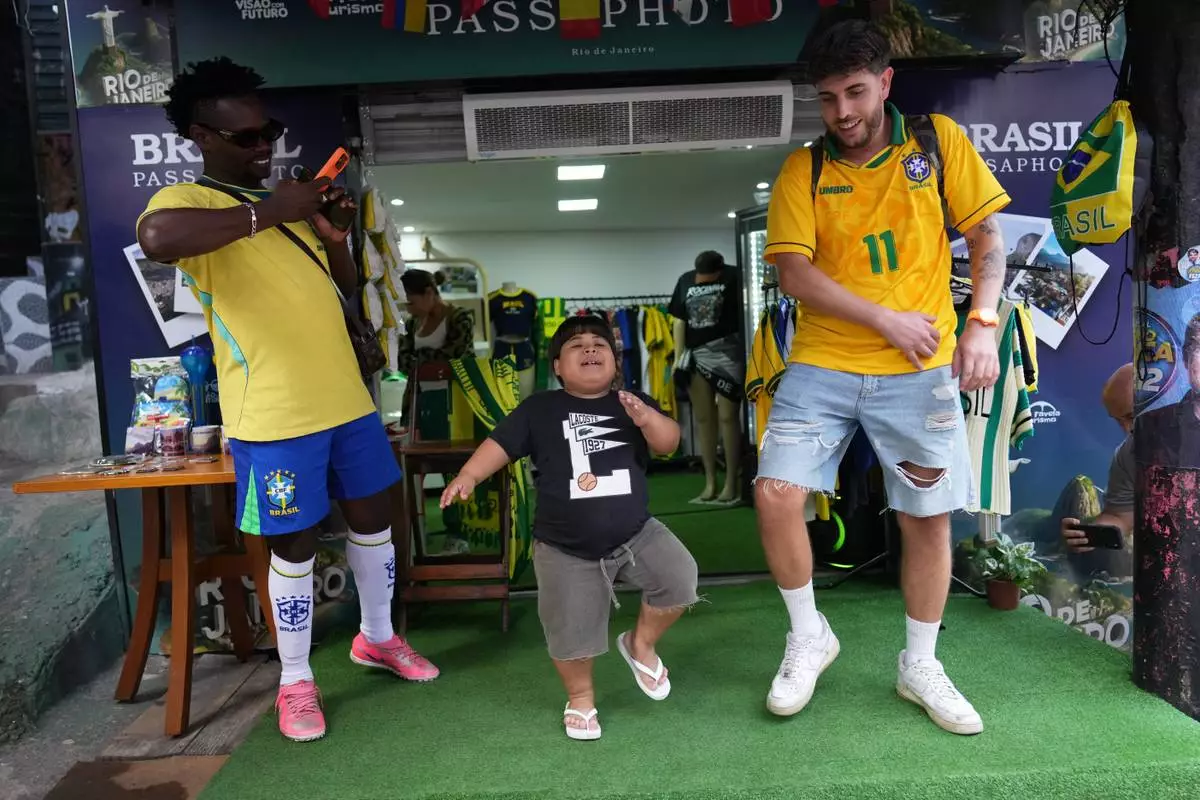
Influencer Narutinho, center, dances with Spain's tourist Ricard Sastre, right, at the Rocinha favela in Rio de Janeiro, on Sept. 2, 2026. (AP Photo/Silvia Izquierdo)
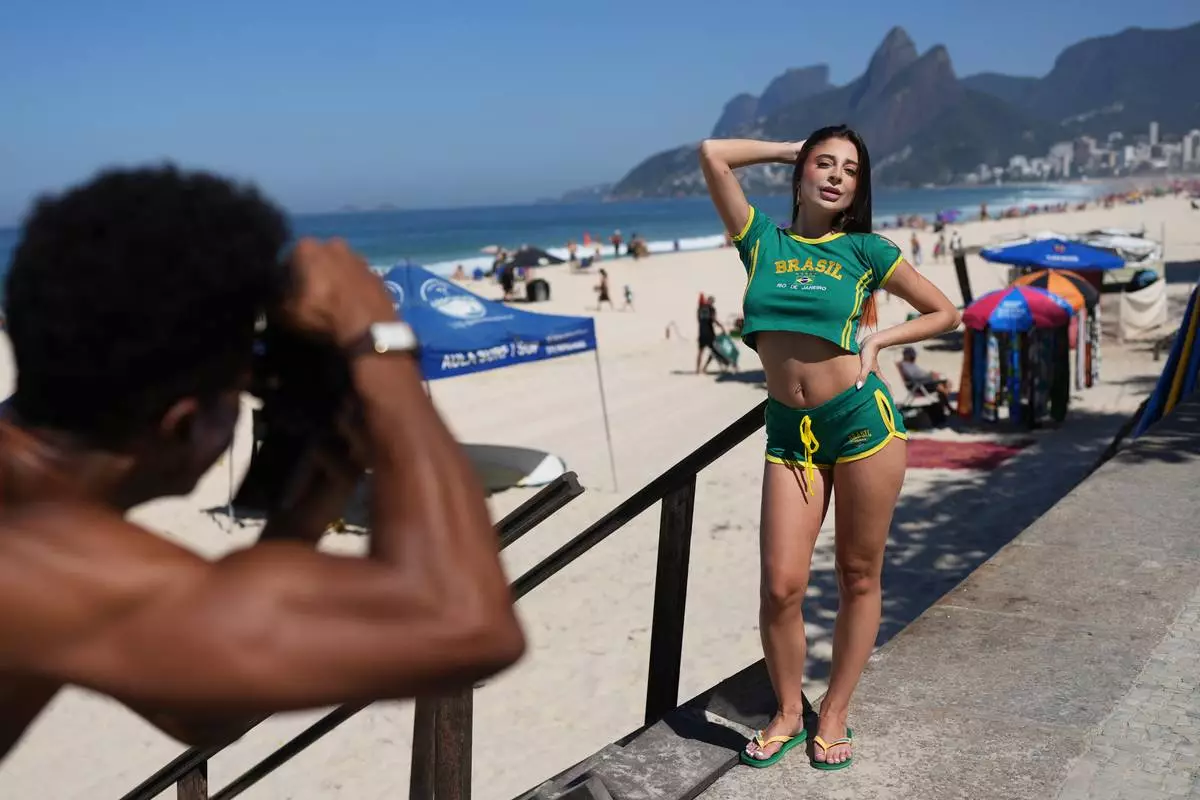
Influencer Gabriela Catao poses for photos at Ipanema beach in Rio de Janeiro, on Sept. 4, 2026. (AP Photo/Silvia Izquierdo)