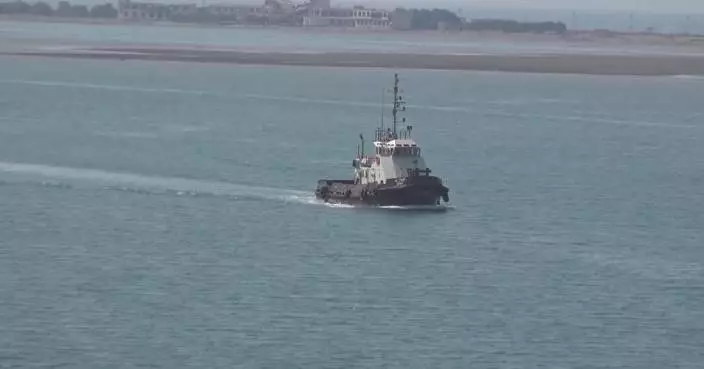
The death toll from Wednesday’s vessel fire off Palawan Province in the Philippines has risen to 76, with 13 people still missing, the Philippine Coast Guard (PCG) said Saturday.
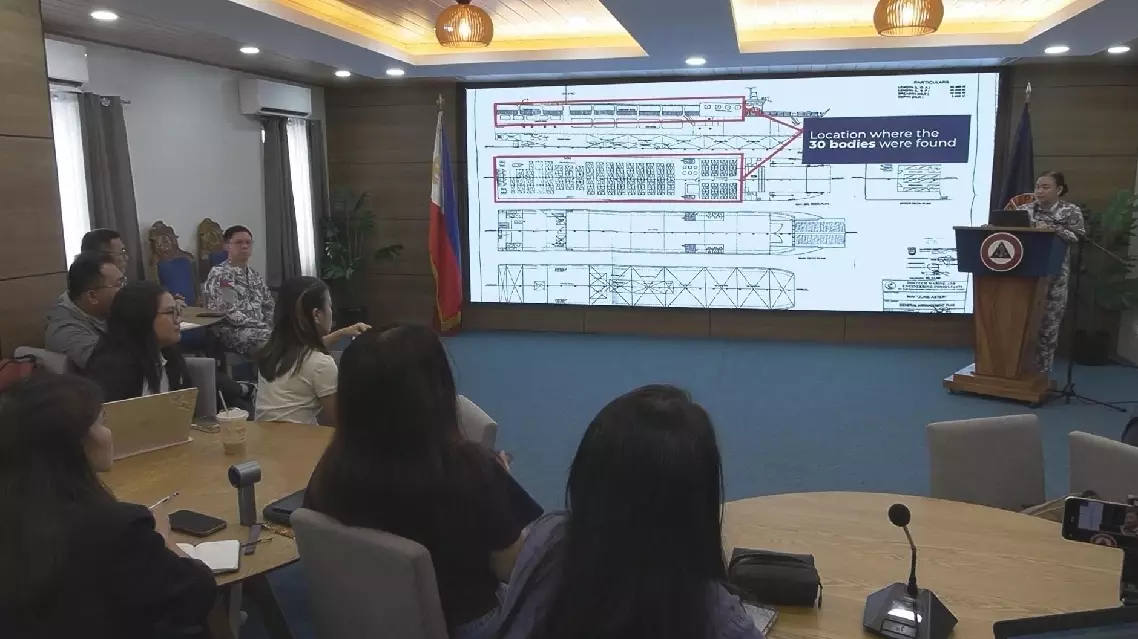
According to the PCG, 41 additional bodies have been found, bringing the total number of confirmed fatalities to 76. The number of survivors remains at 43.
Speaking at a press conference on Saturday, PCG spokesperson Commodore Noemi Cayabyab said the agency's priority remains the recovery of bodies from the vessel.
"We are now focused on the retrieval. After that, we will proceed with the investigation. For the safety investigation, we have already started conducting inquiries with all of the survivors on board the vessel," said Cayabyab.
The PCG is investigating whether failures in the ferry's emergency response may have contributed to the high death toll aboard the MV June Aster.
Meanwhile, it is trying to locate the captain, Roel Sarmiento, who remains missing, said Cayabyab, adding that the captain's statement would be crucial for the investigation.
"The Philippine Coast Guard is really exerting our efforts to locate the captain of the vessel. As I mentioned, his statement will contribute greatly to the ongoing investigation," said Cayabyab.
The ferry departed Manila and caught fire near waters off Coron Municipality, a well-known tourist destination. According to the passenger manifest, 134 people, including 117 passengers and 17 crew members, were listed on board. Two passengers later told authorities they did not embark.
Philippine vessel fire death toll rises to 76, with 13 missing
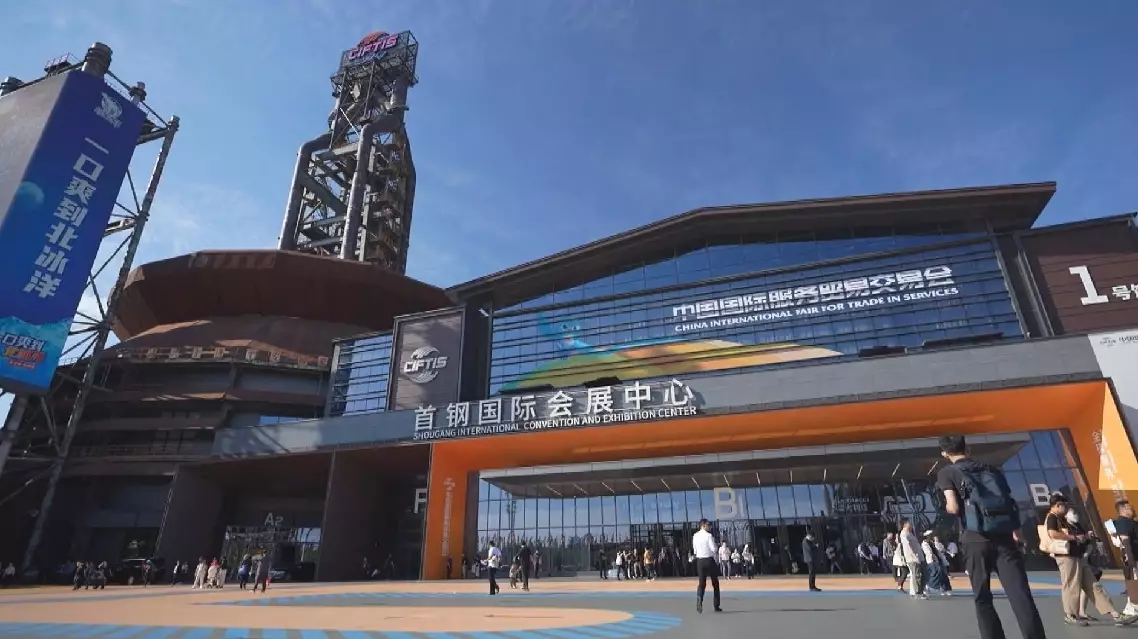
International exhibitors from Mauritius to Norway praised Chinese innovation at the just-concluded 2026 China International Fair for Trade in Services (CIFTIS) in Beijing, from customized green building solutions to smart agriculture systems, and sought closer collaboration in AI and robotics.
The five-day CIFTIS opened on Wednesday, drawing participants from 90 countries, regions and international organizations, with over 1,800 companies showcasing their service products on-site.
For Baznath from Mauritius, this year's CIFTIS was well worth the trip. He signed a decade-long agreement with his long-time partner, Beijing Construction Engineering Group, designating each other as preferred collaborators on a range of projects, from highways to smart commercial hubs.
"Chinese companies dedicated to develop those elements of our products help us a lot. Because we are able to be faster than we were," said Divij Baznath, head of projects management at United Docks.
Chinese firms designed green, intelligent construction plans customized for Mauritius, and their high-quality service won Baznath's trust.
"Because Mauritius is an island nation, it has long faced marine corrosion from sea air. In response, we specially designed aluminum alloy energy-saving windows that reduce emissions, resist corrosion and ultraviolet rays, along with radiation-proof glass. This significantly lowers the building's carbon emission," said Dong Wenjing, deputy general manager of Beijing Construction Engineering Group International Construction Co.
Many agricultural products showcased at the CIFTIS have adopted a smart traceability technology developed in China.
"Scan the QR code, and you get the local phenological system -- temperature, water, soil moisture, atmospheric data including negative oxygen ions, and seed data for the agricultural products. It's all backed by data," said Liu Huaixin, a staff member at the Chinese Academy of Sciences.
The smart farming system, developed by the Chinese Academy of Sciences' Institute of Geographic Sciences and Natural Resources Research, is now being used in over 20 countries in the Asia‑Pacific, Africa, and Latin America. It helps local produce reach global markets and increases farmers' incomes.
"We are promoting in many countries in Asia and the Pacific and this Geographical Indications, Environment, and Sustainability (GIES) helps to enhance the market value of the products that these countries are trying to export to China," said Ken Shimizu, deputy regional representative for Asia and the Pacific at Food and Agriculture Organization of the United Nations (FAO).
Also looking to seize the opportunity was Synnove Nes, a project manager at Kristiansund and Nordmore Chamber of Commerce. She brought five companies to this year's CIFTIS.
During the event, she also took time to explore China's artificial intelligence sector and discovered many new opportunities for cooperation.
"And we know that AI and also robot technology is very suitable for ocean technology. Our company that works with that already uses a lot of AI. And I know that they're very interested in more collaboration, more AI, more robot technology, maybe from China and maybe because of this trip," said Nes.
Many international exhibitors and officials at CIFTIS were focused on China's AI sector, using their visit to explore the AI-powered products woven into daily life here.
"We are super impressed by the whole ecosystem in China. You order something and it's at your door within 30 minutes. Behind this is a huge infrastructure that is very impressive," said Henning Kristoffersen, commercial counselor at the Norwegian Embassy in China.
Global exhibitors find opportunities in AI, green tech at CIFTIS in Beijing