NANTERRE, France (AP) — She hit the high F, held it, then blew out a breath and turned to look back at the band — a quick, disbelieving glance toward her musical director. Some 30,000 people read it before they had finished screaming: Celine Dion did it.
It was “All By Myself,” the song the Quebec superstar’s voice has been measured against since 1996, saved for the encore of her first full concert in more than six years — her first since stiff person syndrome, a rare, progressive neurological disease, attacked her muscles, including those of the throat.
Click to Gallery
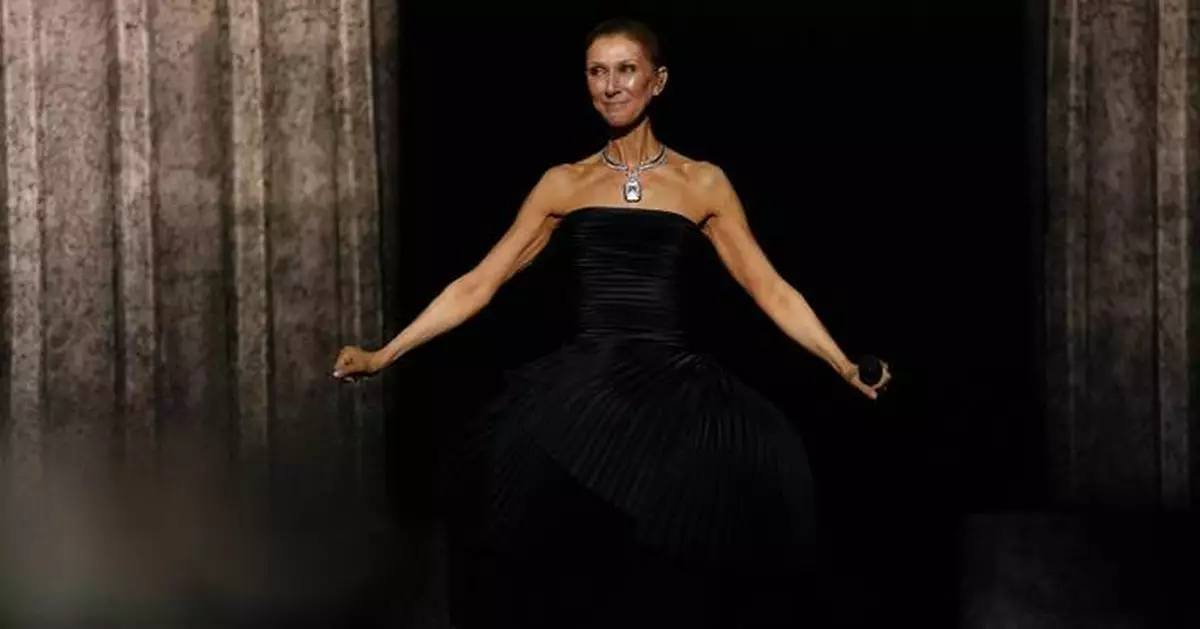
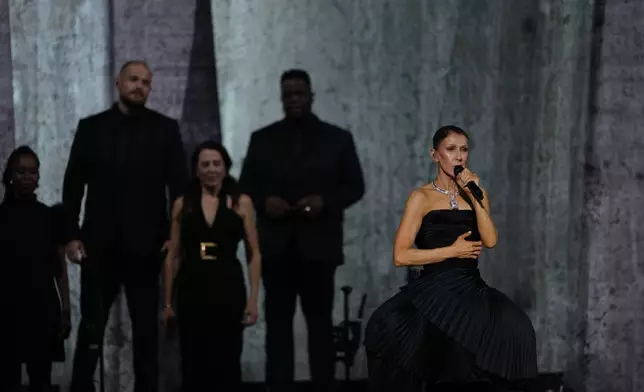
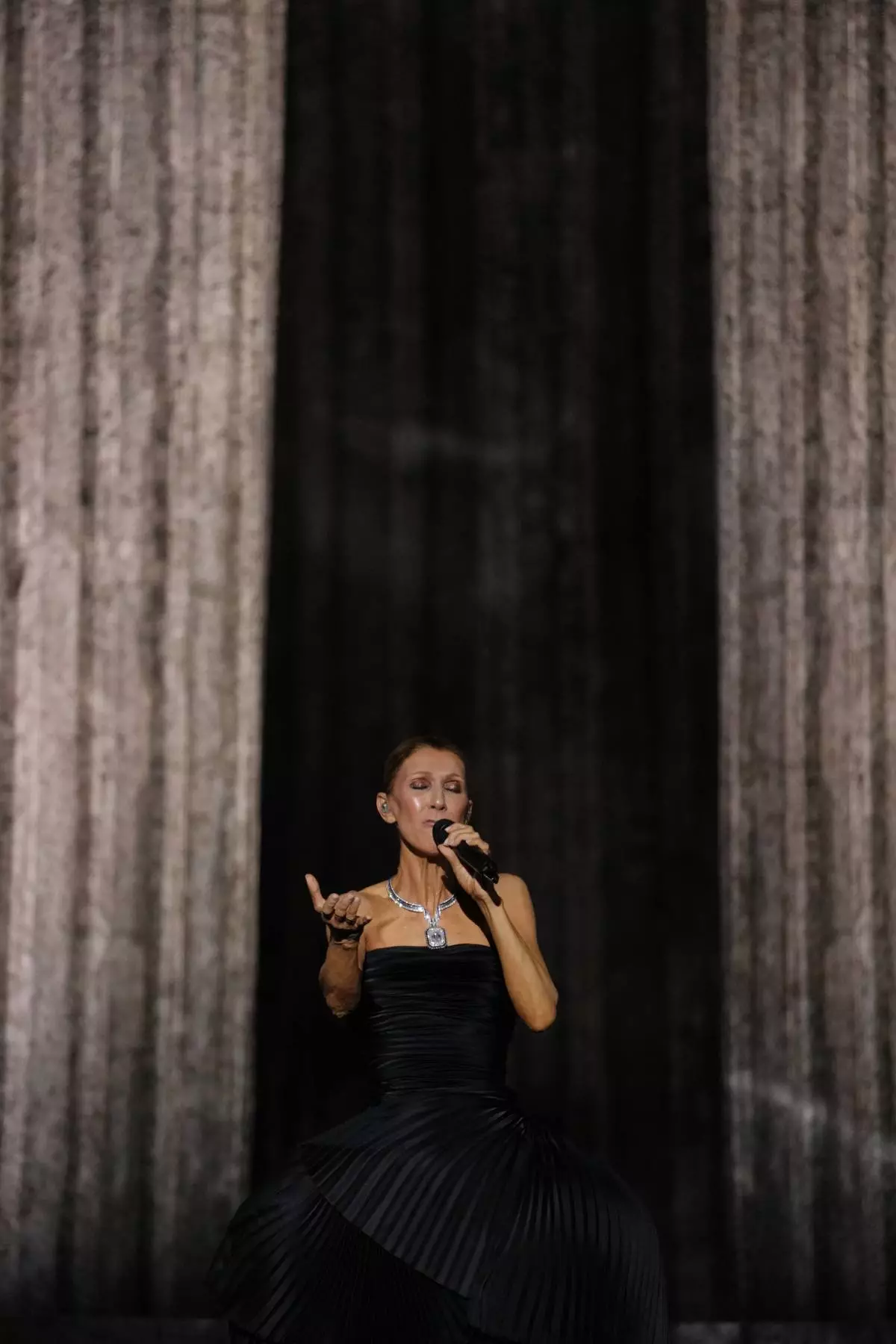
Singer Celine Dion performs during the opening concert of her "Celine Dion Paris 2026" residency at the Plenitude Arena in Nanterre, France, outside Paris, Saturday, Sept. 12, 2026. (AP Photo/Aurelien Morissard)
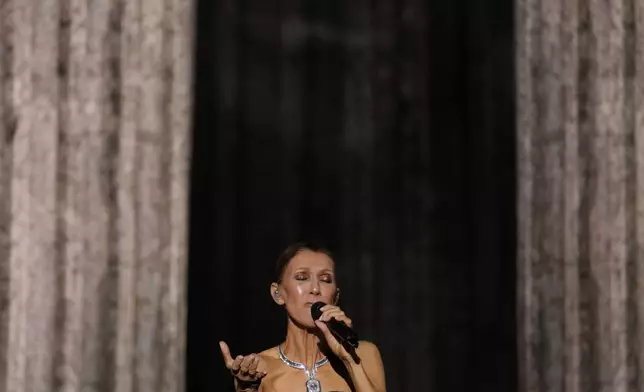
Singer Celine Dion performs during the opening concert of her "Celine Dion Paris 2026" residency at the Plenitude Arena in Nanterre, France, outside Paris, Saturday, Sept. 12, 2026. (AP Photo/Aurelien Morissard)
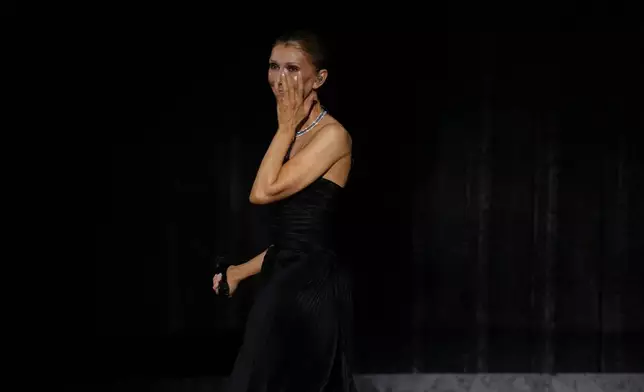
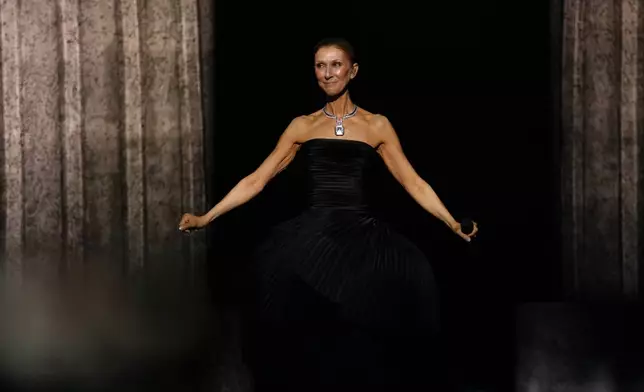
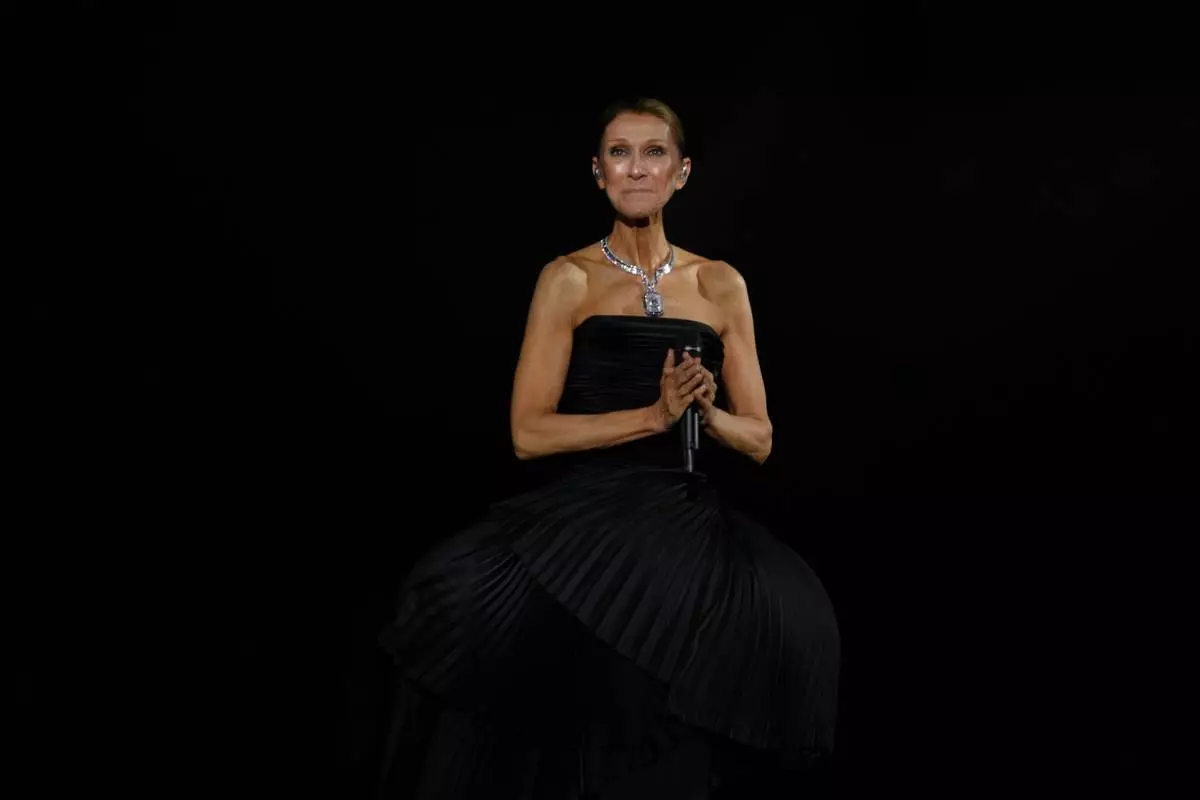
Singer Celine Dion reacts during the opening concert of her "Celine Dion Paris 2026" residency at the Plenitude Arena in Nanterre, France, outside Paris, Saturday, Sept. 12, 2026. (AP Photo/Aurelien Morissard)
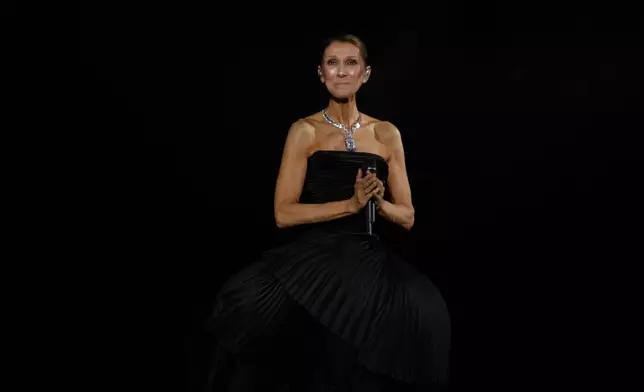
Singer Celine Dion performs during the opening concert of her "Celine Dion Paris 2026" residency at the Plenitude Arena in Nanterre, France, outside Paris, Saturday, Sept. 12, 2026. (AP Photo/Aurelien Morissard)
Singer Celine Dion performs during the opening concert of her 'Celine Dion Paris 2026' residency at the Plenitude Arena in Nanterre, outside Paris, Saturday, Sept. 12, 2026. (AP Photo/Aurelien Morissard)
Few doubted she could still sing. What nobody knew was whether she could get through a whole show, and then get up and do it again a few nights later.
Dion gave the crowd three words: “Je vais bien.” (“I’m doing fine.”)
“When she hit that note, I grabbed my friend’s arm. I’d been holding my breath without realizing. Then I started crying. ‘She’s back. She’s really back,‘” said Élodie Marchand, 42, a primary schoolteacher from Nantes.
Dion, 58, had not played a full concert since March 8, 2020. She was diagnosed in 2022 with stiff person syndrome. She canceled a world tour, then what was left of it, and went quiet. On Saturday night, 25 songs in 2 hours and 15 minutes at the Plenitude Arena in Nanterre, west of Paris, was the first night of the engagement meant to prove she can work again.
The sold-out run is punishing: 16 shows in five weeks, 10 more booked for May 2027, 26 nights in all before tens of thousands of people each time.
The last time France saw her sing, it lasted four minutes. At the Olympic opening ceremony in July 2024, Dion sang from the Eiffel Tower — one song, one night — and the world called it a resurrection. Saturday she had to do it 25 times, then get up and do it again Wednesday.
Stiff person syndrome affects one or two people in a million. It stiffens muscles and sets off spasms violent enough to break bones, triggered by loud noise, by touch, by emotional stress. An arena holding 30,000 people is all three at once. Singing with it, Dion told NBC in 2024, felt like being strangled.
“Touring can be very difficult even when you’re 100%,” she said in a statement in 2023, canceling the last of her dates.
She cried before she finished the first song. In a Dior gown and a Boucheron necklace, she pressed her hands together in prayer, then missed her cue in “On ne change pas,” on the line about the skinny little girl from Charlemagne, Quebec.
“I promised myself I wouldn’t cry,” she said. The crowd answered by chanting the riff from “Seven Nation Army.”
She said she had learned to live with the fragility and made it her reason to keep going. Then she sang for another two hours.
The voice has lost some of its top; it is not the instrument that sold 250 million albums. Every big note is now a decision she makes in front of 30,000 people.
She took most of them. She sang “My Heart Will Go On” and “The Power of Love,” then Catalani’s “Ebben? Ne andrò lontana” — Maria Callas’ signature aria — in pink feathers while fake snow fell. Her disease attacks the larynx. She went for it anyway.
Willo Perron’s set put her among gray megaliths, a pop Stonehenge. An 18-voice gospel choir came on in robes.
Michelle Obama watched from the seats. Outside, fans wore sashes reading “Celine Dion 2026,” like beauty pageant winners, and T-shirts from the LVMH house that shares her first name.
“My daughter kept saying, ‘Mum, we can’t go all the way to Paris for Celine,’” said Isabelle Gagnon, 52, a teacher from Montreal. “Tonight my daughter was singing beside me, and I thought: you see? This is why we came.”
“In Montreal, you grow up knowing those songs whether you mean to or not,” said Antoine Beaulieu, 31, a graphic designer. “I used to pretend I was too cool for Celine. Tonight I knew every word, so clearly that was a lie.”
Camille Morel, 38, a pharmacist from Lyon, put her phone away. “I wanted to actually be there,” she said. “My voice is completely gone. I’m supposed to be working tomorrow — good luck to them.”
Then the encore, and the note: the last “anymore” a cappella, the note bent upward, the orchestra surging in beneath her. She fanned herself, laughing at her own relief.
She closed with two Jean-Jacques Goldman standards and a last line to the room: I love you, my loves. Take care of yourselves.
It had taken her 2,379 days to get back. She has 25 more nights to go.
Singer Celine Dion performs during the opening concert of her "Celine Dion Paris 2026" residency at the Plenitude Arena in Nanterre, France, outside Paris, Saturday, Sept. 12, 2026. (AP Photo/Aurelien Morissard)
Singer Celine Dion performs during the opening concert of her "Celine Dion Paris 2026" residency at the Plenitude Arena in Nanterre, France, outside Paris, Saturday, Sept. 12, 2026. (AP Photo/Aurelien Morissard)
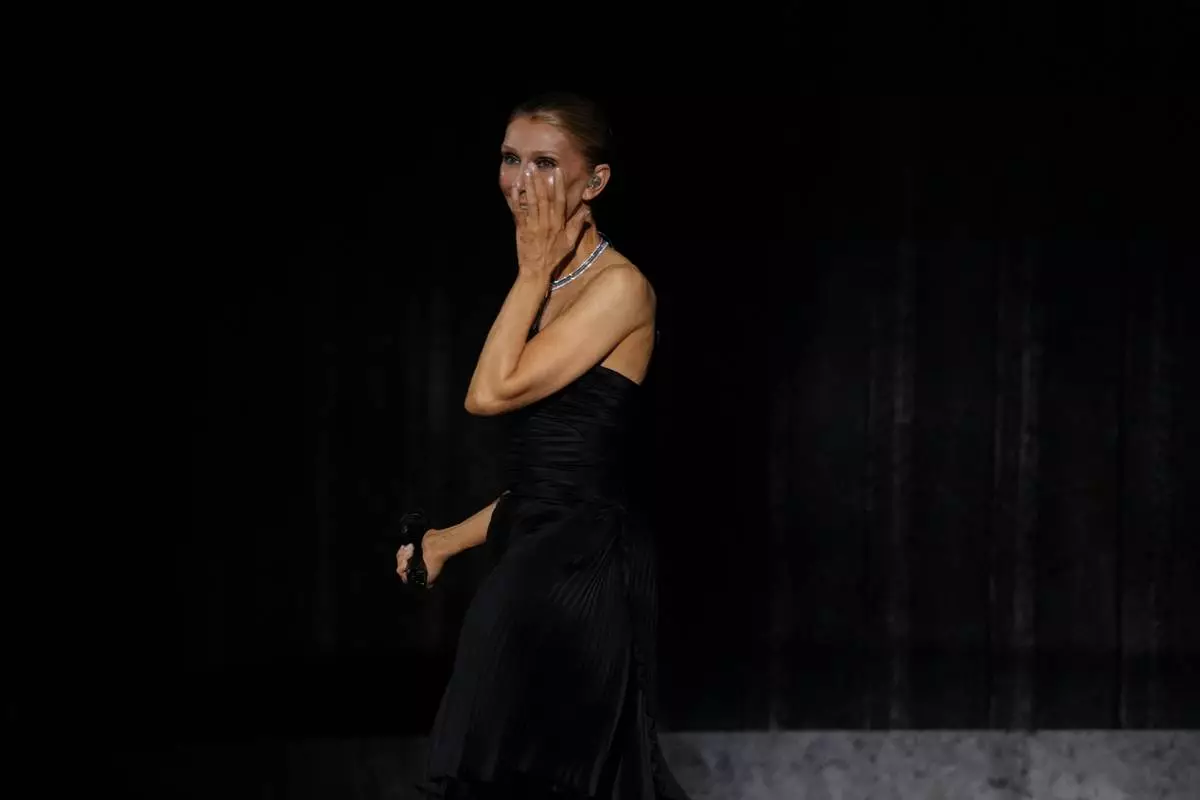
Singer Celine Dion reacts during the opening concert of her "Celine Dion Paris 2026" residency at the Plenitude Arena in Nanterre, France, outside Paris, Saturday, Sept. 12, 2026. (AP Photo/Aurelien Morissard)
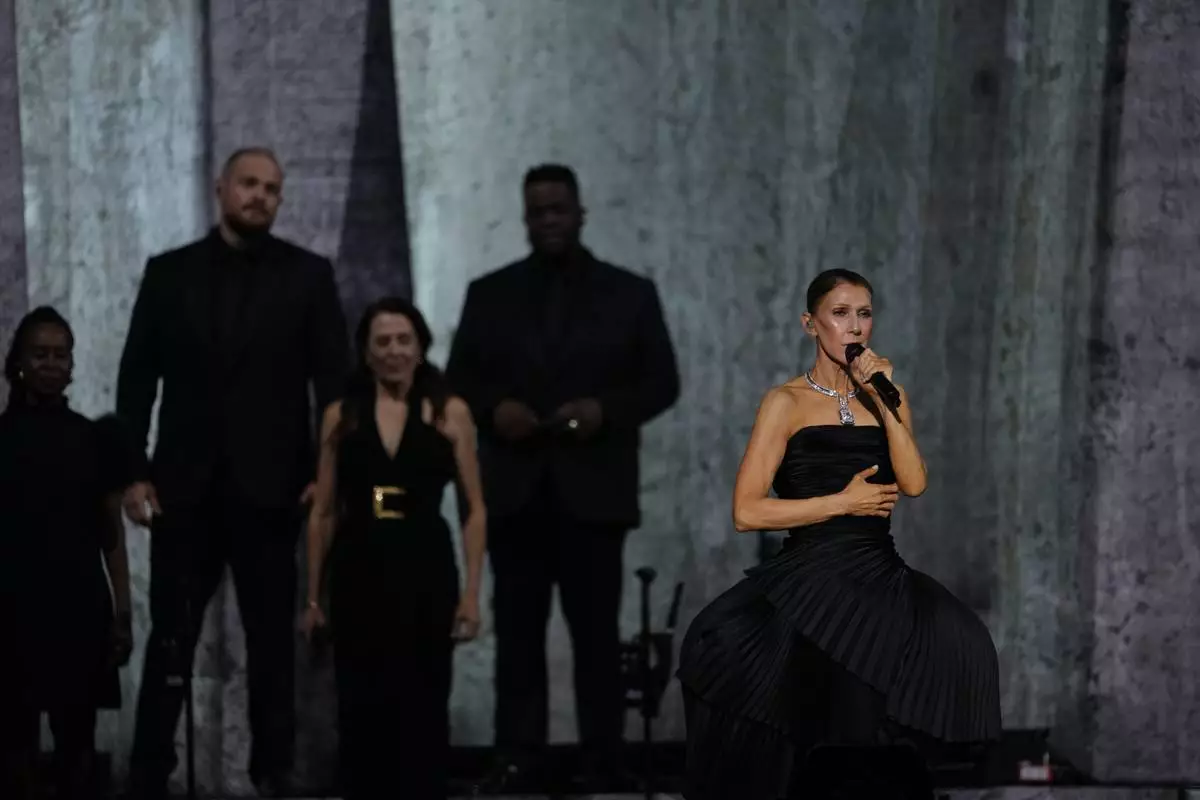
Singer Celine Dion performs during the opening concert of her "Celine Dion Paris 2026" residency at the Plenitude Arena in Nanterre, France, outside Paris, Saturday, Sept. 12, 2026. (AP Photo/Aurelien Morissard)
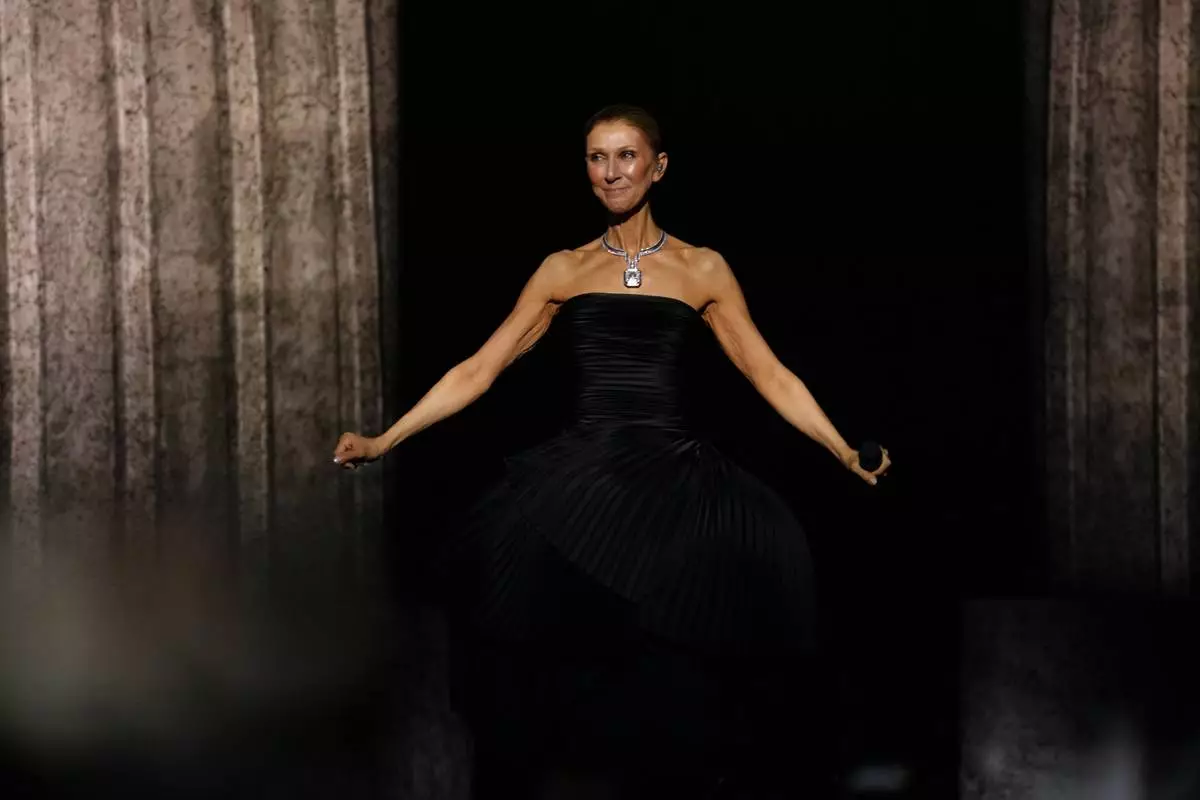
Singer Celine Dion performs during the opening concert of her 'Celine Dion Paris 2026' residency at the Plenitude Arena in Nanterre, outside Paris, Saturday, Sept. 12, 2026. (AP Photo/Aurelien Morissard)
NEW YORK (AP) — Islam is expected to surpass Christianity as the world’s largest religion by 2035, according to detailed projections released Wednesday by the Pew Research Center.
Pew, which has been issuing authoritative reports on religious demography for 25 years, said both Islam and Christianity are growing, but Islam is growing much faster. A key reason, Pew said, is that Muslims tend to have more children than other major religious groups.
“It's the babies,” said Pew senior demographer Conrad Hackett, explaining that conversion and other ways of changing religious identity are much smaller factors than fertility rates.
During 2020-2025, the fertility rate for Muslims was 3.1 children per woman, followed by the rate for Christians at 2.5, according to Pew. The average fertility rate for all other women was 1.6, below the level of 2.1 that's considered necessary for each generation to replace itself.
According to Pew's latest estimates, there were 2.27 billion Christians and 2.02 billion Muslims worldwide in 2020. Pew's new projections forecast that there will be 2.57 billion Muslims and 2.52 billion Christians by 2035. By 2070, if recent trends continue, there will be more than 3.6 billion Muslims and just under 3 billion Christians worldwide.
The estimates are part of a broader Pew project examining how the size of major religious groups could change between 2020 and 2070. The projections take into account recent differences between religious groups’ age profiles, fertility rates, and patterns of religious switching and migration.
Among the many notable findings: Pew projects that the United States, within 40 years, will no longer have a Christian majority. Christians now account for 62% of U.S. adults, according to Pew, and will fall below 50% by 2065.
In neighboring Canada, Christians are expected to drop below 50% by 2030, Pew said.
In both countries, a significant reason for the drop is the concurrent increase in the number of people with no religious affiliation. By 2070, they are projected to account for 41% of the U.S. population and to outnumber Christians in Canada.
The world’s population is projected to increase by 29% between 2020 and 2070, Pew said. Of the religious groups it analyzed, Muslims and Christians are the only ones expected to keep pace, with Christians growing by 30% and Muslims by 80%.
Although Hindus and Jews are growing in absolute numbers, they are projected to decline as a percentage of the global population, Pew said. It forecasts that Buddhists would shrink both in number and as a portion of the world’s population, in part due to expected declines in the overall populations of China, South Korea and Japan.
Over the coming decades, Pew said, most of the world’s population growth is expected to occur in Africa, particularly south of the Sahara Desert, where most people are Christians or Muslims. The region’s high fertility and rising life expectancy will boost the global numbers of both faiths, Pew predicted.
By 2070, Pew said, more than half of the world’s Christians will live in sub-Saharan Africa, and Congo will surpass the United States as the country with the most Christians, with their ranks increasing more than threefold to 299 million.
The populations of other major regions are expected to grow more modestly, or even decline.
For example, the number of people living in Europe will shrink by 17% by 2070, Pew said, and the number of Christians there will drop by a third, from 505 million to 324 million. Over the same period, the percentage of Europe's population that is Muslim is expected to increase from 6% to 13%.
In the U.S., Pew projects that the number of Christians will decline from about 217 million in 2020 to about 174 million in 2070.
Several mainline Protestant denominations in the U.S. have faced declining membership over many years. However, Jeffrey Brodd, a religious studies professor at California State-Sacramento, suggested a rebound was possible following congressional election victories this month by several Democrats active in these moderate-to-liberal denominations.
By Pew’s estimates, Muslim women gave birth to more babies than women in any other religion during 2020-2025. About 252 million babies were born to Muslim mothers, compared with 208 million born to Christian mothers.
Muslims are the only major religious group expected to have growing numbers of births in the decades ahead. The other groups are projected either to have steady numbers of births or to experience gradual decline.
If recent trends continue, according to Pew, Pakistan will have the largest Muslim population by 2070, followed by India, Nigeria and Indonesia — which currently has the most Muslims.
Gina Zurlo, a senior researcher at Harvard Divinity School specializing in religious demographics, said Christian-Muslim relations are “extremely important” in light of the evolving trends.
“The ‘clash of civilization’ theory still looms large in some religious communities and there is a lot of misunderstanding of both religions from both sides,” she said via email. “Many Christians are not happy to see that Islam will be the world’s largest religion and it’s causing even more angst.”
“I hope people seek opportunities for greater interreligious education,” she added. “Personal contact is important — when people have personal relationships across religious differences, it ‘humanizes’ the ‘other’ in fruitful ways.”
Alan Cooperman, Pew's director of religion research, noted that most of the projected proliferation of Muslims and Christians was occurring in countries where they already are the majority — with conversion playing only a minor role.
“I don’t think this is a situation in which the growth of Muslims is coming at the expense of Christians,” he added. “I do worry about mischief being made with headlines or narratives that take this finding and portray it as sort of a clash where Christians are losing to Muslims.”
Many countries have seen a steady proliferation of the “nones” — people who are atheist, agnostic or religiously unaffiliated.
Excluding China, which has a high proportion of “nones” but faces a sharp decline in overall population, the ranks of “nones” elsewhere will grow by more than 180 million by 2070, Pew said.
The “nones” already account for a majority of the population in 10 countries, including the Czech Republic, Japan, the Netherlands, New Zealand, Uruguay and Vietnam, according to Pew. South Korea, France and the United Kingdom are forecast to join this group by 2070.
Associated Press religion coverage receives support through the AP’s collaboration with The Conversation US, with funding from Lilly Endowment Inc. The AP is solely responsible for this content.

Rabbis gather for a group photo in front of Chabad-Lubavitch world headquarters in the Brooklyn borough of New York, Sunday, Nov. 8, 2026, as part of a meeting of rabbis and Jewish leaders from over 100 countries. (AP Photo/Andres Kudacki)

FILE - Buddhist monks walk on the National Mall near the Washington Monument, during the Walk For Peace, Feb. 11, 2026, in Washington. (AP Photo/Rahmat Gul, File)
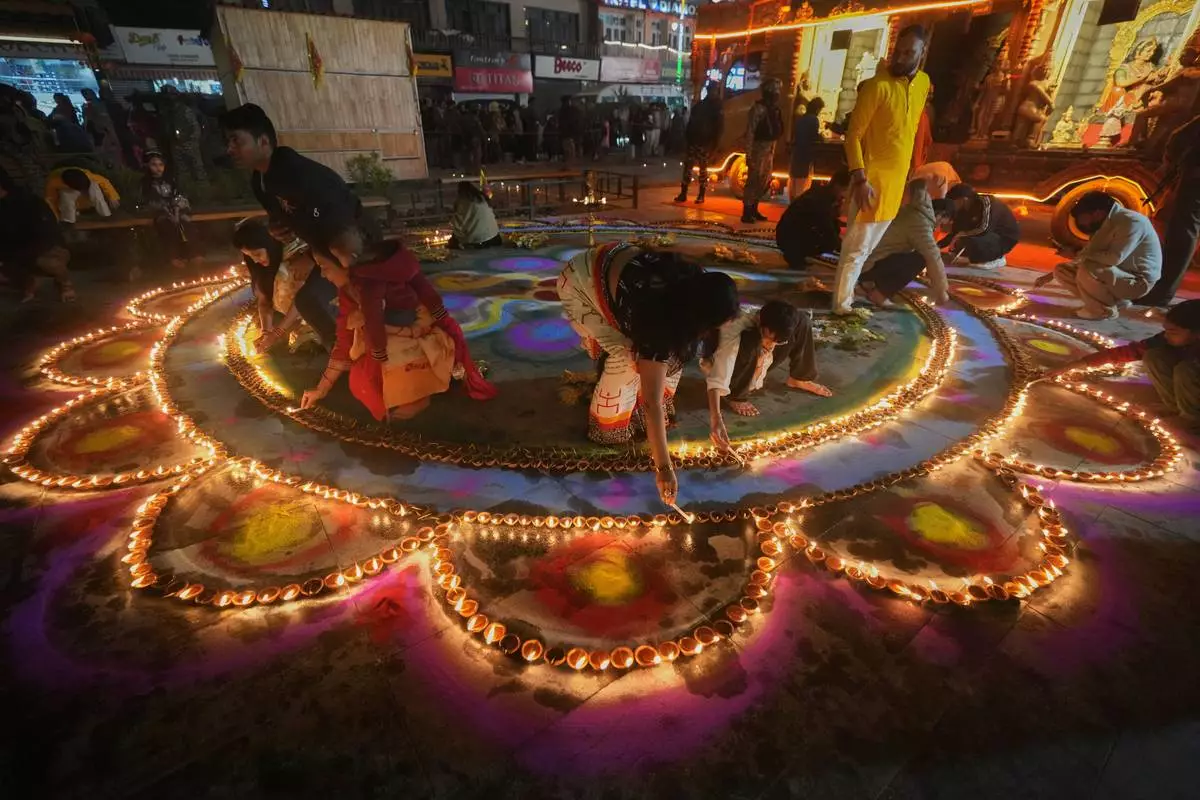
FILE - Hindus light oil lamps as they celebrate Diwali, the Hindu festival of lights, in Srinagar, Indian controlled Kashmir, Nov. 8, 2026. (AP Photo/Mukhtar Khan, File)
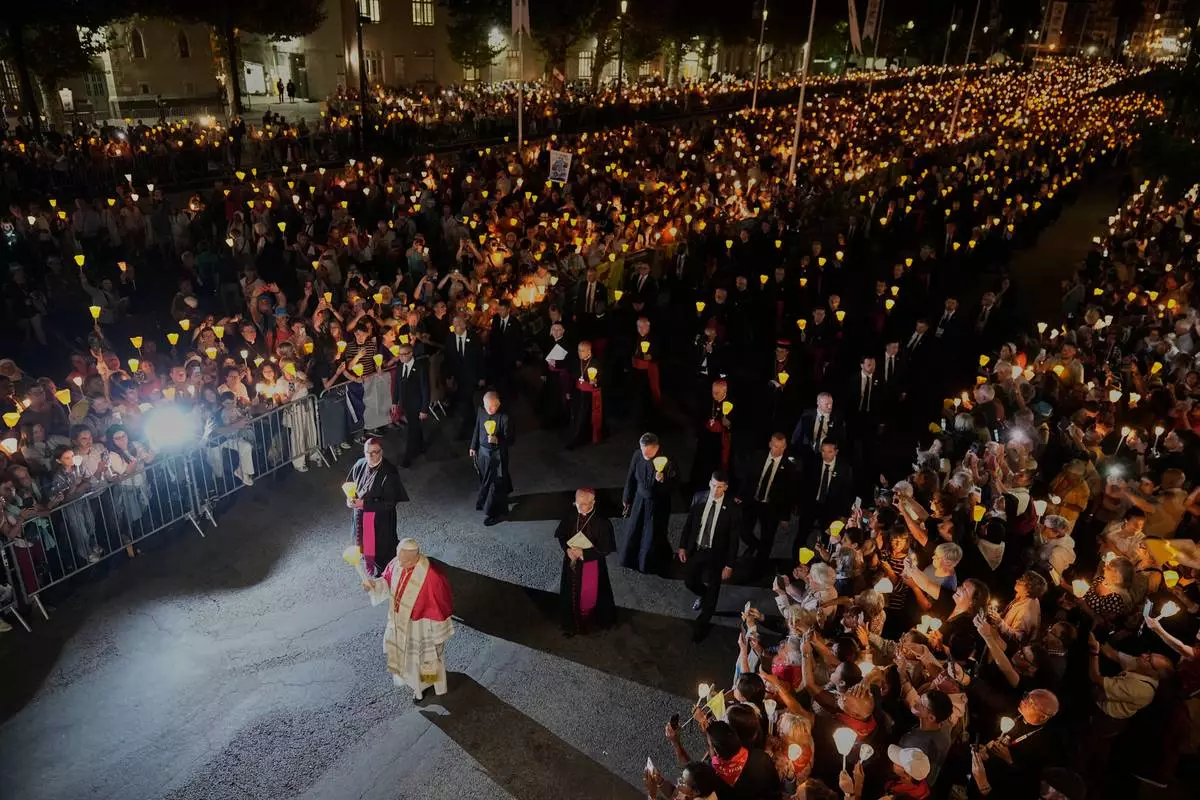
FILE - Pope Leo XIV, left, holds a candle during a prayer of Holy Rosary and torchlight procession at the Sanctuary of Our Lady of Lourdes, France, Sept. 27, 2026. ((AP Photo/Laurent Cipriani, File)
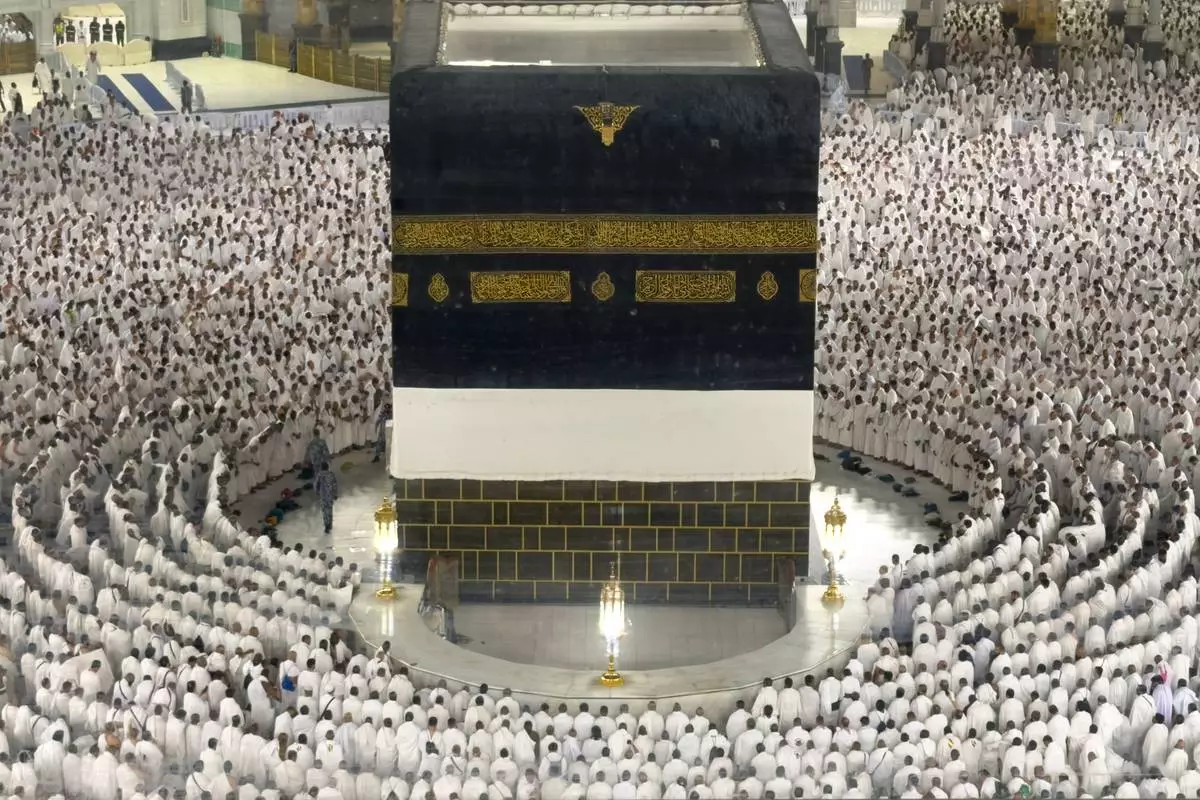
FILE - In this photograph taken through a glass fence, Muslim pilgrims are seen praying around the Kaaba, Islam's holiest site at the Grand Mosque during the annual Hajj pilgrimage, in Mecca, Saudi Arabia, May 22, 2026. (AP Photo/Altaf Qadri, File)