WESTPORT, Conn. (AP) — Flash flooding brought on by heavy rains prompted road closures, water rescues and commuter rail problems across the tristate area Sunday.
The National Weather Service said the hardest-hit areas appeared to be northern New Jersey, parts of New York’s Westchester County and a swath of coastal Connecticut along Interstate 95. The service issued flash flood warnings across the region for much of the morning Sunday as rain fell at a rate of 1 to 2 inches (2.5 to 5 centimeters) an hour in places.
Metro-North and Amtrak said their rail lines to New Haven, which serve Norwalk, Bridgeport and other major Connecticut communities, were experiencing delays and cancellations due to flooding impacts.
Tweed New Haven Airport also closed its departures terminal due to local flash flooding. Airport officials in a Facebook post said travelers with flights departing Sunday should not come until further notice.
Connecticut Gov. Ned Lamont and other state officials, meanwhile, urged drivers to avoid flooded roadways and not to attempt to drive through standing water.
The coastal stretch from Norwalk to Westport was among the most impacted in the state, receiving 6 to 7 inches (15 to 18 centimeters) of rain Sunday morning, with rainfall rates reaching 3 to 4 inches (8 to 10 centimeters) per hour.
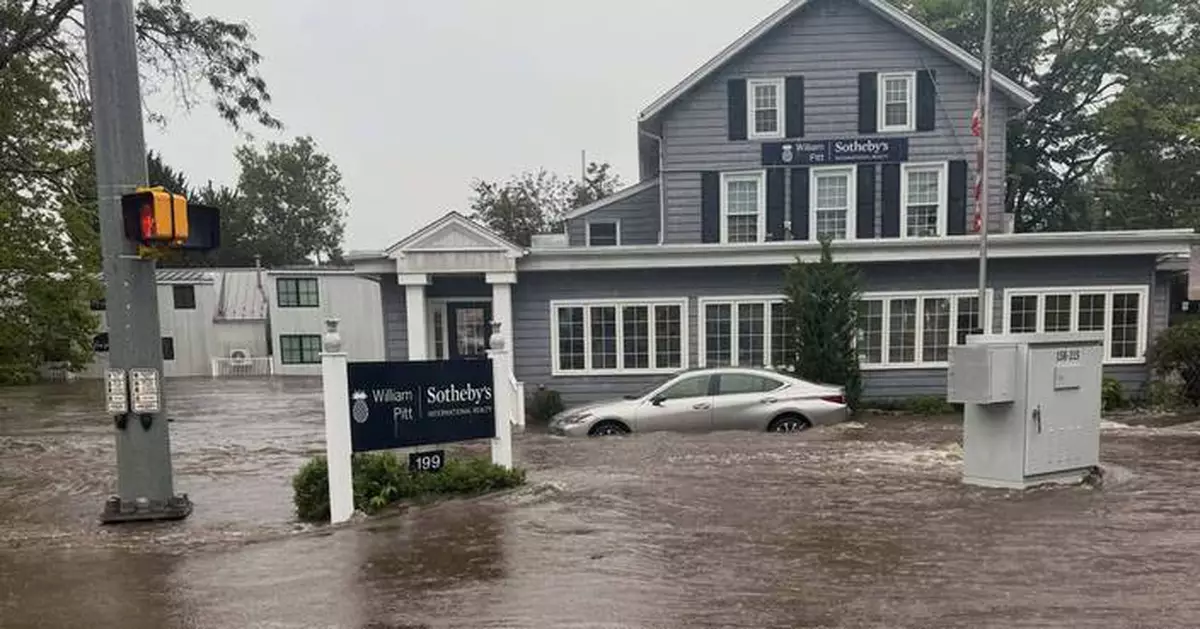
In Westport, emergency responders conducted 13 rescues of people trapped in vehicles by floodwaters, according to the fire department. Photos and videos shared on social media showed downtown businesses inundated.
“Even as the rain subsides, standing water and other hazards may remain,” the department cautioned on Facebook. “Residents should continue to avoid flooded roads, never drive around barricades, and give emergency crews room to work.”
In Bridgeport, the fire department said in a social media post it answered “call after call” on Sunday, including deploying boats “to rescue residents from flooded areas and bring them to safety.” Photos shared by the department showed residents being helped into a boat from the door of a house, with rescuers standing in knee-deep water outside.
The heavy rains also forced multiple road closures and some water rescues in White Plains and other major communities in New York's Westchester County.
In New Jersey, Paterson Mayor Andre Sayegh said emergency crews rescued about 20 people from rapidly rising floodwaters, including a woman who fell out of her wheelchair and ended up floating in the street.
Sayegh said there were no immediate reports of any deaths or severe injuries from the deluge, even as video shared on social media showed parked cars submerged nearly up to their windows on some roads.
As the rains tapered off and the skies cleared, Paterson's annual Dominican parade stepped off Sunday afternoon, though with a slight delay.
“The rain won’t stop us from celebrating our culture, pride, and community!” organizers wrote on Facebook.
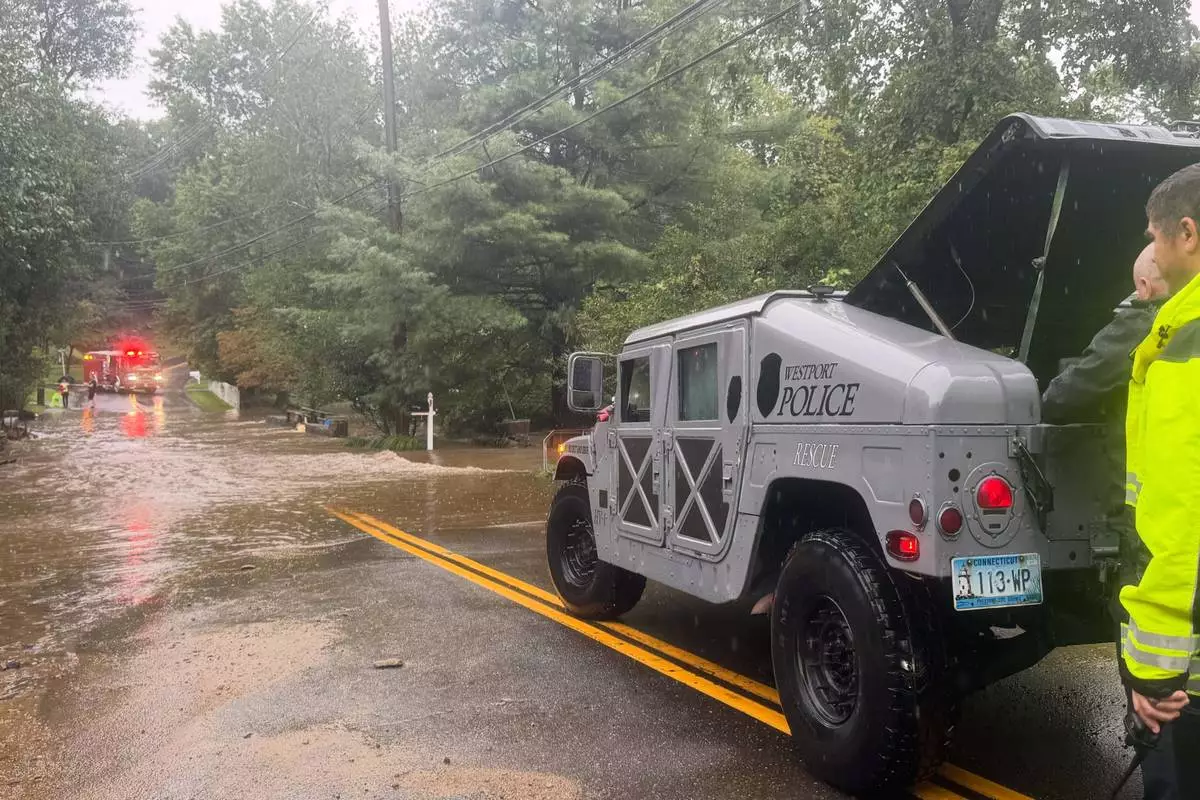
This photo provided by Westport Fire Department shows rescuers responding to flash flooding in Westport, Conn., Sunday, Sept. 13, 2026. (Jennifer Petrosinelli/Westport Fire Department via AP)
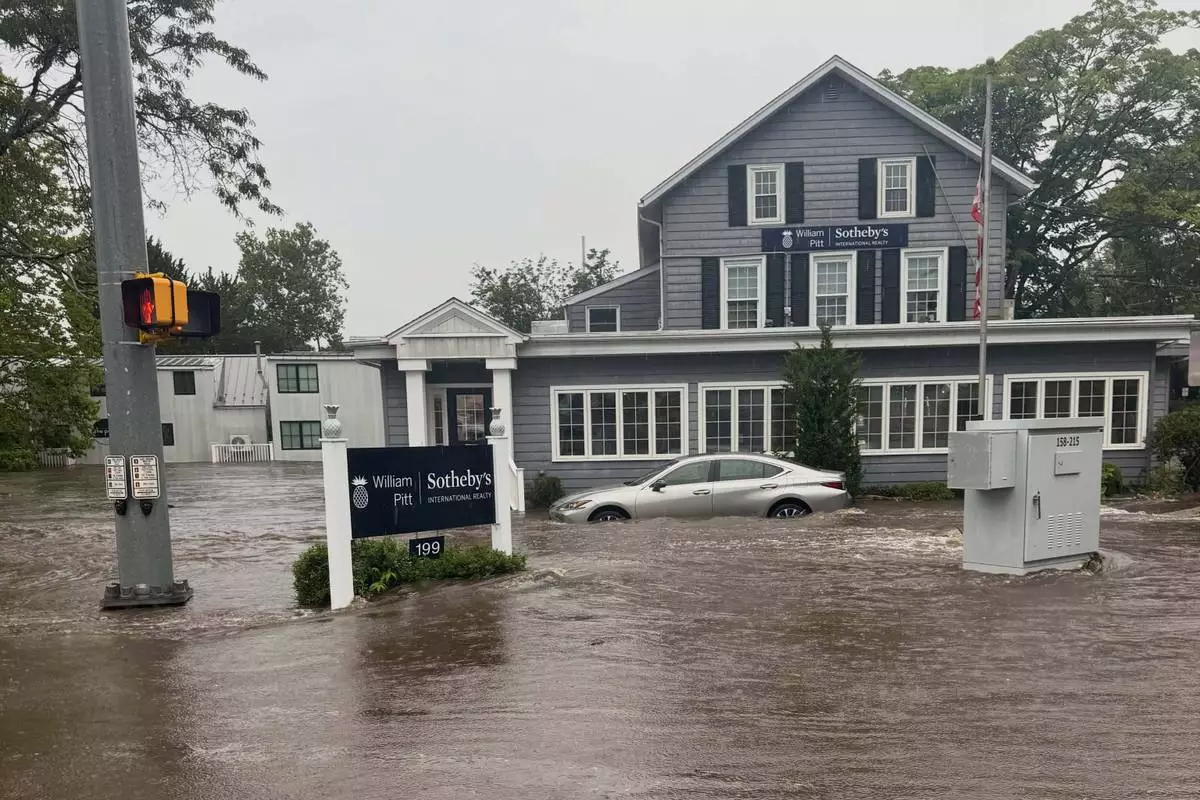
This photo provided by Westport Fire Department shows flash flooding in Westport, Conn., Sunday, Sept. 13, 2026. (Jennifer Petrosinelli/Westport Fire Department via AP)
ROVANIEMI, Finland (AP) — European leaders were meeting Monday to discuss growing competition in the Arctic, where global warming is opening new shipping routes, governments are vying for vast natural resources and a Russian military buildup is heightening security concerns.
German Chancellor Friedrich Merz and Danish Prime Minister Mette Frederiksen were among leaders expected for the European Arctic Summit in Rovaniemi, Finland, a city perhaps best known for its Santa Claus village.
The two-day gathering that began Sunday comes on the heels of a Norwegian seizure of a Russian vessel earlier this month in the remote Arctic archipelago of Svalbard at the request of Ukraine, drawing the condemnation of Russian President Vladimir Putin.
Finland’s Prime Minister Petteri Orpo told reporters as the meetings got under way that the Arctic was “very important" for European security and prosperity, and a “clear picture” and “common understanding” were needed.
“We have natural resources. We have new sea routes because of climate change. But also we have threats. That’s why we need concrete actions,” he said. “There is so much we can do together.”
The Centres for European Policy Network, a think tank, noted the “extremely dynamic backdrop” for the summit.
It cited factors like accelerating climate change, China's growing trade through the Arctic, and conflict around the Strait of Hormuz, which has raised the importance of the Northeast Passage for maritime shipments.
The meeting serves as a “dress rehearsal” for a looming revamp of the European Union's Arctic policy expected to be released this autumn, with security at the center of the strategy for the first time, the group said.
Climate change has been thinning the Arctic ice, promising to create a northwest passage for international trade and reigniting competition with Russia, China and other countries over access to the region’s mineral resources.
Meanwhile, the European bloc has been grappling with its response to U.S. President Donald Trump's persistent pressure over Greenland, a self-governing territory of EU member country Denmark. He has repeatedly said the icy, resource-rich island should be part of the United States. Greenland’s government opposes U.S. designs on the island.
Last week, European Commission President Ursula von der Leyen offered 200 million euros ($232 million) in EU support over the next two years to help Greenland tackle climate change, boost internet connections and improve hydropower plants, fisheries and education.
Separately Monday, President Alexander Stubb of Finland announced his country was joining France’s “forward deterrence” program that aims to leverage the French nuclear arsenal for European defense. Ten countries have now joined, including Britain, Germany and Finland’s Nordic neighbor countries.
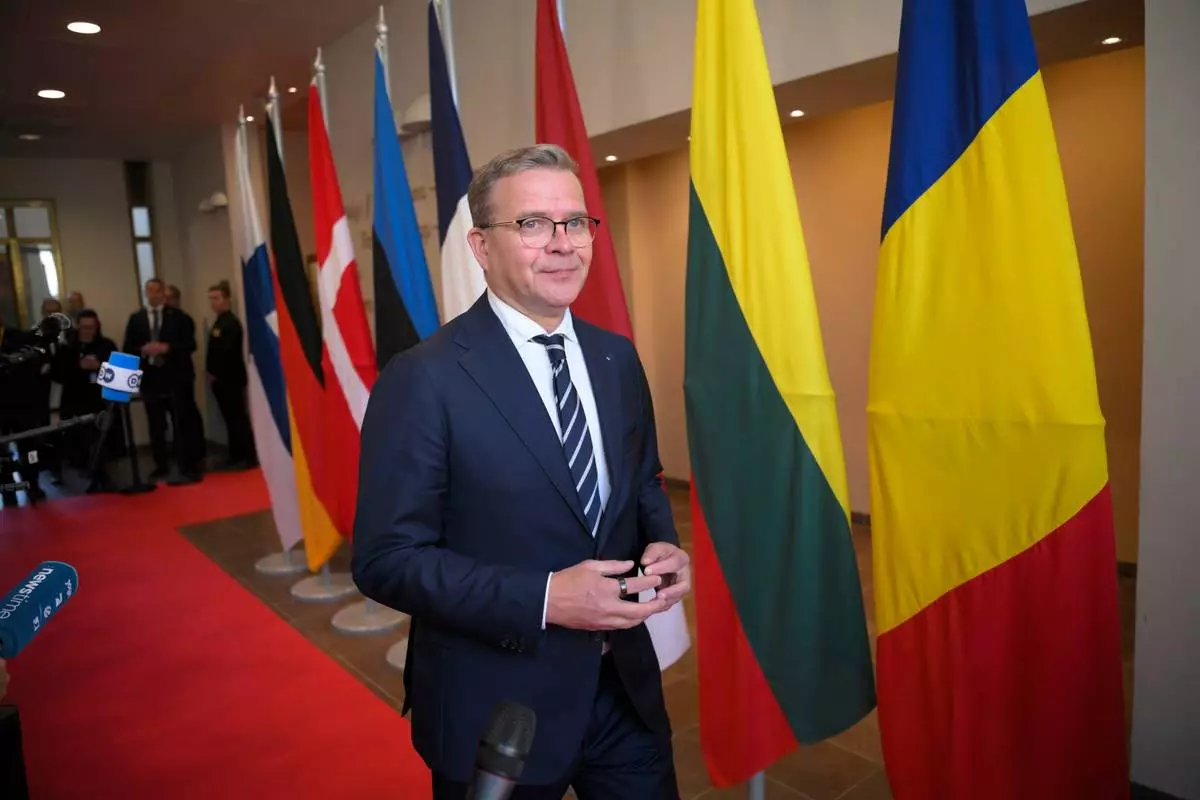
Finnish Prime Minister Petteri Orpo arrives ahead of the European Arctic Summit in Rovaniemi, Finland, Monday, Sept. 14, 2026. (Jouni Porsanger/Lehtikuva via AP)
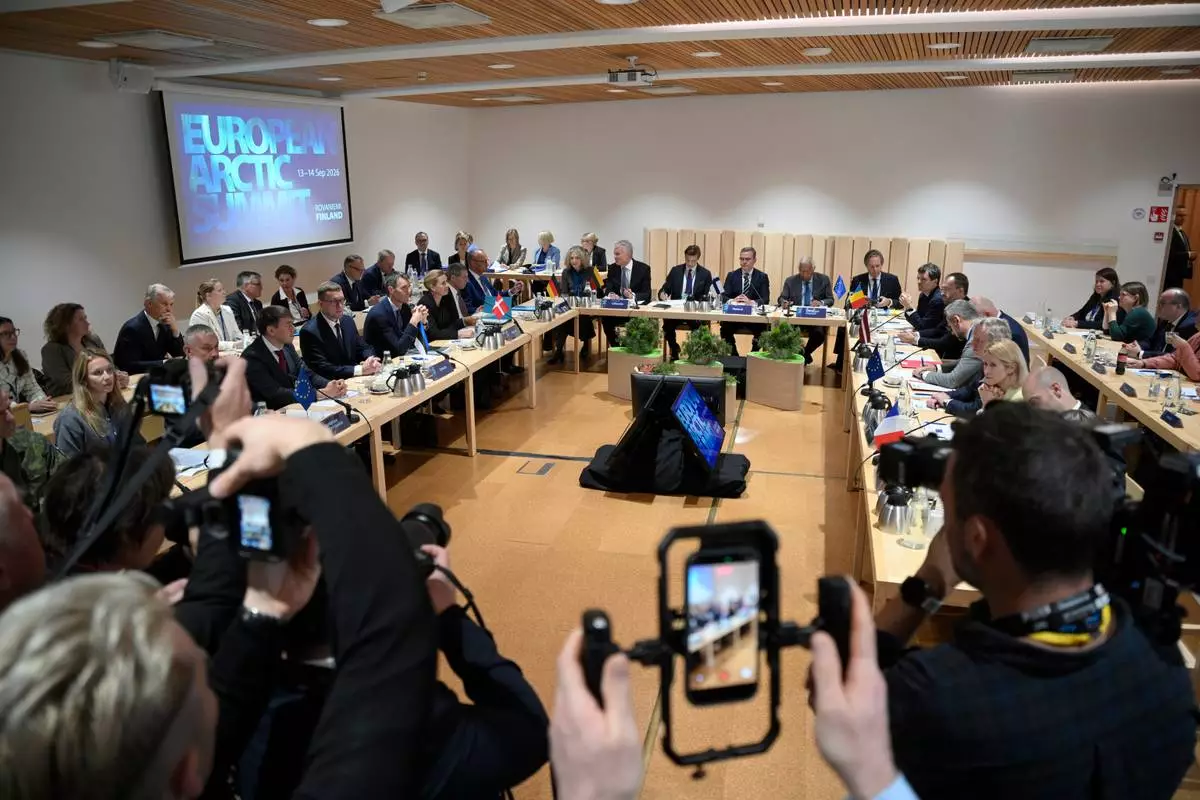
Members at the First Working Session of The European Arctic Summit meet in Rovaniemi, Finland, Monday, Sept. 14, 2026. (Jouni Porsanger/Lehtikuva via AP)
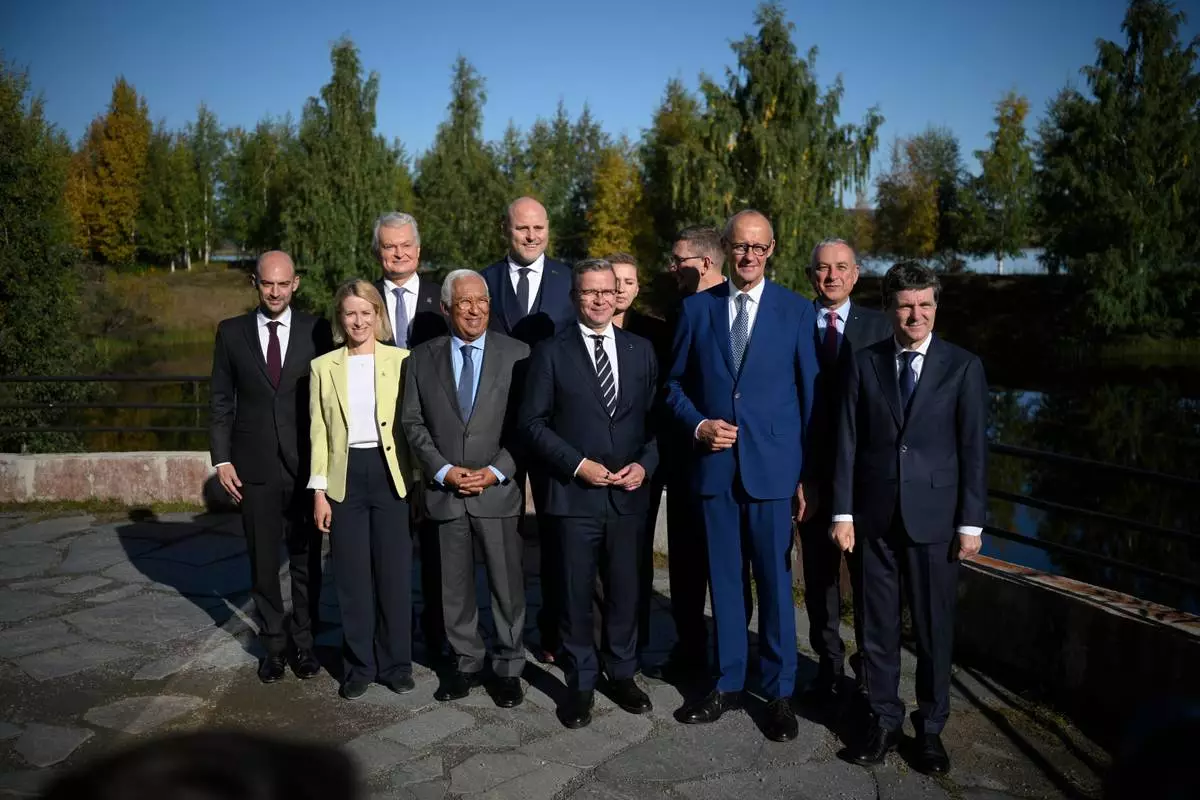
Minister for Europe and Foreign Affairs of France Jean-Noel Barrot, from left, High Representative of the Union for Foreign Affairs, Security Policy Kaja Kallas, President of Lithuania Gitanas Nauseda, President of the European Council António Costa, Prime Minister of Latvia Andris Kulbergs, Finnish Prime Minister Petteri Orpo, Prime Minister of Denmark Mette Frederiksen, Prime Minister of Estonia Kristen Michal, Federal Chancellor of Germany Friedrich Merz, Commissioner for International Partnerships Jozef Síkela and President of Romania Nicușor Dan pose for a family photo during the European Arctic Summit in Rovaniemi, Finland, Monday, Sept. 14, 2026. (Jouni Porsanger/Lehtikuva via AP)
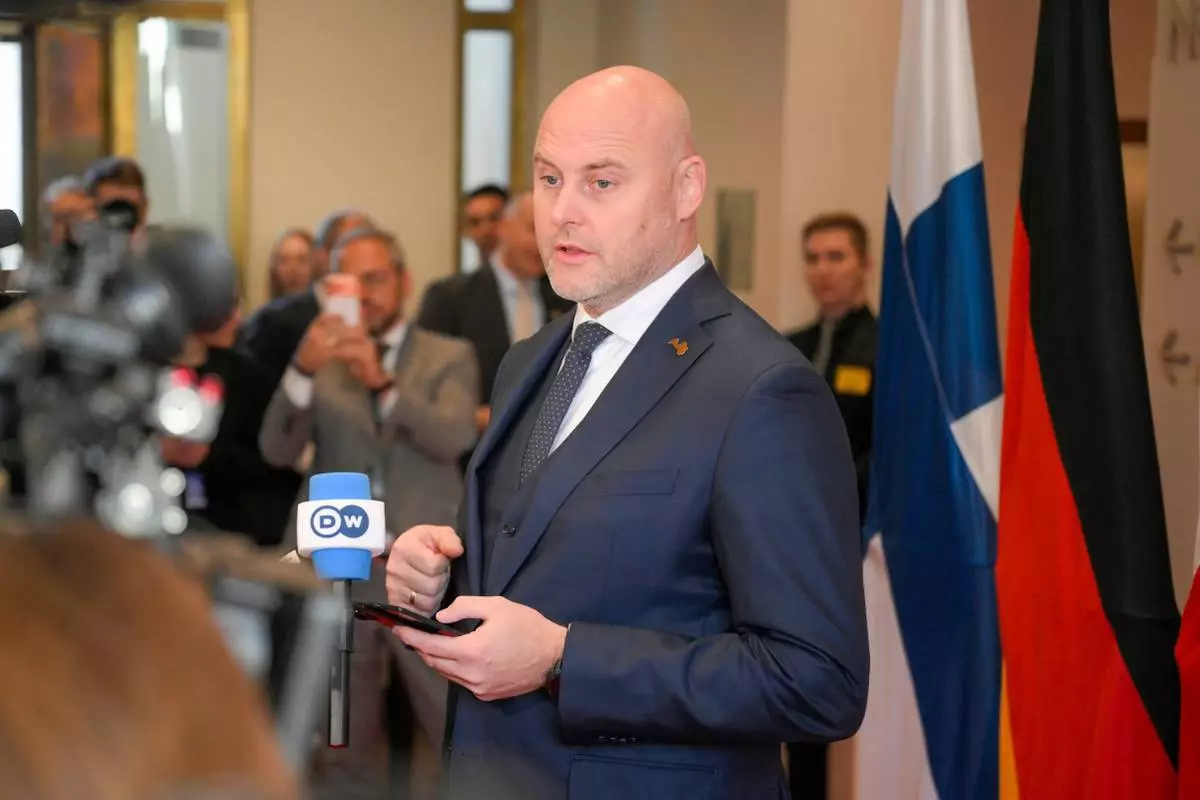
Prime Minister of Latvia Andris Kulbergs speaks to the media during the European Arctic Summit in Rovaniemi, Finland, Monday, Sept. 14, 2026. (Jouni Porsanger/Lehtikuva via AP)
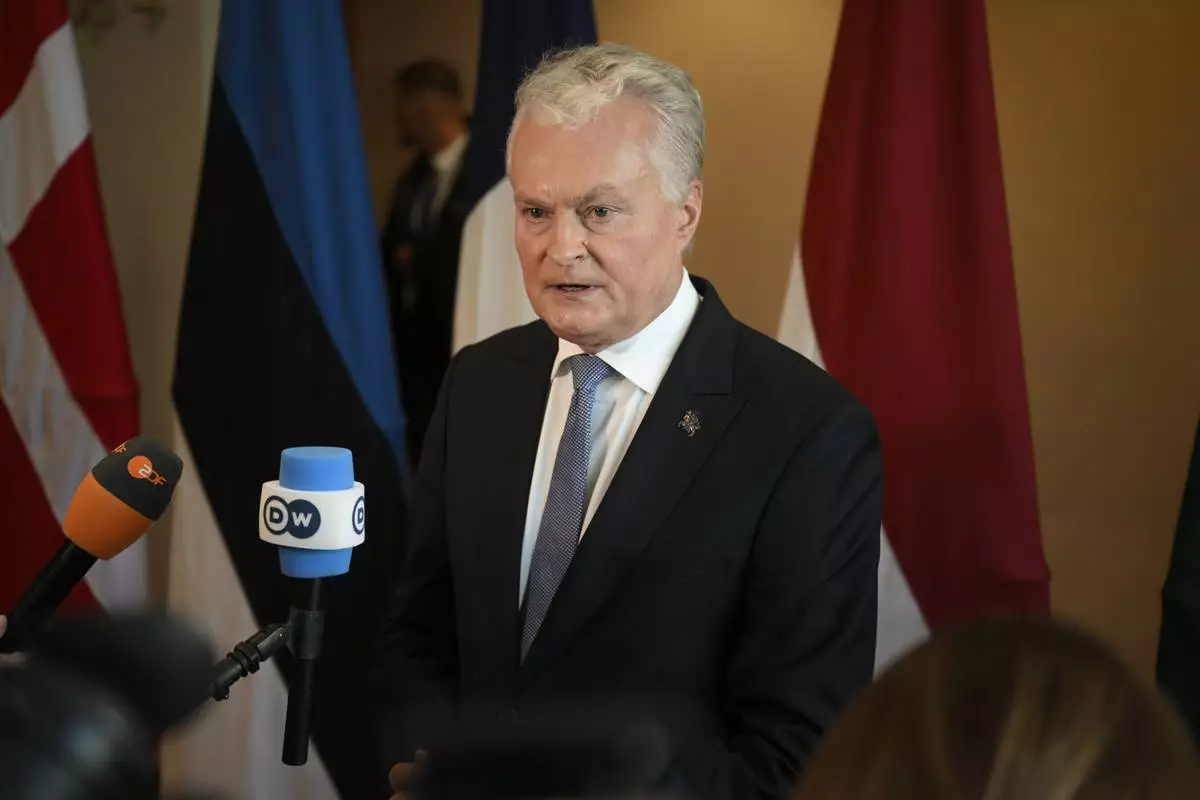
President of Lithuania Gitanas Nauseda speaks with members of the media during the European Arctic Summit in Rovaniemi, Finland, Monday, Sept. 14, 2026. (Jouni Porsanger/Lehtikuva via AP)
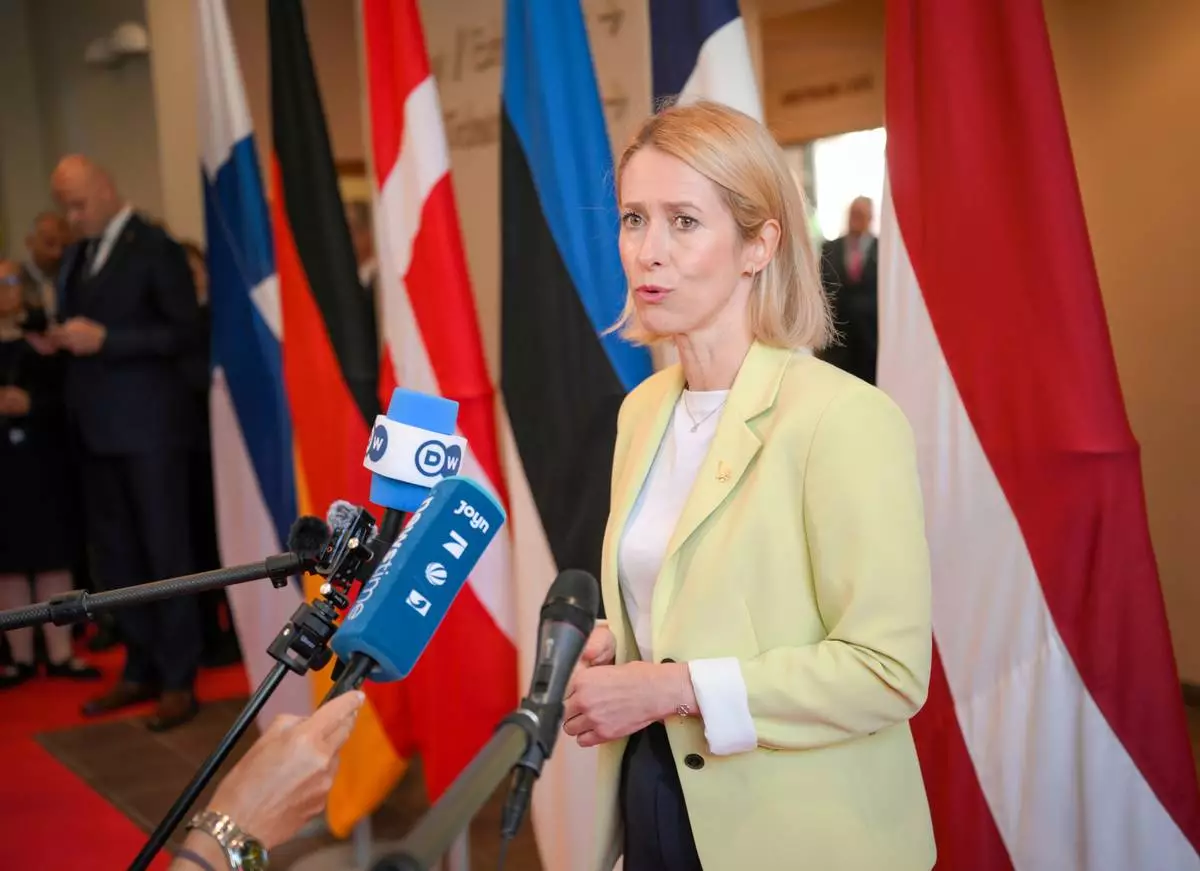
European Commission Vice-President Kaja Kallas speaks to the media during the European Arctic Summit in Rovaniemi, Finland, Monday, Sept. 14, 2026. (Jouni Porsanger/Lehtikuva via AP)
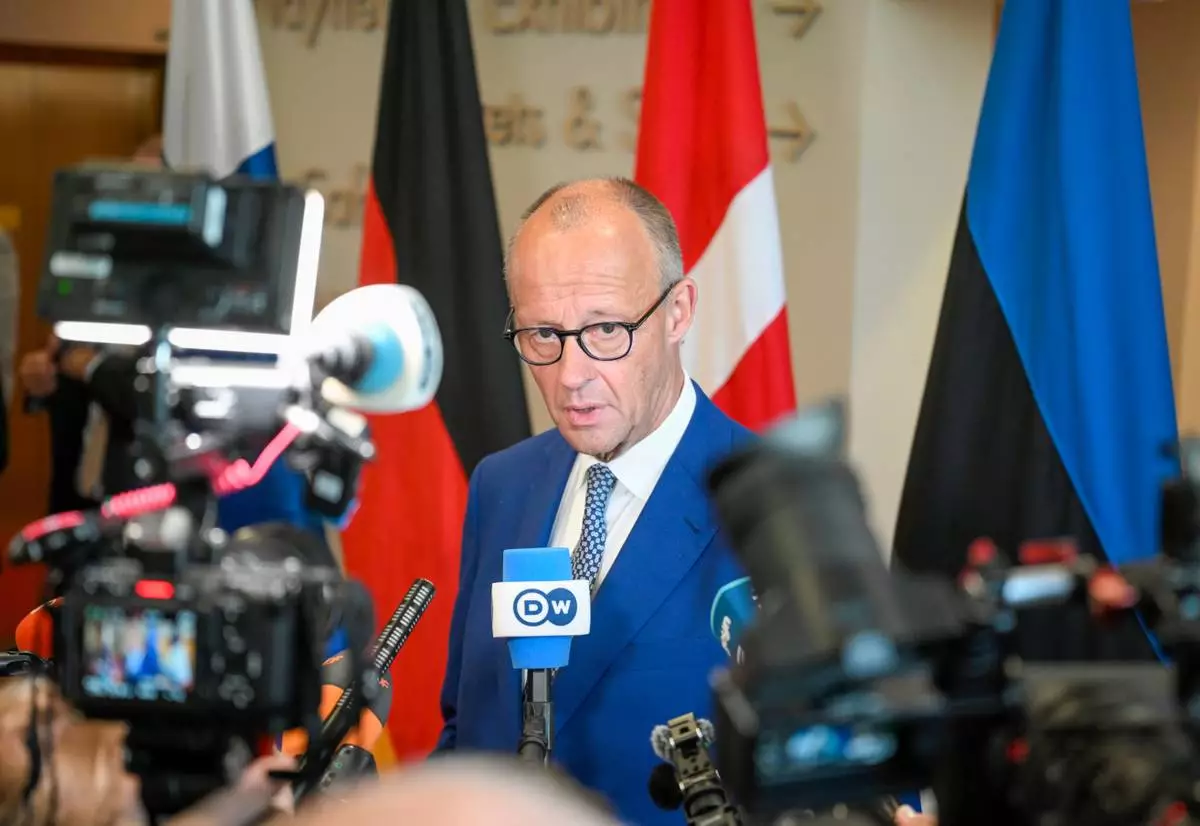
Federal Chancellor of Germany Friedrich Merz speaks to media during the European Arctic Summit in Rovaniemi, Finland, Monday, Sept. 14, 2026. (Jouni Porsanger/Lehtikuva via AP)