Millions of displaced people in Sudan are suffering from a devastating heatwave that has gripped the country since the beginning of summer, worsening living conditions amid dwindling resources and medical supplies across the war-torn country.
Since April 2023, fighting between the Sudanese Armed Forces and the paramilitary Rapid Support Forces has killed tens of thousands of people and displaced millions both within Sudan and across its borders.
Heatwaves have gripped many parts of the country since the start of summer, with temperatures in some areas still exceeding 40 degrees Celsius in September.
The intense heat has seen a rise in cases of heatstroke, which has seen residents failing to get needed treatment amid shortages of medical supplies due to the war.
"Many people have fallen ill due to the heat. The community health center is currently treating six to seven heatstroke patients. A few days ago, heatstroke cases reached 70," said Mohamed Abdallah, a displaced resident.
The extreme heat has further exposed the country's water and electricity shortages. Since the conflict began, water treatment plants, supply stations and pipelines in many parts of Sudan have been damaged, leaving the water supply network disrupted for long periods.
Power shortages are also widespread, especially in Port Sudan, where many displaced people are concentrated. The city currently suffers outages of eight to 14 hours a day, while some shelters for displaced people can only supply electricity for a few hours a day.
For many the deeper problem lies in what the fighting has left broken.
"Recently, many people have suffered heatstroke due to the high temperatures. The situation of displaced people is particularly worrying. One important reason is the lack of public services caused by the conflict, especially the severe shortage of water and electricity," said Mohamed Ali, another displaced resident.
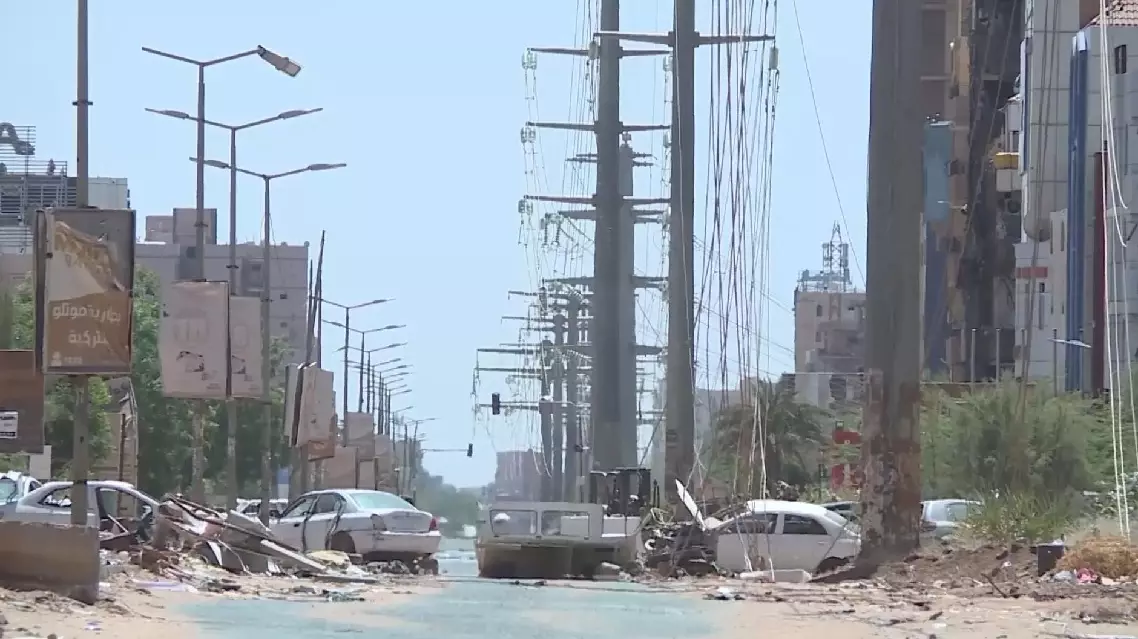
Heatwaves worsen plight of displaced people in conflict-hit Sudan
Israeli President Isaac Herzog on Sunday formally tasked opposition leader Gadi Eisenkot with forming a government, giving the former military chief a chance to replace Prime Minister Benjamin Netanyahu after Netanyahu's right-wing coalition lost its parliamentary majority in October's election.
Eisenkot, leader of the centrist Yashar party, received recommendations from 67 lawmakers in the 120-seat parliament, compared with 46 for Netanyahu.
At the ceremony, Herzog called for unity and a "stable government that can last."
Eisenkot warned that Israel was facing a "critical moment," saying the objectives of its multi-front conflicts "remained unfulfilled," its international relations were in a "devastating crisis," and its democracy was facing one of its gravest challenges.
"If we continue on the current path, we risk reaching a point of no return," he said, calling for new leadership "that people can look in the eye and trust."
He said he was convinced it was possible to form a new government with a substantial majority in the Knesset, and that he was open to Netanyahu's Likud party and far-right Finance Minister Bezalel Smotrich's Religious Zionist Party joining a government under his leadership.
He said they were invited to "support the government under my leadership and the principles I've outlined."
"I intend to be the prime minister of all citizens of Israel, those who voted for me and those who haven't," Eisenkot said.
Eisenkot has 28 days to form a government, with a possible 14-day extension. Netanyahu will remain caretaker prime minister until a new government is sworn in.
Eisenkot's four-party alliance holds only 48 seats and would need support from Arab lawmakers or other parties to form a government.
Netanyahu on Saturday called for a national unity government, while Eisenkot's party said Likud could join a government led by Eisenkot if it abandoned its far-right allies.
Under Israeli law, if Eisenkot fails to form a government within the allotted time, Herzog may assign the task to another candidate, or at least 61 members of the 120-seat Knesset can ask the president to entrust the mandate to a candidate of their choice. If these efforts also fail, the Knesset will be dissolved and new elections will be held.
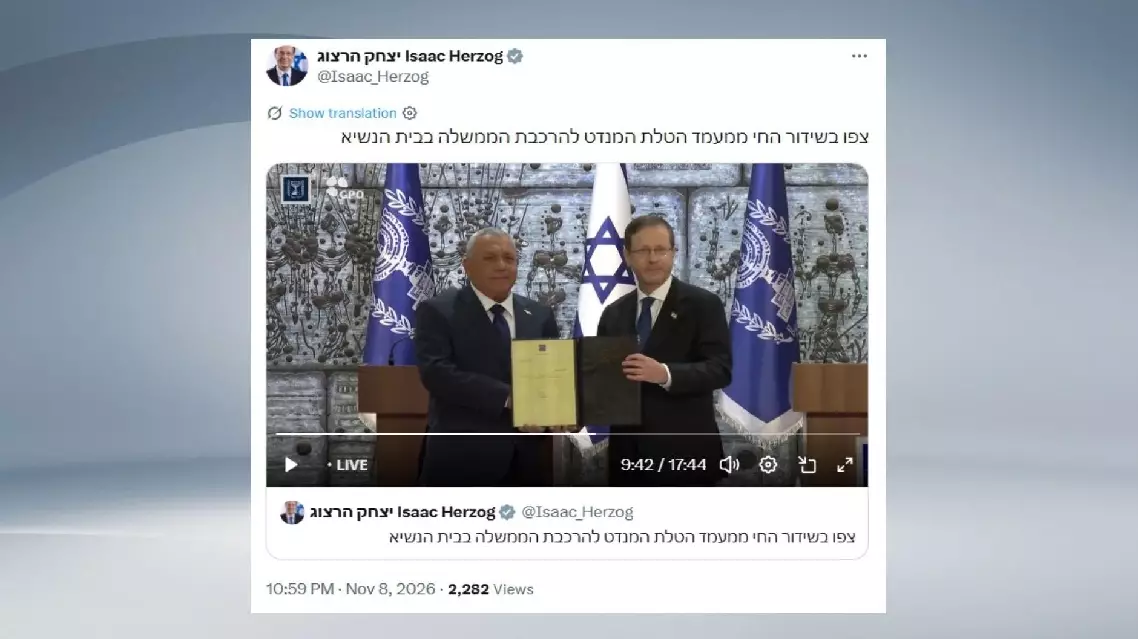
Israeli opposition leader Eisenkot officially receives mandate to form gov't
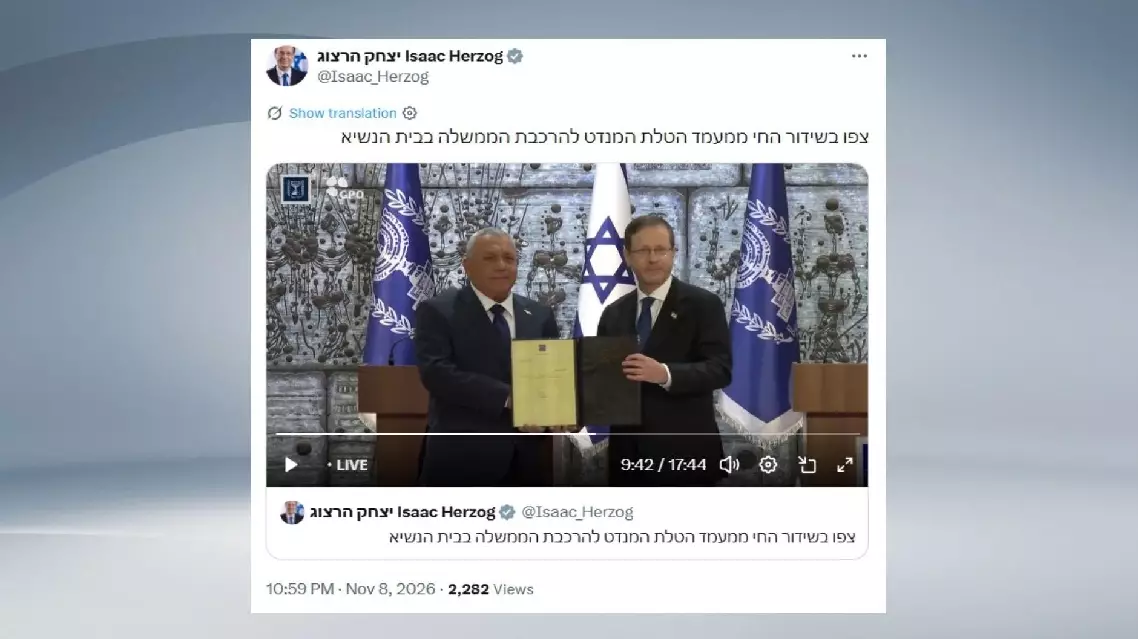
Israeli opposition leader Eisenkot officially receives mandate to form gov't