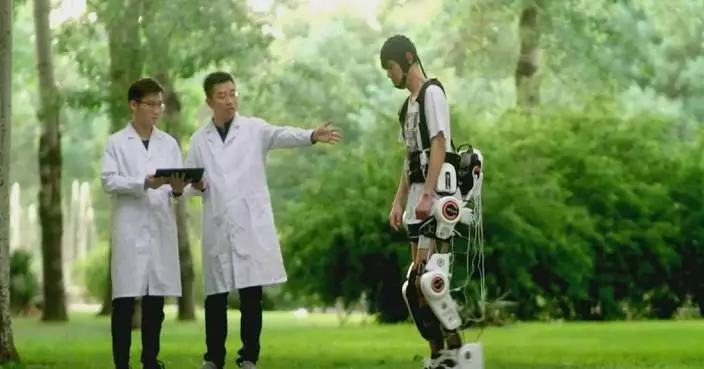
China's approval and issuance of its third medical device standard for brain-computer interfaces (BCIs) marks a significant advancement from isolated breakthroughs to a systematic approach in this emerging field, contributing a Chinese solution to global BCI standardization.
Approved on Monday and set to take effect on September 1, 2027, this standard is the world's first product guideline for BCIs utilizing AI algorithms to process brainwave data. It will establish unified requirements for the collection, processing, labeling, storage, and access of brainwave data.
China first released its standard for BCI medical devices on September 16, 2025, establishing a systematic terminology framework for equipment based on BCI technology. This standard took effect on January 1, 2026. A second standard was introduced on September 28, 2025, focusing on test method for sensing and response performance of implantable nerve stimulators.
"The third BCI medical device standard released today enhances the conceptual framework established by the terminology standard and offers a data quality foundation for performance test and registration review of specific brain-computer interface products," said Li Shu, Deputy Director of the Institute for Medical Devices Control of the National Institutes for Food and Drug Control, and a drafter of the standard.
The National Medical Products Administration is actively initiating and formulating a range of related standards, including 10 national standards and three industry standards. These efforts aim to create a comprehensive standards system covering terminology and definitions, paradigm design, data specifications, neural electrical signal acquisition and decoding, key performance testing, and reliability verification.
"The National Medical Products Administration has included implantable brain-computer interface medical devices in the Catalogue of High-End Medical Devices for Priority Examination and Approval, guiding enterprises in registration applications. At the same time, some products have been placed in the innovation and "global new" green approval channels, with full-process guidance to accelerate product launch," said Yuan Peng, Deputy Director of the Medical Device Registration Department at the National Medical Products Administration.
With robust policy support and technological advancements, China's BCI market is entering a rapid growth phase. Data predicts that China's BCI market will exceed 6 billion yuan (about 840 million U.S. dollars) by 2028 with a compound annual growth rate of 17.7 percent from 2024 to 2028. The global BCI medical application market will reach 40 billion U.S. dollars by 2030 and 145 billion U.S. dollars by 2040.
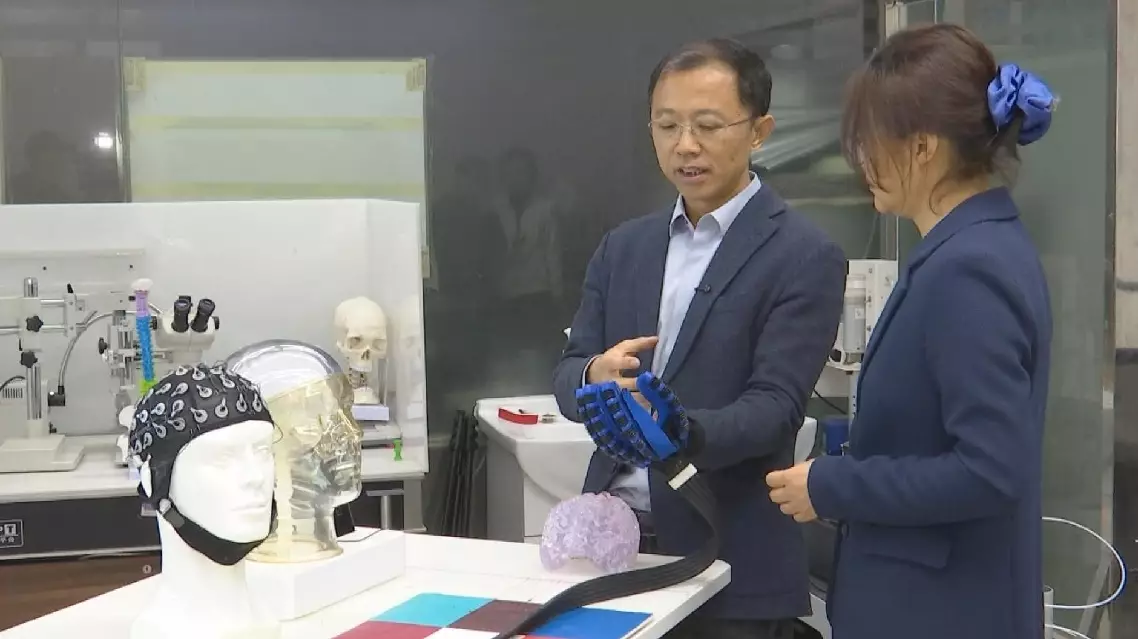
China advances global BCI framework with new standard for BCIs
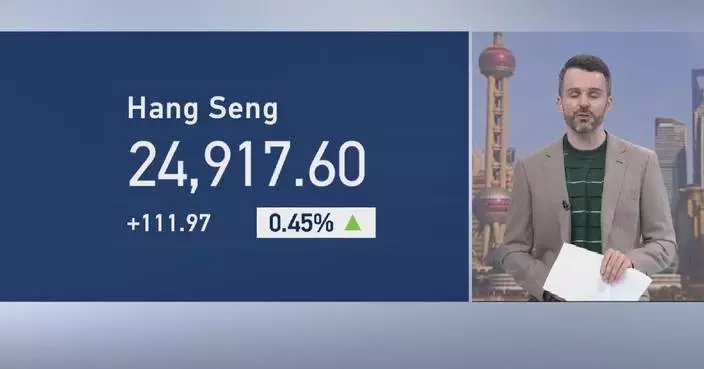
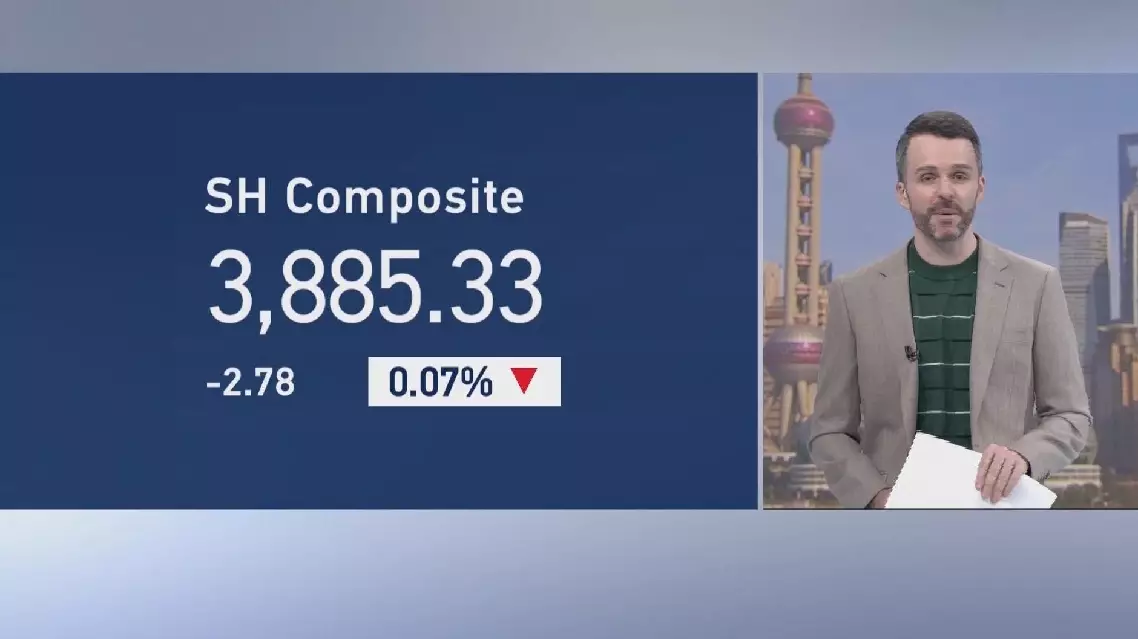
China's benchmark Shanghai Composite Index closed almost flat on Monday amid a wide sell-off of artificial intelligence-related stocks triggered by calls from top executives of major U.S. AI developers to slow the pace of AI development, according to Timothy Pope, an analyst for China Global Television Network (CGTN).
The Shanghai Composite Index dropped 0.07 percent to 3,885.33 points on Monday, while the Shenzhen Component Index closed 0.64 percent lower at 13,384.57 points.
The ChiNext Index, tracking China's Nasdaq-style board of growth enterprises, lost 1.10 percent to close at 3,285.58 points Monday. The STAR Composite Index, which reflects the performance of stocks on China's sci-tech innovation board, closed 0.35 percent lower at 1,811.23 points.
Pope noted that despite the overall resilience of major indexes, AI hardware stocks were among the biggest losers on the day.
"The Chinese mainland markets proved pretty resilient today actually as global AI stocks wobbled. We saw oil prices jump and interest-rate hike bets rising as well. The Shanghai Composite Index ended the session pretty much flat, while the Shenzhen Component [Index] lost a little more than half of 1 percent. AI stocks around the world sank today after the Anthropic CEO Dario Amodei published an essay calling for a slowdown in the development of frontier AI models. That was also backed up by OpenAI boss Sam Altman and some other industry leaders as well. But critically for Chinese companies, Amodei also called for tighter restrictions on exports of advanced AI chips and semiconductor equipment to China. We saw AI shares on the A-share have been caught in a bit of a rotation cycle already lately, with investors switching in and out pretty aggressively from these AI hardware stocks. So that added some extra momentum to today's move out of that sector. They were falling and were one of the weaker sectors today," said Pope.
The analyst said stocks of listed big state-own banks saw an injection of capitals from investors amid AI sell-off.
"Investors took some shelter in financial stocks. The big state-owned banks were once again helping to support the Shanghai index and investors were also waiting for the latest bank-lending data, although that wasn't released before the close of the markets today. There was also a small rebalance in the STAR 50 today. A handful of new companies joined the high-tech index, but that didn't fundamentally change things for the pressured tech sector," he said.
Pope highlighted that Chinese investors will witness a slew of data release in the rest of the week, helping them to have a more comprehensive grasp of the status of the country's domestic demand.
"For the week ahead in China, it's going to be very data-heavy. Tomorrow we have a big data dump including fixed-asset investment, property data, retail sales and industrial production and that's really going to give the market some clues about the state of domestic demand after those very strong trade figures that we saw last week," he said.
Chinese stocks resilient as calls for AI slowdown trigger sell-off: analyst