BUCHAREST, Romania (AP) — Vadim Ghirda is a Bucharest, Romania-based Associated Press photographer who has documented major news, conflict and humanitarian stories for more than 35 years.
Here's what he had to say about this extraordinary photo:
I enjoy shooting events outside the mainstream hard-news agenda. They often offer a more intimate perspective on human nature, and photography is one of the greatest vehicles for exploring it. Photography and other forms of visual journalism are a universal language, accessible to all humans regardless of the things that mislead us into thinking we are different: race, gender, social status, access to education, sexual orientation, or religion. Speak it well and you have a good shot at breaking down the cultural barriers that separate us. This has always been an important mission, and in times of growing division, it is more important than ever.
I am not a fan of technicalities. The way we “see” our individuality is what makes the photograph. However, the tools we choose help us better convey the ‘soul’ of a fleeting moment. In this case, a wide-aperture lens and its shallow depth of field helped make the subject stand out. I was also very lucky — one must always acknowledge that.
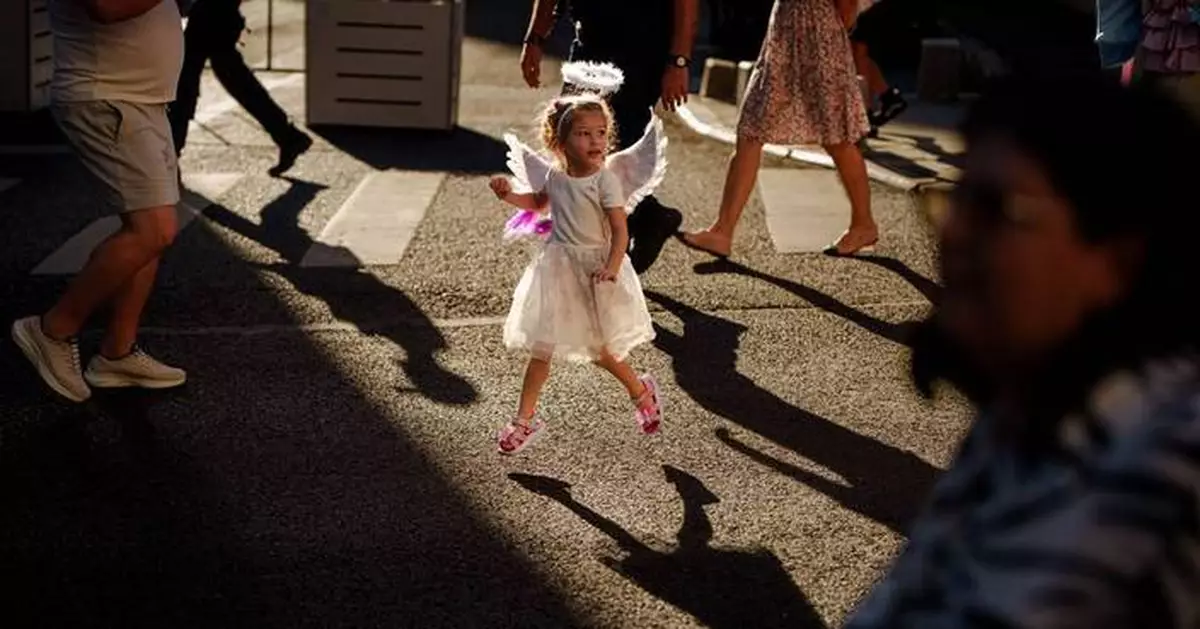
It is a simple image, and this is the main reason it is eye-catching. The little girl, wearing an angel costume, is backlit and surrounded by almost dark areas. This contrast, together with capturing her in midair — a posture we’d expect from a little angel — makes the photograph work. She is tiny and beaming with childhood energy as she jumps among adults who seem unaware of her presence.
I choose to see her as hope in a not very happy environment. After all, this is the role of angels.
Since joining AP in December 1989, Vadim Ghirda's assignments have included the upheaval following communism in Eastern Europe, the Balkan wars, the Middle East, Crimea, and Russia’s war in Ukraine. His work has received recognition, including a World Press Photo award, Prix Bayeux-Calvados and a 2023 Pulitzer Prize as part of AP’s Breaking News Photography team covering Ukraine.
For more extraordinary AP photography, click here.
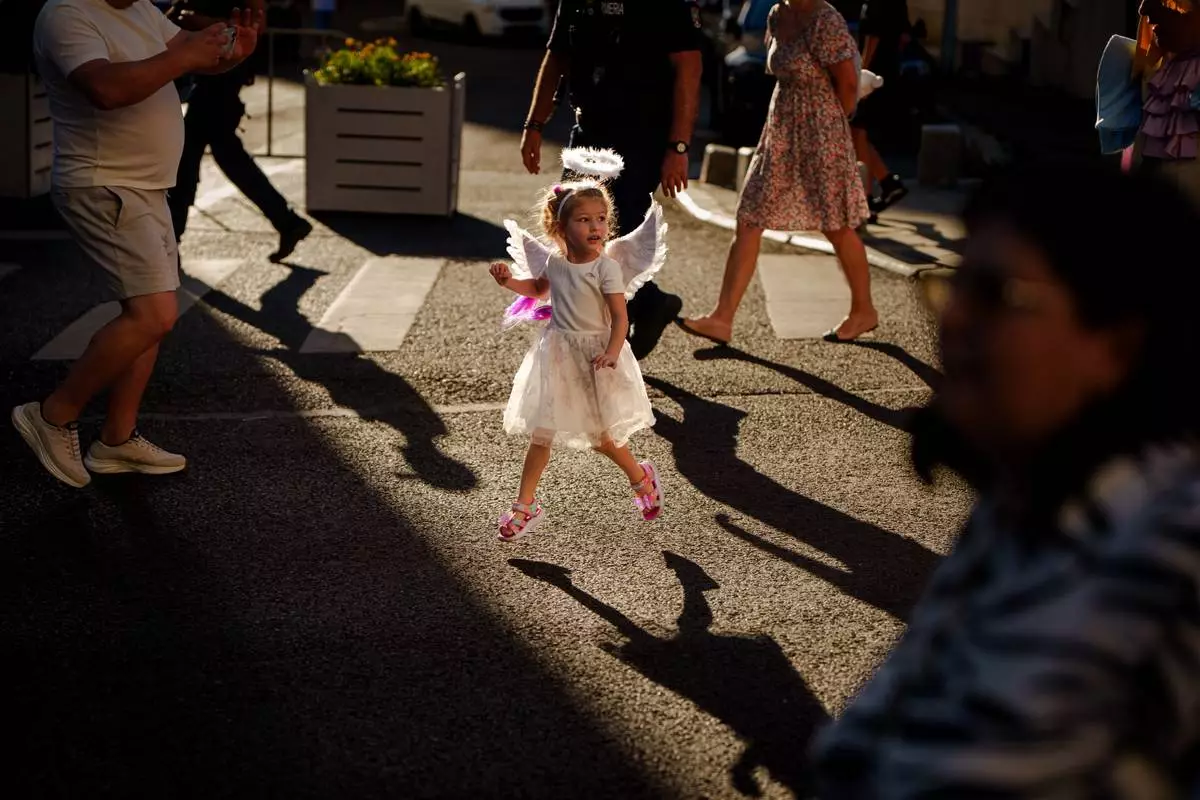
A child dressed as an angel runs during an event dubbed the Little Angels' Parade, a Christian-themed street performance featuring dozens of children wearing angel costumes, in Bucharest, Romania, Saturday, Sept. 5, 2026. (AP Photo/ Vadim Ghirda)
MARFA, Texas (AP) — Landowners, ranchers and business owners in the Big Bend region of Texas along with a nonprofit organization dedicated to protecting the region's landscape and heritage are suing to stop the Trump administration's plans to build a wall and other border infrastructure through the remote section of the state.
The lawsuit, filed by Conserve Big Bend and with the support of dozens of landowners, comes as the administration is ramping up a $46 billion effort to line the roughly 2,000-mile southern border with a collection of 30-foot (9-meter) steel bollard walls, vehicle barriers, and technology intended to keep out smugglers and migrants.
In Texas, the effort has run up against numerous lawsuits and bipartisan opposition from sheriffs, elected officials, tour guides, environmental groups and landowners.
Officials backing the wall “were woefully unprepared for the hornet’s nest they stirred up because they had no idea how much we love this place,” said David Keller, an archaeologist and historian who specializes in the Big Bend and lives in the region.
“For us, the Big Bend is not an empty place on the map,” he said. “It is our home.”
As part of its wall-building efforts, the administration has waived numerous regulations and statutes designed to protect the environment, archaeology or wildlife, on the basis that there's an urgent need to protect the border in what Homeland Security has called areas of “high illegal entry.”
But in the lawsuit announced Monday, the plaintiffs argue that when it comes to the Big Bend region, that's not an accurate description. They've cited historical statistics issued by Customs and Border Protection showing how few people cross the border in Big Bend compared with other areas along the U.S.-Mexico border.
Big Bend has about 500 miles of border with Mexico __ roughly one quarter of the total length of the border with Mexico from the Pacific Ocean to the Gulf of Mexico. But the region only accounted for about 1% of arrests, according to the lawsuit's stats.
The plaintiffs are arguing that the Department of Homeland Security is misusing powers from Congress that allow the secretary broad authority to waive regulations in order to build border walls or other infrastructure in areas where there are large numbers of people trying to cross into the country illegally.
“That determination is legally and factually unsound and unsupported,” the plaintiffs wrote.
The lawsuit filed Monday is the latest in efforts to slow or stop the administration's plans in Texas and elsewhere.
The biggest outcry has come over Customs and Border Protection's plans for the Big Bend National Park, which sits in a far southwestern corner of Texas where the Rio Grande separates the U.S. from Mexico.
The park's remote and rugged location, its steep limestone canyon walls and crystal clear starry night views attract visitors from around the world. The government has said in court hearings that no final plans have been decided for what will be built in the park but plans made public so far have included building a new road, installing detection technology and barriers to stop vehicles from crossing the border.
When bulldozers were spotted clearing land in the park in August, people across the state were outraged. CBP Commissioner Rodney Scott temporarily paused construction-related activity in the park but many activists and local residents would like to see even more changes to the administration's plans in the broader Big Bend region.
Native American groups have argued that the construction could inhibit their ability to practice their faith and is damaging important religious sites while environmentalists worry the wall will cause flooding or keep animals from migrating.
Landowners who've lived and worked along the Rio Grande for years have questioned how they'll feed livestock or water their crops if they can't access the river.
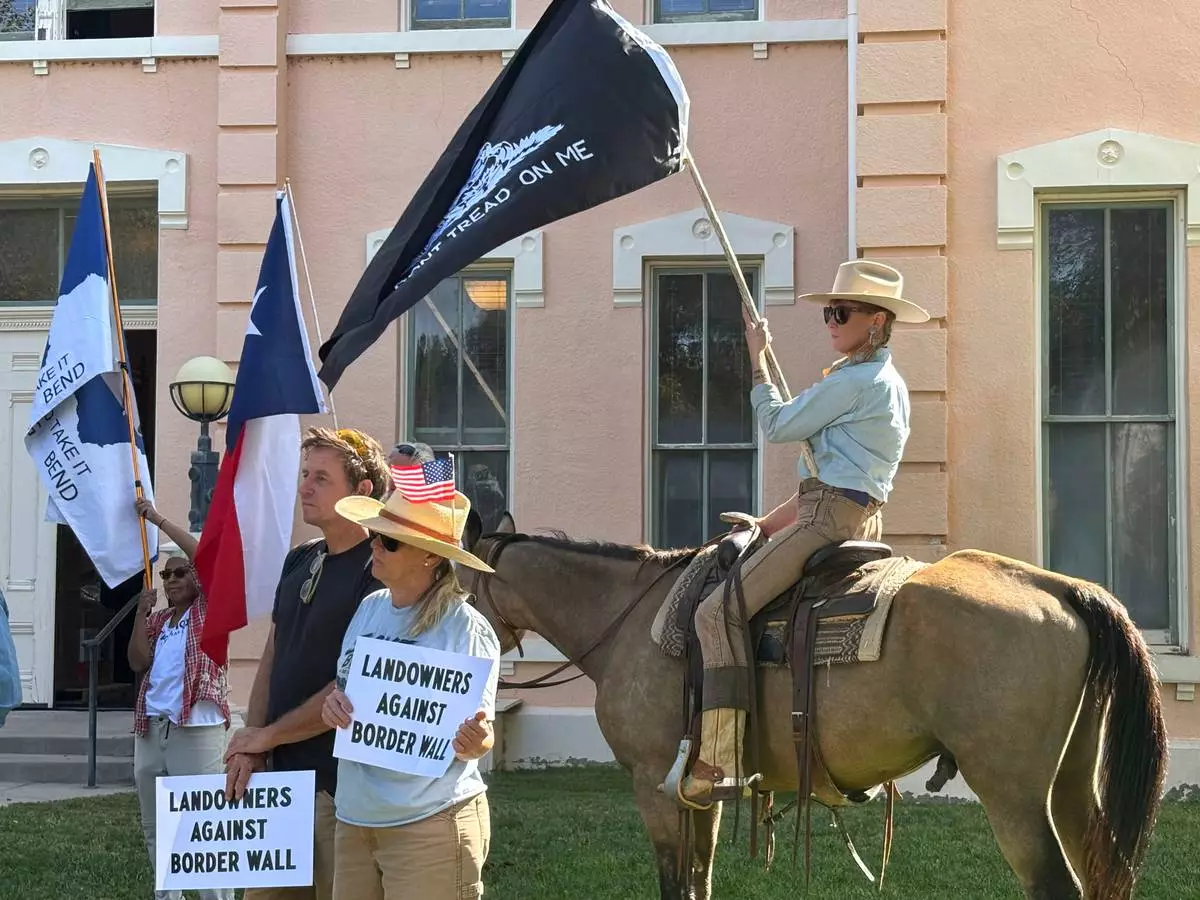
Landowners and other supporters hold signs against the Trump administration's plans to build a border wall and other infrastructure in Texas' remote Big Bend region, Monday, Sept. 14, 2026, in Marfa, Texas. (AP Photo/Rebecca Santana)
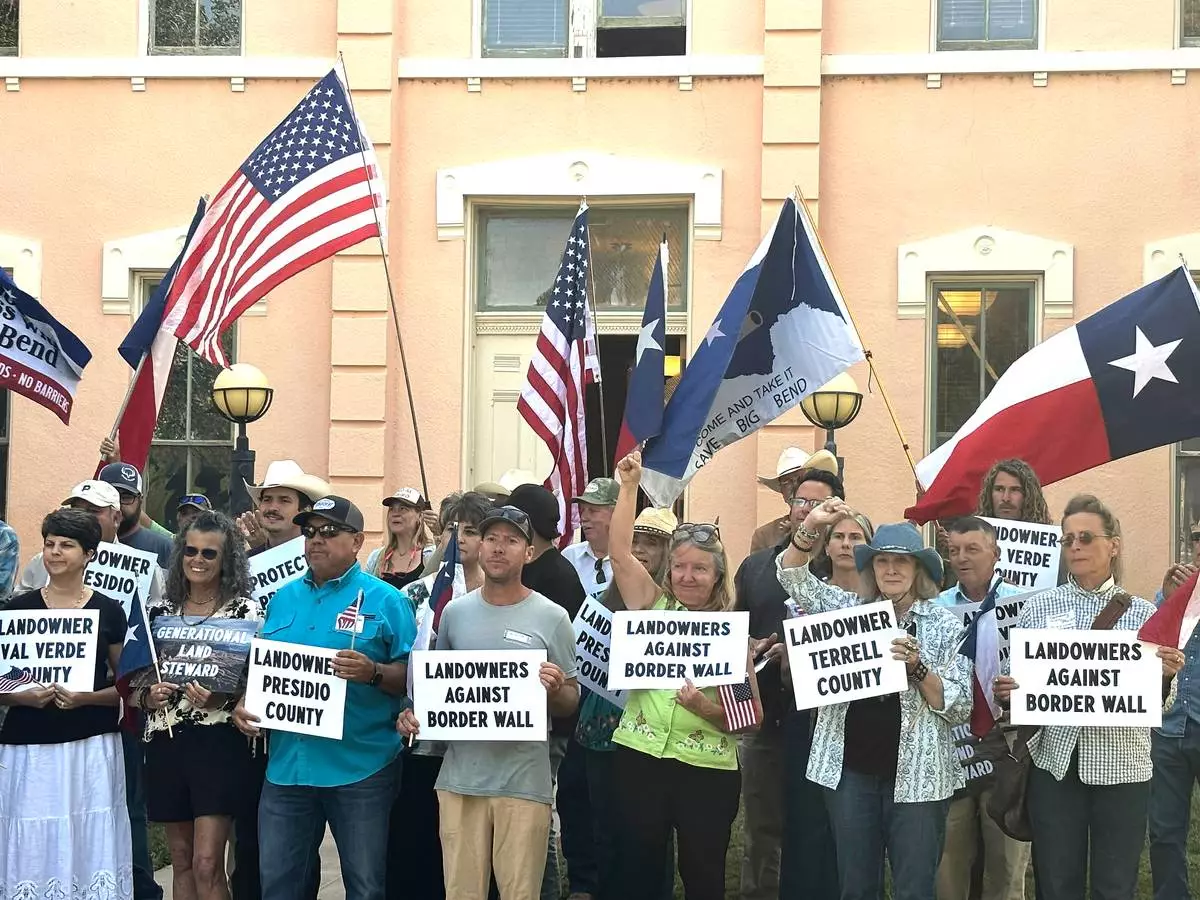
Landowners and other supporters hold signs against the Trump administration's plans to build a border wall and other infrastructure in Texas' remote Big Bend region, Monday, Sept. 14, 2026, in Marfa, Texas. (AP Photo/Rebecca Santana)