MIAMI (AP) — A close ally of ousted Venezuelan President Nicolás Maduro is expected to plead guilty Tuesday in a federal case that accused him of bribing officials to win lucrative contracts to import food at a time of widespread hardship in the South American country.
Alex Saab is scheduled to appear before Judge Kathleen Williams in Miami on Tuesday for a change of plea hearing, according to court records. The details of the plea were not immediately made public and Saab’s attorney, Neil Schuster, declined to comment.
Saab was deported in May by Venezuela's acting President Delcy Rodriguez in response to pressure from the United States, which has been targeting the Colombian-born businessman for more than a decade. He was charged with a single count of money laundering tied to an alleged conspiracy to create fake companies, falsify shipping records and skim from government contracts to import food from Colombia and Mexico.
Saab, 54, was previously charged during the first Trump administration in 2019 and then arrested during a refueling stop in Cape Verde on what the Venezuelan government described as a high-level humanitarian mission to Iran.
But President Joe Biden pardoned him in 2023 in exchange for the release of several imprisoned Americans in Venezuela. The deal, part of a failed effort by the Biden White House to lure Maduro into holding a free presidential election, was harshly criticized by Republicans and federal law enforcement officials, who immediately began investigating Saab for other alleged crimes not covered by the narrowly tailored pardon.
U.S. officials have long described Saab as Maduro’s “bag man” and could ask him to serve as a character witness against the former president, who is awaiting trial on drug charges in Manhattan after being captured in a raid by the U.S. military in January.
The new U.S. prosecution of Saab and Maduro is taking place as the Trump administration overhauls relations with Venezuela, focusing its attention on tapping into Venezuela's vast oil reserves. This month, Trump announced what he called the “BIGGEST OIL DEAL IN WORLD HISTORY” in Venezuela, a partnership with Venezuelan oil entrepreneur Alejandro Betancourt in which the U.S. government will gain a stake and access to at-cost crude shipments from oil fields with a potential to produce 65 billion barrels.
Saab was little known even in Venezuela until after his first arrest, in 2020, when Maduro's government invested huge resources rallying public support for his release.
Rodríguez, then serving as Maduro's vice president, helped mount an international campaign in which she referred to Saab as an “innocent Venezuelan diplomat” who had been illegally “kidnapped” by the U.S.
But following Maduro's capture, Rodríguez distanced herself from Saab, firing him from her Cabinet and stripping him of his role as the main conduit for foreign companies looking to invest in Venezuela.
Saab amassed a fortune through Venezuelan government contracts but became even more valuable to Maduro as U.S. sanctions forced Venezuela to conduct much of its oil sales and foreign trade outside of Western financial institutions.
The new indictment accuses Saab and others of setting up a web of companies to bribe top Venezuelan officials controlling contracts for the so-called CLAP program set up by Maduro to provide staples — rice, corn flour, cooking oil — to poor Venezuelans at a time of rampant hyperinflation and a crumbling currency.
As part of the alleged conspiracy, Saab and others allegedly expanded their corrupt influence deep inside the Maduro government, accessing billions of dollars in oil sales from state-run oil company PDVSA, prosecutors allege.
Durkin Richer reported from Washington.
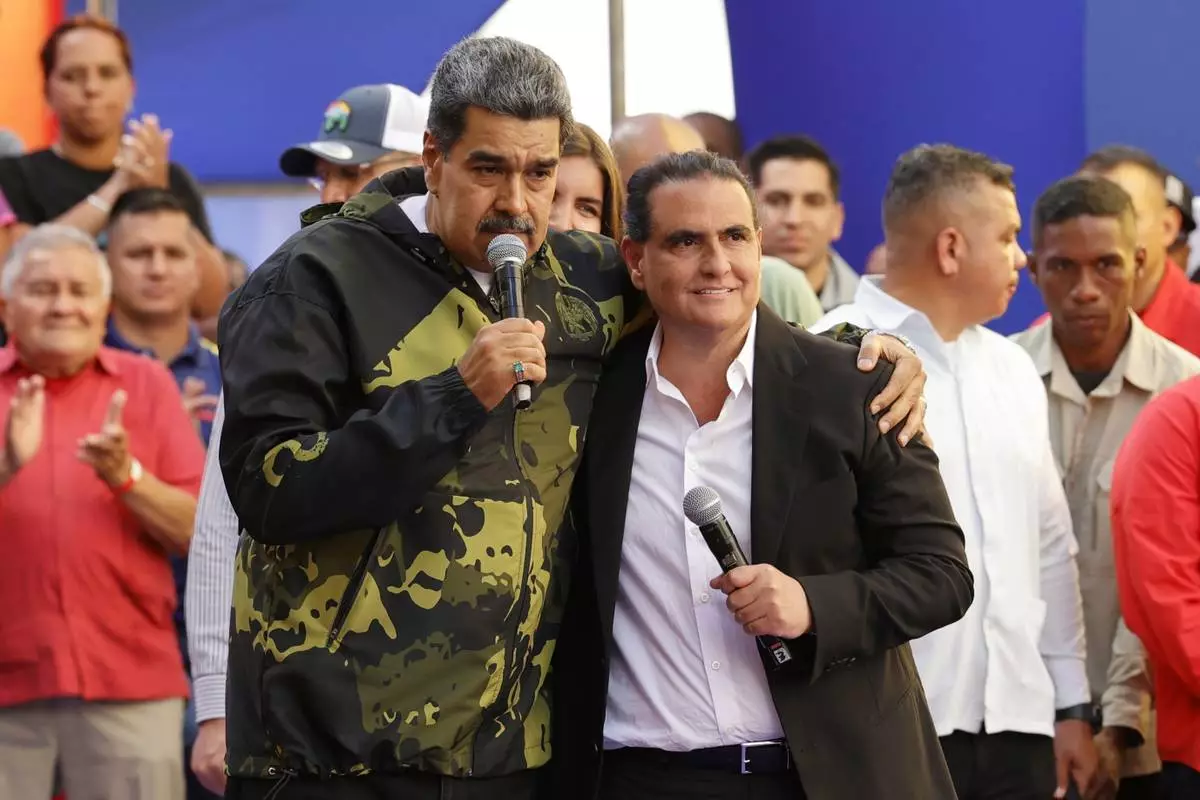
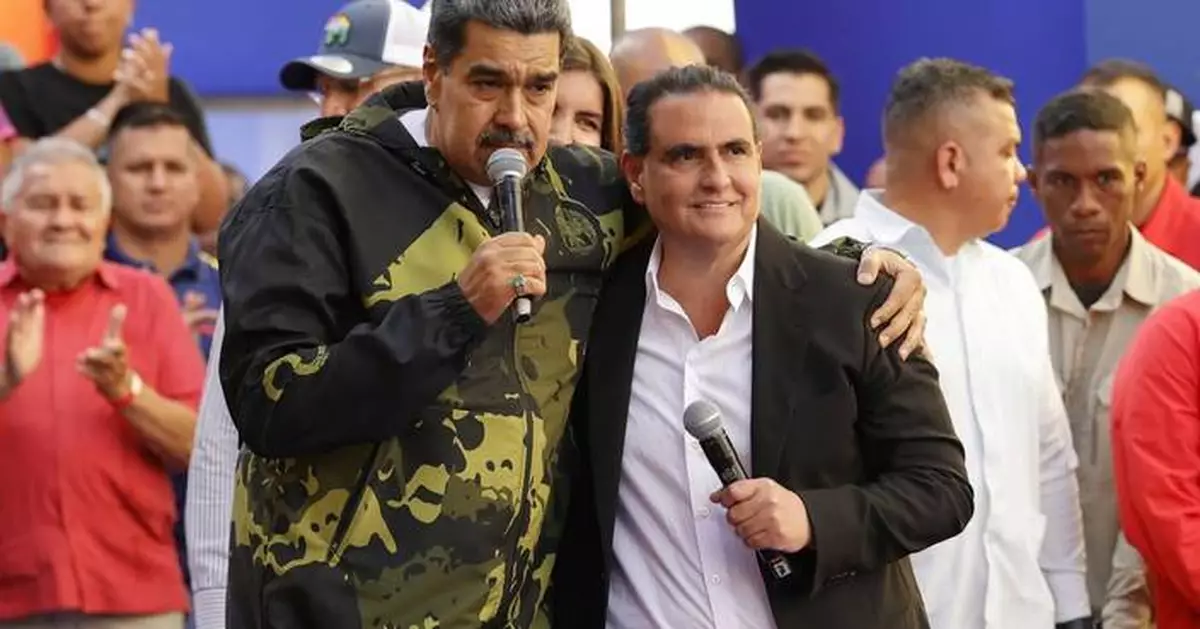
FILE - Venezuela's President Nicolas Maduro, left, and Alex Saab stand together during an event marking the anniversary of the 1958 coup that overthrew dictator Marcos Perez Jimenez, in Caracas, Venezuela, Jan. 23, 2024. (AP Photo/Jesus Vargas, File)
WASHINGTON (AP) — The Environmental Protection Agency said Monday it is repealing rules that limit planet-warming greenhouse gas emissions from power plants fueled by coal and natural gas, an action the agency said would remove more than $300 billion in costs for the industry and help “unleash” American energy. The rule change, first proposed last year, represents a fundamental shift from efforts by Democratic Presidents Joe Biden and Barack Obama to address climate change and clean up industrial pollution. EPA officials said the change would allow utilities to make the best decisions for their ratepayers rather than be forced to close aging or inefficient plants.
The rule, which is expected to face immediate legal challenges, also could prevent future administrations from regulating greenhouse gas emissions from power plants.
EPA chief Lee Zeldin, Interior Secretary Doug Burgum and Energy Secretary Chris Wright are hosting a G20 ministerial meeting on “energy abundance” in Houston. The site is both a nod to the important role the oil-rich state plays in the energy industry and a potential snub of European and other international allies in attendance who have pursued environmentally friendly policies that the Trump administration has moved to undo.
Republican President Donald Trump called climate change “the greatest con job ever perpetrated on the world” at a speech to the United Nations last year, and his administration withdrew the U.S. — for the second time — from the 2015 Paris climate accord that sets voluntary goals to curb planet-warming emissions.
Trump has boasted of U.S. energy abundance even as the Iran war continues to disrupt global fuel markets and gas prices top $4.31 a gallon, up more than a dollar from a year ago.
The rollbacks are meant to fulfill Trump’s repeated pledge to “ unleash American energy ” and make it easier for utilities to supply electricity for homes and businesses.
The power plant rule is among nearly three dozen environmental regulations that Zeldin targeted in early 2025 when he announced what he called the “most consequential day of deregulation in American history.”
Zeldin said in proposing the new rules last year that they were meant to end the Biden and Obama administrations’ “war on so much of our U.S. domestic energy supply.”
Environmental and public health groups called the rollbacks dangerous and vowed to challenge the rules in court.
“Tearing down our national protections against climate pollution from power plants will have enormous costs for the health, safety and well-being of families across the country,” said Vickie Patton, general counsel for the Environmental Defense Fund. “Americans everywhere are already suffering from record-breaking heat, more dangerous floods and storms, and skyrocketing insurance costs.”
The EPA has a legal responsibility to protect the public from harmful pollution, Patton said, adding that “clean, affordable and reliable technologies are widely available to power our homes and businesses.”
Coal, gas and oil-fired power plants are responsible for about one-quarter of the nation’s total climate pollution, second only to the transportation sector. Pollution from power plants is one of the largest sources of climate-changing pollution in the world.
The rules targeted by Trump’s EPA could prevent an estimated 30,000 deaths and save $275 billion each year they are in effect, according to an Associated Press examination last year that included the agency’s own prior assessments and a wide range of other research.
Even a partial dismantling of the rules would mean more pollutants such as smog, mercury and lead — and especially more tiny airborne particles that can lodge in lungs and cause health problems, the AP analysis found. It would also mean higher emissions of greenhouse gases, driving Earth’s warming to deadlier levels.
Biden, a Democrat, had made fighting climate change a hallmark of his presidency. Coal-fired power plants would have been forced to capture smokestack emissions or shut down under a strict EPA rule issued in 2024. Those rules are now being upended.
In its proposal last year, the Trump EPA argued that carbon dioxide and other greenhouse gases from fossil fuel-fired power plants “do not contribute significantly to dangerous pollution” or climate change and therefore do not meet a threshold under the Clean Air Act for regulatory action. Greenhouse gas emissions from coal and gas-fired plants “are a small and decreasing part of global emissions,″ the EPA said.
Zeldin, a Republican and former New York congressman, said Biden-era actions were designed to “suffocate our economy in order to protect the environment,” with the intent to regulate the coal industry “out of existence” and make it “disappear.”
The coal industry and groups representing coal-fired power plants have denounced the Biden rule as “overreach” by the EPA and urged its repeal. Lifting the rule will protect grid reliability and shield electricity consumers from higher costs at a time of surging demand from data centers, artificial intelligence and advanced manufacturing, according to America’s Power, a trade organization for the U.S. coal fleet.
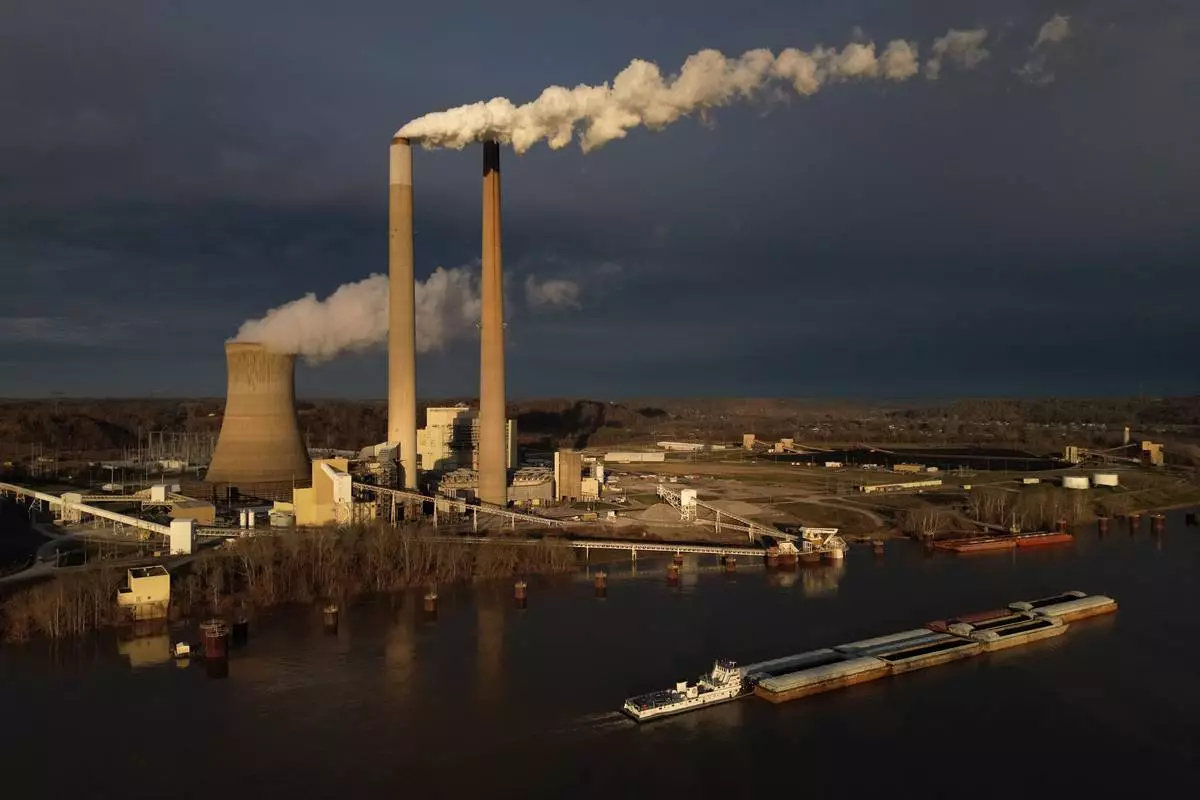
FILE - A barge on the Ohio River moves past the Mountaineer Power Plant, a coal-fired power plant near New Haven, W.Va., March 13, 2026. (AP Photo/Carolyn Kaster, File)
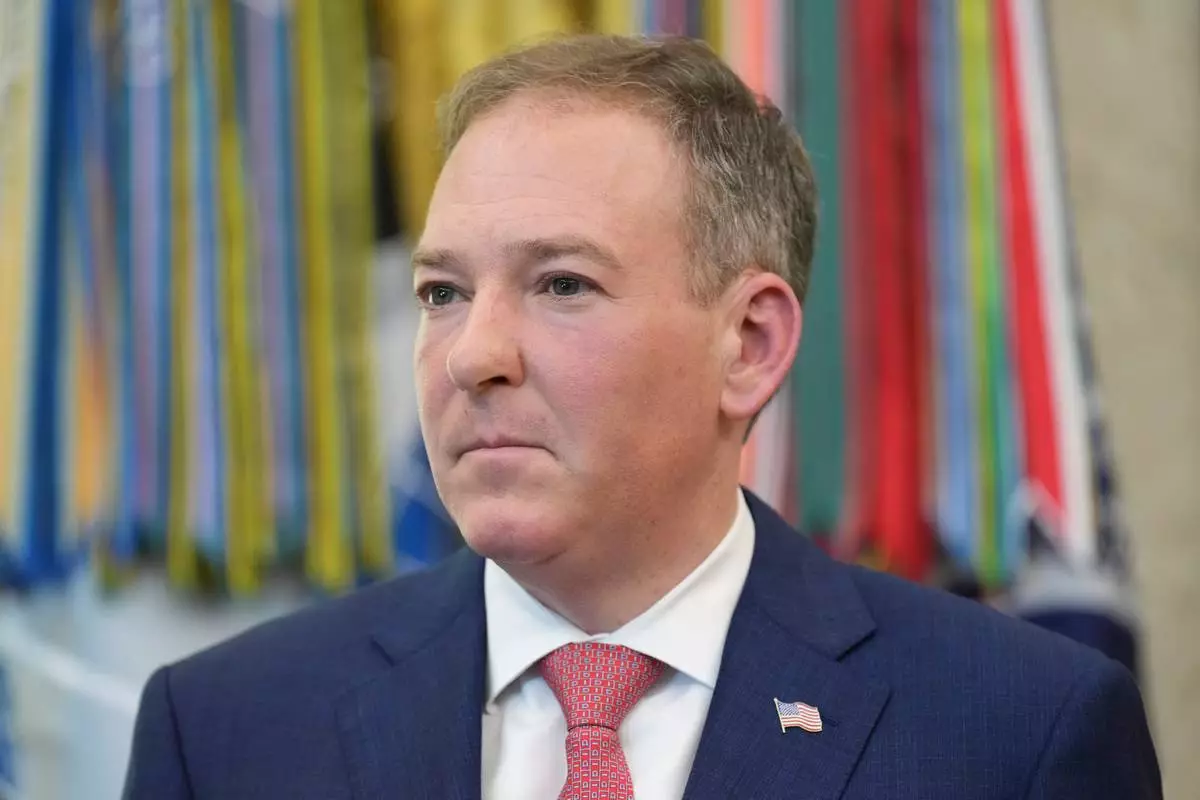
FILE - Environmental Protection Agency administrator Lee Zeldin listens as President Donald Trump speaks in the Oval Office of the White House, June 29, 2026, in Washington. (AP Photo/Jacquelyn Martin, File)