WASHINGTON (AP) — Republican Sen. Mitch McConnell of Kentucky returned to the Senate to vote on Monday for the first time in three months, noticeably more frail after he was hospitalized for a June fall in his home.
McConnell's lengthy absence from the Senate generated a flood of criticism and online speculation, as he initially remained quiet for weeks about his condition. The 84-year-old senator eventually disclosed that he had been “briefly unconscious” due to the fall and had also been treated for mild pneumonia in the hospital.
Click to Gallery
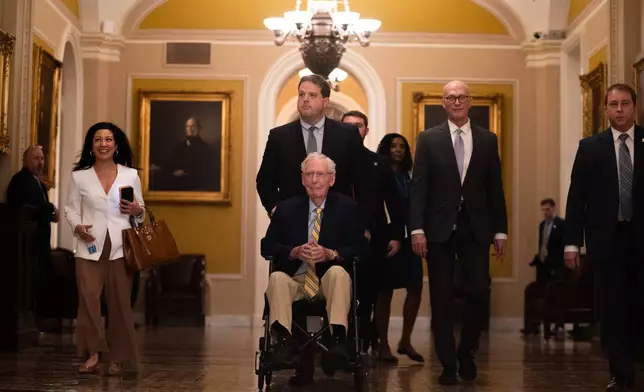
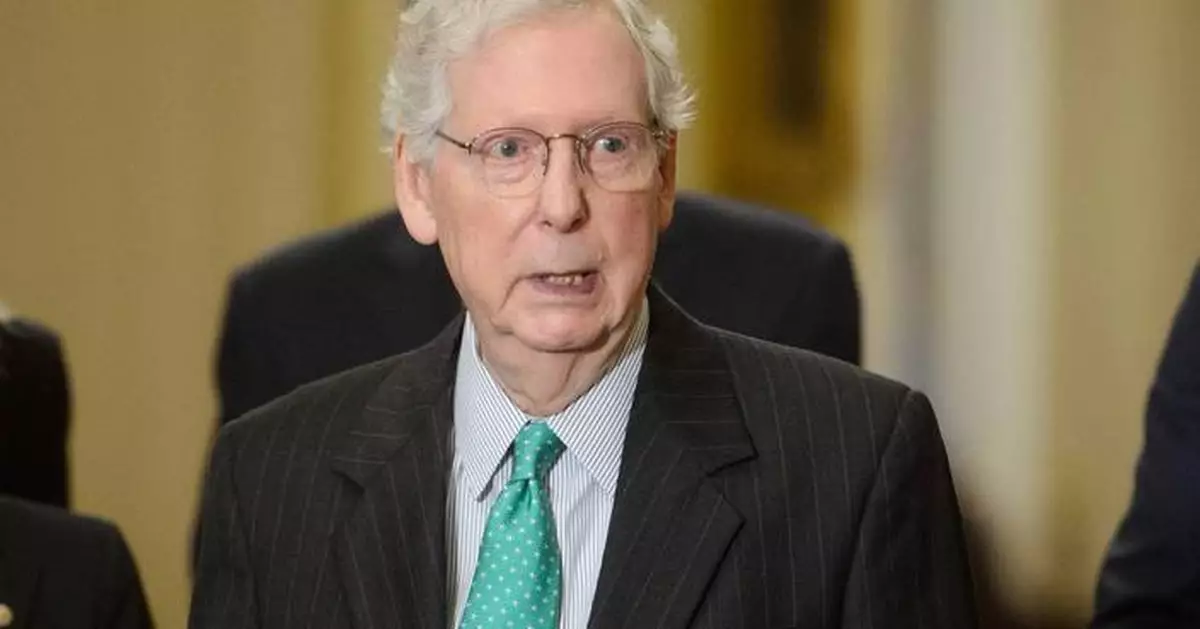
Sen. Mitch McConnell, R-Ky., arrives at the U.S. Capitol, Monday, Sept. 14, 2026, in Washington. (AP Photo/Allison Robbert)
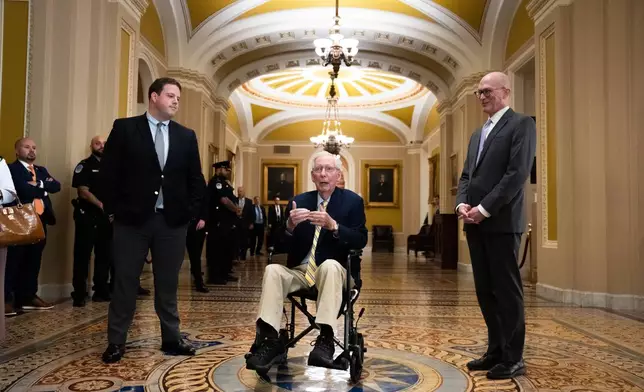
Sen. Mitch McConnell, R-Ky., speaks to reporters at the U.S. Capitol, Monday, Sept. 14, 2026, in Washington. (AP Photo/Allison Robbert)
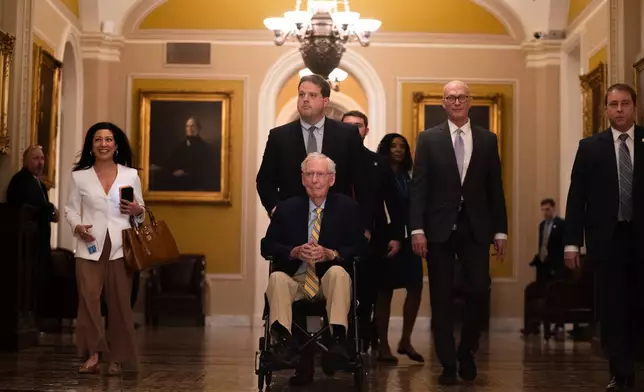
Sen. Mitch McConnell, R-Ky., arrives at the U.S. Capitol, Monday, Sept. 14, 2026, in Washington. (AP Photo/Allison Robbert)
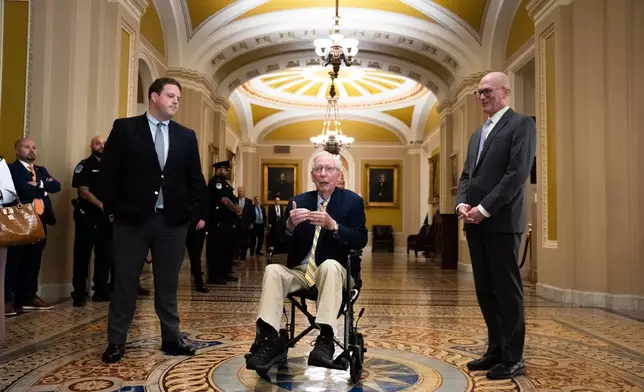
Sen. Mitch McConnell, R-Ky., speaks to reporters at the U.S. Capitol, Monday, Sept. 14, 2026, in Washington. (AP Photo/Allison Robbert)
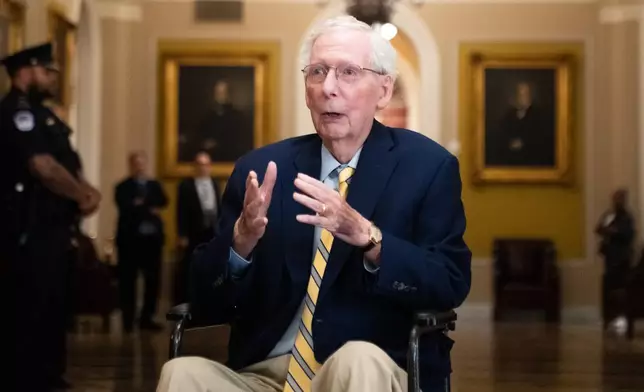
Sen. Mitch McConnell, R-Ky., speaks to reporters at the U.S. Capitol, Monday, Sept. 14, 2026, in Washington. (AP Photo/Allison Robbert)
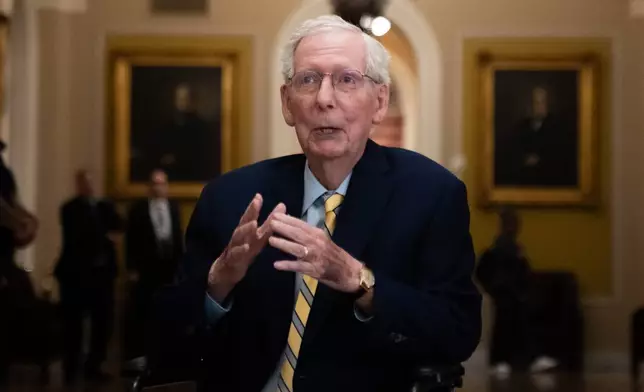
Sen. Mitch McConnell, R-Ky., speaks to reporters at the U.S. Capitol, Monday, Sept. 14, 2026, in Washington. (AP Photo/Allison Robbert)
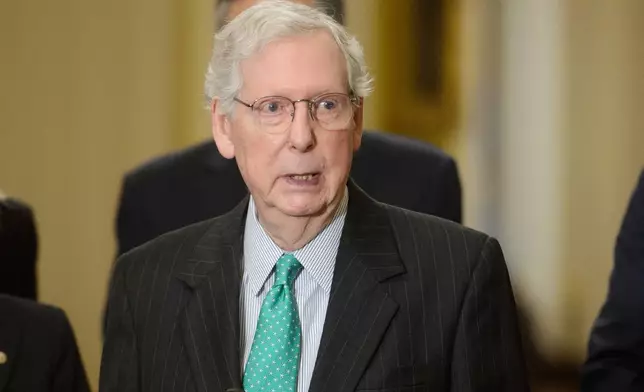
FILE - Senate Minority Leader Mitch McConnell, R-Ky., offers remarks following the Senate Republicans policy luncheon at the Capitol, July 30, 2024, in Washington. (AP Photo/Rod Lamkey, Jr., File)
He briefly addressed reporters from a wheelchair outside the Senate chamber ahead of the vote, smiling but speaking slowly and with some difficulty. McConnell joked that he wasn’t sure how many reporters would be there after dodging so many questions during his almost two decades as leader.
He said he was back in the Senate to work on a pending farm bill and because he has an ongoing interest in NATO and “backing up our good friends who are totally in the fight against the Russians.”
Reporters and photographers were told by Senate staff not to take video of his remarks in the second-floor hallway, even though video is often permitted in that area. Still images were allowed.
In a statement issued before his remarks, McConnell said that “my recovery has been a long and often frustrating process, and the lingering effects of childhood polio haven’t made it any easier."
“I’m still not quite back to 100%, but I’ve assured Leader Thune that, as I continue with physical therapy on the advice of my doctors, I will do my best to be present for tough votes when our Conference needs me.”
The concerns over McConnell’s absence highlighted increasing public concern about the age of lawmakers and their capacity to carry out their duties. Speculation about his condition grew so intense at one point that Kentucky’s Democratic Gov. Andy Beshear took the extraordinary step of issuing a public letter asking McConnell to update the public in a “transparent manner.”
McConnell’s absence was also felt over the summer as Republicans were unable to advance a farm bill out of committee. His return could give GOP leaders a needed vote as they try to advance legislation on cryptocurrency regulation and college sports.
McConnell, who holds the distinction of being the longest-serving Senate leader, is in his final months of his four decades in office. He is retiring at the end of January after one of the most consequential careers in modern politics.
Republicans have nominated U.S. Rep. Andy Barr to replace him, while Democrats have nominated former state lawmaker Charles Booker. McConnell said he is determined to finish out his term.
McConnell had polio in his early childhood and has long acknowledged difficulty as an adult in walking and climbing stairs.
The physician’s office in Congress in the July statement said McConnell has “experienced several falls through the year” due to his “post-polio condition.” The office said his physical therapy was aimed at reducing the risk of him falling again.
“A comprehensive evaluation by a multidisciplinary team determined that he had no fractures, cardiac abnormalities, stroke, tumor, or hemorrhage,” the physician’s office said.
McConnell was first elected to the Senate in 1984 and was the Republican leader from 2007 until last year, serving as both majority and minority leader during that period. He has remained active as a rank-and-file senator, showing up for work when the chamber is in session, often using a wheelchair to get around.
But the senator’s physical condition has visibly declined in recent years.
He was hospitalized with a concussion in March 2023 and missed several weeks of work after falling in a Washington hotel. He twice froze up during news conferences after he returned, staring vacantly ahead before colleagues and staff. A year later, he fell and sprained his wrist while walking out of a GOP luncheon.
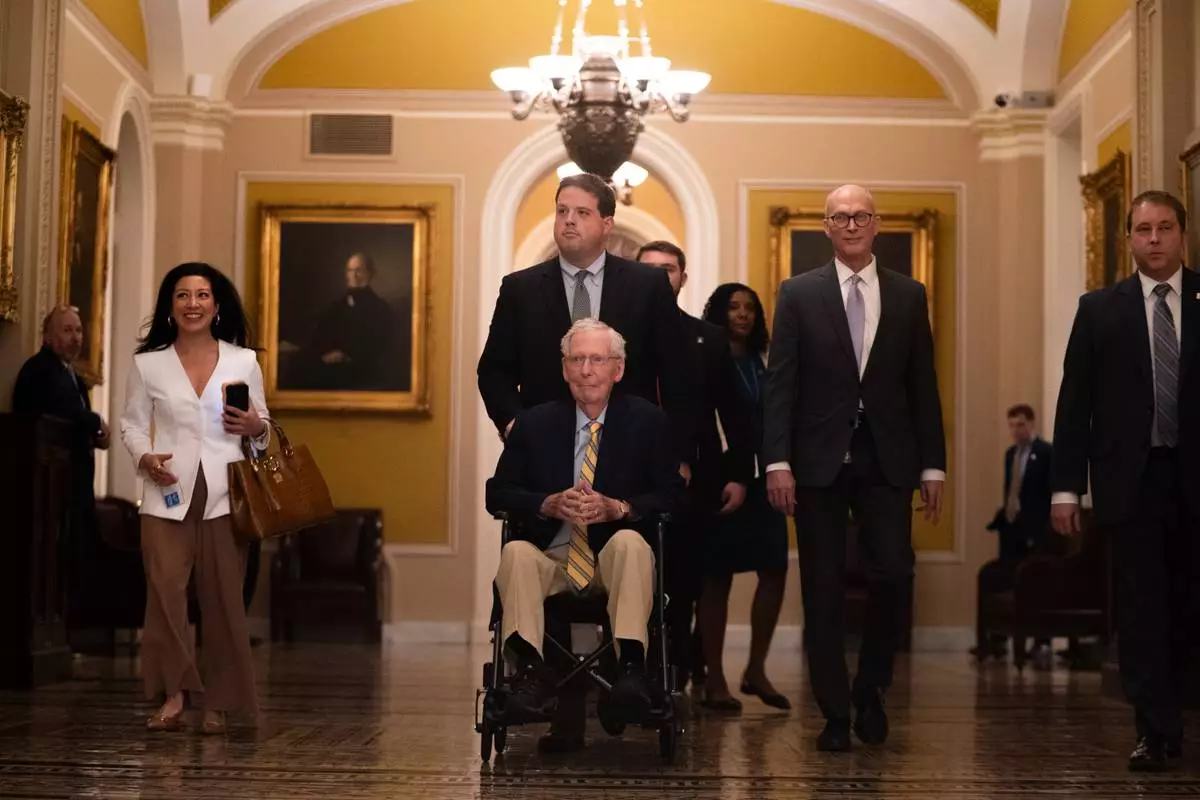
Sen. Mitch McConnell, R-Ky., arrives at the U.S. Capitol, Monday, Sept. 14, 2026, in Washington. (AP Photo/Allison Robbert)
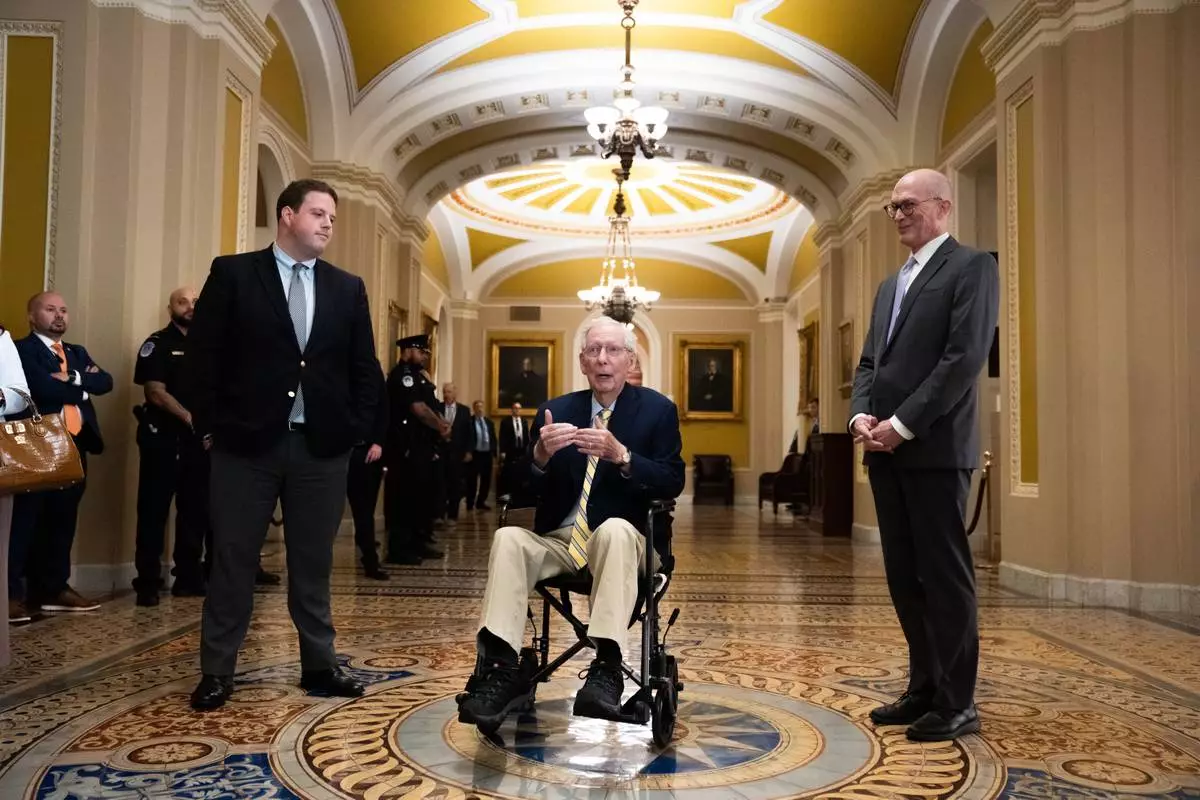
Sen. Mitch McConnell, R-Ky., speaks to reporters at the U.S. Capitol, Monday, Sept. 14, 2026, in Washington. (AP Photo/Allison Robbert)
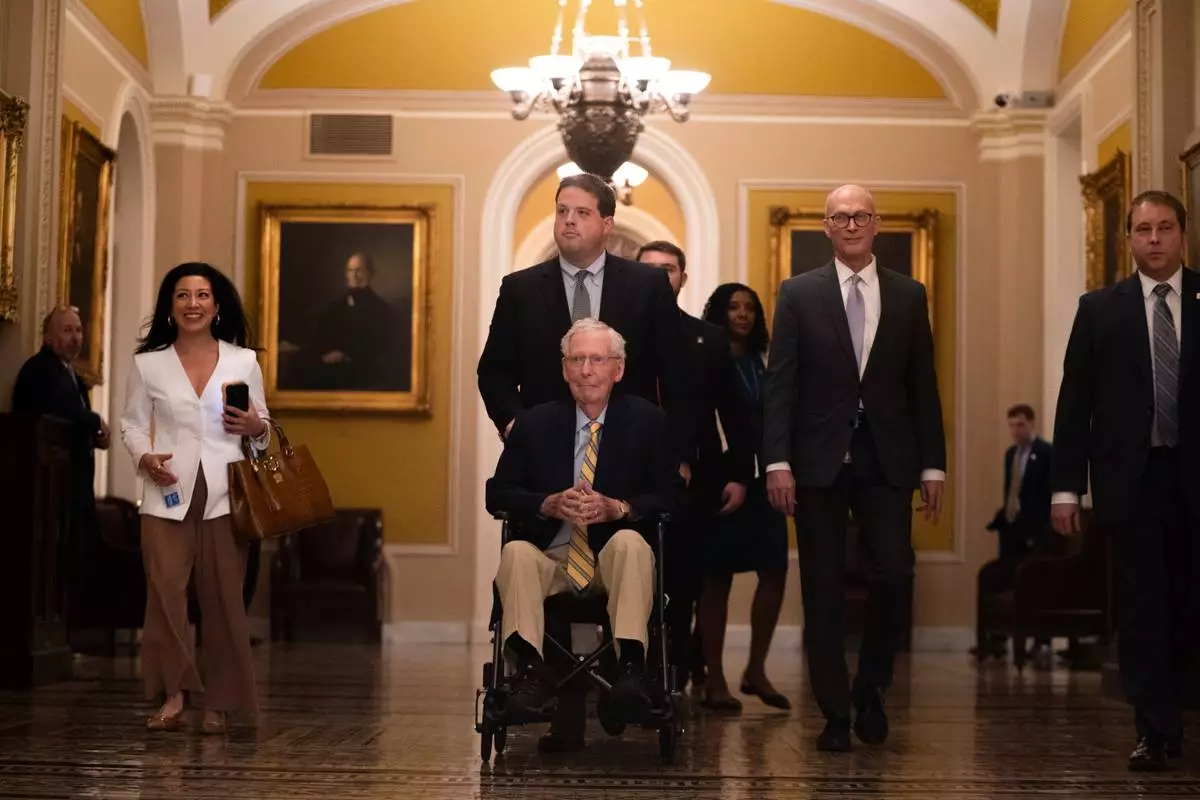
Sen. Mitch McConnell, R-Ky., arrives at the U.S. Capitol, Monday, Sept. 14, 2026, in Washington. (AP Photo/Allison Robbert)
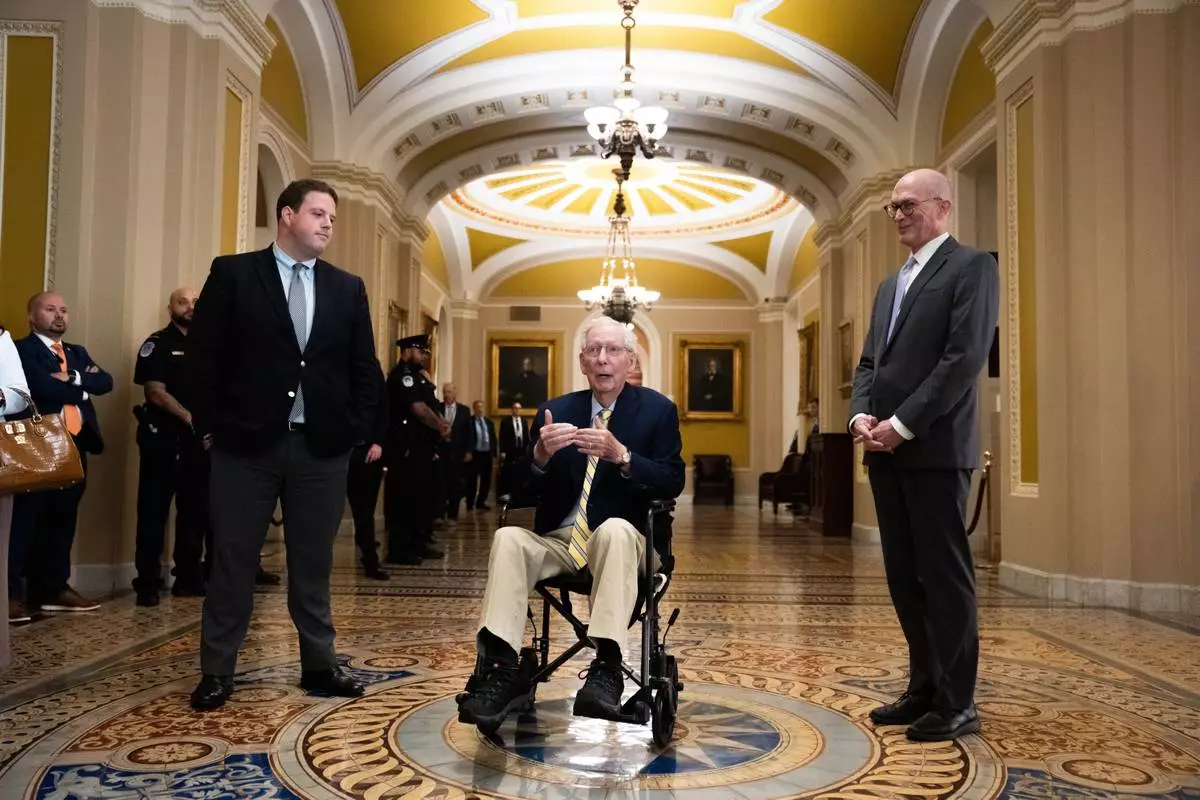
Sen. Mitch McConnell, R-Ky., speaks to reporters at the U.S. Capitol, Monday, Sept. 14, 2026, in Washington. (AP Photo/Allison Robbert)
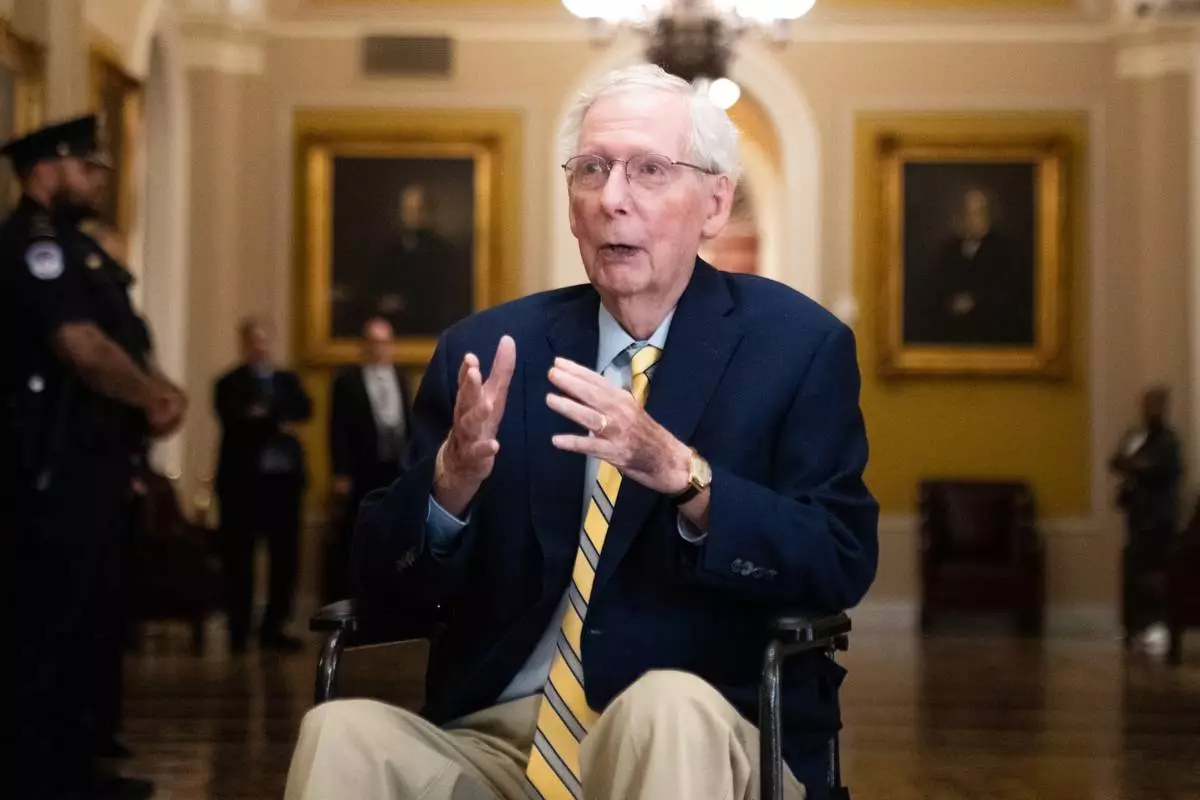
Sen. Mitch McConnell, R-Ky., speaks to reporters at the U.S. Capitol, Monday, Sept. 14, 2026, in Washington. (AP Photo/Allison Robbert)
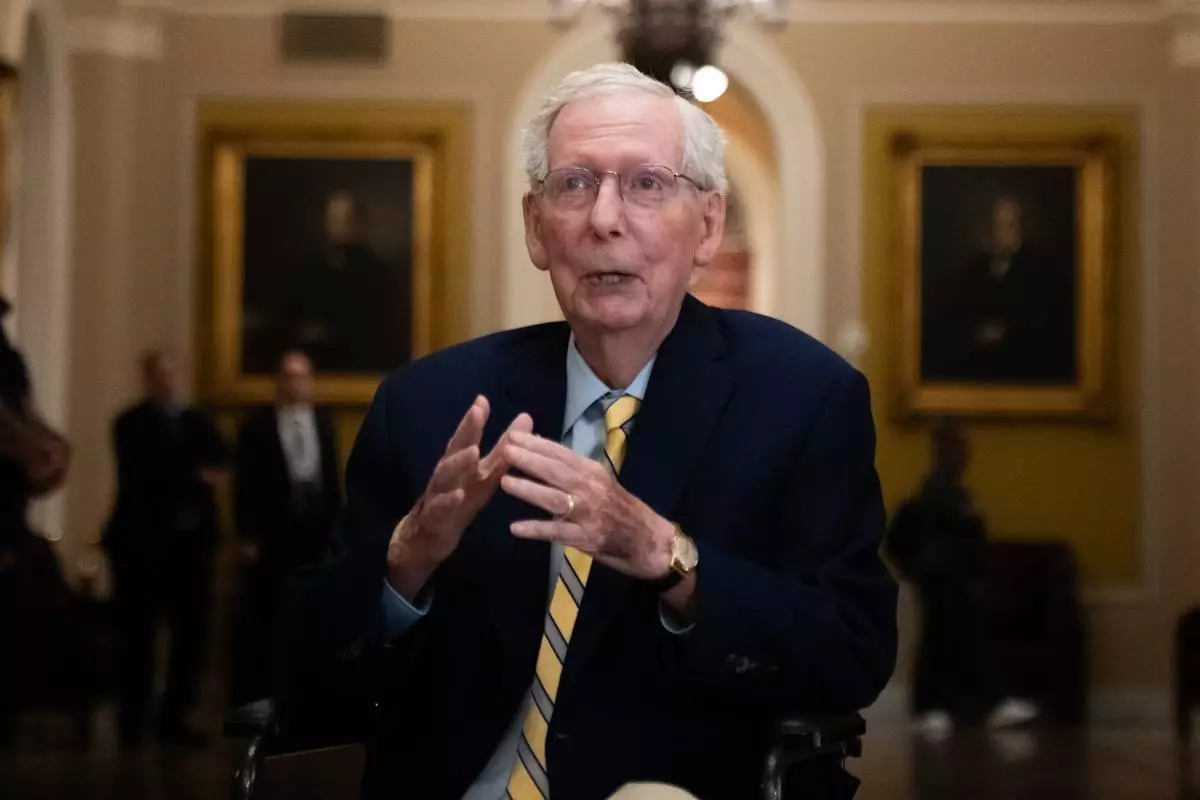
Sen. Mitch McConnell, R-Ky., speaks to reporters at the U.S. Capitol, Monday, Sept. 14, 2026, in Washington. (AP Photo/Allison Robbert)
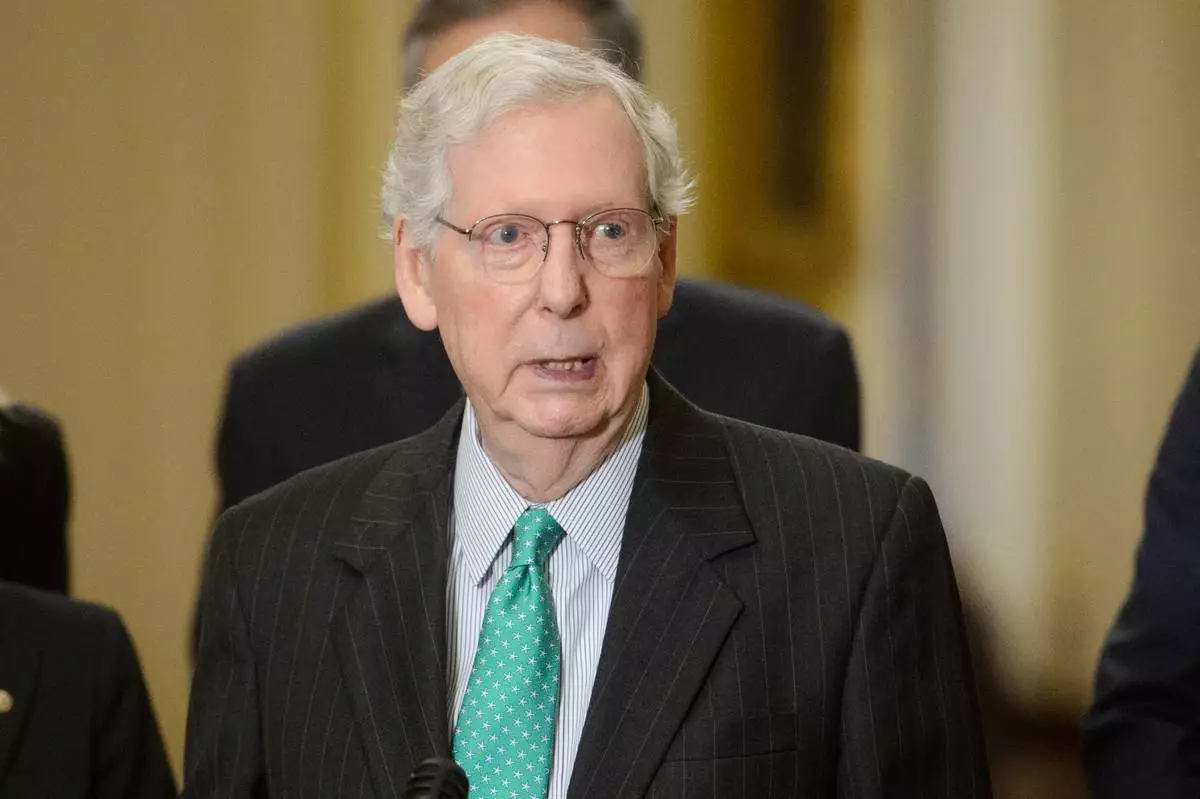
FILE - Senate Minority Leader Mitch McConnell, R-Ky., offers remarks following the Senate Republicans policy luncheon at the Capitol, July 30, 2024, in Washington. (AP Photo/Rod Lamkey, Jr., File)