DURHAM, N.C.--(BUSINESS WIRE)--Sep 15, 2026--
People across North Carolina – including families across Durham, Raleigh, and the greater Triangle region – now have access to a dedicated, non-surgical scoliosis and hyperkyphosis treatment center with the opening of ScoliCare North Carolina. As the seventh ScoliCare clinic to open in the United States, the new practice aims to transform the lives of patients through a scoliosis-specific approach, state-of-the-art facilities, and an experienced healthcare team.
This press release features multimedia. View the full release here: https://www.businesswire.com/news/home/20260914532573/en/
Scoliosis is an abnormal curvature of the spine that affects two to three percent of the population, or an estimated 7 million people in the U.S. In North Carolina, the need for individualized, non-surgical scoliosis care has been on the rise, and ScoliCare North Carolina is committed to addressing this issue.
ScoliCare’s unique, non-surgical approach to treatment serves infants, children, adolescents, and adults alike. Each plan may include the innovative ScoliBrace ® custom 3D corrective bracing system and the ScoliBalance ® exercise-based physiotherapeutic program, designed to address scoliosis and hyperkyphosis from multiple angles.
“I’m incredibly grateful to bring this level of care to families in North Carolina,” expressed Dr. Sanghyun Ju, D.C., Head Clinician at ScoliCare North Carolina. “It’s about giving children, teens, and people of all ages who have scoliosis or hyperkyphosis a place where the focus is entirely on their condition, with non-surgical treatment options and a team that truly understands what they’re going through.”
Local healthcare professionals, community members, and partners, including members of the Greater Durham Chamber of Commerce, attended the Grand Opening to celebrate the launch of ScoliCare’s newest U.S. clinic. The event marks another step in ScoliCare’s mission to make advanced scoliosis care accessible to people worldwide.
About Dr. Sanghyun Ju, D.C.
Dr. Sanghyun Ju is the Head Scoliosis Clinician at ScoliCare North Carolina and a chiropractor dedicated to non-surgical spinal care. Born in South Korea, Dr. Ju was introduced to chiropractic care early in life after sustaining a back injury while training in martial arts. He was inspired to pursue a career in chiropractic care after experiencing the positive impact of treatment firsthand. He later moved to the United States, where he graduated from Palmer College of Chiropractic.
Dr. Ju became a certified ScoliBrace ® Practitioner in 2016 and has since incorporated highly specialized scoliosis treatment protocols in his practice. He continues to pursue extensive continuing education to ensure he provides the highest standard of care to his community.
Now leading ScoliCare North Carolina, Dr. Ju is passionate about delivering non-surgical scoliosis and hyperkyphosis treatment to help patients achieve better spinal health and improved quality of life.
ScoliCare North Carolina is located at 5314 NC-55, Suite 105, Durham, NC 27713. For more information or to schedule an appointment, visit scolicare.com/north-carolina or call 919-585-1934.
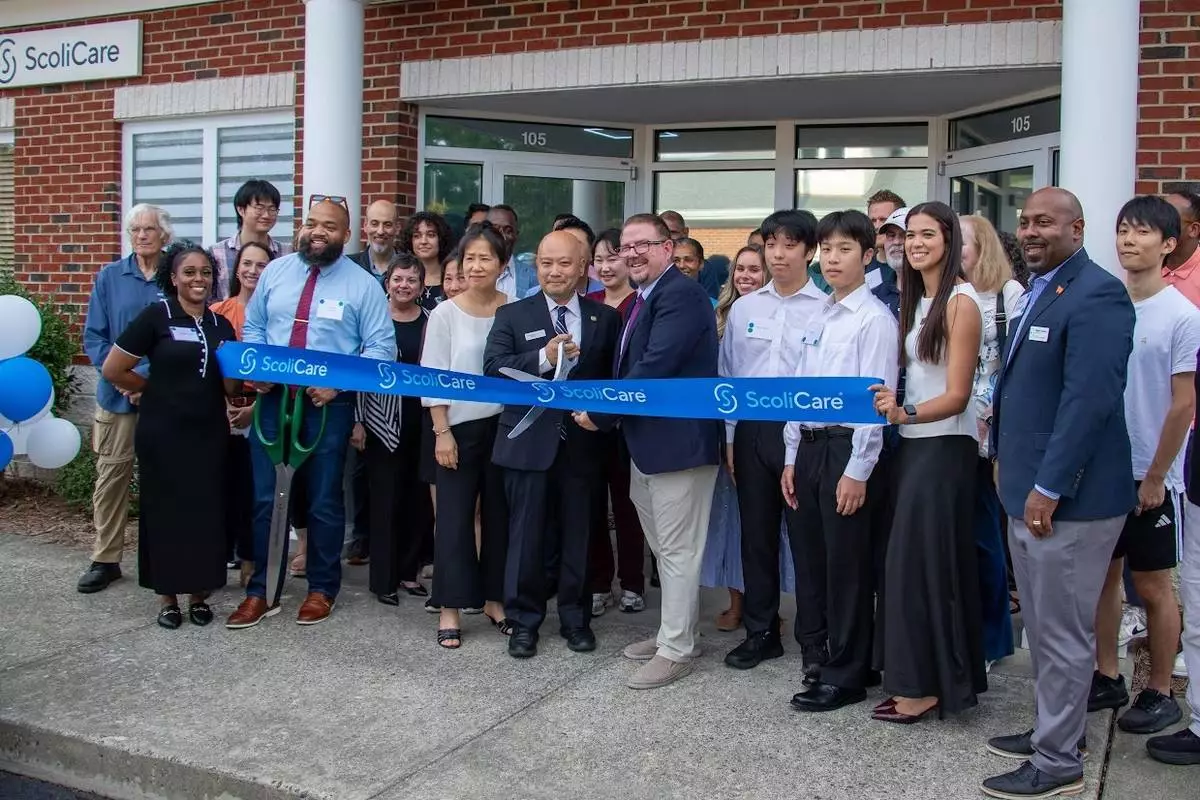
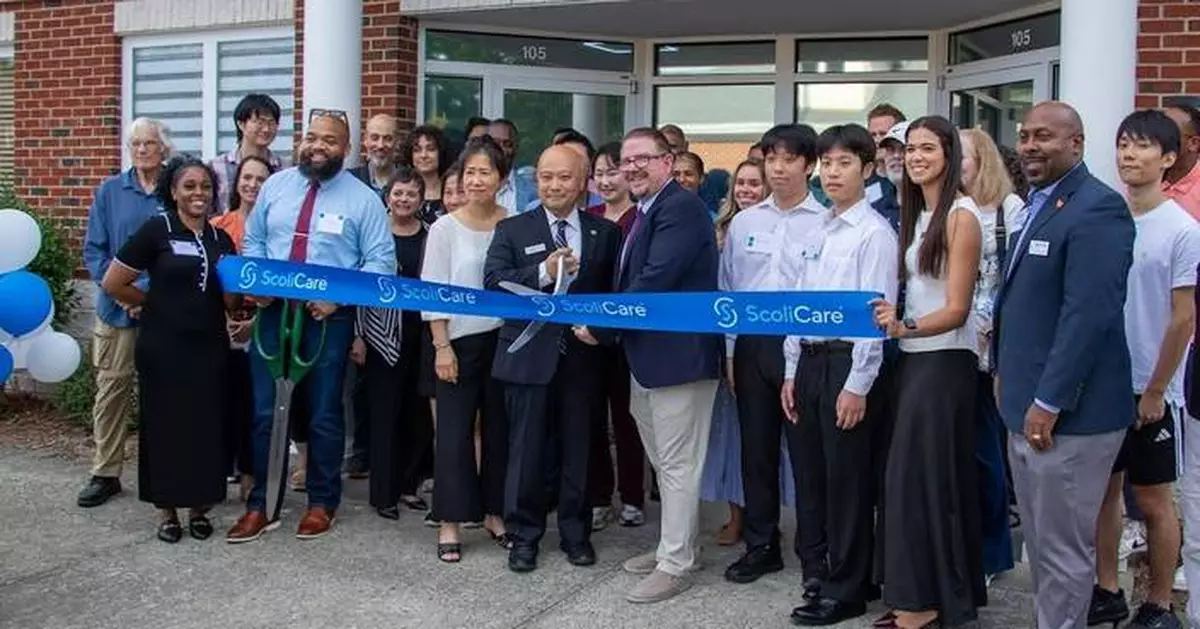
ScoliCare North Carolina Head Scoliosis Clinician Dr. Sanghyun Ju and ScoliCare CEO Dr. Jeb McAviney cut the ribbon at the grand opening, joined by the Greater Durham Chamber of Commerce and members of the community.
WASHINGTON (AP) — The Supreme Court on Monday rejected President Donald Trump's bid to restrict mail ballots for the midterm elections, capping a flurry of last-minute legal action with voting already underway.
The decision allows states to continue sending out mail ballots under the same processes they’ve used for years and have accounted for nearly a third of votes cast.
It represented a stark defeat for Trump on an issue he consistently has emphasized as vital to ensuring election integrity even though there is virtually no evidence of fraud with mail ballots.
The Supreme Court majority wrote that the administration's push to implement the restrictions this year is likely to lose in court, though the brief emergency order didn't detail its reasoning. Two justices, Samuel Alito and Clarence Thomas, publicly dissented.
The Trump administration had asked the justices, once again at the center of a roiling political controversy, to clear the way for restrictions before the pivotal November contests for control of Congress.
Alito wrote in his dissent that the Postal Service “has broad authority to regulate the mail” and likely does have the power to enforce Trump's restrictions.
Justice Brett Kavanaugh, meanwhile, agreed that the restrictions should not go into effect for the midterms but indicated he might rule in favor of the Trump administration if the issue comes back before the court at a later time.
Election officials have said there was simply no way to carry out a complete overhaul in the weeks before the midterms. Indeed, Alabama, North Carolina and Wisconsin began sending mail ballots to voters over the past week while the new system was still not active.
The Trump administration plan would require states to adopt a uniform envelope style and submit lists of eligible voters to an online portal. The Postal Service could refuse to deliver ballots to states that didn’t comply.
The administration’s efforts had the potential to be especially disruptive in states that send out ballots entirely by mail. Washington's Secretary of State Steve Hobbs, a Democrat, said the decision means work “to carry out a safe, secure, and accurate election" can continue ”without having to upend our election processes to meet unrealistic ballot mail requirements.”
In Arizona, another largely vote-by-mail state, Democratic Secretary of State Adrian Fontes said “it is crucial for us to continue rejecting the notion that access and security are mutually exclusive when it comes to running strong elections.”
Utah Lt. Gov. Deidre Henderson, a Republican serving as the state’s chief election officer, said on social media that the Supreme Court’s decision means “Utahns can have confidence that the 2026 election will proceed as normal."
The White House and Justice Department did not immediately respond to requests for comment, but have in the past framed the restrictions as commonsense changes aimed at keeping elections secure.
Democratic state officials and voting rights groups challenged the restrictions in court, arguing that the president has no constitutional authority to set election rules that would “virtually eliminate mail voting on the eve of a major election."
A whistleblower report, meanwhile, said the postal system’s requirements could lead to millions of mail ballots never being sent, because problems with the not-yet-operational portal meant a single bar code error could result in an entire batch of ballots being tossed out.
Some states don't have the infrastructure to quickly pivot back to in-person voting, according to court documents.
The League of Women Voters, a plaintiff in the case, called the proposed restrictions “an extraordinary attempt to interfere with voting” and said it would have thrown elections into chaos. “Voters should never be caught in the middle of a political power warfare,” said CEO Celina Stewart.
Lower courts agreed to block Trump’s plan, including a preliminary injunction issued by a judge nominated by the president.
But the Trump administration appealed to the Supreme Court, arguing that federal control of the Postal Service allows them to set rules for mail ballot handling and that compliance was possible.
The federal government won an early procedural decision at the Supreme Court, but the justices pointedly did not decide the legality of the plan.
Trump has long opposed mail voting and falsely blamed it for his 2020 election loss to Democrat Joe Biden, even though he often uses that method to cast his own ballot, including as recently as this year.
A report by the Brookings Institution published in 2025 found that mail voting fraud occurred in only about four cases out of every 10 million mail ballots cast.
__
Associated Press writers Nicholas Riccardi in Mason, Michigan; Ali Swenson in New York; Gene Johnson in Seattle; and Jacques Billeaud and Wufei Yu in Phoenix contributed to this report.
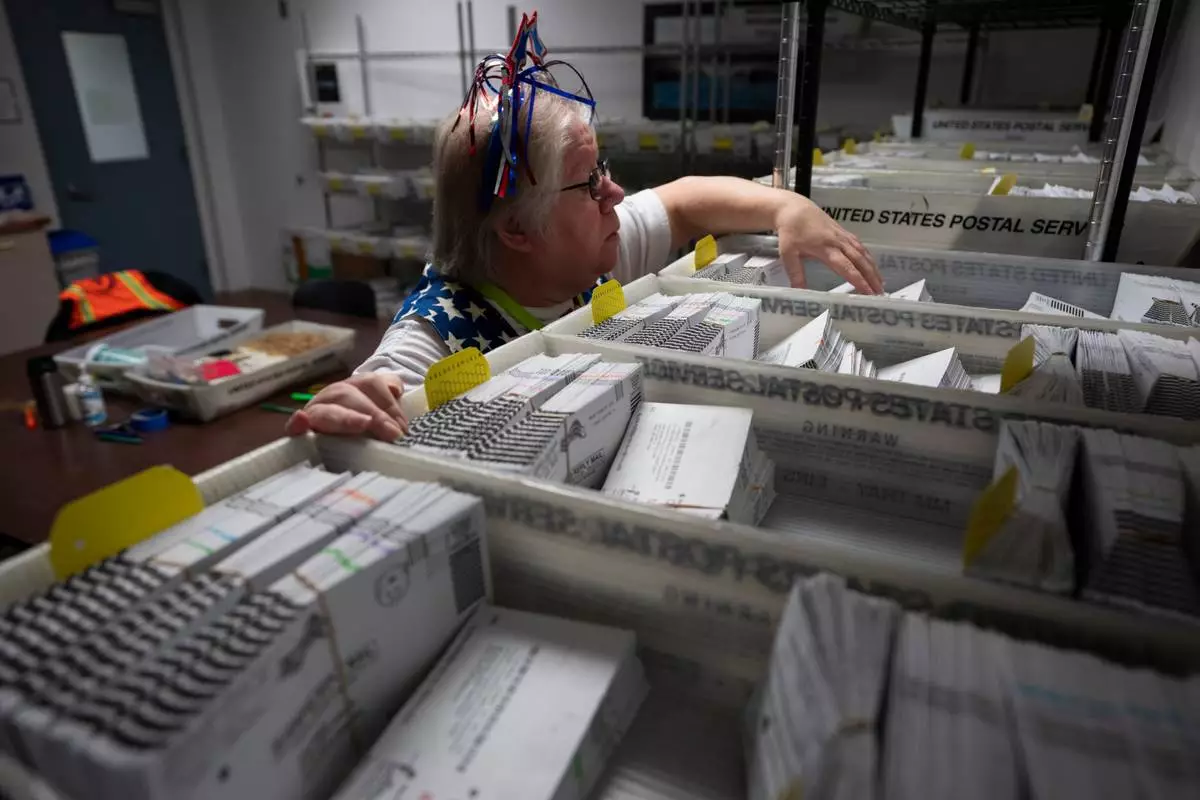
FILE - Election worker Wendy Wimer looks through vote-by-mail ballots for the presidential primary election, March 12, 2024, at the Clark County Elections Office in Vancouver, Wash. (AP Photo/Jenny Kane, File)