NAIROBI, Kenya (AP) — A fuel shortage in Yemen is hampering the movement of people fleeing the country’s escalating fighting and seeking safety across the Red Sea in Djibouti, with the U.N. migration agency warning that more Yemenis are ready to make the crossing by boat.
More than 2,000 Yemenis are currently in Djibouti, where the country's government and the International Organization for Migration are providing food and shelter.
Yemen’s internationally recognized government and Saudi Arabia have been battling the Iranian-backed Houthi rebels for 12 years. The recent escalation has ended a ceasefire that had largely stopped civil war across Yemen since 2022. The Houthis kept to the sidelines during the initial, heavy phase of the Iran war, but in July they resumed attacks on Saudi Arabia and declared a blockade against the oil giant.
Now the number of people from Yemen fleeing the fighting is soaring, with nearly 94,000 people displaced in the country.
IOM Regional Director for East and Southern Africa Frantz Celestin told The Associated Press on Monday that arrivals had slowed because of the fuel shortage, but warned that more people were expected to make the dangerous crossing.
“We expect more to come. What we were told is that there are a lot of people who are willing and ready to come. They simply don’t have fuel to make the journey,” Celestin said. “There’s a fuel shortage in Yemen that may explain the lull that we’ve seen today.”
The prospect of more arrivals is raising concerns that Djibouti, the small Horn of Africa nation, could struggle to accommodate the influx.
“When you have that many people come in a short amount of time, it’s bound to overwhelm the system,” Celestin said. “But so far, they (Djibouti) are managing it quite well. But there may be a time, if they continue to come, where they may overwhelm the capacity of the country to house and accommodate all of them.”
Djiboutian Finance Minister Ilyas M. Dawaleh said on X that the situation was “becoming increasingly difficult for our country, despite our unwavering commitment to humanitarian assistance.”
“We cannot allow those who have sought refuge among us to suffer. I am proud of my fellow Djiboutians for their collective mobilization and their remarkable solidarity with our Yemeni brothers and sisters,” he wrote.
Dawaleh also praised residents of Obock, a coastal town in northern Djibouti that has been on the front line of the humanitarian response.
The IOM's Celestin said the arrivals were putting additional pressure on communities and called for more international support, including additional tents and medical services.
Djibouti sits across the Bab el-Mandeb Strait from Yemen, making it one of the closest places of refuge for Yemenis fleeing the conflict.
On Monday, the Houthi-run Yemen Petroleum Company said a recent increase in local fuel prices was driven by rising global oil prices and higher import costs, blaming the US-Iran war, international sanctions and what it described as a Saudi blockade imposed when the civil war in Yemen began 12 years ago.
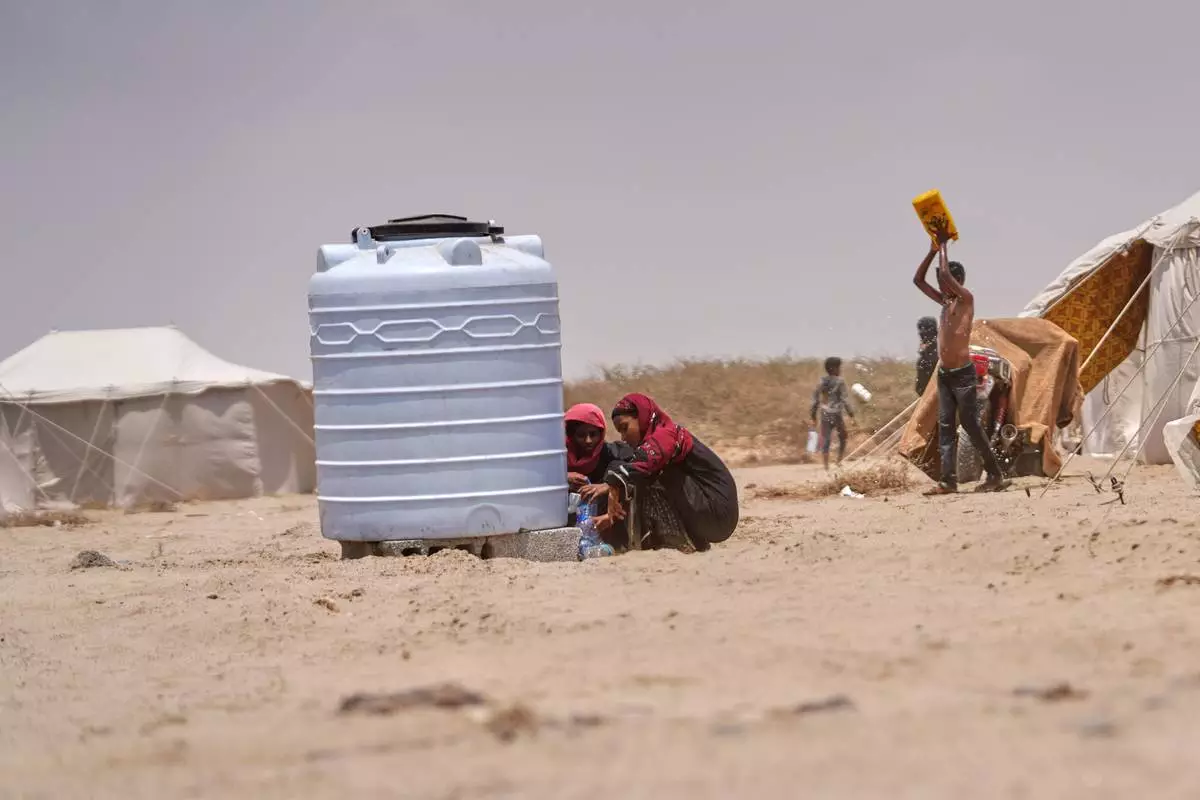
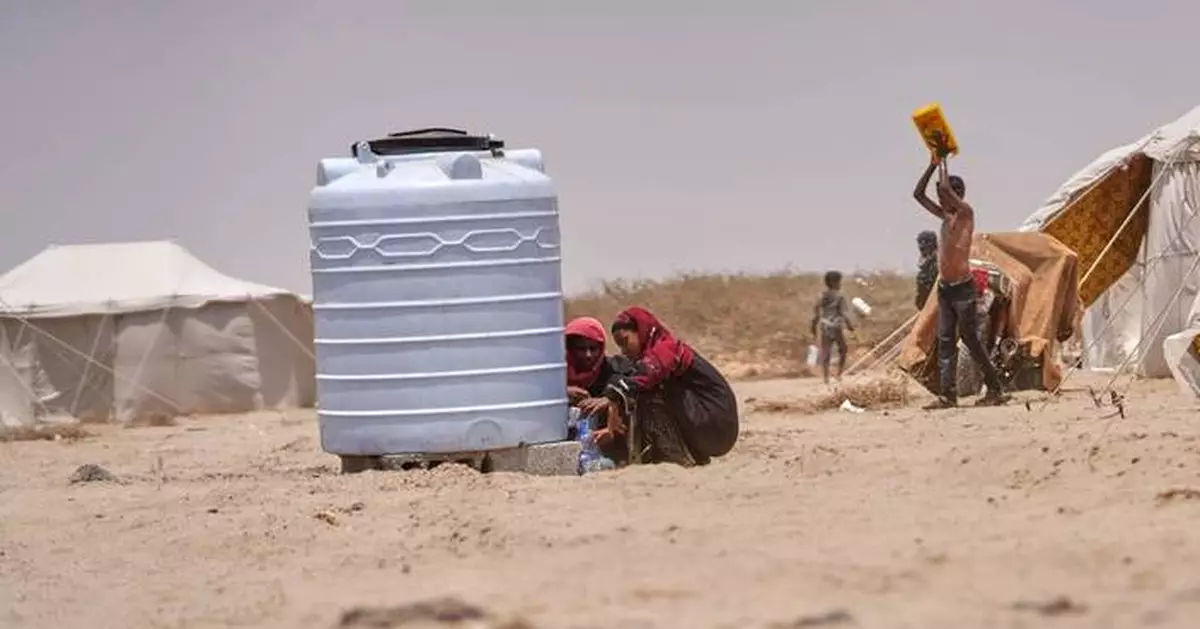
Displaced Yemenis collect water at Al-Firdaws camp in Ras Imran, just outside Aden, Yemen, Monday, Sept. 14, 2026. (AP Photo/Abdulnasser Alseddik)
NAMISINDWA, Uganda (AP) — The farmers who paid David Nabutsilili money to summon rain were angry when they received so much of it that their vegetable gardens were left flooded. They chased him up and down the hills, stopping when he fell upon a rock and broke a femur. That was his punishment.
Sixteen years later, the rainmaker still feels pain in his leg. Many of those who pursued him regularly seek his spiritual help when they need rain, especially during the planting season, but also when they seek to block it. If he fails to meet their expectations, he must temporarily flee his home for his own safety, Nabutsilili told The Associated Press during an interview in his village in eastern Uganda.
“People beat us because sometimes the rain is too much, or there is no rain,” he said.
African rainmakers have long served as spiritual leaders in their communities, performing rituals to ask deities to bring rain. But their perceived successes can create enormous expectations among farming communities in many parts of sub-Saharan Africa. Now they are increasingly targeted for their presumed failure to perform amid the vexations of climate change. In the most extreme cases, they are killed by mobs.
“We have been with these people, and indeed sometimes they have done (rituals) and we have had rain,” said Joseph Weyusya, an elder with Inzu ya Masaaba, a traditional institution of the Bagisu people of eastern Uganda.
But sometimes the weather is uncooperative.
“When the rains refuse, people gather around the village and then start looking for them — ‘Why are we not having rain?’" Weyusya said. ”And most times they have beaten such people to almost near death.”
In South Sudan, which neighbors Uganda to the north, at least two rainmakers have been killed in the past two years. In 2024, Solomon Oture was buried alive in the remote mountain village of Lohobohobo during a dry spell. In June, in a southeastern area facing a prolonged dry spell, men abducted a rainmaker named Albino Lobillia and buried him alive, according to witnesses.
“There was no food, and animals began dying in large numbers because of the drought,” said Madelina Tito, a relative of Lobillia and a local chief. “They held meetings and decided he should be killed because, according to them, he had refused to command the rain.”
A study last year in the International Journal of Environment and Climate Change found that the average annual number of rainy days in the Kapoeta region, which borders Lobillia’s home area, had fallen from 90 in the 1980s to 46 by the mid-2010s, the most recent period for which figures were available. When rain does come, it is often sudden and intense.
“Communities in the most flood-prone areas have spent the last few years alternating between losing crops to floods and losing them to drought,” said Joris Gasper, a researcher for REACH Initiative, a humanitarian group active in South Sudan.
Unsurprisingly, many farmers blame rainmakers for their misfortune. In Uganda, as in South Sudan, millions depend on subsistence agriculture to feed their families. Erratic weather can destroy livelihoods, putting rainmakers on the spot over their perceived inability to do their work.
“It’s becoming worse and worse,” said Matthew Oromo, a government official in Lobillia’s home area, speaking of violence against rainmakers. “People are not aware of what is happening. They don’t understand this issue of climate change.”
Although no Ugandan rainmakers have been killed, some have been assaulted and even reported to authorities for allegedly obtaining money under false pretenses.
Nabutsilili, 45, said he was possessed by the rainmaking spirit as a 14-year-old boy when his legs mysteriously developed wounds. His first task came from cabbage transporters who put him atop their truck and asked him to keep the rain away. It did not rain on them, and he went on to become his village’s most reliable rainmaker even as erratic weather patterns occasionally confounded him and those he serves.
If things don’t work out, he said, that is what God wishes. “In life there are always things that fail,” he said of rainmaking. “It doesn’t stop (us) from trying again.”
Rainmakers in Uganda can be consulted in their homes, or in the bars where they go to drink. Those who need their services are required to pay a fee, which can range from a token as small as $13 to an amount as high as $260, which is what Nabutsilili was paid to block the rain the day President Yoweri Museveni came to the region last year to campaign for reelection. It didn’t rain that day.
The quid pro quo is said to contribute to violence targeting rainmakers when they refuse to refund the money after perceived failures. Unlike Christian priests and medicine men, who generally command respect, rainmakers are sometimes seen as malicious people who retaliate against whole communities for quarrels with their neighbors.
“Sometimes when you have grown your crops, like this season, and there is no rain and you give them money to bring rain, they bring rain that destroys our crops,” said farmer Paul Boyi.
Some in Namatsokha, Nabutsilili’s village, recalled a recent incident when work at a construction site was frustrated by persistent rain only at the scene. The rain reportedly stopped after several rainmakers were paid, fueling suspicions that they had caused it deliberately.
Nabutsilili, who walks barefoot wherever he goes, is widely seen as spiritually strong enough to summon the rain without even going to the waterfall where others perform rituals. Many said his authority was not in doubt.
Yet he was accused of failing to do his work as recently as November, detained in a neighboring village over rainfall that disrupted an important ceremony. “They said bring back the money, because you have failed to deliver,” said witness Isaac Watenga. Other punishments include forcing a rainmaker to drink the muddy runoff after it rains.
There are at least four rainmakers in Namatsokha, sometimes leading to rivalries that can only be contained when they unite in associations. As this is not always possible, there can be competition among rainmakers trying to discredit each other, said 30-year-old Kilindon Simiyu, another of the village's rainmakers.
“You can give me money to stop the rain. Then my colleague finds out that they have given me money to stop the rain and the colleague brings rain,” he said.
One recent morning, Simiyu and Nabutsilili descended into the depths of a waterfall and appeared to pray as they chewed on some herbs. Namatsokha had not received rain for many weeks, and many locals described the spell as one of the driest they had known. Some seemed skeptical as the men performed the rainmaking ritual.
“We are having difficulties because, sometimes when it is supposed to rain, it doesn’t rain,” Simiyu said afterward. “So we use our powers to try and bring it, but it doesn’t come as it used to come in those days.”
Falzetta reported from Nairobi, Kenya.
Associated Press religion coverage receives support through the AP’s collaboration with The Conversation US, with funding from Lilly Endowment Inc. The AP is solely responsible for this content.
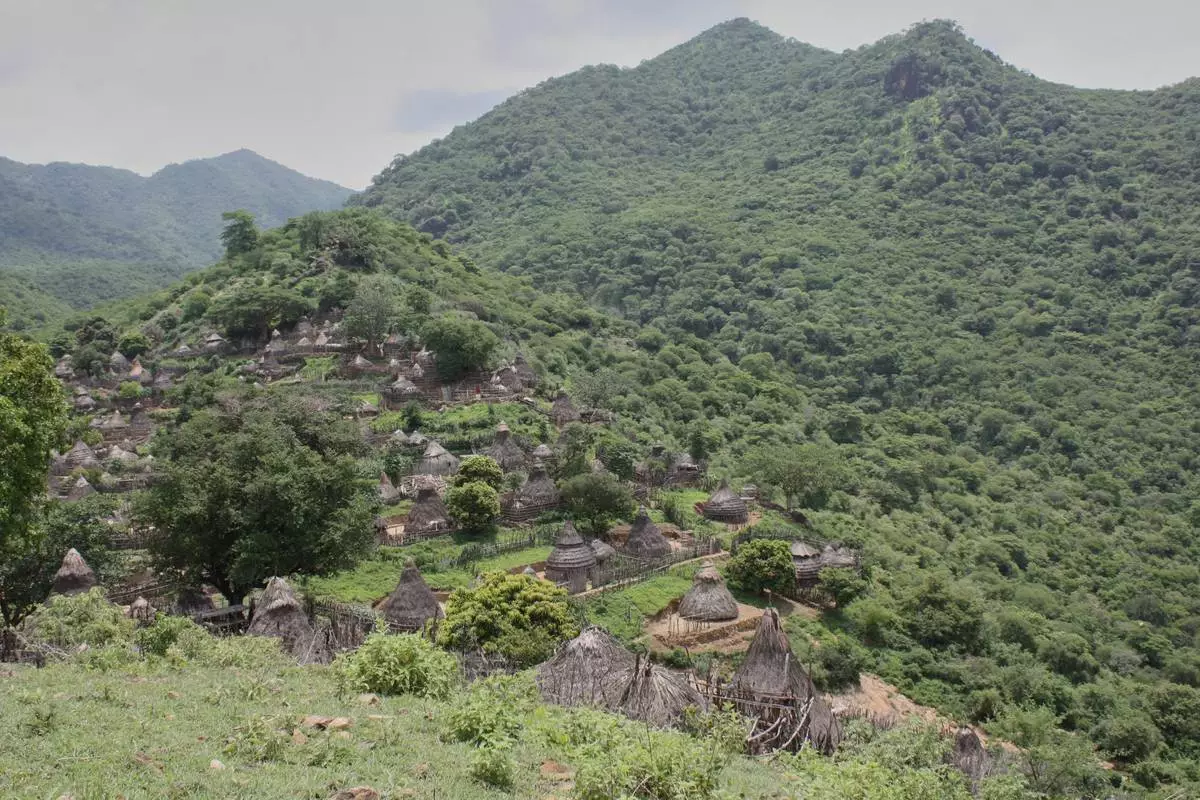
A view of the village of Lohobohobo, in South Sudan, Thursday, July 24, 2025. (AP Photo/Joseph Falzetta)
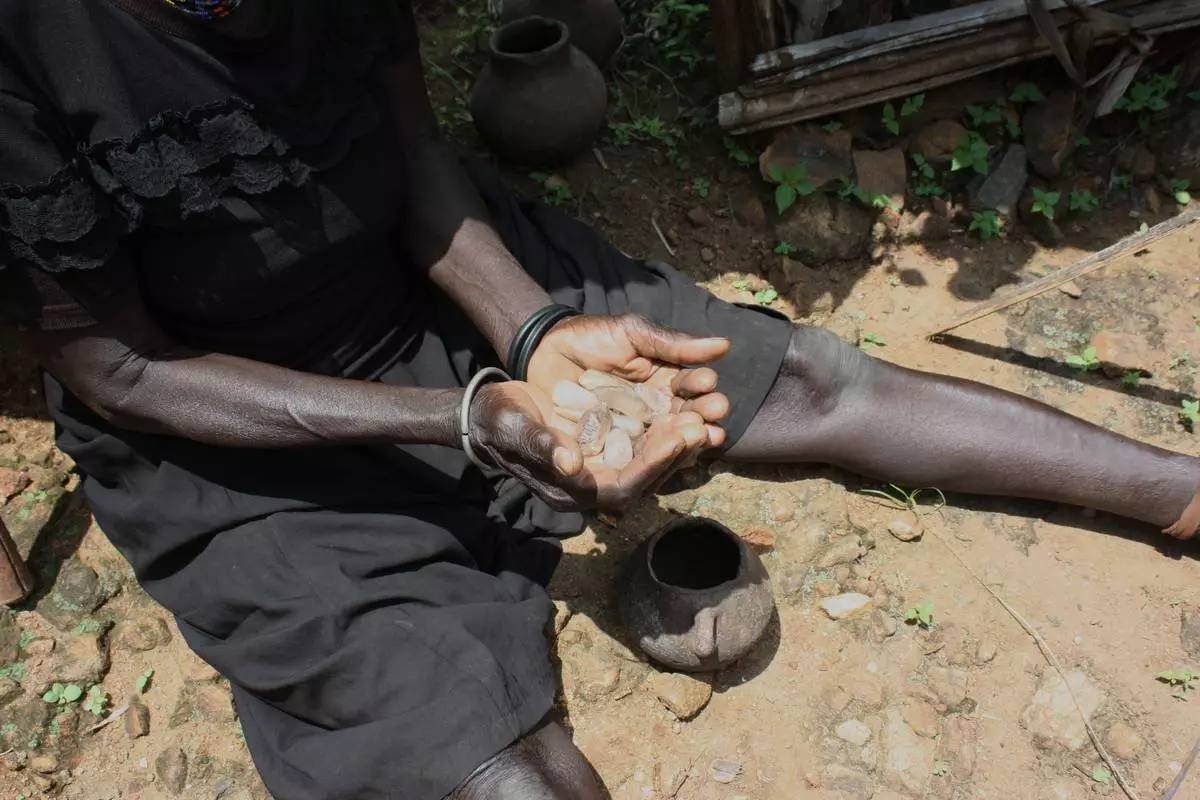
A rainmaker from a village in the Lopit Mountains shows sacred stones used in rainmaking rituals, South Sudan, Thursday, July 24, 2025. (AP Photo/Joseph Falzetta)
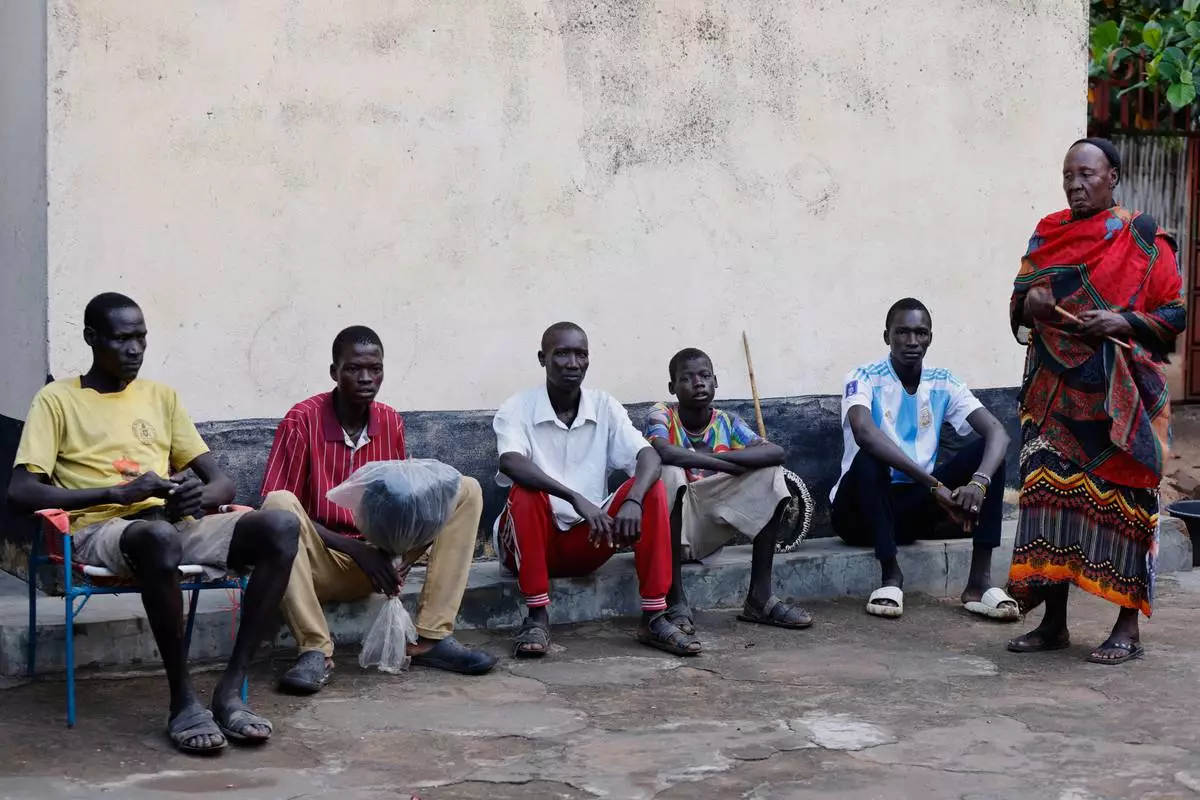
Young men and boys who fled drought in South Sudan sit alongside a chief in Torit, the capital of Eastern Equatoria state, South Sudan, Friday, Aug. 14, 2026. (AP Photo/Juma Peter)
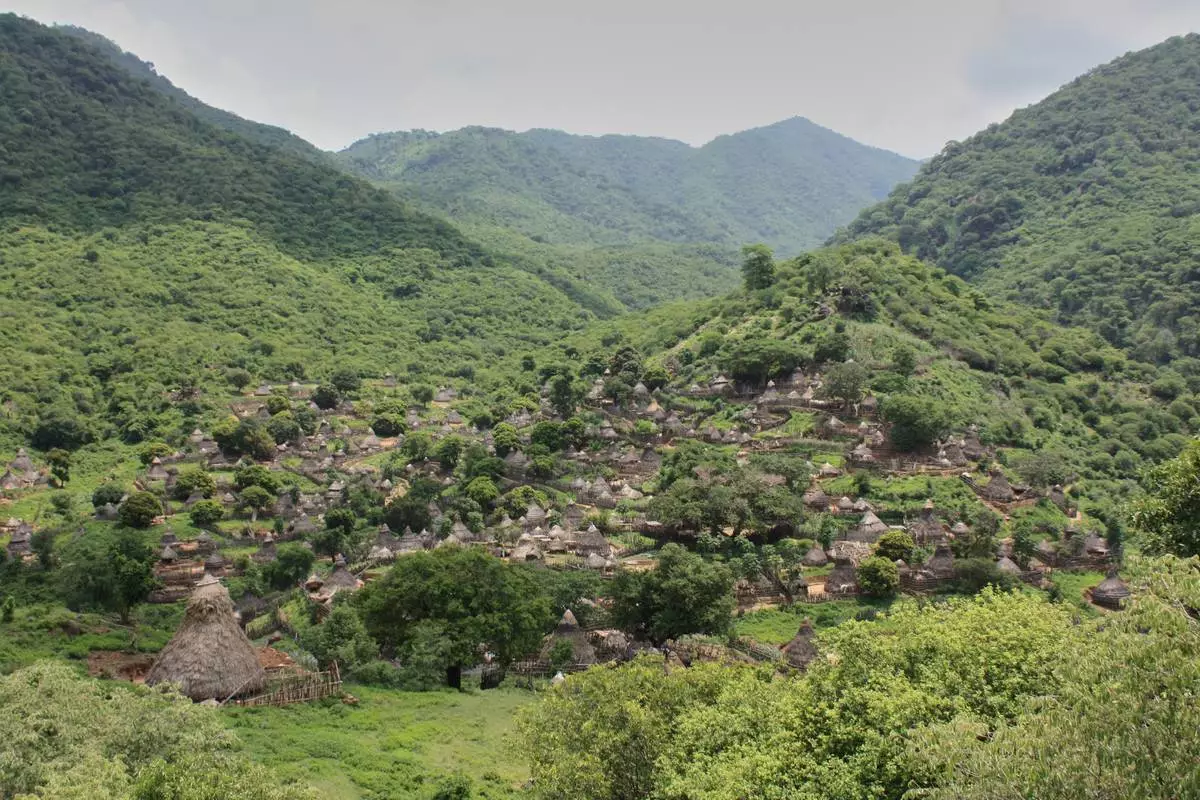
A view of the village of Lohobohobo, in South Sudan, Friday, July 24, 2025. (AP Photo/Joseph Falzetta)
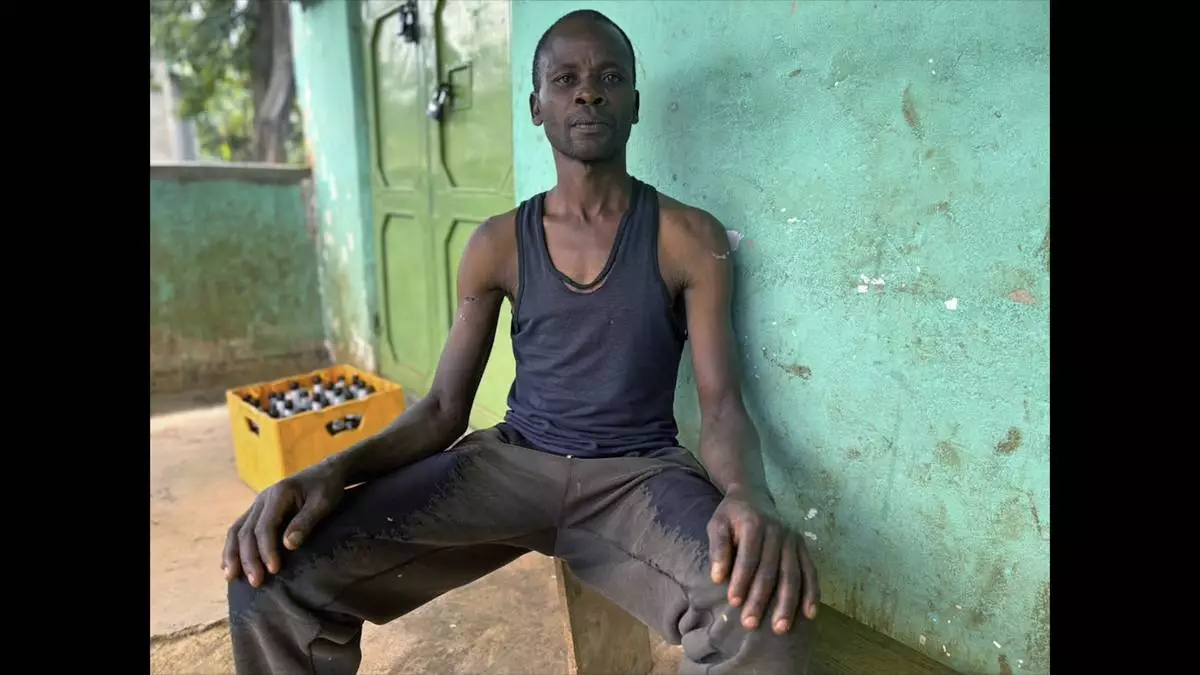
In this photo taken with a smartphone, David Nabutsilili, a rainmaker, poses for a photo in Namisindwa, Uganda, Tuesday, Sept. 3, 2026. (AP Photo/Rodney Muhumuza)