
The NUHS Appropriate and Value-Based Care Symposium 2026 showcases a decade of proven impact — providing value-based care to over 300,000 patients, saving 18,225 bed days, and advancing a model for healthcare transformation across Singapore
SINGAPORE, Sept. 15, 2026 /PRNewswire/ -- More than 300,000 patients at the National University Health System (NUHS) have benefited from a decade-long transformation in how healthcare is measured and delivered, reducing hospital bed days by 18,225, while generating over SG$13 million in annual cost avoidance. The results prove that better patient outcomes and smarter healthcare spending are not mutually exclusive.
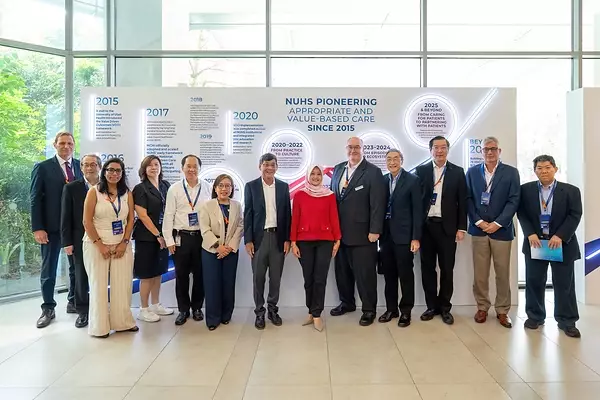
Today, NUHS commemorated this milestone by bringing together healthcare leaders, clinicians and policymakers at the NUHS Appropriate and Value-Based Care (AVBC) Symposium 2026 to showcase a model that has influenced national healthcare policy and demonstrated what is possible when care is measured by outcomes that matter to patients.
Since becoming the first healthcare cluster in Singapore to adopt the Value-Driven Outcomes (VDO) framework in 2015, NUHS has prevented 793 emergency readmissions within a 30-day period and improved outcomes across more than 75 clinical conditions and programmes spanning primary, secondary and tertiary care.
Officiated by Guest of Honour Mdm Rahayu Mahzam, Minister of State, Ministry of Digital Development and Information & Ministry of Health (MOH), the symposium marks a milestone in Singapore's healthcare transformation — from the first Value-Driven Outcomes (VDO) pilots at the National University Hospital (NUH), to scaling uptake across the cluster, and shaping national adoption.
To celebrate a decade of value-based healthcare and consolidate key lessons gained, NUHS will also be launching two books, A Practical Framework for Measuring Health Outcomes at the National University Health System, Singapore: The First Decade of Our Journey, and NUHS Clinical Outcomes Book, at the symposium. The NUHS Clinical Outcomes Book is the first of its kind in Singapore.
The two publications capture the collective efforts of countless healthcare professionals, researchers and partners, documenting the lessons learnt, innovations pioneered and impact achieved along the journey.
"Healthcare systems around the world are continually being challenged to deliver better outcomes, greater value, and deeper trust simultaneously," said Adj A/Prof Diarmuid Murphy, Group Chief Value Officer, NUHS. "A decade in, the data speaks for itself: when you measure what matters to patients, the system works better for everyone. The question now isn't whether value-based care works. It's how fast we can scale it."
A decade of measurable impact
Beginning with 14 pilot conditions at the National University Hospital (NUH) in 2015, the VDO methodology demonstrated significant improvements in outcomes and costs within two years, providing a strong foundation for wider implementation.
This led to the national adoption of the methodology through MOH's National Value-Driven Care (VDC) programme in 2017, which enabled public acute hospitals to benchmark outcomes and costs, share best practices, and drive continuous improvements in care and value.
Over the past decade, what started with a small number of pilot conditions has since evolved into a system-wide VDO initiative, expanding progressively from 18 conditions in 2017 to now more than 75 clinical conditions, service lines and population health programmes extending across primary, secondary and tertiary care.
The impact has also extended beyond individual projects to drive system-wide transformation. Healthcare workshops and training programmes have been conducted cluster wide, equipping healthcare professionals with the knowledge and skills to embed value into everyday care delivery.
Measuring what matters to patients
With the evolution of NUHS's value-based healthcare journey, the focus has expanded beyond traditional clinical indicators to include a more holistic understanding of patient wellbeing.
In stroke care at NUH, Patient-Reported Outcome Measures (PROMs) are being used to capture non-motor symptoms and aspects of wellbeing for young adult stroke survivors aged 18-60 years old, which may not surface in a standard consultation. While AVBC is currently enabled by measuring care processes such as functional recovery, length of stay and readmissions, they may not fully highlight concerns such as anxiety symptoms, depressive symptoms, fatigue, sleep disturbance, despite representing a significant burden for stroke survivors.
NUHS's stroke PROMs data found that anxiety symptoms (39.4 per cent), pain interference (31.5 per cent), depressive symptoms (26.8 per cent), fatigue (24.4 per cent) and sleep disturbance (16.5 per cent) were among the challenges most commonly reported by patients recovering from stroke.
These findings highlight the importance of looking beyond clinical recovery alone. By combining patient-reported outcomes with clinical outcomes data, a key principle of value-based healthcare, NUHS gains a more holistic understanding of recovery, enabling more personalised care and identifying opportunities to improve care delivery.
Delivering care in the right place: From hospital wards to patients' homes
At the heart of NUH's transformation is a fundamental redesign of where and how care is delivered. That same principle underpins NUHS@Home, NUHS's Mobile Inpatient Care at Home programme, which brings hospital-level care safely into patients' homes. Since its launch in 2020, the programme has transformed care for more than 11,400 patients and saved over 68,200 hospital bed days, helping to shift care from a traditional hospital-first model to a home-first model where clinically appropriate.
Under its VDO framework, NUHS@Home tracks measures including clinical outcomes, patient safety and patient experience. Among patients cared for between May 2022 and June 2026, 87 per cent completed their care at home without requiring a return to hospital, while the programme's 30-day readmission rate was 9.3 per cent. More than 95 per cent of patients would also recommend the service to others. Together, these results demonstrate that hospital-level inpatient care can be delivered at home safely, effectively and at scale. This shift forms a key pillar of NUHS's wider "Home First" strategy, which aims to anchor care in the community, and deliver it in the right place and at the right time.
NUHS is exploring expanding beyond hospital-at-home care into a connected ecosystem of virtual and community-based services. Central to this is the Virtual Care Centre (VCC), a digital front door for the triage and assessment of urgent medical concerns. Patients can receive prompt virtual assessment and be directed to the most appropriate care pathway, enabling Emergency Departments to focus on those who truly require urgent acute care.
Initially established by Alexandra Hospital as a post-discharge helpline, NUHS is also reviewing evolving VCC into part of the broader ecosystem of delivering care in the community, alongside virtual professional consults and chronic disease management services. Since 2020, the service has handled more than 6,000 medical calls, with 60 per cent of callers advised to continue monitoring their condition and only 13.5 per cent requiring referral to 995 or the Emergency Department. This demonstrates how virtual care can improve access to the right care while helping to preserve physical hospital capacity.
Proven impact across clinical conditions
One of the earliest pilot projects at the genesis of NUHS's VDO adoption was Total Knee Replacement (TKR) care at NUH, which demonstrated how measuring outcomes across the full care journey could lead to meaningful improvements.
From 2017 to 2021, perioperative blood transfusion rates fell from 12.52 per cent to 3.58 per cent, while venous thromboembolism prophylaxis rates improved from 90.05 per cent to 95.02 per cent, reducing the risk of post-surgery blood clots. Length of stay has also reduced from around four to five days to approximately one to two days today, enabling patients to return more quickly to daily life — without compromising safety or outcomes.
The same commitment to improving patient outcomes for TKR care was mirrored in the Enhanced Recovery After Surgery (ERAS) evidence-based interventions pioneered by clinicians at Ng Teng Fong General Hospital (NTFGH).
Beyond focusing on the surgery itself, multidisciplinary teams examined what helped patients recover better, from preparation before the operation to rehabilitation after. This included pre-operative measures such as identifying and optimising patients with low haemoglobin, improving nutrition, preparing patients through prehabilitation, and supporting them with more effective pain control and early mobilisation after surgery.
ERAS enabled patients to return home within one to two days, compared with four to five days previously.
The VDO approach has been applied across dozens of other conditions, from cardiac procedures to cancer care, consistently demonstrating that when we measure what matters, care improves. (See Annex for a case study on same-day discharge for percutaneous coronary intervention)
Looking to the next decade and beyond
As NUHS embarks on its next decade, the principles of appropriate and value-based care will be woven even more deeply into standard practice — informing workforce training, care pathway redesign, innovation adoption, and outcome measurement.
By continually measuring what matters and improving care delivery, NUHS is building a healthcare system that better serves patients and caregivers today, and in the years ahead, anchored on a simple but powerful goal: delivering care that is appropriate, sustainable, and meaningful to patients' lives.
ANNEX
Percutaneous Coronary Intervention (PCI) — Same-Day Discharge
The nurse-led Same-Day Discharge initiative for eligible patients undergoing elective Percutaneous Coronary Intervention (PCI) at the National University Heart Centre, Singapore (NUHCS) was anchored upon delivering the right care. While PCI was traditionally considered a high-risk procedure in the past and patients were required to be admitted overnight, modern practices — including comprehensive admission screening, post-procedure assessment and discharge checks — have evolved PCI into a safe day surgery procedure for suitable patients.
Key outcomes:
- Since the programme became fully operational from May 2024, an average of 78.8 per cent of eligible cases were discharged on the same day from May 2024 to February 2026, enabling earlier recovery at home while easing hospital bed occupancy, without compromising patient safety.
- Over 300 bed days saved
About the National University Health System (NUHS)
The National University Health System (NUHS) aims to transform how illness is prevented and managed by discovering causes of disease, development of more effective treatments through collaborative multidisciplinary research and clinical trials, and creation of better technologies and care delivery systems in partnership with others who share the same values and vision.
Institutions in the NUHS Group include the National University Hospital, Ng Teng Fong General Hospital, Jurong Community Hospital, Alexandra Hospital and the upcoming Tengah General and Community Hospital; three National Specialty Centres – National University Cancer Institute, Singapore (NCIS), National University Heart Centre, Singapore (NUHCS) and National University Centre for Oral Health, Singapore (NUCOHS); the National University Polyclinics (NUP); Jurong Medical Centre; and three NUS health sciences schools – NUS Yong Loo Lin School of Medicine (including the Alice Lee Centre for Nursing Studies), NUS Faculty of Dentistry and NUS Saw Swee Hock School of Public Health.
With member institutions under a common governance structure, NUHS creates synergies for the advancement of health by integrating patient care, health science education and biomedical research. As a Regional Health System, NUHS works closely with health and social care partners across Singapore to develop and implement programmes that contribute to a healthy and engaged population in the Western part of Singapore.
For more information, please visit www.nuhs.edu.sg.
** This press release is distributed by PR Newswire through automated distribution system, for which the client assumes full responsibility. **
RIGHT CARE, RIGHT PLACE: NUHS MARKS A DECADE OF ADVANCING VALUE-BASED CARE, SAVING 18,225 BED DAYS