Skip to Content Facebook Feature Image

Powerful Medical Receives FDA De Novo Approval for PMcardio "Queen of Hearts," Its AI ECG Model for Detecting Acute Heart Attacks

Business

Powerful Medical Receives FDA De Novo Approval for PMcardio "Queen of Hearts," Its AI ECG Model for Detecting Acute Heart Attacks
Business

Business

Powerful Medical Receives FDA De Novo Approval for PMcardio "Queen of Hearts," Its AI ECG Model for Detecting Acute Heart Attacks

2026-09-15 17:38 Last Updated At:17:50

NEW YORK--(BUSINESS WIRE)--Sep 15, 2026--

Powerful Medical, a leader in AI-driven cardiovascular diagnostics, today announced that the U.S. Food and Drug Administration (FDA) has granted De Novo authorization for Queen of Hearts (ACS AI ECG Model). The AI-powered model is designed to identify ECG findings suggestive of urgent acute coronary syndrome (ACS), which can include ST-segment elevation myocardial infarction (STEMI) and STEMI equivalents, and urgently notify clinicians of suspected cases.

This press release features multimedia. View the full release here: https://www.businesswire.com/news/home/20260910110255/en/

Heart attacks remain a leading cause of death, affecting a U.S. patient every 40 seconds. Rapid diagnosis is critical to improving survival. While the electrocardiogram (ECG) is the primary diagnostic tool, standard-of-care interpretation often fails to detect a significant proportion of acute heart attacks, particularly STEMI equivalents, leading to delays in life-saving treatment. Queen of Hearts is already addressing this gap in Europe, where following CE-marking it detected over 120,000 heart attacks in 2025, contributing to reduced treatment times in more than half of these cases.

Following Breakthrough Device Designation in March 2025 and inclusion in the FDA’s Total Product Life Cycle Advisory Program (TAP), Powerful Medical has received FDA De Novo authorization, establishing a new device classification for AI ECG models targeting acute, life-threatening cardiovascular diagnoses and recognizing this technology as a meaningful advance over existing diagnostic tools.

“This milestone reflects our mission to ensure every patient has access to fast, accurate heart attack diagnosis, regardless of where they present,” said Martin Herman, CEO and Co-founder of Powerful Medical. “With FDA De Novo authorization in place, we can scale adoption and bring this technology into routine clinical care across the United States.”

Queen of Hearts is backed by more than 20 peer-reviewed studies, including randomized controlled trials (RCTs) in high-impact cardiovascular journals spanning over 40,000 patients across four continents. Published data demonstrate approximately twofold higher sensitivity compared to standard of care, alongside up to fivefold fewer false positives and faster time to treatment. Queen of Hearts facilitates the early identification of suspected ACS patients who benefit from early cardiology consultation and cardiac catheterization.

“ Many heart attack patients in the United States still miss the window for life-saving treatment due to delays in diagnosis and inefficient triage,” said Robert Herman, MD, PhD, Chief Medical Officer and Co-founder of Powerful Medical. “ With FDA approved technology now available, we can bridge this gap by bringing accurate, real-time ECG interpretation to the first medical contact. ” adds Felix Bauer, COO and Co-founder.

With FDA De Novo reclassification of Queen of Hearts, Powerful Medical is accelerating U.S. deployment of PMcardio—an AI-driven cardiac care coordination platform built for health systems, integrating ECG interpretation across pre-hospital, emergency departments, and cardiology. The PMcardio platform embeds AI ECG Modules such as Queen of Hearts directly into existing clinical workflows, enabling AI-assisted assessment at first patient contact and seamless handoff to cardiology—reducing time to reperfusion, and improving quality and patient outcomes.

For more information about PMcardio and its breakthrough Queen of Hearts AI ECG, visit www.powerfulmedical.com.

About Powerful Medical

Powerful Medical is leading the AI revolution in cardiology, making expert-level cardiac diagnosis available to every patient, regardless of where they present. Its platform, PMcardio, embeds AI ECG models that interpret ECGs to detect acute heart attacks (Queen of Hearts), heart failure, structural heart disease, and 40+ other cardiac conditions. PMcardio is used by more than 100,000 clinicians across hospitals, EMS, and cardiac centers worldwide.

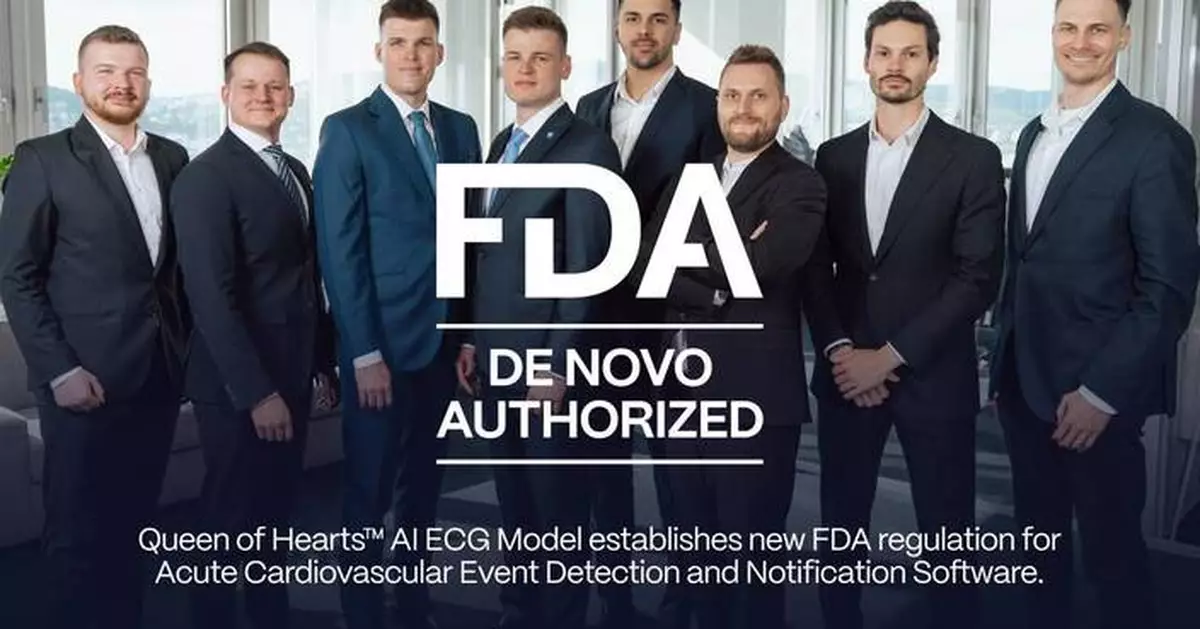
The Powerful Medical team behind Queen of Hearts™, the world’s first FDA-authorized AI ECG solution designed to detect acute heart attacks that may include STEMI and STEMI equivalents and require urgent cardiologist activation.

The Powerful Medical team behind Queen of Hearts™, the world’s first FDA-authorized AI ECG solution designed to detect acute heart attacks that may include STEMI and STEMI equivalents and require urgent cardiologist activation.

Christa Pike said Friday she remains in constant pain, struggles to speak and has been largely isolated in a prison hospital after surviving a lethal injection in Tennessee last month.

In her first public statement since, Pike said she's “deeply hurt by the incompetence that has put so many people in this terrible position.”

“I continue to think about my victim’s family,” she said, “and the terrible pain and loss they have endured.”

Pike and her boyfriend tortured and stabbed a 19-year-old classmate, Colleen Slemmer, to death in 1995. Pike was 18 at the time, making her one of the youngest women sentenced to death. Slemmer’s mother traveled from Florida to witness Pike’s execution.

Pike, 50, survived two doses of pentobarbital that her lawyers say probably didn't enter her bloodstream correctly and instead pooled in her arms, leaving them burned and blistered. Unconscious, she was hospitalized on a ventilator for days, and at one point her lawyers said they didn't expect her to survive.

“There hasn’t been a moment since that night when I haven’t been in pain. My body hurts. My arms hurt. My hands hurt. My throat hurts. I still struggle to speak,” Pike said. “And the pain isn’t just physical. There is pain in my mind and in my soul.”

Pike said she had been prepared to die in peace, but instead woke up alone and confused in a hospital bed. She said she's “searching for meaning in what happened to me.”

“I don’t know why I survived that night. I don’t know what comes next,” Pike said in a statement dictated to her legal team from prison.

Pike remains sentenced to die, and her attorneys want Republican Gov. Bill Lee to change that to life in prison. However, Lee told reporters this week, “I suspect her sentence will be the same as before unless determined otherwise by the courts.”

The governor has tapped a former U.S. attorney to conduct an independent review of the failed execution, and has postponed the state’s other lethal injection scheduled for this year.

Pike's lethal injection was plagued by problems. Her attorneys had warned that her small veins and diagnosis of thrombocytosis, a blood-clotting disorder, could make IV access difficult.

In a court document, her attorney Randy Spivey said the execution team struggled to get working IV lines in Pike’s arms and expressed concern that a vein might be “blowing.” Pike remained awake for much of the lethal injection, saying her arm hurt and burned before falling unconscious. The execution began just before 7:30 p.m., and an ambulance arrived at the prison about an hour and 45 minutes later.

The failed execution has brought renewed scrutiny to how Tennessee carries out death sentences.

In a 2025 deposition released with court documents this week, prison Warden Kenneth Nelson said the execution team doesn't practice inserting IV lines during training sessions, at the directive of the prison commissioner. Nelson said he did not know why the practice was discontinued or when the order was given.

Practicing insertion of IVs was part of Tennessee’s prior execution protocol, but it is not included in the state’s new protocol.

Dorinda Carter, a spokesperson for the Tennessee Department of Correction, said she could not comment on the filing because of pending litigation.

Frank Strada, commissioner of the Department of Correction, announced his resignation in the wake of Pike's failed execution. His final day is Oct. 31, Carter said.

FILE - In this image from video provided by WBIR-TV, Christa Pike cries after being sentenced to death on March 30, 1996 in Knoxville, Tenn. (WBIR-TV via AP, File)

FILE - In this image from video provided by WBIR-TV, Christa Pike cries after being sentenced to death on March 30, 1996 in Knoxville, Tenn. (WBIR-TV via AP, File)

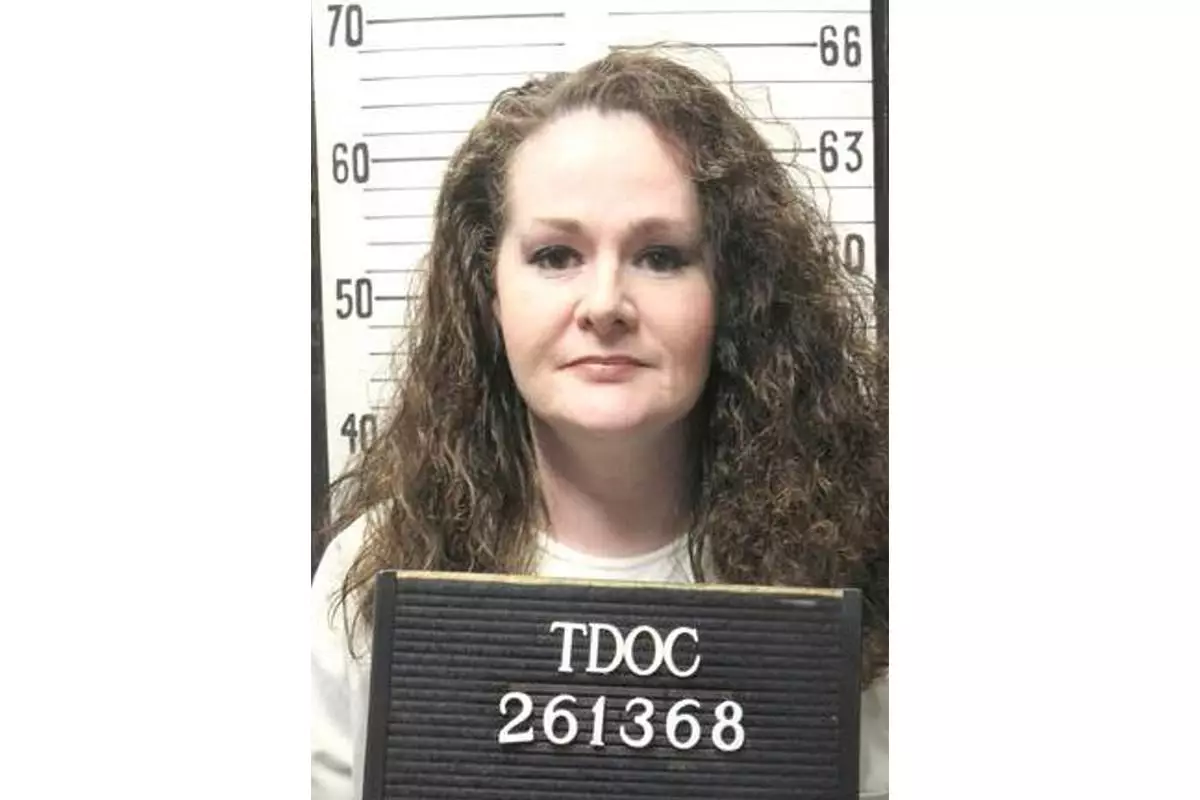
FILE- This photo provided by the Tennessee Department of Correction shows Christa Pike on Jan. 12, 2023. (TDOC via AP)

FILE- This photo provided by the Tennessee Department of Correction shows Christa Pike on Jan. 12, 2023. (TDOC via AP)

Recommended Articles