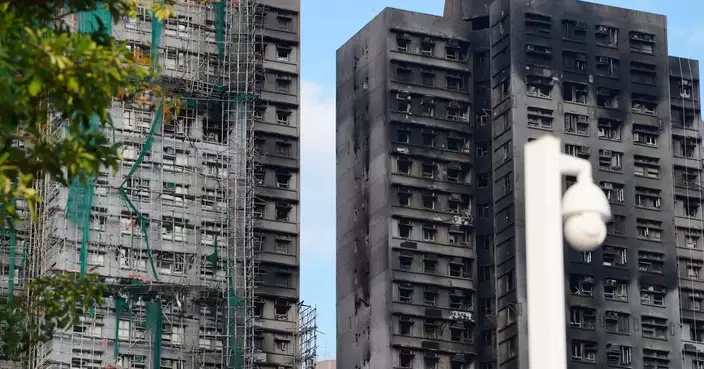
CHP investigates confirmed Mpox case
The Centre for Health Protection (CHP) of the Department of Health (DH) said today (September 15) that it is investigating a confirmed Mpox (also known as Monkeypox) case, and strongly urged high-risk target groups to receive Mpox vaccinations. Meanwhile, the public is advised to be vigilant and avoid close physical contact with individuals suspected of contracting Mpox.
The case involves a 27-year-old man who developed rash and vesicles at his genital organs and surrounding areas starting on September 6. Subsequently, he developed a fever and lymphadenopathy and the rash spread to other parts of his body (including upper limbs, right leg and trunk). As his symptoms persisted, he called the CHP's hotline on September 11 to report his health condition to the CHP staff. The CHP immediately arranged the patient to seek medical attention at a social hygiene service clinic (SocHS) under the DH. The patient is currently receiving isolation treatment at Queen Elizabeth Hospital. Upon laboratory testing by the CHP's Public Health Laboratory Services Branch, his clinical specimen tested positive for the monkeypox virus. The patient is currently in stable condition.
According to information provided by the patient, he had high-risk exposures with two male strangers in Hong Kong during the incubation period. No epidemiological linkages between this case and confirmed Mpox cases earlier recorded in Hong Kong have been identified so far. The CHP is continuing an epidemiological investigation of the case, and will endeavour to contact individuals who had high-risk contact with the patient and report the case to the World Health Organization.
Since 2022, Hong Kong has recorded a total of 105 Mpox cases (83 local cases and 22 imported cases), including the above-mentioned case. All patients were males. Since this August, the number of Mpox cases in Hong Kong has seen an increase. As of today, 21 cases have been recorded this year, including 16 local cases and five imported cases. Among them, 12 are new cases reported since August. Epidemiological investigations showed that among the 12 recently identified cases, all patients self-identified as men who have sex with men or bisexual men. No epidemiological links were found between the cases. All patients reported engaging in high-risk sexual behaviour during the incubation period, including having sex with male strangers or having sex without a condom. In eight of these cases, patients reported using dating applications to find sexual partners. The CHP has sent a letter to doctors in Hong Kong, reminding them to be vigilant for Mpox cases and to provide relevant recommendations regarding Mpox vaccination to high-risk individuals.
The Mpox vaccine can prevent infection and severe disease. The DH provides Mpox vaccination services for high-risk groups. The following high-risk target groups are eligible for Mpox vaccinations on a voluntary basis:
- individuals with high-risk sexual practices, e.g. having multiple sexual partners, sex workers, or having a history of sexually transmitted infection within the past 12 months;
- healthcare workers responsible for caring for patients with confirmed Mpox;
- laboratory personnel handling zoonotic pox viruses; and
- animal care personnel with high risk of exposure in case of Mpox occurrences in animals in Hong Kong.
High-risk target groups can receive Mpox walk-in vaccinations at any of the DH's SocHS (namely Chai Wan SocHS, Wan Chai Male SocHS, Wan Chai Female SocHS, Yau Ma Tei Male SocHS, Yau Ma Tei Female SocHS, Yung Fung Shee SocHS, Fanling SocHS and Tuen Mun SocHS) and the DH's Yau Ma Tei Integrated Treatment Centre, without prior appointments.
Meanwhile, the DH's Kowloon Bay Integrated Treatment Centre and the Hospital Authority's Special Medical Clinics at Queen Elizabeth Hospital and Princess Margaret Hospital also provide Mpox vaccination services for their clients.
Mpox is not transmitted through respiratory droplets or aerosols in general, and transmission would not occur through social contact. The CHP reminds the public, especially those at higher risks of exposure, to take precautions and avoid close physical contact with persons or animals suspected of being infected. They should seek medical attention as soon as possible if they experience relevant symptoms, including rash, fever, chills, swollen lymph nodes, exhaustion, muscle pain, and severe headaches. They should not engage in activities with others that may involve contact with skin rash or body fluids.
For more details, please visit the CHP's webpages on Mpox and Mpox Vaccination Programme.
The Centre for Health Protection, Photo source: reference image
DH and NMPA co-organise seminar on "GBA Medical Device Regulations and Registration Process Training" in Hong Kong again
The Department of Health (DH), in collaboration with the Guangdong-Hong Kong-Macao Greater Bay Area Center for Medical Device Evaluation and Inspection (GBA Center) of the National Medical Products Administration (NMPA), today (September 15) co-organised the "GBA Medical Device Regulations and Registration Process Training" seminar in Hong Kong. The seminar aims to assist the local trade in tapping into the Chinese Mainland market and to further deepen exchanges and co-operation between the two places in medical device regulation and industry development.
This was the second seminar of its kind co-organised by the DH and the GBA Center since last May. The Deputy Director of the GBA Center, Mr Xu Liang, and a number of reviewers travelled to Hong Kong to serve as speakers, sharing updates on the GBA Center's latest work and giving an in-depth briefing on the regulatory framework, registration procedures, key market-entry requirements and major review considerations for medical devices in the Chinese Mainland. The seminar helped the trade to gain a comprehensive understanding of the latest trends and market access requirements in the Chinese Mainland.
The seminar attracted approximately 300 representatives from the local medical device trade, including manufacturers, traders, research and development (R&D) professionals, and regulatory affairs consultants. The participants noted that the training content was substantive and tailored to the industry's practical needs, helping them gain a thorough understanding of the current regulatory regime and the details of the submission arrangements in the Chinese Mainland.
The DH expresses its gratitude to the NMPA for its support. As the Mainland China is an important global market and R&D hub for medical devices, the DH will continue to organise similar activities to deepen professional exchanges and collaboration. Leveraging Hong Kong's role as a "super connector" and "super value-adder", the DH is committed to promoting healthcare innovation and high-quality development of the industry.
At the same time, in line with the nation's strategic initiatives to accelerate the development of "Healthy China" and prioritise health in development, the DH will work toward building "Healthy Hong Kong". Promoting innovation in cross-boundary medical co-operation will not only help Hong Kong integrate into the "Healthy GBA", but will also allow Hong Kong's internationally recognised healthcare system to contribute to elevating national medical standards to the global stage, thereby underscoring Hong Kong's unique advantages and value in integrating into and serving the nation's overall development.
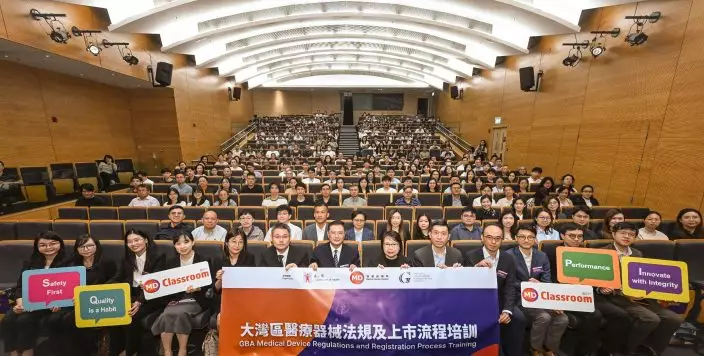
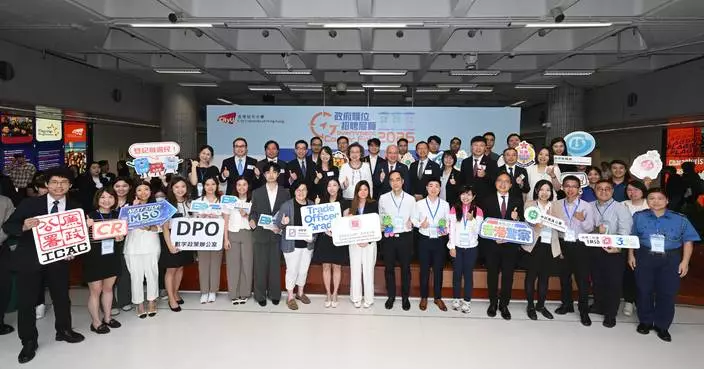
The Department of Health, in collaboration with the Guangdong-Hong Kong-Macao Greater Bay Area Center for Medical Device Evaluation and Inspection (GBA Center) of the National Medical Products Administration (NMPA), today (September 15) co-organised the "GBA Medical Device Regulations and Registration Process Training" seminar in Hong Kong. The seminar aims to assist the local trade in tapping into the Chinese Mainland market and to further deepen exchanges and co-operation between the two places in medical device regulation and industry development. Photo shows the Assistant Director of Health (Health Sciences and Technology), Dr Liza To (front row, sixth right); the Deputy Director of the GBA Center of the NMPA, Mr Xu Liang (front row, seventh right); and other speakers and participants. Source: HKSAR Government Press Releases
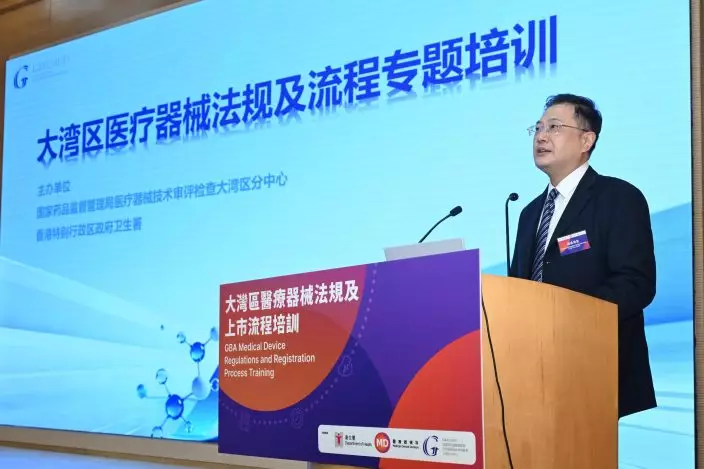
The Department of Health, in collaboration with the Guangdong-Hong Kong-Macao Greater Bay Area Center for Medical Device Evaluation and Inspection (GBA Center) of the National Medical Products Administration (NMPA), today (September 15) co-organised the "GBA Medical Device Regulations and Registration Process Training" seminar in Hong Kong. The seminar aims to assist the local trade in tapping into the Chinese Mainland market and to further deepen exchanges and co-operation between the two places in medical device regulation and industry development. Photo shows the Deputy Director of the GBA Center of the NMPA, Mr Xu Liang, delivering a speech at the seminar. Source: HKSAR Government Press Releases
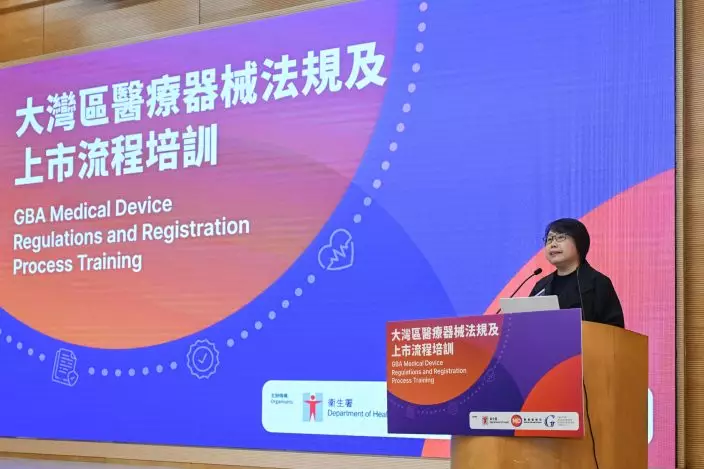
The Department of Health, in collaboration with the Guangdong-Hong Kong-Macao Greater Bay Area Center for Medical Device Evaluation and Inspection of the National Medical Products Administration, today (September 15) co-organised the "GBA Medical Device Regulations and Registration Process Training" seminar in Hong Kong. The seminar aims to assist the local trade in tapping into the Chinese Mainland market and to further deepen exchanges and co-operation between the two places in medical device regulation and industry development. Photo shows the Assistant Director of Health (Health Sciences and Technology), Dr Liza To, delivering a speech at the seminar. Source: HKSAR Government Press Releases