Skip to Content Facebook Feature Image

FBI chief Kash Patel defends loosening of employment standards on bestiality, prostitution

News

FBI chief Kash Patel defends loosening of employment standards on bestiality, prostitution
News

News

FBI chief Kash Patel defends loosening of employment standards on bestiality, prostitution

2026-09-16 01:20 Last Updated At:01:30

WASHINGTON (AP) — FBI Director Kash Patel on Tuesday defended the bureau's loosening of hiring requirements regarding prostitution and bestiality, saying the changes were meant to enable victims of those acts to apply for employment without fear of automatic disqualification.

The FBI quietly issued guidance this past spring lifting a categorical hiring ban on applicants who had previously engaged in prostitution, and said that it would instead consider the context of the behavior in at least some cases. The bureau made a similar change with regard to bestiality.

More Images
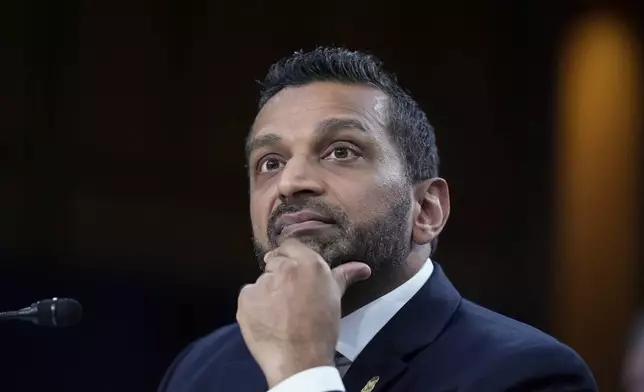
FBI Director Kash Patel listens during the Senate Judiciary hearing on Oversight of the Federal Bureau of Investigation, Tuesday, Sept. 15, 2026 in Washington. (AP Photo/Manuel Balce Ceneta)
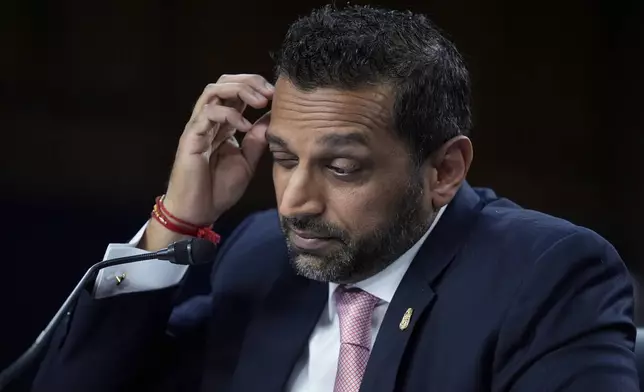
FBI Director Kash Patel listens during the Senate Judiciary hearing on Oversight of the Federal Bureau of Investigation, Tuesday, Sept. 15, 2026 in Washington. (AP Photo/Manuel Balce Ceneta)
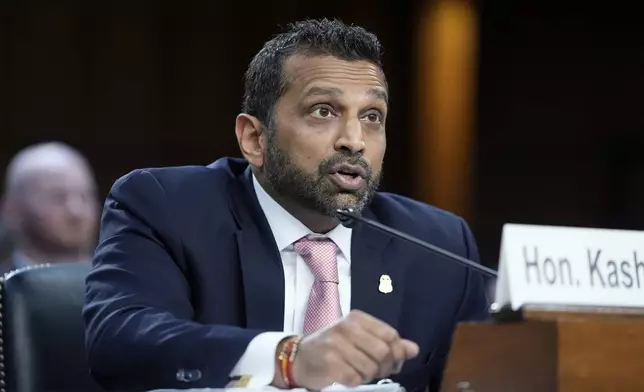
FBI Director Kash Patel testifies during the Senate Judiciary hearing on Oversight of the Federal Bureau of Investigation, Tuesday, Sept. 15, 2026 in Washington. (AP Photo/Manuel Balce Ceneta)

FBI Director Kash Patel testifies during the Senate Judiciary hearing on Oversight of the Federal Bureau of Investigation, Tuesday, Sept. 15, 2026 in Washington. (AP Photo/Manuel Balce Ceneta)

FBI Director Kash Patel testifies during the Senate Judiciary hearing on Oversight of the Federal Bureau of Investigation, Tuesday, Sept. 15, 2026 in Washington. (AP Photo/Manuel Balce Ceneta)

FBI Director Kash Patel testifies during the Senate Judiciary hearing on Oversight of the Federal Bureau of Investigation, Tuesday, Sept. 15, 2026 in Washington. (AP Photo/Manuel Balce Ceneta)

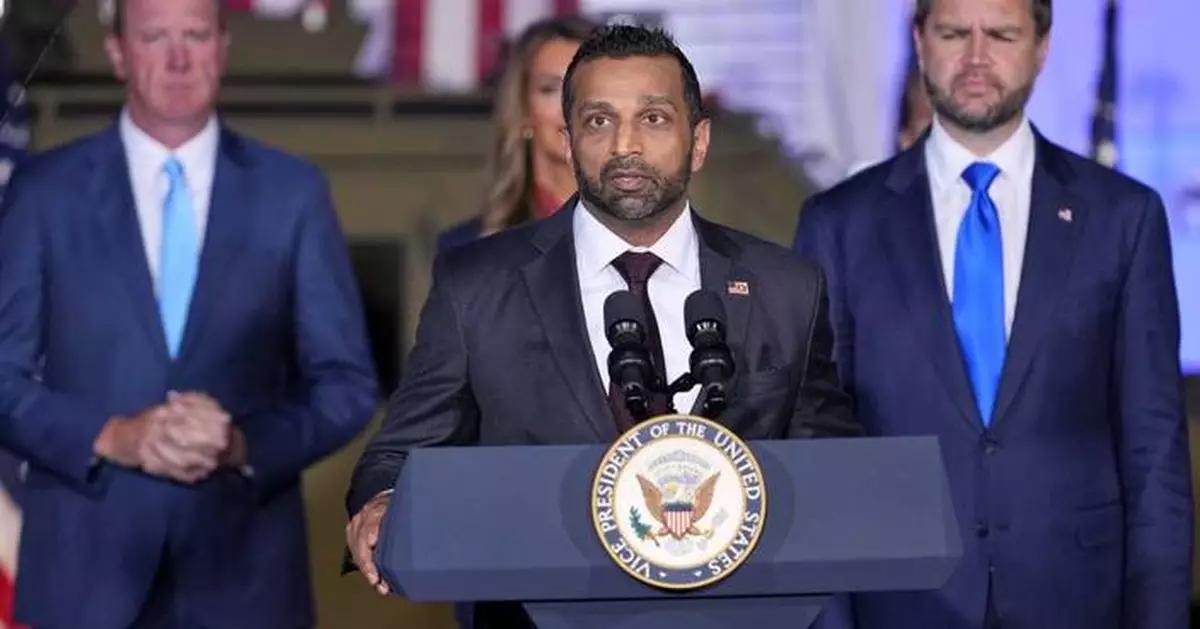
FBI Director Kash Patel speaks as Sen. Eric Schmitt, R-Mo., left and Vice President JD Vance listen during an event at the FBI Field Office in Kansas City, Mo., Monday, Sept. 14, 2026. (AP Photo/Mark Schiefelbein, Pool)

FBI Director Kash Patel speaks as Sen. Eric Schmitt, R-Mo., left and Vice President JD Vance listen during an event at the FBI Field Office in Kansas City, Mo., Monday, Sept. 14, 2026. (AP Photo/Mark Schiefelbein, Pool)

Pressed about the moves at a Senate Judiciary Committee oversight hearing, Patel denied that the changes reflected a lowering of employment standards and insisted that they were designed to protect victims who had been forced to engage in that conduct and preclude them from being automatically disqualified.

“We did not want to punish victims of bestiality, victims who were trafficked. We did not want to make it an automatic disqualification for the FBI to consider you,” Patel said.

The answer did little to satisfy Republican Sen. John Kennedy of Louisiana, who grilled Patel about the rationale for a change that the FBI director said was proposed to him by subordinates.

“When you saw bestiality, I say this with respect: The person who recommended it, why didn't you just say what planet did you parachute in from?” Kennedy asked.

Patel replied that that was his initial reaction but he came to see it as a way of supporting victims.

The Republican-led panel tried to keep the focus on Patel's efforts to combat violent crime, counter drug trafficking and pursue the Trump administration's agenda from his perch at the nation's premier federal law enforcement agency.

But Democrats seized on the tumult inside the FBI over the last year, including sweeping firings of agents who participated in investigations into President Donald Trump, efforts by the bureau to investigate Trump's perceived political adversaries and Patel's travel schedule that has blended private leisure with professional responsibilities.

“Mr. Patel is the least qualified and most partisan FBI director in our nation's history,” Sen. Dick Durbin of Illinois, the panel's top Democrat, said in his opening statement at the hearing. He accused Patel of wielding the bureau's law enforcement powers to seek retribution against Trump's political opponents and pursue the president's grievances, including his false claims that the 2020 election he lost was stolen.

Patel has made multiple appearances before Congress while serving as director, including to testify about the FBI's budget, but this was his first time since last September before the Senate committee that has principal oversight jurisdiction over the bureau.

That hearing featured feisty and personal exchanges with Democrats, with Patel at one point shouting over Sen. Adam Schiff of California as he called him an “utter disgrace” and a “coward.”

"You can make an internet troll the FBI director, but he will always be an internet troll,” Schiff shot back.

Tuesday's hearing was expected to be no less contentious given Democrats' fierce criticism of his leadership and conduct. Durbin called for Patel to be replaced as director in April following an article by The Atlantic magazine that raised allegations of excessive drinking.

Patel later filed a $250 million defamation lawsuit, calling the article false and a “malicious hit piece.” The Atlantic said it stood by its reporting and would vigorously defend against the “meritless lawsuit.”
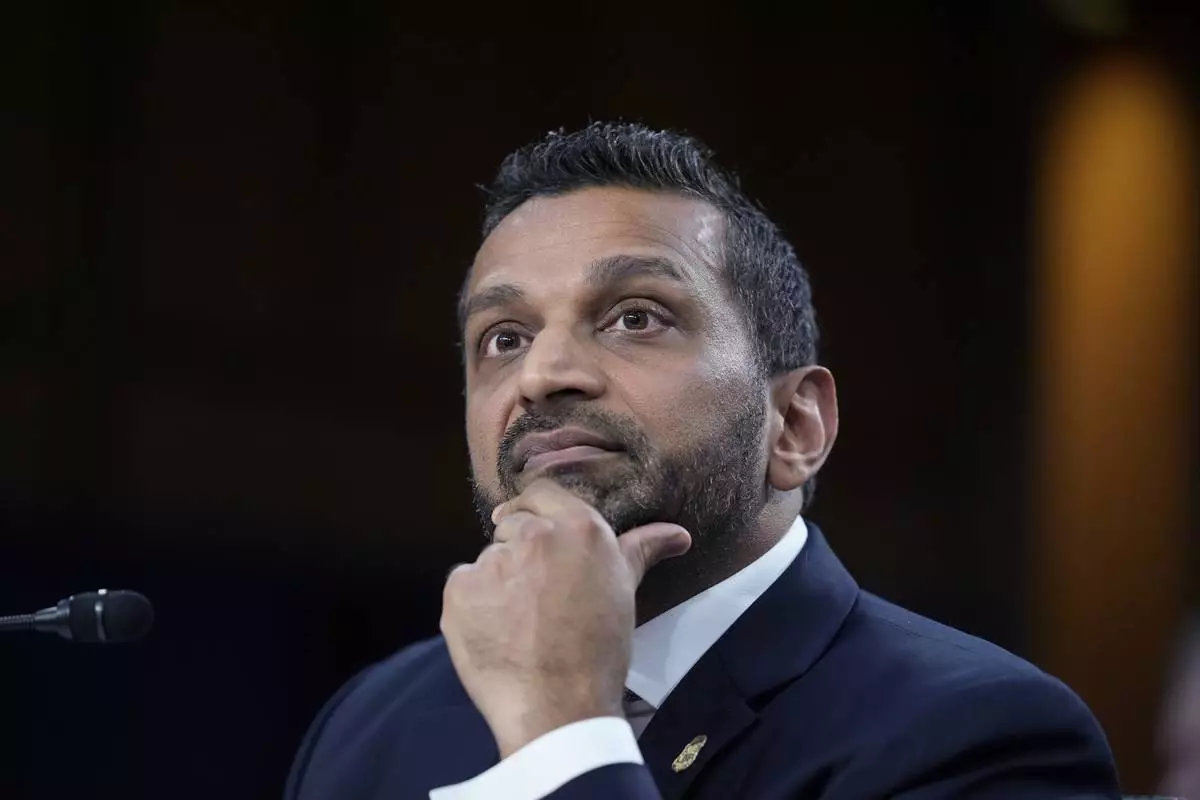
FBI Director Kash Patel listens during the Senate Judiciary hearing on Oversight of the Federal Bureau of Investigation, Tuesday, Sept. 15, 2026 in Washington. (AP Photo/Manuel Balce Ceneta)
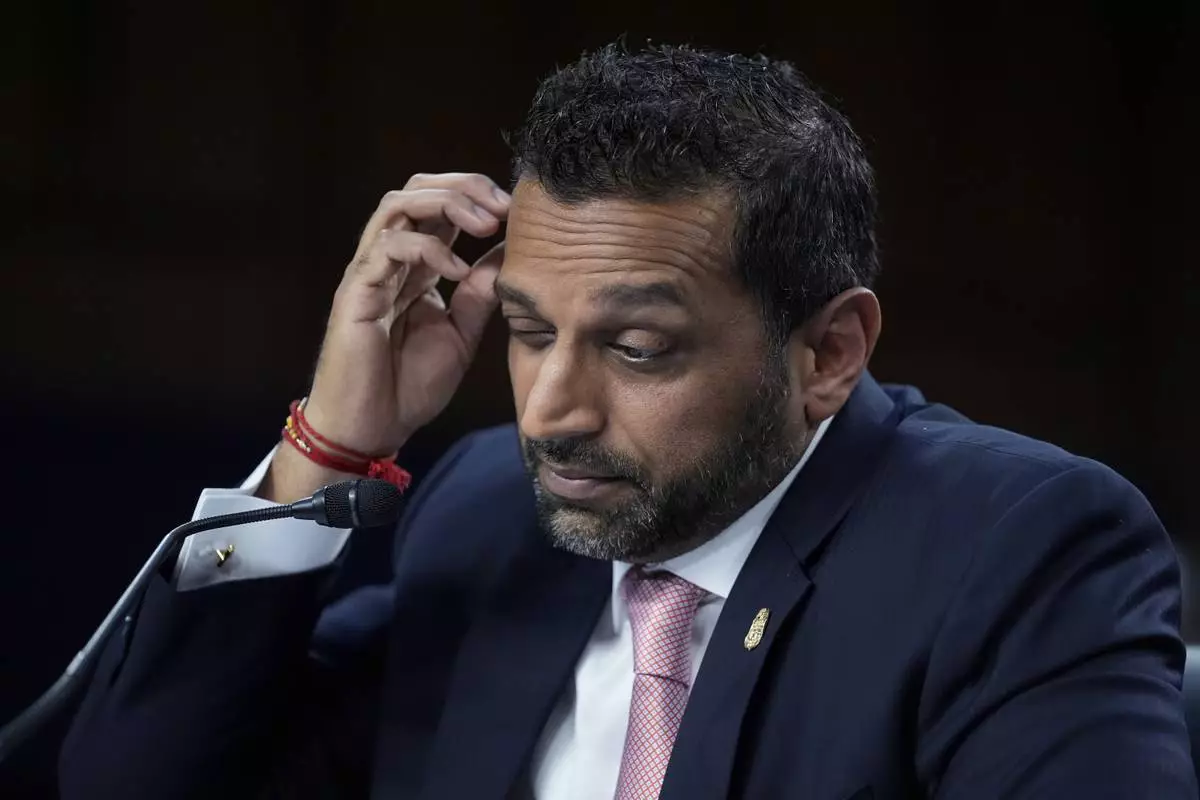
FBI Director Kash Patel listens during the Senate Judiciary hearing on Oversight of the Federal Bureau of Investigation, Tuesday, Sept. 15, 2026 in Washington. (AP Photo/Manuel Balce Ceneta)
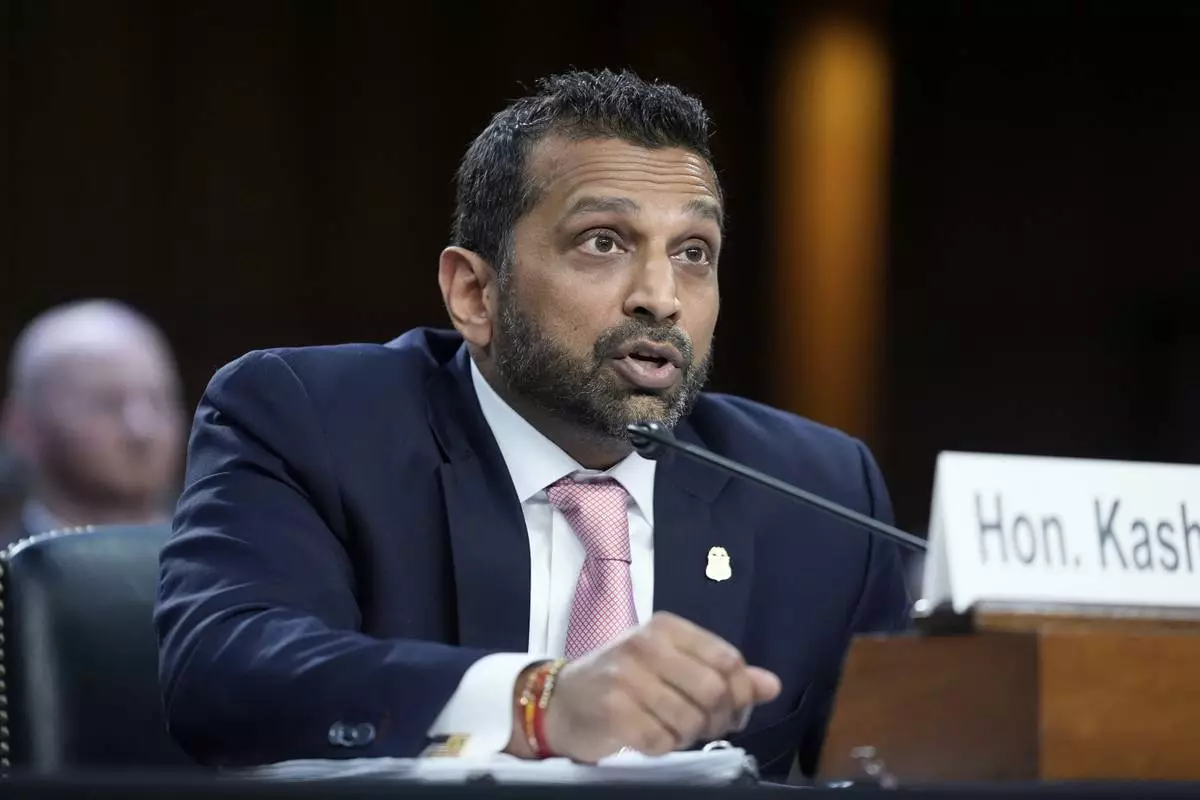
FBI Director Kash Patel testifies during the Senate Judiciary hearing on Oversight of the Federal Bureau of Investigation, Tuesday, Sept. 15, 2026 in Washington. (AP Photo/Manuel Balce Ceneta)

FBI Director Kash Patel testifies during the Senate Judiciary hearing on Oversight of the Federal Bureau of Investigation, Tuesday, Sept. 15, 2026 in Washington. (AP Photo/Manuel Balce Ceneta)

FBI Director Kash Patel testifies during the Senate Judiciary hearing on Oversight of the Federal Bureau of Investigation, Tuesday, Sept. 15, 2026 in Washington. (AP Photo/Manuel Balce Ceneta)

FBI Director Kash Patel testifies during the Senate Judiciary hearing on Oversight of the Federal Bureau of Investigation, Tuesday, Sept. 15, 2026 in Washington. (AP Photo/Manuel Balce Ceneta)

FBI Director Kash Patel speaks as Sen. Eric Schmitt, R-Mo., left and Vice President JD Vance listen during an event at the FBI Field Office in Kansas City, Mo., Monday, Sept. 14, 2026. (AP Photo/Mark Schiefelbein, Pool)

FBI Director Kash Patel speaks as Sen. Eric Schmitt, R-Mo., left and Vice President JD Vance listen during an event at the FBI Field Office in Kansas City, Mo., Monday, Sept. 14, 2026. (AP Photo/Mark Schiefelbein, Pool)
CHELMSFORD, England--(BUSINESS WIRE)--Sep 15, 2026--

Teledyne Space Imaging technology was successfully launched aboard two major European Space Agency (ESA) Earth observation missions; Sentinel-3C and the Fluorescence Explorer (FLEX). The satellites launched together this morning aboard a Vega C rocket from Europe’s Spaceport in French Guiana.

This press release features multimedia. View the full release here: https://www.businesswire.com/news/home/20260915438838/en/

Sentinel-3C: Continuing long-term Earth observation

Designed and developed by ESA, and operated by EUMETSAT, Sentinel-3C is the third satellite in the Sentinel-3 series. The Sentinel missions are part of Copernicus, the EU Space Programme’s Earth observation campaign.

Teledyne supplied five CCD55-20 detectors for Sentinel-3C’s Ocean and Land Colour Instrument (OLCI). The detectors – back-illuminated, frame transfer CCDs optimised for hyperspectral imaging – observe in the visible to NIR, from 0.4 to 1.04 µm, and will assist with mapping ocean colour, vegetation cover, and land use.

Elinor Mitchell, Product Engineering Team Leader of the CCD55-20 at Teledyne Space Imaging, said, “We’re delighted to see the successful launch of Sentinel-3C, and our imaging technology continuing to play a vital role in helping support ocean forecasting systems, environmental monitoring and observing changes in atmospheric composition.”

Sentinel-3A was launched in 2016 and Sentinel-3B followed in 2018. Once fully commissioned, Sentinel-3C is expected to take over from Sentinel-3A, helping to ensure continuity of observations from the Sentinel-3 programme.

FLEX: Observing vegetation from space

ESA’s Fluorescence Explorer (FLEX) launched alongside Sentinel-3C.

Teledyne supplied three CCD325 detectors for the satellite’s Fluorescence Imaging Spectrometer (FLORIS). These detectors image in the spectral range from 0.5 to 0.78 µm. The imaging sensors have been engineered to measure the fluorescent signal given off by plants during photosynthesis. The amount of fluorescence will provide information on the plant’s photosynthetic efficiency, health, and stress. By measuring this signal, its strength also serves as a direct indicator of how much carbon dioxide is being pulled from the atmosphere during this natural process and will help us understand how well an ecosystem is working.

This data will offer scientists new information about the health and functioning of terrestrial vegetation and how plants interact with the wider Earth system – such as carbon and water cycles – processes that are essential for life on this planet.

Tracy Phillips, Principal Project Manager of the CCD325 at Teledyne Space Imaging, said, “Seeing FLEX successfully launch is an exciting moment for our team and everyone who has contributed to the mission. FLEX will give scientists a new way to observe the process of photosynthesis and understand the movement of carbon between plants and our atmosphere. We’re proud that Teledyne detectors will play a key role in generating data that will support important topics such as agricultural management and food security.”

Sentinel-3C and FLEX are developed and procured by the European Space Agency. The view expressed herein can in no way be taken to reflect the official opinion of the European Space Agency.

About TeledyneSpace Imaging

Teledyne Space Imaging of Teledyne Technologies Incorporated (NYSE:TDY) has a distinguished legacy in developing space-qualified imaging sensors, focal plane arrays, and integrated camera systems for leading space agencies and observatories including NASA, ESA, JAXA, and KASA. Its heritage spans more than 250 space projects, along with a wide range of commercial space applications. Teledyne Space Imaging designs, tests and manufactures a range of CCD, CMOS, and IR detectors with optical filters and package options to meet every performance requirement.

About Teledyne

Teledyne is a leading provider of sophisticated digital imaging products and software, instrumentation, aerospace and defense electronics, and engineered systems. Teledyne's operations are primarily located in the United States, Canada, the United Kingdom, and Western and Northern Europe. For more information, visit Teledyne’s website at www.teledyne.com

Teledyne's CCD325 detector used aboard FLEX

Teledyne's CCD325 detector used aboard FLEX

Recommended Articles