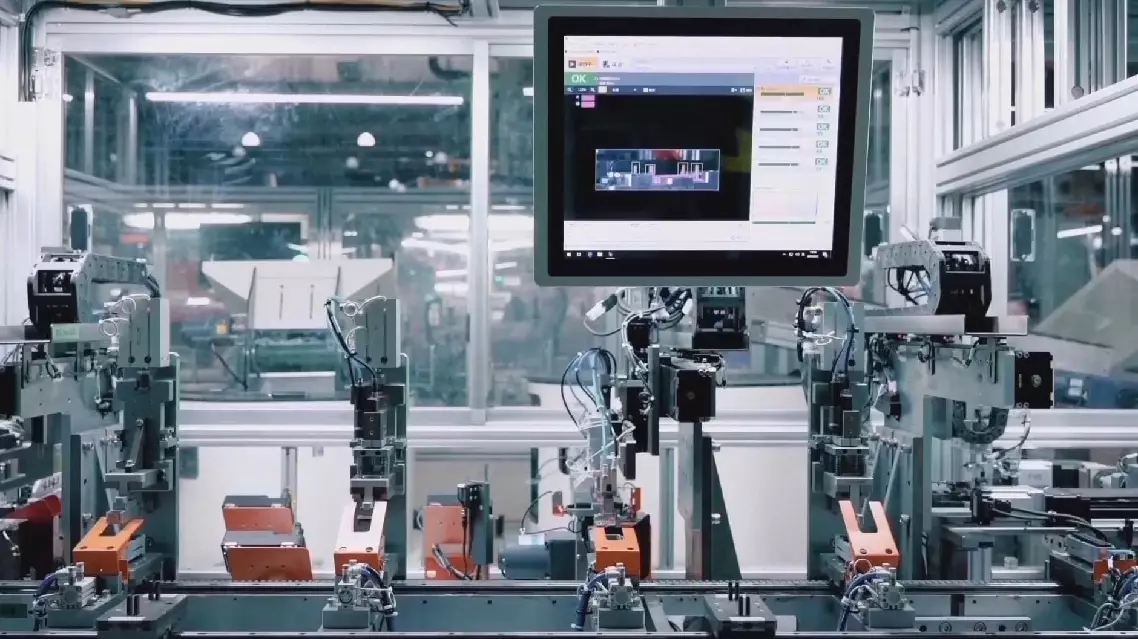
Canadian manufacturers are seeking out business opportunities in a host of new sectors and markets under the strain of U.S. tariffs which are pushing them to break their long reliance on customers across the border.
Trade tensions between the two North American neighbors have been rising in recent weeks after the United States imposed 50 percent tariffs on about 20 billion dollars worth of Canadian goods effective Aug 22, while Canada responded with matching tariffs on an equivalent value of U.S. imports.
Some Canadian insiders say the tariff measures imposed by the U.S. could ultimately backfire on both American businesses and consumers, and believe Canadian enterprises may be well placed to ride out the current storm.
Louis Jahn, president of the Canadian Tooling and Machining Association, a trade body for the country's precision metalworking sector, said that U.S. companies lack the skilled technical workers needed to quickly expand domestic production in high-end tooling and precision manufacturing, leaving American buyers dependent on Canadian suppliers despite the tariffs.
"The Americans are still coming here to buy their molds because they have no choice. They're just under this assumption that you're just going to take all this stuff that's made in other countries -- Canada and Mexico -- and you're just going to bring it to United States tomorrow and it's going to be all manufactured in the United States. Well, it doesn't," he said.
Peter Frise, a professor of mechanical, automotive and materials engineering at the University of Windsor, said the two countries' auto industries are so intertwined that halting production on one side of the border could influence work on the other.
"For instance, in Windsor, we have the Stellantis Windsor Assembly Plant. So if they stop building minivans there, they will stop building engines and transmissions in the United States until they can move the work to the United States. And they could do that, but it won't take place in a few months. That would take years. It would cost billions of dollars, if not trillions," he said.
Jahn also noted that Canadian manufacturers are now looking to reduce their reliance on the United States in the mid to long-term, by proactively embarking on something of a strategic transformation and expanding into a variety of other key sectors with government support to combat the tariff impact.
"Canadian companies, to make up the shortfall where they traditionally sold to an American company, they are now doing defense, they're doing nuclear, they're doing aerospace, they're doing mining, they're doing consumer goods, they're doing agriculture and they're looking to other markets too. And that's really helping the Canadian manufacturing base. So that's probably going to last a good five to 10 years," he said.
Canadian Prime Minster Mark Carney has vowed to stand firm in the face of tariff pressure, saying Canada would do all it takes to protect its workers and businesses, and Jahn noted the mood among ordinary Canadians is also one of defiance in the face of the current trade tensions.
"Right now, the average Canadian consumer, when they look at their next purchase, what they want to do is say, 'OK, where is that product made?' If it's made in the United States, they don't want it," he added.

Canadian manufacturers turning to new markets amid US tariffs