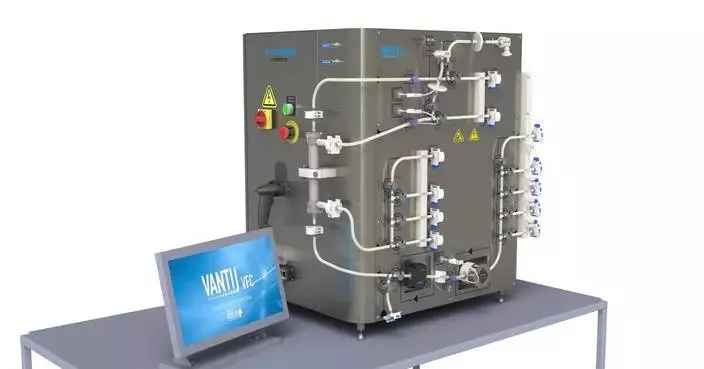
VIENNA, Va.--(BUSINESS WIRE)--Sep 15, 2026--
Following the introduction of Everbridge 360 AI at GSX 2026, Everbridge, the global leader in High Velocity Critical Event Management (CEM), today announced significant new investments in its risk intelligence portfolio with the introduction of Everbridge 360 AI Protective Intelligence and Everbridge 360 AI Risk Stream. These new offers expand organizations' ability to identify emerging threats earlier, understand evolving situations more clearly, and respond with greater speed and confidence. Protective Intelligence also builds on the recently announced acquisition of Open Measures, bringing advanced open-source intelligence capabilities into the offering.
This press release features multimedia. View the full release here: https://www.businesswire.com/news/home/20260915772727/en/
Today's risks rarely begin with the incident itself. Increasingly, the earliest indicators of operational, physical, and reputational threats emerge across online communities, messaging platforms, social media, and other digital channels long before they appear in traditional intelligence sources. Organizations need earlier visibility into emerging threats before they become operational disruptions, along with the context to turn those signals into informed decisions.
The Everbridge 360 AI Protective Intelligence solution combines AI-powered analysis with open-source intelligence to enable organizations to detect emerging risks sooner, understand their potential impact, and coordinate response through a single platform. It also helps organizations monitor and investigate threats targeting executives, traveling employees, and other designated individuals, providing richer context to help teams assess and prioritize risk.
Everbridge 360 AI Risk Stream delivers high-volume, real-time risk intelligence from thousands of trusted global sources, giving security and operations teams earlier visibility into emerging events and helping them focus on the risks most relevant to their people and operations.
A leading global transportation company participating in an Everbridge AI pilot said, “Our work with Everbridge has shown us the potential of pairing powerful AI with a clear, intuitive user experience. The solution will help us quickly classify and prioritize high-profile events, including incidents outside traditional asset-proximity alerts, while assessing potential connections to our brand and business. By translating complex risk intelligence into configurable, actionable workflows, it can reduce information overload, improve decision confidence, and strengthen operational resilience at scale.”
“Security teams don't need more data – they need intelligence they can act on,” said Julie Finkelstein, VP, Risk Intelligence at Everbridge. “With Everbridge 360 AI Protective Intelligence and Risk Stream, we're bringing together real-time intelligence, AI-powered analysis, and open-source data to help teams cut through the noise, understand what matters, and direct their attention where it's needed most. The goal is to give customers the context they need to move from identifying potential risk to making confident, informed decisions.”
Open Measures further strengthens these capabilities by adding advanced open-source intelligence and proprietary data collection to the Everbridge risk intelligence portfolio. Open Measures' technology helps organizations identify and analyze signals across a broad range of online sources, creating new opportunities for AI-powered analysis, investigation, and decision support.
Everbridge will demonstrate its expanded Risk Intelligence portfolio – including Everbridge 360 AI Protective Intelligence, Everbridge 360 AI Risk Stream, and newly integrated Open Measures capabilities – during GSX 2026 at Booth #1841.
Learn more about Everbridge 360 AI Protective Intelligence and how Everbridge helps organizations identify and assess emerging risks.
About Everbridge
Everbridge helps more than 6,500 enterprises and government organizations manage critical events by enabling them to know earlier, respond faster, and improve continuously. Through an all-in-one AI-powered platform, Everbridge High Velocity CEM™ is autonomous when you want it to be and human-guided when you need it to be, so every incident response is optimized. For more information, visit everbridge.com and follow us on LinkedIn.

Everbridge Unveils Everbridge 360 AI Protective Intelligence, Expanding AI-Powered Risk Intelligence
The Supreme Court has rejected President Donald Trump’s bid to restrict mail ballots for the midterm elections, capping a flurry of last-minute legal action with voting already underway. The decision allows states to continue sending out mail ballots under the same processes they’ve used for years. Nearly a third of U.S. voters cast their ballots by mail.
A federal whistleblower says a last-ditch Trump administration effort to hunt for noncitizen voters ahead of November’s elections is requiring federal employees to misrepresent themselves on voter lookup tools in a way that likely violates state laws.
And the Federal Reserve is widely expected to lift its short-term interest rate Wednesday for the first time in three years to fight stubbornly high inflation, despite Trump's lobbying for a cut.
Here’s the Latest:
Air Force Secretary Troy Meink told the Air and Space Cyber Conference in Maryland on Monday that the U.S. has fielded “on-orbit space control weapons capable of defending the Joint Force against hostile adversary action.”
He didn’t say what the weapons are or how they work. In 2024 the U.S. said Russia was developing a new anti-satellite weapon that could be launched from space. At the time the White House said the danger wasn’t imminent, but it raised concerns about threats to U.S. infrastructure that depends on satellite communications.
Meink, who has overseen the Space Force, predicted the service would look “radically different” by 2032 — for example, with one-way attack drones replacing artillery as the “primary killer.”
“We are increasing readiness against existing threats,” he said.
The technology industry’s increasingly urgent warnings about the potential harm of artificial intelligence are slamming into political intransigence in Washington, offering a fresh test of the federal government’s willingness and ability to confront what may become a defining issue of the era.
Trump is leading the opposition to recent calls by tech leaders seeking greater government oversight.
The president dismissed efforts to limit the technology on Monday as a “conspiracy.” House Speaker Mike Johnson has largely deferred to the White House.
Democrats, meanwhile, are pressing for a more robust response, convening in private on Tuesday in the House to discuss AI. Sen. Bernie Sanders, I-Vt., is hosting his colleagues for a briefing with experts on Wednesday.
The contrasting responses illustrate a yawning disconnect emerging between a tech sector warning of AI’s existential threats to humanity and a federal government often struggling to accomplish basic functions under the weight of intense partisanship and election-year pressure.
▶ Read more
A last-ditch Trump administration effort to hunt for noncitizen voters ahead of November’s elections is requiring federal employees to misrepresent themselves on voter lookup tools in a way that likely violates state laws, according to a federal whistleblower’s statement released Monday.
The Department of Homeland Security probe known as the “Unlawful Voter Initiative” also asks employees to create federal law enforcement records about voters based on unreliable data, the account warns. That could potentially wrongly implicate U.S. citizens in official documentation that could spur further investigation.
The anonymous, nearly 30-page disclosure was published Monday by Democratic Senate Minority Leader Chuck Schumer of New York and Democratic Sen. Alex Padilla of California, the ranking member of a Senate committee overseeing federal elections.
Padilla and Schumer said Monday the initiative was an example of Trump attempting to interfere in elections and the short timelines would impede officials from conducting proper investigations. They noted that the data DHS has on voters can be unreliable and differ from state records, making any federal findings based on that data potentially problematic.
▶ Read more
The Federal Reserve is widely expected to lift its short-term interest rate Wednesday for the first time in three years to fight stubbornly high inflation, a move that would put the central bank at odds with President Donald Trump’s support for a cut.
An increase in the Fed’s rate, currently about 3.6%, isn’t guaranteed because Fed Chair Kevin Warsh doesn’t provide the signals about next moves that his predecessors did. Still, most analysts and economists expect a hike after a speech two weeks ago at the Fed’s annual conference in Jackson Hole, Wyoming, in which Warsh argued that the Fed had not yet achieved its goal of putting inflation in check.
A rate hike would throw another sharp shift into a volatile period for the economy and financial markets. As recently as March, the Fed had forecast it would cut its rate once this year. But with the Iran war flaring up again and causing sharp increases in oil and gas prices, inflation is likely to remain higher than the Fed’s 2% target for even longer.
▶ Read more
The Supreme Court on Monday rejected President Donald Trump’s bid to restrict mail ballots for the midterm elections, capping a flurry of last-minute legal action with voting already underway.
The decision allows states to continue sending out mail ballots under the same processes they’ve used for years and have accounted for nearly a third of votes cast.
It represented a stark defeat for Trump on an issue he consistently has emphasized as vital to ensuring election integrity even though there is virtually no evidence of fraud with mail ballots.
The Supreme Court majority wrote that the administration’s push to implement the restrictions this year is likely to lose in court, though the brief emergency order didn’t detail its reasoning. Two justices, Samuel Alito and Clarence Thomas, publicly dissented.
The Trump administration had asked the justices, once again at the center of a roiling political controversy, to clear the way for restrictions before the pivotal November contests for control of Congress.
▶ Read more
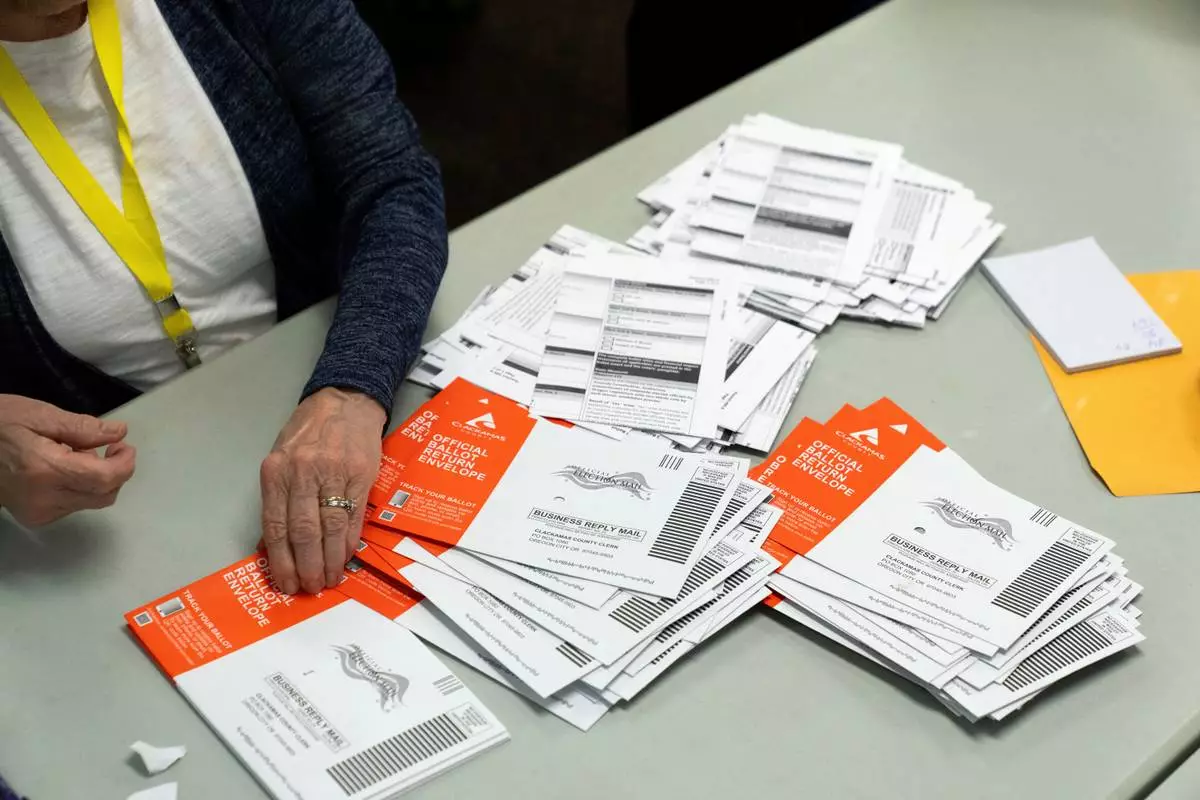
FILE - An election worker reaches for an unopened ballot during sorting at the Clackamas County Elections office, Nov. 7, 2024, in Oregon City, Ore. (AP Photo/Jenny Kane, File)

President Donald Trump speaks with reporters before boarding Air Force One at Shannon Airport, Sunday, Sept. 13, 2026, in Shannon, Ireland. (AP Photo/Julia Demaree Nikhinson)

Protestor, Linda James, poses for photo with her "VOTE" sash at the Dallas March on the RNC Midterm Convention in Dallas, Thursday, Sept. 10, 2026. (AP Photo/Gabriela Passos)