WASHINGTON (AP) — The board of the Kennedy Center voted Tuesday to close the facility amid financial issues and a dispute over putting President Donald Trump’s name on the iconic performing arts venue, according to people familiar with the matter.
Trump and Commerce Secretary Howard Lutnick participated in the board meeting, according to one of the people. They spoke on condition of anonymity because they were not authorized to discuss a private meeting. Lutnick's wife, Allison, is a member of the Trump-appointed board.
Click to Gallery
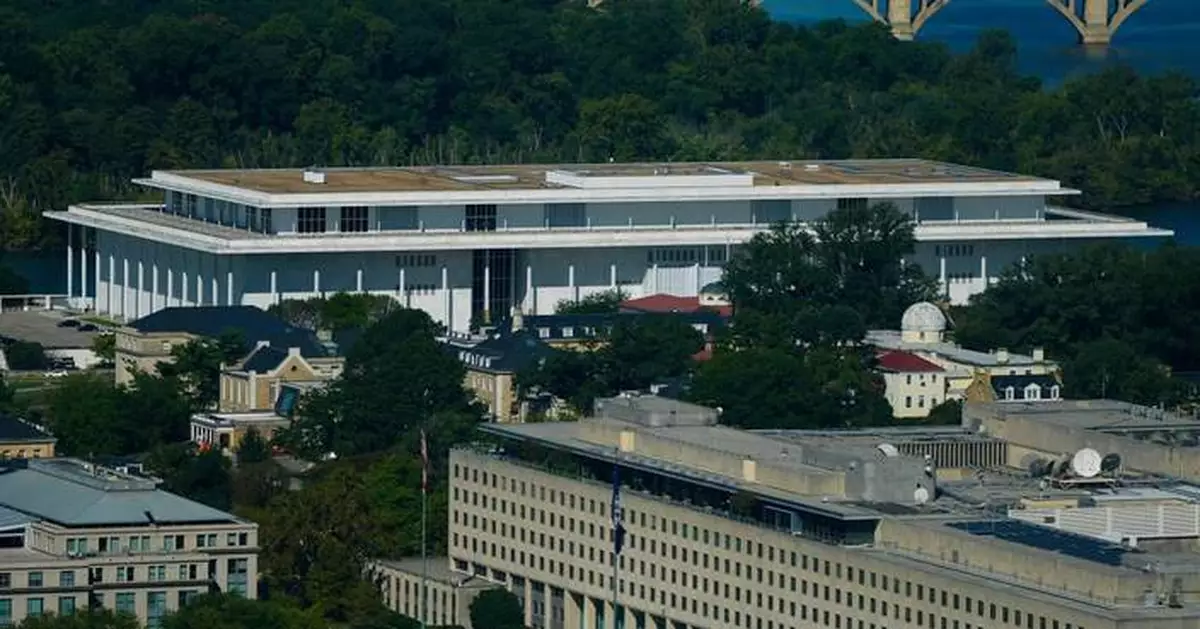
The John F. Kennedy Center for the Performing Arts, is seen, Sunday, Sept. 6, 2026, in Washington. (AP Photo/Jose Luis Magana)
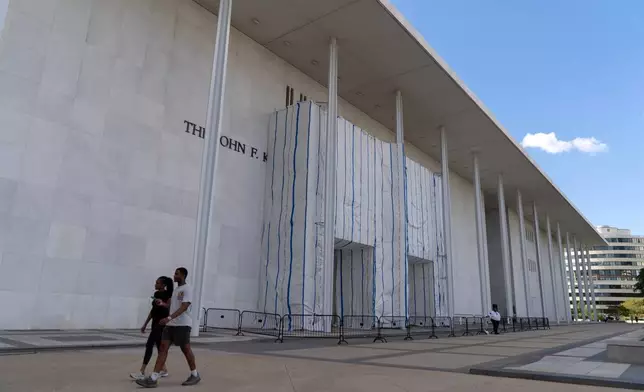
Visitors walk at The John F. Kennedy Center for the Performing Arts, Sunday, Sept. 6, 2026, in Washington. (AP Photo/Jose Luis Magana)
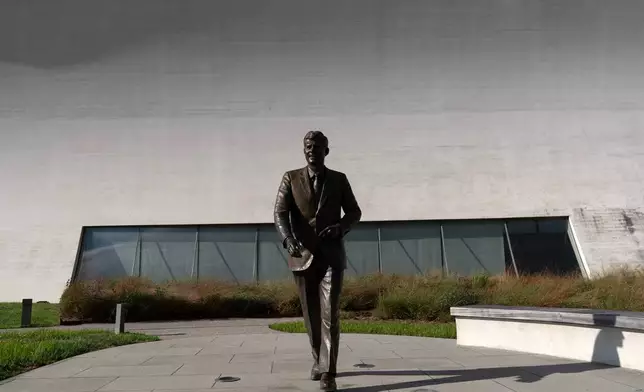
An sculpture of President John F. Kennedy is seen at The John F. Kennedy Center for the Performing Arts, Sunday, Sept. 6, 2026, in Washington. (AP Photo/Jose Luis Magana)
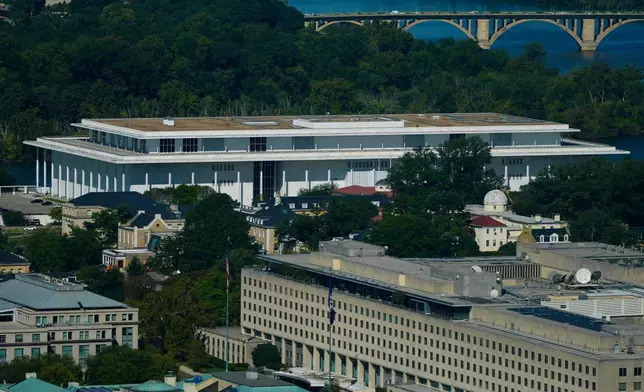
The John F. Kennedy Center for the Performing Arts as seen from the Washington Monument, Tuesday, Sept. 15, 2026, in Washington. (AP Photo/Pablo Martinez Monsivais)
Prior to Tuesday's board meeting, a federal judge blocked the Kennedy Center board from adding Trump's name to the structure or grounds, saying it would violate an earlier ruling that his name was illegally added to the building.
Judge Christopher Cooper ruled, “Simply put, Defendants cannot install memorials for President Trump or anyone or anything else at the Kennedy Center without Congress’s blessing.”
After the board added Trump's name above Kennedy's, Cooper ruled in May that only Congress can approve changes to the Kennedy Center’s name. The board responded by erecting an elevated tarp which obscures Trump’s name and most of Kennedy’s.
The board had recently floated multiple options for getting Trump’s name on the grounds, including inscriptions like “Renovation and endowment overseen by President Donald J. Trump and the Trump Kennedy Center Fund.” Another option: “With Gratitude for Support from President Donald J. Trump and the Trump Kennedy Center Fund.”
The board's proposal flatly states that “without such appropriate recognition” it’s unlikely that Trump will financially support what the board says are desperately needed renovations.
Cooper, in his Tuesday ruling, noted “the government plays word games.”
In a scheduling hearing Tuesday morning, prior to the release of his ruling and prior to the board's vote, Cooper appealed to lawyers for both sides to find a mediated solution to the fate of the performing arts center. The center’s board has claimed the building is in desperate physical shape and the institution is close to insolvency.
“Is it possible to turn down the temperature a little bit?” Cooper asked. “I’m not ordering you to do it, but there is a larger public interest here.”
But Cooper's appeal for common ground was largely subsumed by the board vote a few hours later.
Trump weighed in on social media shortly after the vote, claiming the closure was necessary for public safety and strongly implying that the fate of the Kennedy Center depended largely on whether his name is attached.
“The Renovation and Reconstruction, which is a very large and complex job, cannot begin until such time as the D.C. Circuit rules on the Board’s approved name,” he wrote. “If the ruling is a negative one, which it should not be ... the Reconstruction and the Renovation of The Kennedy Center will not take place.”

The John F. Kennedy Center for the Performing Arts, is seen, Sunday, Sept. 6, 2026, in Washington. (AP Photo/Jose Luis Magana)
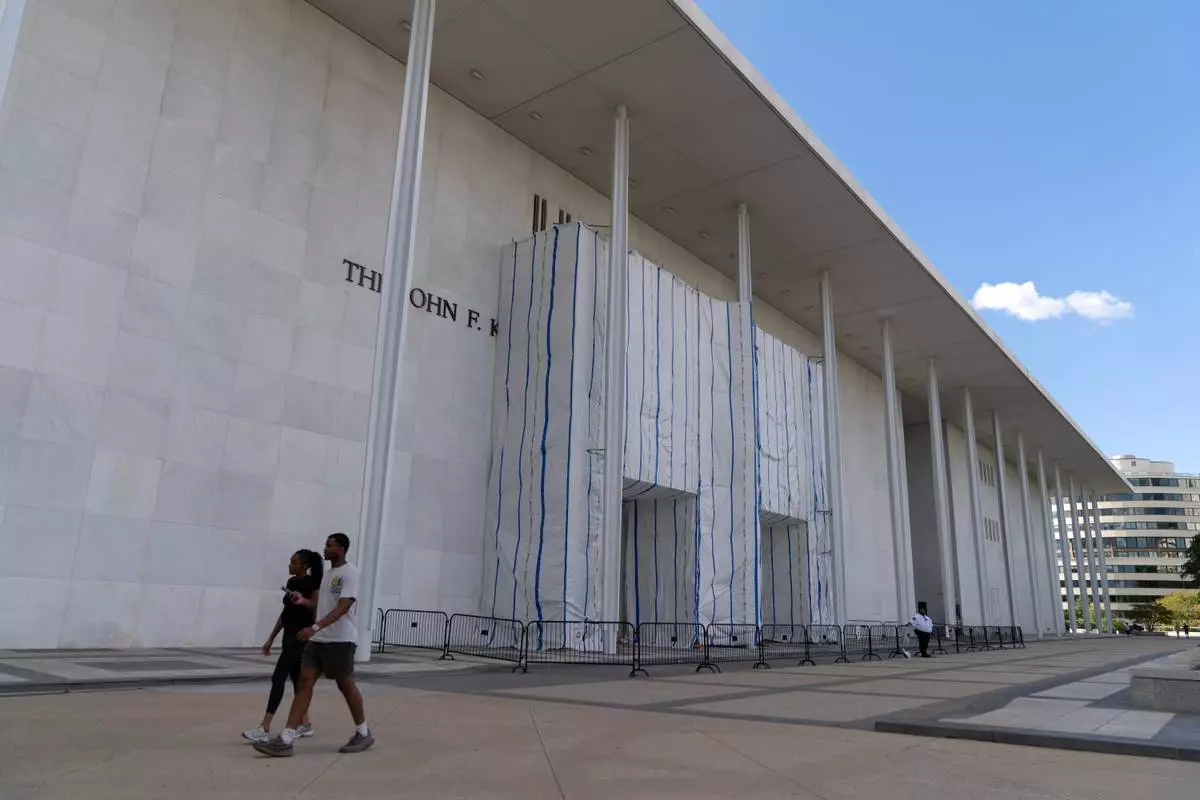
Visitors walk at The John F. Kennedy Center for the Performing Arts, Sunday, Sept. 6, 2026, in Washington. (AP Photo/Jose Luis Magana)

An sculpture of President John F. Kennedy is seen at The John F. Kennedy Center for the Performing Arts, Sunday, Sept. 6, 2026, in Washington. (AP Photo/Jose Luis Magana)
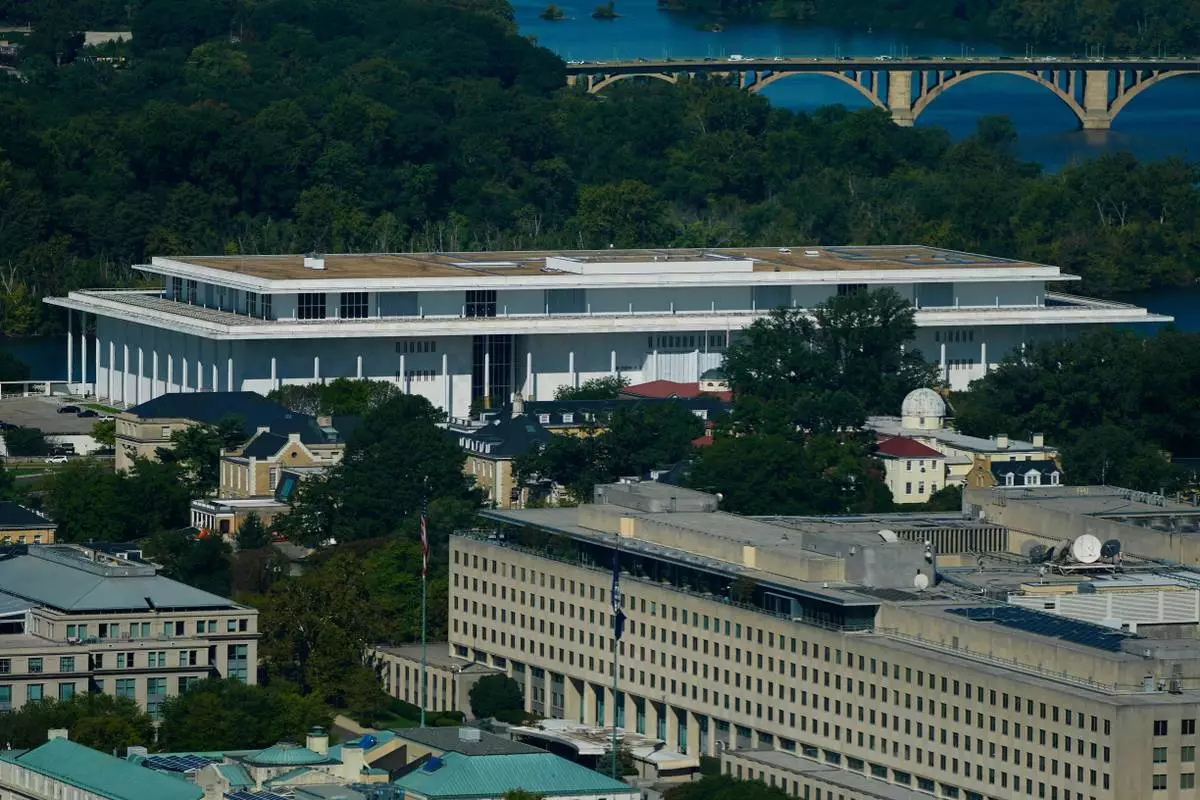
The John F. Kennedy Center for the Performing Arts as seen from the Washington Monument, Tuesday, Sept. 15, 2026, in Washington. (AP Photo/Pablo Martinez Monsivais)
WASHINGTON (AP) — Senate Democrats on Tuesday blocked legislation to create a new regulatory framework for cryptocurrency, stalling an industry-backed effort to place new guardrails around digital assets after demanding more limits on President Donald Trump's investments.
The 49-50 vote on whether to move forward with the legislation was a pivotal election-year test for the $2.3 trillion cryptocurrency market as the industry has pushed aggressively for a uniform set of rules. The Senate debate came as cryptocurrency companies have become a major political force, and as Trump has amassed significant wealth in crypto while in office.
While some Democrats are friendly toward the industry and support the idea of regulation, they have been adamant that the bill include strong ethics safeguards to prevent the president and his family from enriching themselves while he's in office. The opposition appears to have only solidified two months before the midterm elections, despite significant donations that crypto groups have given to some Democrats in recent years.
“Let’s make sure that we do not pass a crypto bill that will let Donald Trump continue to rake in billions of dollars in crypto profits while working families across this country struggle to deal with higher prices and an economy that gets worse by the day,” said Massachusetts Sen. Elizabeth Warren, the top Democrat on the Senate Banking Committee.
As Democrats made clear they would block the bill, Trump agreed to some concessions on ethics, including new restrictions on federal elected officials from issuing digital assets like the presidential meme coins he and his wife Melania launched before he took office for his second term. He agreed to new concessions Sunday, such as additional powers for state attorneys general that Democrats had sought to enforce the crypto measures.
Those concessions were not enough for Democrats, who said the latest Republican proposal did not have enough enforcement. They also wanted a requirement for Trump or any future president to divest if holdings reach a certain value.
The latest version of the legislation “leaves a lot to be desired,” said Arizona Sen. Ruben Gallego, who was involved in last-minute talks with Republicans on the bill.
Democrats sent a counteroffer late Monday that would expand the ethics provision, but they were not able to strike a final deal. Republicans needed Democratic support to win the 60 votes necessary to move forward on the bill in the 53-47 Senate.
North Carolina Sen. Thom Tillis, a Republican who worked with Gallego to strengthen the ethics provision, said before the vote that he was pleased with Trump’s latest concessions.
“We’re so close,” Tillis said. “It’s just a shame to not take this opportunity.”
Trump’s family has raked in big profits in the crypto sector since he was reelected, including the meme coin, announced the day before Trump took office. Top investors were invited to a private reception with the president.
Trump’s family also has a controlling stake in World Liberty Financial, a crypto firm co-founded with the president’s special envoy Steve Witkoff. Trump reported more than $500 million in revenue from World Liberty Financial sales of crypto products, including “governance tokens,” in his annual disclosure report filed with the Office of Government Ethics. That is a significant share of the more than $1.4 billion that the president reported from crypto businesses last year.
A measure enacted into law last year regulating stablecoins, a type of cryptocurrency, barred members of Congress and their families from profiting off them, but it did not extend to Trump or his family.
Republicans who have been working on the legislation for more than a year say it could now stall indefinitely. The House and Senate will be out of session during October and before the elections, and the dynamics could significantly shift if Democrats win back the majorities of the House or Senate, or both, in November.
Republican Sen. Cynthia Lummis of Wyoming, a lead sponsor of the bill, said beforehand that a no vote means ”opposing real ethics reforms on politicians’ personal investments, handing American leadership in digital assets to our foreign competitors, and leaving Americans with zero protections in the digital asset markets.”
Supporters say the legislation aims to give the industry more legal certainty and protect consumers by creating a broad set of guardrails and regulatory requirements, including better enforcement to prevent bad actors and protections to prevent a market collapse.
As talks continued Tuesday morning, Lummis posted on X that it was “now or never for the Clarity Act,” referring to the bill’s name.
“The time for negotiating is over,” she wrote.
Opponents, mostly Democrats, say the bill is a giveaway to the industry as crypto companies have become generous donors to candidates in both parties around the country.
“It’s no secret that they are seeking to ram a bill through Congress based upon not the merits of the bill, but the threat that they will spend even more money in elections against people who vote against it,” said Democratic Sen. Chris Murphy of Connecticut.
In 2024, the crypto industry spent more than $130 million in congressional races, including $40 million in Ohio and $10 million each in Arizona and Michigan.
“DC received a clear message that being anti-crypto is a good way to end your career, as it doesn’t represent the will of the voters,” Brian Armstrong, the CEO of Coinbase, the nation’s largest crypto exchange, wrote in a social media post the day after the 2024 election.
Associated Press writers Seung Min Kim and Joey Cappelletti contributed to this report.
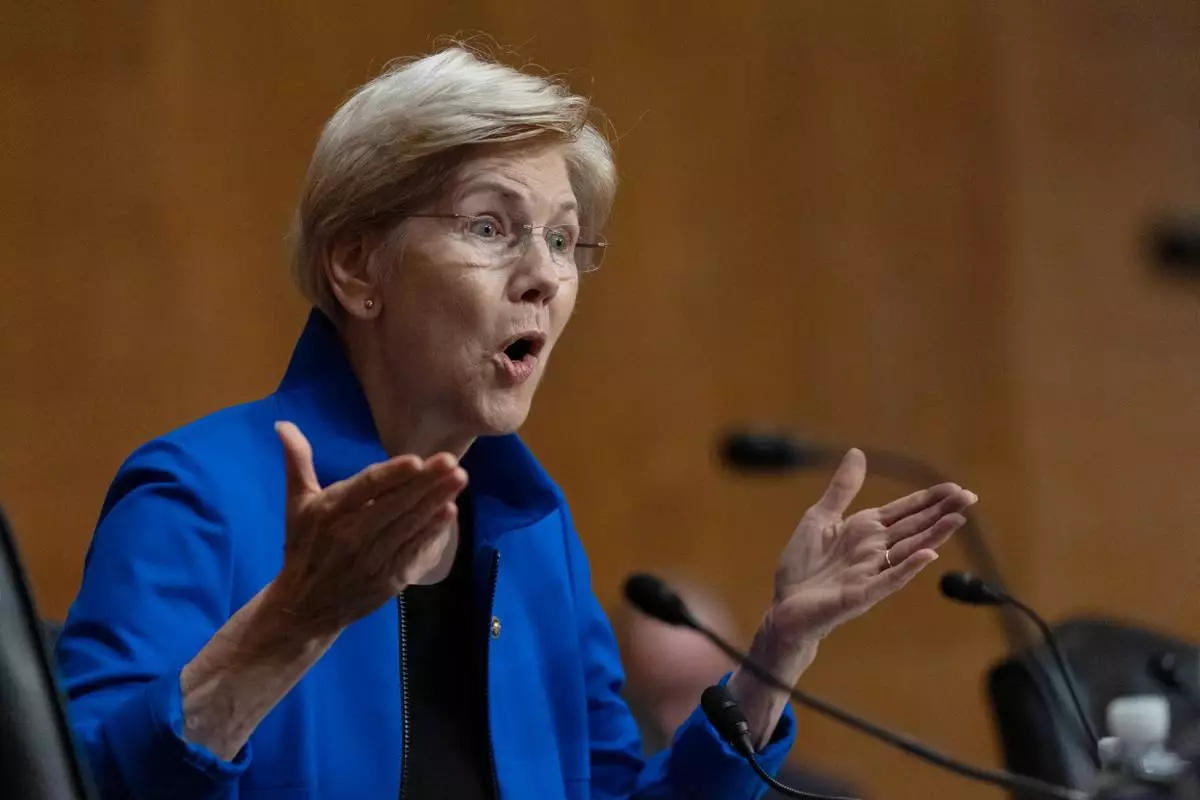
Senate Finance Committee member Sen. Elizabeth Warren, D-Mass., speaks to nominees, during a confirmation hearing on Capitol Hill, Tuesday, Sept. 15, 2026, in Washington. (AP Photo/Manuel Balce Ceneta)

FILE - Eric Trump, Executive vice president of The Trump Organization, from right, speaks as co-founder of World Liberty Financial Zach Witkoff and founder of TRON Justin Sun look on during Token 2049, a Crypto event, in Dubai, United Arab Emirates, May 1, 2025. (AP Photo/Altaf Qadri, File)
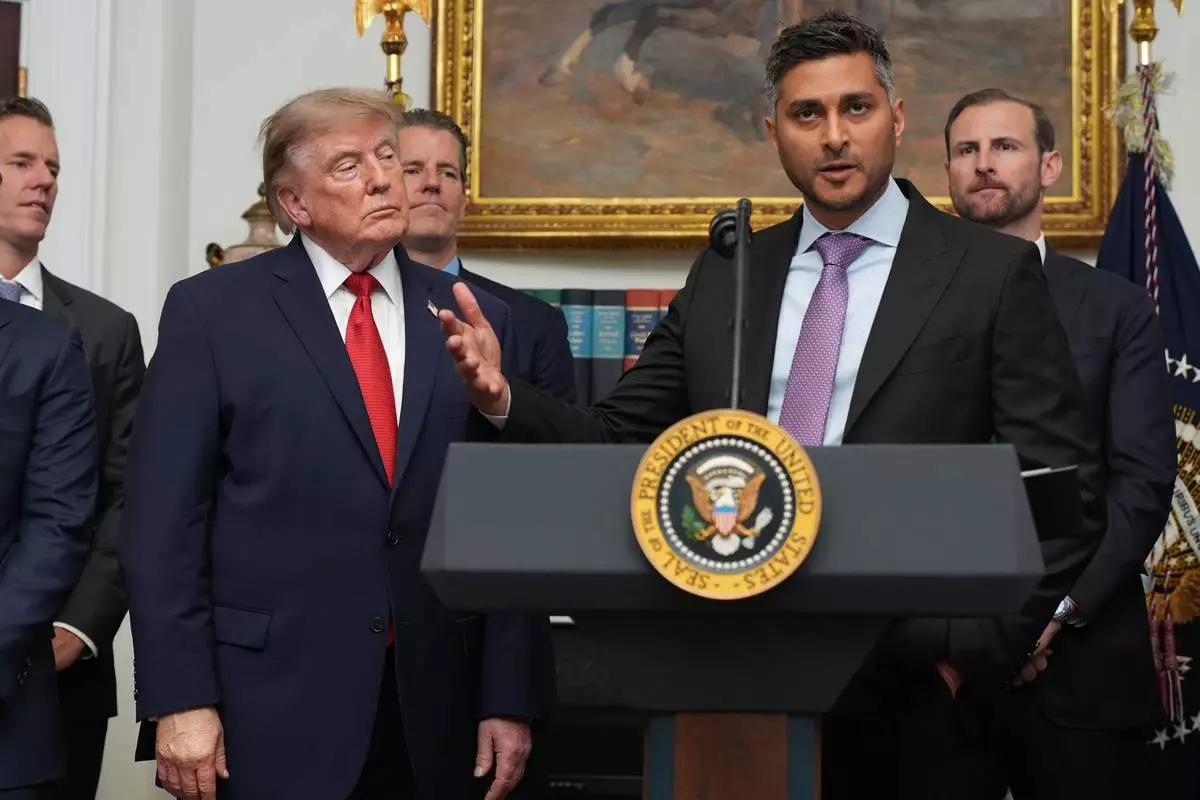
FILE - Kraken co-CEO Arjun Sethi speaks as President Donald Trump listens during a meeting with technology leaders in the Roosevelt Room of the White House, Aug. 19, 2026, in Washington. (AP Photo/Jacquelyn Martin, File)