WASHINGTON (AP) — A bill that proposes to fix some of the biggest problems in college sports — spiraling spending, constant lawsuits and a transfer portal run amok — cleared a major hurdle Tuesday when the Senate voted 74-24 to halt debate and move the measure one step closer to a final up-or-down vote.
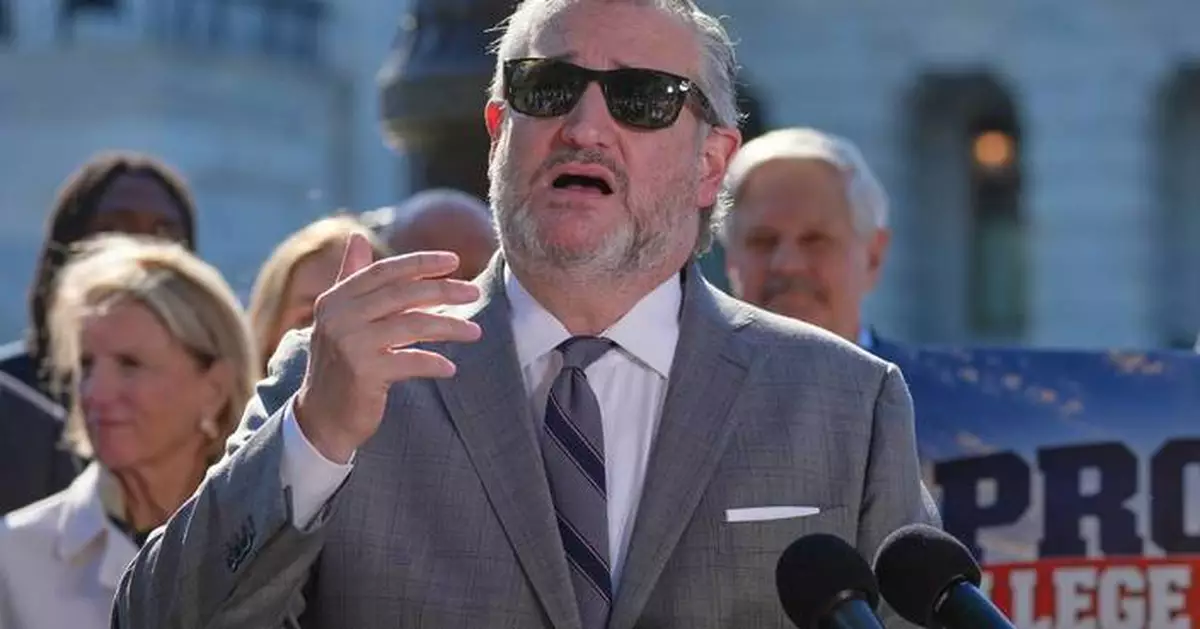
The Protect College Sports Act, a bill co-sponsor Sen. Ted Cruz, R-Texas, called “a bipartisan solution designed to bring order to the chaos” easily cleared the 60-vote threshold it needed to stop the filibuster.
Co-sponsor Maria Cantwell, D-Wash., said the lopsided nature of the vote left her “cautiously optimistic” it could get through the House, which has failed repeatedly in passing a different version of a college sports bill.
There remains, however, a persistent block of opposition.
“What this bill does at its core is to protect a system of exploitation,” said Sen. Chris Murphy, D-Conn.
Notably, all four Black Democrats in the Senate — Cory Booker, Raphael Warnock, Lisa Blunt Rochester and Angela Alsobrooks — voted against the bill that is strongly opposed by the NAACP.
The vote came a week after college football's most recent crisis — a scheduled meeting of school presidents in the Southeastern Conference to expel LSU over its now-canceled plans to place players on the roster who had participated in NFL training camps.
Calmer heads prevailed. The eligibility lawsuit that triggered the mess is the sort of litigation the bill would outlaw.
“That was probably like a big lamp for some people who saw it and said, ‘Oh my God, this is so out of control,’" Cantwell said in an interview with The Associated Press. “You can see how out-of-hand the situation was getting.”
Cantwell and Cruz introduced the bill in late May and it nearly died without the support of the Southeastern and Big Ten conferences. Compromises helped get them on board, then it became a matter of getting the bill onto the floor of the busy upper chamber.
At around the time the vote took place, Cantwell released a report that outlined a “spending spiral” that has taken hold of college sports since name-image-likeness payments began.
Among its findings: There was a $519.9 million increase in institutional and government support of athletic programs between 2015 and 2025 among the 53 schools in the Power Four whose data was publicly available. The bill promises to harness that in a number of ways, including:
— Placing into law the 22% cap (around $21.5 million this year) on revenue colleges are allowed to share with their players — an amount agreed to in the House settlement that defined the rules over paying players. It would add a $27.5 million “retention pool” for schools to keep current players in a move that could bring some of the hard-to-regulate third-party NIL deals back in-house.
— Giving conferences the option of pooling their TV media rights, a move proponents say could raise between $4 billion and $8 billion in additional revenue. The SEC and Big Ten disagree and say they would not participate.
— Restricting players to one “free” transfer where they wouldn't have to sit out a year, which could limit bidding wars that take place year-round in the transfer portal.
— Placing into law the NCAA's new rule that allows players five years of eligibility, but no more.
Critics say the NCAA, which has struggled to police its business for the last 100 years, shouldn't be getting more power.
“Over and over again, courts have determined that colleges and the NCAA and conferences are violating the law,” Murphy said.
The bill, however, has gained support from a long list of sports leaders, including retired football coach Nick Saban and Deion Sanders of Colorado, and basketball coaches John Calipari of Arkansas and Mark Few of Gonzaga.
“I think this clears up about 75-80% of our issues,” Calipari said at a news conference in Washington on Monday, the eve of the vote. “Nothing is perfect. This is a bite out of the apple.”
Though the bill passed on a bipartisan measure, some lawmakers view it as their best chance to do something with the uncertainty of the upcoming election looming. Republicans currently hold a 53-47 majority in the chamber. Democrats are trying to flip the Senate in November’s midterms, which can complicate the legislative agenda.
“We’re going to get one shot at this, and I don’t know if we ever will again soon,” said another co-sponsor, Sen. Eric Schmitt, R-Mo., just ahead of the vote. “We’ve got a moment.”
The bill, he said, could “define the trajectory of college athletics.”
Pells reported from Denver.
AP college sports: https://apnews.com/hub/college-sports
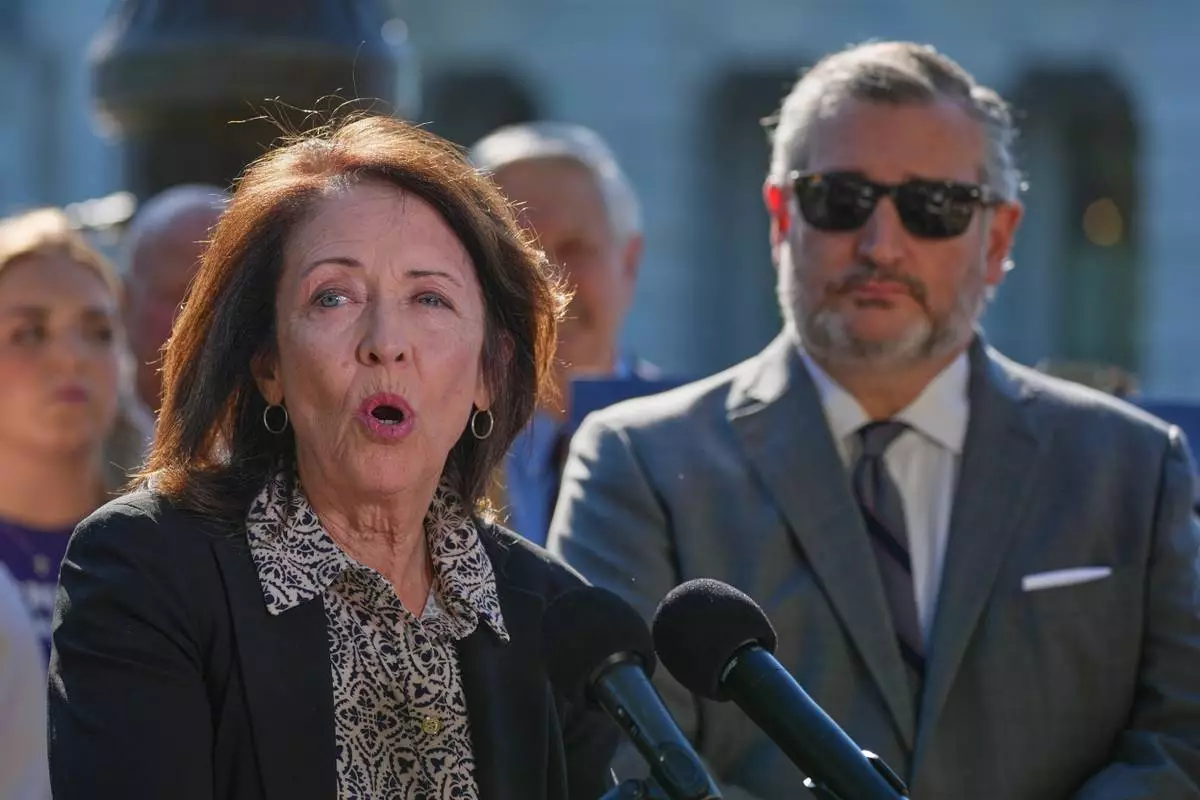
Sen. Maria Cantwell, D-Wash., left, speaks as Sen. Ted Cruz, R-Texas, right, listens during a news conference on Capitol Hill, Monday, Sept. 14, 2026, in Washington. (AP Photo/Mariam Zuhaib)
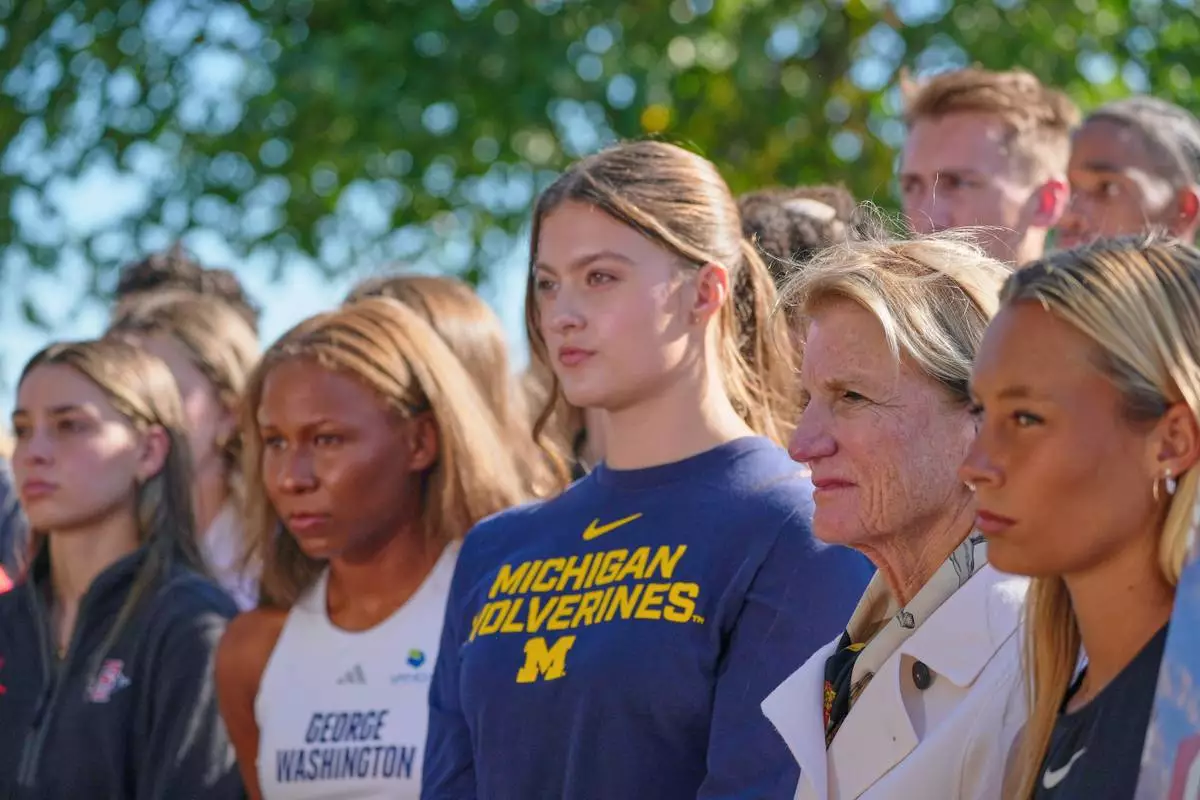
Sen. Shelley Moore Capito, R-W.Va., second from right, listens during a news conference on Capitol Hill, Monday, Sept. 14, 2026, in Washington. (AP Photo/Mariam Zuhaib)
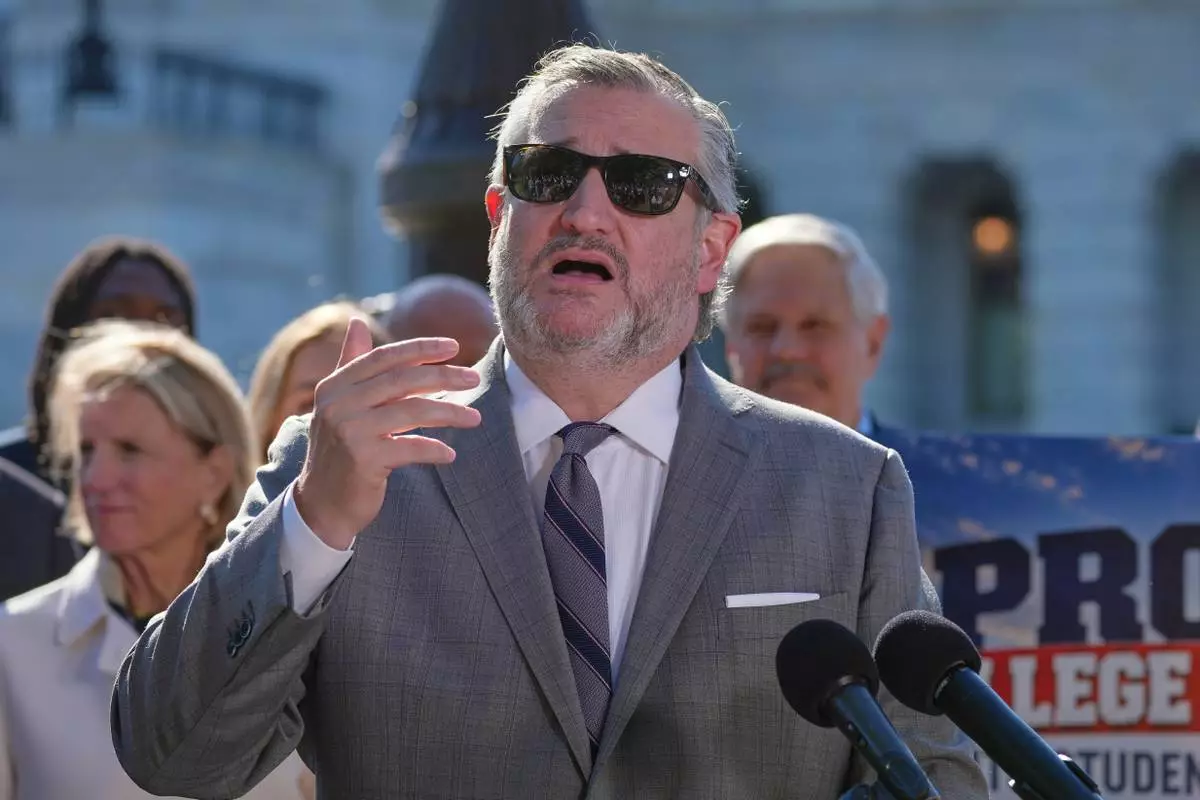
Sen. Ted Cruz, R-Texas, speaks during a news conference on Capitol Hill, Monday, Sept. 14, 2026, in Washington. (AP Photo/Mariam Zuhaib)