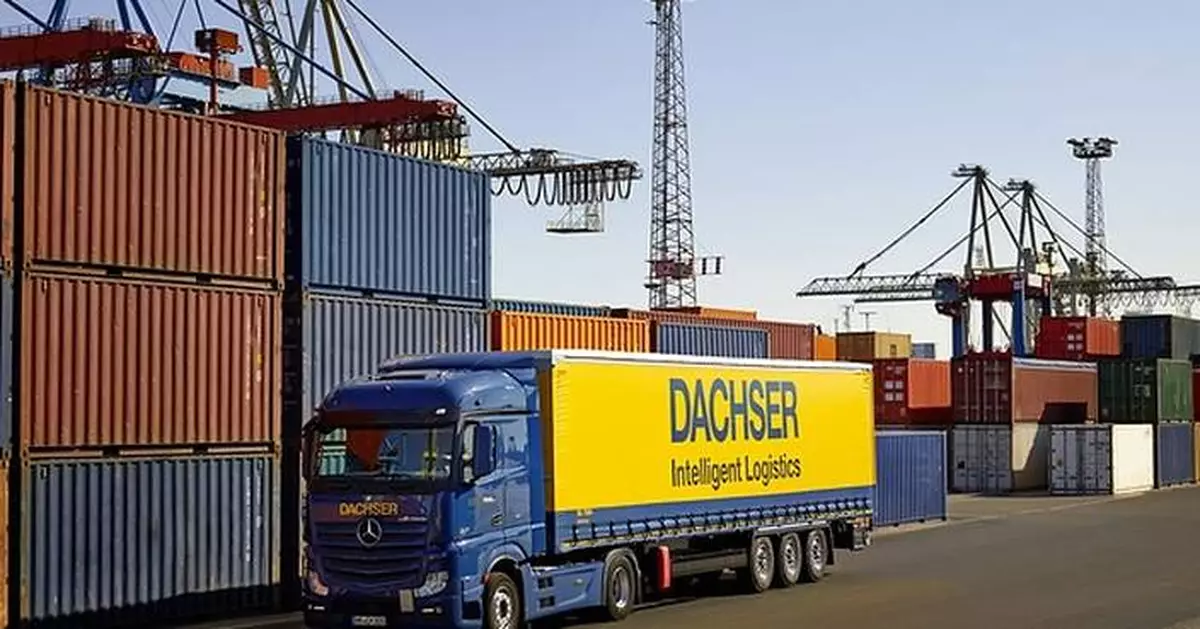
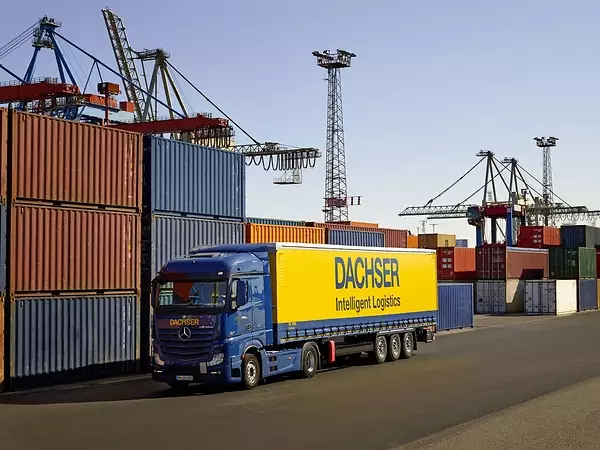
AUCKLAND, New Zealand, Sept. 16, 2026 /PRNewswire/ -- Dachser Air & Sea Logistics New Zealand today announced its partnership with the German-New Zealand Chamber of Commerce (GNZCC) as Naming Sponsor of Oktoberfest 2026, supporting stronger business connections between Germany and New Zealand.
Taking place on October 15, 2026, GNZCC Oktoberfest will bring together businesses, partners, and industry professionals to celebrate German culture and the longstanding economic relationship between Germany and New Zealand.
"Germany and New Zealand share strong trade and business ties, and the European Union (EU)–New Zealand Free Trade Agreement is creating even more opportunities for companies operating across both markets," said Tom Pritchard, Country Manager, Dachser Air & Sea Logistics New Zealand.
"Our partnership with the GNZCC and Oktoberfest 2026 reflects Dachser's commitment to building strong relationships in New Zealand. It also gives us an opportunity to connect with businesses that are looking for reliable, internationally connected logistics support."
Dachser operates in Auckland and Wellington, providing air and sea freight and integrated supply chain solutions to customers across New Zealand. The company supports importers and exporters in managing international shipments, customs requirements, and supply chain visibility, while connecting businesses with key markets across Europe, Asia and the Americas.
Backed by more than 95 years of logistics experience, its European road logistics network and a global air & sea logistics network, Dachser combines international connectivity with local market knowledge. Its New Zealand team supports customers across industries.
"GNZCC Oktoberfest is an important platform for bringing together the German and New Zealand business communities in an informal and engaging setting," said Joerg Schmidt, CEO of German-New Zealand Chamber of Commerce. "We are delighted to welcome Dachser New Zealand as our Naming Sponsor for 2026. Dachser's international logistics expertise and commitment to supporting businesses across New Zealand will add valuable perspective to this year's event."
About Dachser
Dachser, a family-owned company headquartered in Kempten, Germany, provides transport logistics, warehousing, and customized services in two business fields: Dachser Air & Sea Logistics and Dachser Road Logistics. The latter consists of two business lines: Dachser European Logistics and Dachser Food Logistics. Comprehensive contract logistics services and industry-specific solutions round out the company's range. A seamless shipping network — both in Europe and overseas — and fully integrated IT systems ensure intelligent logistics solutions worldwide.
Thanks to some 37,500 employees at 427 locations all over the globe, Dachser generated consolidated net revenue of approximately EUR 8.3 billion in 2025. The same year, the logistics provider handled a total of 86.2 million shipments with a tonnage of 46.7 million metric tons. Dachser is represented by its own country organizations in 42 countries.
Further press releases from Dachser can be found here: https://www.dachser.com/en/mediaroom/index
In the DACHSER magazine, you can regularly find current reports, features, specialist articles, and interviews on the relevant topics of today and tomorrow: magazine.dachser.com
** This press release is distributed by PR Newswire through automated distribution system, for which the client assumes full responsibility. **
Dachser New Zealand strengthens German-New Zealand business ties through GNZCC Oktoberfest partnership
Fatih Özkadı and Barış Alparslan set out the company's case for competitive, lower-carbon value
chains and the capital needed to build them.
ANTALYA, Türkiye, Nov. 14, 2026 /PRNewswire/ -- Beko used its COP31 panels to make the case that climate, trade and industrial policies need to work together, and that finance has to follow, if climate action is to strengthen industrial competitiveness rather than erode it. Fatih Özkadı, Chief Sustainability, Quality, and Customer Care Officer, and Barış Alparslan, Chief Financial Officer, took that message to their panels during the summit's first week.
Climate measures are being introduced alongside industrial policies, trade defence instruments and strategic autonomy goals. These priorities do not always align, and the result can be added costs and barriers across integrated supply chains. Carbon pricing and the European Union's Carbon Border Adjustment Mechanism (CBAM), which entered its definitive phase at the start of 2026, are changing investment decisions, sourcing strategies and competitive conditions.
The European Commission has proposed extending CBAM to around 180 downstream products with high steel or aluminium content, including domestic appliances, from 1 January 2028, a proposal still to be adopted. That gives home appliance makers a direct stake in the debate.
"Climate, trade and industrial policies need to be designed together," said Fatih Özkadı. "Manufacturers like us buy steel and aluminium, make finished products in several countries and compete in global markets. When carbon pricing, CBAM and industrial measures are not aligned, the costs add up and reduce what we can invest in decarbonisation. For manufacturers working across Türkiye and the EU, recognising carbon prices effectively paid in Türkiye, and keeping reporting practical would make a real difference. Any potential extension of CBAM to downstream products should be assessed product by product, taking account of the combined effects of climate, trade and industrial policies on competitiveness and the transition to cleaner production across integrated value chains."
Beko makes appliances in both Türkiye and the EU, so it sees these rules from both sides. As Fatih Özkadı told the panel, Turkish and European industry have developed together over decades, and Turkish manufacturers invest, produce and create jobs within the EU. Beko's own plants reflect that integration: three of them, its refrigerator and dishwasher plants in Türkiye and its washing machine plant in Romania, are part of the World Economic Forum's Global Lighthouse Network, and the site in Romania also holds the Sustainability Lighthouse designation.
The transition needs investment in energy efficiency, renewable energy, lower-carbon manufacturing, supply-chain transformation and new technologies. Climate finance has to reach projects that deliver measurable, scalable impact. COP31 is the first COP since the publication of the Baku to Belém Roadmap to 1.3T, which sets out how climate finance for developing countries can be scaled up to USD 1.3 trillion a year by 2035.
In December 2025, Beko signed its first sustainability-linked loan, a €200 million five-year facility from the International Finance Corporation (IFC). Its KPIs are linked to reducing greenhouse gas emissions and increasing women's representation in the workforce.
"Industrial decarbonisation is a capital question as much as a technical one," said Barış Alparslan. "The challenge is not simply to mobilise more capital, but to turn credible transition plans into bankable projects. Manufacturers need long-term finance, appropriate risk-sharing structures and a cost of capital that reflects the time it takes to transform factories and supply chains. When the financing structure matches the economics of the transition, technically viable projects become financially investable. Our sustainability-linked loan with IFC demonstrates one way of connecting financing directly to measurable emissions and workforce outcomes."
On the ground at COP31
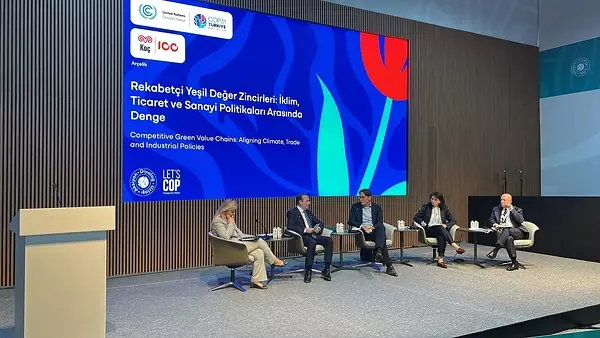
On 10 November, Fatih Özkadı spoke on the panel "Building Competitive Green Value Chains: Industry, Trade and the Climate Transition" in the Green Zone, alongside Mustafa Tuzcu, Deputy Minister of Trade of Türkiye, Peter Spiller, Partner of McKinsey & Company, Frankfurt am Main and Gamze Gökçen Pilevne of Mercedes-Benz Türk, Board Member of AHK Türkiye, with Dr Pınar Artıran, WTO Chair Holder at İstanbul Bilgi University, moderating. On 11 November, he moderated "Competitive Green Value Chains: Aligning Climate, Trade and Industrial Policies" at the Türkiye Pavilion in the Blue Zone, with Aik Hoe Lim, Director of the Trade and Environment Division at the World Trade Organization, Fatma Canan Nilüfer Dora, Deputy Director General for International Agreements and EU Affairs, Ministry of Trade of the Republic of Türkiye, Peter Spiller, and Dr Pınar Artıran.
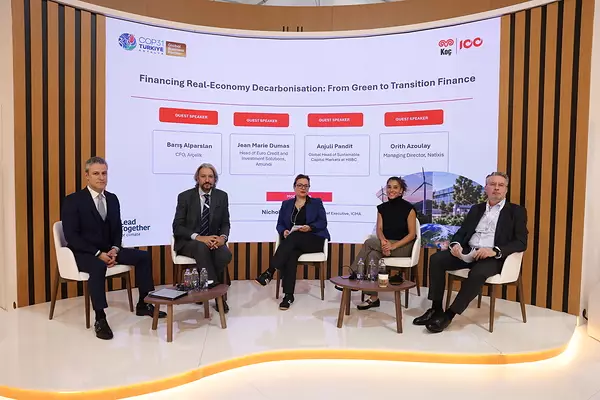
On 13 November, Barış Alparslan spoke on two panels at the Koç Holding Pavilion. "Financing Real-Economy Decarbonisation: From Green to Transition Finance" brought together Jean Marie Dumas, Head of Euro Credit and Investment Solutions at Amundi, Anjuli Pandit, Global Head of Sustainable Capital Markets at HSBC, and Orith Azoulay, Managing Director at Natixis, with Nicholas Pfaff, Deputy Chief Executive of ICMA, moderating. He also joined "Financing the Green Transition: Capital, Carbon & Competitiveness", alongside Wagner Almeida, IFC Regional Director of Industry for the Middle East and Central Asia; Mürsel Akbulut, Head of the Climate Finance and Incentives Department at the Presidency of Climate Change; and Jacqui Powell, Managing Director, Corporate Sector, EBRD, with Perihan İnci, Vice President of TÜSİAD, moderating.
Beko is at COP31 alongside Koç Holding, COP31 Global Business Partner.
ABOUT BEKO
Beko is an international home appliance company with a strong global presence, operating through subsidiaries in more than 55 countries with a workforce of around 45,000 employees and production facilities spanning multiple regions—including Europe, Asia, Africa, and the Middle East. Beko has 22 brands owned or used with a limited license (Arçelik, Beko, Whirlpool*, Grundig, Hotpoint, Arctic, Ariston*, Leisure, Indesit, Blomberg, Defy, Dawlance, Hitachi*, Voltas Beko, Singer*, ElektraBregenz, Flavel, Bauknecht, Privileg, Altus, Ignis, Polar). Beko is the largest white goods company in Europe with its market share (based on volumes) and reached a consolidated turnover of 10.7 billion Euros in 2025. Beko's 28 R&D and Design Centers & Offices across the globe are home to over 2,000 R&D employees and hold more than 4,500 international registered patent applications to date. The company has achieved the highest score in the S&P Global Corporate Sustainability Assessment (CSA) in the DHP Household Durables industry for the seventh consecutive year (based on the results dated 16 October 2025).** The company has been recognized as the 89th most sustainable company on TIME Magazine and Statista's 2026 list of the World's Most Sustainable Companies and has been the sector leader for three consecutive years. Beko's vision is 'Respecting the World, Respected Worldwide.'
www.bekocorporate.com
*Licensee limited to certain jurisdictions.
**The data presented belongs to Arçelik A.Ş., a parent company of Beko.
** This press release is distributed by PR Newswire through automated distribution system, for which the client assumes full responsibility. **
Beko Calls for Climate, Trade, and Finance Policies to Align as Carbon Rules Reshape Manufacturing
Beko Calls for Climate, Trade, and Finance Policies to Align as Carbon Rules Reshape Manufacturing