NEW YORK (AP) — Consumers may be griping about higher prices at the pump and elsewhere, but they keep spending, helping to power the economy, according to the latest government snapshot.
Retail sales rebounded at a better-than-expected 1.2% increase last month after recording a revised 0.5% dip in July, according to Commerce Department data released Wednesday. Economists were anticipating a 0.7% gain for the month, according to FactSet.
The decline in July was notable because there had been few signs of fatigue from U.S. consumers. Americans spent heavily during the World Cup and Amazon Prime Day sales this summer. That followed solid retail sales in April and May as Americans dipped into their government tax refunds.
Even excluding business at gas stations, retail sales rose 1.1% in August, underscoring the resilience of the American consumer. The government figures aren’t adjusted for inflation. The roar back in spending is happening even as consumer confidence took another hit in July, according to the latest reading by the Conference Board.
The strong spending report comes as the Federal Reserve is widely expected to lift its short-term interest rate Wednesday for the first time in three years to fight stubbornly high inflation.
Much of the strength in retail last month reflected a bounce back in nonstore sales, which declined sharply in July, according to economists. That was “seasonal noise” driven by shifts in the timing of Amazon’s Prime Day shopping event, which also coincides with heavy promotions from other major online retailers, according to Michael Pearce, chief U.S. economist at Oxford Economics. Rising gas prices also propped up gasoline station sales, he said.
But even accounting for these factors, gains in most spending categories were “decent,” led by discretionary sectors such as food services, electronics, and sports and recreation, Pearce wrote.
“American consumers are still opening their wallets and buying,” Heather Long, chief economist at Navy Federal Credit Union, wrote in a report published Wednesday. ”August retail sales showed a big bounce back after a weak July."
The so-called control group — which excludes food services, autos, building materials and gas station sales and is used to calculate economic growth — rose a strong 1.4% last month from the prior month.
Many Americans continue to spend despite skyrocketing gas prices that have accompanied renewed fighting in the Middle East. The average price for a gallon of regular gasoline rose overnight to $4.37 on Wednesday, according to motor club AAA. That is about 47% more than a gallon cost before the war began, when it cost less than $3.
Diesel, which has an outsized impact because it’s used for shipping, transportation and manufacturing, has risen even faster, up 68%.
The Labor Department reported Friday that consumer prices rose 3.4% last month from a year earlier, and they’re up 0.4% from July, quadrupling the 0.1% registered in the previous month.
Still, Americans have grown more selective about what they buy, according to retailers who reported their quarterly financial results in the past few weeks, but some, like Walmart and Macy’s, are using a portion of their tariff refunds from the government to lower prices.
Macy’s received $116 million in tariff refunds from the government, Macy’s CEO Tony Spring said, and some of those proceeds are being used to lower prices on certain big-ticket items like furniture and fine jewelry.
Executives at the National Retail Federation, the nation’s largest retail trade group, said that retail sales have been better than expected this year.
Mark Mathews, chief economist at the NRF, also noted he’s seeing in recent months a softening of the K-shaped spending trends — the upper part of the K refers to higher-income Americans seeing their incomes and wealth rise while the bottom part points to lower-income households struggling with weaker income gains and steep prices.
Underscoring consumers’ resilience, September is expected to be the busiest month of the year for import volume at the nation’s major container ports, according to the retail group’s Global Port Tracker. The tracker is produced for the NRF by a consultancy firm called Hackett Associates.
Typically, the peak month is either July or August, NRF executives said.
But economists still worry about how rising gas prices will impact future spending.
“We have a consumer that’s willing to spend, and up until this point, we have had a consumer who’s been able to spend,” Mathews said. “Now looking forward that looks a little bit more challenged because if gas prices remain high, then you know you have to start questioning where the consumer is going to fund that spending growth from."
Pearce echoed those worries, noting that while the solid labor market has helped prop up spending among lower-to middle-income shoppers this year, he sees a “deeper bifurcation of the consumer returning in the coming months.”
“Higher gasoline prices will deliver a renewed squeeze on real incomes, holding back spending on other goods and services by those households,” he wrote.
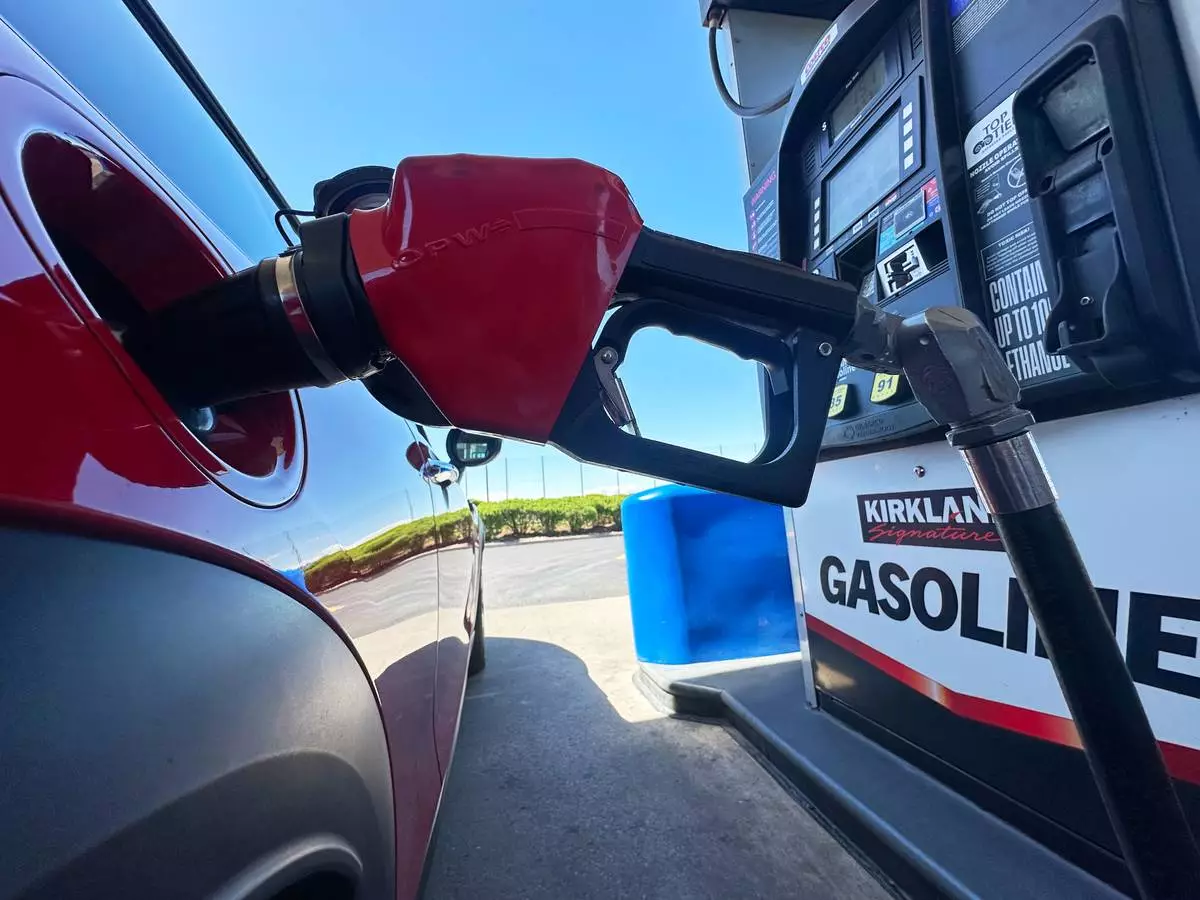
FILE - A motorist fills up the tank of a vehicle at a Costco gasoline station Wednesday, April 15, 2026, in Sheridan, Colo. (AP Photo/David Zalubowski, file)
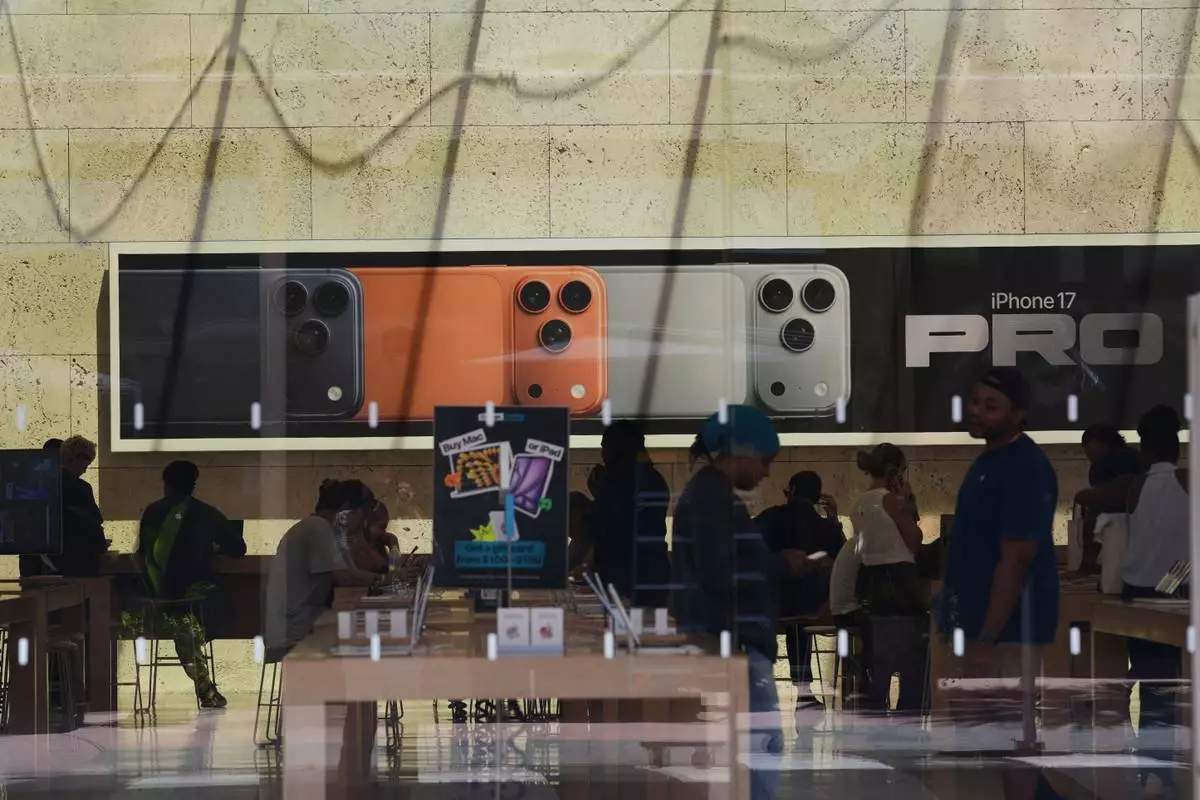
Customers shop at an Apple store Thursday, Sept. 3, 2026, in Miami Beach, Fla. (AP Photo/Marta Lavandier)

The per-gallon price for regular unleaded fuel is displayed electronically on a sign outside a Conoco gasoline station Wednesday, Sept. 9, 2026, in Denver. (AP Photo/David Zalubowski)