Hospital Authority welcomes First Five-Year Plan for Economic and Social Development of the Hong Kong Special Administrative Region (2026-2030) and the Chief Executive's 2026 Policy Address
The following is issued on behalf of the Hospital Authority:
The Hospital Authority (HA) welcomes the measures relating to healthcare service reform and the international health and medical innovation hub included in the First Five-Year Plan for Economic and Social Development of the Hong Kong Special Administrative Region (2026-2030) and the Chief Executive's 2026 Policy Address delivered by the Chief Executive, Mr John Lee, today (September 16). The measures, which are of far-reaching significance, will facilitate the sustainable development of the public healthcare system, enable early diagnosis and treatment for patients, provide services that meet patients' needs, further accelerate the technological development of innovative drugs and medical devices, and strengthen the role of public healthcare as a safety net for all.
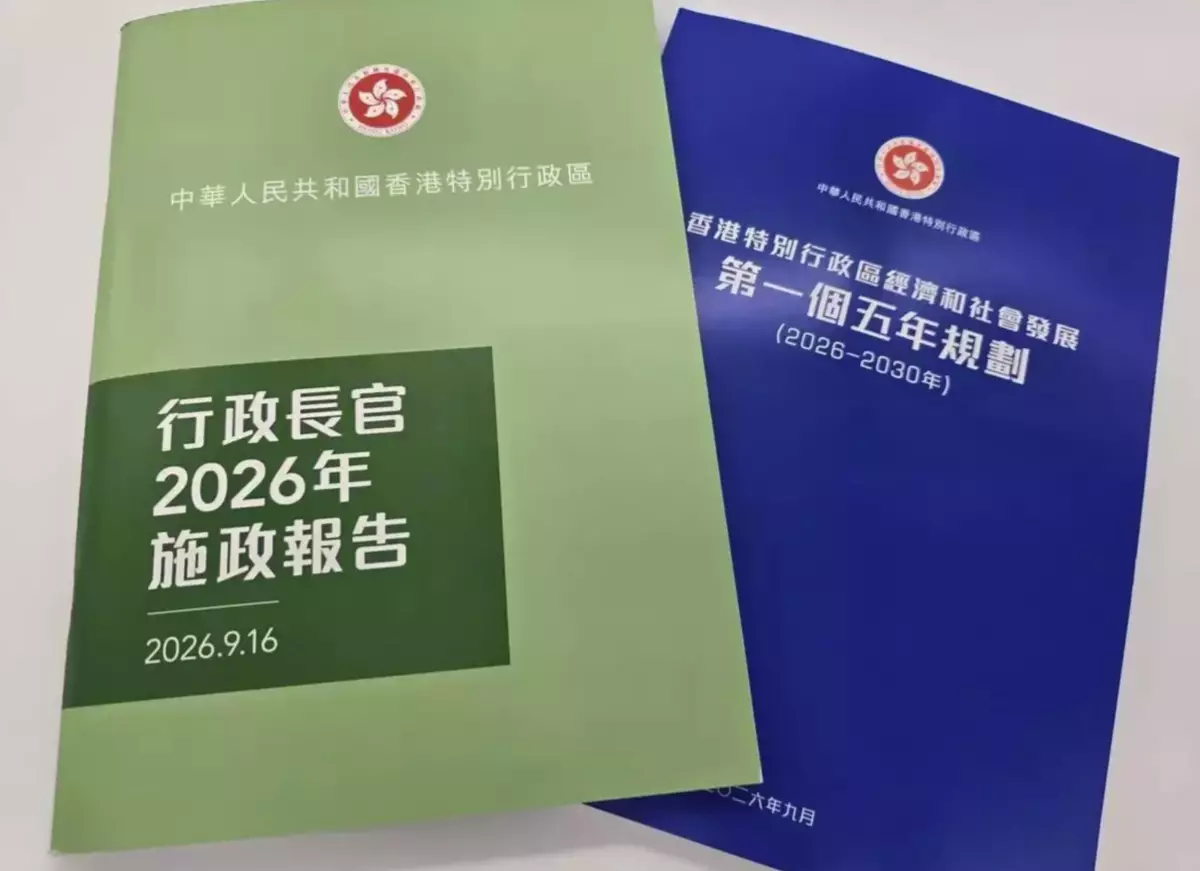
The Hong Kong's First Five-Year Plan and 2026 Policy Address, Photo by Bastille Post
The HA Chairman, Mr Henry Fan, said, "With the progressive commissioning of Kai Tak Hospital, the HA will utilise the site of Queen Elizabeth Hospital to develop Hong Kong's first integrated ambulatory care hospital at King's Park. High-capacity cataract surgery and diagnostic radiology services will first be introduced, and the site will also serve as a radiotherapy centre. The additional service capacity will ensure that patients can receive treatment as soon as possible. The development projects under the First Hospital Development Plan are expected to be completed in 2031. By then, the number of beds in public hospitals will increase by nearly 20 per cent, and the number of operating theatres will increase by more than 40 per cent. The HA will also commence preparations next year for the establishment of the New Territories North Cluster, and assess the need and feasibility of constructing Hung Shui Kiu Hospital."
Mr Fan said that the HA will continue to strive to enhance overall operational efficiency and shorten the waiting time for stable new cases in specified specialties (namely Ear, Nose and Throat, Ophthalmology, Gynaecology, Medicine, Orthopaedics and Traumatology, Psychiatry and Surgery) by half within five years. In the coming year, the waiting time of the specified specialties will first be reduced by 10 per cent. The HA will also optimise appointment arrangements, expand multi-disciplinary, integrated clinical services, and continuously enhance service capacity. In addition, to dovetail with the Government's measures to encourage childbirth, the HA will progressively increase the service quota for in-vitro fertilisation to 1 900 per year over the next three years.
The HA will fully dovetail with the Government's policy direction to develop an international health and medical innovation hub, enhance the regulatory system of drugs and medical devices, and drive the translation of medical innovation. The HA will make preparations to establish the HA Technology Convergence Hub as a platform to promote translation into clinical application, accelerate the adoption of innovative medical technologies, and bring in innovative drugs and medical equipment through co-operation with stakeholders, so that new therapies can benefit patients earlier and treatment options in public hospitals can be broadened.
Additionally, through implementing digitalisation, the use of data and artificial intelligence, the HA will comprehensively promote the digital transformation of public hospitals in five areas, namely "Smart Care", "Smart Hospital Management", "Smart Hospital Support", "Smart Staff" and "Smart Facilities and Infrastructure", so as to build global leading smart hospitals.
The HA Chief Executive, Dr Libby Lee, said, "The first phase of the public healthcare fees and charges reform has been implemented smoothly, and the protection for poor, acute, serious and critical patients has shown immediate results. The HA will actively include more innovative drugs with excellent efficacy in the Drug Formulary, covering more indications, to ensure that no patient will be unable to receive appropriate treatment due to financial reasons, and that members of the public will not become impoverished due to illness.
In cancer treatment, the HA will continue to implement the Hong Kong Cancer Strategy, raising diagnostic imaging capacity and applying AI to assist with diagnosis and advanced laboratory testing; increase radiotherapy service capacity and expedite the introduction of new cancer drugs through the public healthcare fees and charges reform; refer stable and low-risk cancer survivors to primary healthcare for continuous follow-up; and strengthen multi-disciplinary palliative care and end-of-life services."
Dr Lee said that, with the staunch support of the HKSAR Government, the HA will continue to dovetail with the policy direction of the Health Bureau and serve the overall national regional development. The HA will further advance the establishment of Integrated Cardiovascular Diseases Centres in accordance with national standards, enhance overall consultation and treatment services for chest pain and other cardiovascular diseases, improve patients' consultation experience and clinical treatment effectiveness, and help promote national medical accreditation as an international standard.
The HA expressed heartfelt appreciation for the HKSAR Government's continuous support of public healthcare services, and will continue to actively dovetail with the Health Bureau to deepen public healthcare reform work, so as to enhance the safety, quality and efficiency of public healthcare services, provide members of the public with a more convenient, comfortable and safe consultation experience, and ensure that services are delivered with a more human touch.
The Hospital Authority, Photo source: reference image