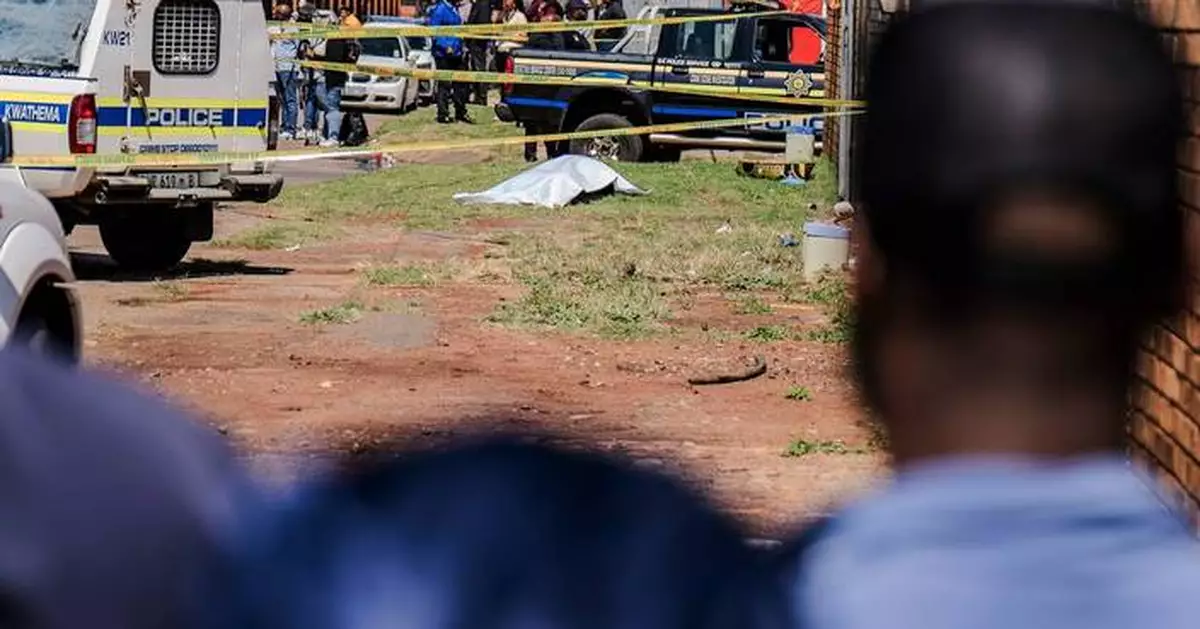
JOHANNESBURG (AP) — The bodies of eight women have been discovered by South African police in the Kempton Park area, east of Johannesburg, in the last two months.
The discoveries have sent shock waves around the country, sparked a high-level investigation and highlighted the scourge of femicide and high levels of violent crime.
Here's what to know about the grim discoveries and the police investigation:
The Gauteng provincial commissioner Fred Kekana said police are examining whether the cases are linked, but warned against prematurely describing the deaths as the work of one perpetrator or a serial killer.
“Investigators are considering all possibilities, including the possibility of multiple suspects or separate perpetrators,” he said. “Police are comparing the evidence, timelines, locations, victim profiles and circumstances of each case before reaching conclusions.”
However, he pointed out that the similarities and proximity of the locations where they were found was concerning.
Some of the bodies discovered more recently were in Olifantsfontein and Kwa-Thema areas, respectively about 25 kilometers (15 miles) and 34 kilometers (21 miles) from Kempton Park, where the first five bodies were discovered.
“While investigations are still underway and SAPS has not, at this stage, confirmed that the deaths are linked to a serial killer, the similarities are sufficiently concerning for the police to issue a public warning and intensify investigations,” said Kekana.
By Wednesday, police said there were a total of eight victims. All were women between the ages of 20 and 38, and all were found either naked or partially clothed with bruises on their bodies, according to the police.
The first body was discovered on 17 July, naked and restrained with cable ties. A suspect believed to have been the victim's boyfriend was arrested and remains in custody, according to the police.
One of the victims was identified as 38-year-old runner Elizabeth “Tsontso” Moselakgomo, who went missing last week.
She was reported missing after her 8-year-old daughter alerted family members that she had not returned from her daily afternoon jog, and was found dead several days later.
The body that was recovered in Olifantsfontein on Tuesday was found naked and in an advanced stage of decomposition.
The youngest victim has been identified as a 20-year-old woman.
The recent deaths have highlighted high rates of femicide and violent crime in the country and sparked an outcry over the safety of women.
Between April and July this year, the country recorded 5,427 murders, which is an average of about 45 murders per day, according to the latest crime statistics.
Femicide rates in South Africa are among the highest in the world, according to the United Nations' agency for gender equality.
A study in 2022 by a South African think tank found that more than 35% of South African adult women had experienced physical or sexual violence at some point.
Police have offered a cash reward for any information to related to the murders.
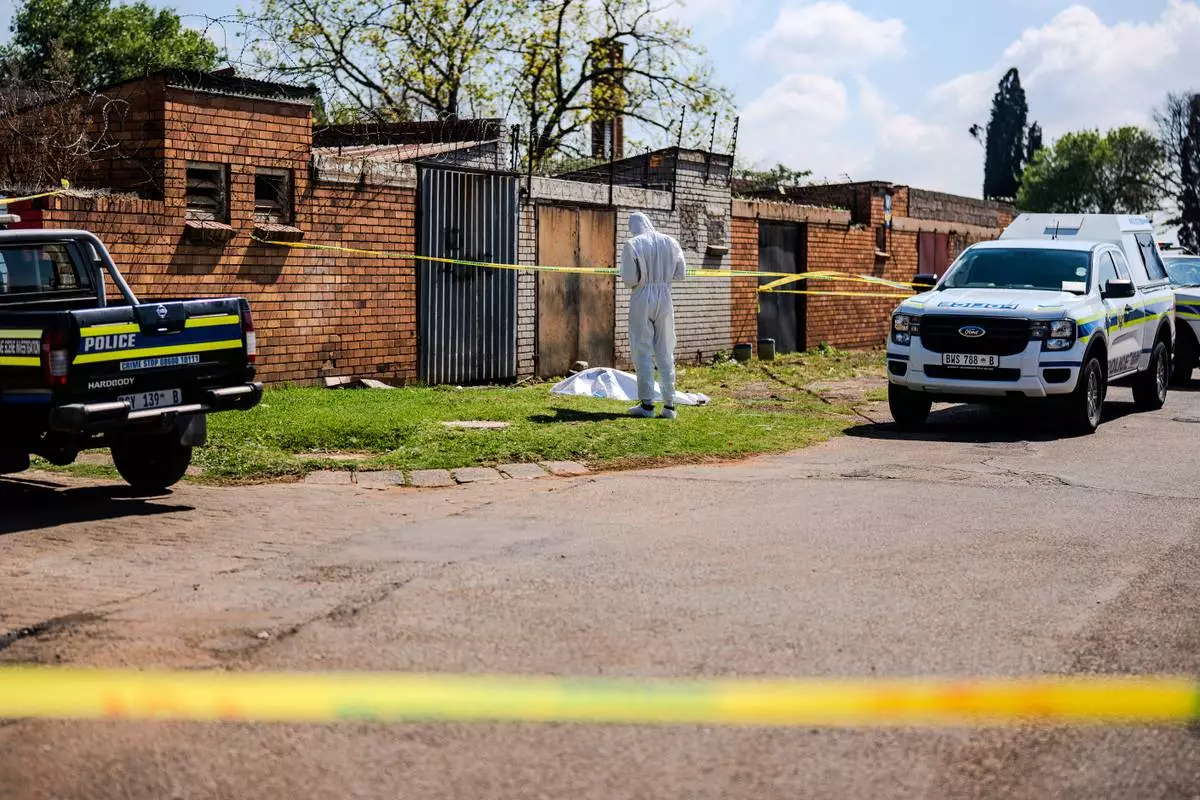
A forensic officer works at the scene where a sixth body, believed to be that of a woman, was found along a road in KwaThema, Springs, South Africa, Tuesday, Sept. 15, 2026. (AP Photo)
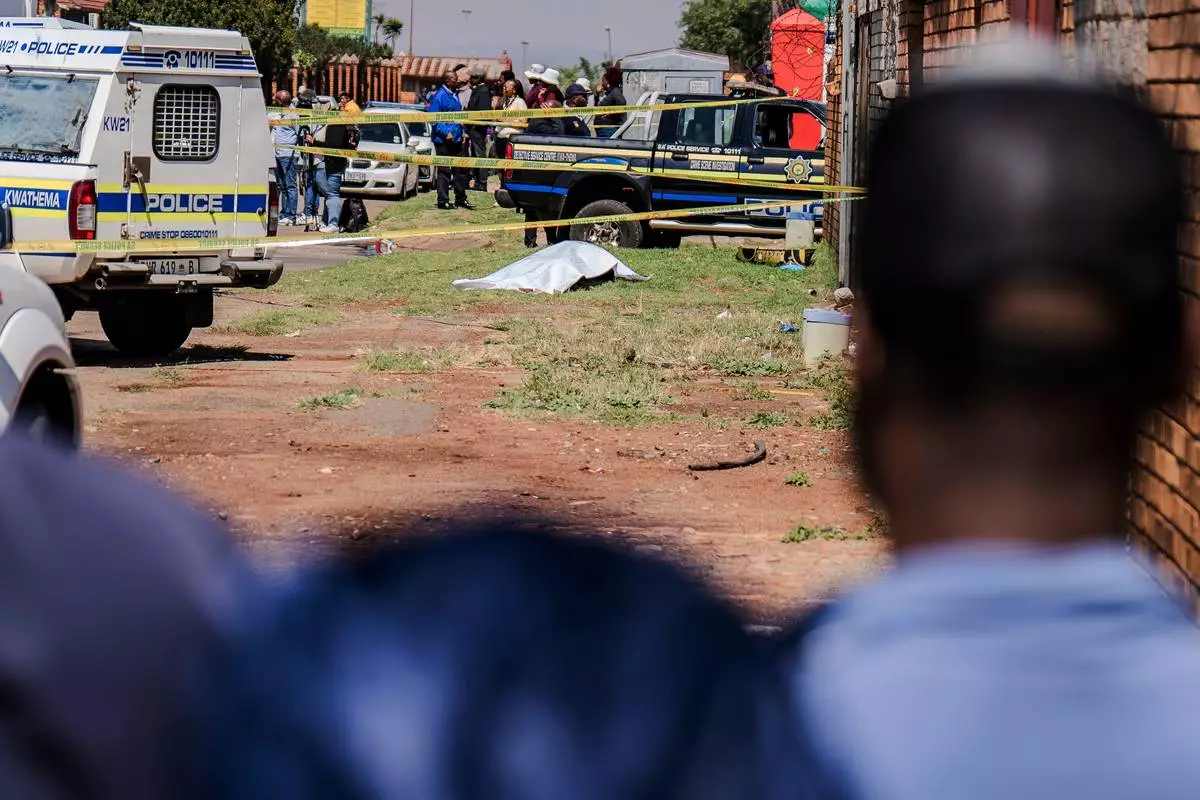
A body, believed to be that of a woman, is found along a road in KwaThema, Springs, South Africa, Tuesday, Sept. 15, 2026. (AP Photo)
Los Angeles has been viewed from above by news helicopters for nearly seven decades. When there was a wildfire, a mudslide or O.J. Simpson fleeing the police across its ribbons of highway, an “eye in the sky” tracked it and advised millions how to keep out of harm's way.
On Tuesday, one of those flying newsrooms crashed live on-air and burst into flames, killing three people while reporters were covering the collision of an SUV and a city bus. NBC4 Los Angeles reported that two people aboard the helicopter — Eliana Moreno and pilot George Marciniw — were killed, and fire officials said another person, Edy Gutierrez Mejia, died on the ground. It was a horrifying addition to at least eight fatal crashes involving news helicopters in the U.S. since 2000, in which 16 people have been killed.
Moreno, known widely as "Eli in the Heli," had been an aerial journalist since 2010, mastering a demanding form of reporting that requires editing, shooting video, intimate knowledge of a city — and quick thinking.
“After working 76 hours since Sunday, I’m almost done!” she posted to Instagram on Sept. 29, 2023. “I can’t complain though because I have the best job in the world.”
Beaming the news from the sky undeniably provides a public service as the descendant of delivery by horseback, teletype and satellite. It's also true that the “Telecopter” was born in Los Angeles as a way to beat the competition to the scene, according to its inventor, John Silva, chief engineer for KTLA-TV when it debuted the machine in 1958. News from the air dazzled audiences — and it meant a new era of big money for local television stations.
In a 2002 interview with the Television Academy Foundation, Silva recalled sitting on the freeway, frustrated over reporting on the reporters — press stories about which journalists got to major news scenes first and were thus “the hero.”
“It came to me all of a sudden. ‘How can we beat the competition?'" Silva recalled. "If we could build a news mobile unit in a helicopter we could get over it all, get there first, avoid the traffic, and get to all the stories before anybody in the competition. It’d be a wonderful thing.’”
But not an easy one. The project had to stay top secret, The helo had to be chosen and fitted in the sprawling backyard property of a news executive, out of sight of rivals. Silva had to figure out how to shave the 2,000 pounds of camera equipment down to less than 400 pounds. And critically, how to beam the news from the air to a receiving dish on a mountain and ultimately to millions of Angelenos.
Airborne at one point during testing, Silva reportedly inched out on the helicopter's right skid — with no safety belt — to investigate the cause of intense vibrations shaking the cockpit, according to a 2009 interview with Smithsonian Magazine.
At 6:30 p.m. on July 24, 1958, KTLA preempted regular programming to broadcast the view from above the City of Angels. The station raked in record amounts of advertising, with Procter & Gamble spending $250,000 to sponsor “Telecopter” coverage, the magazine reported.
”It broadened what news could do, just like the live camera on the ground," Stan Chambers, then a KTLA news correspondent, told the same foundation. Until then, he said, “television news was not that important to a lot of decision-makers. Then the helicopter really captivated everybody.”
Silva won two Emmy awards for his invention.
News from the air punctuated a giddy era of television journalism that was increasingly striving for live, real-time reports. Americans were riveted to reports on the L.A. riots in 1992 and the two-hour police chase of O.J. Simpson's white Ford Bronco two years later. Together, the two events did much to confirm the allure of live crisis coverage from the air.
In 1977, a KNBC news helicopter crashed when it ran out of fuel while returning to the station after covering a wildfire in Santa Barbara, killing the pilot and camera operator. Nine years later, a helicopter flying a radio traffic reporter over the city for a live rush-hour broadcast plunged into the Hudson River, killing her and critically injuring the pilot. The reporter, WNBC Radio's Jane Dornacker, could be heard screaming, “Hit the water!” as the helicopter went down.
And in 2007, two news helicopters covering a police chase on live television collided and crashed, killing all four people on board in a plunge that viewers saw as a jumble of spinning, broken images. The NTSB said that crash happened because two of the pilots who were pulling double duty as reporters were distracted by the chase on the ground.
Tammy Rose, a longtime journalist for more than 20 years, was at KPNX in Phoenix in 2007 when the two television helicopters collided and has survived some harrowing incidents. But, she told The Associated Press in an interview Wednesday, journalists and pilots follow strict protocols to manage the risks.
In Phoenix after the crash, all five news stations agreed to share the same news helicopter. And the company she works for in Houston, Helicopters Inc., wants its pilots to stay above 500 feet so they will have some altitude to work with in case of a problem like an engine failure.
“A news helicopter is more than a flying camera,” said Rose, who reports now for ABC-13 in Houston and says her passion keeps her flying. “As a reporter aboard the aircraft, I could see the larger scene, communicate with the newsroom, gather information and report live while events were unfolding.”
NBC4 reported Wednesday that Moreno and Marciniw were known as “the eyes and ears in the sky” for two newsrooms — NBCLA and Telemundo 52 — and logged hundreds of hours together since they began working together in 2023. Marciniw is believed to have had more than 30 years of flight experience and was respected in the industry, NBC4 reported.
Esteban Jimenez, a fellow helicopter pilot, told the channel that he had known Marciniw since the 1990s and that the two had talked recently about retirement.
Moreno stood in awe of the breadth of subjects the team could report — and she seemed to do everything except fly the helicopter. “I’m not just a photographer or reporter or editor, I’m actually doing all three things at the same time,” she told her alma mater, Chapman University.
In a social media posting from Whiteman Airport on July 31, she said any kind of spot news was fair game, but the brush fires that plague Southern California were critical. “It’s really one of the best stories to cover from the helicopter, because the helicopter is able to show here’s where the fire started, here’s where it’s going, these are the homes that are threatened."
“It just goes to show the power that we have from being the eye in the sky."
AP Transportation Writer Josh Funk contributed from Omaha, Nebraska. Kellman reported from London.
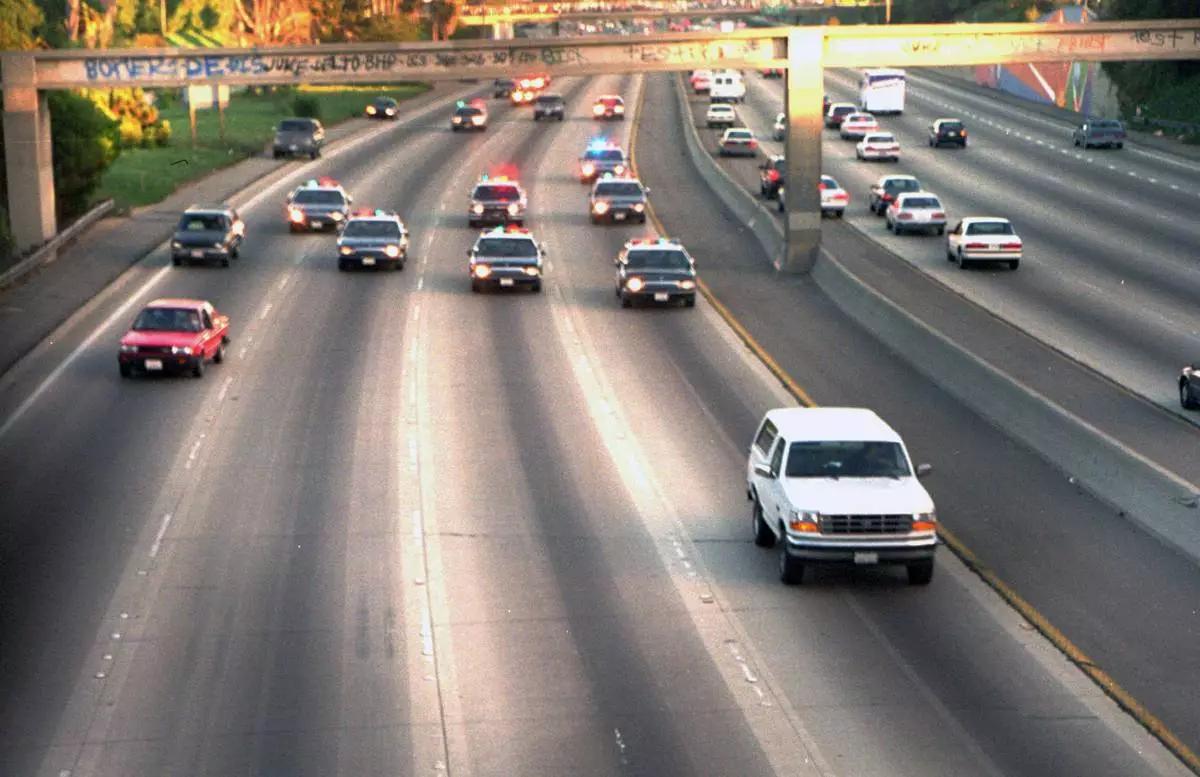
FILE - A white Ford Bronco, driven by Al Cowlings carrying O.J. Simpson, is trailed by Los Angeles police cars as it travels on a Southern California freeway in Los Angeles on June 17, 1994. (AP Photo/Joseph Villarin, File)
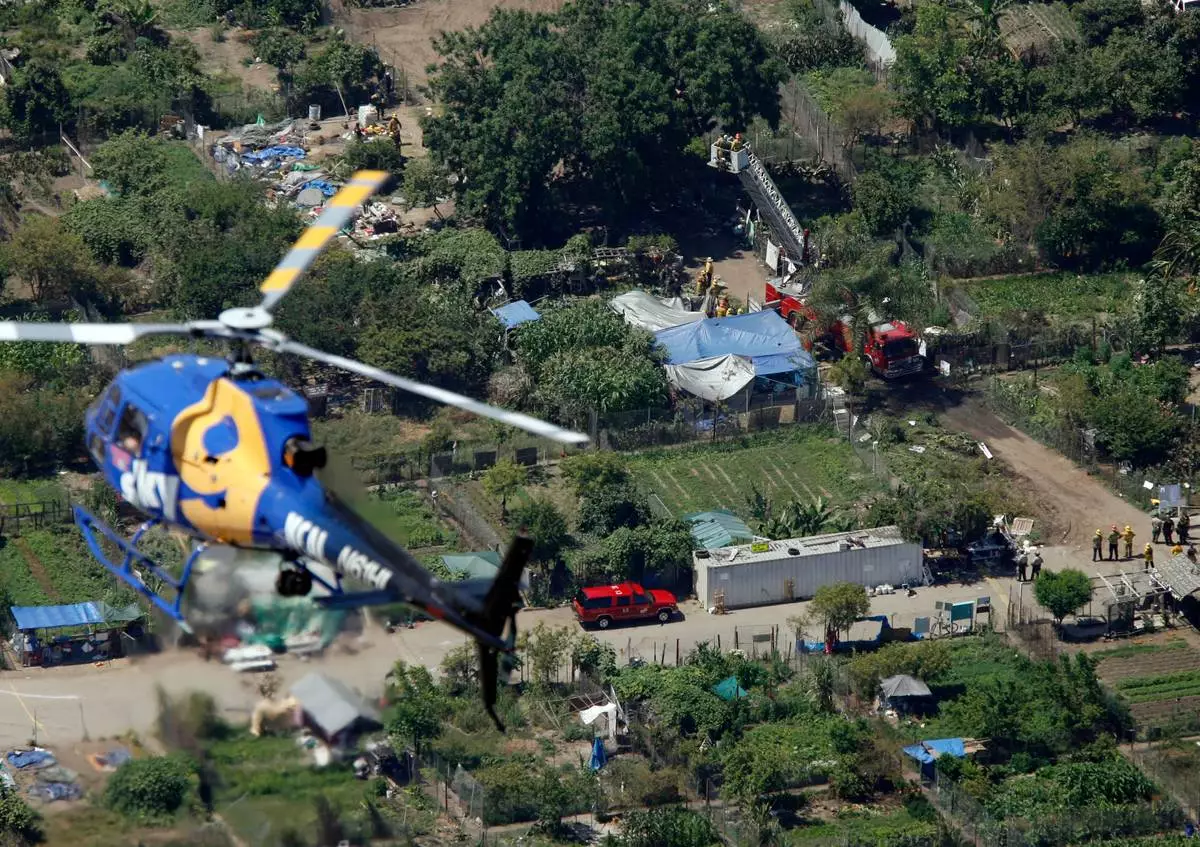
FILE - A news helicopter flies over the South Central urban community garden in downtown Los Angeles, June 13, 2006, as authorities use a Los Angeles Fire Department ladder truck ladder, upper right, to extract actress Daryl Hannah and tree sitter John Quigley from a walnut tree. (AP Photo/Damian Dovarganes, File)
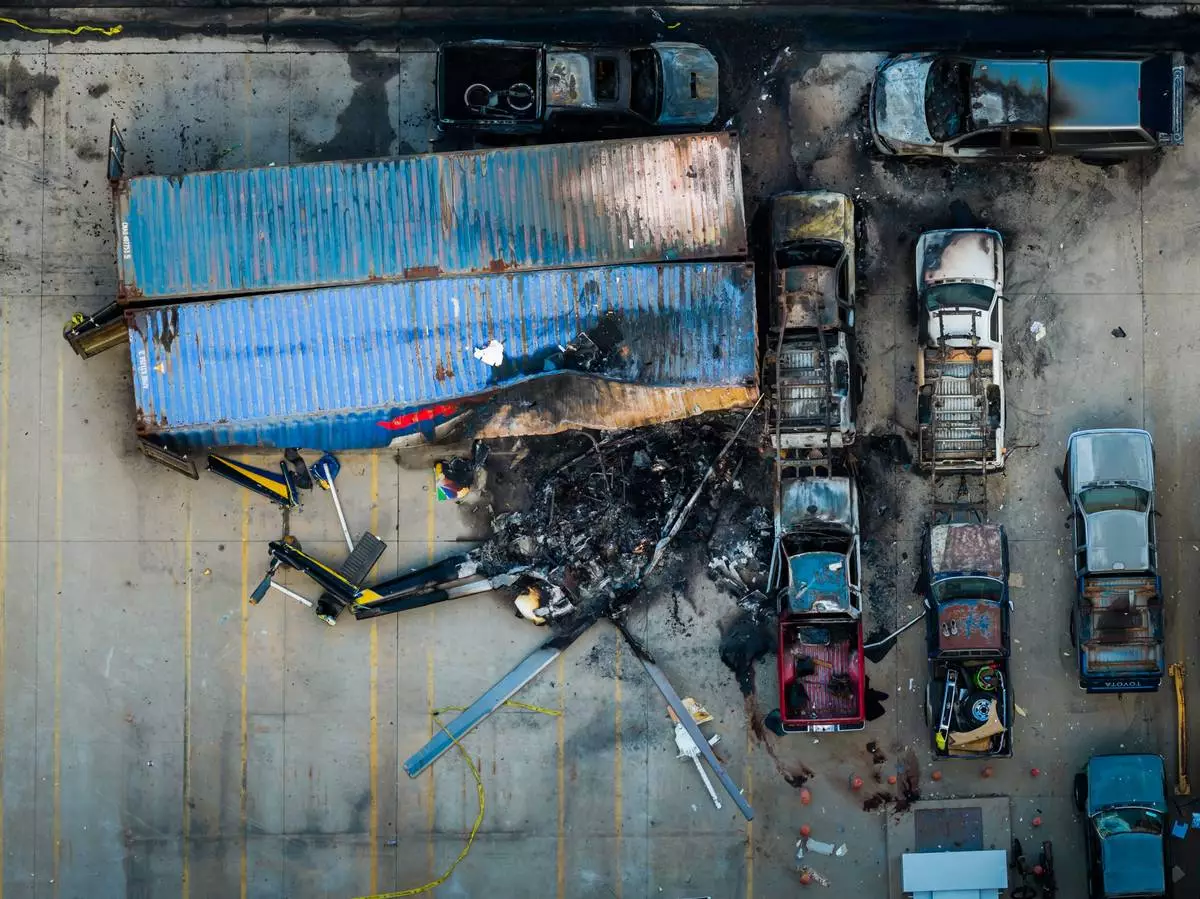
An aerial view of the aftermath of a news helicopter that crashed in Chatsworth, a neighborhood in Los Angeles, Wednesday, Sept. 16, 2026. (AP Photo/Ethan Swope)