STOCKHOLM (AP) — Sweden’s left-leaning opposition won a narrow majority in the country’s national election, a complete vote count showed on Thursday.
The Swedish Election Authority said the four opposition parties won 176 seats in the 349-seat Riksdag, Sweden’s parliament, in Sunday’s election. The four parties that make up or support the outgoing conservative-led government took 173 seats.
Click to Gallery
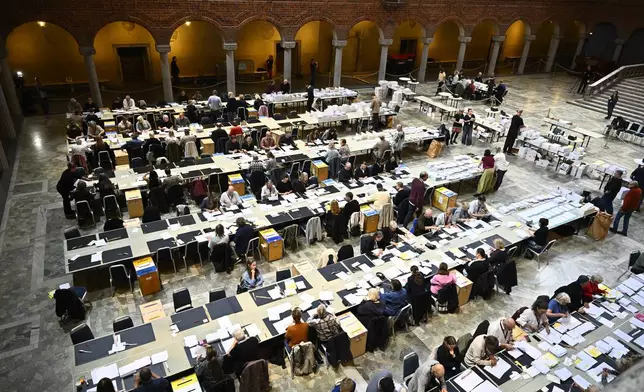
Election workers count early votes and overseas votes in Stockholm City Hall, in Stockholm, Sweden, Wednesday, Sept. 16, 2026. (Christine Olsson/TT News Agency via AP)
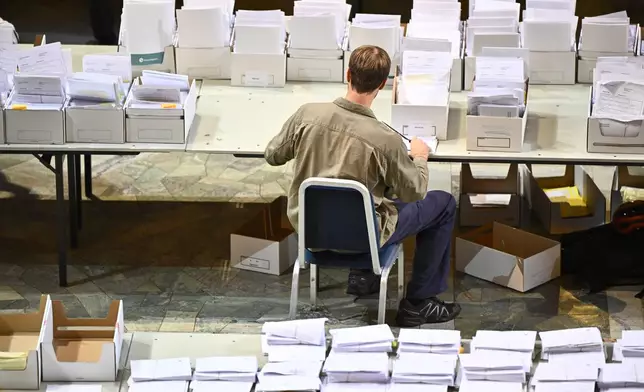
An election worker counts early votes and overseas votes in Stockholm City Hall, in Stockholm, Sweden, Wednesday, Sept. 16, 2026. (Christine Olsson/TT News Agency via AP)
Leader of the Sweden Democrats party Jimmie Åkesson speaks during the Sweden Democrats election night watch party, Sunday, Sept. 13, 2026, in Stockholm. (Pontus Lundahl/TT News Agency via AP)
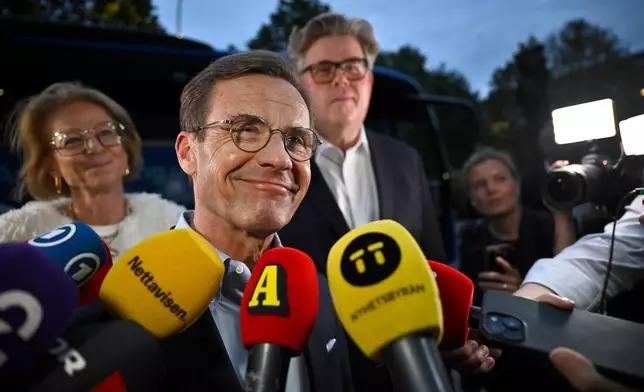
Swedish Prime Minister Ulf Kristersson arrives at the Moderate Party election watch night in Stockholm, Sweden, Sunday, Sept. 13, 2026. (Christine Olsson/TT News Agency via AP)
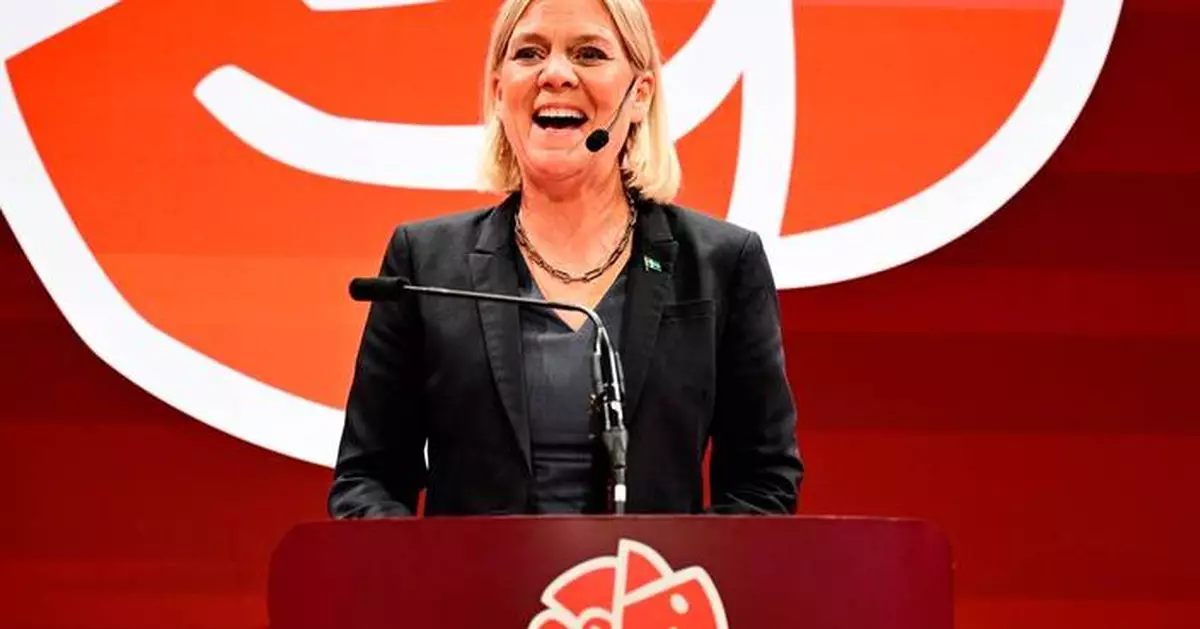
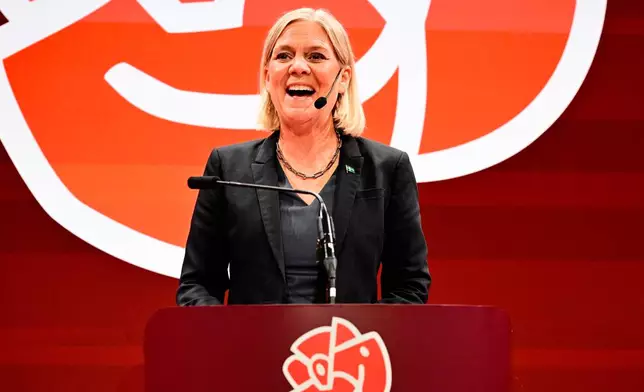
Social Democrats party leader Magdalena Andersson speaks during the Social Democrats' election night watch party, Sunday, Sept. 13, 2026, in Stockholm. (Jonas Ekströmer/TT News Agency via AP)
Center-right Prime Minister Ulf Kristersson posted a letter on X shortly after the final results were announced, saying he would resign from his position as the head of government.
Magdalena Andersson, the opposition leader and a former prime minister, said that “the Swedish people have voted for a new direction for our country, voted for cohesion and against division,” Swedish news agency TT reported.
It was not immediately clear exactly what government NATO’s newest member will get for the next four years. Sweden, a country of about 10.6 million inhabitants, is also a member of the European Union.
Andersson hopes to regain the prime minister's job, which she lost in 2022. Her center-left Social Democrats finished as the biggest single party with 99 seats, despite losing eight seats.
But she will still face a complicated task to turn the result into a government because of tensions within the left-leaning bloc.
The opposition’s small lead was initially uncertain but was confirmed after early votes that didn’t arrive at polling stations by Election Day, including overseas ballots, were counted.
Kristersson has led Sweden with a three-party, center-right coalition. The parliamentary majority relied on outside support from the Sweden Democrats, an anti-immigration party that has far-right roots but has moved toward the political mainstream.
Kristersson had held out the prospect of Cabinet seats for the Sweden Democrats this time, if the governing coalition won. However, it was a disappointing election for the Sweden Democrats, who dropped into third place behind the outgoing prime minister's Moderates and took 62 seats, 11 fewer than in the last parliament.
Andersson faces the task of overcoming differences in the opposition bloc. The Center Party, which aligned with the left because it does not wish to govern with the Sweden Democrats, also doesn’t want to go into government with the Left Party at the other end of the spectrum.
Any combination across the traditional right-left division would also be complicated. But there is broad political consensus in Sweden on several major issues, such as support for Ukraine and the decision to join NATO, whose 32nd member it became in 2024.
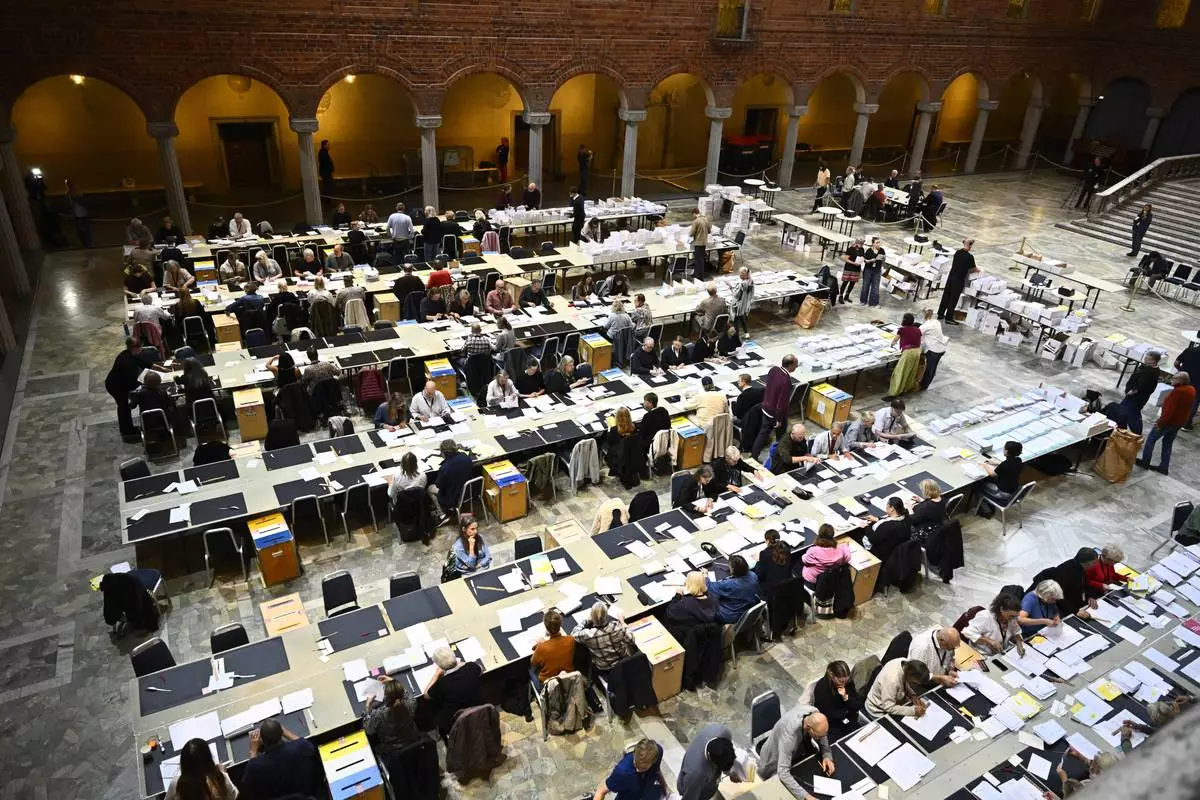
Election workers count early votes and overseas votes in Stockholm City Hall, in Stockholm, Sweden, Wednesday, Sept. 16, 2026. (Christine Olsson/TT News Agency via AP)
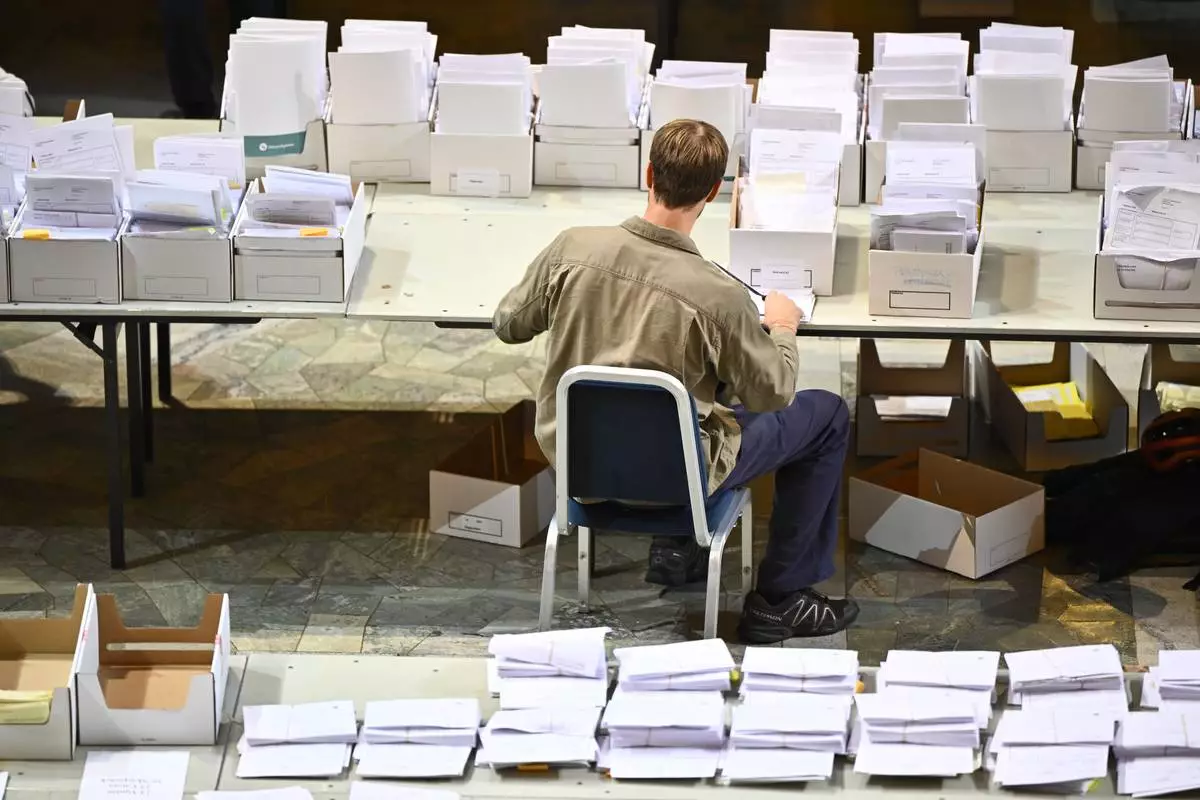
An election worker counts early votes and overseas votes in Stockholm City Hall, in Stockholm, Sweden, Wednesday, Sept. 16, 2026. (Christine Olsson/TT News Agency via AP)

Leader of the Sweden Democrats party Jimmie Åkesson speaks during the Sweden Democrats election night watch party, Sunday, Sept. 13, 2026, in Stockholm. (Pontus Lundahl/TT News Agency via AP)
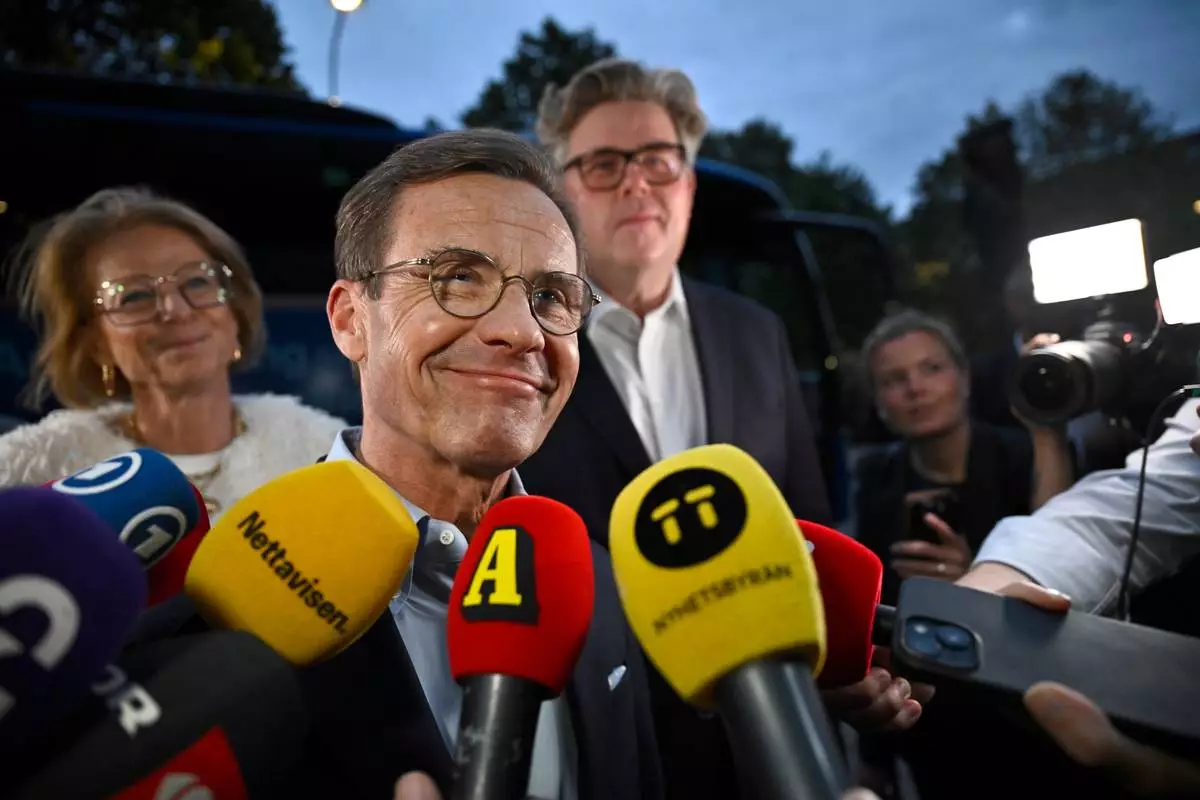
Swedish Prime Minister Ulf Kristersson arrives at the Moderate Party election watch night in Stockholm, Sweden, Sunday, Sept. 13, 2026. (Christine Olsson/TT News Agency via AP)
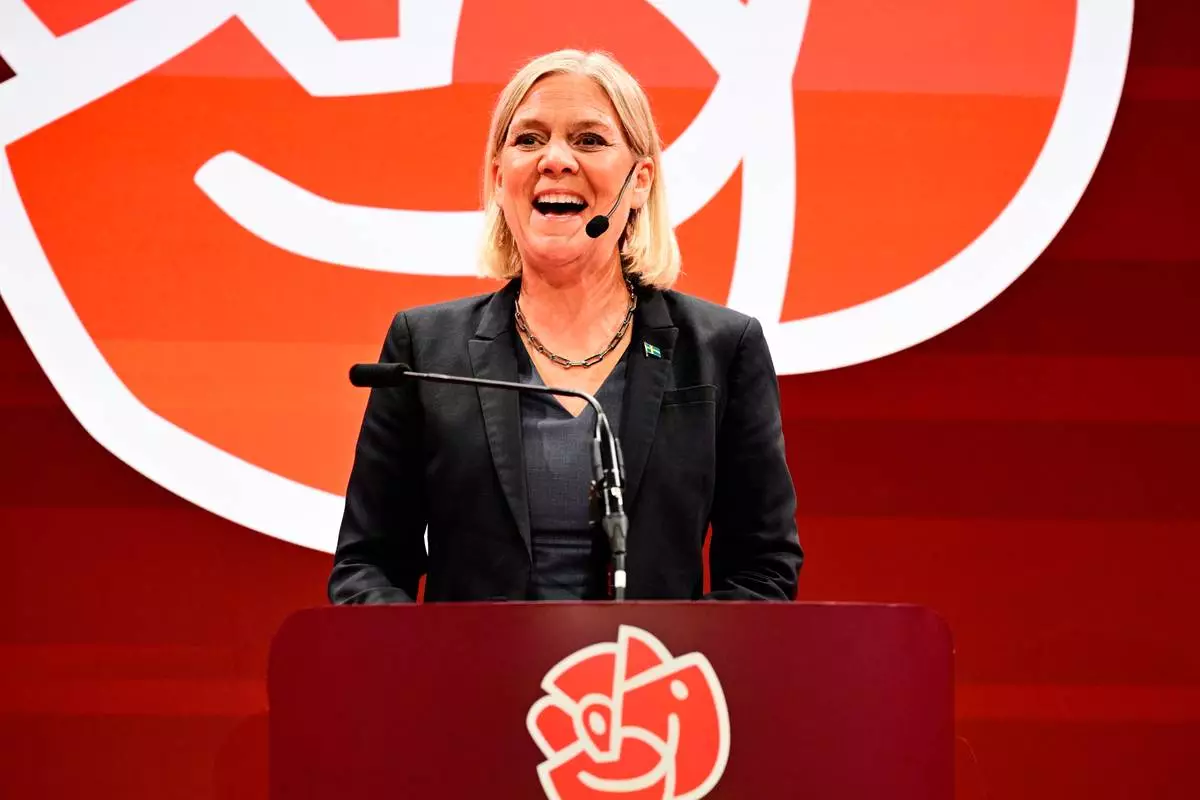
Social Democrats party leader Magdalena Andersson speaks during the Social Democrats' election night watch party, Sunday, Sept. 13, 2026, in Stockholm. (Jonas Ekströmer/TT News Agency via AP)
United Nations-backed human rights experts said on Thursday there are “reasonable grounds” to believe the United States committed war crimes in two strikes in Iran on the first day of the war.
Meanwhile, the Palestinian Authority condemned the U.S. decision to deny its officials visas needed to attend the upcoming U.N. General Assembly. And countries that recently signed a defense pact with Saudi Arabia are calling for the escalation in fighting in neighboring Yemen to end.
Here’s a look at the latest news in the Middle East on Thursday. Full coverage can be found here.
Human rights experts commissioned by the U.N.’s top human rights body said their findings focus on a pair of U.S. strikes that killed at least 178 civilians, including women and children, on the first day of the war in Iran.
At least one U.S. missile hit the Shajareh Tayyebeh school in Minab, according to an Associated Press investigation. The Trump administration has yet to directly accept the blame or release findings of a Pentagon investigation into the school bombing.
The U.N.-backed team made the allegations of war crimes over the strike on the “clearly identifiable” school and another airstrike where missiles dispersed tungsten pellets over a “clearly identifiable sports complex and residential area” in the southern city of Lamerd.
The Palestinian Authority condemned the U.S. denial of visas for Palestinian President Mahmoud Abbas and other PA officials ahead of the U.N. General Assembly and called Israel’s actions “the real threat to the two-state solution and prospects for peace.”
The authority administers parts of the Israeli-occupied West Bank. It also pushed back against U.S. accusations that it has glorified extremism and strayed from the path toward peace with Israel.
Its foreign ministry said it remained committed to long-stalled negotiations but defended its efforts to gain Palestinian recognition through international bodies and courts. The U.S. opposes the strategy, saying it “internationalizes” the Israeli-Palestinian conflict and seeks to circumvent negotiations.
Israel will open the bidding for an additional 2,167 units in a settlement project that would effectively cut the West Bank in two, two days before elections on Oct. 27.
The new tender, which seeks bids from developers, would bring the total number of housing units for the E1 project to 3,401. The would effectively cut the West Bank in two. Critics say the planned settlement, on an open tract of land east of Jerusalem, would prevent the possibility of a Palestinian state in the territory.
The project will be “extremely difficult to reverse” under any future government, the Israeli rights group Ir Amim said in a statement.
A spokesperson for Palestinian President Mahmoud Abbas condemned the new units as a violation of international law. Israeli Prime Minister Benjamin Netanyahu’s office did not immediately respond to a request for comment. The E1 project was on hold for years due to U.S. pressure.
Syria will provide subsidized diesel fuel for heating and agriculture after sharp price increases sparked widespread protests this week.
The energy minister said Thursday that the government would set a tiered system of prices for diesel, with subsidized fuel being sold at 115 Syrian pounds ($0.94) per liter (35 ounces).
The government on Sunday announced price increases of 30% to 40% for gasoline and diesel, citing the U.S.-Iran war and repairs at a major oil refinery. In northeastern Syria, hundreds of oil trucks were stranded when protesters upset over prices blocked a highway.
Israel and Morocco said they will open embassies and expand relations established under the U.S.-brokered Abraham Accords, which saw four Arab countries normalize ties with Israel in 2020.
Israel and Morocco announced the move in a joint statement with the United States, saying that integrating Israel into the broader Arab world “will lead to peace, stability and shared prosperity.” The Abraham Accords were a marquee foreign policy achievement of President Donald Trump’s first term.
Pakistan and Turkey, which recently signed a defense pact with Saudi Arabia, have condemned the recent attacks by Iran-backed Houthi rebels in Yemen against the kingdom.
Turkey's defense ministry described the pact as defensive in nature, focusing on collective deterrence, military cooperation and strengthening the countries’ defense capabilities. It said the signatories were working toward “institutionalizing” the alliance.
This piece will be updated throughout the day as new developments emerge.
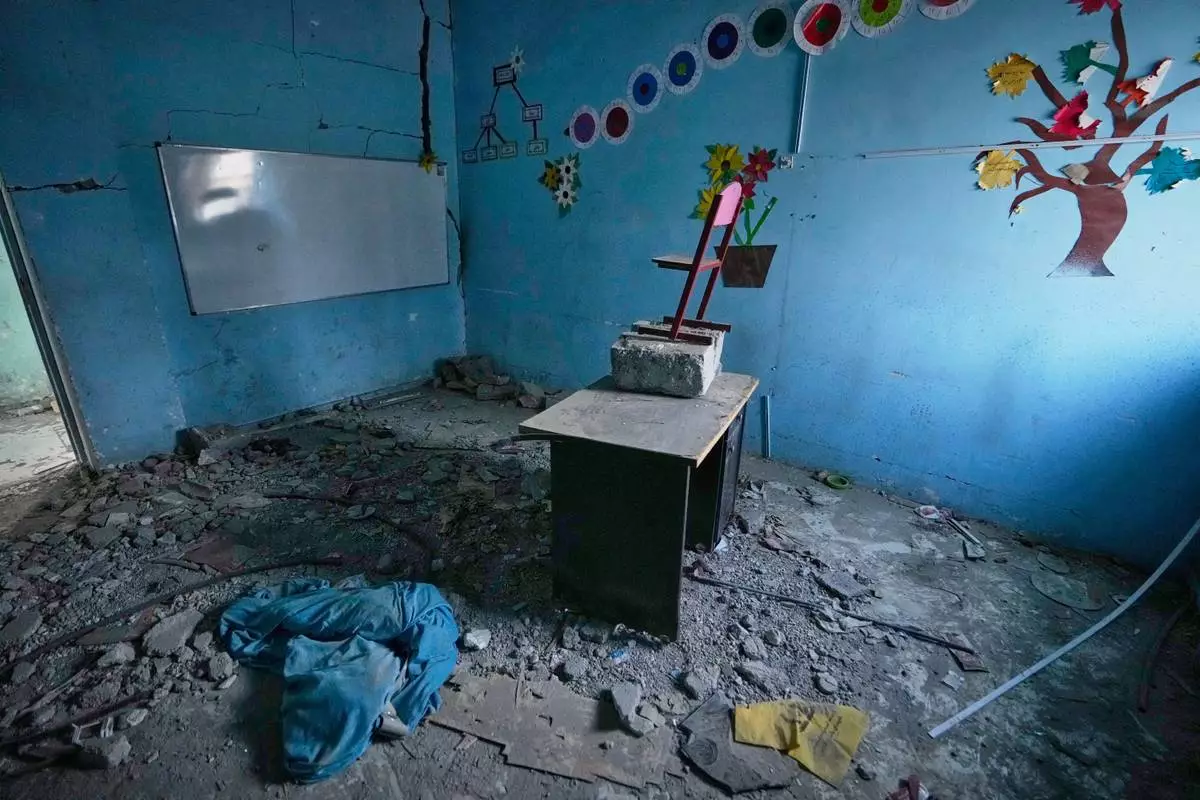
Colorful tree and flower decorations remain on the walls of a rubble-strewn classroom at Shajareh Tayyebeh school, damaged in a U.S. airstrike on Feb. 28, in Minab, southern Iran, Monday, Sept. 7, 2026. (AP Photo/Vahid Salemi)