Skip to Content Facebook Feature Image

Chef David Chang hits the road across the US in new food-centric CNN travel series

ENT

Chef David Chang hits the road across the US in new food-centric CNN travel series
ENT

ENT

Chef David Chang hits the road across the US in new food-centric CNN travel series

2026-09-17 23:49 Last Updated At:09-18 00:01

NEW YORK (AP) — In an episode of his new CNN travel series, chef David Chang is cruising down the highway on his way to Las Vegas when he stops at a humble truck stop off Interstate 15.

The town is Hesperia, California, and the producers wanted Chang to try an Indian restaurant near a windshield repair store. But Chang spots a Mexican cantina that looks promising.

He naturally chooses to eat at both, freaking out his camera crew.

“I just wanted to taste things. When I see something, I’m like, ‘Oh, that looks interesting. I would like to taste that,’” he says in an interview. “To the dismay of the producers and the team, they’re like, ‘No, no. We got to go here.’ I was like, ‘You don’t understand. I told you guys that if we’re going to do the show, everything’s on the table.'”

“Everything's On the Table” might be a good alternative title for the six-part “The Detour with David Chang,” where the famed founder of the Momofuku global restaurant chain pairs with a companion and hits the open road, eating his way through America. It begins airing Sunday.

Chang chows down on Filipino food in South Las Vegas, bites into a traditional Czech puff pastry in Texas and tries Haitian food for the first time in Miami. The show's motto is: “All we’ve got is a destination. Everything else is a detour.”

He's paired by friends and strangers alike, from “American Fiction” director and writer Cord Jefferson to comedian, actor and writer Cristela Alonzo, who shows him her Texas. In Tennessee, he rides with Christina Tosi, the Milk Bar creator, who is almost a surrogate sister.

The show is about exploring and connecting with locals to find hidden gems, like the spot that serves killer Cuban fritas at a laundromat. Or the chefs who take barbecue and combine Asian flavors, creating oak-smoked pulled pork with Penang curry. Or the family serving Honduran food truck breakfast that helps heal Chang's terrible rum hangover.

“I love going out to eat, but as I get older, staying inside, not doing as much, is also nice. And I think that over the past few years, I’ve certainly been calcified,” says Chang. “Anytime you get out of your comfort zone or your little bubble, I think it’s a good reminder that there’s so much other stuff out there.”

Chang joins a crowded field of celebrity travel hosts, which includes Daniel Dae Kim, Tony Shalhoub, Rainn Wilson, Eugene Levy, Stanley Tucci,Orlando Bloom, Zac Efron, José Andrés, Chris Hemsworth, Will Smith, Eva Longoria and Ewan McGregor. Awkwafina is on deck.

All owe a debt to Anthony Bourdain, who inspired millions to share his delight in food and the bonds it created. Bourdain died in 2018. Amy Entelis, executive vice president of talent, CNN Originals and creative development, notes that Chang is the first chef to host a CNN original series since Bourdain.

“Dave isn’t setting out to define American food or find the ‘best’ restaurant in every city. It’s almost the opposite,” she says. “He gets in the car, talks to people and follows recommendations that take him somewhere he didn’t expect to go. At a time when an algorithm can tell you where to eat, where to stay and what to see, there’s something really appealing about just getting a little lost and seeing what you find.”

The seed of the series was planted when Chang and executive producer Morgan Neville were chatting one day about what it was like to discover new indie rock bands back in the old days before the internet and influencers, and the joy when you found one.

“I felt like that was sort of how I felt about food as well,” says Chang. “Listen, it’s easier to eat than ever before. But, in some ways, it is harder to find something that is meaningful to you.”

One show highlight is the delightful way he ends up at an Ethiopian restaurant in Las Vegas after listening to the recommendation of a taxi driver. Eating slow-cooked chicken and injera — the sour, spongy flatbread — reminded Chang of how good that cuisine is.

“I will die on the hill that Ethiopian food is one of the world’s greatest cuisines. There’s nothing like it, and it’s a singular approach to texture, flavor, and the kind of food that everyone loves these days — communal dining, where everyone can eat the same thing but customize it themselves.”

He learns that in Texas the Holy Trinity is brisket, ribs and sausage, but some local chefs are also putting their own spins on classic dishes. Like pitmaster Chuck Charnichart at the eatery Barbs in Lockhart, who adds serrano glaze on her ribs and zests fresh limes over them. “It feels like I have a front-row seat to Dylan going electric,” Chang says in admiration.

Throughout the series is Chang's gentle humor and willingness to try and do anything, dropping references to the painter Rothko, musician John Coltrane and director Terrence Malick along the way. And, of course, always popping corn nuts.

“When you think about it, I’m getting paid to go eat and hang out with friends,” he says, laughing. “I have nothing to complain about. And it’s a nice reminder that this is literally a dream job.”
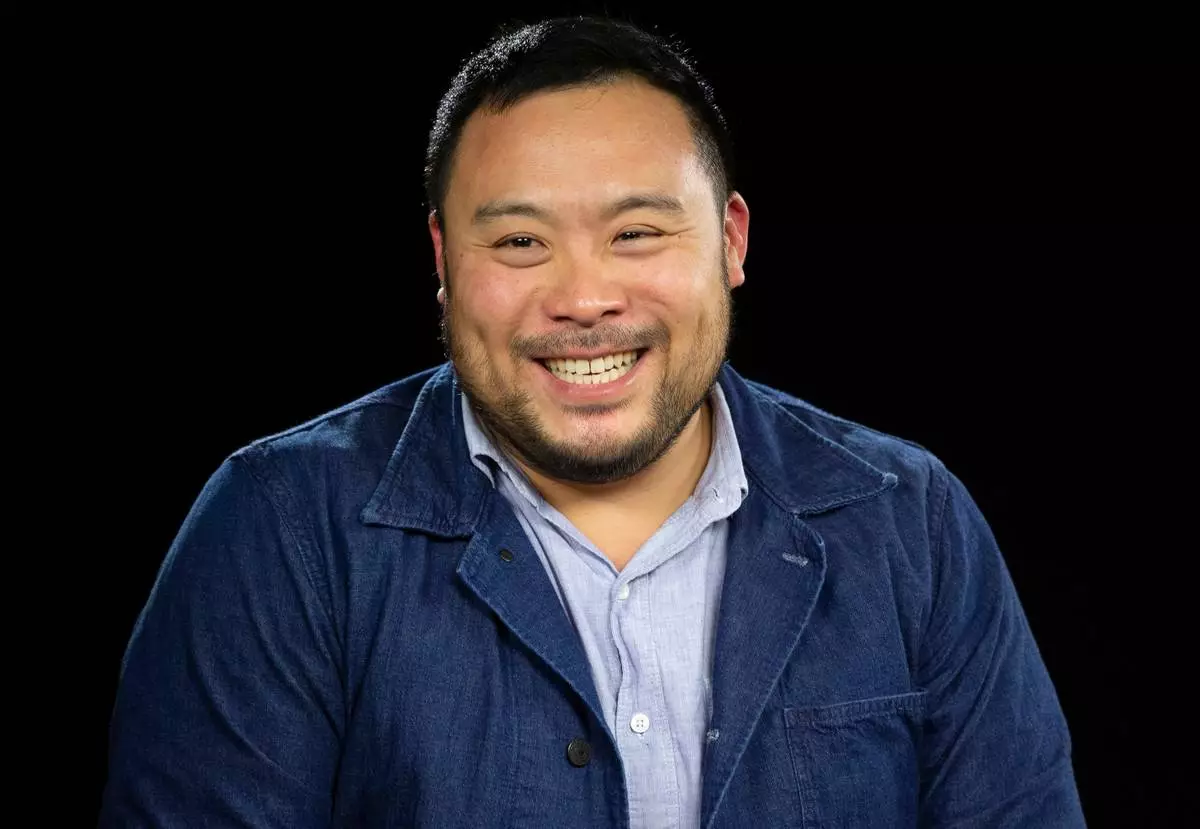
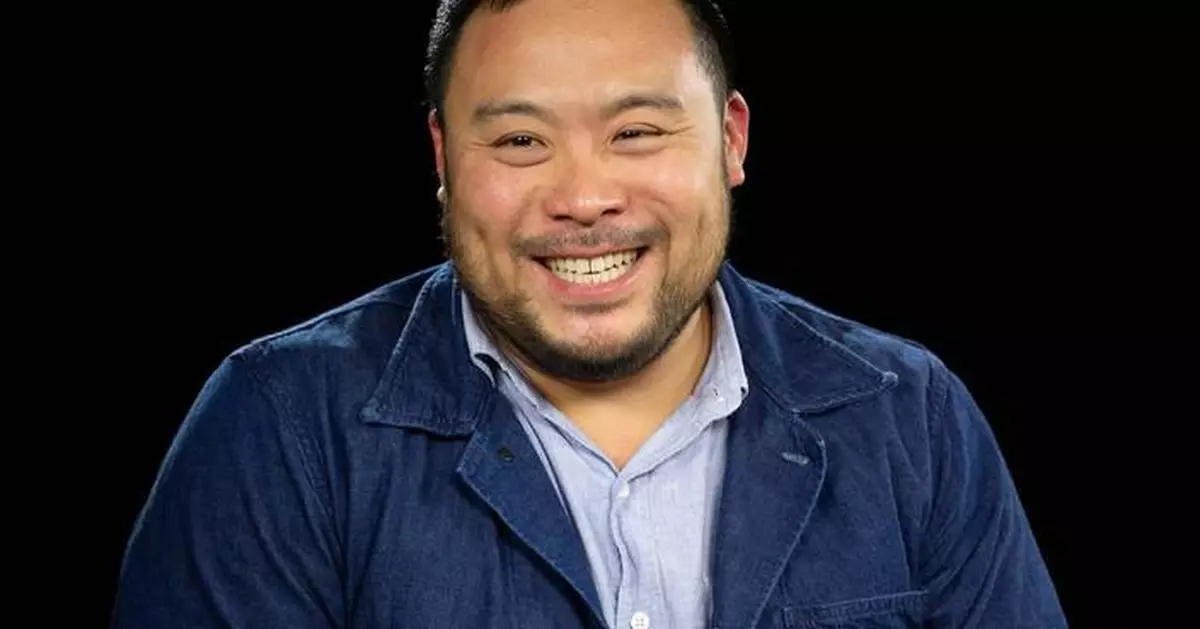
FILE - Chef David Chang speaks during an interview in Los Angeles on Oct. 23, 2019. (AP Photo/Damian Dovarganes, File)

FILE - Chef David Chang speaks during an interview in Los Angeles on Oct. 23, 2019. (AP Photo/Damian Dovarganes, File)
GENEVA (AP) — Human rights experts commissioned by the U.N.’s top human rights body say they have found “reasonable grounds” to believe the United States committed war crimes in two strikes in Iran, including on a school in the southern city of Minab. They also accuse Iran’s theocratic government of carrying out crimes against humanity against its own people in a report published Thursday.

The report, while not binding, adds to international evidence gathered about crimes in the war in Iran, and could eventually be used in efforts to reach justice in international courts.

The fact-finding mission on Iran, chaired by jurist Sara Hossain of Bangladesh, is made up of independent experts and was created in 2022 by the Human Rights Council, the U.N.’s top human rights body, which is based in Geneva.

The experts were expected to present their findings on Monday to the council, which is made up of 47 U.N. member countries.

The international fact-finding mission says its findings on U.S. war crimes center on a pair of U.S. airstrikes that killed at least 178 civilians, including women and children.

At the start of the U.S.-Israeli war against Iran in February, at least one U.S. missile hit the Shajareh Tayyebeh school in Minab, according to an Associated Press investigation. There has been no final accounting of what happened.

Iranian state media have said 168 people were killed in the strike, most of them children.

“Following the United States and Israeli attacks on 28 February, the mission found reasonable grounds to believe the United States committed the war crime of launching indiscriminate attacks resulting in the loss of life or injury to civilians or damage to civilian objects,” a U.N. statement about the team's findings said.

The U.S. State Department did not immediately respond to a request from The Associated Press seeking comment.

In their report, the experts concluded that “the building of the school was the intended point of impact” and the resulting damage wasn’t the result of an errant strike or collateral damage from an attack on a compound of Iran’s Revolutionary Guard next to the school.

The Trump administration has yet to directly accept responsibility or release the findings of a Pentagon investigation into the school bombing.

The U.N.-backed team based its allegations on two strikes — one involving Tomahawk missiles that hit the “clearly identifiable” school, and another in which Precision Strike Missiles dispersed tungsten pellets over a “clearly identifiable sports complex and residential area” in the southern city of Lamerd, also on Feb. 28.

The U.N.-backed team said 22 civilian men and women were killed. U.S. Central Command has denied responsibility for the strike on Lamerd.

The team found that killings by state security forces in Iran have occurred on a “staggering scale,” and civilians faced “gross human rights violations and crimes against humanity committed by their own government."

Iranian security forces carried out “violent repression” over the last two years by firing assault rifles into crowds, beating protesters and arresting healthcare workers, among other things, the team said. Detainees faced torture, and were deprived of legal counsel, leaving their families “in the dark” about their whereabouts, the experts said.

The Tehran government intensified the use of the death penalty, and said more than 70 people – including five women and three boys – remain at “imminent risk of execution,” they added.

“The report concluded that many of these gross violations amount to crimes against humanity — including murder, imprisonment, torture, and other inhumane acts committed as part of a widespread and systematic attack on civilians,” the statement said.

The experts said the United States and Iran should halt all rights violations and crimes, and provide “full reparations to victims.”

The report, built on a “victims-centered approach,” was based on interviews with 73 people both inside and outside Iran, along with documentation, satellite imagery, photographic and video material and information from “credible” organizations and experts, the experts wrote.

The ongoing conflict that has driven people from their homes in Iran as well as an internet shutdown and a lack of full cooperation from the two governments partially impeded the team's efforts to get information.

Nearly three dozen requests from the experts for information from Iran's government went unanswered, they said, as have requests in June to the U.S. government for information and meetings with officials.

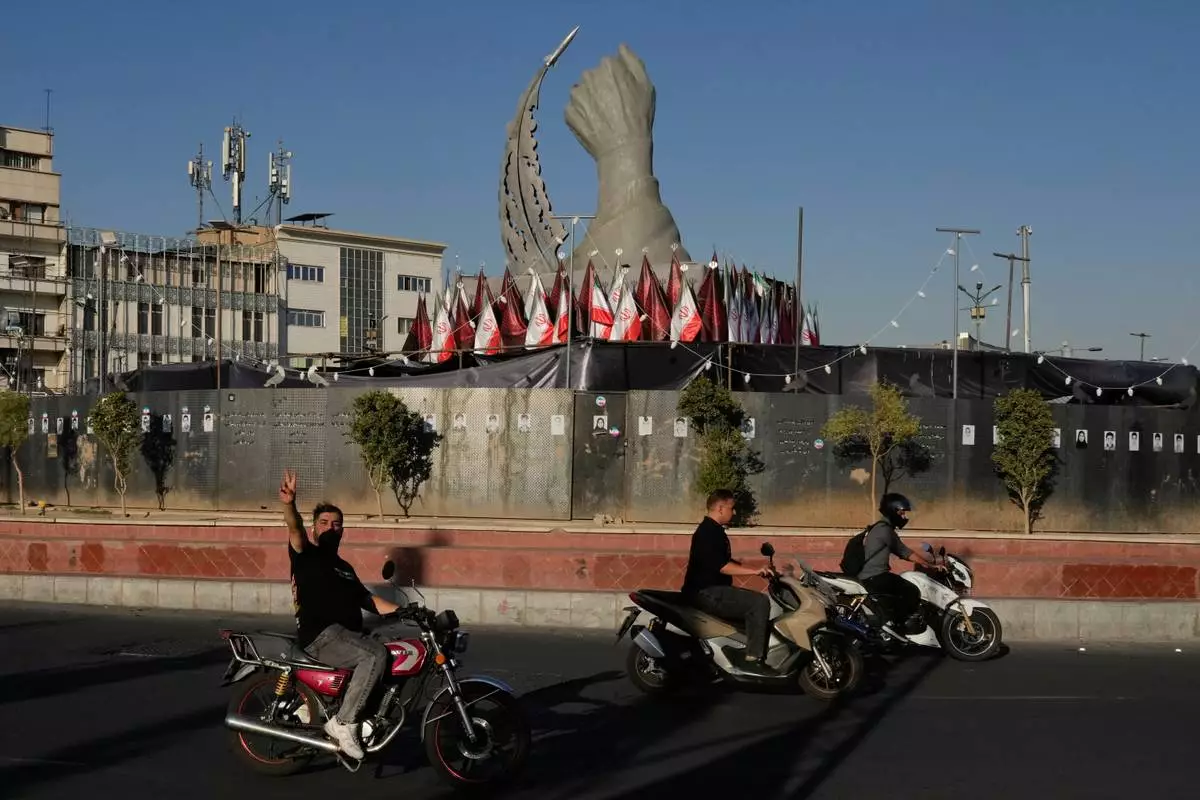
A man reacts to the camera while driving past a monument depicting the clenched fist of the late Iranian Supreme Leader Ayatollah Ali Khamenei, who was killed in the U.S. and Israel strike on Feb. 28, and a missile at the Islamic Revolution square in downtown Tehran, Iran, Tuesday, Sept. 15, 2026. (AP Photo/Vahid Salemi)

A man reacts to the camera while driving past a monument depicting the clenched fist of the late Iranian Supreme Leader Ayatollah Ali Khamenei, who was killed in the U.S. and Israel strike on Feb. 28, and a missile at the Islamic Revolution square in downtown Tehran, Iran, Tuesday, Sept. 15, 2026. (AP Photo/Vahid Salemi)

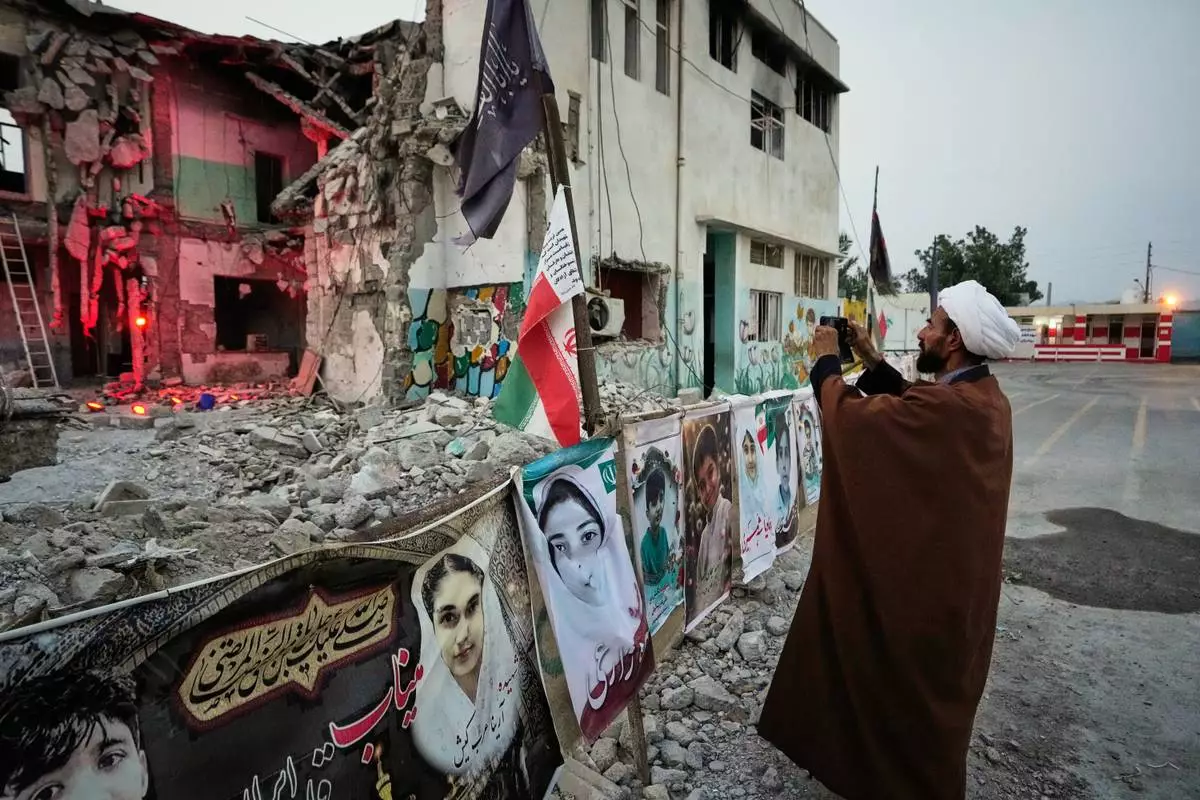
FILE - A cleric takes a photograph at the shattered Shajareh Tayyebeh school, which has become a place of mourning and a memorial to those killed in a U.S. airstrike on Feb. 28, in Minab, southern Iran, Monday, Sept. 7, 2026. (AP Photo/Vahid Salemi, File)

FILE - A cleric takes a photograph at the shattered Shajareh Tayyebeh school, which has become a place of mourning and a memorial to those killed in a U.S. airstrike on Feb. 28, in Minab, southern Iran, Monday, Sept. 7, 2026. (AP Photo/Vahid Salemi, File)

Recommended Articles