MINNEAPOLIS (AP) — A federal immigration officer charged with shooting and wounding a Venezuelan man in January and lying about the circumstances to investigators made a brief initial appearance Thursday before a Minnesota judge after state authorities arrested him ahead of a separate hearing in federal court.
During Thursday's hearing, Judge Paul Scoggin granted Immigration and Customs Enforcement officer Christian Castro bond. Castro wore an orange jumpsuit and appeared behind a glass enclosure.
His attorney, Daniel Gerdts, declined to comment after the hearing.
Castro was being held without bond after the Minnesota Bureau of Criminal Apprehension arrested him on Wednesday in downtown Minneapolis on state charges of assault and false reporting of a crime stemming from the shooting of Julio Cesar Sosa-Celis. Scoggin set bail at $400,000 with no conditions and $200,000 with conditions.
Castro also faces federal charges stemming from the shooting, which occurred during a federal immigration crackdown in the Minneapolis area. Prosecutors say Castro falsely told investigators that he had been attacked with a broom and a shovel.
Castro's arrest by Minnesota authorities and appearance in state court followed a dispute between Minnesota prosecutors and Texas' governor over Minnesota's attempts to extradite Castro from his home state to face the state charges. One of the conditions Scoggin set for the lower bail amount for Castro was that he not fight extradition should he be released.
The lead prosecutor for the county handling the state case told reporters after the hearing that “Castro invented a story to justify shooting through a front door into a house with multiple people in it.”
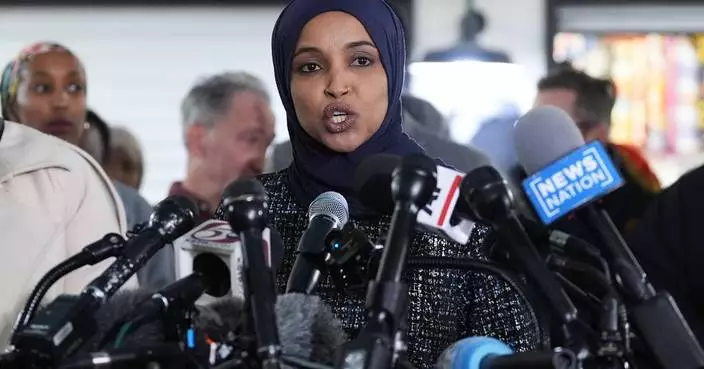
“His appearence in a Hennepin County courtroom today is a critical step in our efforts to hold him accountable for that shooting,” Hennepin County Attorney Mary Moriarty said during a news conference.
The next court hearing for Castro is scheduled for Friday. That hearing will be in federal court in St. Paul and involves the separate federal case in which he is charged with making false statements to investigators regarding the same shooting. Castro’s defense attorneys in the federal case have said he plans to plead not guilty.
It’s the first Justice Department prosecution of a federal officer for actions taken during this year’s massive Operation Metro Surge, which brought thousands of agents to the Twin Cities and led to sweeping protests, arrests and the fatal shootings of two U.S. citizens by federal officers.
In both the federal and state cases against Castro, prosecutors say he shot 24-year-old Sosa-Celis in the leg while firing through the front door of a Minneapolis home. They say Castro later falsely reported he had been attacked with a broom handle and a snow shovel before firing his gun.
Minnesota authorities have battled with President Donald Trump's administration over who should handle any charges against Castro. The Department of Homeland Security has called Minnesota’s prosecution of Castro “unlawful and nothing more than a political stunt,” saying only federal authorities have jurisdiction.
Minnesota charged Castro months before his federal indictment. He was arrested in Texas in May on the Minnesota charges. But Texas Gov. Greg Abbott last month refused to sign an extradition warrant to hand him over to Minnesota authorities. He was released in Texas and soon after was indicted on the federal charges. He then turned himself in to federal authorities and returned to Minnesota on his own.
This story has been updated to correct the spelling of Sosa-Celis’ middle name and the location of Friday's federal court hearing.
Bynum reported from Savannah, Georgia.
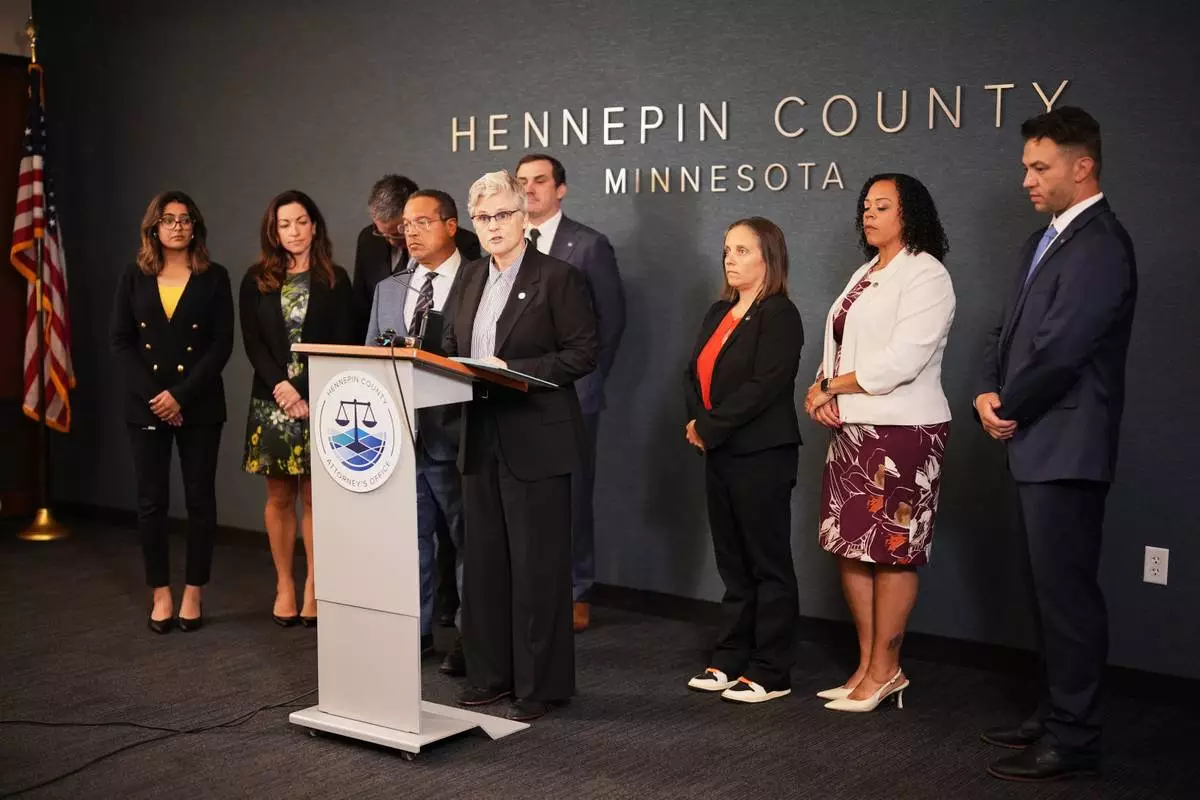
Hennepin County Attorney Mary Moriarty speaks during a news conference, Thursday, Sept. 17, 2026, in Minneapolis. (AP Photo/Ellen Schmidt)
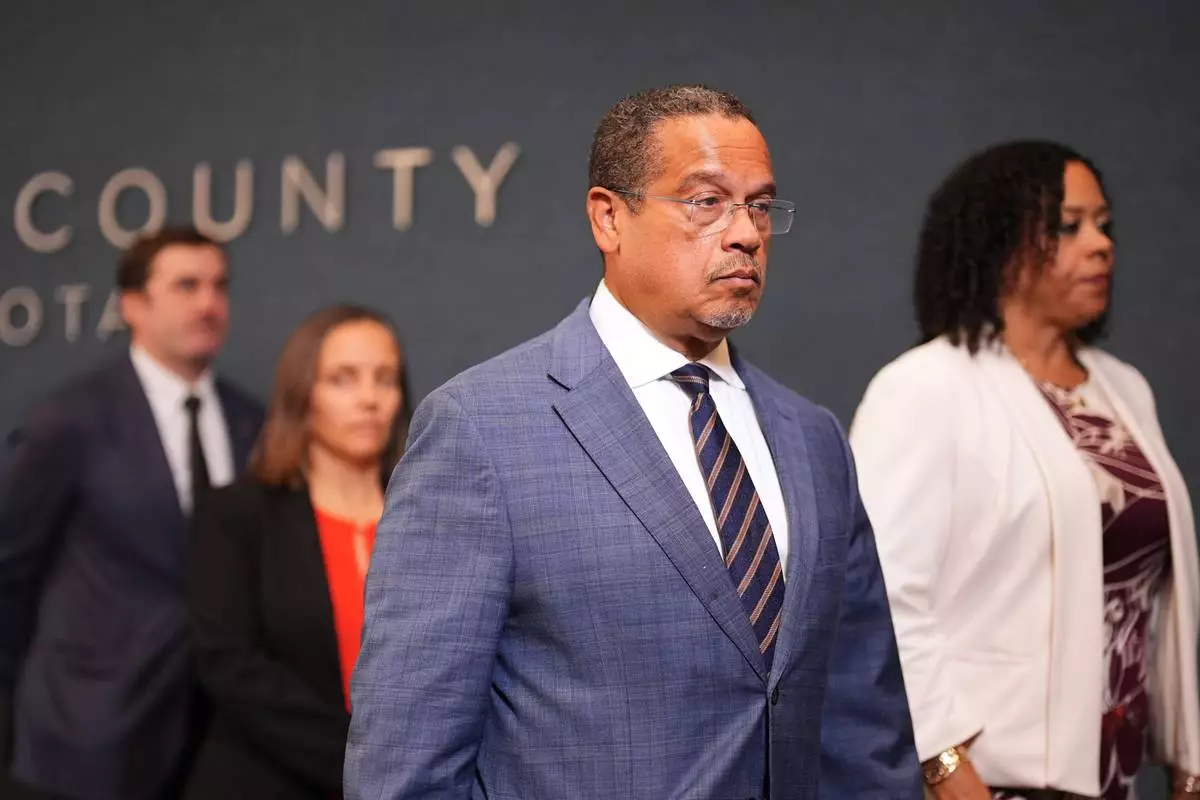
Minnesota Attorney General Keith Ellison leaves after a news conference, Thursday, Sept. 17, 2026, in Minneapolis. (AP Photo/Ellen Schmidt)
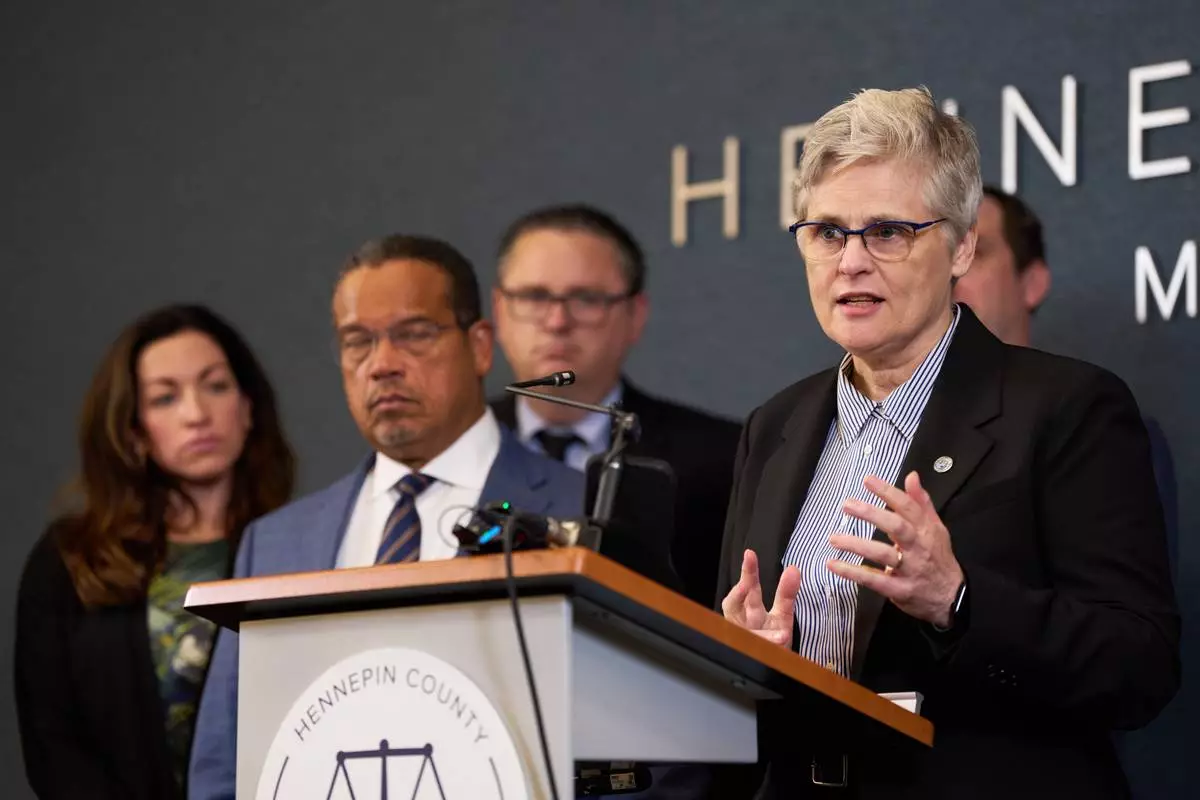
Hennepin County Attorney Mary Moriarty speaks during a news conference, Thursday, Sept. 17, 2026, in Minneapolis. (AP Photo/Ellen Schmidt)
WASHINGTON (AP) — The Trump administration has approved visas for top Iranian officials, including the president and foreign minister, to attend next week’s U.N. General Assembly high-level meeting in New York even as the two countries are locked in a stalemated war.
The State Department said Thursday that it had approved visas for Iran’s “core delegation,” along with essential staffers to participate in the U.N. meetings. The core delegation includes President Masoud Pezeshkian and Foreign Minister Abbas Araghchi, according to U.S. officials, who spoke on condition of anonymity due to visa privacy laws.
The move is unusual due to the more than six-month-long conflict between Iran and the United States and no sign that agreements to reopen the Strait of Hormuz or return to talks on Iran’s nuclear program are close. It also comes as Iranian-backed Houthi rebels in Yemen have stepped up attacks on Saudi infrastructure and shipping in the Red Sea, another major maritime route in the region where impediments have helped drive a surge in global oil prices.
In addition, Iran remains the world's leading state sponsor of terrorism, according to the United States, which has imposed significant sanctions against the country and launched a new campaign in recent weeks aimed at severing “critical financial lifelines."
As the host country for the United Nations headquarters, the U.S. is generally limited in what it can do to prevent foreign leaders from coming to the General Assembly. However, it has in the past denied visas to — or discouraged applications from — leaders involved in active conflicts with the United States.
For last year's U.N. meetings of world leaders — which took place before the Iran war began on Feb. 28 but after the U.S. and Israel launched air strikes on Iranian nuclear facilities in June 2025 — the State Department also approved a limited number of visas for Iranian diplomats but also imposed rigid restrictions on the delegation's movements.
Those included severe limitations on how far Iranian officials could travel in New York City from their U.N. mission and barred them from shopping at wholesale membership stores, such as Costco and Sam's Club.
The decision on the Iranian visas was announced just a day after the State Department denied visas to Palestinian President Mahmoud Abbas and his delegation to come to the General Assembly.
“Consistent with our host country obligations, the core delegation from the Iranian regime will be able to attend UN General Assembly High Level week," the State Department said. "The delegation will be under travel restrictions and will face prohibitions on the purchase of luxury and other goods per our policy. The delegation is smaller than last year.”
The department accused the Palestinian Authority — which administers parts of the Israeli-occupied West Bank — of trying to “internationalize” the Israel-Hamas war in Gaza by bringing cases to the International Court of Justice and the International Criminal Court as well as continuing to pay stipends to prisoners jailed in Israel for attacks on Israelis.
The Palestinian Authority condemned the move and called Israel’s actions “the real threat to the two-state solution and prospects for peace.” It also said it remained committed to long-stalled negotiations but defended its efforts to gain Palestinian recognition through international bodies and courts.
“Punitive measures and restrictions imposed on Palestinian officials do not contribute to advancing peace or combating violence,” the authority’s foreign ministry said in a statement. “Rather, they weaken the Palestinian partner committed to a political solution and encourage forces working to undermine the two-state solution and impose the reality of occupation, settlement and annexation by force."
The U.S. does not recognize the Palestinian Authority as the government of a full U.N. member state. The U.N. General Assembly, however, along with various U.N. agencies and organizations, does.
Associated Press writer Sam Metz in Jerusalem contributed to this report.
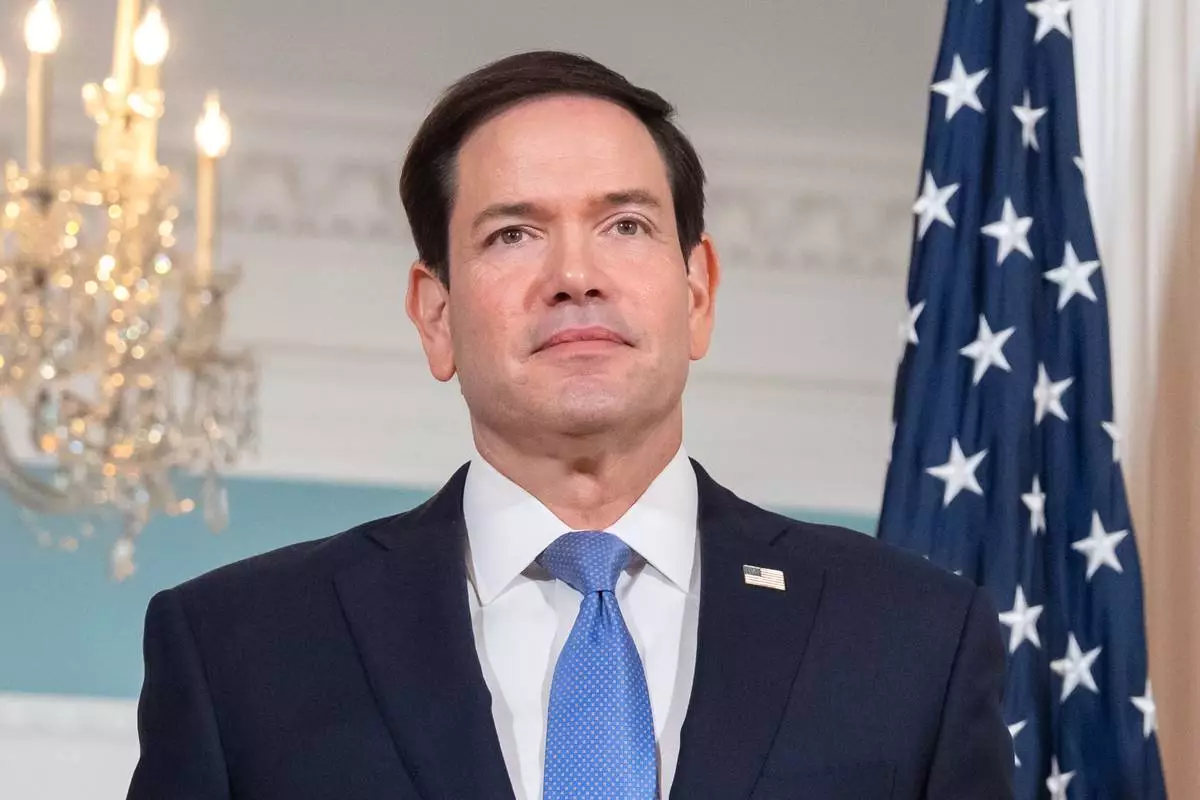
Secretary of State Marco Rubio stands with Costa Rica's Foreign Minister Manuel Tovar Rivera, not shown, at the State Department, Wednesday, Sept. 16, 2026, in Washington. (AP Photo/Mark Schiefelbein)