FRANKFURT, Germany (AP) — The frictions in Russia’s wartime economy are growing, as massive military spending balloons the budget deficit. Consumers and businesses are gloomier. Growth has slowed.
None of that, however, signals an imminent financial crisis or economic collapse, economists say. With crucial oil export revenues holding up due to high prices from the Iran war, the government is able to find the money to pay for its 4 1/2-year-old invasion of Ukraine, at least for now.
Click to Gallery
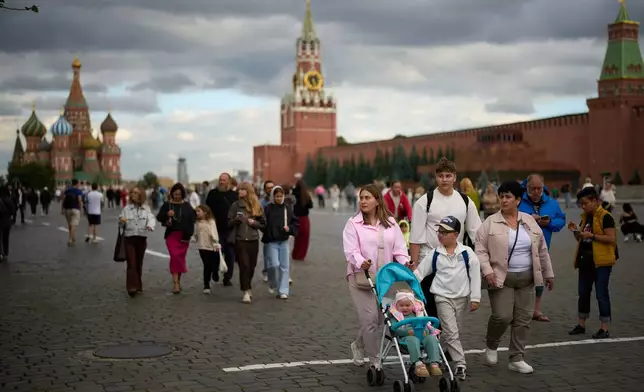
FILE - People walk through Red Square in Moscow on Monday, Aug. 24, 2026, near St. Basil's Cathedral, left, and the Spasskaya Tower, center. (AP Photo/Alexander Zemlianichenko, File)
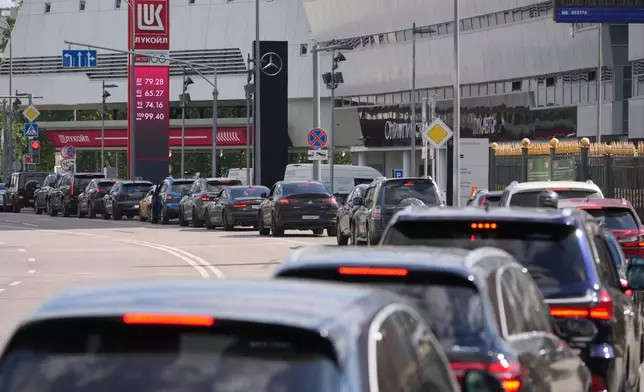
FILE - Motorists line up at a Lukoil gas station in Moscow on Tuesday, June 30, 2026. (AP Photo/Pavel Bednyakov, File)
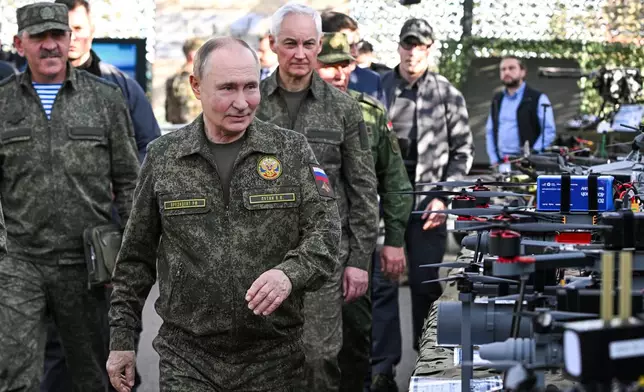
FILE - Russian President Vladimir Putin, accompanied by Deputy Defense Minister Yunus-Bek Yevkurov, left, and Defense Minister Andrei Belousov, right, inspects weapons and equipment during military drills at the Mulino training ground in the Nizhny Novgorod region of Russia on Tuesday, Sept. 16, 2025. (Sergey Bobylev/Sputnik, Kremlin Pool Photo via AP, File)
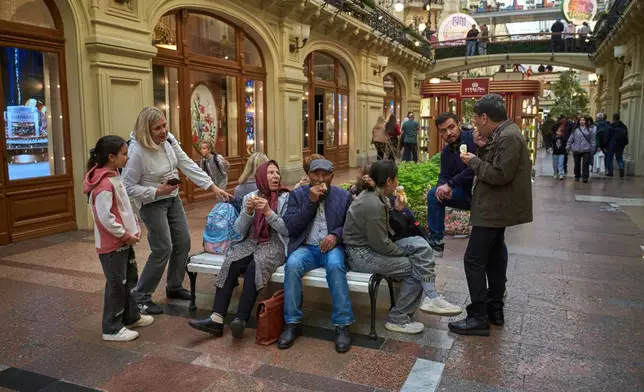
FILE - Shoppers rest at the GUM Department store near Red Square in Moscow, Monday, Aug. 25, 2025. (AP Photo/Alexander Zemlianichenko, File)
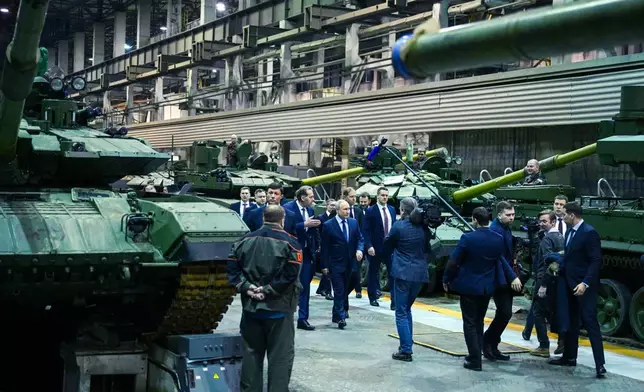
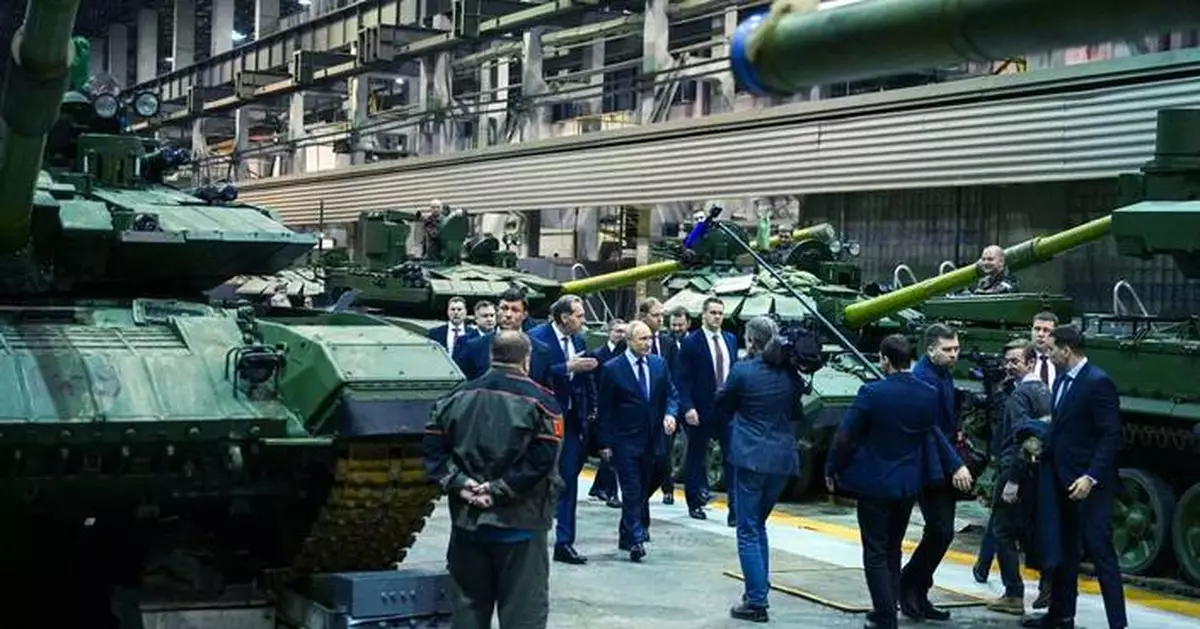
FILE - Russian President Vladimir Putin, center, visits the Uralvagonzavod factory in Nizhny Tagil, Russia, on Thursday, Feb. 15, 2024. (Ramil Sitdikov, Sputnik, Kremlin Pool Photo via AP, File)
Meanwhile, low unemployment and government largesse in poor regions help keep a lid on consumer grumbling.
That picture suits the Kremlin’s narrative of stability ahead of Russia's stage-managed parliamentary election that got underway Friday and concludes Sunday.
But economists warn that longer-term problems are gnawing at the foundations — and could one day result in a crisis.
Indicators of consumer sentiment have drifted down since a peak in 2024-25, when increased military spending was pumping up growth and wages. More recently, consumers have coped with higher gasoline prices and shortages due to Ukrainian drone attacks that knocked out refineries. And many small businesses have lost inventory and customers due to strikes against online retailers Wildberries and Ozon.
At the same time, growth has slowed from a peak of over 4% annual expansion in 2023-24. The government foresees 0.6% this year, and the economy shrank in the first quarter before rebounding somewhat in the second.
The consumer sentiment index compiled by the Levada Center, an independent Russian pollster, fell to 94 over the summer, down from 116 in spring and summer of 2025. Readings under 100 indicate that consumer sentiment is more negative than positive.
People asked about the election in Moscow responded with mostly basic concerns about pensions and prices.
Alexander Vertukhin, a 72-year-old retired military prosecutor, said the government should be focusing on "a decent standard of living for pensioners.”
As for his own situation, “I'm doing fine, both financially and in every other respect,” he said.
“Overall I'd like housing to become more affordable, I'd like pensioners to be able to live decently instead of merely surviving,” said Dmitry Kirillin, 26. “I'd also like travel in our country to be more affordable. Those are the main things that first come to mind, if I gave it more thought I could probably name more."
He added, "I’d like prices to rise more slowly, if that’s possible in the current situation."
The gasoline situation and Wildberries strikes have made the war more visible to people but don't constitute a crisis, said Chris Weafer, CEO of the Macro-Advisory Ltd. consultancy active across the former Soviet Union. He described the economy as in a state of “tolerable stability" and the public mood as “grumbling” but not protesting.
“The economy is under strain — it's stagnant to the effect that it's stable but not growing,” Weafer said. “But it's not facing recession either.”
Most people “are not that affected” by the Ukrainian strikes, he said. “Just because your shopping habits are disrupted, that's not going to change the public support for the Kremlin.”
President Vladimir Putin’s approval rating has declined in recent months but remains higher than it was before the war started in 2022.
One key sign of stress is Russia's budget deficit and the government's efforts to find new sources of money. Putin has resorted to increasing value-added tax paid by consumers at the cash register, raising a raft of other fees and tightening taxation of small businesses. But the deficit has continued to climb.
By the end of July, budget data showed a deficit of 2.8% of annual economic output — almost twice the original annual budget target. Available resources in Russia's reserve fund have dwindled to 1.6% of GDP, meaning the Kremlin needs to borrow from domestic banks.
That, however, means paying high borrowing costs, with interest rates on Russian bonds as high as 17%, according to Janis Kluge, an expert on Russia's finances at the German Institute for International and Security Affairs.
Budget stress is “adding to doubts about how long Russia can sustain the war," he wrote in a recent report. Russia's central bank has kept rates high to contain the inflation caused by war spending. That stresses civilian companies who don't get the privileged access to credit afforded defense firms.
Another source of war funding has been increased private lending by Russia's compliant banks to defense-related companies, meaning those debts are not showing up in the deficit figures.
Over the long term, Western sanctions deprive Russia of new investment that would make the economy more productive.
And the risk factors — high spending, low growth, rising debt and elevated borrowing costs — lead some economists to warn that while Russia's economy has not collapsed, its structural foundations are eroding dangerously.
The current trajectory is “unsustainable,” according to Torbjörn Becker at the Stockholm School of Economics. Still, “the timing of a crisis remains highly uncertain.”
Oil export earnings, which had fallen below $10 billion per month ahead of the Iran war, rebounded to $15.8 billion by June and $13.8 billion in July.
Russia’s budget constraints “may effectively disappear for as long as elevated energy prices persist,” Becker wrote.
To change that, tougher measures against Russia’s sanctions-evading oil tanker fleet must be a priority, he argued.
Money for defense factories and enlistment bonuses has been a boon to Russia's provinces, which are poorer than Moscow and St. Petersburg. With factories often running full blast, unemployment is 2.2% nationwide.
The Uralvagonzavod tank factory in Nizhny Tagil in the Urals region increased its workforce from about 20,000 to more than 38,000 since the invasion of Ukraine as it launched 24-hour production, according to a recent report from the Center for Strategic & International Studies on Russia's defense industries. Kupol, which makes drones and surface-to-air missiles, is the largest industrial enterprise in the Udmurtia region on the Volga River and more than doubled its output in 2025.
Shortages of skilled labor are restraining production in defense firms and across the economy, compounded by the emigration of several hundred thousand mostly younger people due to fears of conscription and political repression.
Kremlin spokesperson Dmitry Peskov said month-to-month deficit figures were volatile and that “this is not a figure that should be cause for concern. Macroeconomic stability is absolutely ensured.”
But the chief economist of Russia's state-owned VEB.RF state development bank, Andrei Klepach, warned in a speech that due to sanctions and economic isolation, “we're falling behind in the technological and economic competition in the world,” and that “we can't win the competition in this war of attrition.”
He was fired.
——
Dasha Litvinova in Tallinn, Estonia, contributed.
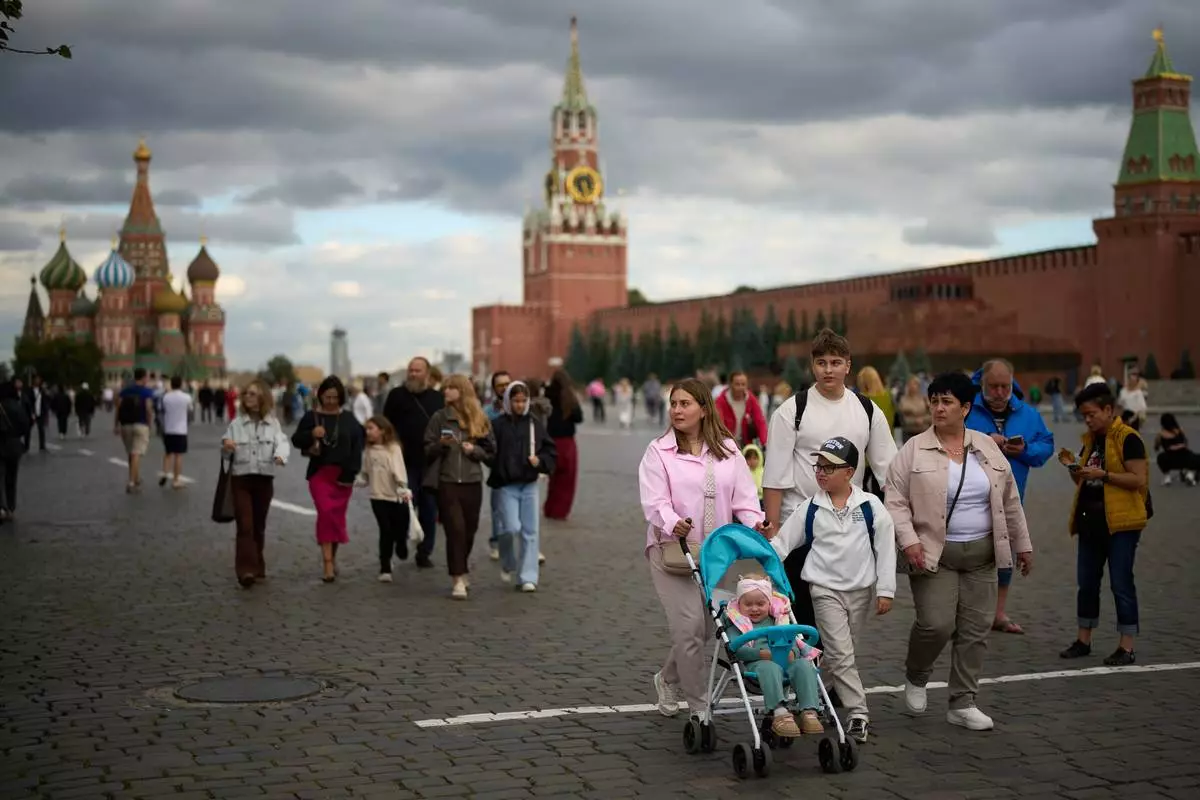
FILE - People walk through Red Square in Moscow on Monday, Aug. 24, 2026, near St. Basil's Cathedral, left, and the Spasskaya Tower, center. (AP Photo/Alexander Zemlianichenko, File)
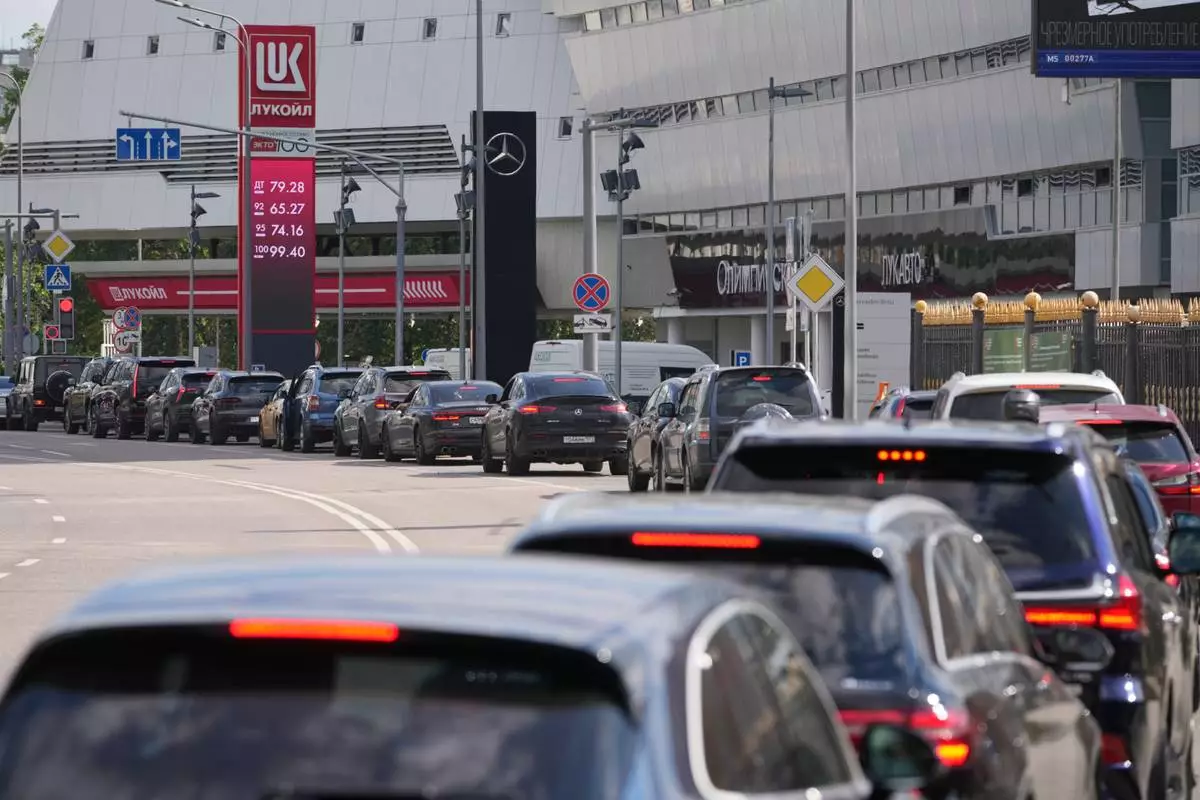
FILE - Motorists line up at a Lukoil gas station in Moscow on Tuesday, June 30, 2026. (AP Photo/Pavel Bednyakov, File)
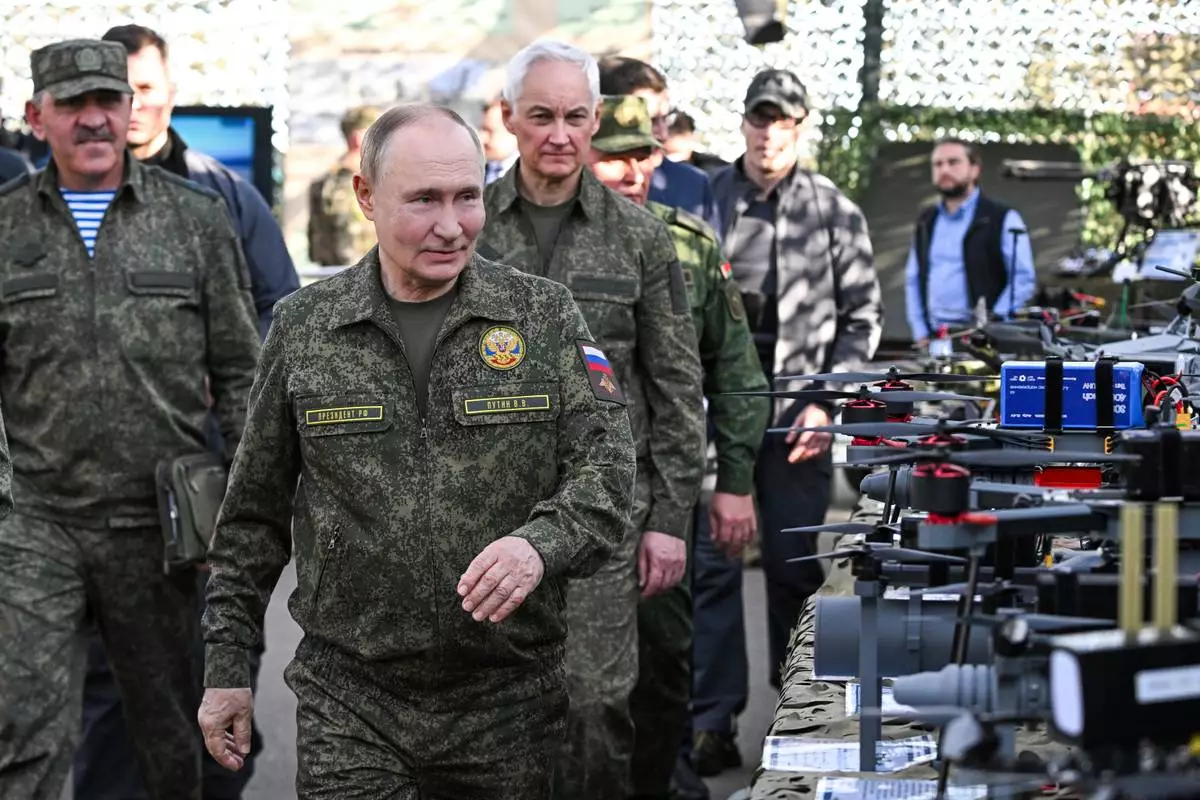
FILE - Russian President Vladimir Putin, accompanied by Deputy Defense Minister Yunus-Bek Yevkurov, left, and Defense Minister Andrei Belousov, right, inspects weapons and equipment during military drills at the Mulino training ground in the Nizhny Novgorod region of Russia on Tuesday, Sept. 16, 2025. (Sergey Bobylev/Sputnik, Kremlin Pool Photo via AP, File)
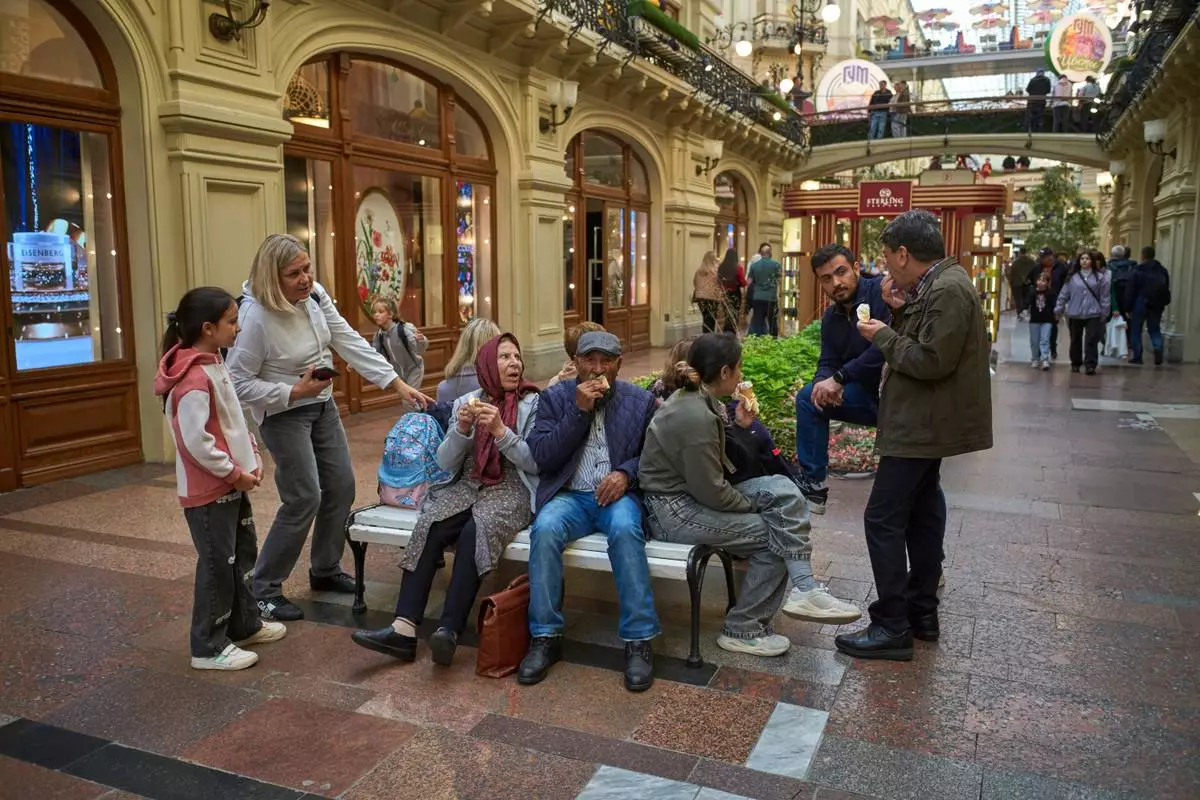
FILE - Shoppers rest at the GUM Department store near Red Square in Moscow, Monday, Aug. 25, 2025. (AP Photo/Alexander Zemlianichenko, File)
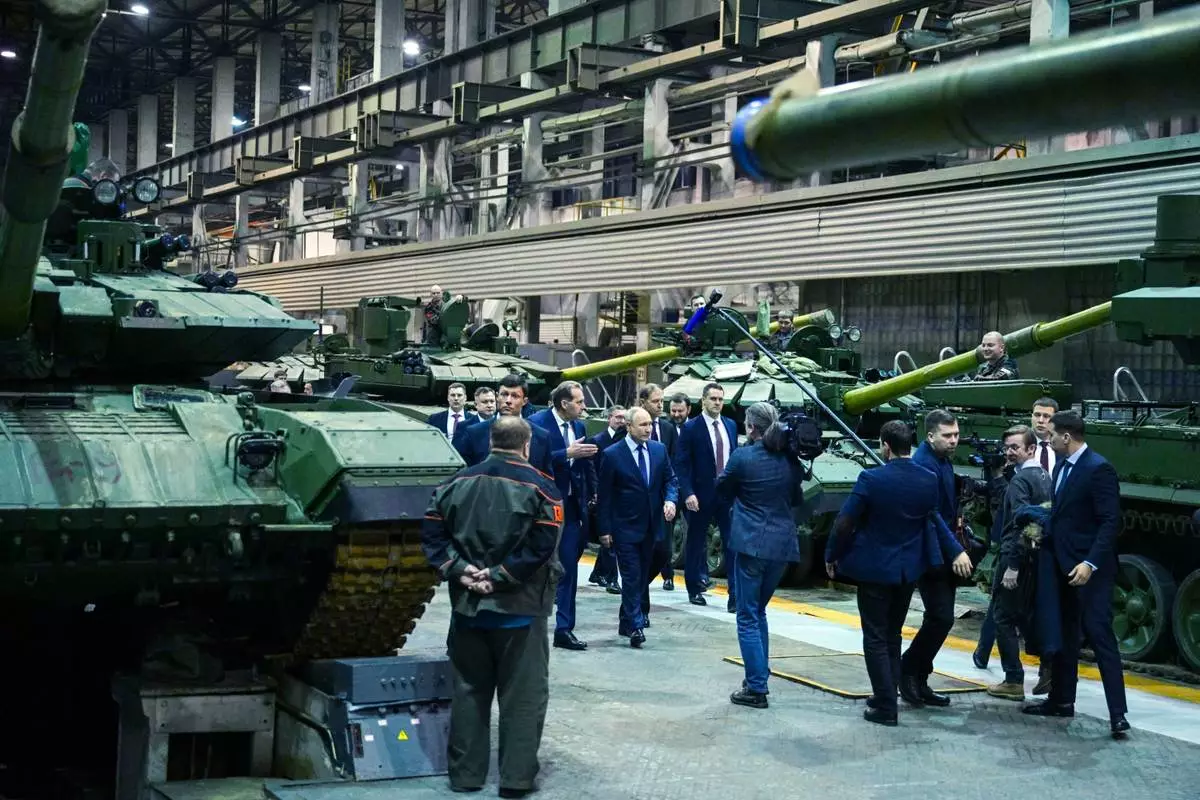
FILE - Russian President Vladimir Putin, center, visits the Uralvagonzavod factory in Nizhny Tagil, Russia, on Thursday, Feb. 15, 2024. (Ramil Sitdikov, Sputnik, Kremlin Pool Photo via AP, File)