CAIRO (AP) — Hundreds of thousands of Iranians rallied Friday in a government-organized show of defiance after months of war, pledging their readiness to take up arms in the biggest such demonstration since the United States and Israel attacked in February.
Iran's government has sought to rally the people and stress national unity, even as the economy worsens under a U.S. naval blockade of Iranian ports and new U.S. sanctions meant to increase Tehran's economic pain.
Click to Gallery
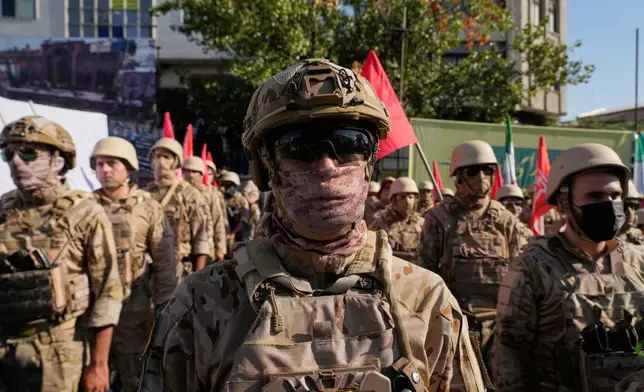
Armed personnel affiliated with Iran's Revolutionary Guard take part in the state-organized "Janfada," or "Sacrifice for Iran," military exercise in Tehran, Iran, Friday, Sept. 18, 2026. (AP Photo/Vahid Salemi)
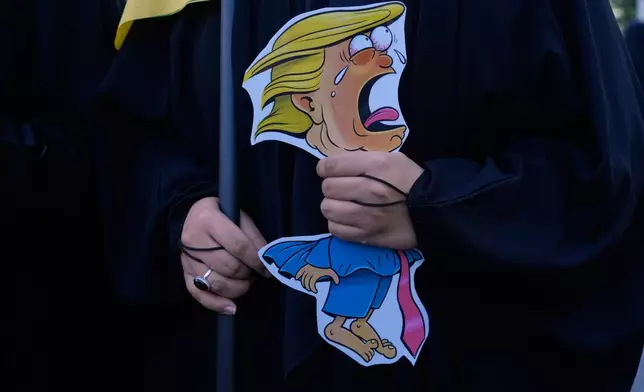
A woman holds a caricature of U.S. President Donald Trump as she attends the state-organized "Janfada," or "Sacrifice for Iran," military-style parade in Tehran, Iran, Friday, Sept. 18, 2026. (AP Photo/Vahid Salemi)
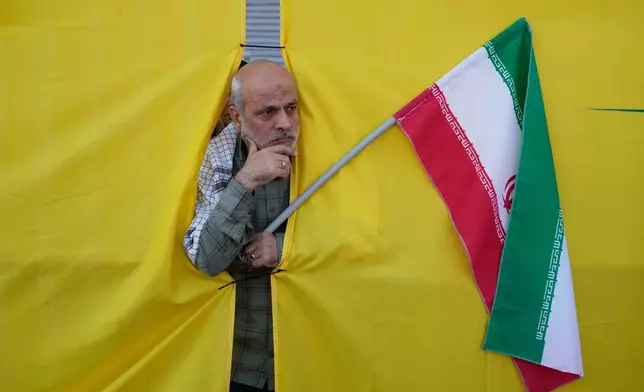
A man holding an Iranian flag peers through an opening in a curtain during the state-organized “Janfada,” or “Sacrifice for Iran,” military-style parade in Tehran, Iran, Friday, Sept. 18, 2026. (AP Photo/Vahid Salemi)
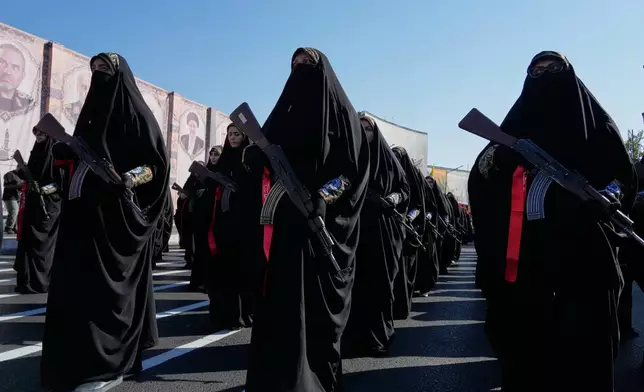
Women affiliated with Iran's Revolutionary Guard carry rifles as they march during the state-organized "Janfada," or "Sacrifice for Iran," military exercise in Tehran, Iran, Friday, Sept. 18, 2026. (AP Photo/Vahid Salemi)
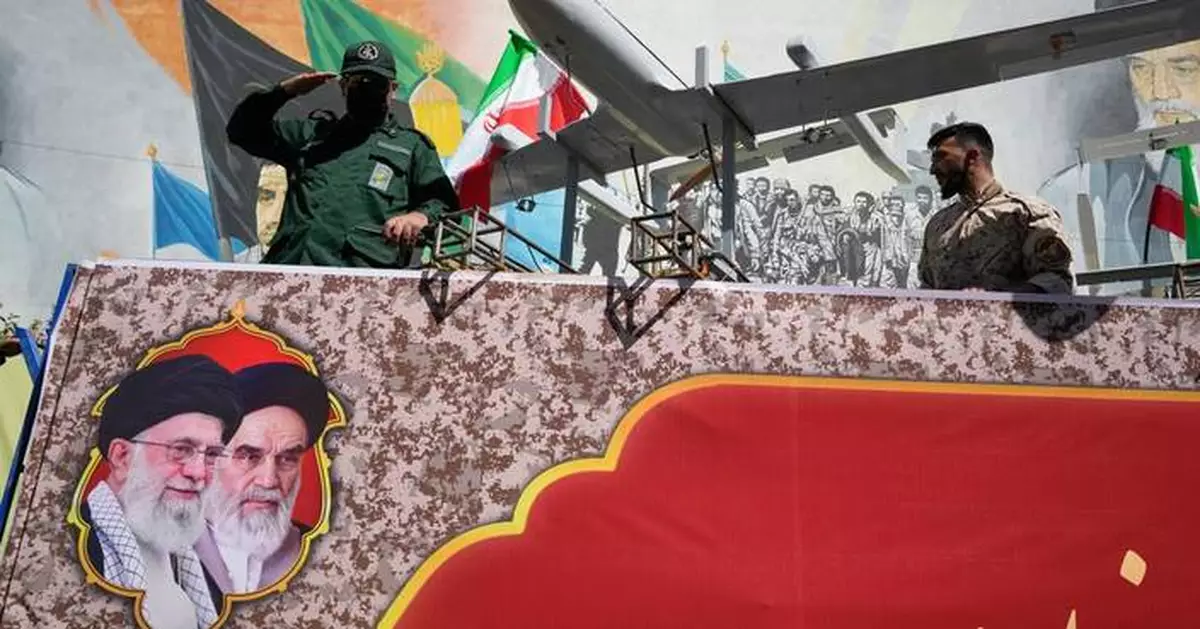
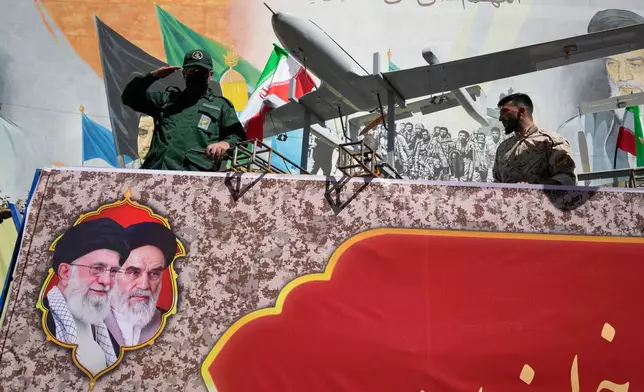
A member of Iran's Revolutionary Guard salutes while riding on a float displaying drones during the state-organized "Janfada," or "Sacrifice for Iran," military-style parade in Tehran, Iran, Friday, Sept. 18, 2026. (AP Photo/Vahid Salemi)
Estimates varied of the number of people volunteering to receive limited military training and defend the country in an effort described as “Janfaday-e Iran,” or the “ones who sacrifice their lives for Iran." They marched through downtown Tehran in combat uniform, carrying flags, as onlookers cheered.
For days, state media have encouraged Iranians to join the campaign, saying training with assault rifles would begin soon. The volunteers would be an additional layer of security to the powerful Revolutionary Guard paramilitary and its all-volunteer arm, the Basij.
Tehran’s Guard chief, Gen. Hassan Hassanzadeh, told the state broadcaster that over 600,000 people had registered to participate, with over 1 million expected to take part in the training. On Friday morning, the broadcaster estimated over 300,000 people were on the streets.
The new head of the Basij, Hossein Taeb, declared in a speech as the rally began that the volunteers will be ready for “full-fledged defense” and similar rallies will take place in other cities soon.
The new trainees will make a “nightmare” for Iran's enemies, Taeb added, as President Masoud Pezeshkian, military commanders and other senior officials watched the march.
Some participants trampled flags of the U.S. and Israel. Others chanted “Death to America” and “Death to Israel.”
“I am here to tell (U.S. President Donald) Trump that we Iranians have no fear about his threats against our homeland,” said Marzieh Afaghi, 24, who attended the rally with her toddler and husband. “No one in history could invade Iran and remain there.”
The rally was also a chance for Iran to show off military hardware. Anti-aircraft batteries were on display, while female Guard members in black headscarves sat with truck-mounted machine guns.
The Guard displayed drones that have been widely used against ships in the Strait of Hormuz, where Iran has asserted control since the war began, severely affecting the Gulf region’s shipments of oil and natural gas to the rest of the world.
Friday's events also suggested that hardliners like Taeb among Iran's leadership will be more prepared to suppress any future demonstration against the theocracy.
In January, shortly before the war, Iran saw some of its largest nationwide protests in history, which began over the struggling economy and turned to wider grievances. Activists have said a crackdown killed over 7,000 people and saw tens of thousands detained.
In May, government officials said more than 30 million people in Iran — home to a population of some 90 million — had volunteered via an online form or at public gatherings to lay down their lives for the theocracy. The Associated Press could not independently confirm that.
Karimi reported from Tehran, Iran, and Anna from Jerusalem.
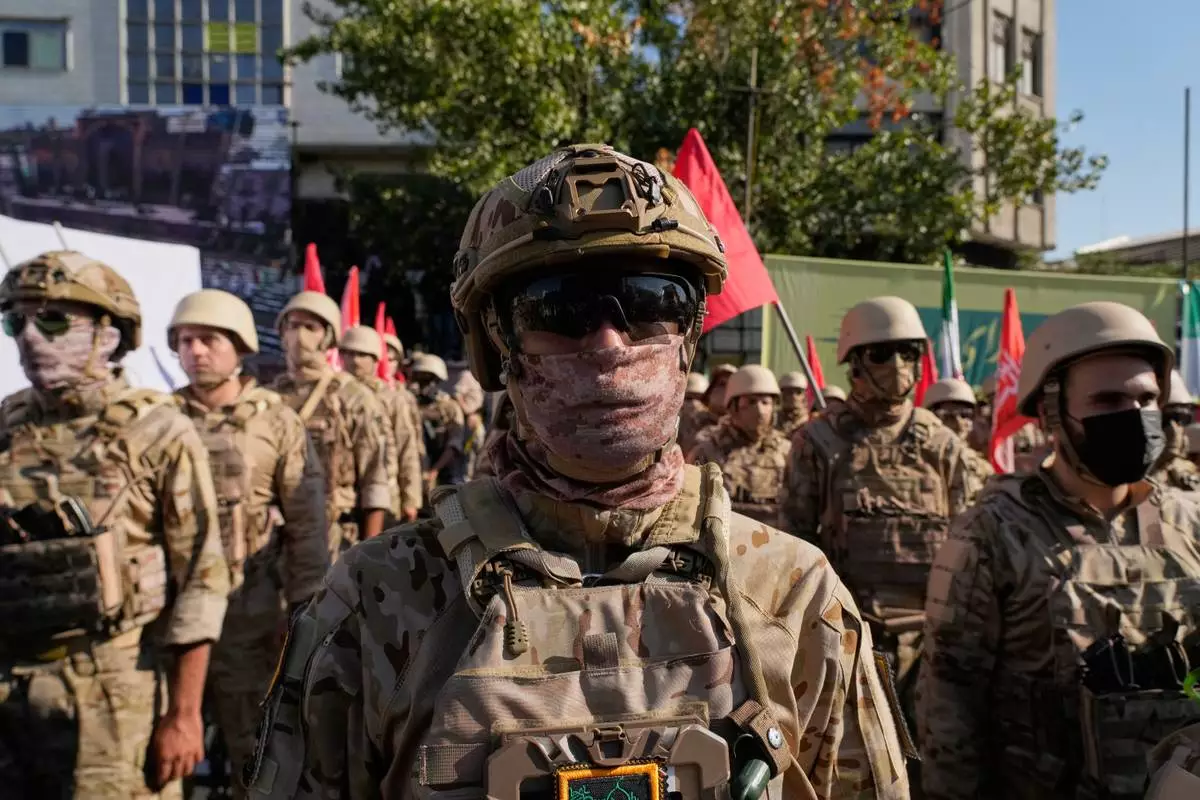
Armed personnel affiliated with Iran's Revolutionary Guard take part in the state-organized "Janfada," or "Sacrifice for Iran," military exercise in Tehran, Iran, Friday, Sept. 18, 2026. (AP Photo/Vahid Salemi)
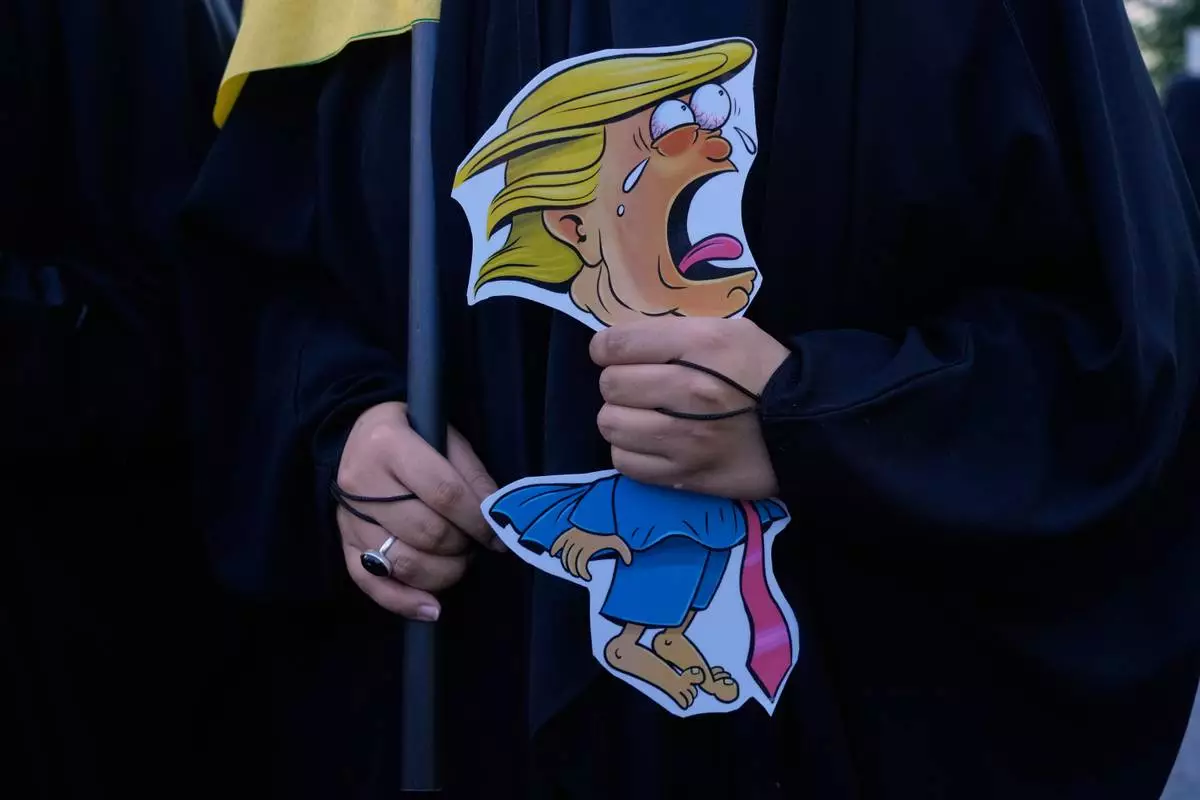
A woman holds a caricature of U.S. President Donald Trump as she attends the state-organized "Janfada," or "Sacrifice for Iran," military-style parade in Tehran, Iran, Friday, Sept. 18, 2026. (AP Photo/Vahid Salemi)
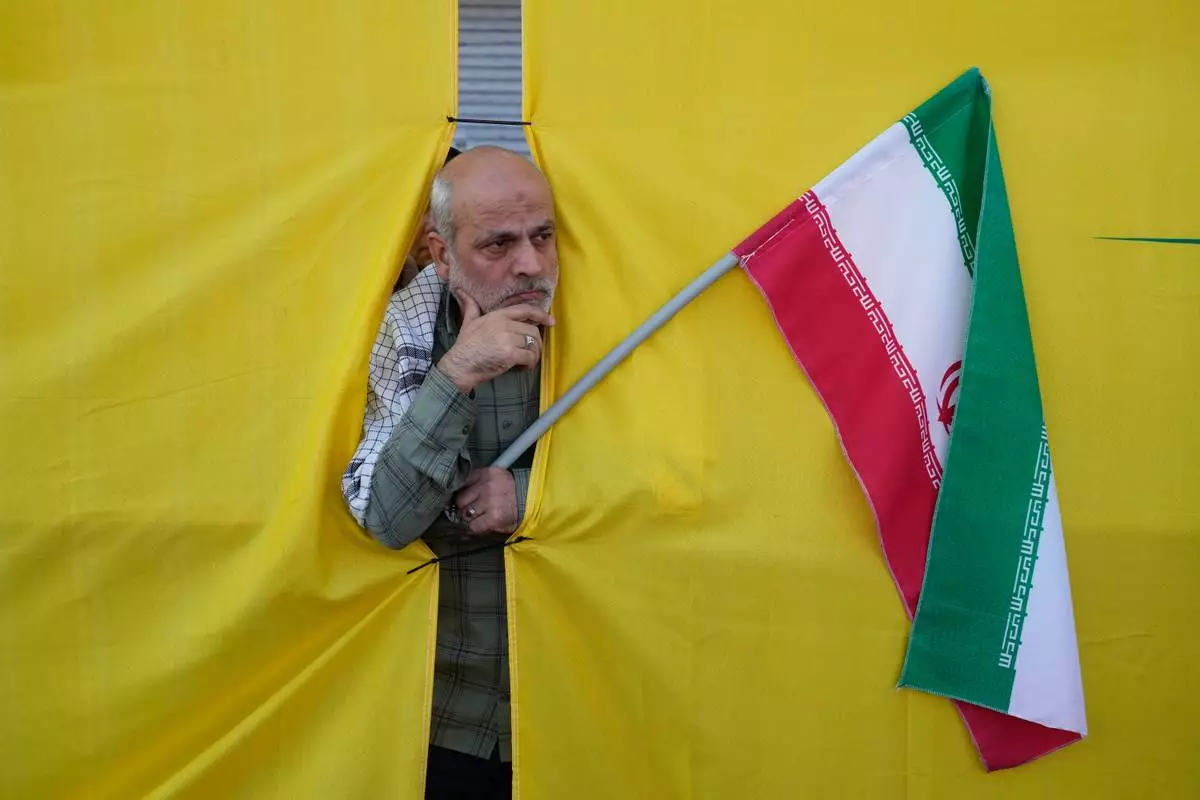
A man holding an Iranian flag peers through an opening in a curtain during the state-organized “Janfada,” or “Sacrifice for Iran,” military-style parade in Tehran, Iran, Friday, Sept. 18, 2026. (AP Photo/Vahid Salemi)
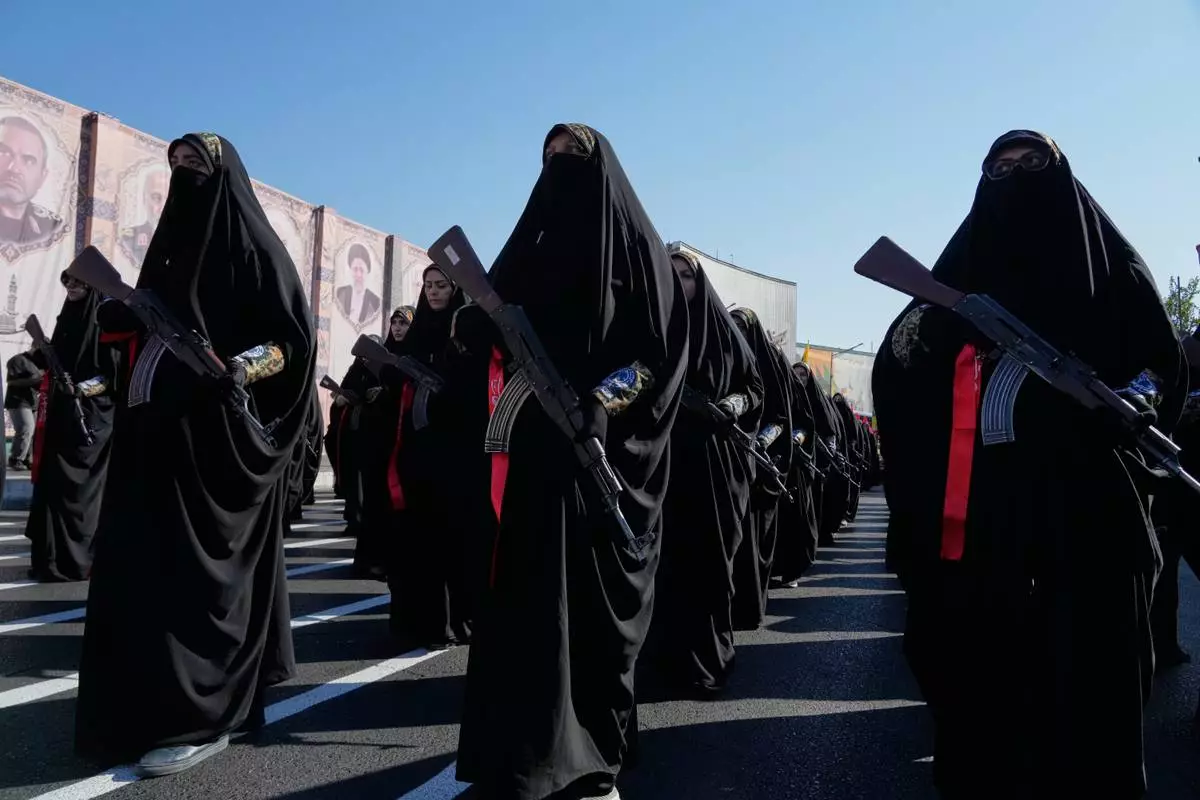
Women affiliated with Iran's Revolutionary Guard carry rifles as they march during the state-organized "Janfada," or "Sacrifice for Iran," military exercise in Tehran, Iran, Friday, Sept. 18, 2026. (AP Photo/Vahid Salemi)
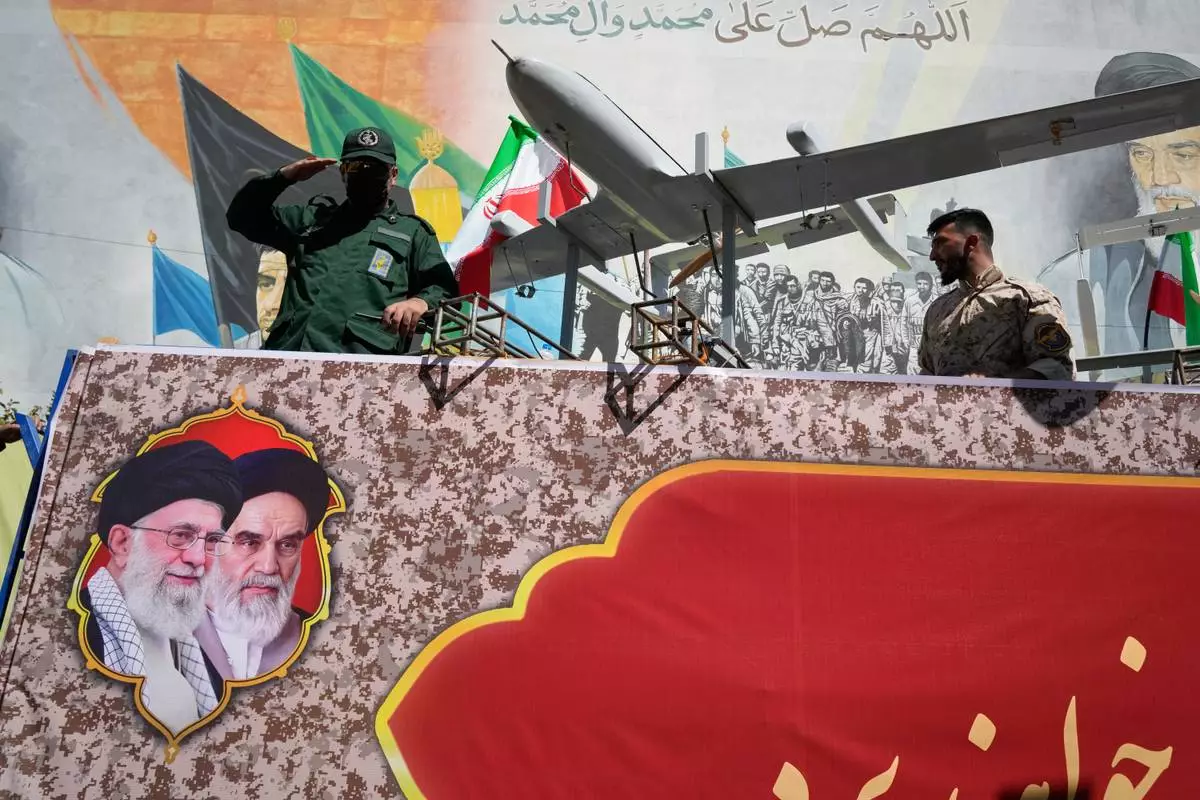
A member of Iran's Revolutionary Guard salutes while riding on a float displaying drones during the state-organized "Janfada," or "Sacrifice for Iran," military-style parade in Tehran, Iran, Friday, Sept. 18, 2026. (AP Photo/Vahid Salemi)
CAIRO (AP) — It's been a week since Yemen's Iran-backed Houthi rebels stormed down the Red Sea coast, extending their reach to a key maritime chokepoint and threatening Saudi Arabia's oil exports.
The Houthis' biggest land grab in years reignited Yemen's 12-year civil war and pushed up global fuel prices. It also gave Iran another potential source of leverage as the United States has started to loosen Tehran's grip on the Strait of Hormuz, on the other side of the Arabian Peninsula.
The Houthis are also firing at Saudi oil facilities and tankers. An attack on Saudi Arabia's east-west pipeline, blamed on Iran-backed militias in Iraq, added to an unfolding nightmare for the kingdom and rattled world markets.
The rebel blitz has forced some 125,000 Yemenis to flee their homes. The civil war has killed over 150,000 people and at times pushed the country to the brink of famine.
Now the rebels appear to be eyeing Yemen's oil-rich east. So far, the only thing standing in their way is Yemen's Saudi-backed government and an array of forces that have fought one another as recently as January. Saudi Arabia's most important ally, the U.S., appears to be sitting this one out.
The Houthis captured the important Red Sea port city of Mokha before taking several islands near the narrow Bab el-Mandeb strait, through which some 12% of world trade passes in peacetime. They are also just 32 kilometers (20 miles) from Djibouti, a small African nation hosting U.S. and other military bases.
The Houthis first swept down from their northern heartland in 2014, capturing the capital, Sanaa, and much of northern Yemen. Saudi Arabia intervened the following year, and fighting raged until a 2022 ceasefire.
In recent days, there has been heavy fighting in and around Marib, a central city in an oil-rich province of the same name. Previous Houthi offensives have failed to capture the city, which also serves as a military hub for Saudi-backed forces. The Houthis also threaten the western city of Taiz, a front line for much of the conflict.
The Houthis want Saudi Arabia to lift a long-running blockade on the territory they control.
“It is Saudi Arabia that closed the Bab el-Mandeb strait to shipping traffic to and from Yemen and imposed an unjust blockade on the country,” Mohammed al-Bukhaiti, a member of the Houthis’ political bureau, told The Associated Press.
The Saudis and their allies have long struggled to contain or deter the Houthis, and may be tempted to seek a diplomatic solution to halt the attacks. That might ultimately require U.S. concessions to Iran, the only country with leverage over the Houthis.
The U.S., which bombed the Houthis under the Biden and Trump administrations, has shown no interest in getting involved this time around, and the Houthis appear keen to keep it that way. They say they are only attacking Saudi shipping.
Windward, a shipping firm, reported a dip in traffic through the Bab el-Mandeb from 35 daily transits before the Houthi advance to 25 after, but traffic has already recovered and climbed to 45 transits on Sunday.
The Houthis could still expand their target bank beyond Saudi ships and tankers. During their self-styled blockade of Israel at the height of the war in Gaza, the Houthis attacked ships in the Red Sea with no known connection to that conflict.
“At the moment, their focus is on Saudi-linked shipping,” said Valentin d’Hauthuille, a Middle East analyst at ACLED, a conflict monitor. But they might “extend the criteria according to which vessels are assessed to be ‘Saudi-linked’ to increase pressure on both Saudi and the global economy.”
Regional mediators have sprung into action, but a diplomatic agreement appears unlikely without some kind of breakthrough in the wider Iran war.
Iran wants the U.S. to lift a blockade and sanctions that have devastated its economy, while the U.S. seeks the full reopening of the Strait of Hormuz and a deal to roll back Tehran's nuclear program. Neither side has shown any sign of budging since a preliminary agreement quickly crumbled over the summer.
Last weekend, Oman hosted a meeting between U.S. and Houthi representatives, a Houthi official and another individual familiar with the talks told the AP this week. They spoke on condition of anonymity because they weren’t authorized to brief the media.
The U.S. says it has been in “constant contact” with the Saudis, a close ally and the recipient of billions of dollars in American military assistance.
Saudi Crown Prince Mohammed bin Salman recently visited Egypt, which has served as a regional mediator. A government official in Turkey, another potential mediator, said this week that it was in talks with Iran and the United Arab Emirates to try and lower tensions.
The Houthi attacks are the first test of a new defense pact among Saudi Arabia, NATO member Turkey and nuclear power Pakistan. But officials from Turkey and Pakistan say they have not received a Saudi request for support.
The latest fighting has killed eight civilians and wounded another 32, according to the U.N. humanitarian office, which says an estimated 125,000 people have fled their homes. The Health Ministry in the Saudi-backed government says the Houthis have killed around 150 civilians since Sept. 3.
Saudi Arabia said Thursday that debris from an intercepted Houthi drone killed one person and wounded two others in the kingdom.
Yemen was the poorest Arab country even before the civil war, and has experienced widespread hunger in recent years because of the conflict and the Saudi-led blockade.
The Houthis' detention of U.N. and aid workers has hampered international assistance in the territories they control. Experts say the Houthis have struggled to pay civil servants, leading to some unrest, and have diverted much of their tax revenues to their military wing.
The U.N. humanitarian office, known as OCHA, says only 20% of its humanitarian appeal for Yemen has been funded, and that “millions risk losing access to food, healthcare, nutrition, water and protection services.”
“The needs are extremely high right now,” said Sara Ahmed, a supervisor with Doctors Without Borders in Mokha. Doctors are working under difficult conditions to keep essential services running despite hearing airstrikes, she said.
Mahida Ahmed fled the fighting in Mokha and is now sheltering in a displacement camp in Aden, where the Saudi-backed government is headquartered. She said she left in a hurry, with her children but no belongings, while her husband is still stranded in Mokha.
“This war has been completely devastating for us,” she said.
Associated Press reporters Samy Magdy and Fatma Khaled in Cairo, Cara Anna in Jerusalem and David McHugh in Frankfurt, Germany, contributed.
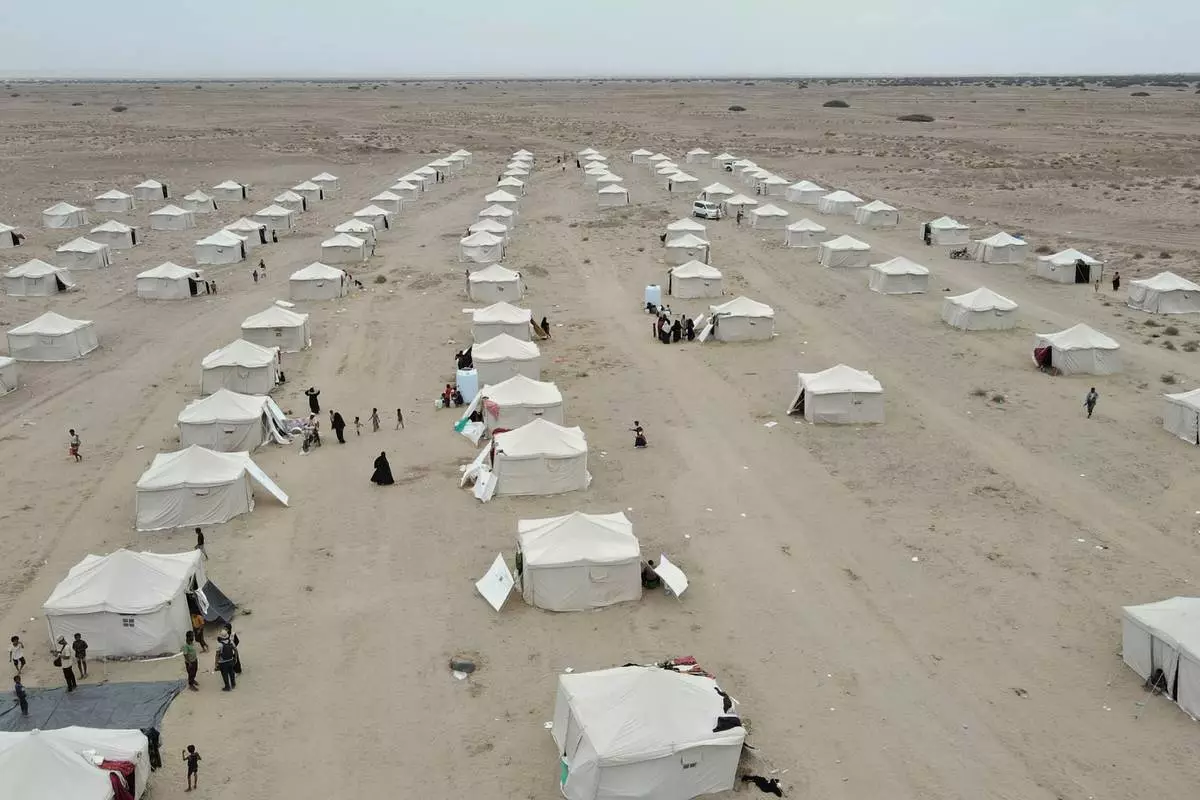
Tents are lined up in the Al-Firdaws camp for displaced Yemenis in Ras Imran, on the western outskirts of Aden, Yemen, Thursday, Sept. 17, 2026. (AP Photo/Abdulnasser Alseddik)