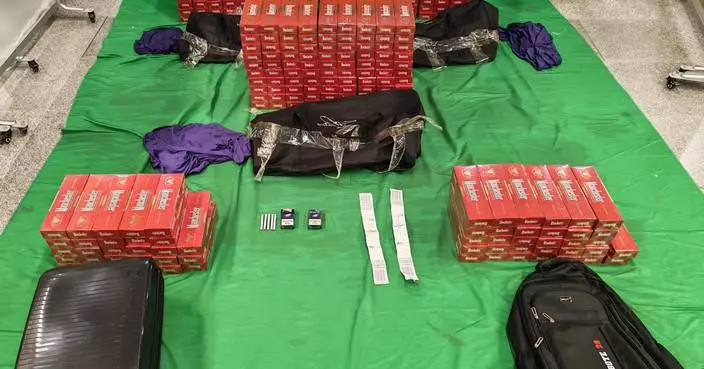
Online retailer proprietor convicted of wrongly accepting payments
A 47-year-old female proprietor of an online retailer was convicted and sentenced to four months' imprisonment and was ordered to pay approximately $160,000 in compensation to five victims at the Kwun Tong Magistrates' Courts today (September 18), for engaging in wrongly accepting payments in the course of business, in violation of the Trade Descriptions Ordinance (TDO). The sentence fully reflects the severity of the offence and carries a deterrent effect.
Hong Kong Customs earlier received a number of reports from members of the public stating that the retailer involved had advertised supermarket vouchers with a face value of $50 for pre-sale at low prices through its online shop and social media platforms. After receiving full deposits, the trader promised to deliver the goods within two to three months. However, after accepting payments, the retailer failed to deliver the goods and did not arrange any refunds. The case involved a total of 4 380 supermarket vouchers with an aggregate amount of approximately $170,000, with the largest individual case amounting to around $70,000.
Customs welcomed the ruling and emphasised that it will continue to strictly crack down on unfair trade practices to protect consumer rights. Meanwhile, traders are reminded to comply with the provisions of the TDO. It is an offence if a trader, at the time of accepting payment, intends not to supply the product, or if there are no reasonable grounds for believing they can supply the product within a specified or reasonable period. Upon conviction, the maximum penalty is a fine of $500,000 and imprisonment for five years.
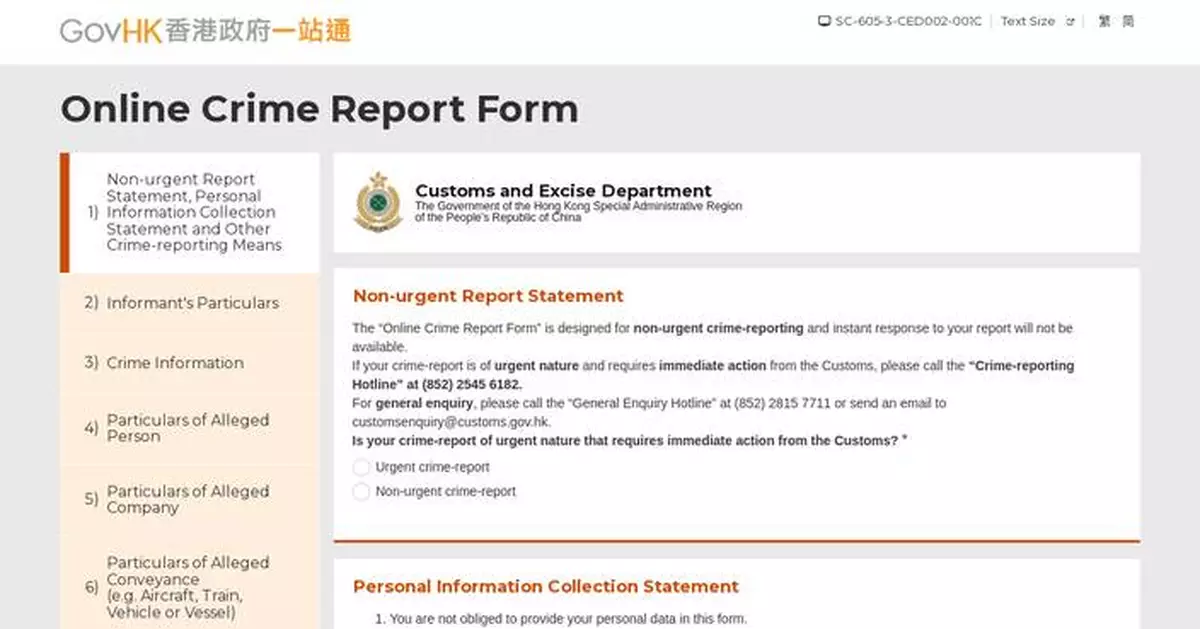
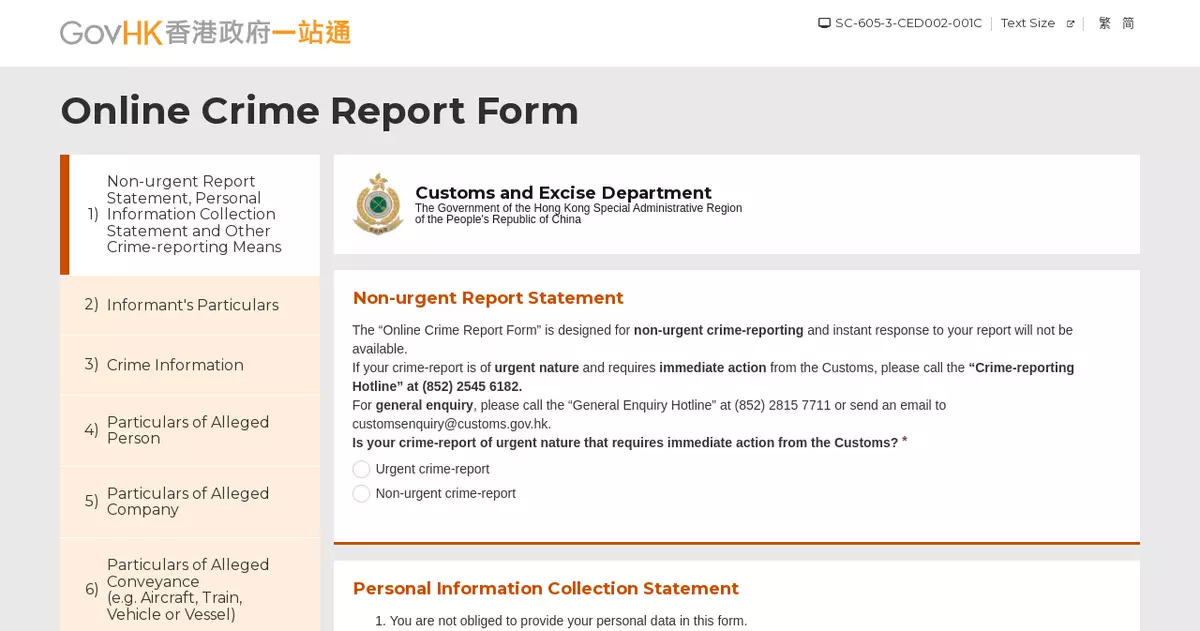
Customs appeals to consumers to maintain vigilance before pre-ordering products with prices significantly lower than the market rate or making large-amount prepaid consumption, and to patronise reputable merchants. Members of the public may report any suspected violations to the Customs' 24-hour hotline at 182 8080, or via the dedicated crime reporting email account (crimereport@customs.gov.hk) or online form (eform.cefs.gov.hk/form/ced002).
Source: AI-found images
CHP investigates two confirmed Mpox cases and recommends high-risk target groups to receive Mpox vaccination
The Centre for Health Protection (CHP) of the Department of Health (DH) said today (September 18) that it is investigating two confirmed Mpox (also known as Monkeypox) cases. Due to the recent increase in Mpox cases, the CHP strongly urged individuals who have engaged in high-risk sexual contact, particularly with strangers, to remain vigilant and take appropriate personal protective measures, including receiving the Mpox vaccination, and avoid close physical contact with anyone suspected of having contracted Mpox. Moreover, unsafe sexual contact can increase the risk of infection. The CHP has stepped up public education and outreach efforts, including setting up an Mpox hotline (2125 2373) to provide health assessments and advice to people concerned, strengthening Mpox prevention and control campaigns on social media platforms, and sending a letter to doctors across Hong Kong reminding them to immediately notify the CHP of suspected Mpox cases for follow-up.
Case details
--------------
The first new case involves a 28-year-old man who developed rashes over his body starting on September 9, including genital organs, forearm, abdomen and face. He sought medical attention at a social hygiene service clinic (SocHS) under the DH on September 15 and was arranged to receive isolation treatment at Princess Margaret Hospital.
The other new case involves a 26-year-old man who developed a fever, sore throat, myalgia, fatigue and lymphadenopathy on August 30. Subsequently, a rash appeared in various parts of his body, including his genital organs, chest and limbs. As his symptoms persisted, he respectively sought medical attention on September 8 and 15. The CHP subsequently arranged him to receive isolation treatment at Queen Elizabeth Hospital.
Upon laboratory testing by the CHP's Public Health Laboratory Services Branch, the two individuals' clinical specimens tested positive for the monkeypox virus, and are in stable condition.
According to information provided by the two patients, both have had high-risk contact with other men respectively in Hong Kong during the incubation period.
No epidemiological linkages between these two cases, nor with other confirmed Mpox cases recorded earlier in Hong Kong, have been identified so far. The CHP is conducting epidemiological investigations of the two cases, and will endeavour to contact individuals who had high-risk contact with them. The CHP will also report these two cases to the World Health Organization.
Since 2022, Hong Kong has recorded a total of 109 Mpox cases (87 local cases and 22 imported cases), including the above-mentioned cases. All patients were males. Since this August, the number of Mpox cases in Hong Kong has seen an increase. As of today, 25 cases have been recorded this year, including 20 local cases and five imported cases. Among them, 16 are new cases reported since August. Epidemiological investigations showed that among the 16 recently identified cases, all patients reported having sexual activities with men. No epidemiological links were found between the cases. All patients reported engaging in high-risk sexual behaviours during the incubation period, including having sex with male strangers or having sex without a condom. In 10 of these cases, patients reported using dating apps to find sexual partners.
Stepping up public education
-------------------------------------
Epidemiological analysis shows that high-risk sexual contact between males (including having sex with unknown men or multiple partners without using condoms) is a risk factor for Mpox infection. The CHP urges people who have engaged in high-risk sexual contact to seek medical attention immediately if they develop symptoms associated with Mpox, such as a rash, fever or swollen lymph nodes. The CHP has set up an Mpox hotline (2125 2373) to provide health assessments and advice to people concerned, which operates daily from 9am to 6pm.
The CHP also stepped up its Mpox prevention and control outreach on social media platforms (including dating apps), and will further coordinate and communicate with relevant non-governmental organisations to strengthen health promotion efforts for Mpox prevention among target groups.
Getting vaccinated to prevent Mpox
--------------------------------------------
The Mpox vaccine can prevent infection and severe disease. The DH provides Mpox vaccination services for high-risk groups. The following high-risk target groups are eligible for Mpox vaccinations on a voluntary basis:
- individuals with high-risk sexual practices, e.g. having multiple sexual partners, sex workers, or having a history of sexually transmitted infection within the past 12 months;
- healthcare workers responsible for caring for patients with confirmed Mpox;
- laboratory personnel handling zoonotic pox viruses; and
- animal care personnel with high risk of exposure in case of Mpox occurrences in animals in Hong Kong.
High-risk target groups can receive Mpox walk-in vaccinations at any of the DH's SocHS (namely Chai Wan SocHS, Wan Chai Male SocHS, Wan Chai Female SocHS, Yau Ma Tei Male SocHS, Yau Ma Tei Female SocHS, Yung Fung Shee SocHS, Fanling SocHS and Tuen Mun SocHS) and the DH's Yau Ma Tei Integrated Treatment Centre, without prior appointments.
Meanwhile, the DH's Kowloon Bay Integrated Treatment Centre and the Hospital Authority's Special Medical Clinics at Queen Elizabeth Hospital and Princess Margaret Hospital also provide Mpox vaccination services for their clients.
Mpox is not transmitted through respiratory droplets or aerosols in general, and transmission would not occur through social contact. The CHP reminds the public, especially those at higher risks of exposure, to take precautions and avoid close physical contact with persons or animals suspected of being infected. They should seek medical attention as soon as possible if they experience relevant symptoms, including rash, fever, chills, swollen lymph nodes, exhaustion, muscle pain, and severe headaches. They should not engage in activities with others that may involve contact with skin rash or body fluids.
For more details, please visit the CHP's webpages onMpoxandMpox Vaccination Programme.
Source: AI-found images