Andrés Cantor and his iconic “¡GOOOOL!” call will be part of Netflix’s coverage of next year’s FIFA Women’s World Cup in Brazil.
The streaming giant has added Cantor to its broadcast team for its Spanish and English broadcasts in the United States and Canada.
“I’ve been doing the most high-profile games for the last 40 years, so I want to keep on doing them,” Cantor said in an interview with The Associated Press. “Streaming is where everyone is consuming not only sports nowadays, but pretty much everything. This is a new chapter for me. It’s a new challenge, and I know that this will be one of my finest going forward.”
Cantor had been with Telemundo since 2000 after 13 years with Univision. Netflix gained the rights to the 2027 and 2031 Women’s World Cups in December 2024. It marked the first time that FIFA unbundled the men’s and women’s World Cup broadcast rights. Fox carried the previous three Women’s World Cups in English while Telemundo had the Spanish-language broadcasts.
“I took a gamble when I moved (in 2000). Univision was the powerhouse of Hispanic television. They had all the rights, and I moved to Telemundo because I wanted the challenge of building something nice in the world of Hispanic TV," Cantor said. “And certainly after 27 years with them, I can say that we obviously had a great run and the challenge was met with all the expectations that I have.”
Cantor has called 14 World Cups, which includes four Women’s World Cups. He called the first one in 1991 and the last three. The 63-year-old Cantor, who was born in Buenos Aires, Argentina, considers Carli Lloyd’s goal from midfield in the United States’ 5-2 win over Japan in the 2015 final in Vancouver one of his top three goal calls.
The recent Men’s World Cup produced even more dramatic moments that Cantor called, from Argentina’s dramatic wins over Egypt and England to Spain’s victory in the final.
“I’ve been following the U.S. game for many years, and I got very excited about what I had seen prior to the Belgium match. That was a very high note, and so were the Argentina games,” he said. “My style is to broadcast every game like it were my last and with lots of passion. And obviously when you have passion with some internal feelings, even though I need to be detached emotionally, but I’m not going to lie to anybody that we all wanted the U.S. to do well in the last World Cup.”
The Women’s World Cup will take place June 24-July 25. The 32-team tournament will begin and end at the Estádio do Maracanã in Rio de Janeiro.
Cantor also will cover the final draw for the tournament on Dec. 11. The breakdown of how many games he will call in English and Spanish is still being determined.
Cantor had doubts about an expanded field before the 2023 tournament in Australia and New Zealand, but those were quickly allayed by the quality of the matches.
“I think the world is catching up to the superpowers. The women’s game is much more competitive than it was, let’s say, 15 years ago, to say the least. And the fact that it’s being played in Brazil, and with the enormous strides that their women’s national team has made and such a soccer-crazy country, I think that it is going to be terrific.”
Netflix will announce more announcers and studio analysts as the tournament approaches.
See AP’s full soccer coverage here
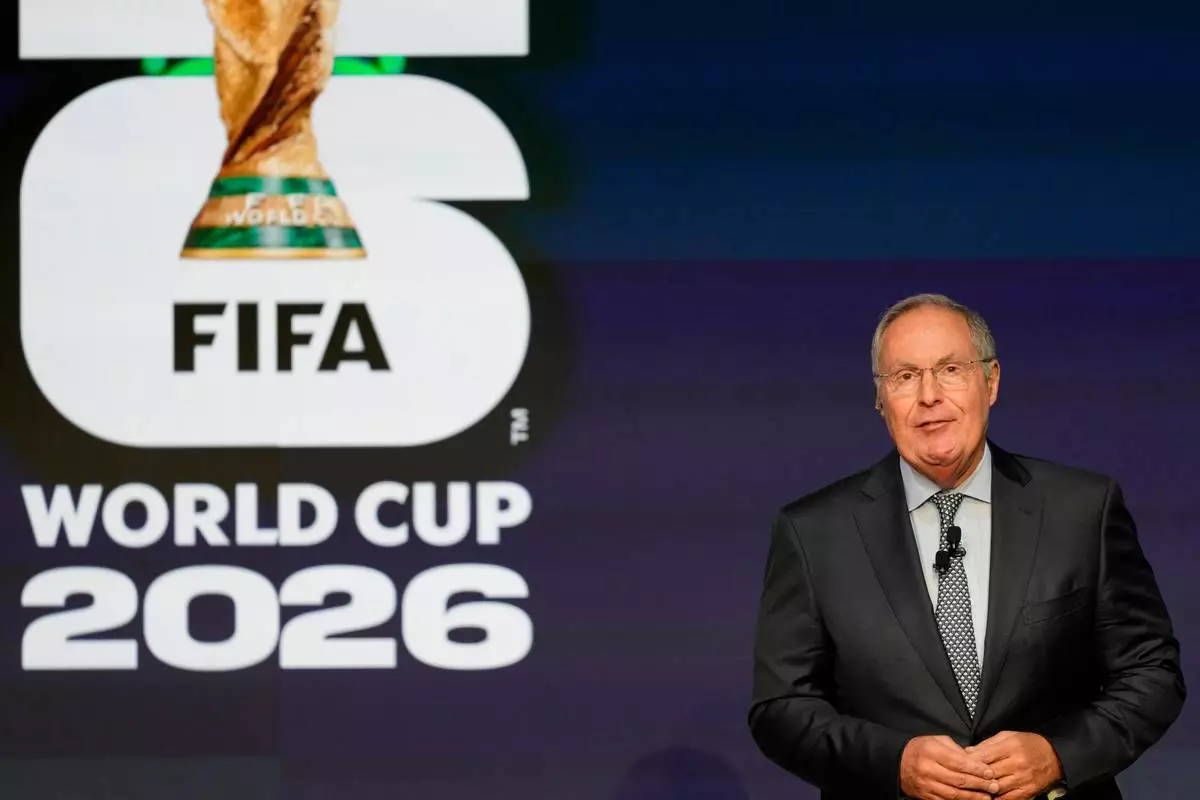
FILE - Host Andrés Cantor speaks during the match schedule reveal for the 2026 soccer World Cup in Washington, Saturday, Dec. 6, 2025. (AP Photo/Chris Carlson,File)
BARCELONA, Spain (AP) — Spain coach Luis de la Fuente announced his Nations League squad from Ceuta on Friday in a show of support for the Spanish city in northern Africa that has become the center of a migration crisis.
For his first squad announcement since Spain won the World Cup, De la Fuente revealed his list in a video featuring him in Ceuta accompanied by residents of the Spanish exclave. In late July, over 70,000 people pushed across the border from Morocco, with more than 100 dying in the chaos. Most quickly returned, but a few thousand remain in the city of just over 80,000.
The mass border rush has become the biggest political talking point in Spain since.
De la Fuente did not directly mention the border crossing or its impact, but he did say: “This is Ceuta, this is Spain.” It echoed the rise in sentiment in Spain that Ceuta — a territory that until the mass crossing was mostly an afterthought for most mainland Spaniards — needs to be supported.
Ceuta is one of two Spanish territories on the north African coast along with Melilla. Ceuta has been in Spanish possession since 1580. Christians and Muslims, Spanish and Moroccan residents and day workers all live there in relative harmony behind a border fence that many migrants from across Africa attempt to cross or swim around for a better life in Europe.
The far-right and conservative opposition parties are calling the migration surge an “invasion” and are hoping they can leverage it in national elections next year and oust the left-wing, pro-legal migration government.
It has also led many in Spain to question the government’s policy of moving closer to Rabat in recent years, all with the backdrop of the two countries preparing to host the 2030 World Cup along with Portugal.
Local authorities in Ceuta have visited Brussels to drum up European political support and demand more border security.
The debate had spilled into sports before De la Fuente’s video when earlier this week a business group asked Real Madrid and Elche to have their players wear T-shirts with a message of support for Ceuta that read “We are all from Ceuta” before their La Liga match.
Kylian Mbappé, Vinícius Júnior and Ibrahima Konaté covered up part of the message by rolling the shirts up to their chests. The decision by the three Madrid players earned them both scorn and support in the media and social media.
Mbappé said that by rolling up the shirt he wanted to show “full solidarity and with all the victims” while also supporting “migrants who have lost their lives and those facing harsh conditions.”
Spain opens the Nations League against England at Wembley Stadium on Sept. 26, when its players will wear two stars on their shirts for the first time after winning a second world title.
After visiting London, Spain will host Croatia on Sept. 29 and the Czech Republic on Oct. 3, before visiting Croatia on Oct. 6.
Del la Fuente kept his World Cup squad mostly intact.
Inter Milan goalkeeper Josep Martínez replaced Barcelona’s Joan García, who is out with a minor knee issue. Real Madrid defender Dean Huijsen is in for Marcos Llorente, who retired from international soccer. Fermín López replaced fellow Barcelona midfielder Gavi, while Espanyol striker Roberto Fernández got his first call-up, replacing Borja Iglesias.
Spain squad:
Goalkeepers: Unai Simón (Athletic Bilbao), David Raya (Arsenal), Josep Martínez (Inter Milan)
Defenders: Aymeric Laporte (Athletic Bilbao), Pau Cubarsí (Barcelona), Eric Garcia (Barcelona), Marc Pubill (Atletico Madrid), Alejandro Grimaldo (Atletico Madrid), Marc Cucurella (Real Madrid), Dean Huijsen (Real Madrid), Pedro Porro (Tottenham).
Midfielders: Rodri Hernández (Barcelona), Pedri González (Barcelona), Fermín López (Barcelona), Martín Zubimendi (Arsenal), Mikel Merino (Arsenal), Fabián Ruiz (Paris Saint-Germain), Álex Baena (Atletico Madrid).
Forwards: Lamine Yamal (Barcelona), Dani Olmo (Barcelona), Ferran Torres (Paris Saint-Germain), Yeremy Pino (Crystal Palace), Nico Williams (Athletic Bilbao), Mikel Oyarzabal (Real Sociedad), Víctor Muñoz (Liverpool), Roberto Fernández (Espanyol).
See AP’s full soccer coverage here
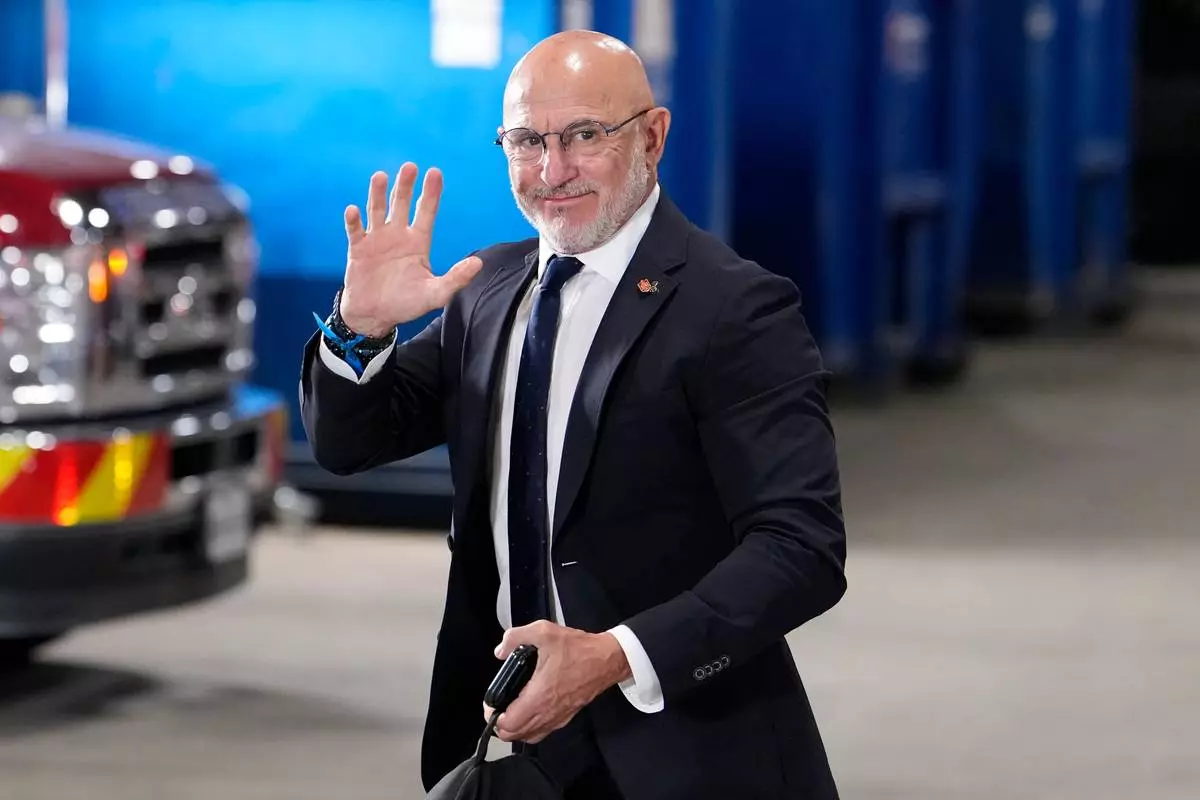
FILE - Spain head coach Luis de la Fuente arrives at the stadium before the World Cup semifinal soccer match between France and Spain in Arlington, Texas, near Dallas, Tuesday, July 14, 2026. (AP Photo/Tony Gutierrez, file)