CIDADE DO MÉXICO--(BUSINESS WIRE)--set 18, 2026--
A AIDS Healthcare Foundation (AHF), a maior organização mundial de assistência relacionada ao HIV, saúda um novo acordo entre a Gilead Sciences e a Organização Pan-Americana da Saúde (OPAS) que poderá ampliar o acesso ao lenacapavir para a prevenção do HIV em 14 países da América Latina. O acordo representa um passo positivo para a expansão do acesso na região e uma vitória para a sociedade civil.
Este comunicado de imprensa inclui multimédia. Veja o comunicado completo aqui: https://www.businesswire.com/news/home/20260917729965/pt/
A AHF esteve entre as primeiras organizações a se mobilizar em torno de preocupações de que o acordo inicial entre a Gilead e a OMS excluía países latino-americanos, unindo-se a outras organizações da sociedade civil para exigir a ampliação do acordo. O Instituto Global de Saúde Pública da AHF, em parceria com o Instituto Nacional de Saúde Pública do México, também realizou um estudo analisando o impacto potencial do lenacapavir nos países da América Latina. O estudo destacou que alcançar um maior impacto na saúde pública dependerá tanto de uma redução significativa no preço quanto da aceitação por parte dos potenciais usuários.
O fato de a OPAS ou a Gilead reconhecerem ou não o papel desempenhado pela sociedade civil, por outros atores não estatais e pelas comunidades na concretização deste acordo pode parecer irrelevante para muitos; no entanto, é um fato que, desde o início da epidemia na década de 1980, esses atores têm desempenhado um papel fundamental para viabilizar acordos de tratamento e prevenção do HIV.
“É animador ver a OPAS e a Gilead criando um caminho para o acesso em países que foram excluídos do acordo anterior entre a Gilead e a OMS. No entanto, por se tratar de um arranjo distinto do acordo inicial, o objetivo não deve ser apenas um preço justo, mas sim um preço genuinamente acessível”, afirmou o Dr. Jorge Saavedra, diretor executivo do AHF Global Public Health Institute e ex-diretor-geral do Programa Nacional de AIDS do México. “Na saúde pública, costumamos dizer que é melhor prevenir do que remediar. Para nós, isso também significa que a prevenção deve ser menos custosa do que o tratamento.”
O Dr. Saavedra acrescentou: “Como convencer um governo latino-americano a pagar mais pelo lenacapavir para fins de prevenção se o tratamento antirretroviral é mais barato e também atua como prevenção secundária? Isso criaria uma grande contradição tanto na saúde pública quanto na economia.”
“Argentina, Brasil, México e Peru ajudaram a gerar as evidências clínicas para o lenacapavir por meio do estudo fundamental PURPOSE 2 da Gilead; no entanto, esses países foram excluídos do acordo original de licenciamento voluntário da empresa”, disse a Dra. Patricia Campos, chefe do escritório da AHF para a América Latina e o Caribe. “As pessoas que ajudam a tornar possível a inovação médica não deveriam, posteriormente, se ver do lado errado de uma barreira de acesso.”
Também permanecem questões importantes sobre o que o novo acordo significará na prática. A AHF insta a Gilead e a OPAS a garantirem transparência quanto a preços, cronogramas, requisitos regulatórios e outros termos fundamentais, assegurando que o acordo resulte em acesso oportuno e a preços genuinamente acessíveis. Um novo mecanismo de aquisição é bem-vindo, mas o acesso não pode existir apenas no papel.
A AHF reconhece a alta eficácia do lenacapavir, mas ressalta que ele está longe de ser uma solução mágica para o controle da epidemia de HIV. A aceitação entre as populações de maior risco também será um fator decisivo nessa equação. A AHF continuará trabalhando com governos, sociedade civil e parceiros em toda a região para defender um acesso equitativo e sustentável ao lenacapavir, juntamente com toda a gama de ferramentas comprovadas de prevenção do HIV, incluindo preservativos.
A AIDS Healthcare Foundation (AHF), a maior organização mundial de assistência à saúde voltada para o HIV/AIDS, oferece medicamentos de ponta e realiza ações de defesa de direitos para mais de 3 milhões de pessoas em 50 países, incluindo os EUA, bem como na África, América Latina/Caribe, região da Ásia-Pacífico e Europa Oriental. Em janeiro de 2025, a AHF recebeu o prêmio MLK, Jr. Social Justice Award, a mais alta distinção do The King Center para uma organização que lidera trabalhos na área de justiça social. Para saber mais sobre a AHF, acesse nosso site AIDShealth.org, encontre-nos no Facebook e siga-nos no Instagram, Twitter e TikTok.
O texto no idioma original deste anúncio é a versão oficial autorizada. As traduções são fornecidas apenas como uma facilidade e devem se referir ao texto no idioma original, que é a única versão do texto que tem efeito legal.
Ver a versão original em businesswire.com:https://www.businesswire.com/news/home/20260917729965/pt/
CONTACT: CONTATO PARA A MÍDIA DOS EUA:
Ged Kenslea,Diretor Sênior de Comunicação, AHF
+1 323.308.1833 comercial +1.323.791.5526 celular
gedk@aidshealth.orgDenys Nazarov,Diretor Global
de Políticas e Comunicação, AHF
+1 323.308.1829
denys.nazarov@aidshealth.org
KEYWORD: MEXICO BRAZIL UNITED STATES SOUTH AMERICA CENTRAL AMERICA NORTH AMERICA LATIN AMERICA
INDUSTRY KEYWORD: AIDS PUBLIC POLICY/GOVERNMENT HEALTH HEALTHCARE REFORM INFECTIOUS DISEASES GENERAL HEALTH PHARMACEUTICAL
SOURCE: AIDS Healthcare Foundation
Copyright Business Wire 2026.
PUB: 09/18/2026 10:46 AM/DISC: 09/18/2026 10:46 AM
http://www.businesswire.com/news/home/20260917729965/pt

Dr. Patricia Campos (middle), AHF Bureau Chief for Latin America & the Caribbean, speaks to attendees at a World AIDS Day concert in Mexico City on Nov. 29, 2025, about the importance of holding Gilead accountable for keeping lenacapavir out of reach of most countries in the region.
NEW YORK (AP) — Duncan Sheik, the Tony- and Grammy-winning singer-songwriter who crafted the music for “Spring Awakening,” has died. He was 56.
Sheik died Thursday from organ failure, his mother Suzanne Sheik told The New York Times. The Associated Press emailed his representatives for comment.
Sheik had been best known for his lasting radio hit “Barely Breathing” when he turned his sights on Broadway with “Spring Awakening,” resulting in the envelope-pushing show that musicalized teenage angst.
“With the exception of our director, we are all kind of Broadway outsiders. We wanted to shake things up a bit. And we just set out to make this really cool piece of theater,” Sheik told The Associated Press in 2007, as the show swept Tony nominations.
Sheik also tackled musicals based on “American Psycho” and “Alice in Wonderland,” and “Barely Breathing” spent 55 weeks on the Billboard Hot 100, peaking at No. 16. But he was probably best known for “Spring Awakening,” which ran for over 860 performances on Broadway starting in 2006.
The musical — adapted from a 19th-century play by German playwright Frank Wedekind, with music by Sheik and lyrics by playwright Steven Sater — is frank in its portrayals of incest, abortion and suicide. It's intended partly as a warning that teens need good information about sex to avoid tragic mistakes.
“I don’t mean to be disrespectful to more traditional theater composers,” he told the Los Angeles Times in 2015. “I love Stephen Sondheim. But it’s my mission to make sure that the theater is paying attention to what the rest of the world is listening to.”
Sheik and Sater were practicing Buddhists who met while chanting. They were collaborating on Sheik's third album, “Phantom Moon,” when Sater mentioned he was working on a new production. Neither had ever written a musical before.
“I said to Steven, ‘I’m happy to do this musical, but I only want to do it if the music in the play is the kind that I and my peers can get behind stylistically and relate to and enjoy,’” Sheik recalled to the AP in 2006.
They made a pact: They'd retain the provincial, 19th-century Germany setting but with, as Sater put it, “the characters breaking into pop-contemporary when they sing.”
“Spring Awakening” won eight Tony Awards, including for best musical, as well as the Grammy for best musical show album.
“Sheik’s music, spare in its simple orchestrations, lush in the lapping reach of its seductive choruses, embodies the shadowy air of longing that infuses the show, the excitement shading into fear, the joy that comes with a chaser of despair,” The New York Times said in its review.
The show is beloved in the musical theater community for breaking ground in terms of staging and content, alongside the likes of “Rent” and “Hamilton.” It returned to Broadway in 2015 in a well-received production by Deaf West Theatre. An off-Broadway version is slated to open this fall.
The cast of the original show was loaded with breakthrough actors like Jonathan Groff, Lea Michele, Lilli Cooper, Jennifer Damiano, Gideon Glick, John Gallagher Jr., Lauren Pritchard and Krysta Rodriguez, who have each gone on to fame in TV, film and stage. Groff would go on to earn a Tony with “Merrily We Roll Along,” and Michele became a superstar with “Glee.”
Sheik next channeled the music he heard getting past the velvet ropes of trendy, late-1980s Manhattan clubs for a Broadway adaptation of the Bret Easton Ellis novel “American Psycho.”
The 1991 novel — later made into a 2000 movie starring Christian Bale — chronicles a homicidal New York yuppie named Patrick Bateman who is obsessed with high-end clothes and beauty products even as he slashes his way through Manhattan. Sheik, who also supplied lyrics, recalled only getting halfway through the book before throwing it across the room as a Brown University student.
For one standout song, “You Are What You Wear,” he reached out to old girlfriends to ask a question: What were you really into wearing in the late ’80s? He put the answers in the tune about high fashion: “Chanel, Gaultier, or Giorgio Armani/Moschino, Alaïa, or Norma Kamali/Should I rock/The Betsey Johnson/Or stick with classic/Comme des Garçons?”
“Duncan is really a genius and an intellectual and brings something both uniquely his but importantly of this period to the stage,” producer Jesse Singer told the AP at the time.
Because Bateman, played onstage by Benjamin Walker, fancies himself a bit of a music critic — spewing mostly inane ruminations about Phil Collins and Huey Lewis and the News — Sheik also peppered his score with sly reworkings of “In the Air Tonight” and “Hip to Be Square.”
“There’s definitely an art to be able to write a song that on one level is a pop song and one that also has to tell a story and keep an audience engaged in terms of a larger narrative arc,” Sheik told the AP in 2013. “When you’re writing a song for the theater, it has to accomplish all this other stuff. It has to work in tandem with all these other agendas and creative impulses.”
The show, directed by Rupert Goold and with a story by Roberto Aguirre-Sacasa, made its premiere in 2013 in London. On Broadway in 2016, it bombed, lasting less than 90 performances.
“We were all sort of worried that it might be too violent for people and it might seem too misogynist,” Sheik told the AP on the eve of the opening. “But, in fact, the truth is this piece is a critique of a certain way of thinking about things. So in truth it’s better to go all-in.”
Growing up between South Carolina and New Jersey, Sheik learned guitar as a child and got his first synthesizer when he was 12. He was heavily influenced by Talk Talk, David Sylvian and Nick Drake. His self-titled debut album was released in 1996 and Rolling Stone gave it a four-star review, calling it “a defiant debut — beautiful and benevolent of spirit.”
“Barely Breathing,” from that album, was nominated for best pop vocal performance in 1998 and would be kept alive on TV shows like “Glee” and “Girls.”
Other projects include “Whisper House,” an album and musical — a ghost story that ran in 2010 at the Old Globe Theatre in San Diego — and “Legerdemain,” an album that explored the tension between art and commerce. His most recent album was 2022's “Claptrap.”
But for someone who had once been a total stranger to Broadway, he told AP in 2016 that he had a sense of mission.
“I feel like it’s become my project to kind of drag different people who might not normally go to musical theater pieces to come see a piece of musical theater,” he said.
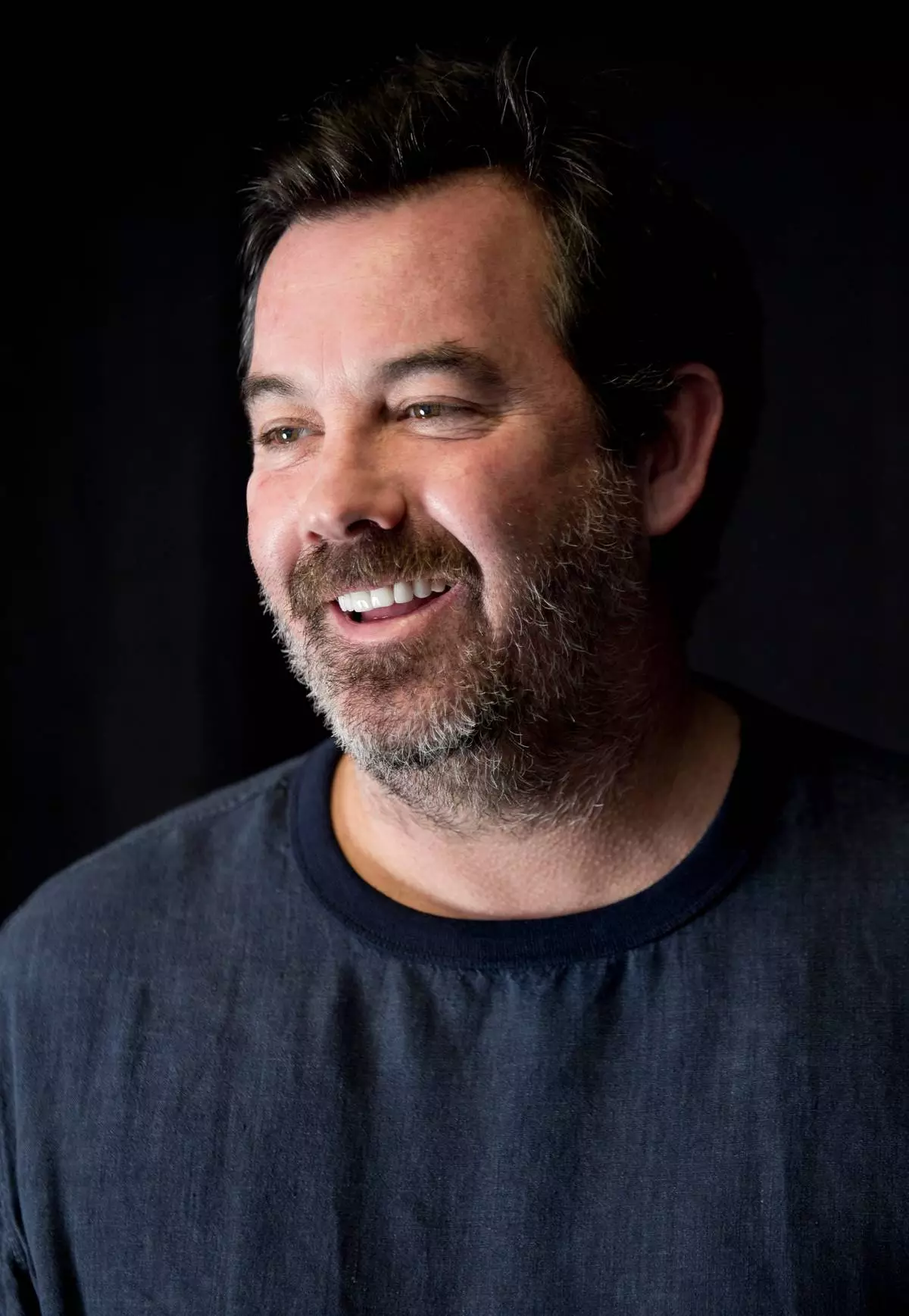
FILE - Duncan Sheik poses for a portrait on Thursday, March 24, 2016, in New York. (Photo by Brian Ach/Invision/AP, File)
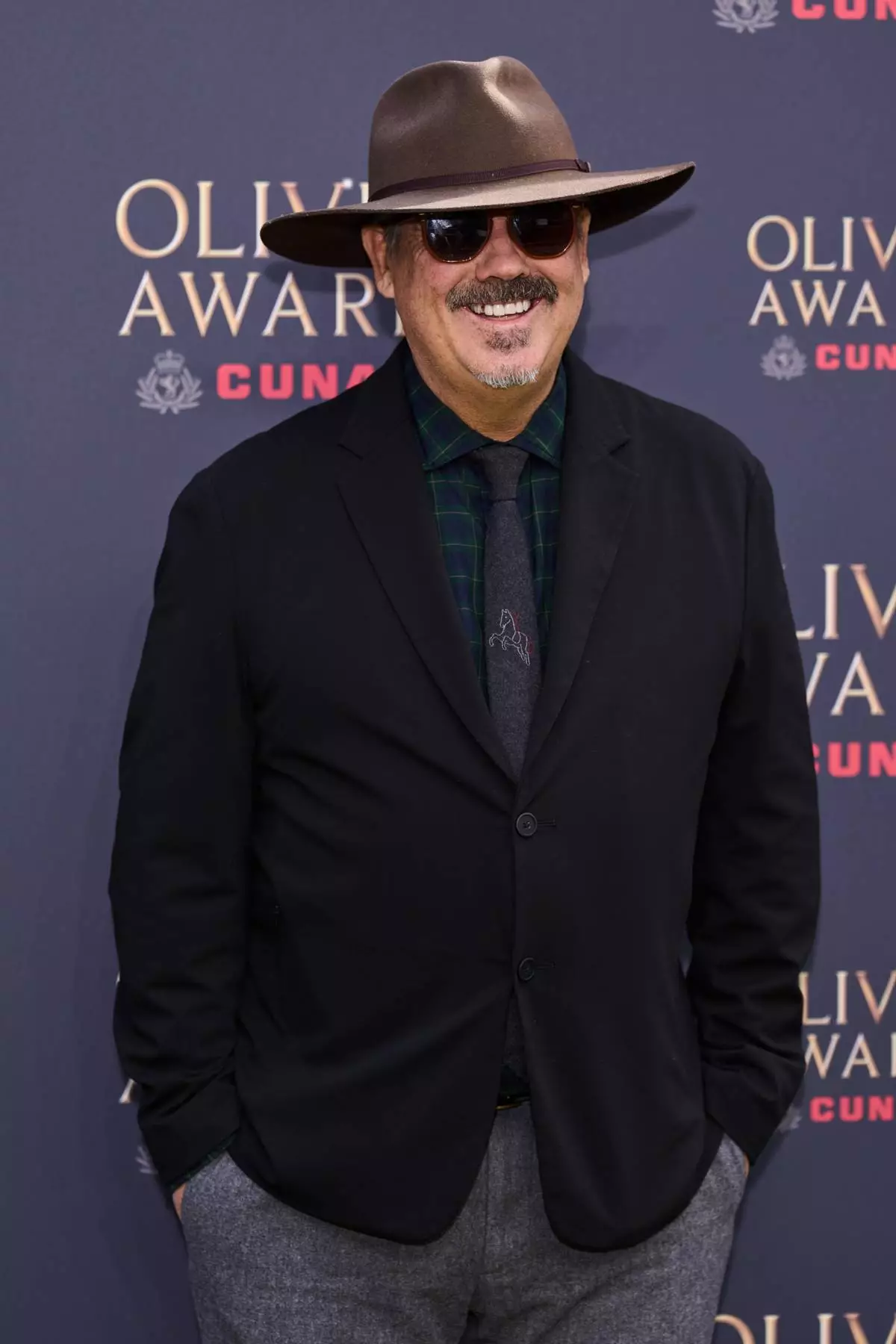
FILE - Duncan Sheik poses for photographers upon arrival at the Olivier Awards in London, England, Sunday, April 12, 2026. (Photo by Scott A Garfitt/Invision/AP, File)
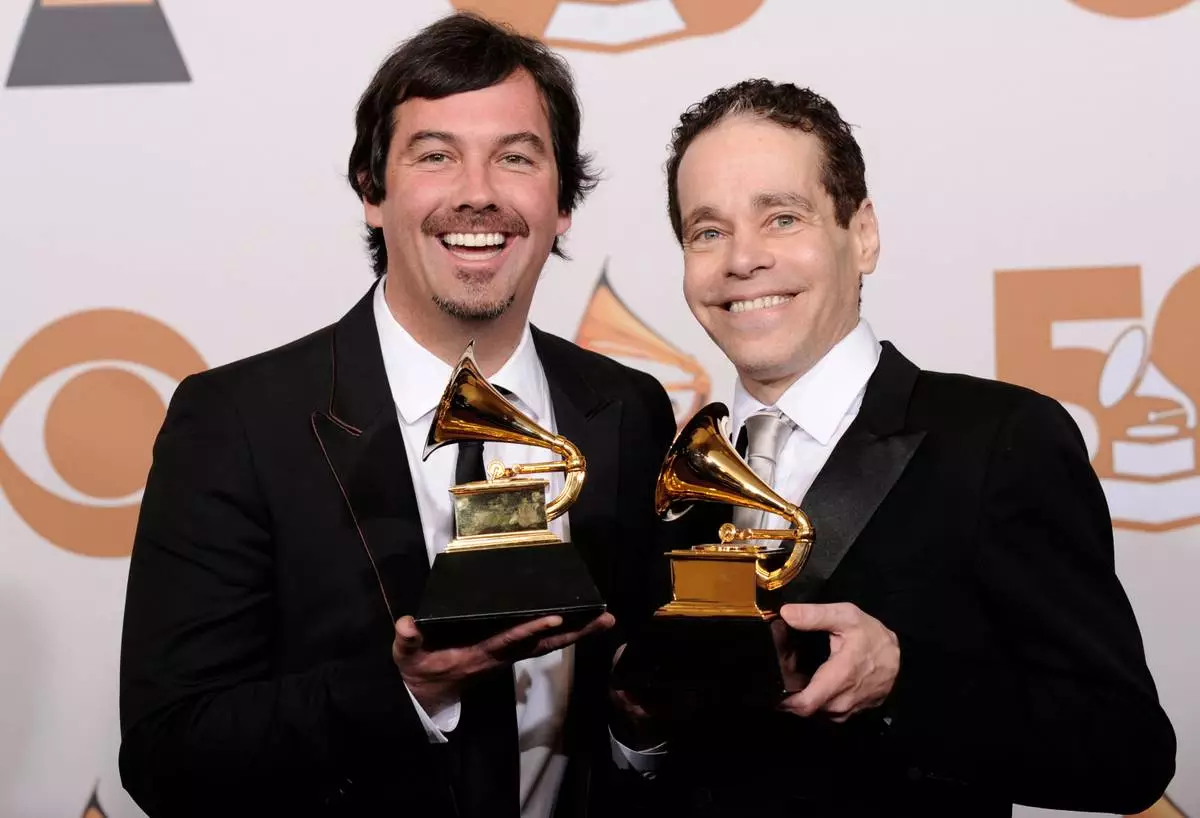
FIE - Duncan Sheik, left, and Steven Sater are seen with the award for best musical show album for "Spring Awakening" at the 50th Annual Grammy Awards on Sunday, Feb. 10, 2008, in Los Angeles. (AP Photo/Mark J. Terrill)
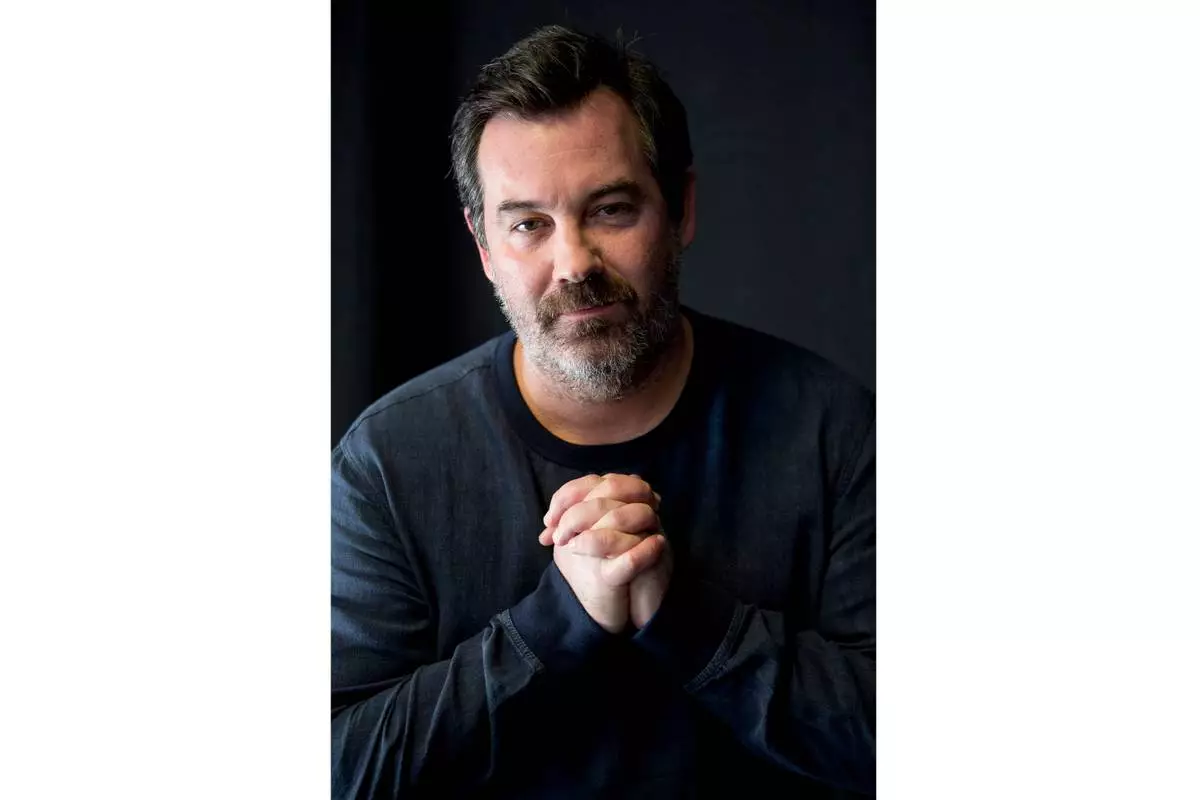
FILE - Duncan Sheik poses for a portrait on Thursday, March 24, 2016, in New York. (Photo by Brian Ach/Invision/AP, File)