PRAGUE (AP) — The U.S. ambassador to NATO renewed his country’s criticism of the Czech Republic on Friday, saying it had failed to spend enough on defense.
“It is disappointing to see that it has not made more progress towards meeting the Hague Defense Commitment,” Matthew Whitaker told a defense conference in Prague.
“Unfortunately, the Czech Republic is trending towards the bottom of the alliance when it comes to defense spending,” said Whitaker, who met with populist Prime Minister Andrej Babiš on Friday.
“There have been small successes, but more certainly needs to be done, and this has been a message I delivered yesterday and today in person to our friends here in the Czech Republic,” Whitaker added.
Lawmakers aligned with Babiš' government approved a budget in March that allocates less than 1.8% of the country's gross domestic product for defense this year. The approval came despite President Petr Pavel, a retired army general, urging an increase in the defense budget to meet NATO’s commitment.
Whitaker warned the Czech Republic at the time in a post on X: “All Allies must pull their weight and honor The Hague Defense Commitment. These numbers are not arbitrary. They are about meeting the moment — and the moment requires 5% as the standard. No excuses, no opt-outs. “
Responding on Friday, Babiš promised that defense spending would reach 2% of GDP next year.
NATO members agreed in 2014 to spend at least 2% of GDP on defense, and the alliance expected all members — including the Czech Republic — to meet that target last year.
At a summit in The Hague last year, NATO members, under pressure from the Trump administration, agreed to invest 3.5% of GDP on core defense requirements and an additional 1.5% on defense and security-related spending by 2035.
Babiš returned to power after his ANO, or YES, movement won a decisive victory in an October election. It formed a governing coalition with two small political groups whose agenda includes reducing support for Ukraine and rejecting some key European Union policies.
The Freedom and Direct Democracy party, which is anti-immigrant and a member of the coalition, wants to cut the defense budget for next year.
Finance Minister Alena Schillerová recently said she currently considers a 5% target to be “unrealistic.”
“The United States remains committed to NATO and defending every inch of allied territory, and the United States is not stepping back," Whitaker said on Friday. "But we expect our allies to step up and join us and equalize with the United States.”
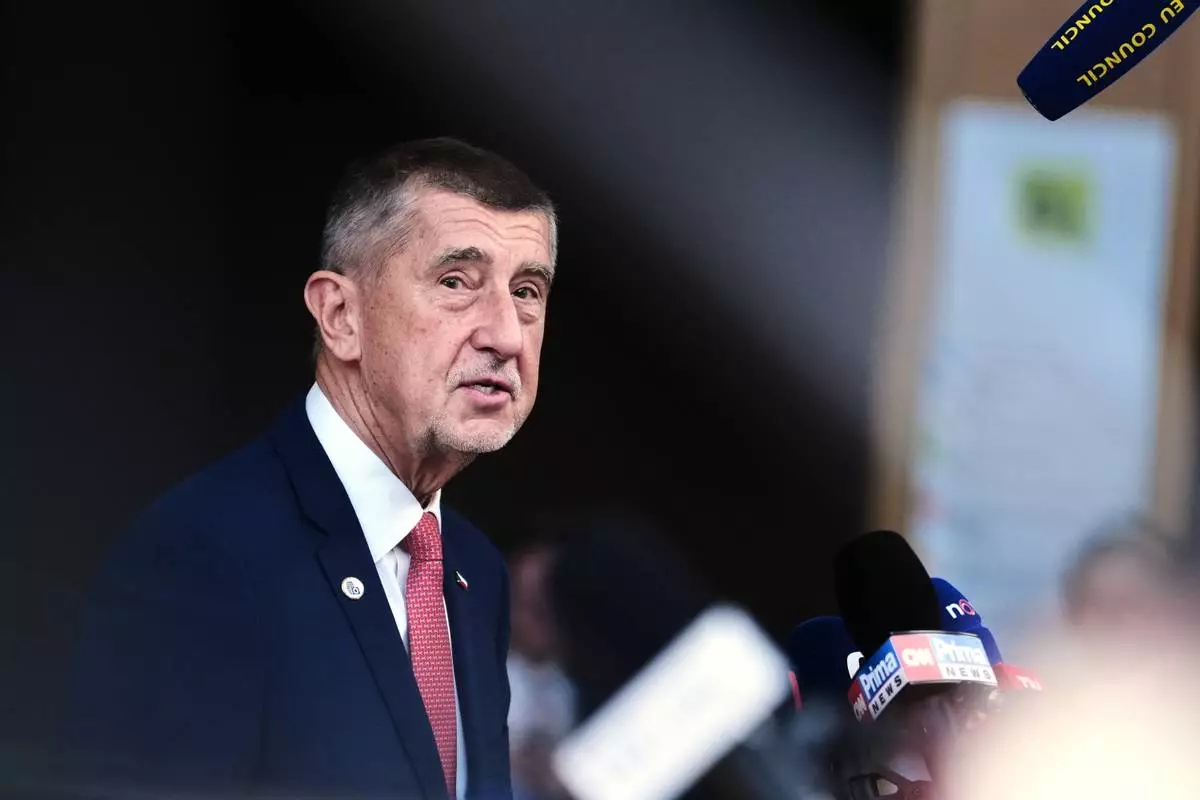
FILE - Czech Republic's Prime Minister Andrej Babis talks to journalists as he arrives for the EU summit in Brussels on June 19, 2026. (AP Photo/Marius Burgelman, File)
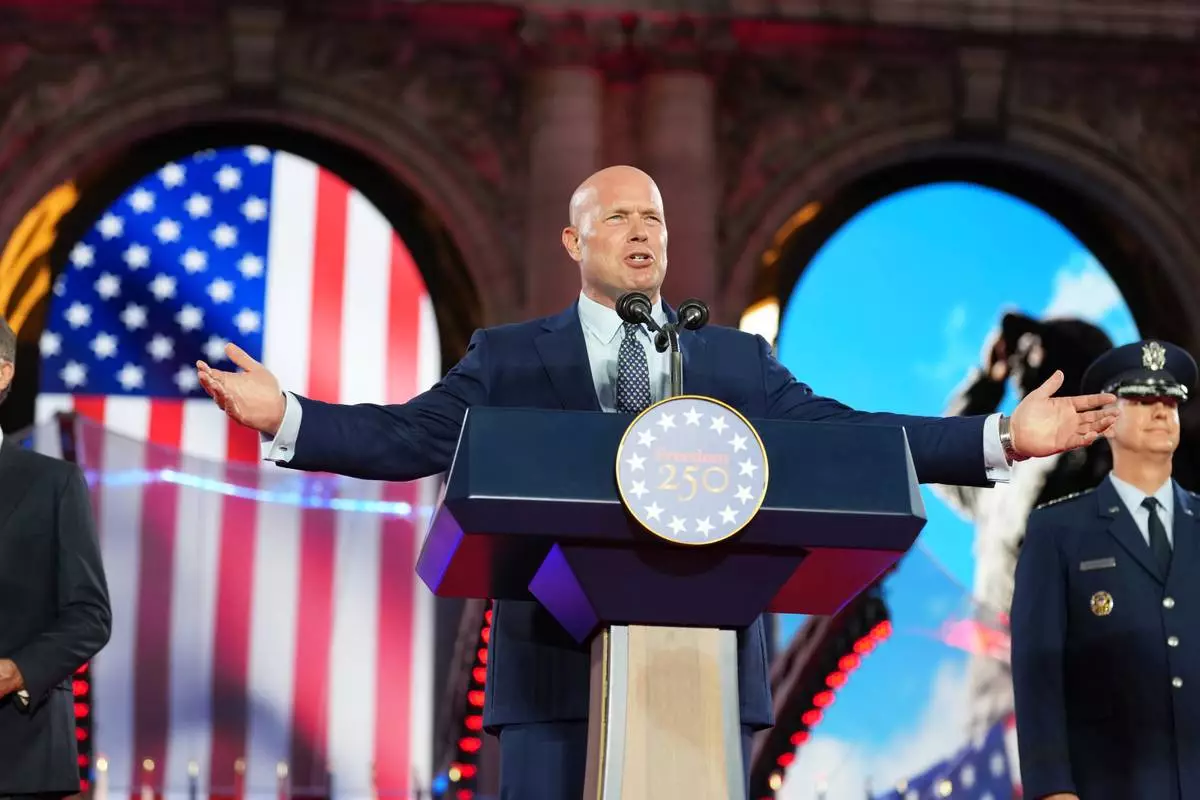
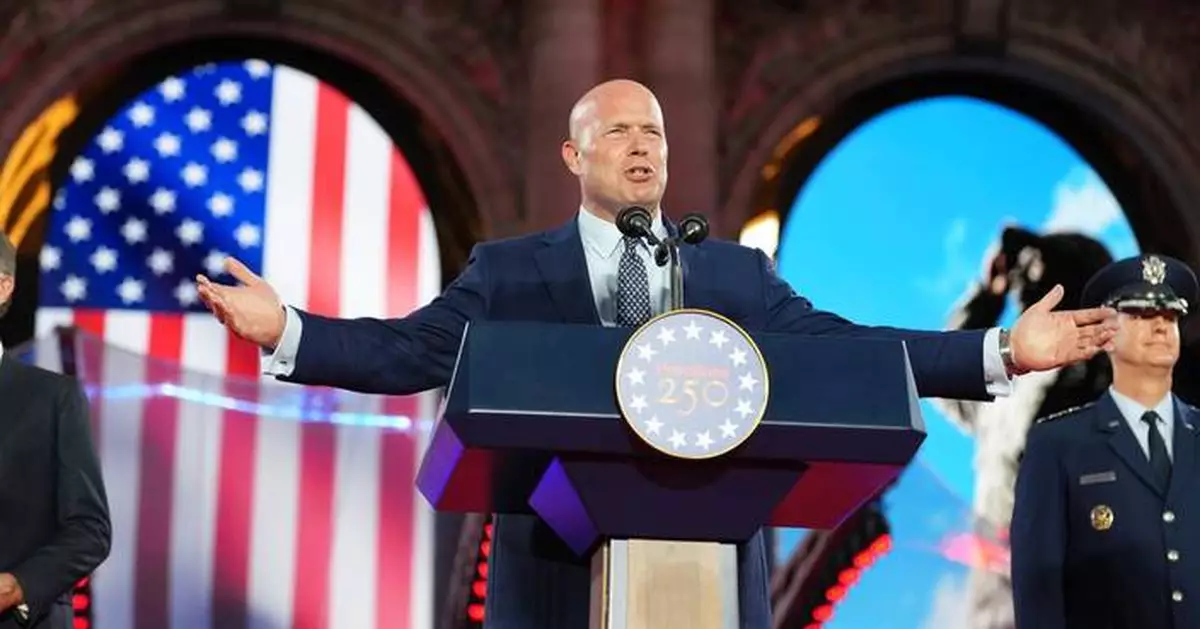
U.S. Ambassador to NATO Matthew Whitaker addresses the audience during the America 250 event in Brussels on June 28, 2026. (AP Photo/Virginia Mayo, File)
COMSTOCK, Texas (AP) — The Trump administration has started building the border wall through a west Texas section of the Big Bend region, marking the first major construction in an area of the U.S.-Mexico border where the administration's plans have met with heavy opposition.
The start of construction marks an important milestone in the administration's $46 billion plan to line the border with walls, barriers, roads and technology as it seeks to make good on a key campaign promise by President Donald Trump to finish the wall. And it comes as Customs and Border Protection says it has doubled the pace at which it is building the wall across the U.S.-Mexico border.
Customs and Border Protection said in a statement to The Associated Press that “border wall panel installation is underway” in a 47-mile stretch of Hudspeth County in west Texas known as Big Bend 1. There are a total of five project areas that make up the roughly 500-mile Big Bend region stretching from an area of Hudspeth County south of El Paso to Lake Amistad.
The agency did not say when the panels had been installed. On a map on the agency’s website where it posts updates of wall construction across the entire southern border, a photo showed a crane lifting one of the 30-foot tall steel wall panels into place while construction workers looked on.
The new activity was separate from a border infrastructure project in the nearby Big Bend National Park, where the administration has temporarily suspended construction in an attempt at outreach to opponents.
In the broader Big Bend region of Texas, CBP has run up against concerted opposition from landowners, environmental groups, business owners and ranchers who say the remote region isn't a high traffic area for illegal immigration.
Activists said Friday they would continue opposing the border infrastructure projects in the rest of the Big Bend region, even as the panels were being installed.
Clara Benson, one of the founders of the No Big Bend Wall Coalition which has been fighting against CBP’s plans, said in an interview Friday that the organization had been receiving reports of trucks moving supplies into the remote area along the Rio Grande and that contractors had been clearing yards to stage supplies.
But speaking from Washington, D.C. where she and others in the coalition were meeting with lawmakers, she said that the organization and others would continue to fight the wall-building plans across the region.
“We will continue to fight for this land no matter what the outcome is. We will continue fighting to the end,” said Benson. “You talk to people in west Texas and they say even if they put it up, we’ll fight for them to take it down. So this fight is not over.”
The news comes as the administration is speeding forward with a plan to line the entire border with a combination of 30-foot tall steel bollard walls, barriers designed to stop vehicles from crossing the border, new patrol roads and various technologies to deter and detect migrants or smugglers from crossing the border.
Customs and Border Protection said that they are building an average of 12 miles of barriers a week across the 2,000-mile border with Mexico and recently hit a milestone of 200 miles of new barriers built since the second Trump administration took office.
The 12-miles a week average is double the pace that the agency's head, Rodney Scott, cited earlier this year.
The agency has faced opposition from environmental groups, a small town that worries the wall will cause flooding in its area, Native Americans who say the construction is disturbing sacred sites and landowners who say the construction will infringe on their land.
In Texas much of the opposition has centered on the agency's plans for Big Bend National Park, in the state's southwest on the Rio Grande that is a draw for tourists from around the world. But up and down river outside the park, much of the land is owned by private landowners, many of whom have pushed back against the government's efforts.
Earlier this week, landowners, ranchers and business owners in the Big Bend region along with a nonprofit organization dedicated to protecting the region’s landscape and heritage sued to stop the administration’s plans.
Activists and landowners have also shown up at county meetings to push their elected officials not to cooperate with contractors hired by CBP to build the wall, and many landowners have refused to allow government officials or contractors onto their land to survey it.
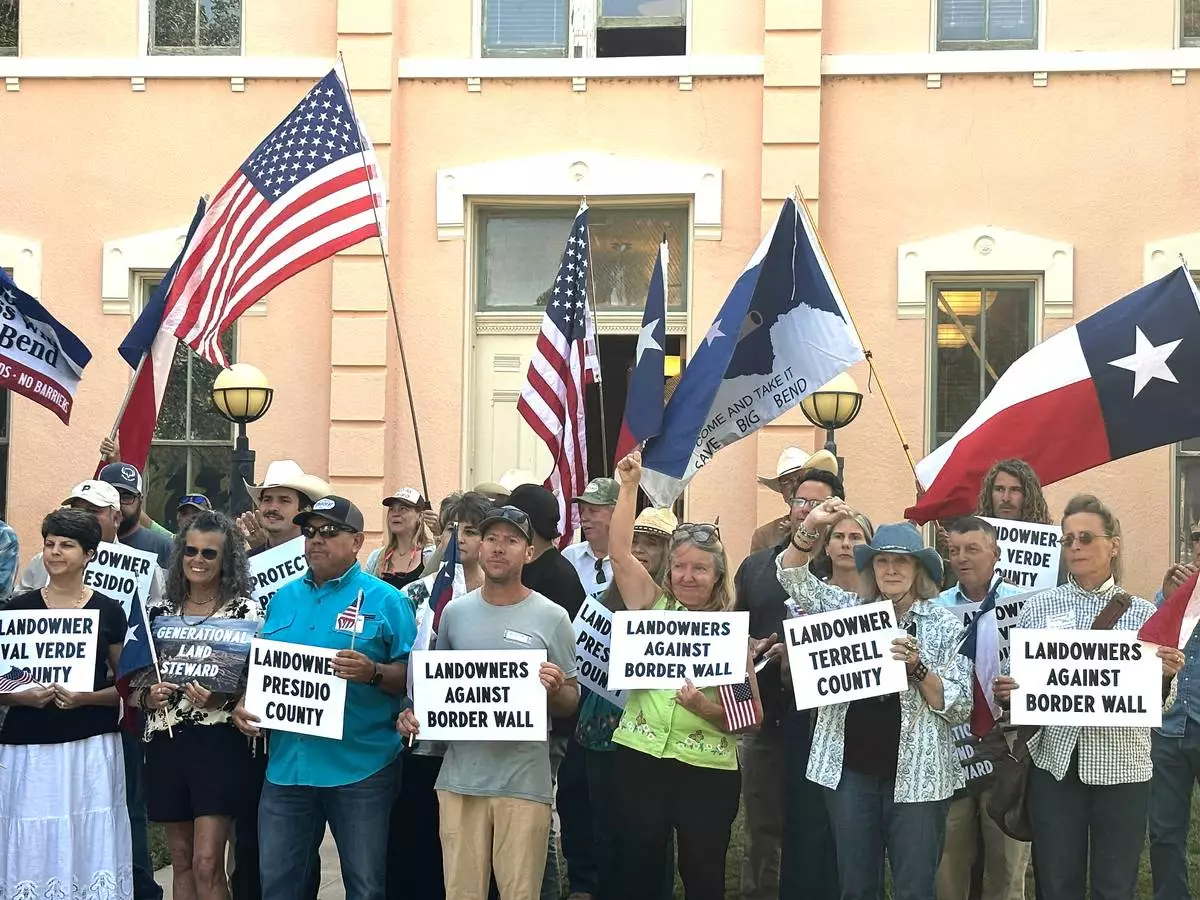
Landowners and other supporters hold signs against the Trump administration's plans to build a border wall and other infrastructure in Texas' remote Big Bend region, Monday, Sept. 14, 2026, in Marfa, Texas. (AP Photo/Rebecca Santana)