The Jehovah’s Witnesses have partly eased their longstanding prohibition on the medical use of donated blood, allowing members to receive products derived from blood but maintaining a ban on transfusions of whole blood.
The policy, announced Friday, is the second revision this year in what has long been one of the most controversial and distinctive teachings of the religious organization.
The new policy says that individuals can receive products derived from blood donated by other people. It says they can receive medical treatments that involve the use of the four main components of whole blood: plasma, platelets and red and white blood cells.
“Each Christian must make his own personal decision about the use of these four primary components in all medical and surgical care,” said Geoffrey W. Jackson, a member of the Governing Body of the organization, based in New York State.
The new announcement also allows members to decide as a matter of individual conscience whether to donate blood to be used for blood products for the medical treatment of others.
But the organization continues to oppose members receiving transfusions of whole blood or donating blood for that purpose.
In March, the Governing Body also announced a revised policy, authorizing members to have their blood stored for their own future medical treatment, but not for others’.
Critics have faulted the organization for prohibiting the use of a proven treatment that can be lifesaving in replenishing blood lost in surgeries, accidents or violence. Critics, including former church members, say that the teaching has led to deaths that could have been prevented.
The Jehovah's Witnesses' longtime opposition to blood transfusions derives from their interpretation of Bible passages requiring believers to “abstain” from blood. While Jewish and other Christian religious traditions have interpreted this as a dietary law, Jehovah's Witnesses have extended that prohibition to transfusions.
Blood components are often used for specific treatments.
Plasma, the liquid component of blood, is often used for those suffering from trauma or certain diseases, according to the American Red Cross. Red cells can be used to treat conditions such as anemia and white cells to treat certain infections. Platelets are used in some cancer and other treatments.
Members shouldn’t make the decision on using blood products lightly, Paul Gillies, international spokesperson for the Jehovah’s Witnesses, said in an interview.
“What we’re saying is you have to pray about it, you have to study it, you have to see what the Bible has to say about it, because blood in the Bible represents life,” Gillies said. Members need to consider all these factors before reaching “a decision that you feel happy about with your God.”
Jehovah’s Witnesses, who emerged in 19th century America, share many Christian beliefs with other churches but diverge on key theological issues, such as the nature of Jesus and biblical prophecy. They are almost alone in their beliefs about blood transfusions. Jehovah’s Witnesses reported a U.S. membership of 1.3 million in 2025, with a worldwide membership of 9.2 million in more than 200 countries and territories.
Associated Press religion coverage receives support through the AP’s collaboration with The Conversation US, with funding from Lilly Endowment Inc. The AP is solely responsible for this content.

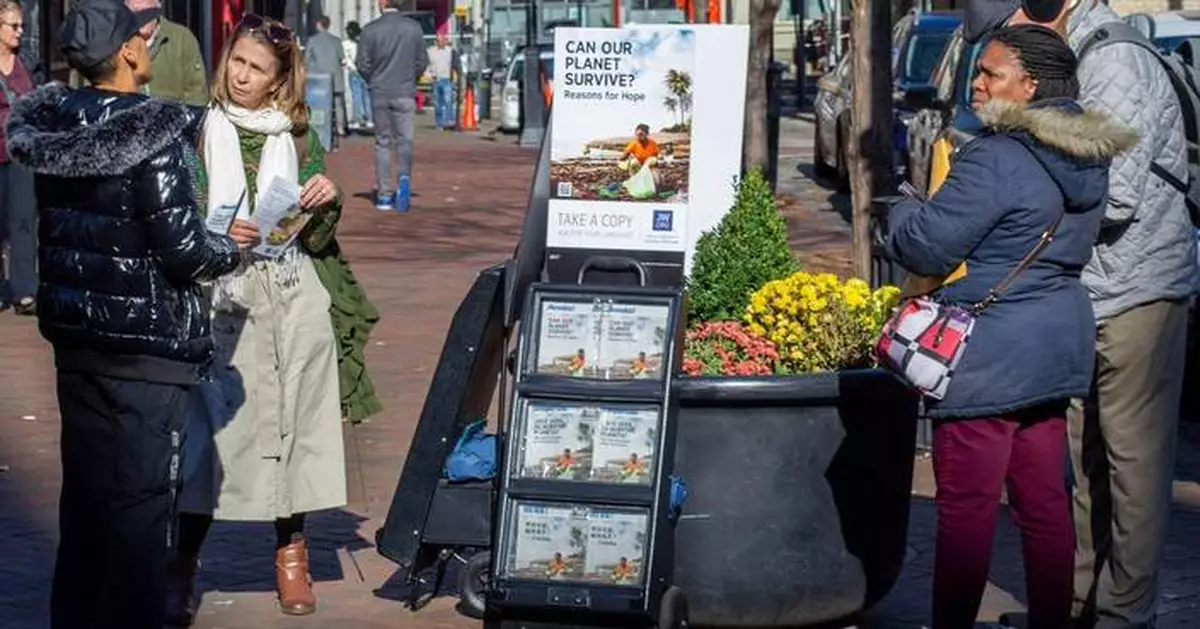
FILE - A woman shares Jehovah's Witnesses' literature with a passerby in downtown Pittsburgh on Nov. 13, 2023. (AP Photo/Peter Smith, File)
KABUL, Afghanistan (AP) — A Russian delegation headed by Deputy Prime Minister Alexei Overchuk arrived Thursday in Kabul for trade and investment talks with Afghanistan's Taliban government, Afghan officials said.
Russia officially recognized the Taliban government in July 2025. It remains the only country to have done so since the former insurgent group seized power in Afghanistan in August 2021 in the wake of the withdrawal of U.S.-led troops from the country. Largely isolated from the international community and with a struggling economy, Kabul has been keen to increase foreign investment and open new trade avenues.
After being greeted by an honor guard, Overchuk met with Prime Minister Mohammad Hasan Akhund and Abdul Ghani Baradar, the deputy prime minister for economic affairs.
A statement from Akhund's office said the prime minister's meeting with Overchuk was also attended by Afghan Foreign Minister Amir Khan Muttaqi.
The Afghan government said in posts on its official X social media account that in their meeting, Baradar stressed Afghanistan’s potential for economic development and investment, highlighting “its strategic location, rich resources and a large workforce of 24 million people of working age.”
During the meeting, Baradar invited Russian companies to invest in Afghanistan in sectors including mineral extraction, the development of factories, infrastructure and special economic zones. He also said there was scope to expand exports of Afghan agricultural products to Russia, and for Russian investment in Afghanistan’s agriculture and livestock farming, the government said.
The deputy prime minister also asked Russia “to provide the necessary facilities for Afghan products in Russian markets and to cooperate in reducing transportation and transit costs,” the government statement said. It said that Baradar also spoke of investment opportunities in railway and road construction projects.
Russia's Interfax news agency quoted Overchuk as saying that Russia intends to develop trade ties with Afghanistan.
“Today our delegation includes more than 70 businessmen representing dozens of Russian companies, many of which already work in Afghanistan, (while) many want to begin working,” Interfax quoted him as saying. “For our part, first of all, we see the task in creating conditions for contacts between business communities to develop normally.”
Overchuk said that companies represented in the delegation are involved in transportation, logistics, agriculture and pharmaceuticals. He said that the Afghan government is interested in Russian fertilizers, including in “building fertilizer production plants directly in Afghanistan.”
“We see a big interest from the government of Afghanistan in developing relations with Russia,” Overchuk said, according to Interfax. “And we are ready to support Afghanistan in that. First and foremost, so that the economy develops, jobs are created, people have normal incomes and can live peacefully.”
While no country apart from Russia has offered formal recognition, the Taliban have engaged in high-level talks with many nations and established some diplomatic and economic ties with several countries, including the governments of China and the United Arab Emirates.
The Afghan government statement on the meeting quoted Overchuk as saying that trade between Russia and Afghanistan had more than doubled in the first eight months of 2026, reaching more than $349 million.
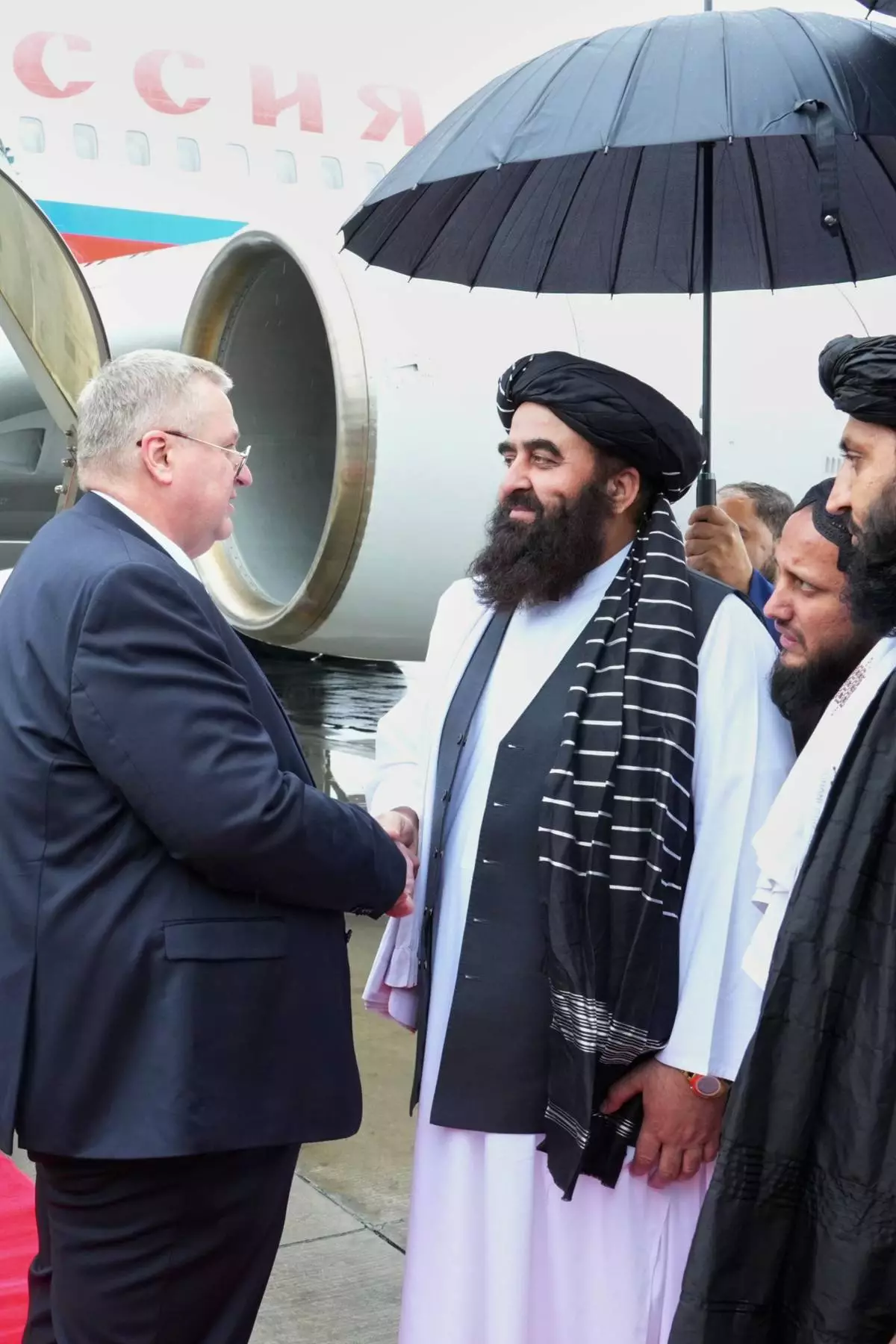
In this handout photo released by the Afghanistan Foreign Ministry, Russian Deputy Prime Minister Alexei Overchuk, left, is greeted by Afghan Foreign Minister Amir Khan Mutaqi, right, upon his arrival in Kabul, Thursday, Nov 12, 2026.(Afghanistan Foreign Ministry via AP)
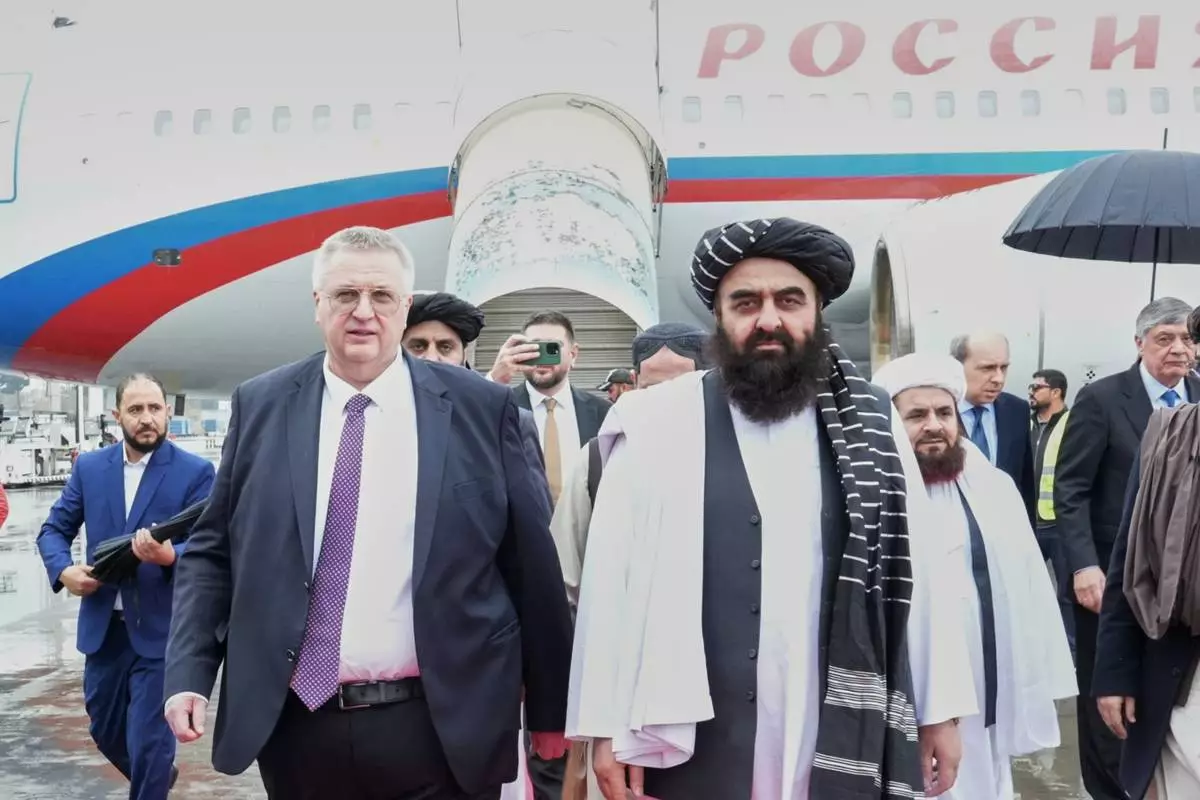
In this handout photo released by the Afghanistan Foreign Ministry, Russian Deputy Prime Minister Alexei Overchuk, left, walks after being greeted by Afghan foreign minister Amir Khan Mutaqi, right, upon his arrival in Kabul, Thursday, Nov 12, 2026.(Afghanistan Foreign Ministry via AP)
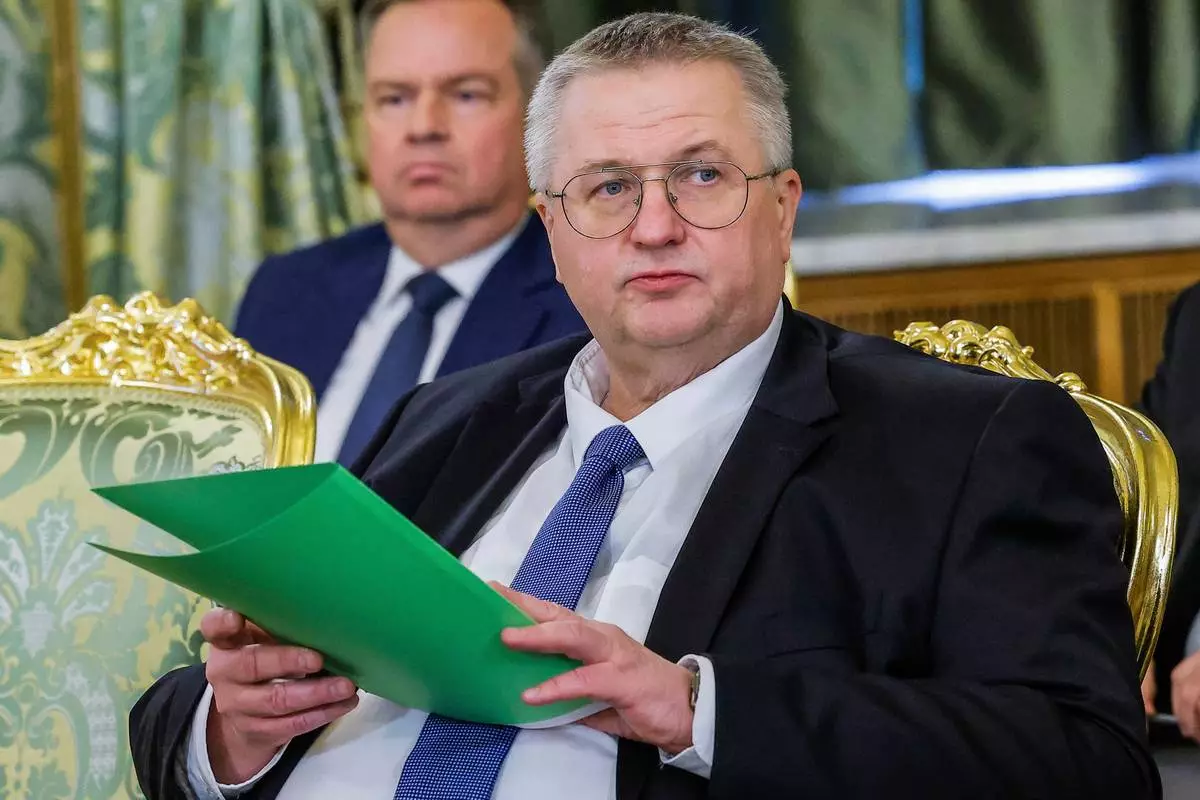
FILE - Russian Deputy Prime Minister Alexei Overchuk attends a meeting of Russian President Vladimir Putin and Kyrgyz President Sadyr Japarov at the Grand Kremlin Palace at the Kremlin in Moscow, Russia, Wednesday, July 2, 2025. (Maxim Shemetov/Pool Photo via AP, File)