Skip to Content Facebook Feature Image

AI fears are fueling progressive Democrat's campaign in Michigan battleground district

News

AI fears are fueling progressive Democrat's campaign in Michigan battleground district
News

News

AI fears are fueling progressive Democrat's campaign in Michigan battleground district

2026-09-19 12:03 Last Updated At:12:10

MASON, Mich. (AP) — Emerson Hyde and Dan Ewart, both Republicans, stood outside a contentious city council meeting earlier this week in the central Michigan town of Mason and grappled with the fact that the most prominent person to stand with them against a possible artificial intelligence data center was the local Democratic candidate for Congress.

Hyde, 70, a farmer and former construction worker, said he is supporting 36-year-old Will Lawrence, a longtime liberal activist who until recently was a member of the Democratic Socialists of America, instead of incumbent Rep. Tom Barrett, a Republican who has not flatly opposed the Mason project.

“He's been out to my house several times,” Hyde said of Lawrence.

Ewart, 43, a fellow opponent of the data center project, was startled to hear that. After all, Republicans have tried to turn Lawrence into a national symbol of Democratic radicalism because he once called for an end to fossil fuels, defunding the police and maintaining open borders. “Lawrence has said a lot of crazy stuff,” Ewart said. “I don't trust him.”

Hyde wasn't convinced. “Right now, what's a bigger fight — a data center or socialism?”

Data centers are the leading example of how Lawrence is trying to defy expectations in a classic swing district by harnessing unease over the rapid pace of artificial intelligence's development, which has created anxieties that hopscotch ideological lines and could upend the nation's politics. It's also created an opening for a wave of leftist Democrats like Lawrence who have long argued that their outsider, anticorporate message can have broader appeal than the moderate establishment.

Lawrence has widened his aim to the entire AI industry, calling for a pause on AI development in the wake of fears from some at the companies that the technology could eliminate humanity.

“We need to put a stop to this, because right now the whole thing is out of control and alarm bells are going off,” Lawrence said at a press conference where he also urged the halting of data center construction.

The co-founder of the aggressive environmental group The Sunrise Movement, Lawrence is not like the candidates who normally triumph in Michigan's evenly-divided 7th Congressional District. The previous Democrat to have represented the district is currently Michigan's junior senator, Elissa Slotkin, a former CIA analyst and steadfast moderate. Lawrence once pleaded online for moderate Democrats to “hurry up and die.”

“He wants to show up and talk about data centers all day to distract from the vulnerability he has on abolishing the police and the border,” Barrett, who is seeking a second term, said in an interview.

Lawrence bristled at that charge, noting that he's been protesting data centers since last fall when a wave of new projects was proposed across the district and the state.

“I'm talking about it because I give a damn about the people of this district,” Lawrence said in an interview. “My whole career is about fighting back against corporate power, standing with regular working people who are getting screwed over.”

Lawrence says he's moved on from many of his previous stances and online postings, including defunding the police or having open borders — a suggestion he said was made during more of a “performance.” He declines to identify himself anymore as a socialist, saying an “ideological label” leads to division. He let his membership in the DSA, whose Lansing chapter a member has said was founded in the living room of the building where Lawrence lived after college, lapse this summer. Lawrence's campaign said he was not present at the founding.

Some Republicans could not believe their luck when Lawrence beat two more traditional candidates in August's Democratic primary.

“We think it's a comical mistake by the Democratic establishment to let somebody like him slip through,” said Ty Bommarito, chair of the Michigan College Republicans and a senior at Michigan State University, the 51,000-student institution in Lawrence's hometown of East Lansing.

But other observers warned against underestimating Lawrence, who made a mark in the primary by energetically stumping across the district, which stretches from Detroit's furthest exurbs to farming communities west of the state capital of Lansing, and has continued at a frenetic pace leading into the general election.

“There's more energy in this Lawrence campaign than I've seen for a very, very long time,” said Lingg Brewer, an 81-year-old former Democratic state lawmaker in Lansing. “The excitement in this town I think equals that for Obama when he first ran.”

Lawrence has spent plenty of time with students on Michigan State's sprawling campus, but he's also become a staple at meetings of residents — often farmers or other rural denizens — fighting data center proposals. Water-rich Michigan, whose Democratic Gov. Gretchen Whitmer embraced the industry initially, has seen a wave of potential projects over the past year.

On the night of the Mason council meeting, Lawrence had to pass on appearing at a simultaneous township council meeting on the opposite side of his district to stand against a different potential project there.

Lawrence wore a cap in the same shade of red as President Donald Trump's campaign hats, but with the phrase “No Data Centers in Mason” instead of “Make America Great Again.” The standing-room-only meeting was full of people wearing identical caps.

Lawrence's reliable opposition to data centers has won him support from some unexpected quarters in the town of 8,000. “I'm sure I disagree with a whole lot of his policies,” Zach Bartels, 48, who identified himself as a conservative independent, said of Lawrence, “but right now I'm kind of a one-issue voter.”

Patrick Lind, 51, regularly votes Republican, but he's not sure if he will this year. “The partisan issue is going to be a lot less important than the data center issue,” Lind said.

Ashley Wickham, 38, says she's never been involved in politics and hadn't voted in a congressional primary before last month's, which was open to any voter regardless of party affiliation. She cast her ballot for Lawrence, noting that he's been to almost every anti-data center event over the past year.

“I'm definitely going to support him, because he supported me,” said Wickham, who bought a house in Mason just before the potential data center was announced last November.

At the time, the city said there was not an official proposed project but disclosed it was in discussions to annex 405 neighboring acres where a company could build a $1 billion hyperscale facility. The community has been convulsed with opposition ever since.

Lawrence scolded the council members, who sat stoically through dozens of speeches. “They say there's a significant chance that all human beings may be killed by what they're building — what they want to build in Mason,” Lawrence said. “How hard is it to just listen to the residents and just say ‘No’?”

Lawrence threw barbs at Barrett, whom he has slammed for accepting donations from technology firms and voting last year for a version of Trump's tax-and-budget bill that would have banned any state from regulating AI for 10 years. The provision was removed from the final version of the bill.

A representative of Barrett's office read a statement from the congressman, who was in Washington and could not attend the meeting. The statement reiterated Barrett's view that local officials should decide on data centers rather than the federal government. In the interview, Barrett said he also favors limits on AI, and the 22-year Army veteran noted that he's proposed legislation banning its use on the battlefield.

Outside the Mason City Council chamber, Ewart said he's urged Barrett to come out more forcefully against the project and warned the congressman about local disappointment with him.

Ewart narrowly lost a Republican primary last month to represent the area in the state legislature, and he warned that voters shouldn't gamble on Lawrence even if they oppose data centers.

“The question is how fast the socialism comes in,” Ewart said.
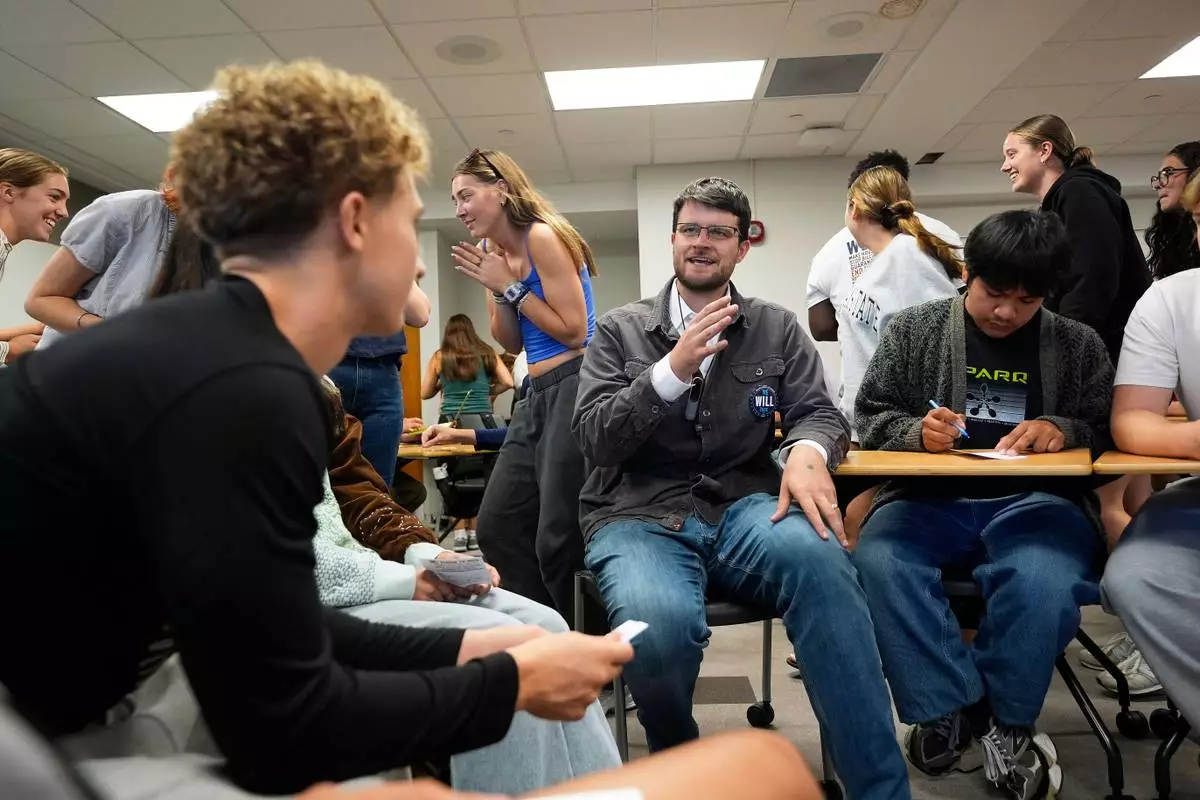
William Lawrence, Democratic candidate for U.S. House of Representatives in Michigan's 7th District, speaks on the campus of Michigan State University during a campaign event Tuesday, Sept. 15, 2026, in East Lansing, Mich. (AP Photo/Paul Sancya)
William Lawrence, Democratic candidate for U.S. House of Representatives in Michigan's 7th District, speaks on the campus of Michigan State University during a campaign event Tuesday, Sept. 15, 2026, in East Lansing, Mich. (AP Photo/Paul Sancya)
NEW YORK (AP) — Islam is expected to surpass Christianity as the world’s largest religion by 2035, according to detailed projections released Wednesday by the Pew Research Center.

Pew, which has been issuing authoritative reports on religious demography for 25 years, said both Islam and Christianity are growing, but Islam is growing much faster. A key reason, Pew said, is that Muslims tend to have more children than other major religious groups.

“It's the babies,” said Pew senior demographer Conrad Hackett, explaining that conversion and other ways of changing religious identity are much smaller factors than fertility rates.

During 2020-2025, the fertility rate for Muslims was 3.1 children per woman, followed by the rate for Christians at 2.5, according to Pew. The average fertility rate for all other women was 1.6, below the level of 2.1 that's considered necessary for each generation to replace itself.

According to Pew's latest estimates, there were 2.27 billion Christians and 2.02 billion Muslims worldwide in 2020. Pew's new projections forecast that there will be 2.57 billion Muslims and 2.52 billion Christians by 2035. By 2070, if recent trends continue, there will be more than 3.6 billion Muslims and just under 3 billion Christians worldwide.

The estimates are part of a broader Pew project examining how the size of major religious groups could change between 2020 and 2070. The projections take into account recent differences between religious groups’ age profiles, fertility rates, and patterns of religious switching and migration.

Among the many notable findings: Pew projects that the United States, within 40 years, will no longer have a Christian majority. Christians now account for 62% of U.S. adults, according to Pew, and will fall below 50% by 2065.

In neighboring Canada, Christians are expected to drop below 50% by 2030, Pew said.

In both countries, a significant reason for the drop is the concurrent increase in the number of people with no religious affiliation. By 2070, they are projected to account for 41% of the U.S. population and to outnumber Christians in Canada.

The world’s population is projected to increase by 29% between 2020 and 2070, Pew said. Of the religious groups it analyzed, Muslims and Christians are the only ones expected to keep pace, with Christians growing by 30% and Muslims by 80%.

Although Hindus and Jews are growing in absolute numbers, they are projected to decline as a percentage of the global population, Pew said. It forecasts that Buddhists would shrink both in number and as a portion of the world’s population, in part due to expected declines in the overall populations of China, South Korea and Japan.

Over the coming decades, Pew said, most of the world’s population growth is expected to occur in Africa, particularly south of the Sahara Desert, where most people are Christians or Muslims. The region’s high fertility and rising life expectancy will boost the global numbers of both faiths, Pew predicted.

By 2070, Pew said, more than half of the world’s Christians will live in sub-Saharan Africa, and Congo will surpass the United States as the country with the most Christians, with their ranks increasing more than threefold to 299 million.

The populations of other major regions are expected to grow more modestly, or even decline.

For example, the number of people living in Europe will shrink by 17% by 2070, Pew said, and the number of Christians there will drop by a third, from 505 million to 324 million. Over the same period, the percentage of Europe's population that is Muslim is expected to increase from 6% to 13%.

In the U.S., Pew projects that the number of Christians will decline from about 217 million in 2020 to about 174 million in 2070.

Several mainline Protestant denominations in the U.S. have faced declining membership over many years. However, Jeffrey Brodd, a religious studies professor at California State-Sacramento, suggested a rebound was possible following congressional election victories this month by several Democrats active in these moderate-to-liberal denominations.

By Pew’s estimates, Muslim women gave birth to more babies than women in any other religion during 2020-2025. About 252 million babies were born to Muslim mothers, compared with 208 million born to Christian mothers.

Muslims are the only major religious group expected to have growing numbers of births in the decades ahead. The other groups are projected either to have steady numbers of births or to experience gradual decline.

If recent trends continue, according to Pew, Pakistan will have the largest Muslim population by 2070, followed by India, Nigeria and Indonesia — which currently has the most Muslims.

Gina Zurlo, a senior researcher at Harvard Divinity School specializing in religious demographics, said Christian-Muslim relations are “extremely important” in light of the evolving trends.

“The ‘clash of civilization’ theory still looms large in some religious communities and there is a lot of misunderstanding of both religions from both sides,” she said via email. “Many Christians are not happy to see that Islam will be the world’s largest religion and it’s causing even more angst.”

“I hope people seek opportunities for greater interreligious education,” she added. “Personal contact is important — when people have personal relationships across religious differences, it ‘humanizes’ the ‘other’ in fruitful ways.”

Alan Cooperman, Pew's director of religion research, noted that most of the projected proliferation of Muslims and Christians was occurring in countries where they already are the majority — with conversion playing only a minor role.

“I don’t think this is a situation in which the growth of Muslims is coming at the expense of Christians,” he added. “I do worry about mischief being made with headlines or narratives that take this finding and portray it as sort of a clash where Christians are losing to Muslims.”

Many countries have seen a steady proliferation of the “nones” — people who are atheist, agnostic or religiously unaffiliated.

Excluding China, which has a high proportion of “nones” but faces a sharp decline in overall population, the ranks of “nones” elsewhere will grow by more than 180 million by 2070, Pew said.

The “nones” already account for a majority of the population in 10 countries, including the Czech Republic, Japan, the Netherlands, New Zealand, Uruguay and Vietnam, according to Pew. South Korea, France and the United Kingdom are forecast to join this group by 2070.

Associated Press religion coverage receives support through the AP’s collaboration with The Conversation US, with funding from Lilly Endowment Inc. The AP is solely responsible for this content.

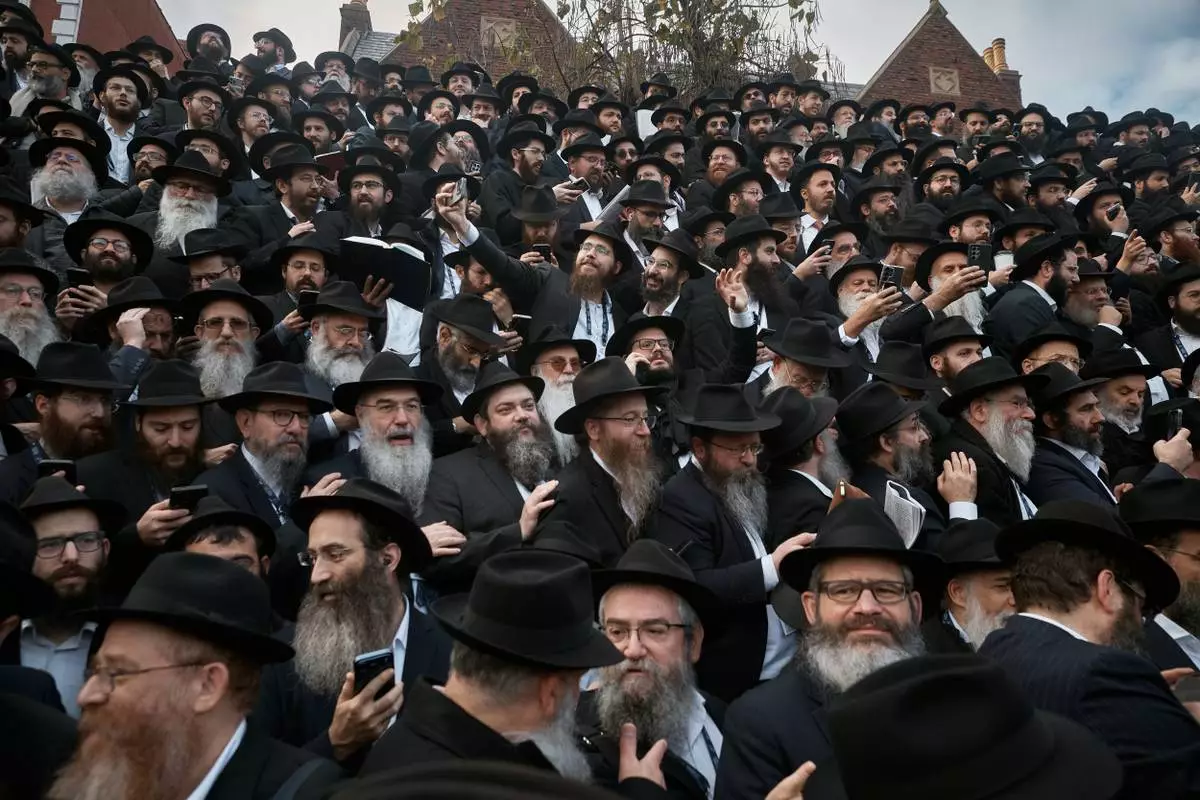
Rabbis gather for a group photo in front of Chabad-Lubavitch world headquarters in the Brooklyn borough of New York, Sunday, Nov. 8, 2026, as part of a meeting of rabbis and Jewish leaders from over 100 countries. (AP Photo/Andres Kudacki)

Rabbis gather for a group photo in front of Chabad-Lubavitch world headquarters in the Brooklyn borough of New York, Sunday, Nov. 8, 2026, as part of a meeting of rabbis and Jewish leaders from over 100 countries. (AP Photo/Andres Kudacki)

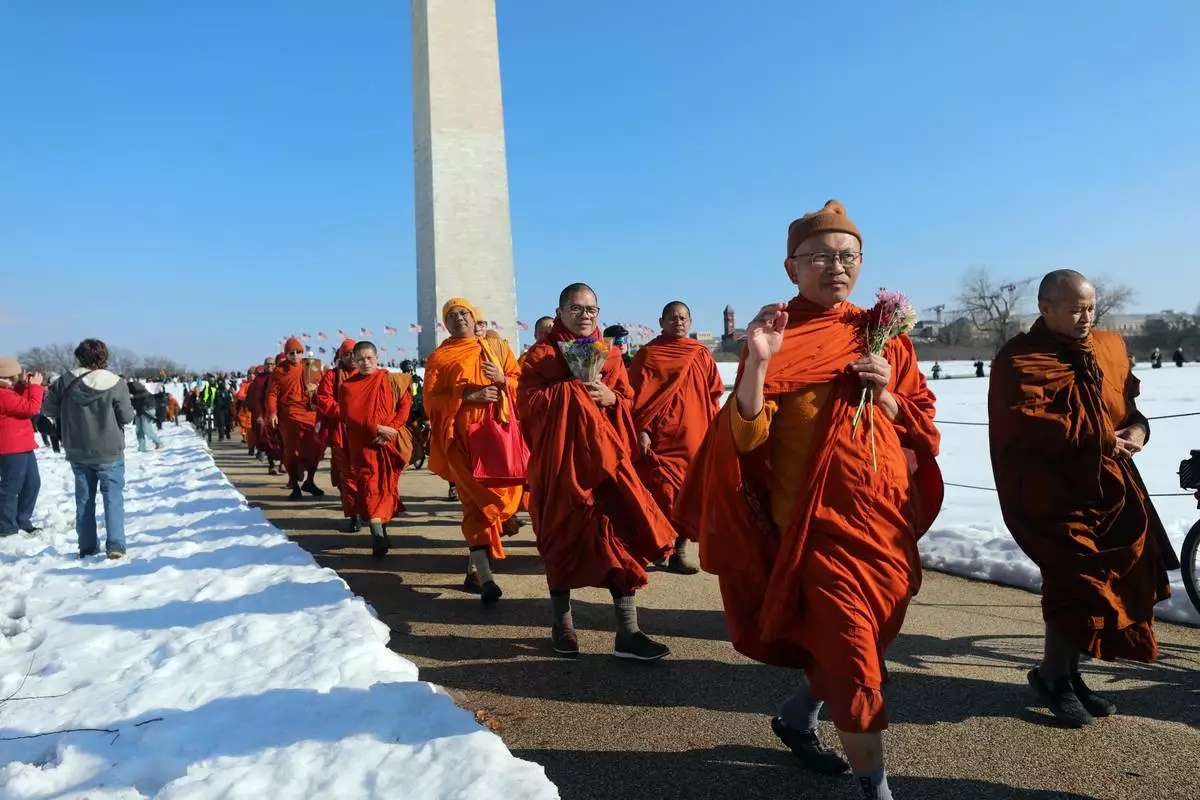
FILE - Buddhist monks walk on the National Mall near the Washington Monument, during the Walk For Peace, Feb. 11, 2026, in Washington. (AP Photo/Rahmat Gul, File)

FILE - Buddhist monks walk on the National Mall near the Washington Monument, during the Walk For Peace, Feb. 11, 2026, in Washington. (AP Photo/Rahmat Gul, File)

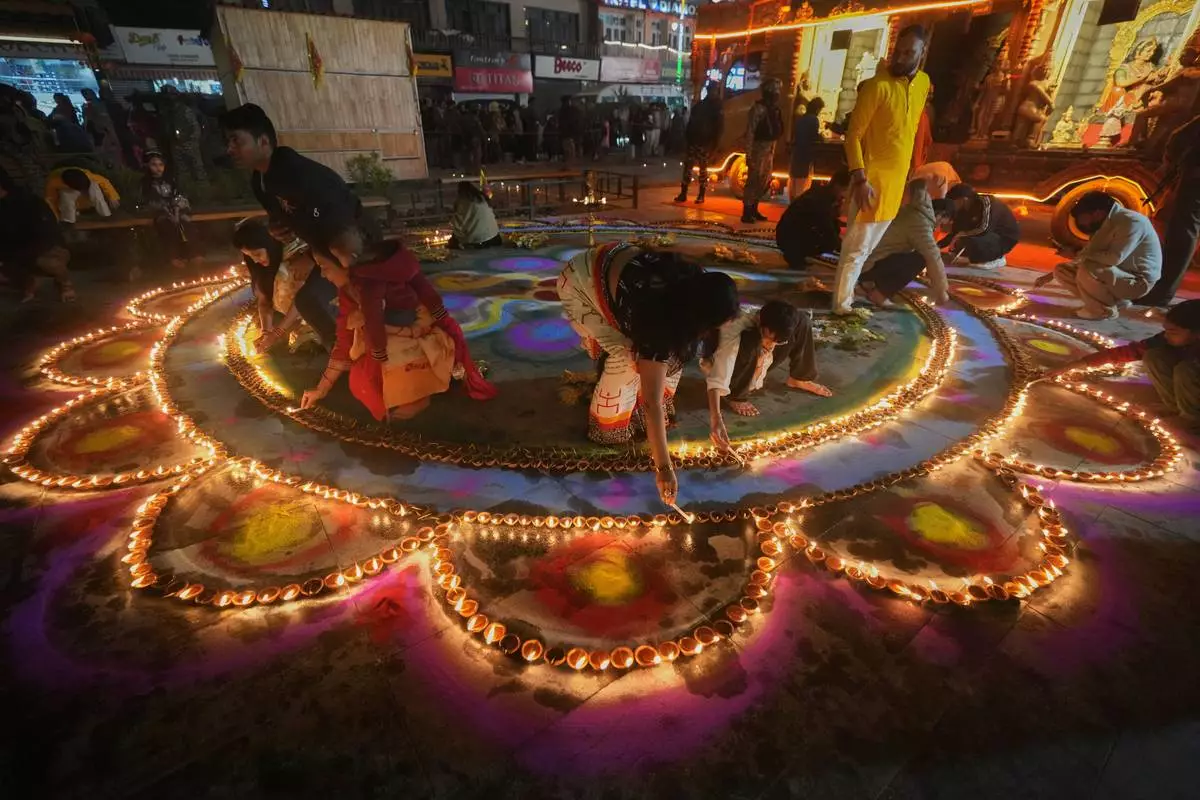
FILE - Hindus light oil lamps as they celebrate Diwali, the Hindu festival of lights, in Srinagar, Indian controlled Kashmir, Nov. 8, 2026. (AP Photo/Mukhtar Khan, File)

FILE - Hindus light oil lamps as they celebrate Diwali, the Hindu festival of lights, in Srinagar, Indian controlled Kashmir, Nov. 8, 2026. (AP Photo/Mukhtar Khan, File)

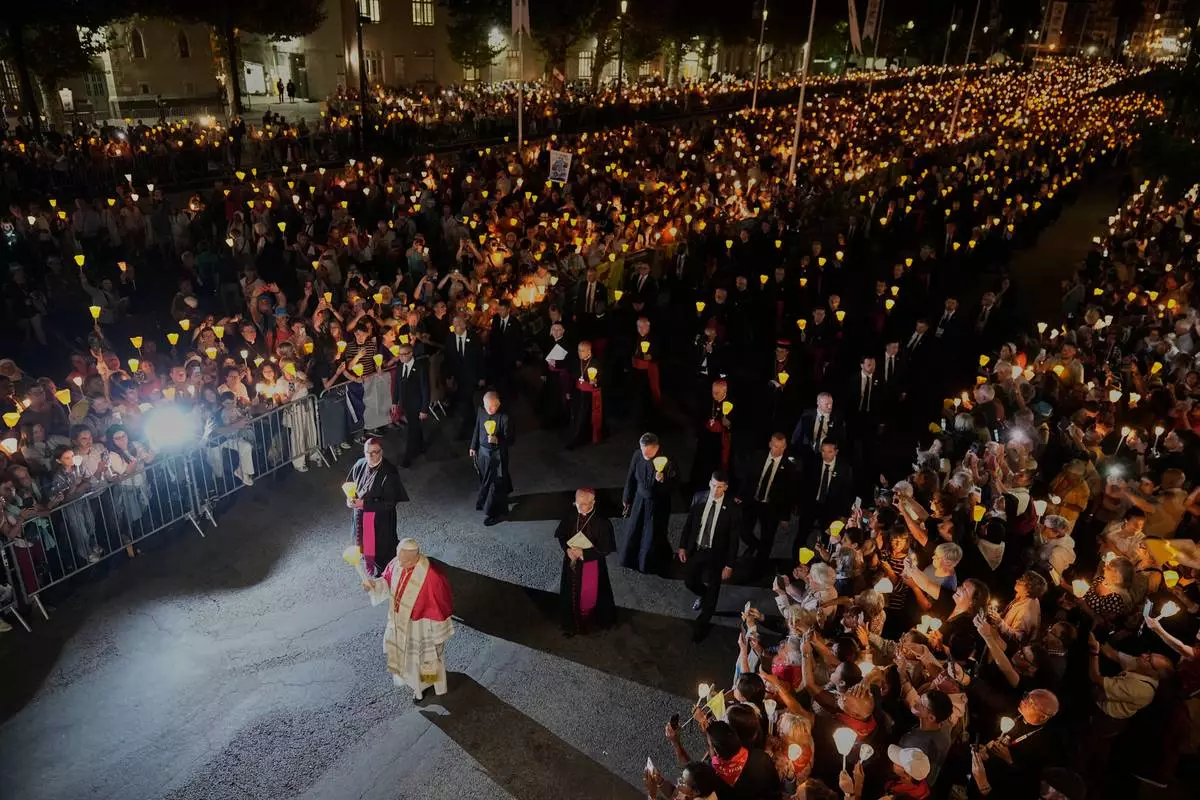
FILE - Pope Leo XIV, left, holds a candle during a prayer of Holy Rosary and torchlight procession at the Sanctuary of Our Lady of Lourdes, France, Sept. 27, 2026. ((AP Photo/Laurent Cipriani, File)

FILE - Pope Leo XIV, left, holds a candle during a prayer of Holy Rosary and torchlight procession at the Sanctuary of Our Lady of Lourdes, France, Sept. 27, 2026. ((AP Photo/Laurent Cipriani, File)

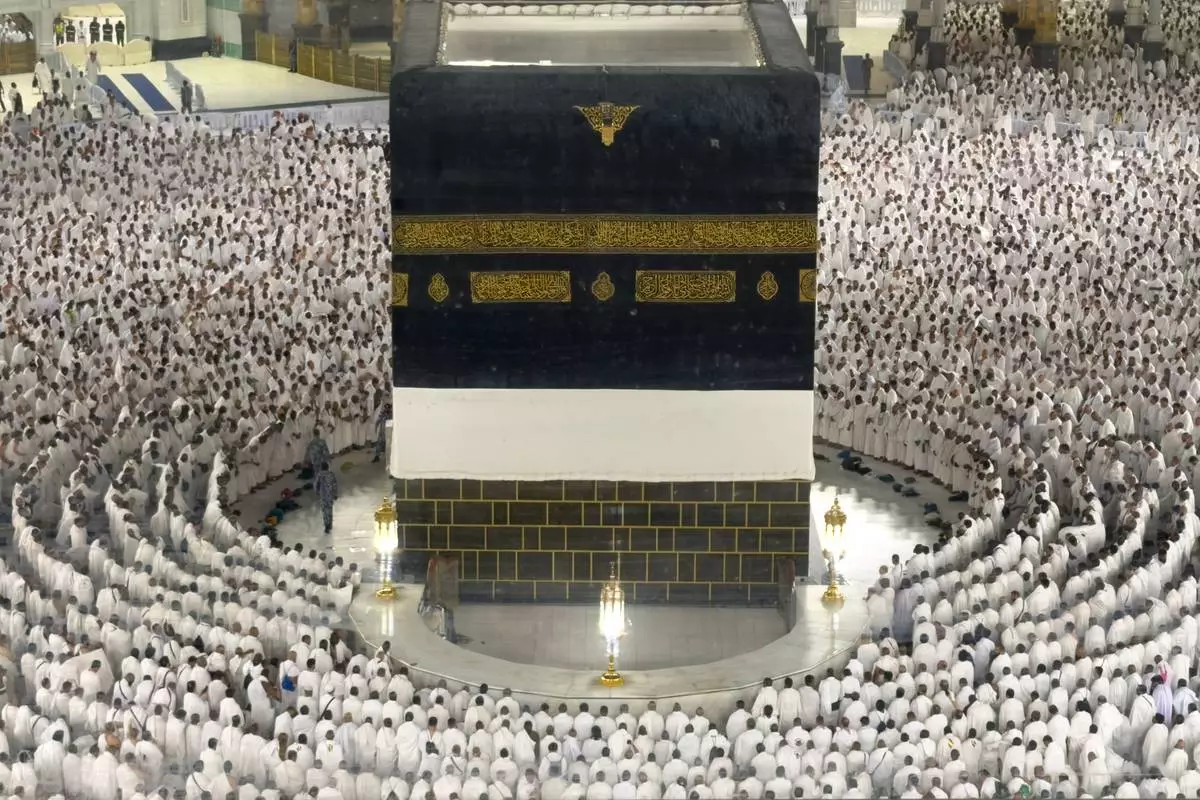
FILE - In this photograph taken through a glass fence, Muslim pilgrims are seen praying around the Kaaba, Islam's holiest site at the Grand Mosque during the annual Hajj pilgrimage, in Mecca, Saudi Arabia, May 22, 2026. (AP Photo/Altaf Qadri, File)

FILE - In this photograph taken through a glass fence, Muslim pilgrims are seen praying around the Kaaba, Islam's holiest site at the Grand Mosque during the annual Hajj pilgrimage, in Mecca, Saudi Arabia, May 22, 2026. (AP Photo/Altaf Qadri, File)

Recommended Articles