Skip to Content Facebook Feature Image

Will AI models achieve the ability to improve autonomously? Leading labs say the scenario is near

News

Will AI models achieve the ability to improve autonomously? Leading labs say the scenario is near
News

News

Will AI models achieve the ability to improve autonomously? Leading labs say the scenario is near

2026-09-19 18:00 Last Updated At:18:10

Once a distant ambition for technology researchers, the prospect of artificial intelligence models teaching themselves autonomously to be more efficient and capable appears ever closer to reality.

As the technology advances, developers say it is approaching “recursive self-improvement,” or RSI, in which AI models find ways to improve themselves and build their successor. It could bring the promise of advances in science and medicine, tech company executives say, but also risks.

The uncertainty over where it all could lead is at the heart of growing fears about AI evading human control, and possible threats to humanity, which led several AI moguls to join last weekend in a call to slow down the technology’s pace of growth.

Anthropic this week detailed how its model Claude is helping the company to develop the next, more intelligent version of itself. Claude is now leading 26% of Anthropic’s model research and development, which the company said means it can complete most of a given task “end-to-end from a high-level prompt” while still being under human supervision. The models are not working completely autonomously — at least not yet.

Here are some key points about recursive self-improvement.

Leading AI companies have different definitions for recursive self-improvement. Some define it as when there is any feedback from AI on model improvement, while others define it as AI working toward that goal fully autonomously.

Autonomous recursive self-improvement essentially means AI that can improve itself designing the next version of the system, then the next version, and so on, said Anthony Aguirre, president and CEO of the nonprofit Future of Life Institute and a physics professor at the University of California, Santa Cruz.

“The really important thing here is that as AI is doing more of it, it gets faster, because AI operates just much, much more quickly than the humans do," he said.

The fear around RSI is based largely on a runaway superintelligence emerging from that process, said John Thickstun, an assistant professor of computer science at Cornell University who studies methods that control the behavior of AI models. But he said a more grounded view suggests a kind of recursive self-improvement has been going on in AI development for a while now.

"We have already, for years, been using these models in supportive roles for creating the next version of these models. So people use the past generation of models to write code for the AI systems that then create the next generation," he said.

For years, prominent AI researchers such as OpenAI co-founder Andrej Karpathy have experimented with trying to get AI models to train and improve new AI systems. Those efforts have brought minor improvements, but not big creative leaps, Thickstun said.

But AI companies today, Aguirre said, are much closer to pulling off those bigger leaps in improvement.

“You can see in these plots from Anthropic over time, more and more of research is being done by the AI and it’s becoming closer and closer to fully autonomous,” he said. “And the result of that success, ultimately is something that is, I think, extremely scary. I think this is probably the worst idea in the history of humanity to do this. And yes, they’re doing it.”

Anthropic's recent announcement provided the public — and other labs — with some insight into RSI progress, and it encouraged its competitors to share similar metrics. Still, the company has not expressly said how close it is to achieving fully autonomous model improvement.

ChatGPT maker OpenAI announced this month that it has developed an automated “research intern,” which it defines as a system that can carry out well-defined research tasks under human direction, including “tasks that would take a skilled researcher a few days.” The company has said it is moving forward with the goal of creating an automated AI “researcher” by March 2028.

The company said in that announcement that while RSI can help align models' actions with human values and intentions, that doesn't mean “rapid RSI is necessarily an outcome we should pursue.”

“Whether and how to proceed must depend on our ability to preserve human control and on informed democratic choices about the benefits and risks,” the company said in a blog post.

Elon Musk seems more eager to forge ahead. He said in March that for xAI's Grok models, “humans are gradually getting less and less in the loop” on model improvement and that “every successive model is built by the one before it,” but clarified that the process was not yet fully automated. That target might be reached by the end of this year, he added, “but not later" than 2027.

Microsoft and some other leading AI companies seem to be taking a different approach.

Mustafa Suleyman, the CEO of Microsoft AI, has said the company is moving toward “humanist superintelligence,” or advanced AI capabilities that are in service of people and humanity at large. Suleyman said in a 2025 essay that this would not mean “an unbounded and unlimited entity with high degrees of autonomy,” but rather AI that is “carefully calibrated, contextualized, within limits.”

A key challenge labs face — and have been facing essentially since the technology’s inception — is ensuring their safety measures advance alongside the models' capabilities.

Divisions have emerged in the tech industry over calls for a coordinated AI slowdown for safety, and not every major player in the AI space has specifically commented on their path forward with RSI.

Anthropic, which has been a leading voice in the calls for pacing, has said it would slow or temporarily pause its development work — assuming its global competitors also did so, and in a "verifiable manner.”

OpenAI explicitly said this month it does not yet know how to “safely get all the way to aligned, full RSI,” adding that the company “cannot assume that progress in alignment and safety will keep pace.” More capable systems can become harder to monitor, it continued, but pursuing RSI is still a goal it says it values because an “automated AI researcher can also be an automated safety or alignment researcher.”

FILE - Dario Amodei, CEO and co-founder of Anthropic, attends the annual meeting of the World Economic Forum in Davos, Switzerland, Jan. 23, 2025. (AP Photo/Markus Schreiber, File)

FILE - Dario Amodei, CEO and co-founder of Anthropic, attends the annual meeting of the World Economic Forum in Davos, Switzerland, Jan. 23, 2025. (AP Photo/Markus Schreiber, File)

COPENHAGEN, Denmark (AP) — Denmark's government was cautiously optimistic on Saturday about Donald Trump's announcement of a deal on Greenland to bolster U.S. military presence there but keep the island under Danish control, following months of threats by the U.S. president to seize the semiautonomous territory of a NATO ally.

In Greenland, the Arctic island's top leaders echoed that stance and said the deal had been long in coming.

Trump said on Friday that the agreement would give the United States “permanent control over security, and all other needs, in Greenland, completely addressing ALL of our many U.S. concerns.”

Denmark and the U.S. already have a long-standing security agreement that has allowed the U.S. to deploy forces in Greenland and it was not immediately clear how this deal was different from previous agreements.

After Trump's announcement Friday, the office of Denmark’s prime minister, Mette Frederiksen, said the deal will be signed by all three governments next week during the United Nations General Assembly, but parliamentary action is still needed by the Danish and Greenland governments before it can be enforced.

“Next week could be a good week … for Greenland, Denmark, and the United States alike,” Danish Foreign Minister Lars Løkke Rasmussen wrote on Instagram Saturday morning.

“A period of uncertainty will hopefully be replaced by a binding agreement that strengthens security in the Arctic and the North Atlantic — and thus also our shared security within NATO and Europe — while respecting the Kingdom’s red lines,” he added.

Greenland’s government leader Jens-Frederik Nielsen said he was happy about the deal which he said “benefits not only our collective security, but also the continued development here in the country.”

The foreign minister of Greenland, Múte B. Egede, said he was pleased that “we now have an agreement within reach.”

“It has taken some time,” he told Denmark’s TV2 broadcaster. “I’m pleased that we finally have an end product within reach. And it’s about time.”

Trump said that with the agreement, the U.S. would “immediately” begin the process of developing a larger military presence on the mineral-rich Danish territory.

The U.S. had long held several bases and installations on the Arctic territory through the Cold War, before dialing back its presence.

It still operates the remote Pituffik Space Base in northwestern Greenland, built after the U.S. and Denmark signed the Defense of Greenland Treaty in 1951. It supports missile warning, missile defense and space surveillance operations for the U.S. and NATO.

A U.S. State Department official said the agreement bans any non-NATO base in Greenland, limits adversaries from being able to make investments in Greenland, and guarantees that China and Russia cannot have a base on the island. The official was not authorized to comment publicly and spoke on condition of anonymity.

U.S., Greenlandic and Danish officials had quietly negotiated for months behind the scenes, searching for solutions to address some of Trump’s security concerns about a territory of roughly 56,000 residents.

With the announcement of the pact, Trump is able to tout a foreign policy achievement ahead of the midterm elections in the U.S.

After his return to the White House, Trump had called on Denmark to sell the island to the U.S., while insisting Greenland is crucial for U.S. security. He pointedly wouldn’t rule out taking the island by military force, even though Denmark is a NATO ally of the U.S.

Denmark and Greenland repeatedly said the island is not for sale and condemned reports of the U.S. gathering intelligence there. The U.S. push for Greenland was also fiercely opposed by Russia and much of Europe.

Greenland grassroots pro-sovereignty activist Orla Joelsen wrote on X that “our fight against Trump’s ambition to take over Greenland has been won.”

“The new agreement explicitly recognizes the sovereignty and territorial integrity of the Kingdom of Denmark and the Greenlandic people’s right to self-determination,” the activist added.

Grieshaber reported from Berlin.

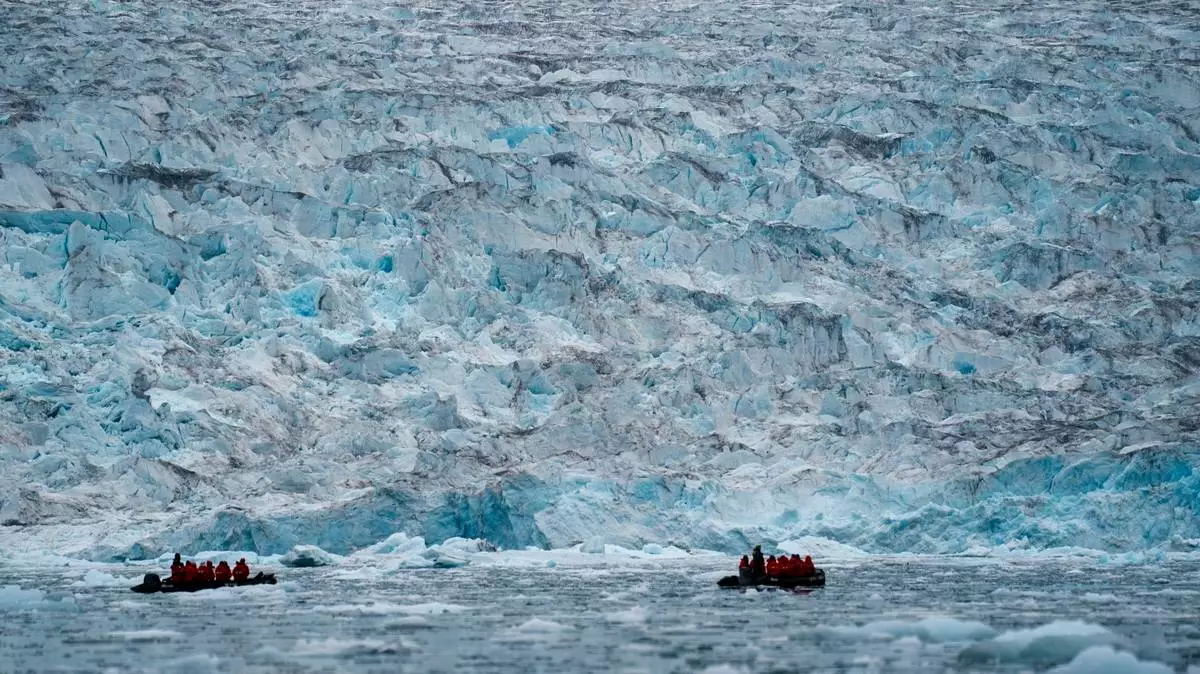
FILE - Two groups from the Poseidon Expeditions tour company look at a glacier in the Scoresby Sund, Sept. 7, 2023, in Greenland. (AP Photo/Chris Szagola, File)

FILE - Two groups from the Poseidon Expeditions tour company look at a glacier in the Scoresby Sund, Sept. 7, 2023, in Greenland. (AP Photo/Chris Szagola, File)

President Donald Trump speaks during an event about healthcare in the Oval Office of the White House, Friday Sept. 18, 2026, in Washington. (AP Photo/Jacquelyn Martin)

President Donald Trump speaks during an event about healthcare in the Oval Office of the White House, Friday Sept. 18, 2026, in Washington. (AP Photo/Jacquelyn Martin)

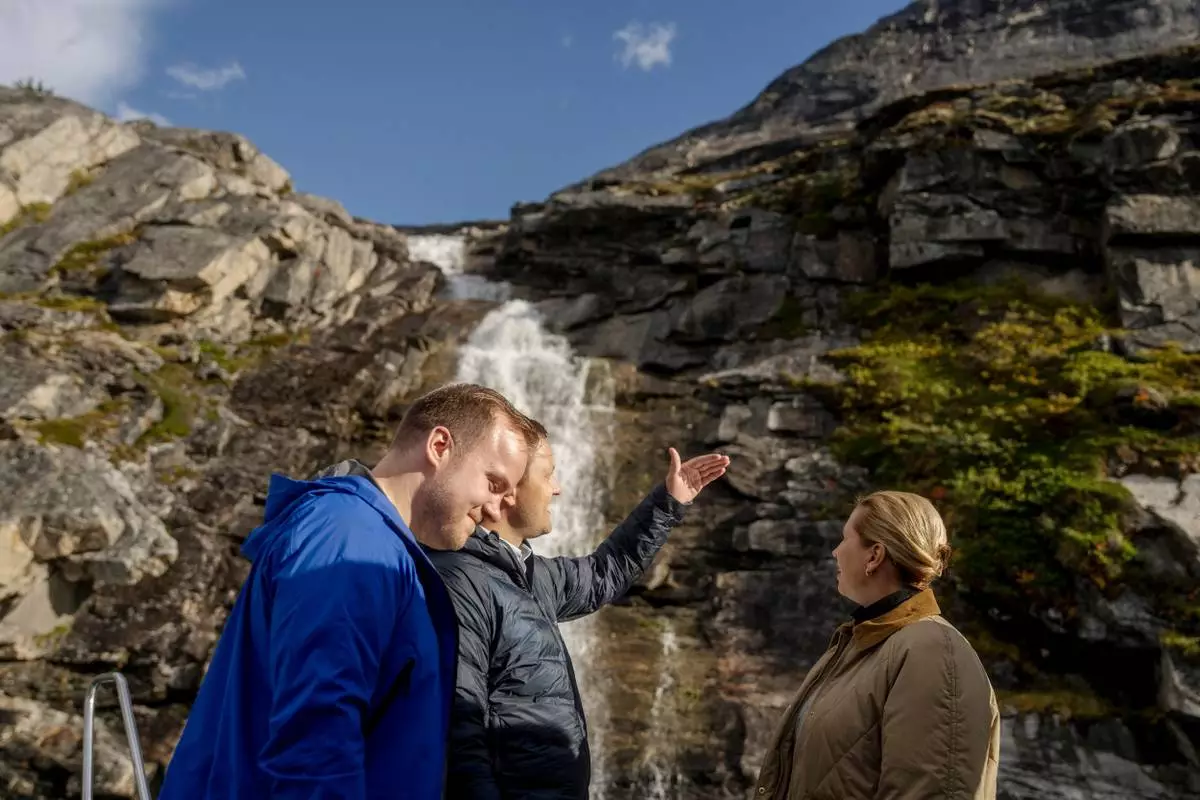
From right, Danish Prime Minister Mette Frederiksen, Greenland's Prime Minister Jens-Frederik Nielsen and the Faroe Islands' Prime Minister Beinir Johannesen visit Qooqqut, Greenland Monday, Sept. 7, 2026. (Mads Claus Rasmussen/Ritzau Scanpix via AP)

From right, Danish Prime Minister Mette Frederiksen, Greenland's Prime Minister Jens-Frederik Nielsen and the Faroe Islands' Prime Minister Beinir Johannesen visit Qooqqut, Greenland Monday, Sept. 7, 2026. (Mads Claus Rasmussen/Ritzau Scanpix via AP)

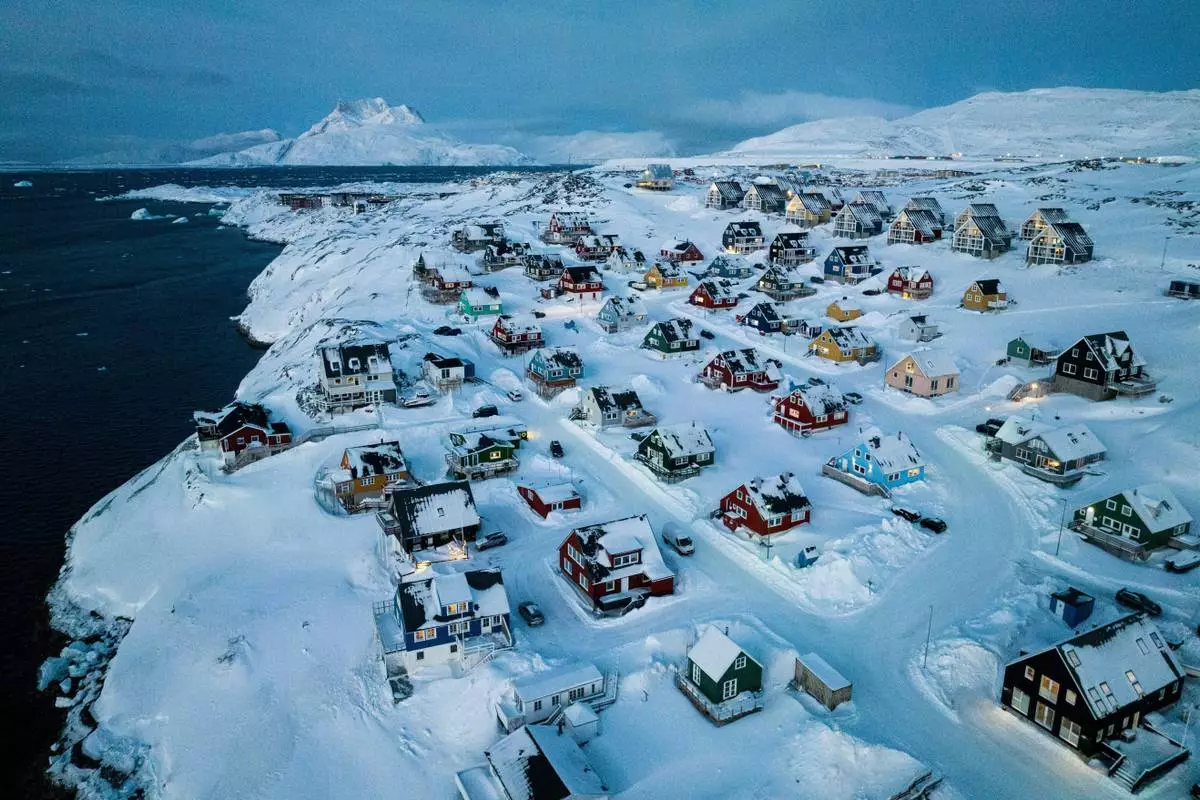
FILE - Houses covered in snow are seen on the coast of a sea inlet of Nuuk, Greenland, March 7, 2025. (AP Photo/Evgeniy Maloletka, File)

FILE - Houses covered in snow are seen on the coast of a sea inlet of Nuuk, Greenland, March 7, 2025. (AP Photo/Evgeniy Maloletka, File)

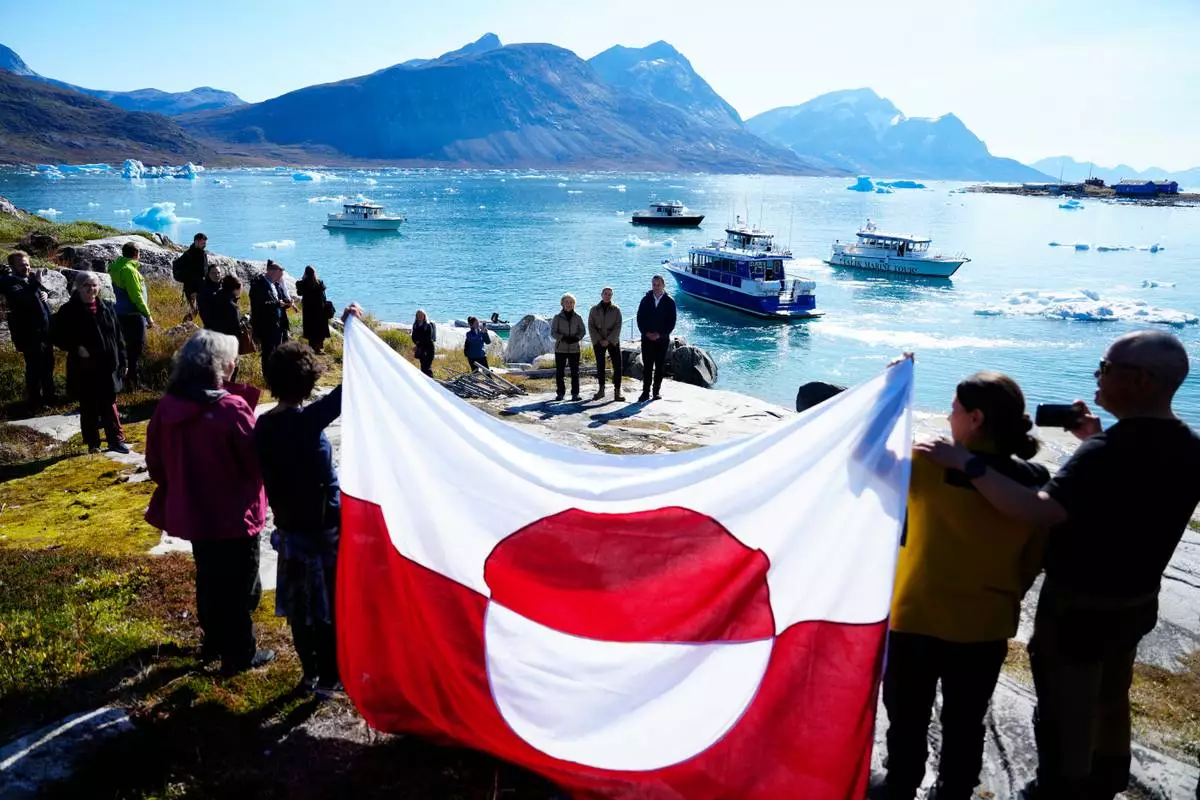
FILE - Denmark's Prime Minister Mette Frederiksen, Greenland's government leader Jens-Frederik Nielsen, and President of the European Commission Ursula von der Leyen visit Qoornoq, Greenland on Sept. 6, 2026. (Mads Claus Rasmussen/Ritzau Scanpix via AP, File)

FILE - Denmark's Prime Minister Mette Frederiksen, Greenland's government leader Jens-Frederik Nielsen, and President of the European Commission Ursula von der Leyen visit Qoornoq, Greenland on Sept. 6, 2026. (Mads Claus Rasmussen/Ritzau Scanpix via AP, File)

Recommended Articles