Iranians are suffering as economic misery and internal repression leave “no room for people to breathe” after 1 1/2 years of wars and ongoing U.S. sanctions, the country’s most prominent human rights activist has told The Associated Press.
Narges Mohammadi, 54, who was awarded the Nobel Peace Prize in 2023, was temporarily released from prison for medical reasons earlier this year after falling unconscious and being transferred to a hospital.
Her memoir — titled “A Woman Never Stops Fighting" — was written behind bars, with parts of it smuggled out by fellow inmates. Editions in French, German and nine other languages are being released this month. The English and Farsi editions are to be released next year.
In an interview conducted Friday by The Associated Press from outside Iran, Mohammadi said Iranians are grappling with multiple crises stemming from the ongoing war and deepening economic pressure.
"It’s the people who are paying an extremely heavy price,” she said.
But she said many Iranians continue to quietly defy their leaders, a change she traces back to the 2022 protests over the death of Mahsa Amini, a 22-year-old woman who died in a hospital after being detained for violating authorities' strict Islamic dress code.
The release of Mohammadi's book this month coincides with Amini's death to honor her memory, her representatives said. The English and Farsi editions are to be released in September 2027 for the same reason.
“If you go out into the streets, you see a wave of resistance among the people, a wave of awareness, and their determination to stand up for their rights,” Mohammadi said. She said that government repression has intensified, but that many in a new younger generation “know their rights” and were standing firm. “And that gives us reason for hope,” she said.
AP agreed not to ask Mohammadi specific questions about the political situation and leadership in Iran, due to concerns for her safety, though she commented generally about the cost of war.
In her interview with AP, Mohammadi — who has been jailed repeatedly over decades of advocating for human rights and was behind bars when she was awarded the Nobel Prize — described her most recent arrest, detention and health.
She said she was severely beaten by security forces when detained in December, in the northeastern city of Mashhad. She and a group of activists were attending a memorial ceremony for human rights lawyer Khosrow Alikordi, who was found dead in his office. She was arrested while giving a public speech. She was sentenced to 16 years and more than a 100 lashes for attending that rally. She has not been flogged but spent long periods in solitary confinement.
“My detention was really life-threatening," she said. "My head was severely hurt because most of the hits were to my head, and despite being in that condition, they kept me for two months in solitary confinement during which my condition was really concerning.”
She lost consciousness May 1 and was transferred to a hospital. She was released on bail nearly 10 days later and transferred to a hospital in Tehran, where she remained for another two weeks.
She smuggled out fragments of her memoir, which she had started writing in 2019 during an earlier stint in Iran's notorious Evin prison in Tehran, where many political prisoners are held. She had lost her handwritten notes that year when they moved her to another site.
This time, “with the help of fellow inmates, we got a few pages out, a few pages at a time," she said. “If it weren’t for them, I couldn’t have done it.”
As for her health, “I am recovering,” Mohammadi said.
Mohammadi said she took inspiration from other women’s stories growing up, beginning with her own mother.
“I tried to put an image to each of these — how these women really managed to change their world, their society, themselves, the next generation — make them aware, make them resist,” she said.
She also recalled “terrifying memories” from her childhood during the 1980s Iran-Iraq war and how she developed “a hatred for war.”
“I wasn’t more than a child when the Iran-Iraq war happened, but I remember a lot of the repression, repression of many political currents and forces, many executions that happened in the silence and darkness of Evin and prisons around the country," she said.
She recalled her concern when she learned that Evin prison had been bombed during the 12-day war between Israel and Iran in 2025, a period when she was out of prison.
“At that moment, I felt that, in this country, we are at the intersection of injustice, discrimination, war, authoritarianism," she said. "All of those are trampling on our people’s human rights.”
Mohammadi has been handed down sentences totaling 44 years. She has already spent 10 years in prison, including 161 days in solitary confinement. She has been banned from traveling abroad since 2009, and is unable to join her husband and two children who live in exile in France.
“My sentence is currently suspended, and I must return whenever the judiciary issues the order,” Mohammadi later said in a text message shared by her team.
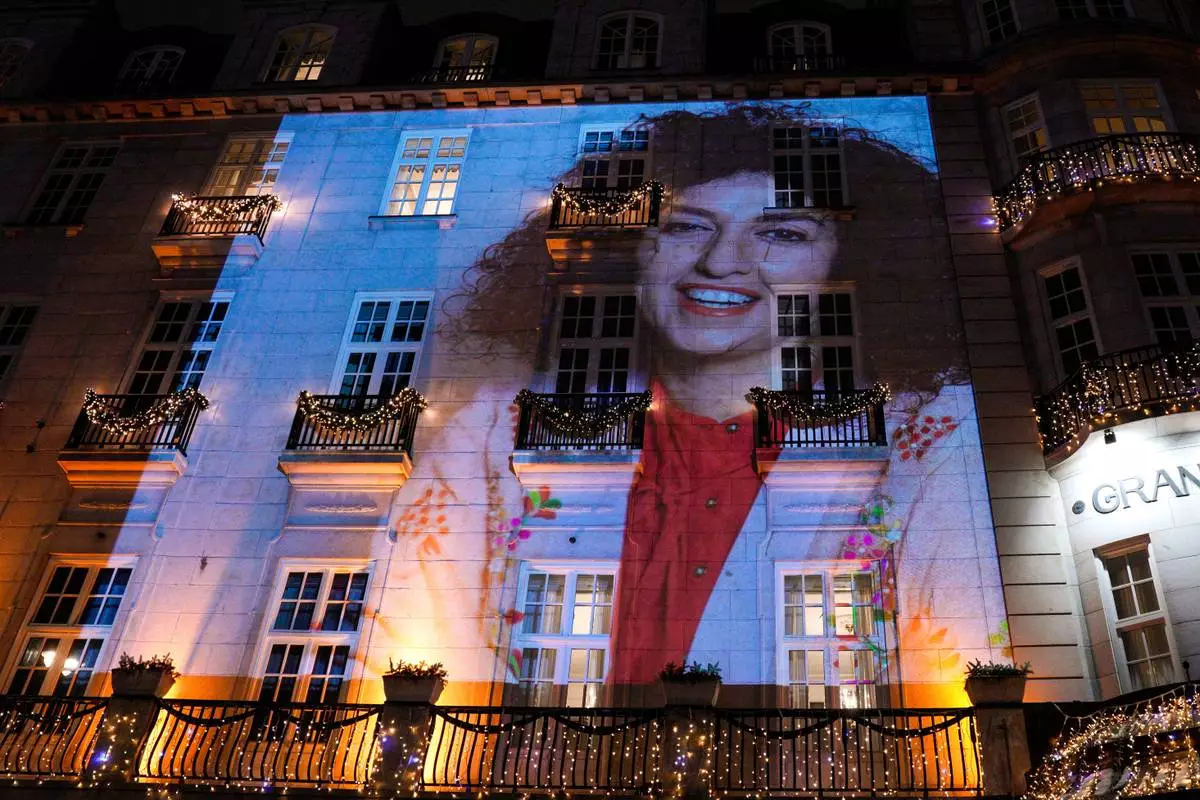
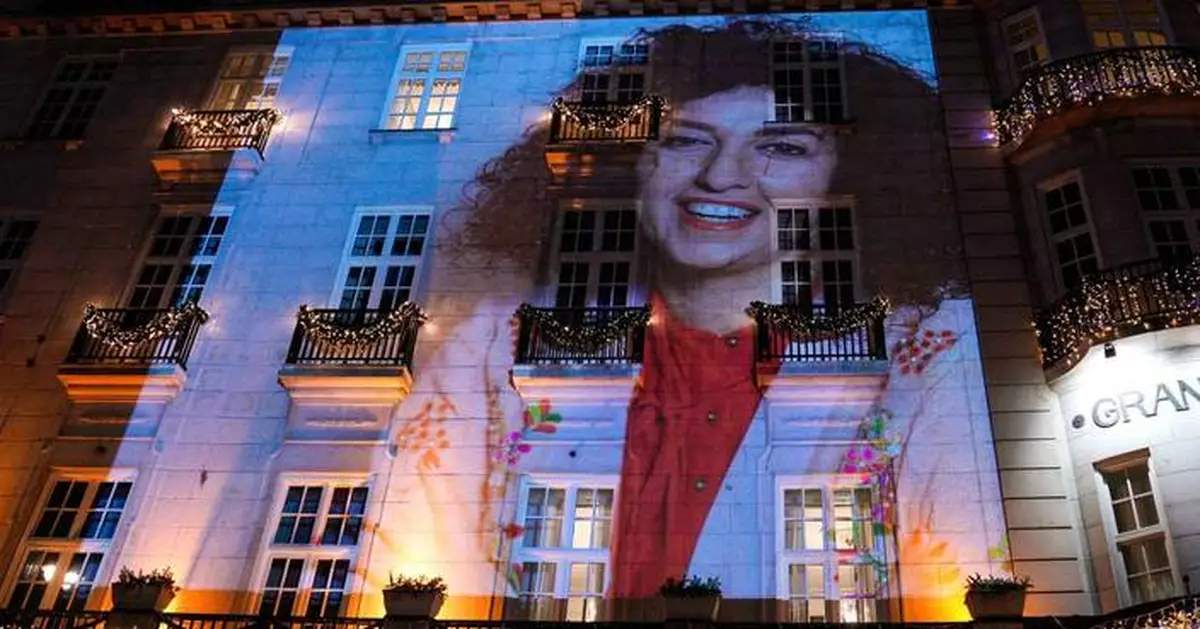
FILE - A photo of Nobel Peace Prize recipient Narges Mohammadi is projected onto the wall of the Grand Hotel in central Oslo before the Nobel banquet on Dec. 10. 2023. (Javad Parsa/NTB Scanpix via AP, File)
Russia’s liberal opposition Yabloko party said that one of its election observers lost consciousness while being arrested by police at a St. Petersburg polling station on Saturday, the second day of a tightly controlled parliamentary election.
The voting to elect members of the State Duma is Russia's first parliamentary election since Moscow launched a full-scale invasion of Ukraine on Feb. 24, 2022. The three-day election, which began Friday and ends Sunday, features virtually no opposition and is all but certain to secure the Kremlin’s political dominance.
Yabloko said that officials at the polling station accused a party election observer of attempting to “disrupt the elections” and called the police, which “used force” against him.
It was unclear whether he received prompt medical attention after falling unconscious, the party said in a statement on Telegram Saturday, adding that he was taken to a police station and charged with disobeying police orders.
Russian officials didn't immediately comment on the incident.
Yabloko, the only registered political entity that dared to criticize Russia's war with Ukraine, was removed from the ballot last month by Russia’s Supreme Court, and only has a few dozen candidates in the single-constituency races. Additionally, some anti-war politicians have been imprisoned or forced to flee abroad before the campaign.
Yabloko and the Communist Party, which has criticized some aspects of government policy but carefully avoided any criticism of Russian President Vladimir Putin, said that many of their election observers were turned away from polling stations.
The parties also reported various violations, including sealed ballot boxes being opened, the refusal to issue paper ballots and provide turnout data for verification, and doors to polling stations not being secured overnight.
On Friday, Yabloko’s leader appealed to Ella Pamfilova, head of the Central Election Commission, over what the party said were numerous denials of entry to its observers and pressure on them.
“The scale of what’s happening does not allow us to view this as a misunderstanding,” Yabloko chairman Nikolai Rybakov said.
Russia didn't invite observers from the Organization for Security and Cooperation in Europe to monitor the election, with the Russian Foreign Ministry accusing the body of “double standards” for its criticism of Russia.
It said that it had invited other international organizations, as well as observers from OSCE member states, in its place.
OSCE Parliamentary Assembly President Pere Joan Pons said that the decision was a breach of Russia’s commitments as a member state of the organization.
“This persistent rejection of independent scrutiny follows a deeply worrying pattern of disregard for the principles of transparency, democratic accountability and the rule of law,” he said.
Russia’s Central Election Commission said that more than 380,000 electoral observers had been registered before the vote, including representatives from 11 political parties. Of those registered, 97,040 observers were linked to the United Russia party, with the next largest group, 42,743 observers, representing Russia’s Communist Party.
It also said that 1,126 international election observers and “electoral experts” have been registered from 133 countries and 13 international organizations.
Russia also tightened restrictions on election observers in the lead-up to the parliamentary vote. Under a new code of ethics, observers are banned from making statements “that could be construed as undermining confidence in the electoral system.”
Russian authorities spread the parliamentary election over the weekend in a bid to boost turnout among the 111 million eligible voters, and they allowed electronic balloting.
For the first time, the parliamentary election includes residents of four Ukrainian regions that Moscow illegally annexed after the war began, but still doesn’t fully control. Voting also is taking place in Crimea, the Black Sea peninsula that was illegally annexed by Russia in 2014.
The Kremlin wants the vote to underline public support for the war in Ukraine and give a veneer of legitimacy to it. It has sought to avoid any political risks by stamping out even the slightest sign of dissent.
The main Kremlin party, United Russia, is all but assured to retain its overwhelming control of the lower house, the State Duma. Several smaller parties of the “systemic opposition” that vote in sync with the government on all key issues also are expected to retain their presence.
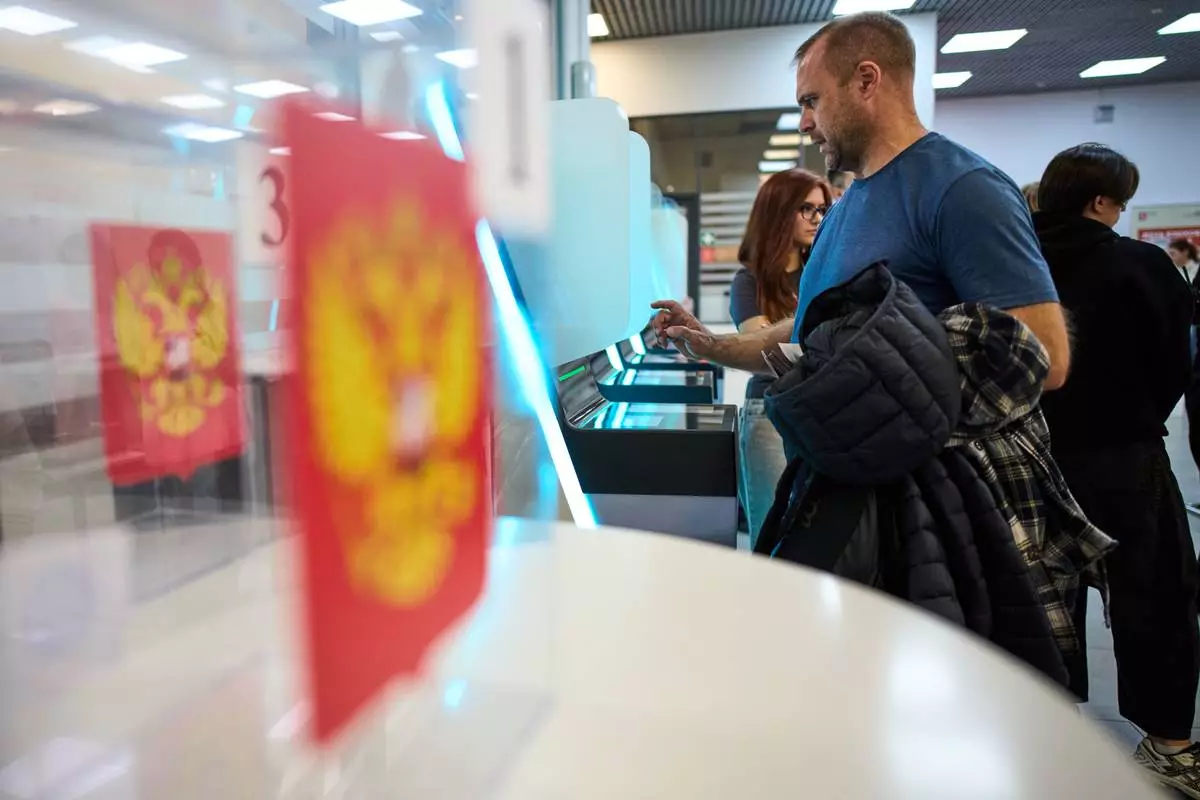
Voters use an electronic voting system in the parliamentary election in Moscow, Russia, Saturday, Sept. 19, 2026. (AP Photo/Alexander Zemlianichenko)
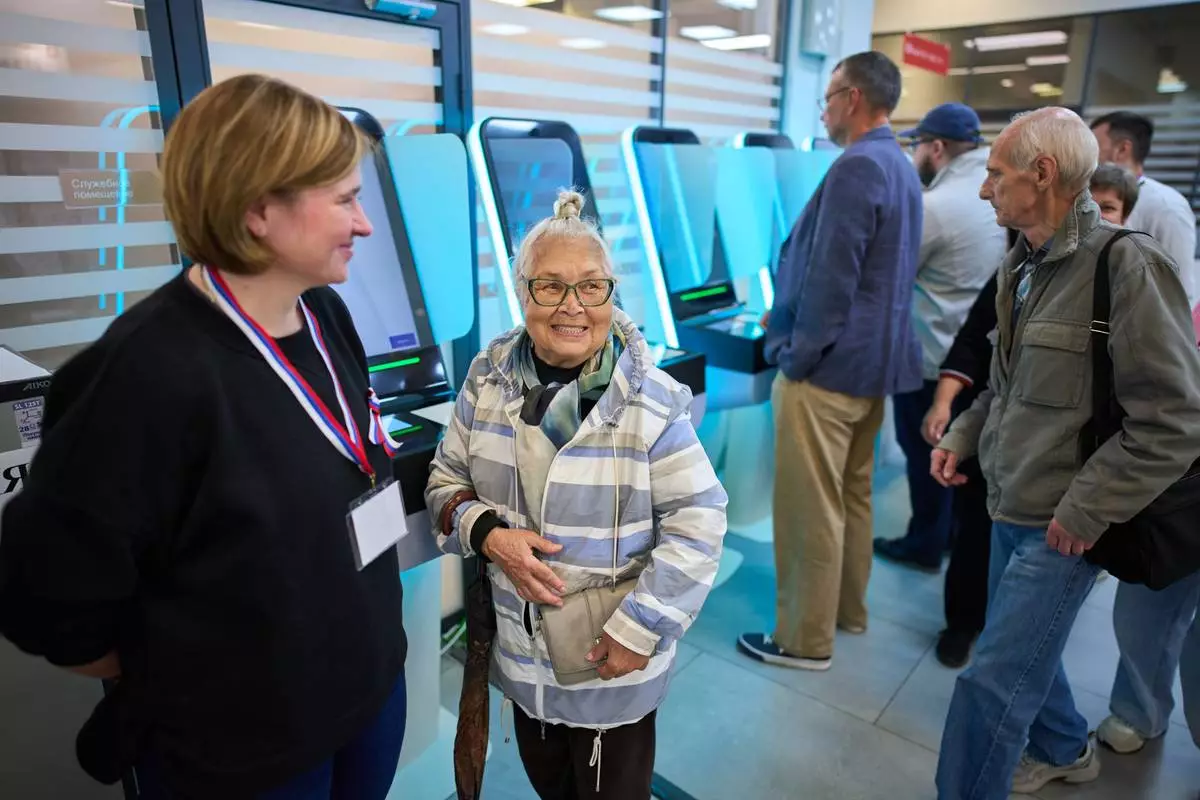
A woman smiles as she speaks to an election commission employee, left, after using an electronic voting system in the parliamentary election in Moscow, Russia, Saturday, Sept. 19, 2026. (AP Photo/Alexander Zemlianichenko)
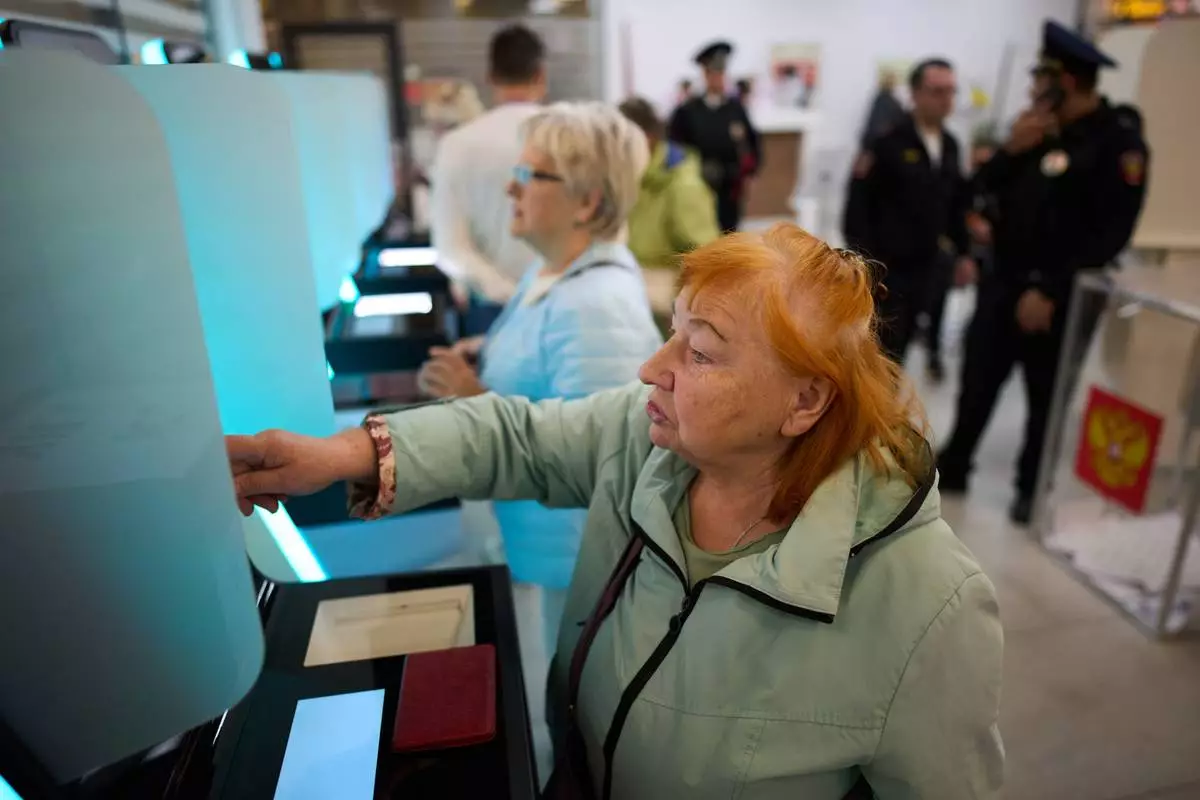
A voter uses an electronic voting system in the parliamentary election in Moscow, Russia, Saturday, Sept. 19, 2026. (AP Photo/Alexander Zemlianichenko)
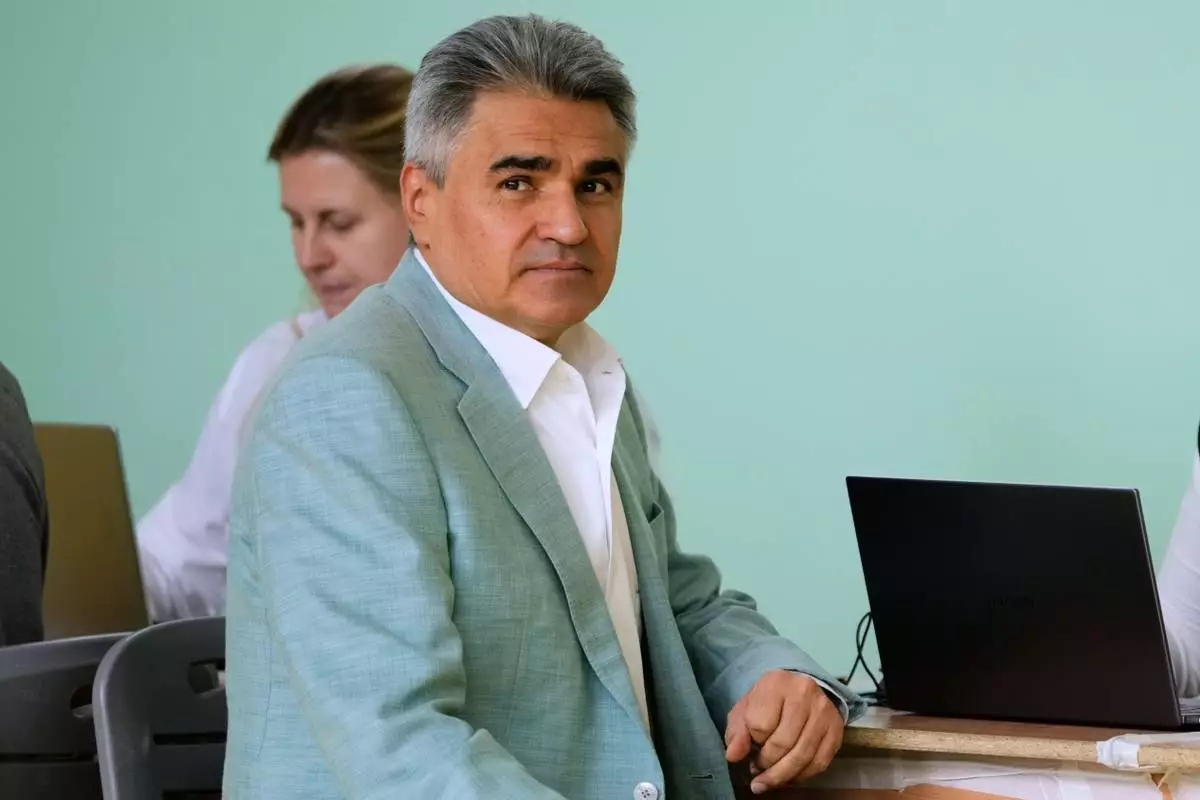
The New People's party leader Alexei Nechayev waits to receive a ballot to vote in the parliamentary election in Moscow, Saturday, Sept. 19, 2026. (AP Photo/Pavel Bednyakov) CAPTION CORRECTION: Corrects spelling of first name from Alexey to Alexei
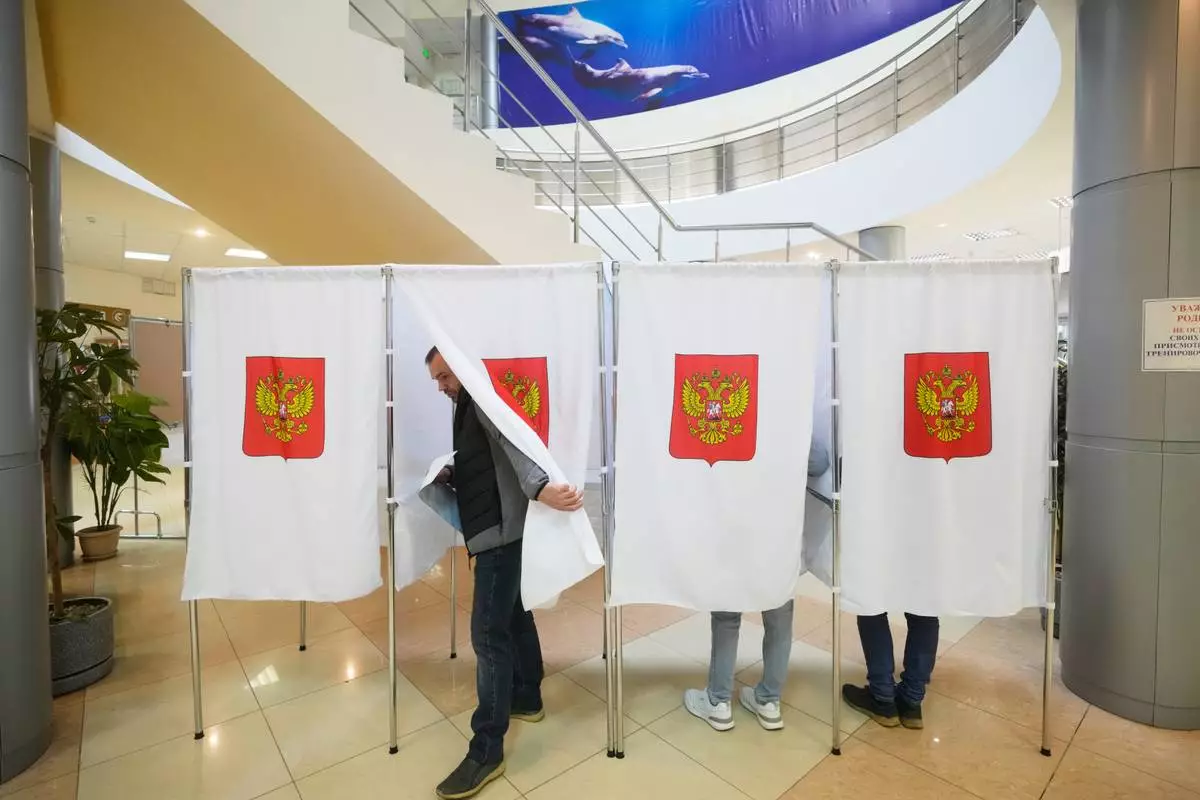
A voter leaves a polling booth after casting a vote during the parliamentary election in Podolsk, Moscow region, Russia, Saturday, Sept. 19, 2026. (AP Photo/Pavel Bednyakov)