SEOUL, South Korea (AP) — North Korea launched two short-range ballistic missiles toward the sea on Sunday, South Korea's military said, days after the North threatened to bolster its nuclear deterrent capabilities and respond to what it called U.S. hostilities.
The launches were the latest in a series of weapons demonstrations by North Korea even after U.S. President Donald Trump scaled back a joint military exercise with South Korea last month in an apparent effort to revive diplomacy with the North's leader, Kim Jong Un.
The two missile launches — about three hours apart — were conducted from North Korea's eastern coastal Wonsan area. The first missile flew about 450 kilometers (280 miles) while the second one flew more than 600 kilometers (370 miles), both toward the North’s eastern waters, South Korea's military said.
The missiles eventually ended up in the sea. South Korea’s presidential office urged North Korea to immediately halt ballistic missile launches that are banned by U.N. Security Council resolutions. The South's military said it maintains readiness to repel any provocations by the North under a solid alliance with the United States.
Japan's Defense Ministry said it detected a suspected North Korean missile earlier Sunday but that the weapon did not land in its territorial waters.
Kim's sister and senior official, Kim Yo Jong, earlier shrugged off Trump’s overture, saying that shortening the drill wouldn’t change its “provocative, aggressive nature.” North Korea’s military later launched about 10 short-range ballistic missiles toward the sea, apparently following through with a previous threat to respond to the U.S.-South Korean drill.
On Friday, Kim's sister slammed another recent U.S.-led multilateral maritime exercise in the region as a “frantic military move” by the Americans meant to prolong their hegemony in the Asia-Pacific area. The “Pacific Vanguard” exercise brought together the U.S., South Korea, Japan, Australia, New Zealand and Canada.
She claimed that “regular U.S.-led war rehearsals” are the main source of worsening tensions in the Korean Peninsula and the region.
“Our will to defend our sovereignty will be expressed in clearer action and there will be never ever change in the course of intensifying the nuclear war deterrence,” she said.
Earlier this month, North Korea conducted what it called a joint live-fire drill involving missiles, artillery and drones, a day after the United States, South Korea and Japan wrapped their five-day trilateral military drill that North Korea described as a provocation. North Korea said its drill included firing different types of weapons simultaneously, likely aiming at developing the ability to overwhelm South Korean and U.S. air defenses.
Kim Jong Un has been focusing on expanding his nuclear arsenal after his earlier high-stakes diplomacy with Trump collapsed in 2019.
When Trump ordered the Pentagon to “substantially reduce” the annual Ulchi Freedom Shield exercise with South Korea, he cited what he called a good relationship with Kim, who has called such drills invasion rehearsals.
Emboldened by his advancing nuclear arsenal and deepening ties with Russia and China, experts say Kim likely thinks he now has greater leverage in possible fresh diplomacy with Trump. Earlier this year, Kim said he could return to talks if the U.S. drops its “hostile policy” against his country and respects what he calls the North’s status as a nuclear state.
South Korean President Lee Jae Myung, a liberal who advocates improved ties with the North, said on Friday that a resumption of U.S.-North Korea talks would be “an important starting point” toward boosting chances for peace on the Korean Peninsula.
“What is clear is that President Trump wants dialogue and I’ve also been encouraging President Trump to seek dialogue” with Kim, Lee told reporters.
Associated Press writer Yuri Kageyama in Tokyo contributed to this report.
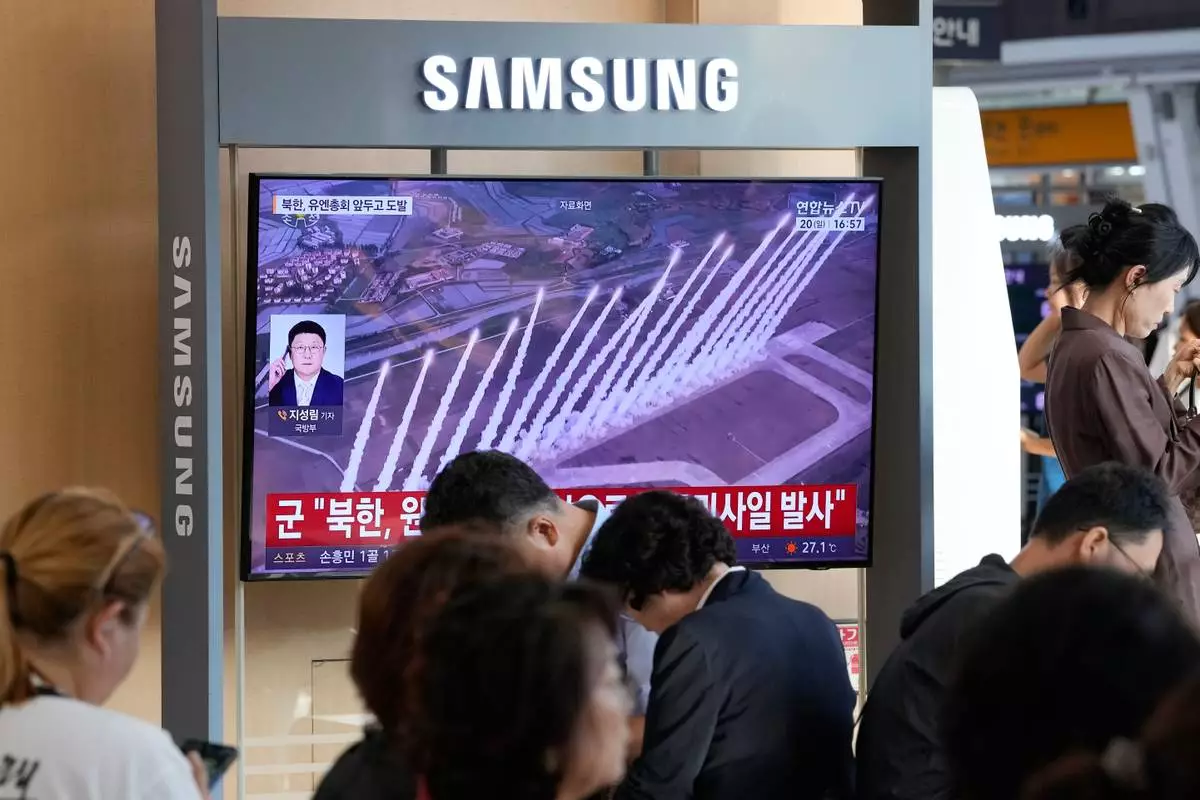
A TV screen shows a file image of a North Korean missile launch during a news program at Seoul Railway Station in Seoul, South Korea, Sunday, Sept. 20, 2026. (AP Photo/Ahn Young-joon)
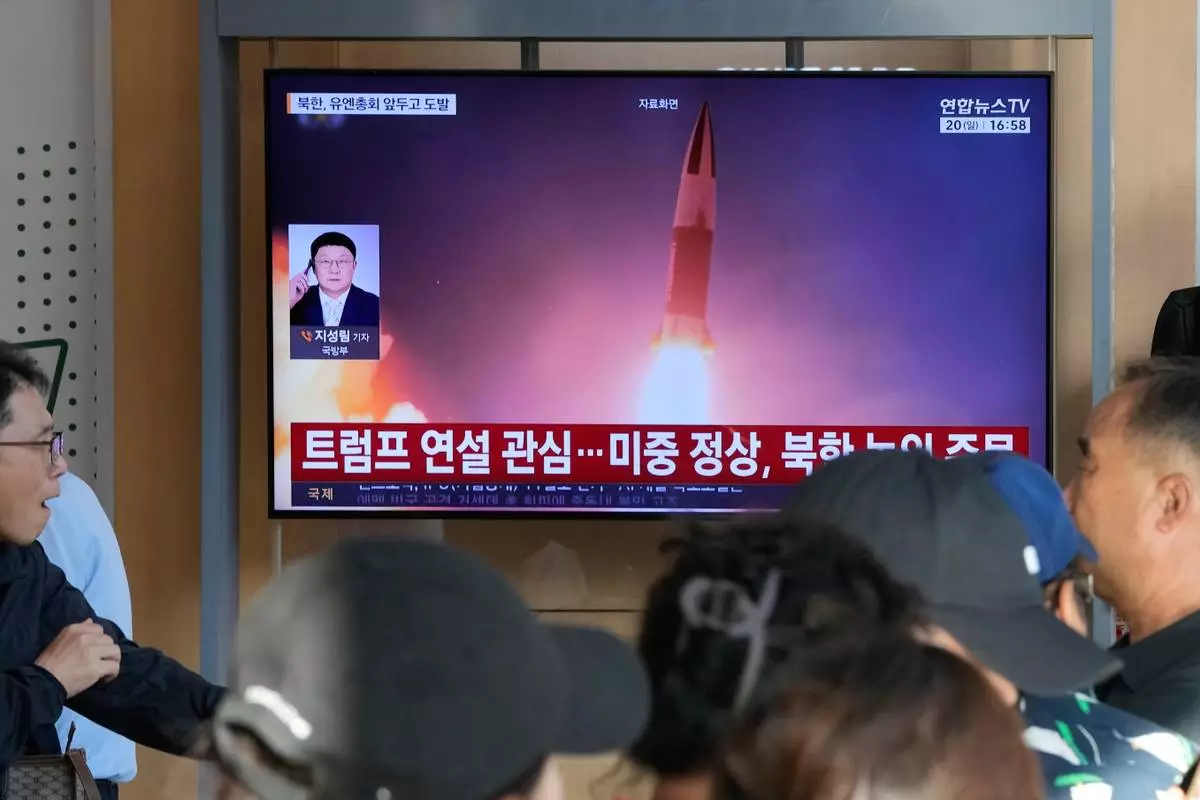
A TV screen shows a file image of a North Korean missile launch during a news program at Seoul Railway Station in Seoul, South Korea, Sunday, Sept. 20, 2026. (AP Photo/Ahn Young-joon)
DETROIT (AP) — Mike Rogers stood outside Cody High School on Detroit’s west side on a recent drizzly morning and decried Michigan's decline in reading achievement.
“This is the civil rights issue of our lifetime,” said the Republican nominee for U.S. Senate in the open-seat race in November.
It had the look and sound of a Democratic campaign policy event, set in one of the nation’s Democratic-voting strongholds.
The contest has quickly become a focal point in the fight for Senate control, and Rogers is working to appeal to segments of Michigan's Democratic electorate. It's a key to what the former congressman sees as his path to defeating progressive Democrat Abdul El-Sayed this fall.
Rogers lost his first bid for Senate two years ago by barely 19,000 votes out of more than 5.5 million cast. This time, he is betting he can win over some Democrats and independents, particularly Black and Jewish voters who may be turned off by El-Sayed's positions, which are to the left of his party’s establishment, notably on U.S.-Israel relations. At the same time, Rogers must rally Donald Trump loyalists to turn out to vote, even though the president isn't on the ballot.
“He is threading a needle,” said Bobby Schostak, Rogers' campaign finance chairman.
Rogers' event outside Cody was part of his promotion of a nonprofit program to boost literacy in Michigan's largest city. A few days later, he promoted a home construction plan in downtown Detroit, where many thousands of lots remain vacant almost 20 years after the Great Recession.
Rogers' campaign sees opportunity in racially and culturally diverse Wayne County, home to Detroit, where roughly three-quarters of the population is Black.
In the 2024 Senate race, then-U.S. Rep. Elissa Slotkin, a Democrat, won the county by more than a 2-to-1 margin over Rogers, or 264,000 votes. Squeezing even a couple more percentage points there in November could be enough for Rogers to win. His team is optimistic in part because in this year's Democratic primary, U.S. Rep. Haley Stevens beat El-Sayed in the county.
El-Sayed has faced resistance from some of Detroit’s older and more establishment-aligned Black Democrats, who favored Stevens' longer-standing ties to Black churches and work on the Obama administration's auto industry rescue plan.
Some local Black activists also faulted El-Sayed, who if elected would be the first Muslim senator, for supporting the “uncommitted” campaign in the 2024 Democratic presidential primary. Some Black Michigan Democrats believe the effort, aimed at pressuring the Biden administration over Gaza, cost then-Vice President Kamala Harris in her campaign as the first Black woman to be a major party presidential nominee. Trump beat Harris by 1.4 percentage points in the state.
Harris plans to campaign with El-Sayed in Michigan on Tuesday, and the Congressional Black Caucus has endorsed El-Sayed.
Democratic leaders have dismissed Rogers' efforts at inroads.
"I don’t think anyone’s buying it,” the state party chair, Curtis Hertel, said of Rogers' efforts to court Black voters in Detroit. “I don’t think (Rogers) has a connection in those communities, I think he’s going to have a hard time.”
Rogers has also leaned into the defections by some Democratic Jewish voters, an influential group particularly in Oakland County, Michigan's second most-populous county.
A day after the August primary, a prominent Democrat, Detroit-area business leader Brian Hermelin, called Schostak, Rogers' campaign finance chairman, asking how he could help. Within 10 days, Rogers was headlining a fundraiser hosted by the Hermelin family and attended by about 130 people, mostly Democrats, Schostak said.
El-Sayed opposes U.S. military aid to Israel and has called the U.S. ally's military campaign in Gaza a "genocide,” an accusation rejected by the Israeli and U.S. governments. The former public health official also has angered some Jewish Democrats with statements he made after the March attack on Temple Israel, Michigan’s largest Jewish congregation.
El-Sayed's suggestion that “hurt people hurt people” was interpreted by some as justification for the attack. El-Sayed later apologized for his response, but the remark helped push some influential Jewish Democrats toward Rogers.
Oakland County commercial real estate broker Benji Rosenzweig, who is Jewish and tends to vote for Democrats, plans to vote for the Republican.
“As a Jew, my family doesn't feel safe with Abdul El-Sayed,” Rosenzweig said.
The seat is open because Democrat Gary Peters is not seeking reelection. If Rogers wins, Republicans would retain their Senate majority even if Democrats pick up as many as four GOP-held seats in November.
Ad spending reflects the stakes. More money has been spent in Michigan — almost $125 million since the Aug. 4 primary — than in any other state where Republicans have a chance at gaining a seat, according to the advertising-tracking firm AdImpact. That is spending by El-Sayed, Rogers and allied groups.
The race has jumped to the top of the Trump political team's priority list.
No Going Back, a new entity linked to Trump's MAGA Inc. super PAC, early this month spent $18.5 million to air ads and reserve advertising time in Michigan, the most the group has committed to any 2026 Senate race so far, according to AdImpact.
The ads show the split-screen tack Rogers and his allies are taking in reaching out to atypical Republican voters while working to inspire the Trump base.
Rogers' campaign organization is airing ads, many of them with him direct to camera, promoting him as the son of a middle-class family, a collaborator during his time in Congress and interested in bringing down costs, notably for healthcare.
The super PACs supporting his candidacy are swinging the hammer. For instance, the super PAC associated with GOP Senate leadership is airing ads noting El-Sayed's past association with left-wing streamer Hasan Piker and the candidate's support for abolishing U.S. Immigration and Customs Enforcement.
The division of messaging reflects that Rogers' team is wary of Trump's low approval, especially on handling the economy, and wants to be seen among the broad swath of Michigan voters as not beholden to the president.
As he says in one ad, “Michigan comes first.”
Yet he has shifted closer to Trump.
After the 2020 election, Rogers was unequivocal that Democrat Joe Biden defeated Trump for the White House, and Rogers he criticized Trump's unfounded claims of widespread fraud. But in July, after Trump's primetime address recycling the disproven claims, Rogers praised Trump's “commitment to transparency."
He has not shied away from the rhetoric that appeals to Trump's supporters, but delivers it in a less edgy tone.
Speaking to the Republican midterm convention in Dallas on the 25th anniversary of the Sept. 11, 2001, attacks, Rogers referenced “radical Islamic terrorism.” He also said El-Sayed had “chosen Hasan Piker as his running mate."
Piker, who in 2019 said the U.S. “deserved 9/11,” had hosted El-Sayed on his livestream and later campaigned with him at rallies during the primary. El-Sayed has since disavowed Piker’s controversial statements and ended plans for joint campaigning, but has not categorically repudiated him nor apologized for appearing with him.
Not once during Rogers' convention speech did he mention Trump, as so many speakers did over the two-night event.
Instead, Rogers closed by echoing a quote attributed to Michigan native Todd Beamer, among the passengers aboard United Flight 93 before its crash in Pennsylvania on Sept. 11.
Jabbing a finger toward the audience, Rogers said, “America, let's roll."
Beaumont reported from Des Moines, Iowa. Associated Press writer Nicholas Riccardi in Grand Rapids, Mich., contributed to this report.
GaNun is a corps member for The Associated Press/Report for America Statehouse News Initiative. Report for America is a nonprofit national service program that places journalists in local newsrooms to report on undercovered issues.
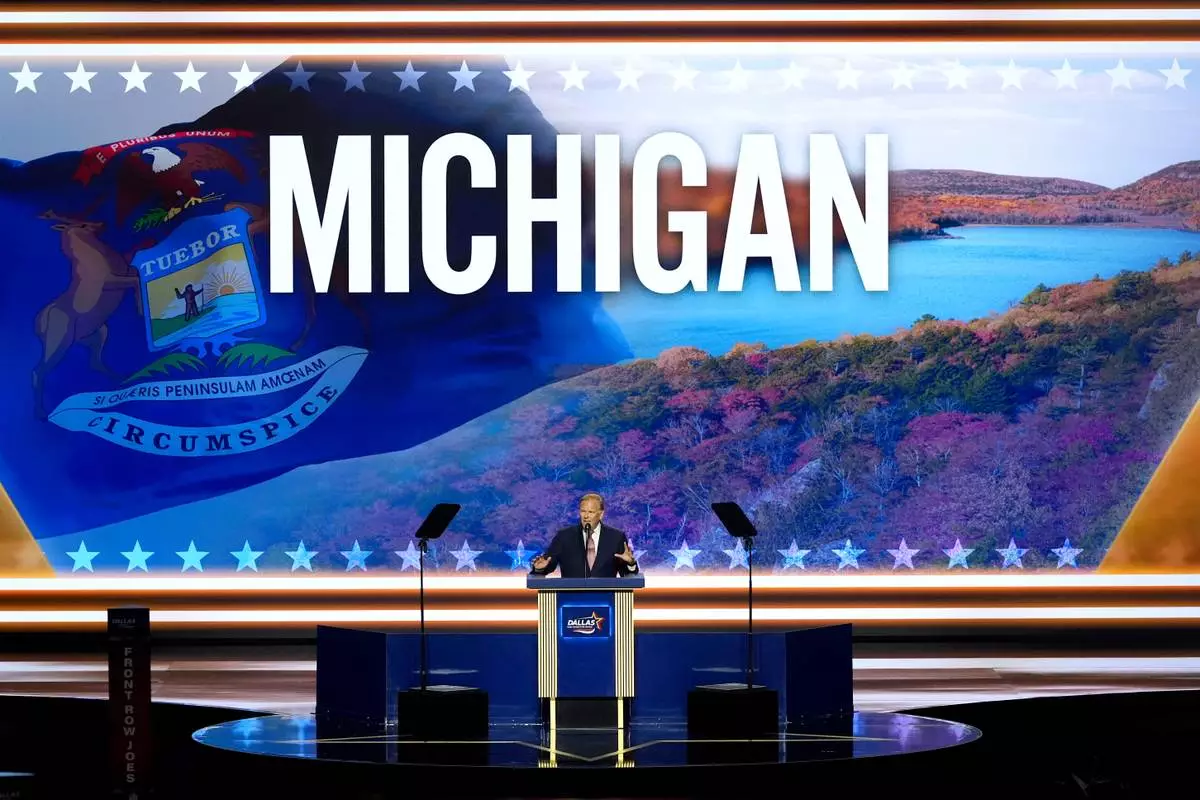
Republican Senate candidate Mike Rogers speaks at the Republican convention Thursday, Sept. 10, 2026, in Dallas. (AP Photo/Tony Gutierrez)
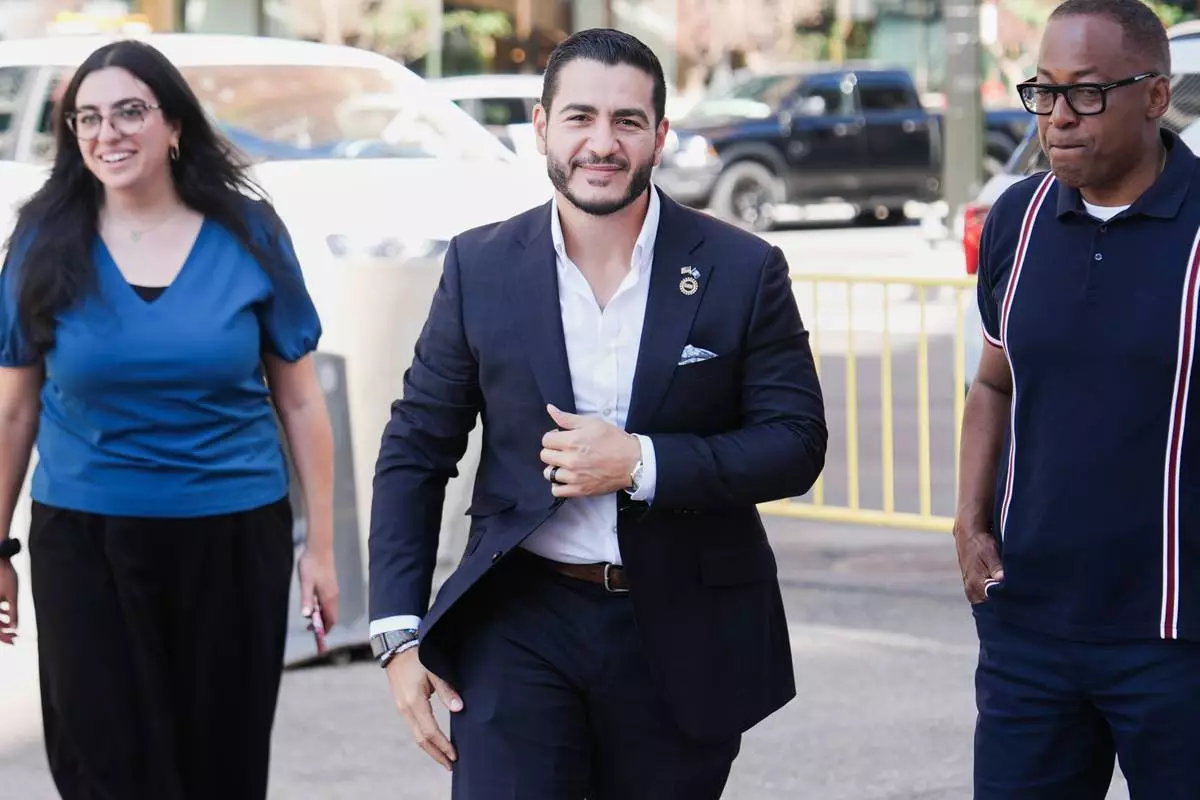
FILE - Abdul El-Sayed, center, arrives for a news conference at the Spirit of Detroit shortly after winning the Democratic nomination for U.S. Senate in Michigan, Aug. 5, 2026, in Detroit. (AP Photo/Julia Demaree Nikhinson, File)
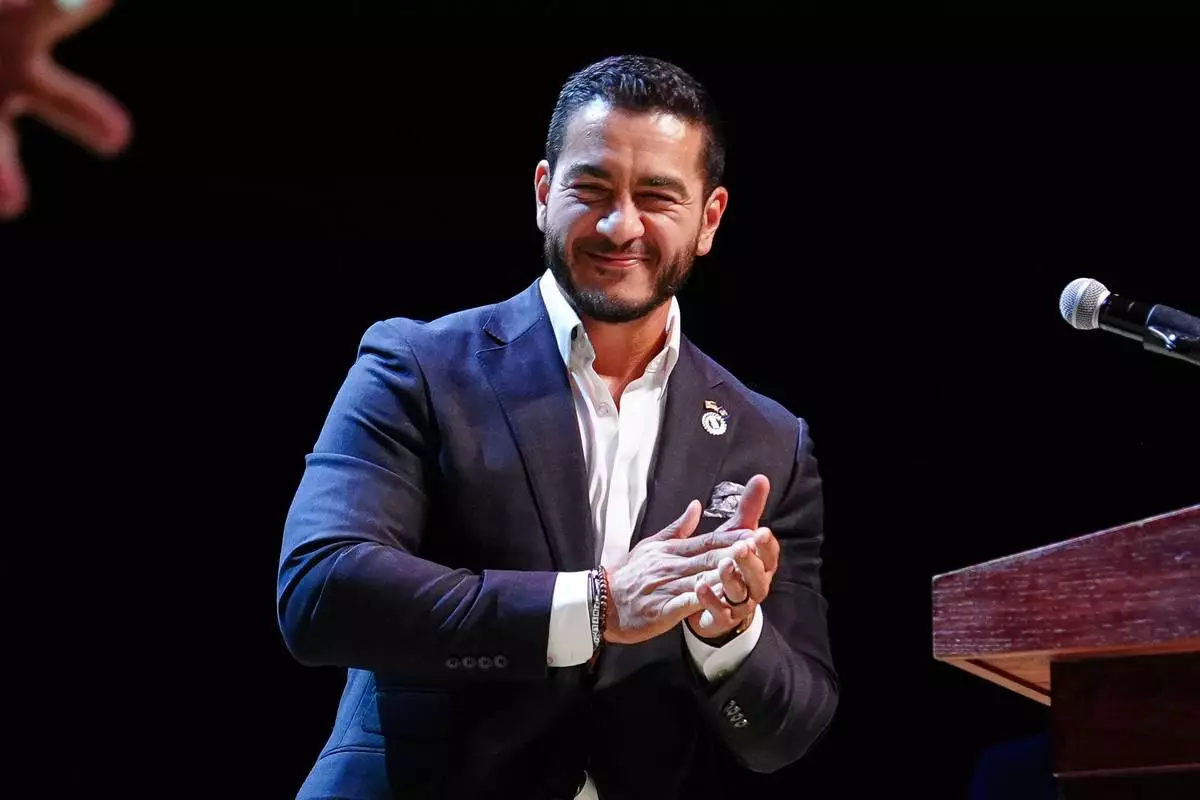
FILE - Abdul El-Sayed, a progressive candidate in the Democratic primary for U.S. Senate in Michigan, speaks during a primary election night event, Aug. 5, 2026, in Detroit. (AP Photo/Julia Demaree Nikhinson, File)