The United States has warned its allies that deliveries of key weapons could be delayed by up to five years due to depleted ammunition stocks, Bloomberg reported on Saturday.
The report says that Germany has asked the U.S. to expedite deliveries of Tomahawk cruise missiles and Typhon missile systems, but U.S. stocks of these weapons have been depleted, and manufacturers are unlikely to fulfill the relevant orders within the next five years.
It cited U.S. officials as saying that following the U.S.-Israeli military strikes against Iran in February of this year, U.S. weapons deliveries to some Eastern European countries had already been delayed. The Pentagon did not respond to media requests for comment.
The report noted that it is estimated the U.S. used more than half of its Patriot missiles, a third of its Tomahawk missiles and nearly half of its Terminal High Altitude Area Defense (THAAD) interceptors during the conflict with Iran.
The U.S. Congressional Budget Office released a report this month stating that since June 2025, the U.S. stockpile of interceptor missiles has been depleted by a half to two thirds and even with increased production, it would take at least five years to replenish the stockpile, according to Bloomberg.
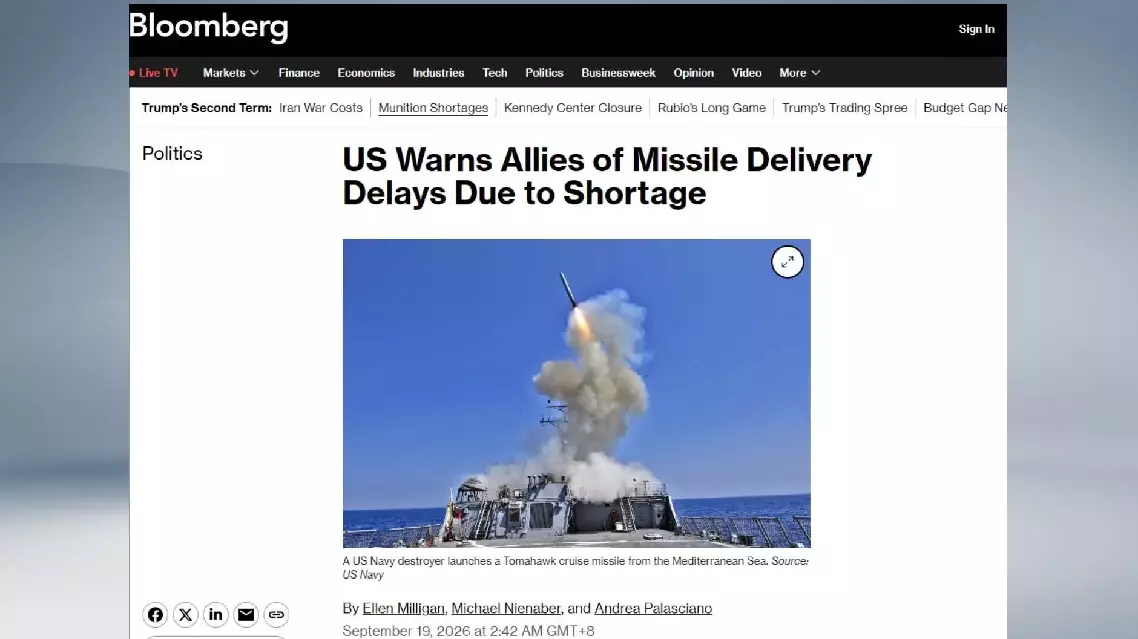
US warns allies of weapons delivery delay: report
Faulty intelligence, outdated satellite imagery and heavy reliance on artificial intelligence (AI) are blamed for a U.S. strike on an Iranian elementary school that killed more than 160 people, mostly pupils, Bloomberg reported Saturday, citing officials involved in a Pentagon internal investigation.
Two U.S. Tomahawk missiles struck the Shajarah Tayyebeh elementary school in the Iranian city of Minab on Feb 28 when the United States and Israel launched large-scale military operations against Iran.
The internal investigation uncovered a series of avoidable mistakes, the report said.
Citing the U.S. officials, the report noted that although the attack site had been identified as a military facility years earlier, commercial satellite imagery had long shown that its use had changed. Images from 2018 even showed brightly colored walls and a soccer pitch.
U.S. intelligence analysts had identified these changes as early as 2019 and recorded the relevant information in a system that is not connected to the main military intelligence database.
Within the U.S. Central Command (CENTCOM), which led the operation, some personnel relied too heavily on the Maven Smart System, an AI-enabled military platform developed by U.S. software firm Palantir Technologies.
According to the officials, some CENTCOM personnel had expected the system to flag outdated information or inconsistencies in the underlying intelligence gathered on potential targets. A spokesperson for Palantir Technologies, however, said that the company "is not responsible for the underlying data nor identifying intelligence deficiencies."
The report also said that in late February, the U.S. government ordered the large-scale airstrike. In the first 24 hours alone, more than 1,000 Iranian targets were struck.
The U.S. officials said the order reduced the time available for finalizing targets, and that the sense of urgency -- combined with information gaps, cuts to civilian protection personnel and an overreliance on AI -- collectively led to the fatal error.
The officials involved in the internal investigation revealed that, just hours after the attack, some Pentagon personnel were already aware that the United States was responsible. However, the U.S. has yet to publicly acknowledge responsibility.
U.S. officials said that although a comprehensive investigation report was largely completed several months ago, it remains unreleased, with all details kept strictly confidential.
A Pentagon spokesperson said the incident is still under investigation and declined to comment further.
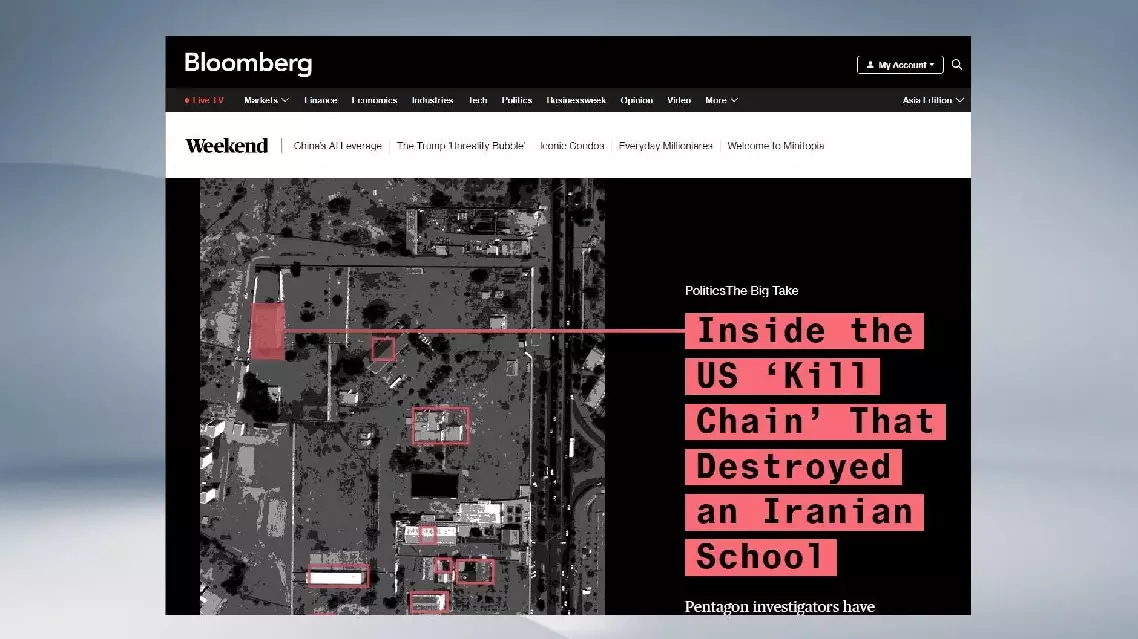
AI, stale data blamed for U.S. strike on Iranian school