CINCINNATI (AP) — Chicago Cubs third baseman Alex Bregman left Sunday's game against the Cincinnati Reds after being struck in the face by a foul ball while standing in the on-deck circle.
In the fourth inning, left-handed batting Michael Busch fouled off a pitch from Reds right-hander Luis Mey that struck Bregman, who immediately jogged toward the Cubs' dugout with his hand over his left eye.
Bregman was escorted by a trainer down the dugout steps and into the clubhouse, with blood visible on his face. Matt Shaw pinch-hit for Bregman.
Bregman is batting .260 with 26 home runs and 88 RBIs in 152 games. He signed a $175 million, five-year free agent deal in January.
The Cubs could clinch a postseason berth with a win Sunday and a Diamondbacks loss.
See AP’s full MLB coverage here

Chicago Cubs' Alex Bregman advances to third base on a double by Ian Happ during the first inning of a baseball game against the Cincinnati Reds, Sunday, Sept. 20, 2026, in Cincinnati. (AP Photo/Kareem Elgazzar)

Chicago Cubs' Alex Bregman celebrates after a one-run single during the first inning of a baseball game against the Cincinnati Reds, Sunday, Sept. 20, 2026, in Cincinnati. (AP Photo/Kareem Elgazzar)
BERLIN (AP) — German Chancellor Friedrich Merz suffered a bruising electoral setback in two state elections on Sunday, including a historic defeat for his party, but vowed to press ahead with potentially painful reforms to Europe’s biggest economy.
Projections by public broadcaster ARD on Sunday night indicated that Merz's center-right Christian Democratic Union, or CDU, came in with just 5% in Mecklenburg-Western Pomerania — the lowest result since World War II for the party in any state. The anti-migration, Russia-friendly Alternative for Germany, or AfD, party made significant gains Sunday. The projections were based on exit polls and partial counting for ARD television.
Merz acknowledged his party's result as a “disaster,” but struck a defiant note, rejecting any retreat from his government’s reform agenda. He argued that Germany’s economic and political problems made difficult and potentially unpopular reforms more urgent, not less so, and pledged to press ahead.
“What needs to be done now requires backbone, steadfastness, and patience,” Merz said in a statement shortly after the exit polls were announced on public television. “I will demonstrate these qualities as chairman of the CDU and, above all, as chancellor of our country.”
In Berlin, projections showed the CDU was to come in second with 19.1%, behind the Left party at 25.3%, according to ARD.
Merz’s authority was already damaged by CDU's stinging defeat to AfD in the Sept. 6 election in the small eastern state of Saxony-Anhalt. That result shocked many Germans who had believed their country had developed an immunity to nationalism and assertions of racial superiority after confronting the horrors of its Nazi past through education and laws to outlaw persecution.
On Sunday, AfD also made big gains in both states. In Mecklenburg-Western Pomerania, it garnered 37.9% of the vote, and in Berlin it achieved 16.2%, according to ARD. But it was nowhere close to being able to form a regional government.
AfD’s national co-leader, Tino Chrupalla, told ZDF television that “the chancellor’s statement today really was more than feeble — he announced that he’d carry on as before, instead of finally drawing the consequences and resigning.”
However, in an apparent reference to the far-right party, Merz said that his government’s reforms would be “the antidote to the poison of authoritarianism, which is penetrating ever deeper into our society as the fascination with authoritarianism grows.”
The government’s reforms include cuts to income tax for low- and middle-income families, an overhaul of the creaking pension system and a reduction of Germany's stifling bureaucracy.
Merz, 70, became Germany’s leader 16 months ago with promises to turn around an economy that has barely grown in years. But he has failed to lift a sullen national mood and become deeply unpopular.
The strong showing of AfD in the Saxony-Anhalt election, where it has the best chance yet of forming the country’s first far-right regional government since World War II, had further weakened the chancellor's standing on the national level as well.
In the past two weeks, there had been calls, even from within his own party, for him to be replaced as chancellor, although no top-level allies have called publicly for his departure, and many warned against “personnel debates.”
Philipp Amthor, a prominent CDU figure from Mecklenburg-Western Pomerania who now manages relations between the federal and state governments at the chancellery, said Sunday night that one problem in the campaign had been “the difficult personnel discussions” of recent weeks — an apparent reference to the speculation about Merz.
“It is good and right for these personnel discussions not to be continued now,” he said.
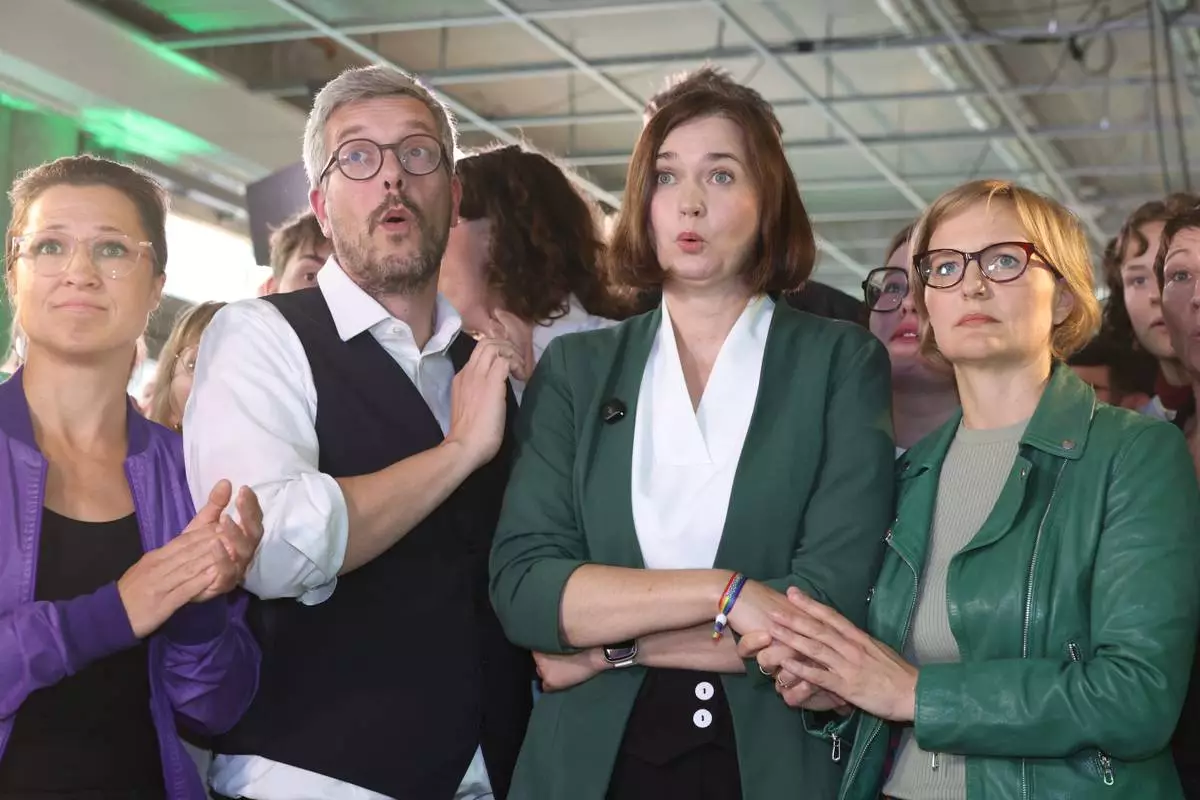
From right, Franziska Brantner, Federal Chair of Alliance 90/The Greens; Claudia Müller (Alliance 90/The Greens), the Greens' lead candidate in Mecklenburg-Western Pomerania and a member of the Bundestag; and Ole Krueger (Alliance 90/The Greens), state chair of Alliance 90/The Greens in Mecklenburg-Western Pomerania, react to the projections for the state election at their party's election party at the tisch coworking space, in Schwerin, Germany, Sunday, Sept. 20, 2026. (Ulrich Perrey/dpa via AP)
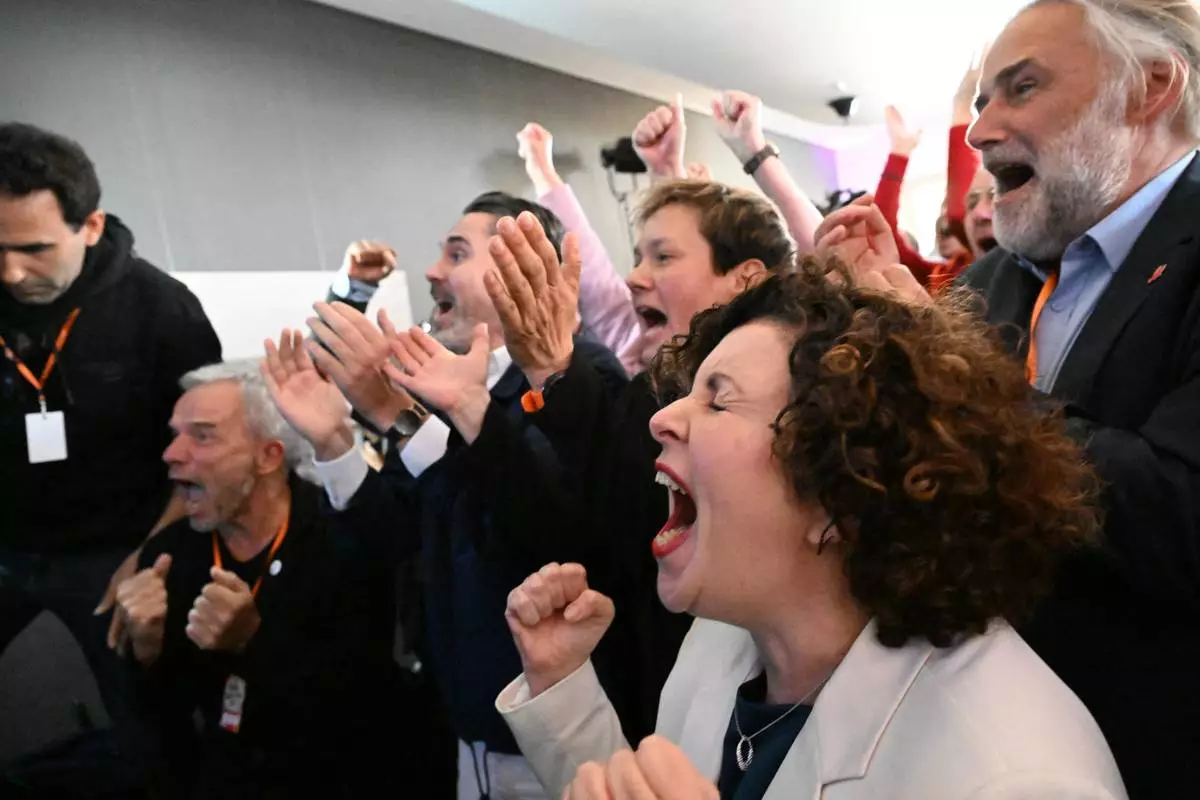
Amira Mohamed Ali, right, reactss to the first projections at the BSW election party in Schwerin, Germany, Sunday, Sept. 20, 2026. (Philip Dulian/dpa via AP)

Supporters and members of the Left Party react to the projected results of the House of Representatives election at an election party in Berlin, Sunday, Sept. 20, 2026. (Sebastian Gollnow/dpa via AP)
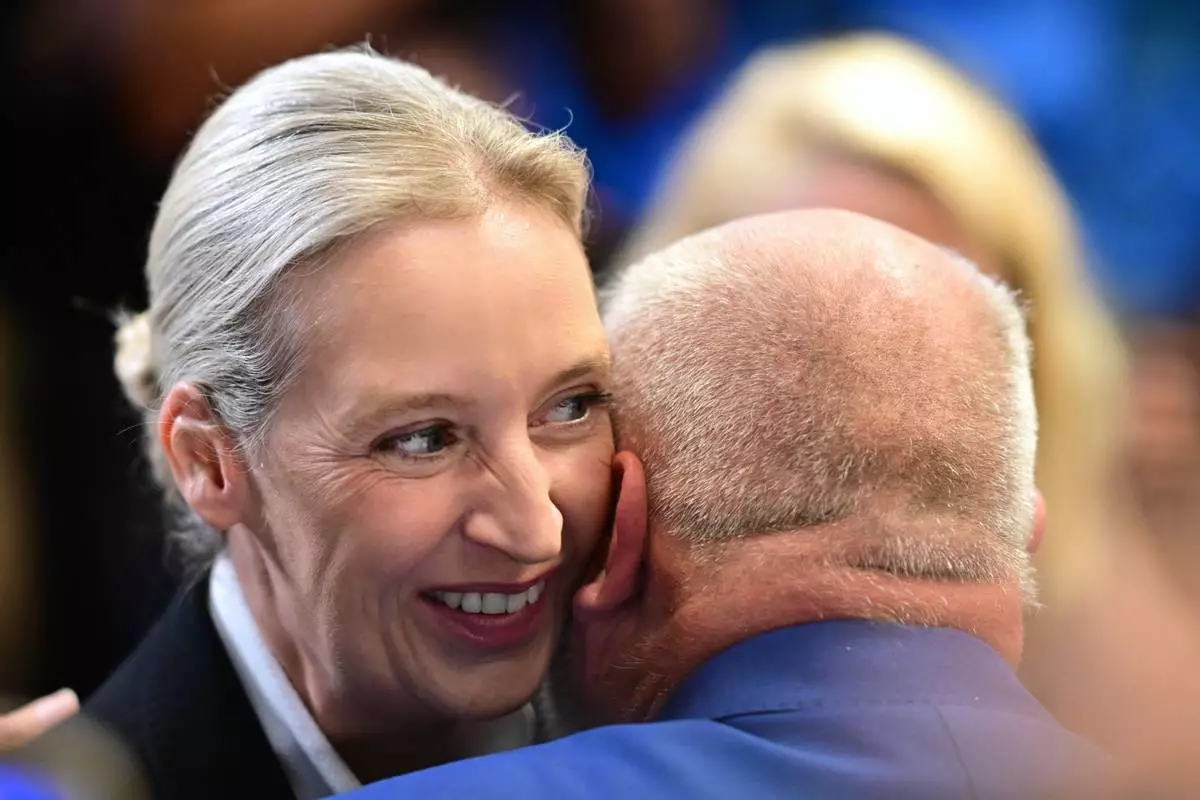
Alice Weidel (AfD), the party's federal chairwoman, reacts to the projections for the State Parliament election at the AfD election party in Berlin, Sunday, Sept. 20, 2026. (Fabian Sommer/dpa via AP)
Russian citizen line up to cast their vote for Russian parliament elections at the Russian embassy in Berlin, Germany, Sunday, Sept. 20, 2026. (AP Photo/Markus Schreiber)
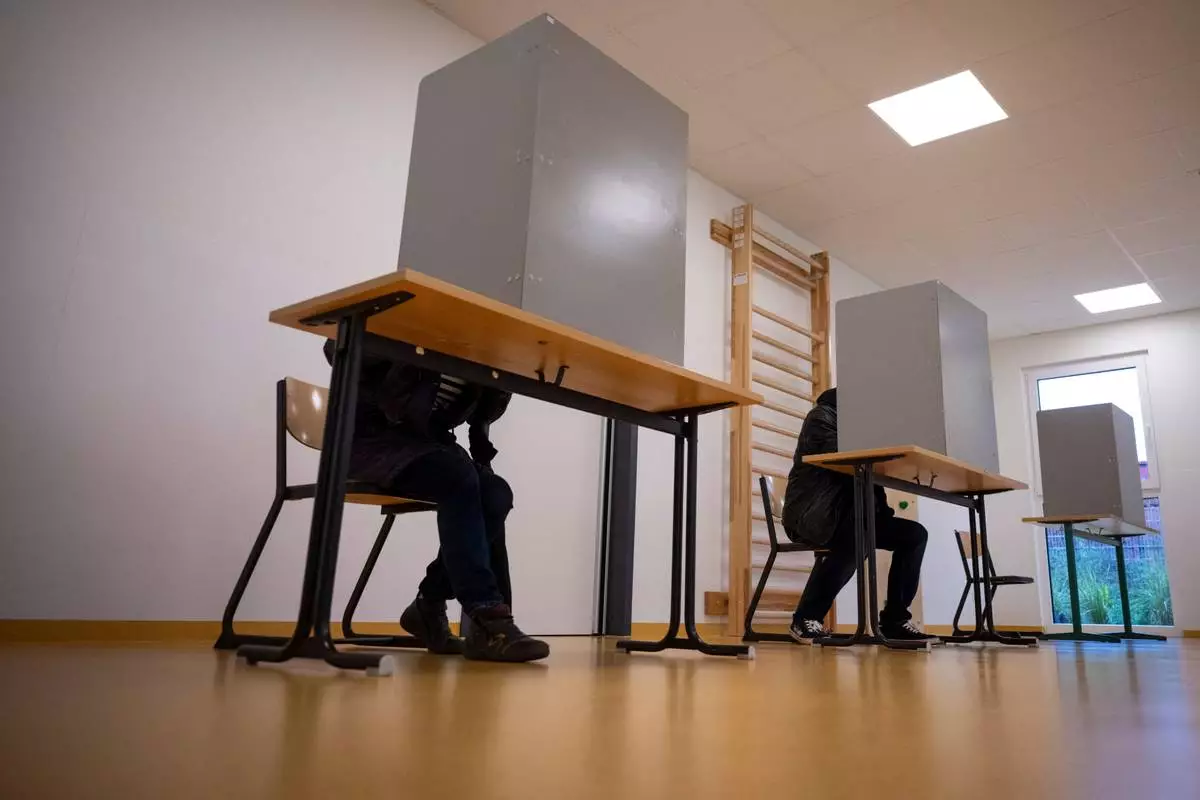
Voters sit at a voting booth in Schwerin, Germany, Sunday, Sept. 20, 2026, as the vote for the Mecklenburg-Western Pomerania state election, Sunday, Sept. 20, 2026. (Philip Dulian/dpa via AP)
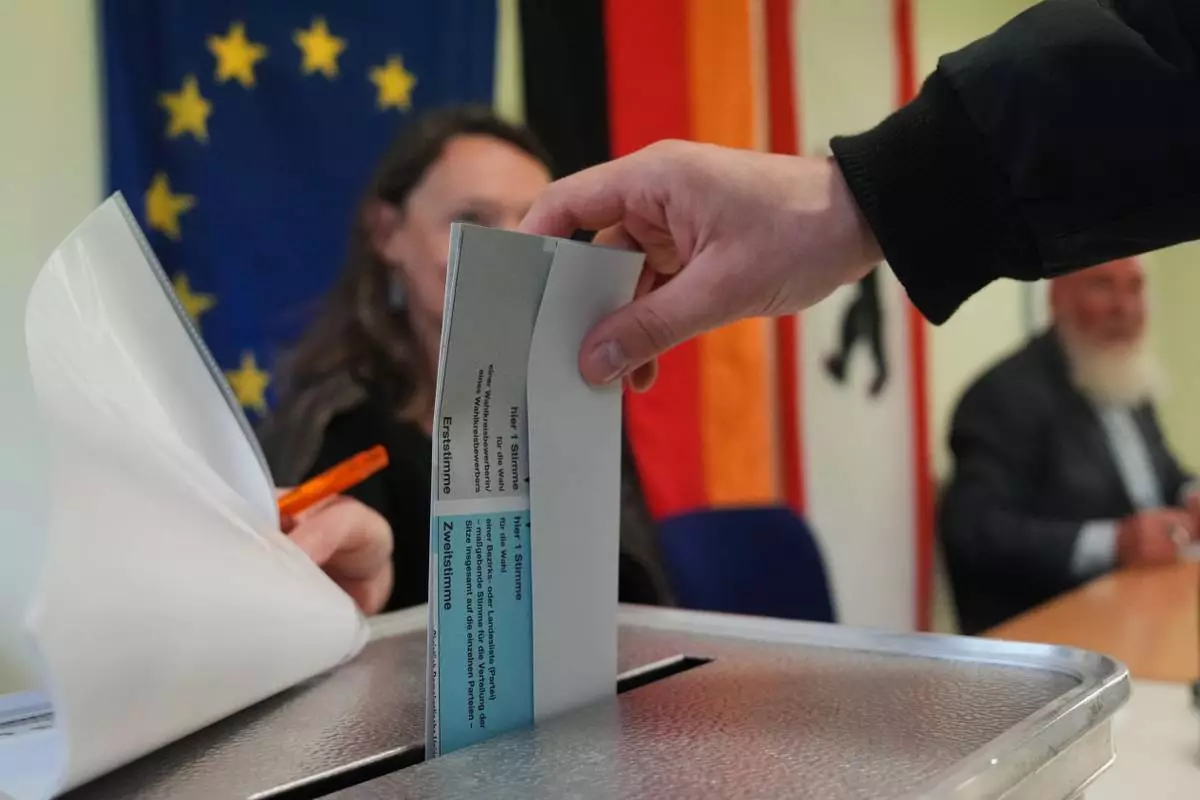
A man casts his vote at a polling station during the Berlin state election in Berlin, Germany, Sunday, Sept. 20, 2026. (AP Photo/Markus Schreiber)
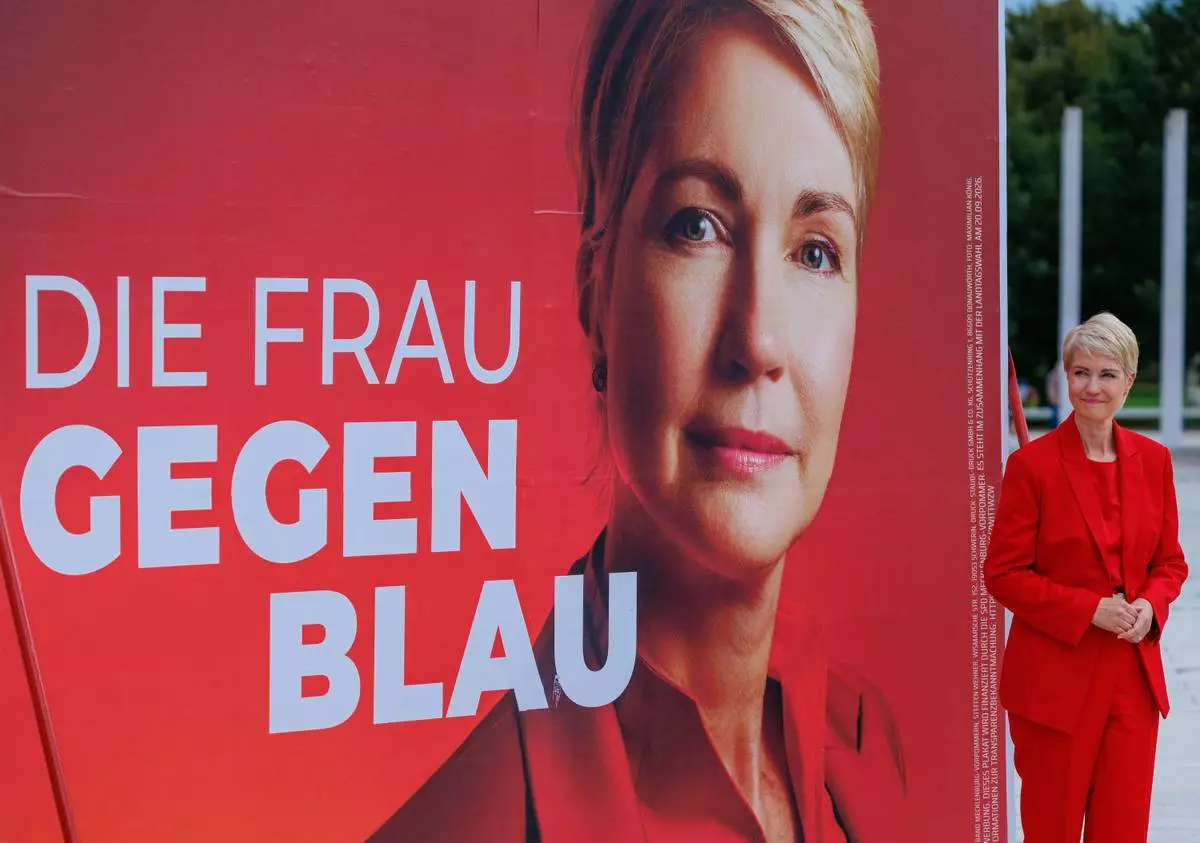
Social Democratic Party Prime Minister of Mecklenburg-Western Pomerania and the party's top candidate for the upcoming state election Manuela Schwesig poses in front of an election campaign poster reading "The Woman Against Blue", in Schwerin, Germany, Monday, Sept. 7, 2026. ( Jens Buettner/dpa via AP)
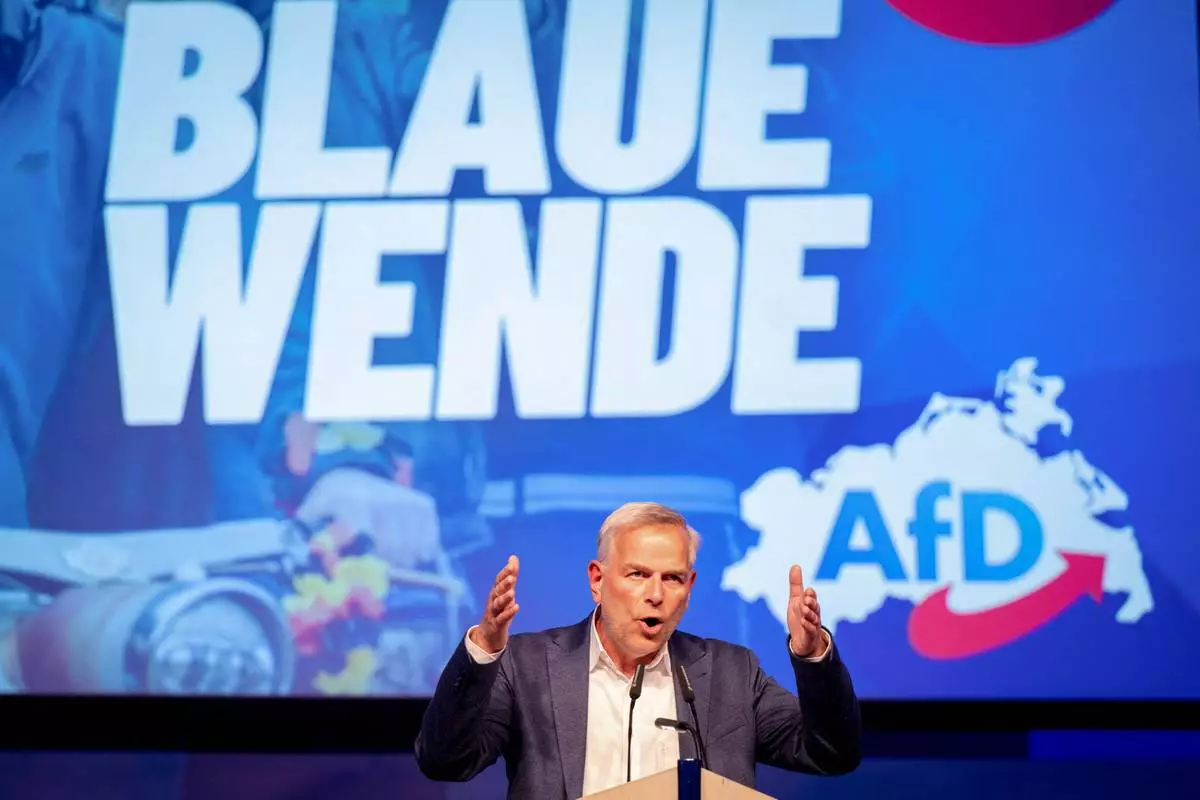
Leif-Erik Holm, the AfD's candidate for state premier in Mecklenburg-Western Pomerania, speaks at the campaign's closing rally in Neubrandenburg, Germany, on Friday, Sept. 18, 2026. (Philip Dulian/dpa via AP)
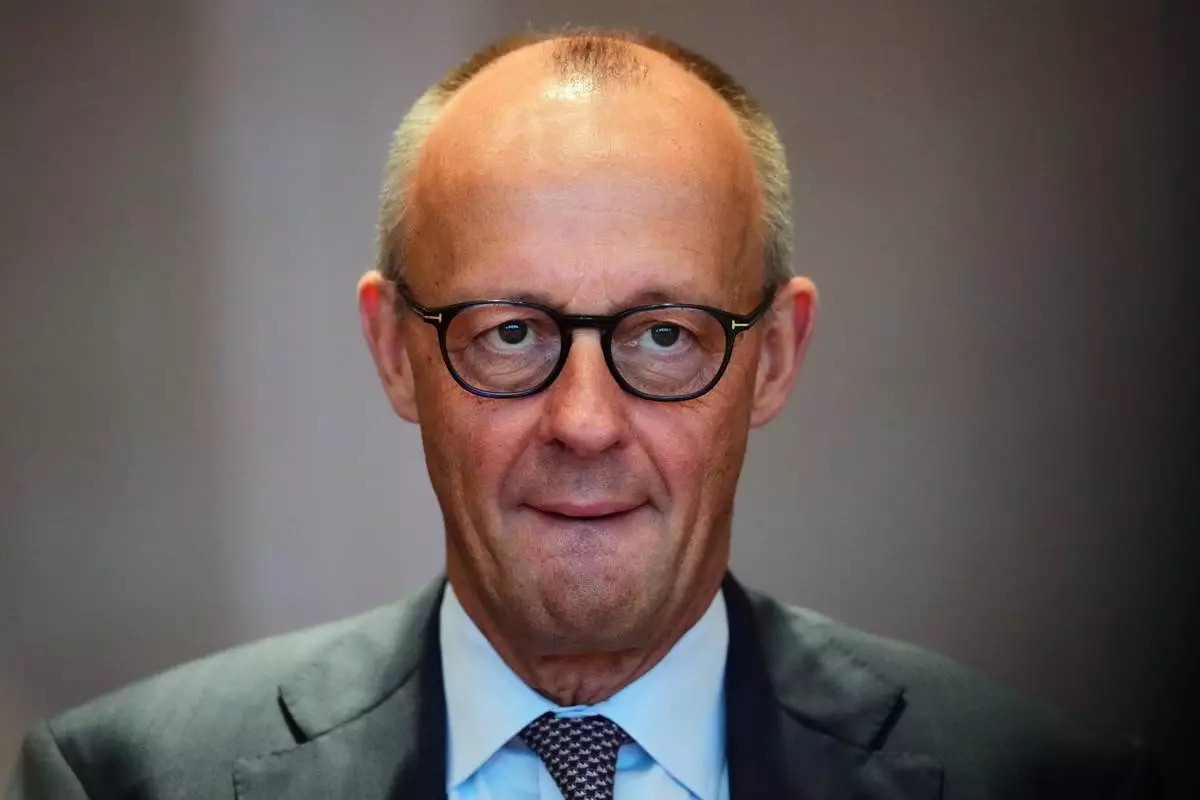
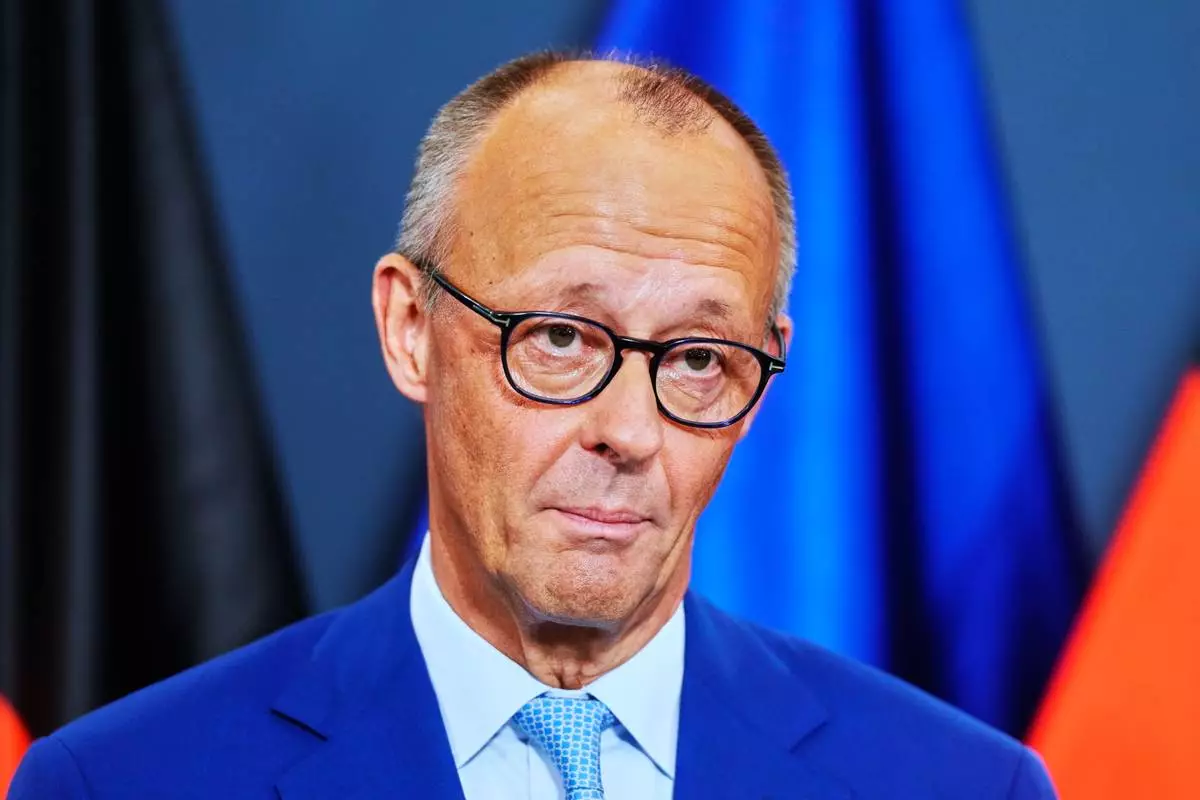
German Chancellor Friedrich Merz arrives for the Cabinet meeting at the Chancellery in Berlin, Germany, Wednesday, Sept. 16, 2026. (AP Photo/Markus Schreiber)