The frequency of China's commercial rocket launches is increasing due to the growing demand for low Earth orbit satellite constellations construction.
CAS Space is one of the major players in the commercial launch sector. On Sunday, the company's Lijian-1 Y18 carrier rocket sent nine satellites into space on the rocket series' 16th mission.
According to an expert from the company, the rapid development of satellite constellations in recent years has increased demand for launch windows and deployment speed. Consequently, commercial rocket launches are shifting from the previous "one mission, one preparation" approach to high-density, routine launches.
"Our early launches were primarily for a small number of experimental satellites. Nowadays, the tight schedule and high launch window demand of microsatellite deployment, combined with the strong demand for shared launch, require stable and reliable 'space shuttles.' This requires our rockets to shift from the previous build-to-order model to a continuous delivery capability based on batch production and scheduled shipments," said Meng Xiangfu, deputy chief commander of the Lijian-1 program.
The launch missions for the Lijian-1 has been booked up until the second half of 2027. The development team has established a pulsating production line with an annual production capacity of up to 30 rockets.
In addition, through the use of dedicated launch stations and process optimization, the test-and-launch cycle at the launch site can be reduced to less than 10 days, ensuring increased launch frequency through mass production and rapid turnaround.
"Airline-style rocket launches are characterized by four core elements: fixed schedules, rapid turnaround, bulk supply, and reliable fulfillment. At this stage, we have officially entered the era of airline-style launches, marking a transition from experimental launches to routine operations," said Sun Liangjie, deputy chief designer of the Lijian-1 carrier rocket.
Moving forward, the Lijian-1 rocket will conduct its first sea-based launch. By combining routine land-based launches with mobile sea-based launches, it will better meet the diverse mission requirements for satellite constellation deployment and rapid constellation replenishment.
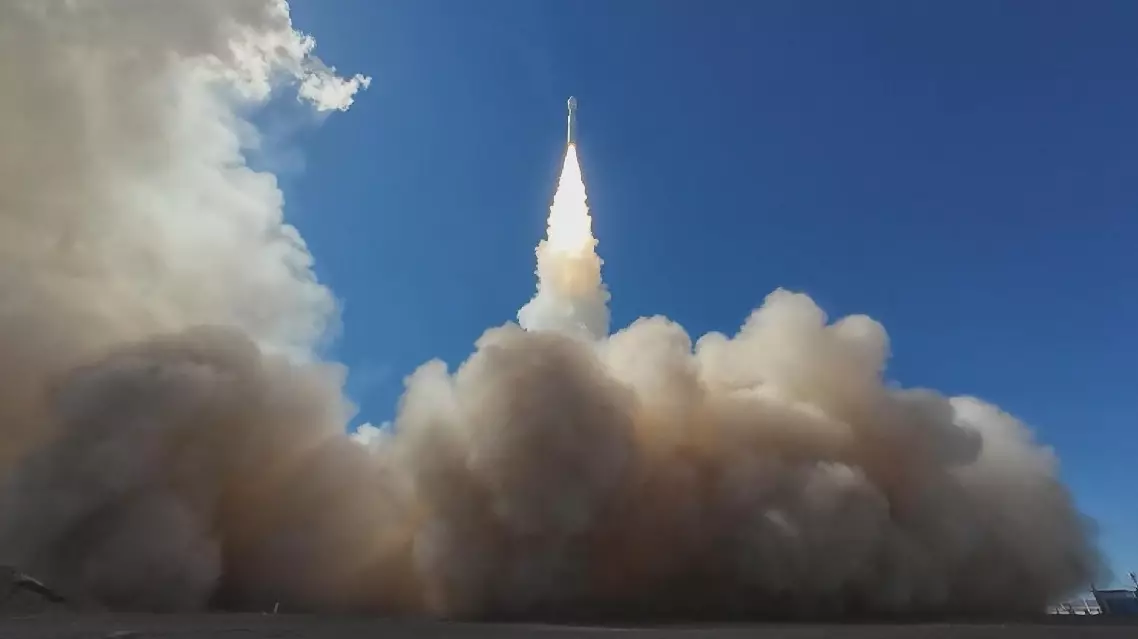
China sees increased frequency of commercial rocket launch