EDB announces Study Subsidy Scheme for Designated Professions/Sectors for 2027/28 cohort - undergraduate programmes
The Education Bureau (EDB) announced today (September 21) that the Study Subsidy Scheme for Designated Professions/Sectors (SSSDP) will subsidise a total of 4 711 places in 59 undergraduate programmes, covering 3 390 places in 59 first-year-first-degree (FYFD) programmes and 1 321 places in 47 top-up degree (TUD) programmes of eight post-secondary institutions for the cohort to be admitted in the 2027/28 academic year.
The programmes of the SSSDP fall under 10 disciplines that have been identified as having keen manpower demand, namely architecture and engineering, computer science, creative industries, financial technology, healthcare, insurance, logistics, sports and recreation, testing and certification, and tourism and hospitality. The programmes include 20 applied degree programmes, which will receive additional subsidies, with a view to further strengthening the vocational and professional education and training progression pathway at the post-secondary level.
The programmes and numbers of subsidised places under the SSSDP are determined by the EDB in consultation with relevant policy bureaux and departments. Details of the participating institutions, the programmes and the numbers of subsidised places are listed in the Annex.
In the 2027/28 academic year, the annual subsidy amounts for laboratory-based programmes and non-laboratory-based programmes will be at $81,450 and $46,780 respectively. For applied degree programmes, including the additional annual subsidies, the total annual subsidy amounts will be at $89,620 for laboratory-based programmes and $51,880 for non-laboratory-based programmes.
The subsidy amounts are applicable to both new and continuing eligible students. The subsidy is tenable for the normal duration of the programmes concerned. Subsidised students will pay a tuition fee with the subsidy applied. Students in need may still apply for student financial assistance from the Student Finance Office of the Working Family and Student Financial Assistance Agency in respect of the actual amount of tuition fee payable.
The subsidised FYFD intake places are mainly allocated through the Joint University Programmes Admissions System to ensure that eligible students are selected on a merit basis, whereas the subsidised places of the TUD programmes are allocated in accordance with the existing admission arrangements of the self-financing TUD programmes, i.e. through direct admission by institutions. Students can apply for admission to the programmes directly through the institutions concerned.
The SSSDP was launched in the 2015/16 academic year to subsidise students to pursue designated full-time locally accredited self-financing undergraduate programmes in selected disciplines. The objectives are as follows:
(1) to increase the supply of subsidised undergraduate places by leveraging the supply of the self-financing post-secondary education sector;
(2) to nurture talent in support of specific industries with keen demand for human resources;
(3) to encourage the self-financing post-secondary education sector to offer programmes in selected disciplines that meet Hong Kong's social and economic needs by providing targeted financial support; and
(4) to support the healthy and sustainable development of the self-financing post-secondary education sector to complement the University Grants Committee-funded sector in broadening and diversifying study opportunities.
The SSSDP has been expanded to include TUD programmes with effect from the 2023/24 academic year. As for the designated sub-degree programmes, the relevant details for the 2027/28 cohort, including the participating institutions, the sub-degree programmes, the numbers of subsidised places and the subsidy amounts, will be announced in due course.
Details of the SSSDP are available on the EDB website (www.cspe.edu.hk/sssdp).
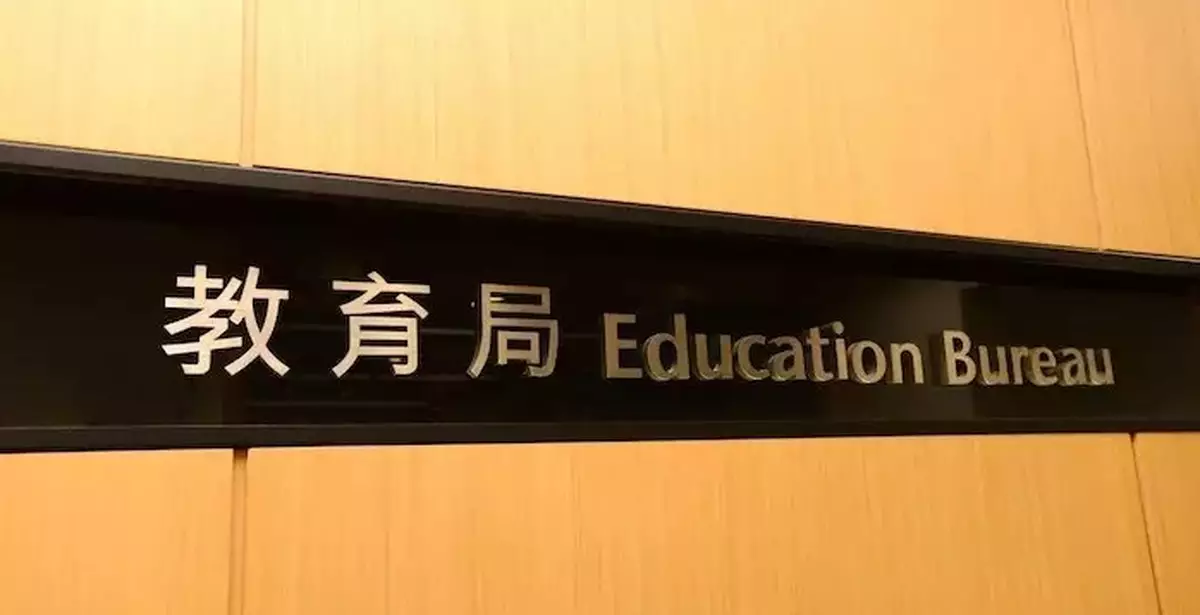
The Education Bureau, Photo source: reference image
Balance of Payments, International Investment Position and External Debt statistics for the second quarter of 2026
The Census and Statistics Department (C&SD) released today (September 21) the preliminary Balance of Payments (BoP), International Investment Position (IIP) and External Debt (ED) statistics of Hong Kong for the second quarter of 2026.
I. Balance of Payments
Hong Kong recorded a BoP surplus of $54.6 billion (6.5% of Gross Domestic Product (GDP)) in the second quarter of 2026. Reserve assets correspondingly increased by the same amount. This compared with a BoP surplus of $35.2 billion (4.2% of GDP) in the first quarter of 2026.
Current account
The current account recorded a surplus of $96.0 billion (11.4% of GDP) in the second quarter of 2026. This reflects that Hong Kong’s savings was greater than its investment, enabling Hong Kong to accumulate external financial assets (such as equity securities or debt securities) as a buffer against global financial volatilities. Compared with the current account surplus of $93.1 billion (11.8% of GDP) in the second quarter of 2025, the increase in surplus was mainly due to the increases in net inflow of primary income and services surplus, partly offset by the increase in goods deficit.
The goods deficit increased to $59.1 billion in the second quarter of 2026, compared with $38.3 billion in the same quarter of 2025. Over the same period, the services surplus increased from $30.9 billion to $38.5 billion. The primary income inflow and outflow amounted to $664.6 billion and $540.9 billion respectively, thus yielding a net inflow of $123.7 billion in the second quarter of 2026, compared with a net inflow of $107.0 billion in the same quarter of 2025.
Financial account
An overall increase in financial non-reserve assets amounting to $76.8 billion (9.1% of GDP) was recorded in the second quarter of 2026, as against an overall decrease of $36.7 billion (4.3% of GDP) in the first quarter of 2026. The overall increase recorded in the second quarter of 2026 was due to the substantial net increase in portfolio investment, partly offset by the net decreases in other investment, financial derivatives and direct investment.
In the second quarter of 2026, reserve assets increased by $54.6 billion, compared with an increase of $35.2 billion in the first quarter of 2026.
II. International Investment Position
At the end of the second quarter of 2026, both Hong Kong's external financial assets and liabilities stood at a very high level, amounting to $62,863.5 billion (18.3 times of GDP) and $43,449.8 billion (12.7 times of GDP) respectively, a typical feature of a prominent international financial centre.
Hong Kong's net external financial assets (i.e. assets minus liabilities) amounted to $19,413.7 billion (5.7 times of GDP) at the end of the second quarter of 2026, compared with $18,448.6 billion (5.5 times of GDP) at the end of the first quarter of 2026. Hong Kong's net external financial assets to GDP ratio is one of the largest in the world, which provides the economy with a strong cushion against sudden external shocks.
III. External Debt
At the end of the second quarter of 2026, Hong Kong's gross ED amounted to $17,869.1 billion (5.2 times of GDP). Compared with $16,630.4 billion (4.9 times of GDP) at the end of the first quarter of 2026, gross ED increased by $1,238.7 billion. This was attributable to the increases in ED of all sectors, in particular the banking sector, other sectors and debt liabilities in direct investment (intercompany lending).
As one of the world's major financial centres, Hong Kong has a considerable amount of ED arising from the daily banking businesses of its local banking sector. At the end of the second quarter of 2026, 52.7% of Hong Kong's ED was attributable to the banking sector. Other ED mainly consisted of ED of other sectors (31.1%) and debt liabilities in direct investment (intercompany lending) (14.6%).
Further information
BoP is a statistical statement that systematically summarises, for a specific time period (typically a year or a quarter), the economic transactions of an economy with the rest of the world (i.e. between residents and non-residents).
IIP is a balance sheet showing the stock of external financial assets and liabilities of an economy at a particular time point. The difference between the total value of external financial assets and liabilities is the net IIP of the economy, which provides a measure of net financial claims on non residents plus gold bullion held as monetary gold.
Gross ED, at a particular time point, is the outstanding amount of those actual current, and not contingent, liabilities that are owed to non-residents by residents of an economy and that require payment of principals and / or interests by the debtors at some time points in the future.
Table 1 presents Hong Kong's BoP. Table 2 presents the detailed current account and capital account, while Table 3 presents the detailed financial account. Table 4 shows Hong Kong's IIP, and Table 5 shows Hong Kong's ED.
Statistics on BoP, IIP and ED for the second quarter of 2026 are preliminary figures, which are subject to revision upon the availability of more data.
The latest statistical tables of BoP (including seasonally adjusted current account), IIP and ED can be downloaded at the website of the C&SD (www.censtatd.gov.hk/en/scode260.html). Analysis of the statistics, together with the conceptual and methodological details, are presented in the publication Balance of Payments, International Investment Position and External Debt Statistics of Hong Kong, Second Quarter 2026 published by the C&SD. Users can download the publication at the website of the C&SD (www.censtatd.gov.hk/en/EIndexbySubject.html?pcode=B1040001&scode=260).
For enquiries about the BoP, IIP and ED statistics, please contact the Balance of Payments Section of the C&SD (Tel.: 3863 2330 or email: bop@censtatd.gov.hk).