Speech by SLW at 8th APEC Human Resources Development Ministerial Meeting in Nanjing (3)
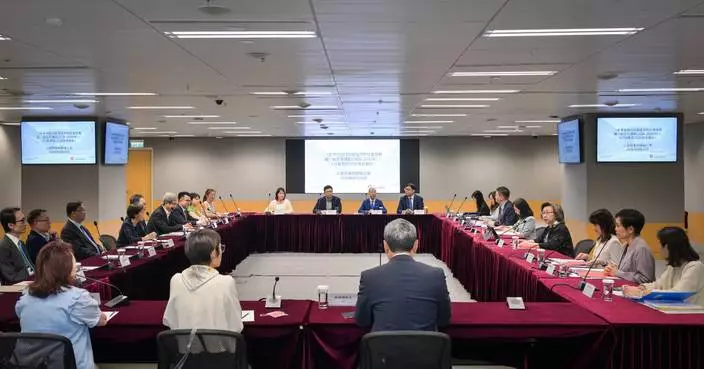
Following is the speech by the Secretary for Labour and Welfare, Mr Chris Sun, during his presentation on the discussion topic of "Strengthening and Optimising Social Security Systems for Efficiency, Adaptability and Accountability" at the 8th Asia-Pacific Economic Cooperation (APEC) Human Resources Development Ministerial Meeting in Nanjing this afternoon (September 21):
Madam Chair, , (Minister of Human Resources and Social Security, Ms Wang Xiaoping), fellow ministers and colleagues:
Good afternoon. We meet here today to address a structural reality that defines our generation: how can our social security system cope with a rapidly growing elderly population? It is my privilege to be here today to share Hong Kong, China's experience.
Demographic shift and economic reality
Societal ageing is a global trend and Hong Kong, China is no exception. As of today, elderly people aged 65 and above account for 24.4 per cent of Hong Kong, China's total population. By 2046, 20 years from now, it will exceed 2.7 million, meaning more than one in three residents in Hong Kong will be elderly. At the same time, our working-age population is shrinking due to a low birth rate.
Faced with this challenge, we must change our mindset. Today's elderly are healthier, better educated, and more active than past generations. Instead of viewing them as a burden on public resources, we should see them as valuable contributors to our economy and community.
A multitiered financial safety net
To support our elderly population, Hong Kong, China provides reliable financial protection through a multitiered system. Firstly, the Comprehensive Social Security Assistance Scheme serves as a safety net of last resort for those experiencing severe financial hardship. I will give an example. A struggling elderly single person receives about US$1,100 per month to cover basic needs. Secondly, we also have the Old Age Living Allowance providing a cash allowance of about US$550 per month for elderly residents with financial needs but who are not too badly off and fall outside the basic safety net. Thirdly, for seniors aged 70 or above, they are eligible for the Old Age Allowance at around US$210 per month, without any financial means test.
Together, these various types of cash allowance reach about 1.4 million elderly. So, that means for every four elderly residents in Hong Kong, three are receiving some form of cash allowance from the Government.
Shifting from welfare to empowerment
A financial safety net is only the foundation. Once basic needs are secure, our focus shifts to empowerment. We encourage active ageing so that seniors can stay fit, mentally sharp, and socially connected. To unleash their full potential, we have launched the Elder Academy Scheme to provide the elderly with continuous educational opportunities. Every year, around 200 schools and universities in Hong Kong together provide over 15 000 learning places on various subjects. In addition, we also encourage volunteerism among the elderly to foster mutual help that includes conducting home visits, providing basic repair support, etc. We consider it important to actively engage our elderly people, in particular the vibrant "young-olds", to support older generations. With adequate empowerment, we believe that our elderly can be a valuable asset instead of a liability to our society.
Closing remarks
In closing, fellow ministers and colleagues, the future of social security across the APEC region is not just about managing demographic shifts, but about unlocking human potential. By combining strong financial protection with active ageing programmes, Hong Kong, China seeks to turn the challenge of longevity into shared opportunities.
Thank you.