ENGLEWOOD, Colo. (AP) — The Denver Broncos heard it all offseason: they'd better not find themselves in close games again this season because their 11-3 record in such contests last year is unsustainable.
The thinking went that there will be a regression toward the mean if not a downright flip-flop in the win-loss column.
Click to Gallery
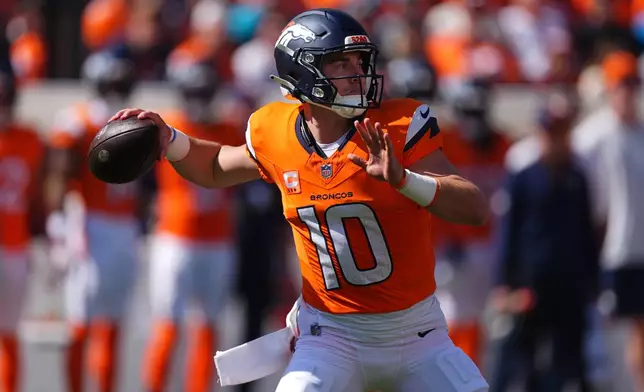
Denver Broncos quarterback Bo Nix passes against the Jacksonville Jaguars in the first half of an NFL football game in Denver, Sunday, Sept. 20, 2026. (AP Photo/David Zalubowski)
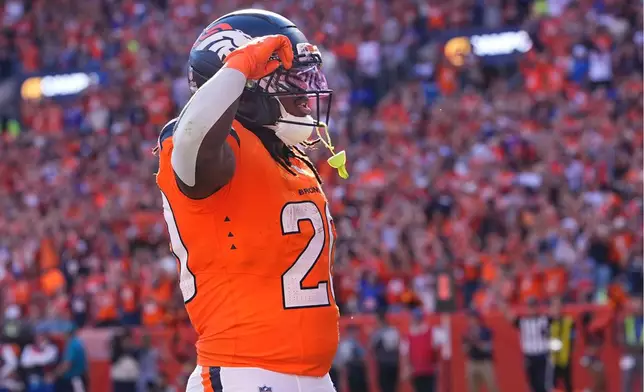
Denver Broncos running back Jonah Coleman celebrates after scoring a touchdown against the Jacksonville Jaguars in the second half of an NFL football game in Denver, Sunday, Sept. 20, 2026. (AP Photo/David Zalubowski)
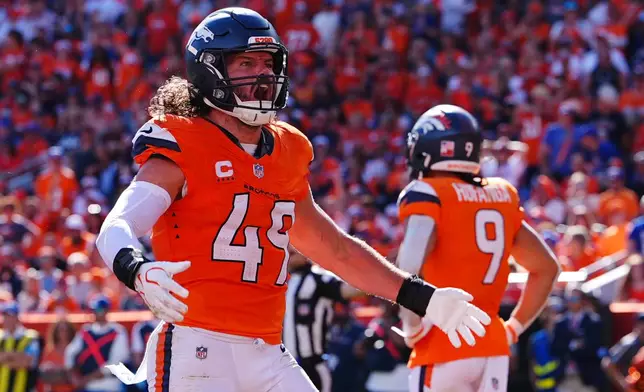
Denver Broncos linebacker Alex Singleton (49) celebrates after the Broncos stopped a drive by the Jacksonville Jaguars in the second half of an NFL football game in Denver, Sunday, Sept. 20, 2026. (AP Photo/David Zalubowski)
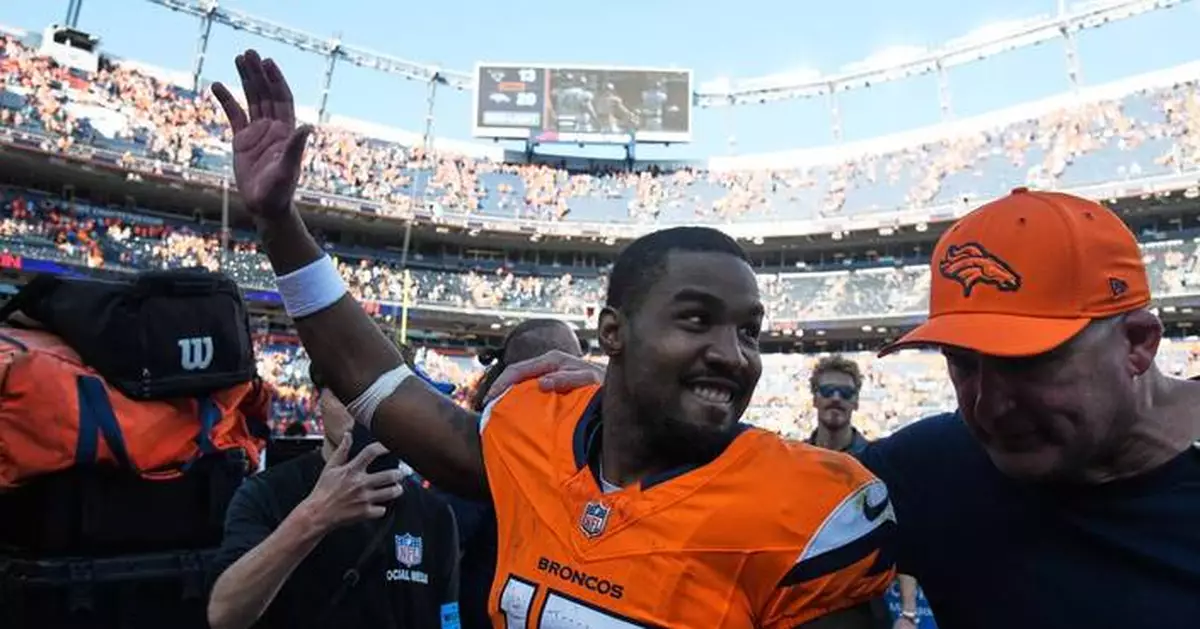
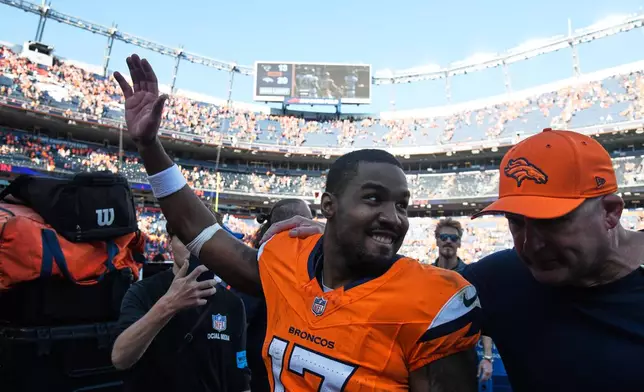
Denver Broncos wide receiver Jaylen Waddle, center, waves to fans as he leaves the field after an NFL football game against the Jacksonville Jaguars, Sunday, Sept. 20, 2026, in Denver. (AP Photo/Eric Lutzens)
What this notion doesn't factor in is that the Broncos (1-1) might just be building traits they can turn to in crunch time to pull out wins like they did Sunday when they scored the final 17 points for a 20-13 win over the Jacksonville Jaguars.
“Having our fair share of close games last year, being able to dig them out at the end definitely helps,” tight end Evan Engram said Monday. “Overall, we're just a very resilient group. ... We don't blink. We play the next play, we continue to fight and things go our way when we do that.”
Coach Sean Payton said over the summer that the best way to avoid a reversal of fortunes is to avoid close games. But when they do have a one-score contest, there's been nobody better since 2025.
“I think in a fair response to that, I think there are two things," Payton said. "We know this, that if at the start of the season we’re not addressing maybe some of the things that kept games a year ago close, that, analytically speaking, it’s hard to say you’re going to repeat the same 11 wins that you had maybe a year ago.
“Now each game’s different, but I also think there’s a confidence level in a team that because they’ve won before, they’ve been behind before and then how do they respond? So I think on the positive side, it’s that confidence having been here before, and then from a coaching perspective, ‘Hey, how do we find a way to not be in as many one-score games or behind in one-score games going forward?’” Payton said.
After a quiet Denver debut, WR Jaylen Waddle was electric with eight catches for 138 yards.
The Broncos still need to tighten things up in the mental department after collecting 10 accepted penalties covering 53 yards.
CB Riley Moss, whose interception in the second half fueled Denver's comeback and atoned for an earlier flag that negated a Denver takeaway.
CB Riley Moss, whose illegal contact penalty once again highlighted the thrive-or-die nature of the position and negated a strip/sack and recovery on the game's opening drive that might have changed the tenor of the entire game.
PR Marvin Mims was inactive as was RB R.J Harvey (hamstring), and J.K. Dobbins (hamstring) was sidelined in the second half. Payton himself has been in some noticeable discomfort during games because of a bad back that flared up over the summer. He said he underwent an epidural injection in his lower back more than a decade ago and “it really can get aggravated when you're standing for three and a half hours. No, there's no surgery for the back.”
Plus 124: in an otherwise evenly matched game, the Broncos produced 392 total yards to Jacksonville's 268.
After settling a score with the Jaguars, who beat them by two touchdowns in Denver last December, the Broncos host the Los Angeles Rams on Sunday night with Sean McVey's team coming off a short week after their Monday night matchup with the Giants.
See AP’s full NFL coverage here
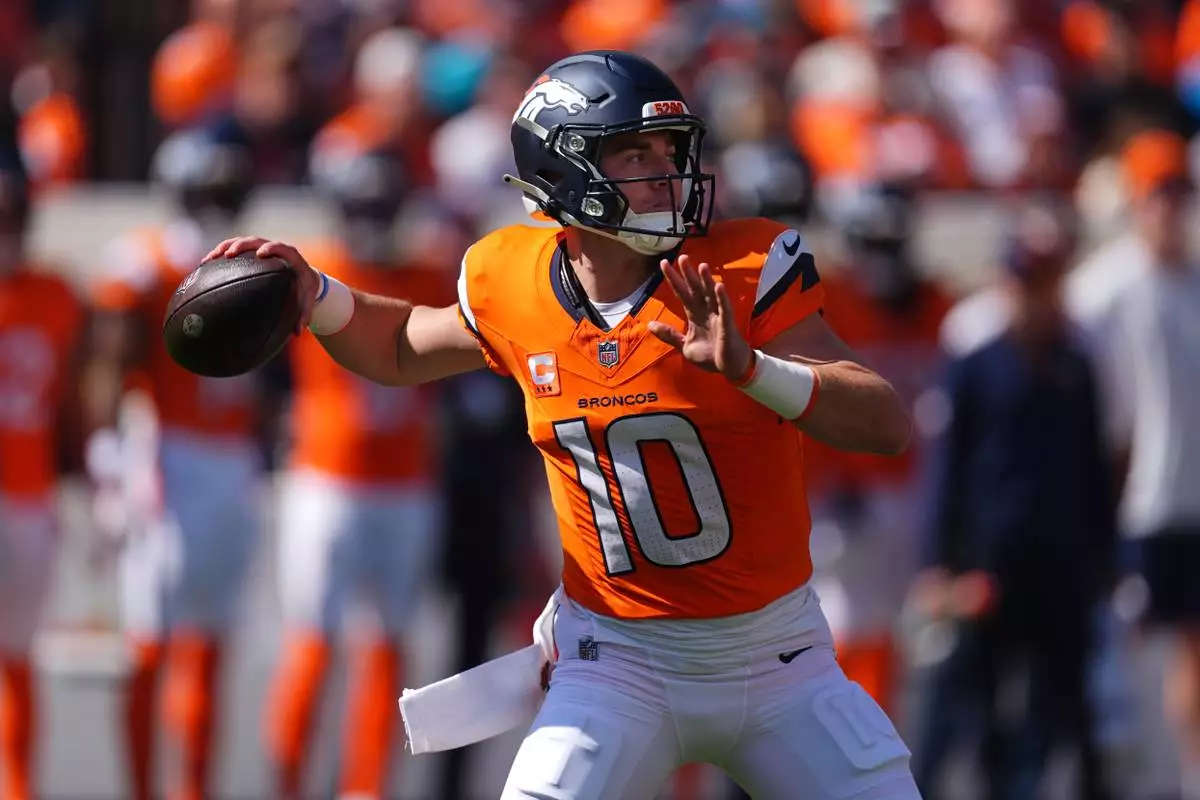
Denver Broncos quarterback Bo Nix passes against the Jacksonville Jaguars in the first half of an NFL football game in Denver, Sunday, Sept. 20, 2026. (AP Photo/David Zalubowski)
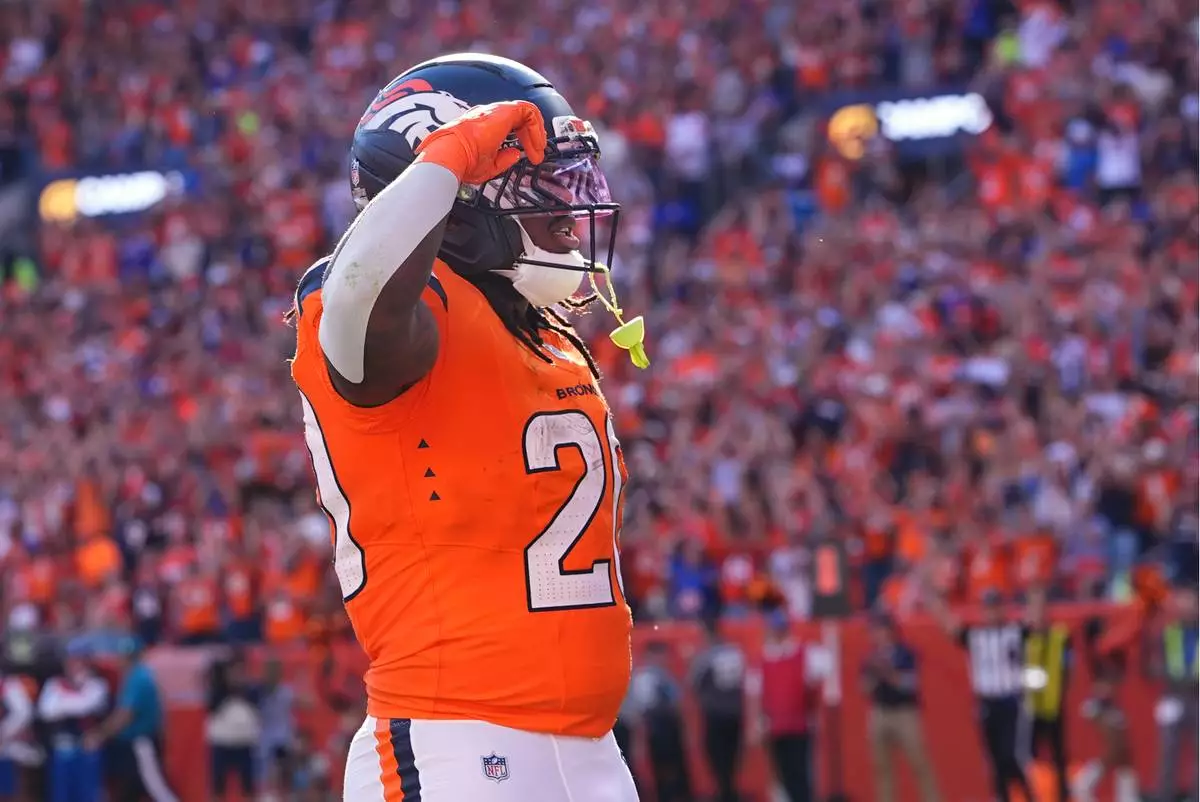
Denver Broncos running back Jonah Coleman celebrates after scoring a touchdown against the Jacksonville Jaguars in the second half of an NFL football game in Denver, Sunday, Sept. 20, 2026. (AP Photo/David Zalubowski)
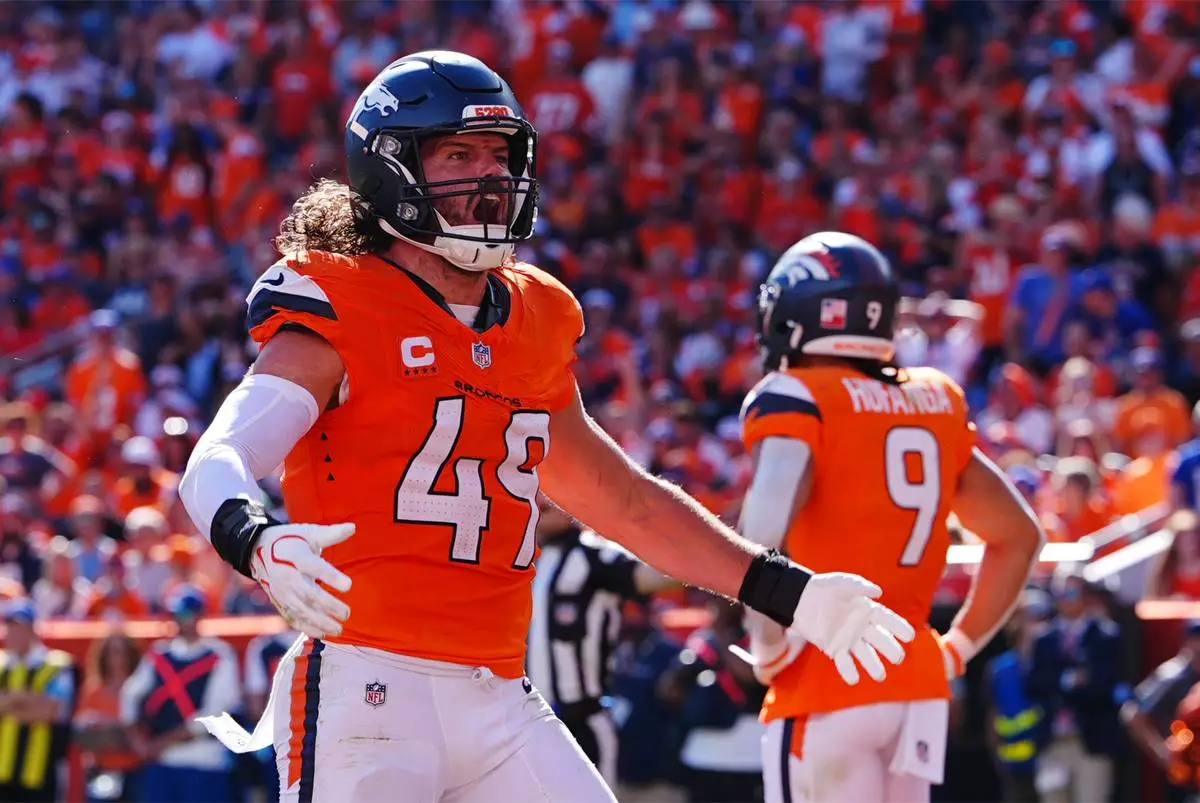
Denver Broncos linebacker Alex Singleton (49) celebrates after the Broncos stopped a drive by the Jacksonville Jaguars in the second half of an NFL football game in Denver, Sunday, Sept. 20, 2026. (AP Photo/David Zalubowski)
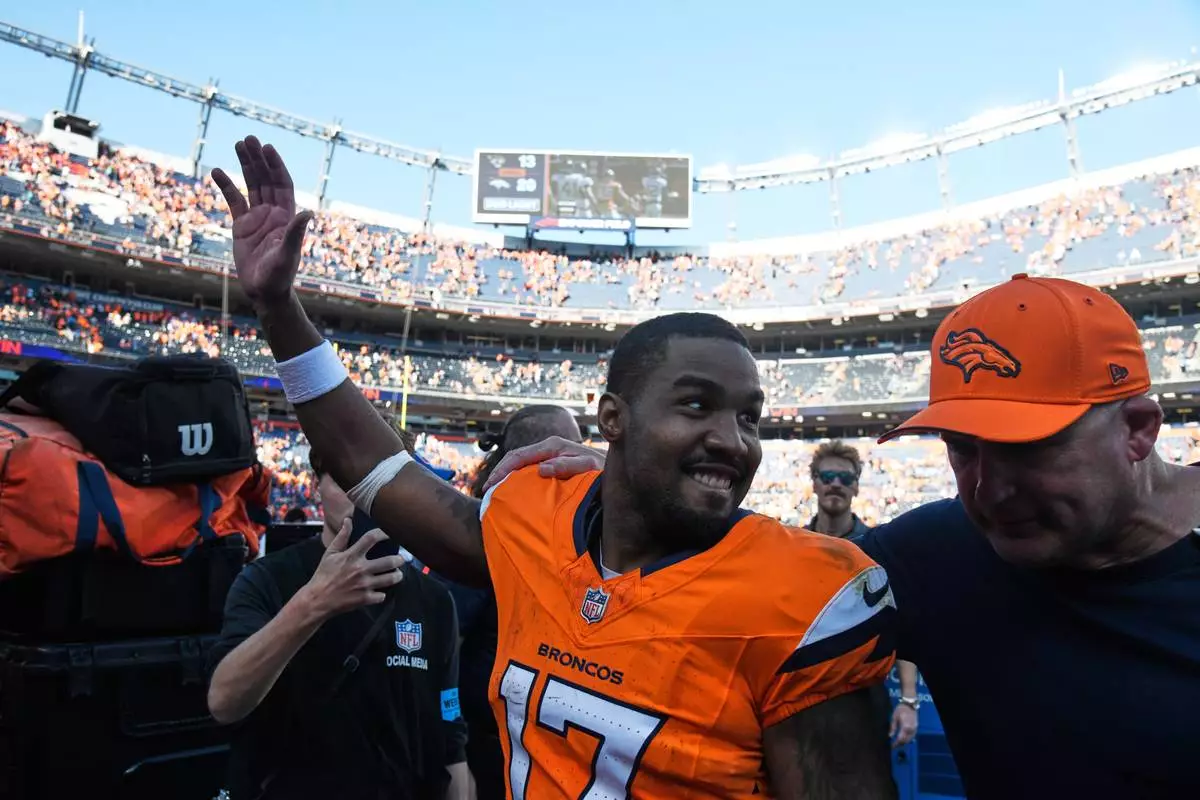
Denver Broncos wide receiver Jaylen Waddle, center, waves to fans as he leaves the field after an NFL football game against the Jacksonville Jaguars, Sunday, Sept. 20, 2026, in Denver. (AP Photo/Eric Lutzens)
Burlington, Vt. (AP) — A jury on Monday convicted a Vermont man of attempted murder in the shootings of three Palestinian college students who were walking near his home, rejecting an insanity defense rooted in his claims that he was acting on orders from U.S. and Israeli intelligence agencies.
Jason Eaton faces up to life in prison in the November 2023 attack in Burlington, which paralyzed Hisham Awartani from the waist down and wounded his friends, Tahseen Aliahmad and Kinnan Abdalhamid.
The men, all 20 at the time, had been visiting Awartani’s grandmother for Thanksgiving. They were smoking cigarettes and speaking a mix of English and Arabic as they walked near the University of Vermont campus after dusk. Two of them were wearing traditional Palestinian scarves known as keffiyehs.
The jury deliberated for several hours before reaching its verdict after a weeklong trial that saw testimony from the three men, who recounted how their stroll ended in bloodshed, and defense and prosecution psychiatric experts who offered differing views of Eaton's mental health and criminal culpability.
Eaton, 51, stared ahead blankly as the verdict was read, standing alongside his lawyers — public defenders whom he tried to fire last week over his concerns that his defense hadn’t been “adequately presented.” Judge John Pacht, who blocked Eaton’s midtrial bid to act as his own lawyer, ordered him jailed pending sentencing, which has yet to be scheduled.
Awartani and Aliahmad watched from the front row of the courtroom gallery, smiling and hugging people around them.
“The verdict cannot undo what happened or erase the trauma our families still carry, but it affirms something fundamental: Jason Eaton is responsible for what he did,” Awartani’s mother, Elizabeth Price, told reporters afterward.
Eaton had pleaded not guilty but did not dispute that he was the shooter. He claimed that the CIA and Mossad transmitted their orders via FM radio and that God was commanding him to protect his Jewish neighbors. His lawyers had urged jurors to find him not guilty by reason of insanity, an outcome that would’ve spared him from prison but could have required that he undergo mental health treatment.
Eaton's lawyers, Margaret Jansch and Joshua O’Hara, said he had struggled with mental health issues his whole life, including diagnoses of attention deficit, post-traumatic stress, bipolar, depression and borderline personality disorders, culminating in a psychotic break after losing his job at a credit union two weeks before the shooting.
Prosecutor Sarah George countered that Eaton was a narcissist but not legally insane. He had a grandiose sense of self-importance and lacked empathy but was fully aware of the criminality of his conduct, George said in a closing argument. He appeared nervous when police arrived at his door, repeatedly asked for a lawyer and hasn't claimed to have received any other messages directing his actions, she said.
Eaton told officers that he had a shotgun in his apartment, but didn't disclose that he had other weapons, including a Ruger .380-caliber handgun that was found in a bedroom dresser and that crime lab testing concluded was used in the shooting, George said.
The shooting, weeks after the start of the Israel-Hamas war, shook Burlington, and reverberated in the West Bank, where the three wounded men grew up and became friends as schoolmates in Ramallah before moving to the U.S. for college. It spawned calls for a hate crime investigation.
But no hate crime charges were filed as questions persisted about whether anti-Palestinian animus, an altered mental state or something else had compelled Eaton to open fire. After the verdict, Awartani’s mother said Eaton's hateful rhetoric, aired at the trial, had made it clear why he targeted her son.
Days after the shooting, George said in her closing argument, Eaton had told his lawyers that he wished Awartani’s grandmother had warned him that the men were “going to dress up like terrorists” and trek through his neighborhood.
“Or see, if grandma had said to them, you know, maybe now’s not a great time to wear that thing on your head," George said, paraphrasing Eaton's remarks. “You know, things are a little tense when you’ve got American hostages over in Palestine, and we’re trying to get them back."
“They were not the words of a man confused about who he shot or why,” Elizabeth Price said. “They were the words a man who saw three young men speaking the language of their childhood and wearing what made them feel closer to their far away families and homes and decided to kill them because of his own prejudices.”
Awartani testified last week that he first noticed Eaton standing on a porch as they approached the apartment house where he lived. Within seconds, Awartani said, Eaton was off the porch and walking toward them. His face was expressionless and he didn’t say anything. As Eaton got to about 5 to 10 feet (1.5 to 3 meters) away, “he pulled out a handgun and started shooting at us,” Awartani said.
Abdalhamid, a student at Haverford College near Philadelphia, said he fled and hid behind another home after seeing Aliahmad fall to the ground. He said he only realized later when he sat down that he had also been wounded.
Awartani, who was studying at Brown University in Rhode Island at the time, was shot in the chest and the bullet ricocheted off his scapula, causing paraplegia in his spinal cord. Aliahmad, who was a student at Trinity College in Connecticut, was struck in the collarbone, and Abdalhamid was shot in the right buttock.
Jacob Pyne, who lived in a different apartment in the same house as Eaton, testified that he heard four to six gunshots, followed by footsteps going up the stairs of the apartment house. He said he ran outside and heard two men speaking, one of whom was more vocal and yelling, “I’ve been shot, help me.” He then brought the men blankets and called 911.
Eaton didn't testify. In an opening statement last week, O’Hara told jurors that Eaton claimed he started receiving messages while listening to a local NPR affiliate. At first, the messages were encouraging and validating, the lawyer said, but subsequent messages turned dark, insisting that Eaton “has to go out and shoot somebody.”
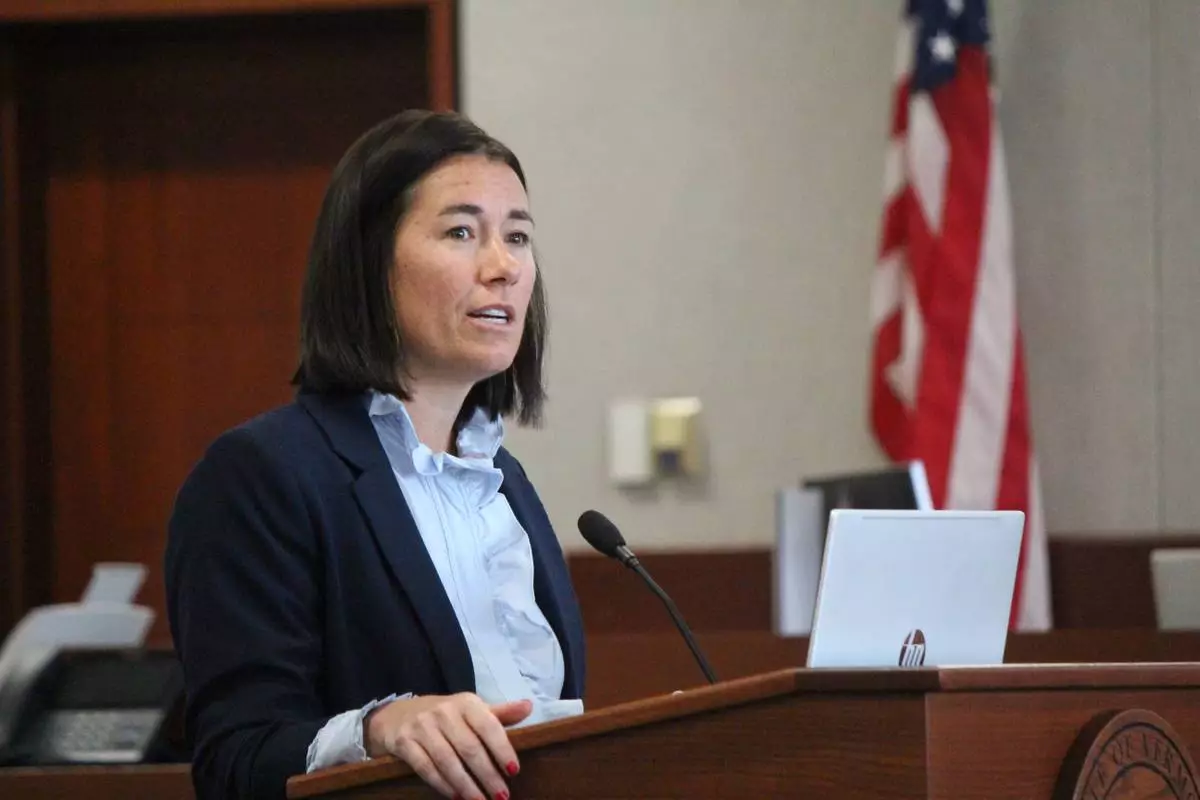
Chittenden County State's Attorney Sarah George gives closing arguments in court during Jason Eaton's trial in Burlington, Vt., Monday, Sept. 21, 2026. (Paul Heintz/The Boston Globe via AP, Pool)
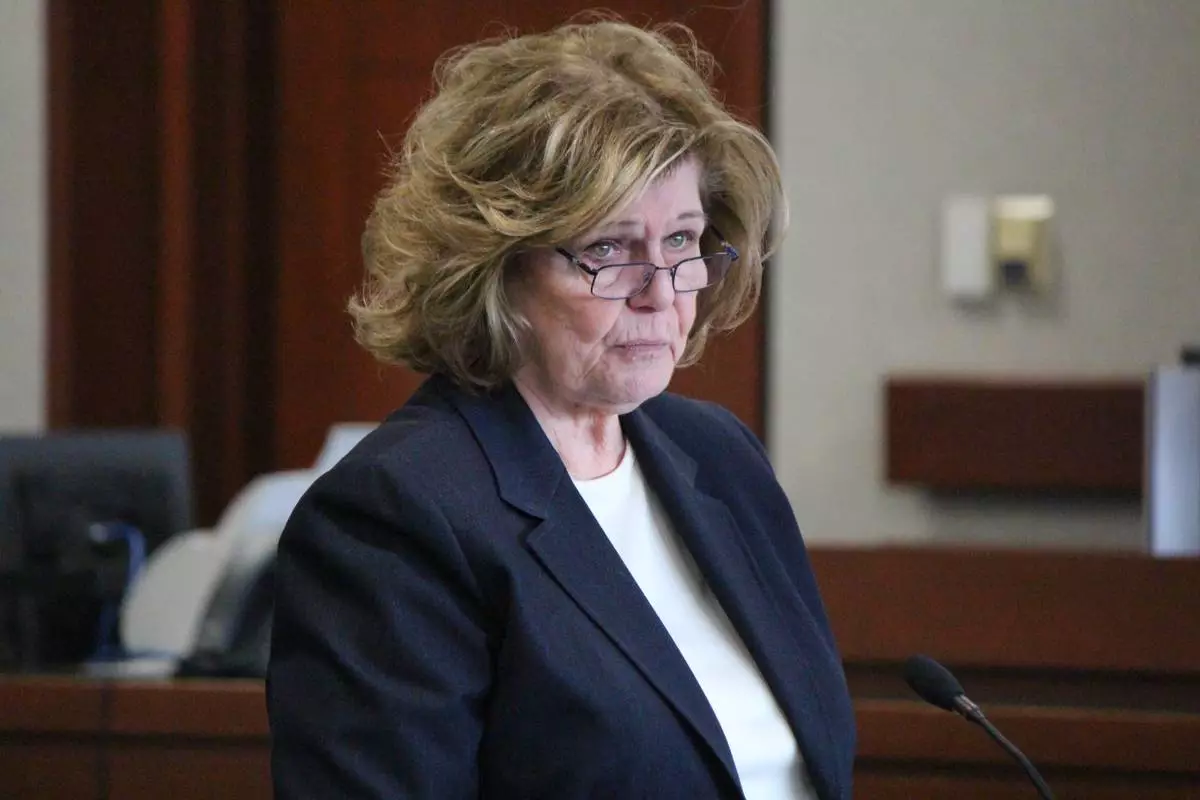
Defense attorney Margaret Jansch gives closing arguments in court during Jason Eaton's trial in Burlington, Vt., Monday, Sept. 21, 2026. (Paul Heintz/The Boston Globe via AP, Pool)
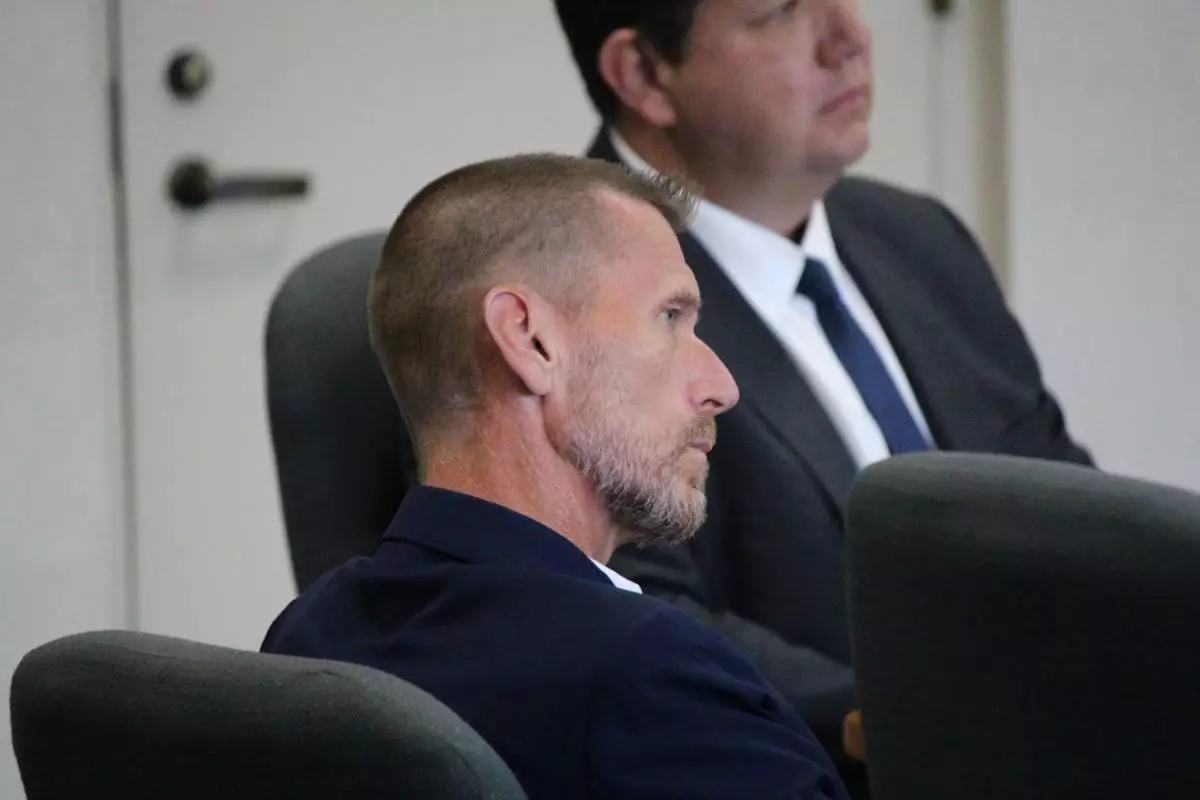
Jason Eaton appears in court during his trial in Burlington, Vt., Monday, Sept. 21, 2026. (Paul Heintz/The Boston Globe via AP, Pool)