MADRID (AP) — A day after Real Madrid coach José Mourinho complained about a poor performance by Miguel Ángel Ortiz Arias, Atlético Madrid called on Monday for an end to “refereeing harassment”.
After Atlético's 2-1 victory on Sunday, Mourinho lashed out at referee Ortiz Arias, arguing that Cristian “Cuti” Romero and Lee Kang-in deserved red cards for fouls committed against Real players.
Mourinho took printed images to his press conference showing the fouls that, he said, warranted severe punishment.
Atlético has now responded on social media with a message reading “Stop refereeing harassment now”, accompanied by a video showing an image of Mourinho emerging from a printer.
“It’s all been very strange,” Mourinho said on Sunday. “First of all, the referee was known a week before the match, but I’m told that’s usually announced just 24 hours in advance. Then he is a 41-year-old referee who isn’t on the international list, so it can’t be because he’s a great referee. The poor guy came here and couldn’t handle the pressure.”
The defeat left Real fourth in La Liga after seven rounds. City rival Atlético sits in second place, trailing only leader Barcelona.
Mourinho is at the start of his second stint with the club, which he previously managed between 2010 and 2013 leading them to a La Liga title and Copa del Rey crown.
__
See AP’s full soccer coverage here

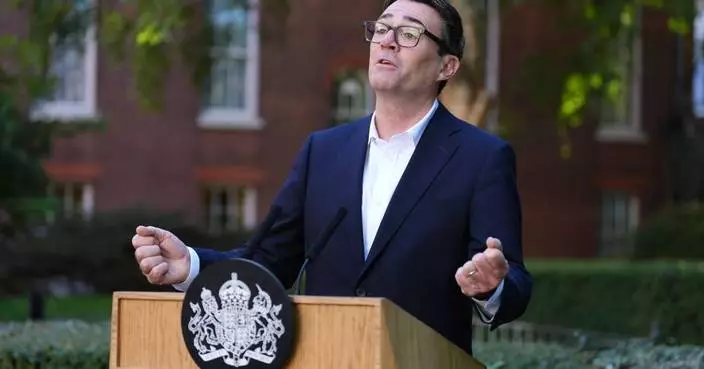
Real Madrid's head coach Jose Mourinho, right, gestures during a Spanish La Liga soccer match between Atletico Madrid and Real Madrid in Madrid, Sunday, Sept. 20, 2026. (AP Photo/Bernat Armangue)
TAYBEH, West Bank (AP) — Leo Correa began working in the Middle East as a freelance photographer for The Associated Press in 2023 and joined the AP staff in 2024.
Since the start of the Israel-Hamas war, settler violence has surged across the Israeli-occupied West Bank, with an increase in attacks by Israeli settlers against Palestinians and repeated Israeli military raids.
I visited the Kaabneh family earlier this July on assignment for AP as part of a visual story about life alongside Israeli outposts, on the outskirts of the town of Taybeh. At that time an Israeli settler stepped into the courtyard of their house as another stood next to the fence, trespassing on Palestinian-Bedouin property. Settlers lingered outside talking on their phones and taking videos of the family and also activists, who were there as a protective presence to support the Palestinians.
As part of my work in the region, I have been following the escalation of violence in the Palestinian territories and on Sept. 10 I went back to the same place where the presence of Israeli settlers is part of the routine. The family has reinforced their property with a barbed-wire fence to try to prevent attacks. Every morning and evening, settlers still go around the house, filming with their phones and staying as close as possible. Activists and volunteers stay outside following the settlers’ steps.
Like shadows at dusk, once again settlers came around Nayef Kaabneh’s family home, walking around. Nayef grabbed a flashlight to track their movements while also trying to record them on his phone to document what was happening.
I was with other members of the family when settlers arrived with their sheep and goats around his property, and Nayef began moving up through his courtyard with his flashlight and phone. For them, documenting this in video is an important measure to defend their rights in these circumstances.
He stopped next to me and started filming again. His eyes moved back and forth between the horizon line, where a settler stood, and the screen of his phone making sure he was recording properly.
I started to photograph this moment and crouched down trying to better frame not only Nayef and his nephew but also the fence against the fading light in the sky. I used a 35 mm Zeiss lens at f/1.6.
The settlers, emboldened by Prime Minister Benjamin Netanyahu’s right-wing government, have ramped up attacks on Palestinian towns and villages, harassing residents and setting homes, mosques and fields on fire.
I think the image works because it makes you question what is going on. When I took the photo, the flashlight partially lit the fence as Nayef’s nephew Muhammad stands next to him helping to spot the settlers. It’s a low-angle frame that helps to emphasize the fence against the fading sky. Standing next to a tree, Nayef is looking through his phone to spot the settlers.
The viewer doesn’t see the settlers, but the image can convey that something is happening beyond the frame.
Israel captured the West Bank in the 1967 Mideast war and in the decades since has built dozens of settlements that are now home to more than 500,000 Jewish settlers living alongside around 2.5 million Palestinians. The U.N. and much of the international community consider them to be illegally occupied, and an obstacle to peace with the Palestinians.
Israel’s military operates in all parts of the West Bank, but rights groups have said the military frequently turns a blind eye to settler violence. The settlers are Israeli citizens, and Israel’s defense minister recently announced plans to fully transfer law enforcement among settlers to the Israeli police.
Correa began with AP as a freelancer in Brazil in 2013. He moved to Senegal in 2020 and later worked on two extended assignments in Ukraine. Correa previously worked for newspapers in Brazil and has a bachelor’s degree in history.
For more extraordinary AP photography, click here.
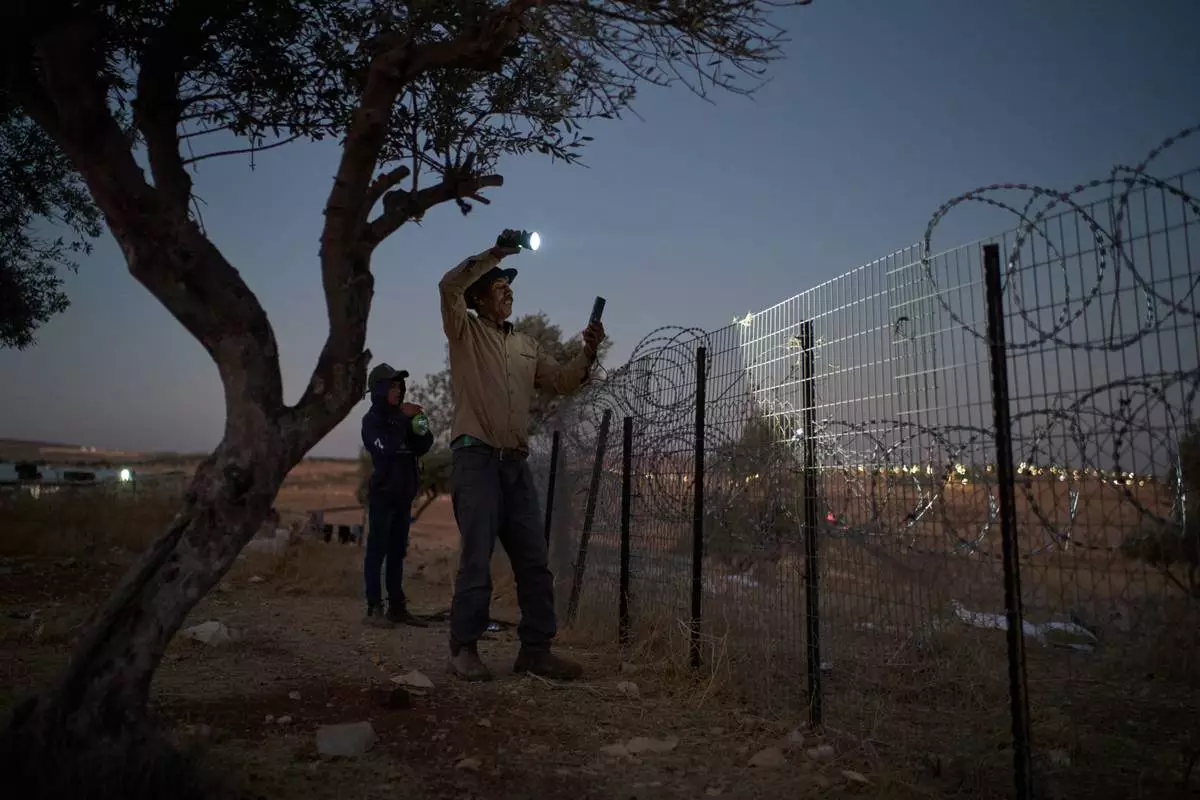
Nayef uses a flashlight after spotting Israeli settlers outside his Palestinian-Bedouin family's house on the outskirts of the West Bank town of Taybeh, Thursday, Sept. 10, 2026. (AP Photo/Leo Correa)