Speech by Head of CEPU at Sustainable Aviation Futures China Congress
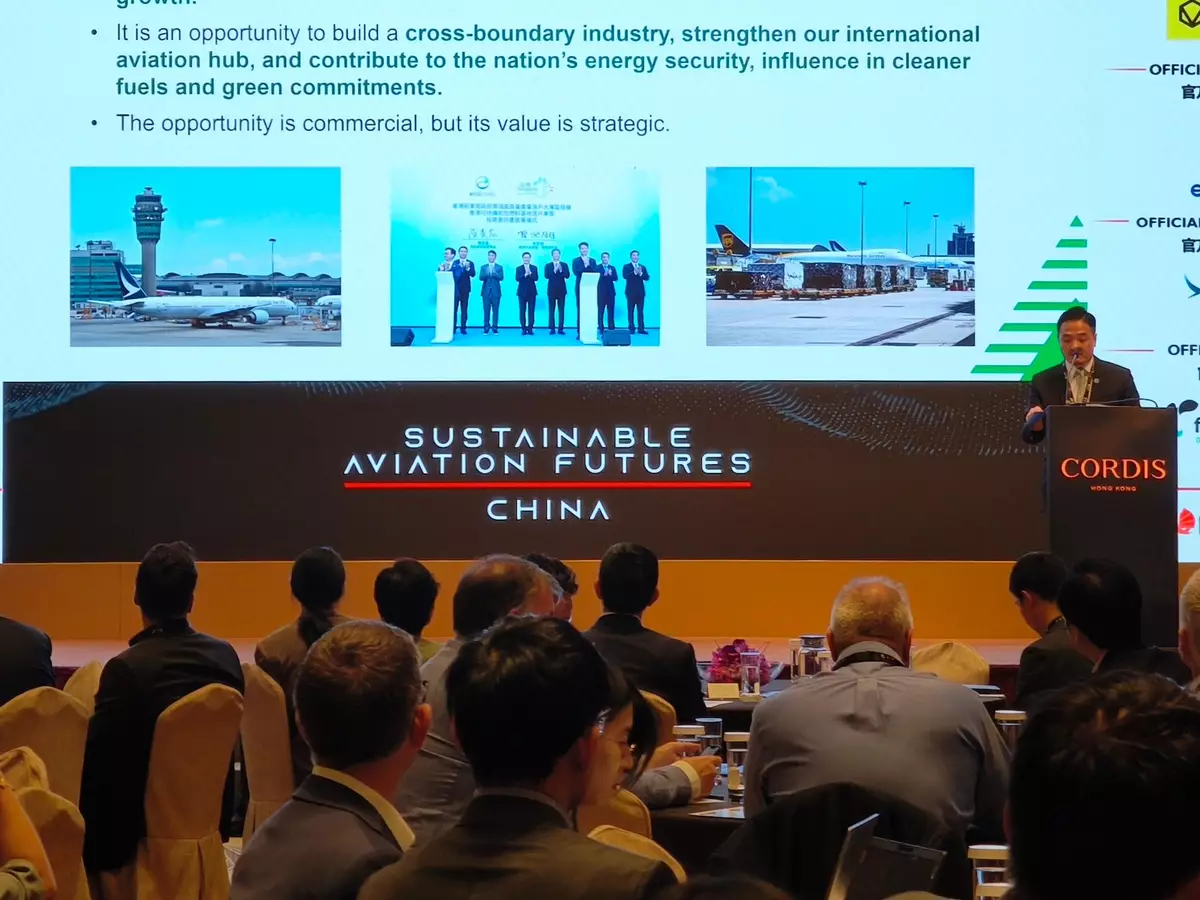
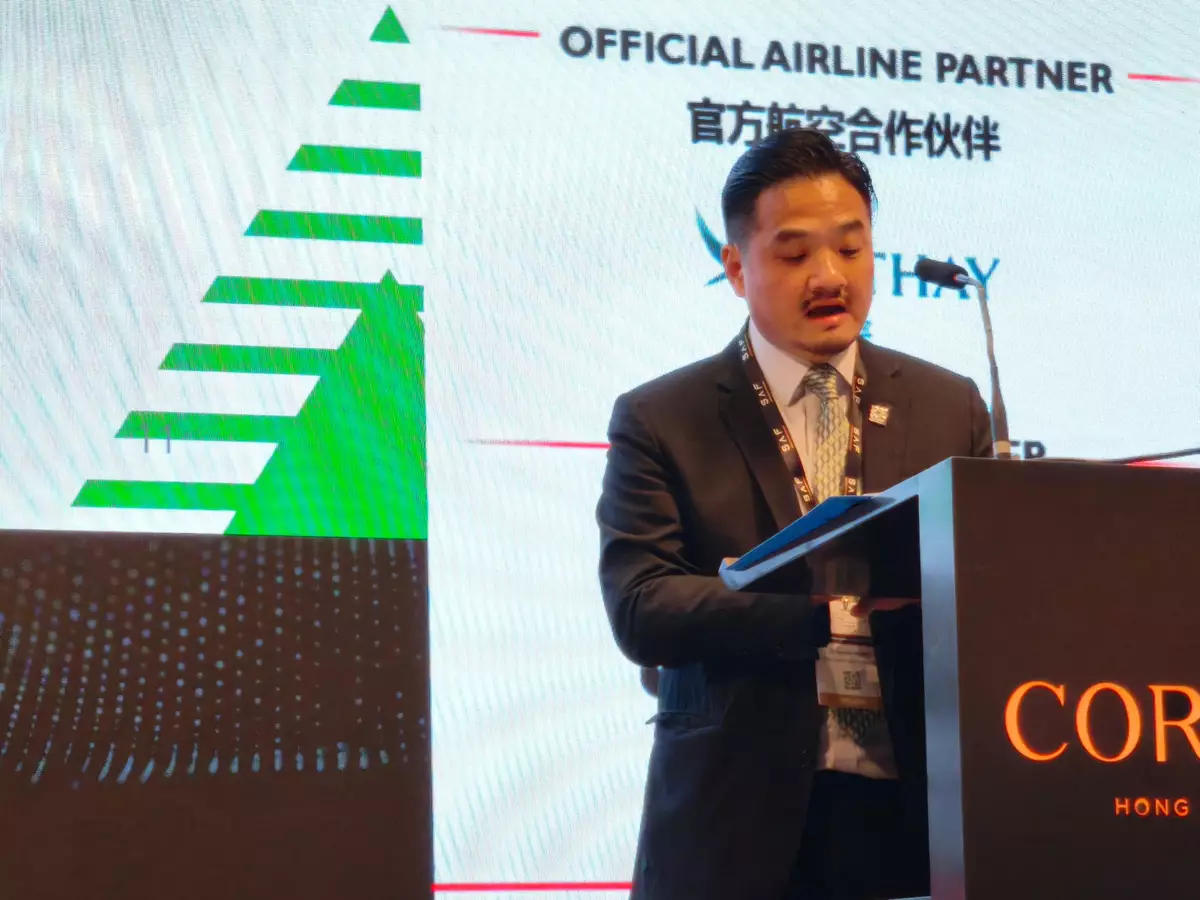
Following is the speech by the Head of the Chief Executive's Policy Unit, Dr Stephen Wong, at the Sustainable Aviation Futures China Congress today (September 22):
Distinguished guests, fellow panellists, ladies and gentlemen,
Good morning. It is my pleasure to open day two of the Sustainable Aviation Futures China Congress.
SAF moves up the policy agenda
By way of context, the Chief Executive's Policy Unit, which I lead, co-ordinates the preparation of the Chief Executive's annual Policy Address and tracks the implementation of Policy Address initiatives. So I remember sustainable aviation fuel (SAF)'s first appearance in the 2023 Policy Address rather precisely: two sentences in a sub-paragraph, mentioning an action plan from the Airport Authority Hong Kong, with the Government promising to "monitor the development trend closely for forward-looking planning". That was where we started.
This year, in Hong Kong's First Five-Year Plan and in the Policy Address released last week, SAF has its own heading - a production base, a consumption ratio, a mandate study with a deadline, and a certification pathway. None of that progress was the Government's doing alone; it was built with industry, with producers, with experts in this room.
That this Congress has come to Hong Kong for its first China edition is itself a marker of how fast this has moved. And it makes this a good moment to look back at how we got here, before we spend the rest of today looking forward.
I want to begin not with a policy, but with a visit.
Story - a jar of used cooking oil
In early 2023, a few months after my unit began operating, I visited one of the top SAF suppliers at its office in Kowloon Bay. I knew very little about SAF at the time. What I remember is being shown, essentially, waste - used cooking oil from restaurant kitchens - and being told that on a lifecycle basis it could cut carbon emissions by up to around 80 per cent compared with conventional jet fuel, useable in existing aircraft.
I left that meeting with one question, and it has organised three years of my work since: if the molecule already works, why isn't this at scale?
So, for three years, we followed the chain:
• we spoke with operators, management and investors;
• we visited the production base in Zhangjiagang; traced used cooking oil upstream across Guangdong;
• we engaged Mainland authorities across energy, commerce, and aviation; and
• we also worked with HKEX (Hong Kong Exchanges and Clearing Limited)'s Core Climate, exploring the trading mechanism and price discovery.
Where the evidence was incomplete, we commissioned further research, including support for universities to look into resilient local supply, faster fuel screening and viable GBA (Guangdong-Hong Kong-Macao Greater Bay Area) feedstocks.
That is what evidence-based policy means: not simply endorsing an idea, but testing the numbers, standards and institutions on which policy research must ultimately rest.
What emerged was not a simple answer, but a different question. The chemistry works. The challenge is aligning feedstock, standards, offtake, and capital across energy, aviation, finance, trade, and innovation. SAF may be a fuel, but scaling it means building an efficient supply chain coupled with a robust market.
The deeper we went, the clearer the strategic significance became. For Hong Kong, SAF offers more than environmental gains or a new source of growth. It is an opportunity to build a cross-boundary industry, strengthen our international aviation hub, and contribute to the nation's energy security, influences in cleaner fuels and green commitments. The opportunity is commercial, but its value is strategic.
National direction, international timelines
The National 15th Five-Year Plan calls for accelerating a comprehensive green transformation of economic and social development, anchored on carbon peaking and carbon neutrality, and for low-carbon substitution in transport. Under its new industries column, it explicitly extends the green hydrogen chain to green ammonia, methanol and SAF. Meanwhile, the National 15th Five-Year Plan expressly supports Hong Kong in consolidating and enhancing its status as an international aviation hub.
We have seen this national playbook before. China built scale in wind and solar, strengthened the supply chain and helped bring down the cost of deployment. The lesson is not that green solutions scale simply because they are green. They scale when industrial capacity turns them into a compelling commercial proposition. SAF can follow the same path.
But the window is narrowing. The International Civil Aviation Organization has set a collective aspiration to reduce international aviation emissions by 5 per cent by 2030 through SAF and other cleaner energies, on the path to net-zero international aviation by 2050. Meanwhile, the European Union and the United Kingdom have introduced mandates, while Singapore and Japan have established their own SAF targets, among other countries. Future demand is increasingly being shaped by policy rather than left to voluntary action.
The implication for Hong Kong is clear. An airport that cannot secure a reliable SAF supply and prove its sustainability through credible certification will risk finding its routes, hub function, and competitiveness constrained. It is a question of whether Hong Kong can remain an international aviation hub as the economics and rules of global aviation change.
Three observations: demand, supply, at GBA scale
So where has three years of work brought us? The question is no longer whether SAF works. It is whether we can align supply, standards, demand, and capital quickly enough to build a credible market. Here, I would like to offer three observations from a policy researcher's perspective - three developments that will matter most to the operators and investors in this room.
First, a demand signal with a number attached. Hong Kong's First Five-Year Plan, unveiled by the Chief Executive last Wednesday, sets an SAF consumption ratio of 1 to 3 per cent for flights departing from the Hong Kong International Airport (HKIA) in 2030. That is not just an aspiration; it is a planning signal you can build a model against.
More consequentially: the 2026 Policy Address commits Hong Kong to study an SAF mandate by 2028. A voluntary target attracts interest. A mandate attracts capital. That is the difference between a pipeline of pilots and a pipeline of projects.
Second, the supply side is becoming real - and I have had the privilege of watching it take shape. Following EcoCeres' signing of an investment letter of intent with the Dongguan Municipal Government earlier this year, plans are advancing for a new SAF production facility in Dongguan. Targeted for a 2030 start-up, the plant is expected to produce about 450 000 tonnes a year of SAF and renewable diesel at full production.
Around that facility, what is intended to become the GBA's first end-to-end SAF value chain is emerging: waste-based feedstock collected across the GBA; refining and production in Dongguan; and research and development and headquarter services in Hong Kong.
Third, the larger opportunity is to build industries at GBA scale. The HKIA Dongguan Logistics Park has already shown how Hong Kong can extend its economic infrastructure into the GBA while strengthening its connections to the world. SAF gives us the opportunity to apply that model to green industry, not by duplicating every function in every GBA city, but by combining the strengths of the region into one globally competitive system. That is regional specialisation by design.
Hong Kong brings distinctive strengths to that system: a common-law legal framework, deep financial markets, international connectivity, and credible systems for certification, carbon data and settlement. We do not need to host every production line. In a market increasingly shaped by carbon costs, value can also accrue to those who finance the product, verify its environmental integrity and connect it to global buyers. That is the position Hong Kong will seek to occupy - and one consistent with the direction of the national plan.
Conclusion - from five-year blueprint to annual delivery
And this brings me to the larger lesson of the SAF story. Building a new industry takes longer than an annual policy cycle. Investors, producers, and airlines all need to know not only what the Government will do next year, but where Hong Kong intends to be five years from now.
Hong Kong's First Five-Year Plan gives that longer horizon practical form. It draws together the elements we have discussed today - a consumption target, an industrial direction and Hong Kong's place in the regional value chain - and turns them into a concrete destination for 2030.
The 2026 Policy Address creates the pathway to realise the five-year blueprint, turning that longer-term direction into mandates, institutions, projects and annual deliverables.
Indeed, the Five-Year Plan provides forwardlooking, strategic, and directional guidance over a period long enough for investment, infrastructure and new industries to take shape.
The Policy Address reports annually on the implementation of the Five-Year Plan and sets the Chief Executive's policy priorities for the year having regard to actual circumstances.
As the Policy Address itself puts it, the two are "interconnected and inextricably related".
SAF demonstrates what that relationship can achieve. When long-term planning and annual execution move together, a policy signal can become an investment decision; individual projects can become a value chain; and an emerging fuel can become a strategic industry.
Three years ago, I was looking at a jar of used cooking oil and wondering whether any of this was real. Today, we know that it is. The task now is to make it investable and scalable.
As the first speaker today, I have had the easier task: setting out the opportunity. The panels that follow will take us into the harder questions, such as:
• how policy, offtake commitments, certification and carbon-accounting rules can provide investable certainty;
• how risks and returns should be shared among producers, airlines, financiers and governments; and
• how China and international partners can build credible, scalable supply chains for the next generation of sustainable fuels.
I hope today's discussions bring us one step closer to the answers, and I wish you all a stimulating, productive, and successful day. Thank you.
Speech by Head of CEPU at Sustainable Aviation Futures China Congress Source: HKSAR Government Press Releases
Speech by Head of CEPU at Sustainable Aviation Futures China Congress Source: HKSAR Government Press Releases