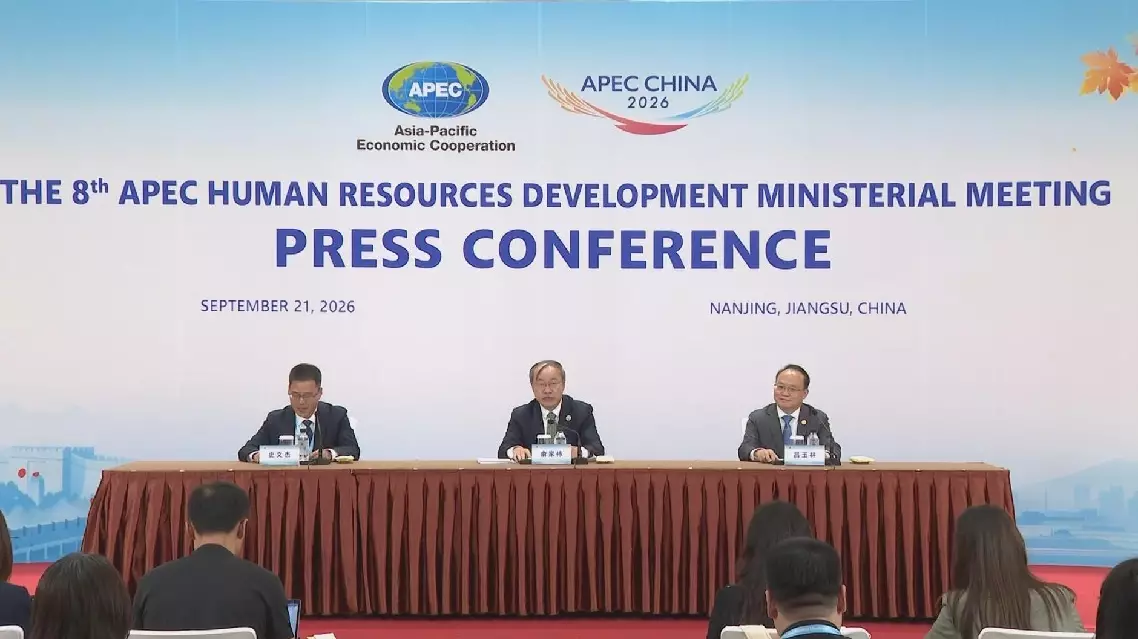
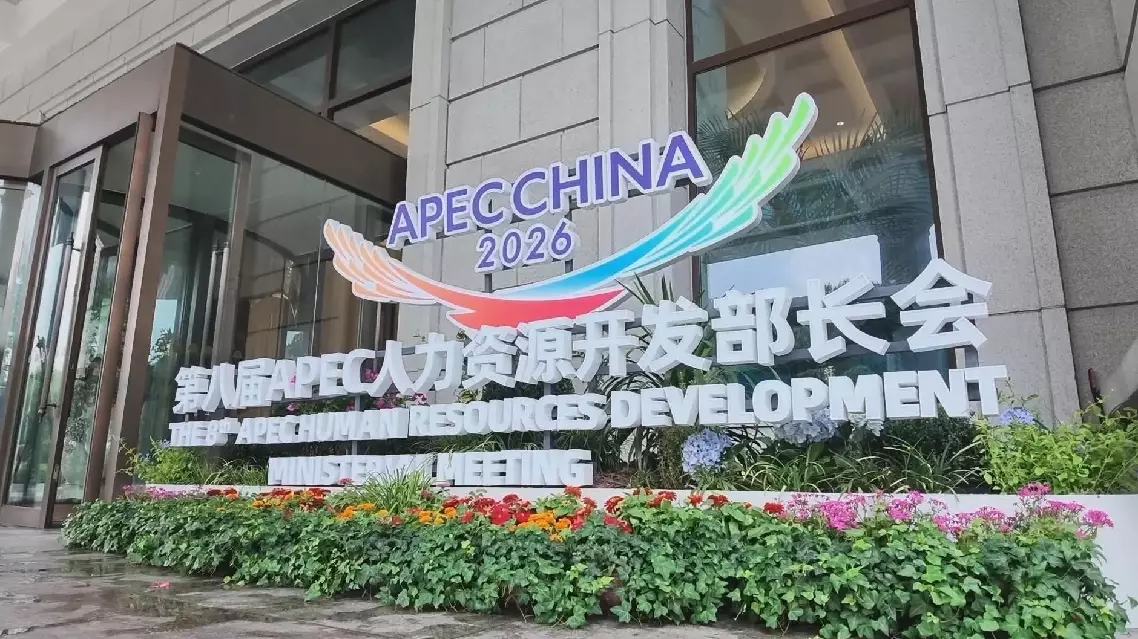
Asia-Pacific economies are stepping up cooperation to adapt to an employment landscape being reshaped by artificial intelligence, APEC Secretariat Executive Director Eduardo Pedrosa said on Sunday, urging governments to strengthen social safety nets so that the benefits of technological advancement are widely shared. The transformation that AI will bring to industries and daily life took center stage at the 8th APEC Human Resources Development Ministerial Meeting, which kicked off Monday in Nanjing, east China, where delegates exchanged ideas on creating better jobs and strengthening vocational training to help workers keep up with a shifting market.
Speaking in an exclusive interview with China Central Television (CCTV) ahead of the meeting, Pedrosa said education reform is a key priority in addressing AI's disruptive effects on employment, and that governments must play a crucial role in connecting workers with emerging opportunities.
"So we undertake projects, policy dialogues to improve understanding of how other regional economies are developing their education sector in response to the digital revolution. There are also those that APEC members are undertaking, and this includes, for example, partnerships between universities. We're here in Nanjing. Nanjing is working with a number of different universities to set up an innovation center," he said.
Pedrosa noted that while AI can boost productivity, serve daily life and advance health research, some groups will inevitably bear the brunt of the transition. Building a robust social safety net is therefore equally critical, he stressed.
He praised China's efforts to build an employment-friendly development model that coordinates employment targets with fiscal and industrial policies, saying the approach offers valuable lessons for other APEC economies.
"AI is such a rapidly evolving technology. We have to make sure that everybody benefits from this, that we have this sense of shared prosperity. We know that it will improve productivity. We know that these technologies can help us in everyday life. We know that it can help us in health research. But how do we make sure that those benefits are really there for everybody and not just a select group of people?" said the official.
APEC official urges AI benefits be shared by all